
Home Blog Page 858

Locals begin work to develop a vision for Eglinton Avenue

0

On Aug. 17, Mike Colle, member of provincial parliament, will be leading a march along Eglinton Avenue urging locals to open their eyes to how the roadway might look in the future.

The march is part of a new initiative called Eglinton 2020, which brings communities along the Eglinton Avenue corridor together to collectively develop a vision for the area. “Nobody has ever done a comprehensive, integrated analysis shaping the middle city. It’s the forgotten part of Toronto, and that’s Eglinton,” said Colle, who is leading the initiative. “As work on the proposed transit line begins, people have got to start to put in rules.”

The initiative’s scope of analysis includes looking at the best way to handle traffic and air pollution issues during the Eglinton light rail transit (LRT) construction. Eglinton 2020 will also assess the best ways to maximize public space, improve the streetscape and make the avenue friendlier to pedestrians and cyclists. Another important issue, said Colle, is how to handle the intensification that will inevitably happen. “It’s about trying to get some sanity into this process because, right now for the developers, it’s a free-for-all along Eglinton,” he said.

To help guide the discussions, Colle teamed up with 8-80 Cities, a local non-profit organization dedicated to building great communities and vibrant cities.

During a community meeting held last month at Forest Hill United Church, 8-80 members gave suggestions on how to make Eglinton Avenue world-class. “Everybody who will be using the LRT will be walking or cycling to get there,” said Guillermo Peñalosa, executive director of 8-80. “You have to make it safe, and you have to make it nice.”

Local Greg Russell attended the meeting and said his biggest priority is the construction of the stations. “How will the station be designed? Where will it be placed?” he asked.

According to Karen Stintz, Toronto Transit Commission (TTC) chair, station construction will be considered carefully.

“There will be construction. Managing that construction and making sure businesses don’t suffer the economic consequences will be our challenge,” she said.

As for how the Eglinton 2020 plan will affect the avenue, Steve Munro, who has been a transit advocate for over 35 years, said he’s not convinced yet that it will: “Mike’s influence on affairs will depend a lot on the outcome of the provincial election in October.”
Three area parks get redo as part of new revitalization plan

0

Despite worries over city funding for green spaces, Sibelius Square Park, Taddle Creek Park and Vermont Square are three Annex parks being revitalized.

“We want to make sure we deliver not just great parks in the Annex, but great parks in the ward,” said Coun. Adam Vaughan. Although the city paid for the parks, the community led the project.

Both Sibelius Square Park and Taddle Creek Park had their grand reopening last month. Completion of Vermont Square is targeted for the fall. According to Vaughan, the parks were all heavily used, but play equipment and other infrastructure had become outdated.

At Sibelius Square Park, working group members have kept the ice rink as the focal point but added a play space for kids of different ages. At Taddle Creek Park, Vaughan said the focus was on tradition. “The city had more of a futuristic design, but the community really pulled it back,” he said.

At Vermont Square, locals have added artistic elements such as a performance stage. Within the park is a playground dedicated to local poet Dennis Lee. Erin Mitchell, the playground committee co-chair, said next will be a project to memorialize Lee’s verse throughout the space. The enhanced Vermont Square cost the city approximately $500,000. David Harvey, executive director of local organization Park People, said, with current budget talks, funding for similar park projects will likely be rare in the near future.

Fundraising reaches the home stretch for Leaside ice rink

0

The Leaside Arena Expansion Project has nearly reached its fundraising goal of $2.5 million to fund the addition of a second ice rink at the Leaside Memorial Community Gardens.

The expansion will cost $9.5 million in total, $7 million in the form of a loan from the city, with the community expected to raise the remaining $2.5 million.

“We’ve raised just over $2 million,” said the chair of the arena expansion committee, Paul Mercer. “There have been over 450 individuals and companies to contribute to the funds.”

In order to raise the remainder of the money, Mercer said they have established naming opportunities for dressing rooms, seats and the new rink, which will be located on the former Ontario Film Review Board’s property. Although he has promoted the opportunity to both individuals and companies, Mercer said mainly individuals have been the most receptive. As for the $7 million loan from the city, that will be repaid over 22 to 25 years through operating revenue from the Gardens’ users.

The expansion came about after youth from the three main user groups of the rink, the Leaside Hockey Association, Leaside Skating Club and the Toronto Leaside Girls Hockey Association were repeatedly turned away.

The project will begin construction at the end of September, and it is expected to be completed in September 2012.

Willowdale’s MP plays pipes for Will and Kate

0

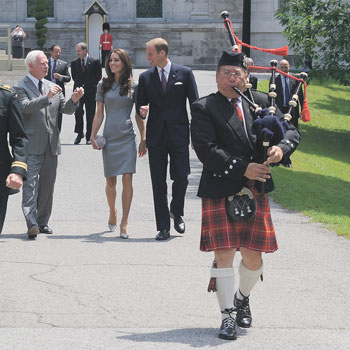
Chungsen Leung, Willowdale’s new member of Parliament, recently got the opportunity to play the bagpipes for William and Kate, Duke and Duchess of Cambridge, at a Rideau Hall tree-planting ceremony. Someone from the Governor General’s office caught wind of his talent and invited him to perform. The MP has played the bagpipes since 2000.

Leung selected two songs for the occasion. “Maple Leaf Forever” is the march pass for the Royal Canadian Legion and “Scotland the Brave” was a nod to Will’s Scottish lineage. Leung was introduced to the newlyweds by Governor General David Johnston, at which point he got the opportunity to chat with them. He said the duke and duchess were “extremely cordial and very personable.”

It’s not Leung’s first brush with royalty, though. He also performed for Queen Elizabeth, Will’s grandmother, back in 2003 and 2004.

In spite of all the excitement around the young royal couple’s visit, he was modest about his most recent gig.

“It was no performance. It was just being the duty piper to hike them from the front of Rideau Hall down to their tree-planting ceremony,” he said.

Guilty plea in drug-smuggling case

0

Sports medicine specialist Dr. Anthony Galea, who has treated such superstar patients as Tiger Woods and Alex Rodriguez, has admitted to smuggling drugs across the U.S. border, with the purpose of treating professional athletes.

The admission was confirmed by Galea’s attorney, Brian Greenspan. “In Buffalo, [Galea] pleaded guilty to bringing into the United States two substances which were mislabelled,” he said.

According to a press release issued by the United States Department of Justice, the drugs included a human growth hormone and Actovegin, which is a derivative of calf’s blood. The drug is not approved by the United States Food and Drug Administration.

“Here, the defendant admitted to not only bringing unapproved substances into the country repeatedly, but that he also practiced medicine without a licence, supervised criminal conduct of others and obstructed justice,” said Judge William J. Hochul Jr., in a prepared statement from the release.

The release indicates that Galea faces a maximum sentence of three years in prison and more than half a million dollars in fines and forfeiture. Until his sentencing, scheduled for Oct. 19, the justice department confirmed that Galea has been released and permitted to return home to Toronto.

Area school forced to find new home after lease ends

0

A local Catholic school being forced to move out of its current location has been given $16 million by the provincial government for a new building, but a local Toronto Catholic District School Board (TCDSB) trustee worries the funds may not be enough.

Students from Dante Alighieri Academy have been leasing space in the former Bathurst Heights Secondary School, near Lawrence Avenue West and Allen Road, for several years. The Bathurst site is owned by the Toronto District School Board (TDSB). In September, all the site’s tenants, which also includes the North York Harvest Food Bank, are being asked to relocate to make room for the TDSB’s new John Polanyi Collegiate Institute.

Despite the government’s $16 million grant, local trustee Maria Rizzo, said the TCDSB is still about $12 million short.

“It’s simply not enough to cover the cost of a new building,” said Rizzo.

The Dante Alighieri students will be temporarily housed in the TDSB’s former Sir Sanford Fleming Academy building, come September, but Rizzo said it is only a “band-aid” solution, until they find permanent space or the funds to build a new school.

She said the government may consider allocating more funds if the TCDSB presents them with a “business case,” which would explain in detail what the money would support.

Meanwhile, Villa Charities, an umbrella of charitable programs aimed at Toronto’s Italian-Canadian community, owns 17 acres of land adjacent to the academy. Rizzo said The TCDSB and Villa Charities have been exploring the possibility of a joint educational/cultural facility.

“We happen to be next door to Dante”, said Villa CEO, Pal Di Iulio. “And we understand from the TCDSB that there’s a need for a school, and we are talking to them in the sense that there’s all this land here. What’s the best way to develop this land?”

Traffic concerns lead to scaling back of Lawrence Heights

0

Toronto City Council recently approved plans to scale back the Lawrence Heights redevelopment, which falls within the bounds of Bathurst Street and Dufferin Street, and Highway 401 and Lawrence Avenue.

The condos on Toronto Community Housing Corporation’s (TCHC) property will be reduced from 4,800 new units to 4,100, and the residential units on the Toronto District School Board’s (TDSB) lands will be reduced from 400 units to 300. The move was meant to address concerns raised about traffic congestion and infrastructure and sewage capacity. But some residents say the new plan is only a start.

“The plans were scaled back very slightly,” said Maria Rosaria of the community group Save Our Streets. “It’s still too much. What happens to this already overly congested area?”

Local councillor Josh Colle, who spearheaded the changes, said the plans are vital to the quality of the community.

“With a development of this size, there will be always be levels of concern,” Colle said. “Right now, Lawrence Heights is a neighbourhood with extremely serious challenges. I would think that most people who live nearby would want to see these issues addressed. The status quo is not an option,” he added.

The next step, according to Colle, is to work on a secondary plan, which will go to community council at the end of next year. But the question of funding remains.

TCHC will fund the redevelopment of buildings on their property, while the City of Toronto will have to bear infrastructure costs.

Rosaria said she wants to see financial responsibility. “The city’s in a real financial hole, so it makes you wonder about the logistics….We really want a transparent framework,” she said.

Colle said he is willing to continue to work with the community to ensure a balanced plan is reached.

Paralympic athlete champions literacy

0

This month, Paul Rosen will go from gold-medal sledge hockey champion to literacy awareness champion. About a year ago, the 51-year-old Thornhill resident decided to confront his secret struggle with reading and writing. Now, having overcome this challenge, he is set to be named as a literacy ambassador for ABC Life Literacy.

Rosen said he’s honoured to be chosen. After six months of courses, he went from a Grade 6 reading level to a university reading level. He was inspired to go public, in part, by Jacques Demers, a well-known former hockey coach who revealed his own struggle with literacy a few years ago.

“It started to affect me in my twenties and thirties, with reading and writing,” he said. “I guess it really hit home when I started to be the face of the team and having to do so many interviews.” Rosen hopes to convey to others who are struggling with literacy, especially adults, that it’s not their fault.

“If I can help somebody and make them realize that this is just another obstacle that they can turn into a great opportunity, then I’m on board.”

So far, his favourite read has been a biography about hockey player Bob Probert.

Cash-for-parkland fee set at $10,000 per unit

0

In a six to two vote, Richmond Hill Council recently set the fee charged to developers for cash-in-lieu of parkland at $10,000 per unit.

But some councillors and residents have raised concerns about the way this figure was chosen. With the staff report that was expected to inform council’s decision not yet ready, a majority on council decided to go ahead anyway and select the interim number until a comprehensive parkland study is completed.

Cash-in-lieu of parkland is meant to establish a reserve of funds that the town can use to purchase public space elsewhere when high-rise development is unable to provide parkland. Before this vote, if residential developers could not dedicate either five per cent of their land or one hectare per 300 units to parks, they were required to pay cash-in-lieu equal to the market value of the land.

The need to revisit the Town of Richmond Hill’s policy was prompted by the province’s targets for intensification and the accompanying influx of applications to build condos. According to the Building Industry and Land Association Development (BILD), in some cases, the old policy would have meant paying the total value of the land.

In a May 2011 letter to York Region’s planning commissioner, Paula Tenuta of BILD wrote that the old policy might prevent high-density projects from moving forward.

Ward 4 councillor, Lynn Foster, thought council should have waited for the staff report.

“It needed to be a very correctly written and properly vetted report because staff knew it would be challenged by the big lawyers for the builders,” she said. “The problem for me is not whether that’s the right number or not, but that there was no process.”

With higher-density projects that can’t provide for parkland coming to the area, it’s important to build a reserve of funds that will allow the town to purchase green space elsewhere, she explained.

“If there is, through the process of going to the OMB [Ontario Municipal Board], an opportunity to buy another piece of large parkland — and that might be property on the David Dunlap Observatory — we need to have cash to buy that,” she said.

Regional councillor Vito Spatafora said he didn’t think it was fair to delay the matter any further.

“There are applications that have been waiting for months and months that needed to be addressed,” he said.

Karen Cilevitz of the David Dunlap Observatory Defenders was disturbed by the move, questioning whose interests were served. She didn’t think council was equipped to make an informed decision without the expert advice of its staff.

“It’s an absolute travesty.… What happened there was undemocratic,” she said.

Cilevitz suspects that the $10,000 figure was on the low end of the spectrum.

“I hope that indeed we will still be able to realize enough funds coming in to allow us to amass a purse for the purchase of the DDO,” she said.

Mayor Dave Barrow said it was the first time the town was dealing with the issue of cash-in-lieu of parkland. In the past, development in Richmond Hill had come mostly in the form of subdivisions, so parkland was easily provided for.

“My feeling was we promised we’d have it ready to go, and unfortunately it wasn’t ready to go, so pick an interim number for a short period of time and to allow these projects to proceed,” he said.

“Our rationale is we know we’re competitive because we applied the formula to — if this development is in North York, Markham or Vaughan — this is probably what it would pay.”

According to Barrow, compared to neighbouring municipalities, the $10,000 figure was neither the lowest, nor the highest.

The fee will only be applied temporarily, until the end of December 2012, when a comprehensive parkland study is slated to be completed by staff.

The interim fee for cash-in-lieu of parkland is expected to affect a few thousand units.

The cult of Conan grows despite brutally honest documentary

0

I’ve had a lot of Conan O’Brien on the brain lately. I finally got the time to read Bill Carter’s excellent book on the recent late night TV conflicts, The War for Late Night, and checked out O’Brien’s live show in Toronto and the subsequent documentary.

I’ve rarely read a better book about show business. Carter takes us behind the scenes at NBC, the network that fought to keep both Jay Leno and Conan O’Brien employed as talk show hosts on the venerable Tonight Show franchise. The arrangement ended disastrously, with NBC firing O’Brien, giving him a huge settlement and rehiring Leno.

All this left O’Brien a very angry man. His fans, younger and more rabid than Leno’s, rallied behind the gangly redhead, calling themselves Team Coco, and launched protests fuelled by the social media.

O’Brien couldn’t perform on TV for six months, so he went on a 40-city tour. I saw the Toronto concert and was very disappointed.

More music than comedy, O’Brien assembled a crack team of musicians for the show and fronted them with his adequate but hardly breathtaking guitar playing. And when he did some funny stuff, he overemphasized every joke, as he sometimes does on his show. It’s strange because his rival and polar opposite, Jay Leno, is guilty of the same thing.

The subsequent documentary about the tour is entitled Conan O’Brien Can’t Stop. In the movie, which oscillates between fascinating and boring, O’Brien is not shown to be a nice guy. In fact, he’s angry, abusive, narcissistic and not terribly funny.

The film certainly captures the tedium of life on the road. You can see O’Brien’s nerves fray as the tour marches on. He snaps at his staff, complains endlessly about his fans and you can even see him age before your eyes as his face becomes hollow and gaunt with the pressures of performance.

O’Brien wouldn’t be used to this life on the road. Unlike his competitors, like Leno and David Letterman, Conan was never a stand-up working 300 dates a year in every town and city in America. It’s one of the reasons I think he’s not a great performer; his soul rests in writing and producing.

When I watch his show, now on TBS, I keep thinking he has the best bits in late night, but I wish that someone else would deliver them.

There’s no denying the success of the Conan O’Brien cult, with shows selling out in six minutes in some cities. But I wonder what his fans would make of this movie. I give O’Brien credit for letting this movie out. It’s honest to a fault, but I can’t watch him now without thinking about his behaviour in the film, which should be out on DVD any day now.

In the end, neither Leno nor O’Brien really won. Both returned to late night with diminished ratings, and Leno with a tarnished reputation.

If anybody won, it was probably David Letterman, who commented on the feud nightly from his lofty perch above the fray.

Of course, you could argue that all of these shows are dinosaurs now that Jon Stewart and Stephen Colbert so radically changed the definition of the late night talk show, and you might be right. But there will always be an interest in the traditional host-guest formula that dominates late night TV.

Now if we could only try it again here in Canada.…

Post City Magazines’ humour columnist, Mark Breslin, is the founder of Yuk Yuk’s comedy clubs and the author of several books, including Control Freaked.

Rosedale like you’ve never seen it before

0

Ideas of family and good old Sigmund Freud filled my thoughts as I readied myself for a new production of Canadian playwright Judith Thompson’s famous, widely praised drama White Biting Dog. The 1984 Governor General’s Award–winning drama is a poetic, symbolic and powerful play. It is being presented by Soulpepper at the Young Centre for the Performing Arts in the Distillery District from Aug. 13 to Oct. 1 (www.soulpepper.ca).

When you hear that Thompson’s White Biting Dog is about a suicidal lawyer who plans to throw himself off the famous Bloor Street Viaduct until a white dog tells him that he has an important mission to save his father from death, don’t be put off.

There are good reasons to seek out this mystical, strange and moving piece of theatre that has the city of Toronto, and the Rosedale neighbourhood specifically, as one of its main characters. The black comedy is the Toronto playwright’s second play.

Directed by Nancy Palk and starring some of the pillars of Canadian theatre (Joseph Ziegler, Fiona Reid, Mike Ross), with this play, I cannot guarantee an evening of laughs, but you will experience one of the most revered plays of that explosive time in our country’s young playwriting renaissance.

Shaw Festival’s sure things for summer
Here we are, nearly halfway through the summer, and I’ve had the opportunity to get to one of our international “summer theatres,” at Niagara-on-the-Lake. I come back with a number of recommendations.

I can certainly recommend a handsome production of Cat on a Hot Tin Roof, by Tennessee Williams, running until Oct. 23, which you may be familiar with from when Paul Newman and Elizabeth Taylor played the major roles. It’s a solid production, with near-perfect acting, and much of the playwright’s poetry comes through, but upon seeing it onstage several times, my belief grows that his autobiographical Glass Menagerie (yes, Soulpepper is doing that now, until Sept. 10) is his greatest play by far.

My Fair Lady, running until Oct. 31, is arguably one of the two or three most inspired musicals of all time. It is not injured by the fact that nearly two-thirds of the dialogue is taken straight from Shaw’s uproarious Pygmalion. It is given a visually stunning production at Shaw’s gorgeous mainstage with spot-on performances by Deborah Hay, Benedict Campbell, Neil Barclay and Patrick Galligan in the main roles.

But most satisfying is the less-well-known early Shaw comedy Candida, directed by the brilliant Tadeusz Bradecki and starring the talented Claire Jullien, Nigel Shawn Williams and Wade Bogert-O’Brian. It is incredibly funny yet also manages to be quite touching — Shaw and the Shaw Festival at their best. You’ve got ’til Oct. 30, so don’t miss it (www.shawfest.com).

Rock from the Rock

0

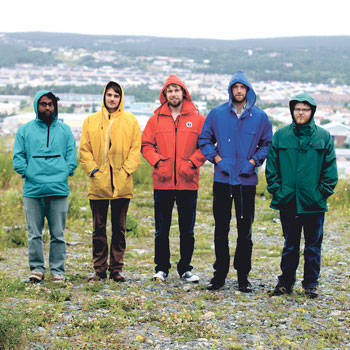
“We were never really going to be a band that anyone knew about really,” says Tim Baker, of Newfoundland band Hey Rosetta!, who is taking part in a Polaris Lounge on Aug. 9 at the Drake Hotel in Toronto. “Like most bands in Newfoundland, we had music and wanted to get something out.”

From humble beginnings and on the strength of a flair for dramatic songwriting and soaring musicality, Hey Rosetta! has garnered significant acclaim both in Canada and internationally. The band’s latest album, Seeds, has landed on the Polaris Prize shortlist along with bands such as Arcade Fire and Ron Sexsmith. During the Polaris Lounge, Baker will be interviewed live onstage while the album is played in its entirety.

The awarding of the Polaris, modelled after the Mercury Prize in Britain, is quickly becoming a major event in Canadian music. It, along with the $30,000 cheque, is awarded to the best album to be released in a given year — no genre or label restrictions. The beauty being that, like this year, Neil Young’s new album, Le Noise, could be found on the nomination list alongside more obscure artists such as Dirty Beaches.

“That’s great. It’s a beautiful thing, the Polaris, you know,” says Baker, whose previous album, Into Your Lungs, was also shortlisted. “It’s a great institution in Canada and for Canadian music, and internationally people take note of it quite a bit.”

Following a few festival dates this summer, the band embarks on a month-long tour of Australia this fall and a major cross-Canada tour in November, including a stop in Toronto on Nov. 24. For more information, go to www.heyrosetta.com.

Like father, like daughter
Musician Ariana Gillis likes to have a good time playing music whether it is donning a mask and snorkel to play her popular tune “Blueberry Ocean” or having a good laugh with the crowd while stomping out another joyful song. Given her current trajectory, it won’t be long before she brings her unique and utterly charming blend of folk-rock to larger stages and crowds. Gillis plays Hugh’s Room in Toronto for a private show this month, followed by a concert in September (www.hughsroom.com).

“I love playing, and I look forward to it every night,” says Gillis, 20, on the phone from her home in pastoral Vineland, smack dab in the middle of Niagara wine country. “The night before a show, all I can think about is getting onstage and playing. It is just such a release for me.” Gillis has been playing music almost as long as she’s been reciting her ABCs, taking her first singing lesson when she was six years old, followed by years at the Royal Conservatory, playing piano and finally picking up a guitar when she was 12. Having musician David Gillis as a father might have something to do with it.

“There was music all around me when I was growing up, so it was natural for me to fall into it,” Gillis explains. “There were guitars everywhere around the house, so we’d just pick them up and play whenever.”

Gillis released her debut album, To Make It Make Sense, in 2009.