

Home Blog Page 957

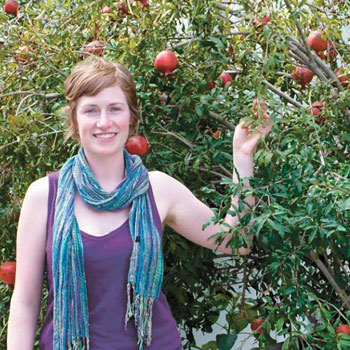
Harvesting the city’s hidden treasures

0

FRUIT ISN’T THE only sweet treat that can be havested from the tree, according to a creative group of green-minded residents.
More than 10,000 pounds of edible bounty later, the locals behind Not Far From the Tree are looking at branching out into maple syrup, says founder Laura Reinsborough.

The local resident’s original concept for Not Far From the Tree was simple: beginning in July, teams of volunteers would harvest trees on behalf of interested homeowners, and then the fruits of their labour would be divvied up three ways. A third would be offered to homeowners, a third would go to volunteers, and at least a third would be donated to community organizations that run food programs.
Her mission was to round up fruit around the neighbourhood that would otherwise go to waste.
 

We’d Tap That is a pilot project that recently had volunteers tapping area maple trees for their sap. They then boiled down the sap and held the Sugaring Off Party, where the public was free to come and sample the syrup.
The future and shape of the new initiative has yet to be determined though, says Reinsborough.
At the moment, Not Far From the Tree operates as a project of a non-profit called The Catalyst Cente. However, she says they’re looking at registering it as an independent non-profit later this year.
 

From a hobby to a volunteer activity to a paying position, Reinsborough’s current role as project coordinator has become a full-time job. Not Far From the Tree also employs a small staff — one person to oversee each neighbourhood — when it comes time to harvest fruit.
For Reinsborough, the biggest reward has been the bond she has formed with her neighbourhood.
 

“It’s a real community-building project because people are working across fences and across different barriers that would otherwise separate us,” she says.
 

When Reinsborough started the program, she says she worried that there might not be enough fruit in the area for it to make sense.
But in Not Far From the Tree’s first year, more than 3,000 pounds of fruit was collected by its 150 volunteers.
Based on this experience, Reinsborough estimates that there are around 1.5 million pounds of fruit — from apples to cherries to pears — across the city of Toronto.
 

“There’s really an abundance of fruit here,” she says.
Some of the trees are left over from old orchards, as in the case of Reinsborough’s neighbourhood. Some came with waves of immigration, such as apricot trees, which have cultural links to Italian and Portuguese communities, she says. Others were simply planted for ornamental purposes.
 

In 2009, with almost triple the number of volunteers, they rounded up more than 8,000 pounds of food.
With a focus on food security, Reinsborough says donating at least one third of the food that is collected to social service agencies, including NaMeRes and Humewood House, is an important aspect of the program.
Not Far From The Tree also does its part to address the challenges of climate change by reducing how far food must travel to the kitchen table and by delivering fruit by foot or by bike.
 

Another goal of Reinsborough’s has been to raise awareness by showing people a different side of their city. “It changes our perception of the soil underneath our feet and of its potential to grow beautiful things,” she says.
In the beginning, Reinsborough comments, people would question whether or not fruit grown in Toronto was safe to eat.
She sees it as a mark of success that people have largely stopped asking this. The fruit is local, organic and edible, she says, not to mention delicious.
 

“People have come to see that the city can be a really healthy place,” says Reinsborough.
She still recalls the first fruit she ever ate fresh off the tree – the Baldwin apple, a heritage variety found at the Spadina Museum.
It had a sweetness to it she had never tasted before, she says. “It’s a pretty neat thing to bite into the history of Toronto that way.”

Save area school for students’ sake says local trustee

0

A recent protest at Bathurst Heights Secondary School highlights one Toronto trustee’s desire to save the school from demolition through purchase by the Catholic school board.

“Fourteen hundred kids in the community aren’t getting a proper facility when a facility is sitting there and exists,” said Rob Davis, Toronto Catholic District School Board trustee and city council hopeful. Since the closure of the Lawrence Avenue West school in 2001 due to declining enrolment, the building has been rented to house adult ESL programs and the North York Harvest Food Bank, as well as 400 Grade 9 students from nearby Dante Alighieri Academy.

The building is one of four locations currently being used by Dante Alighieri Academy to accommodate educational programming for its students. According to Davis, the dispersal of students is unacceptable. “Today, we have 1,400 students who are only a kilometre away at Dante Alighieri crammed in like sardines,” Davis said.

Under the proposed 138-hectare revitalization plan of Lawrence Heights, which extends from Bathurst Street to Dufferin Street and from Lawrence Street to Highway 401, Davis said the school would be razed to make way for condominiums and a new school. While he is sympathetic to other groups using the Bathurst Heights building, Davis said that other suitable locations exist in the area for them to operate from. “The school is built to be a high school, not a food bank,” he said. “There’s only one school that has the capacity for 1,300 students, and that’s Bathurst Heights.”

Ski hill’s future sits on slippery slope

0

The future of North York’s Earl Bales ski hill will be determined with the approval of the 2010 operating budget later this month. The city is considering a proposal to rent or lease the Earl Bales and Centennial Park ski hills, as well as the Glen Rouge Campground to third parties.

The city would save $700,000 in what a staff proposal called, “the best possible option” for the future operation of the facilities. The city’s five golf courses are currently run in the same way by third parties. City councillor and budget committee member Joe Mihevc said the current day pass price of $25 would likely not last under third party operation.

“The long and short of it [is] that the operator would basically have to increase the fees,” he said. An increase in user fees could have a serious impact on those that use the facility. “The families that we are dealing with are sort of modest means, so they can’t afford to go belong to private clubs up north,” said Clive Kessel, president of the North York Alpine Racing Club, which trains at Earl Bales.

For the last 10 years, Kessel has led the program for skiers ages six to 19 previously run by the city. “Essentially, we break even,” Kessel said. “So any increase in cost would be cost we would have to pass on. And we don’t know whether there’s much room to pass on much more cost.” Kessel said he is concerned about the future of the hill if the city is unable to find someone to take over operations. He pointed to Chedoke Winter Park in Hamilton, which was shut down by the city several years ago, forcing the local racing program to find a new home.

The facility and the program he offers are important to the Toronto area, Kessel said. “This is an opportunity for regular people and kids and their families to participate in alpine skiing. It’s an amazing facility, given where it is.”

Forest Hill filmmaker options bestseller

0

THE GROUNDBREAKING NOVEL The Book of Negroes is heading to the big screen after Toronto filmmaker Clement Virgo optioned the film rights.
 

“It speaks to the black diasporic experience,” said Virgo, who grew up in the Eglinton West area of the city and attended West Prep in Forest Hill.
The book, set in the 18th century, follows a girl named Aminata Diallo, taken from West Africa to live as a slave in South Carolina. Hill, who grew up in Don Mills, won the Commonwealth Writers’ Prize for Best Book and the Rogers Writers’ Trust Fiction Prize for the book.
 

Hailing from Jamaica, Virgo explained that being born in a British colonial society helped him identify with the main character because his own ancestors were taken from Africa to be slaves. Virgo’s latest film is Poor Boy’s Game, starring Danny Glover. He also works in television, most recently as a director on the NBC/CTV series The Listener. He said he wants to film The Book of Negroes in Nova Scotia and the U.K.
 

The film will be produced by Virgo and Damon D’Oliveira, his partner in the production company Conquering Lion Pictures.

Wayne Gretzky adds his mighty moniker to winery

0

IF WAYNE GRETZKY, Mike Weir and Dan Aykroyd walked into a wine bar, what would they order?

This is not the opening line of a joke. All three Canadian icons have their own wine label. Golfer Mike Weir was first in the field.

Mike Weir’s grandparents emigrated from Italy and settled in Niagara Falls, and like many Italian immigrants they made their own wines. The first wine Mike ever drank was a homemade wine at his grandfather’s table.

“I think he cut it with ginger ale,” says Mike. “The grapes came from Niagara even if they were a little rough back then.”

The Mike Weir wines are made at Château des Charmes.

The wine epiphany for Dan Aykroyd occurred in an L.A. nightclub in the 1980s. The erstwhile Blues Brother, Ghostbuster and Conehead was the opening act for Steve Martin.

That night his band’s guitarist Steve Cropper opened a bottle of wine for him. “It was a big Napa Valley Cabernet Sauvignon,” Dan recalls, although he doesn’t remember the winery or the vintage. “I changed my whole perception of what I wanted to taste for the rest of my life.”

Until that Proustian moment, he confesses that a big night out in his hometown Ottawa was a bottle of Mateus Rosé.

In 2005, Dan Aykroyd acquired the Canadian rights for the ultrapremium tequila Patrón.

The Canadian importing agent for this brand is Toronto-based Diamond Estates,a company that controls five wineries in the Niagara region — EastDell Estates, Lakeview Cellars, Birchwood Estate, 20 Bees and De Sousa. Dan sunk $1 million into Diamond Estates.

Given his international celebrity status, it was perhaps a no-brainer that Dan Aykroyd should have his name on the label. In addition to his VQA Ontario wines, Dan also has bottlings of a Sonoma Chardonnay and Cabernet Sauvignon.

The first wine Wayne Gretzky ever tasted was a red made by his Russian grandfather in the 1960s when “the Great One” was growing up on a farm in Brantford, Ont.

Wine is not a beverage you would associate with hockey, but now that Wayne Gretzky is coaching behind the bench, rather than scoring on the ice, he can allow himself that indulgence. “Janet and I have, for many years, wanted to fulfill a dream of launching a winery that makes world-class wines,” he says.

Wayne’s wines are made by Creekside Estate winemakers Rob Power and Craig Macdonald at the former Willow Heights Winery, now Wayne Gretzky Estate.

While none of the three celebrity winery guys actually get their feet in the vat, they do select the final blends that end up in the bottle.

According to Mike Weir: “I have been fortunate to have been involved in every aspect of the wines.… I actually do the blending on the Cabernet Shiraz with the winemakers, although I wish that I had much more time to dedicate to that part of the process.”

Both Mike Weir and Wayne Gretzky donate proceeds to their own foundations.

And to go back to that question that opened this column: they would probably do the gentlemanly thing and order a glass of Bob Izumi’s Coyote’s Run Chardonnay — because that TV fisherman also has his own wines.


Communication with the Facebook generation

0

Kids spend more time in front of screens than doing almost anything else.

Research tells us that very young kids’ screen time increases the incidence of ADHD. Common sense says life is not meant to be lived onscreen.

Our world is rich with pity parties of parents bemoaning how much time their kids spend texting, on Facebook, playing computer games and not relating. So quit whining and do something about it. Or look in the mirror and say something honest to yourself, like: “My kid(s) spend more hours in front of a screen than they do relating to their peers or doing actual activities, and I’ve accepted that’s how it’s going to be.”

If you prefer choice # 1, start by looking in that mirror again. You can talk to kids all day about how they should live their lives, but a) they won’t listen, and b) they’ll live the way you do, regardless of what you say to them.

Do you look at emails or surf the net during family time? Answer your cell when the kids are around? Watch lots of TV? Monkey see, monkey do. As we say to counselors at camp: “They know what we show.”

Do you have boundaries around your own screen time? If you’re onscreen 24/7, it’s time to get real and know that’s what you show. Perhaps your kids have mentioned that. How would you survive if you restricted yourself screen-wise, if you created personal boundaries about when you check email, when you answer your cell, when you surf the net, when you watch TV?

It would be like going on a diet: You set up a situation of deprivation in order to get something you want. Same deal with screen reduction: You give up a habit in order to get something you want, which is being a better role model for your kids. Are your kids important enough to do that?

Having adjusted your own habits, step two is checking out what we offer our kids instead of screen time?

Do an inventory for a week. Add up the uninterrupted time your family spent together. Change it if need be. Do stuff together. By together, I don’t mean driving the kids to a program. I mean doing something together.

Remember family dinner? The centre of my household is the kitchen and dining area.

Because we’re “foodies,” we do a lot of cooking together with our kids, and family dinner follows naturally. But the cooking doesn’t matter — it’s just a way to spend time together. A family could sit down to something ordered in or defrosted and still experience connection and communication. The dinner table is the hub of a household because it’s where a family connects with each other — screen-free.    

If one of my kids whips out a cell to text during dinner, I say: “Put it away, this is family time.”That’s the third leg of the stool: Requiring screen-free time. Notice that I put it after 1) role modeling and 2) creating family time. This third strategy will not work if you don’t do it after the first two are in place. Do it first and it will be read (accurately) by your kids as authoritarian, unfair and unrealistic.

Trying to limit screen time only through rules is a guaranteed road to fights and failure.
The connecting that occurs in real family time matters because kids find out who they are by seeing themselves reflected in other people’s eyes, in relation to others.

You can Twitter, text, Facebook and call, but why is it that when kids are together they’re on their phones? They’re not connecting.
The screen is empty calories. Connecting used to come naturally to kids, pre-computers, when they rode bikes around the block and hung out with neighbourhood kids. The social skills that used to be “invisible” include keeping friendships working, how to manage small conflicts with your friends and stay friends, how to integrate new kids into the group.

Every time you decide whether (or not) to leave your BlackBerry off during family time, think about that.

Brain over brawn is the key to survival

0

Many people say George Wald was the greatest lecturer in Harvard’s history. He was certainly the best I’ve heard. Dr. Wald won a Nobel Prize in 1967 for his work on the biochemical basis of colour vision. He and I became friends in the 1970s because we shared a common concern about the misapplication of science, especially during the war in Vietnam. Dr. Wald once captivated me with a story he told:

For close to 150 million years, dinosaurs dominated the planet, and they were impressive. They were huge animals, armed with weapons like spikes on their tails, giant claws, and razor-sharp teeth. They were covered with armour plates. They seemed invincible, and when they roamed the Earth, other creatures fled in terror. But they had a fatal flaw: a tiny brain in relation to their body size. Despite their impressive traits, they disappeared – victims, in part, of their low brain-to-brawn ratio.

About 64 million years after the dinosaurs went extinct, a beautiful animal appeared on the plains of Africa. This animal stood upright and walked on two legs, and its skin was free of fur. Unlike the plentiful wildebeest, this animal was rare. It wasn’t as big as a hippo. It wasn’t even as fast as an elephant. It wasn’t as strong as a chimpanzee, and it couldn’t see like an eagle, smell like a dog, or hear like a gazelle.

But those first beautiful humans were endowed with the highest brain-to-brawn ratio ever achieved, and in only 150,000 years, they had spread to every continent on Earth. Humans eventually outnumbered other mammals on the planet. Their high brain-to-brawn ratio served them well as they learned to domesticate plants and animals, and to live in environments as varied as Arctic tundra, deserts, coral atolls, mountain slopes, wetlands, and forests of every kind.

But then they invented guns and cannons and their brain-to-brawn ratio fell. They got into cars, tanks, and planes, and dropped napalm and nuclear bombs. And with each innovation, the brain-to-brawn ratio sank toward that of the dinosaurs.

I love Dr. Wald’s story because it encapsulates much of our dilemma. The human brain was the critical factor that more than compensated for our lack of physical and sensory abilities. We had a vast memory, we were observant and curious, and we were creative. In the past, our innovations such as the needle, bow and arrow, and pottery had huge repercussions but took centuries to evolve into the culture.

Agriculture was the big shift that released us from being nomadic hunter-gatherers to farmers and village dwellers. Then the Industrial Revolution heralded a massive change. In only two centuries, people were able to harness the cheap, portable energy of fossil fuels to create machines of incredible power. In the movie Avatar, the giant robots have no heads, a symbol of what we have become as a species. We have acquired vast technological power but far too little of the brainpower or wisdom needed to use that power well.

Consider this simple example. When New Zealand fishers discovered a fish called orange roughy in deep-sea waters, they thought they had hit a bonanza. Technology to fish the deep sea – radar, sonar, GPS, freezers, giant nets – enabled them to exploit the abundant fish in massive numbers. Despite the fact that these were a new target species about which virtually nothing was known, the animals were taken in vast quantities. It’s called “harvesting” but it was really a “mining” operation. Only years later did we learn these fish live more than a hundred years and grow and mature far more slowly than inshore species.

When was the last time you ate orange roughy? They have been nearly wiped out all around the globe because our technology was too powerful in relation to our knowledge. We didn’t consider our limitations, which should have caused us to be far more cautious and conservative. The technology meant that brain-to-brawn sank toward a level closer to that of the dinosaurs.

Technology can provide great benefits, but unless we learn to use our heads in applying our technologies, we will also go the way of the dinosaurs.

Where the wild things are – but for how long?

0

AFTER THE MASSIVE international spotlight on Vancouver during the 2010 Olympics, many people will remember Canada for the accomplishments of our winter athletes. But just as many will remember us for something that has always defined our nation: our spectacular natural environment.

In much of Canada, you can still find all of the charismatic megafauna that were present at the time of European settlement, including grizzly bears, cougars, wolves and wolverines.

British Columbia is home to as many as half of Canada’s grizzly bears and is one of the Earth’s last safe havens for these great animals. In other parts of the world, including Western Europe, Mexico and the continental U.S., grizzlies and other bears have been driven to extinction or are on the verge of disappearing.

Despite their importance in nature and their vulnerability to human impacts, grizzlies remain unprotected in Canada. Some provinces, such as British Columbia, allow hunters to kill this threatened animal for sport.

The trophy-hunting season for grizzlies and other bears in B.C. will open in a few weeks.

The extent to which trophy hunters are killing grizzlies in B.C. was not fully known until now.The David Suzuki Foundation recently acquired and analyzed thousands of kill records collected by the government. We found that close to 10,000 grizzlies have been legally hunted in B.C. since the late 1970s.

Our research also shows that hunters are turning many of B.C.’s parks and protected areas into graveyards for bears that are legally slaughtered.We’ve identified more than 60 provincial parks where grizzly bears are hunted for sport. British Columbia has taken steps to protect grizzly habitat by banning some resource activity like logging and mining in protected areas, but these measures are nearly useless without laws that prohibit people from killing bears.

Ironically, the strongest protection for grizzly bears exists outside of Canada, in places like Mexico where they are no longer found. We must tell our government leaders that this is not acceptable. Canada’s wildlife is worth much more than an Olympic mascot or a marketing brand to sell to tourists — or a trophy on someone’s wall.


Huge festival slated for Downsview this July

0

A two-day music and arts festival slated for Downsview Park this July could bring up to one million attendees and generate $200 million annually for Toronto tourism, according to its organizers.

The Imagine Music Festival, scheduled for July 10 to 11, will feature three main stages, along with an arts and crafts village and an indoor expo featuring green exhibits and conferences. The event, three years in the making, is a joint venture between Woodstock ’69 co-creator Artie Kornfeld and Montreal artist David Kam set to coincide with the G-20 meeting in Toronto in late June.

“This event is going to mean so much more than the acts,” Kornfeld said. “This is about giving the children a future.” “This is the largest event in the 40 years after Woodstock,” Kam added.

He said the success of World Youth Day and “SARSstock,” along with transit accessibility and proximity to both the airport and downtown makes Downsview Park the perfect venue for the event. “I think that Downsview Park is going to be a mecca where people come to say, ‘This is the one that helped turn the tide,’” Kornfeld said. Information on tickets prices and participating acts is expected soon.

Four arrested in Richmond Hill banquet stabbings

0

Two young offenders, one from Richmond Hill, along with a 20-year-old Richmond Hill man were recently arrested in connection with a stabbing at a Richmond Hill banquet hall in February. On Friday, Feb. 12, at approximately 11 p.m., a fight broke out at Elegance Banquet Hall located at 10 Newkirk Rd. During the altercation, one of the suspects pointed a firearm at a victim, making threats that he would kill him.

In an ensuing fight, three victims were stabbed. The three suspects then fled the scene in an unknown direction. An 18-year-old man, a 21-year-old man and a 16-year-old male youth were transported to a local hospital where they were treated for life-threatening injuries. The fourth victim, a 21-year-old man, was treated and released.

On March 4, at approximately 6 a.m., York Region Police investigators working out of the York Regional #2 District Criminal Investigation Bureau executed search warrants at two residences, one in Richmond Hill and one in Toronto. As a result of the warrants, three individuals were arrested and a quantity of clothing and weapons related to the stabbings were seized.

Following the arrest of the three suspects, a woman was brought into the #2 District Headquarters, after allegedly attempting to engage other individuals in providing a false alibi for the accused. The woman was subsequently arrested and charged with attempting to obstruct the investigation. The three arrested males face a number of charges including attempted murder, assault with a weapon, carrying a concealed weapon and threatening death.

Director a cut above

0

“You don’t watch a lot of TV do you?” I ask doctor, black belt, stunt double, recently turned film director and mother of four Dr. Sandra Feldman.

“No,” she replies, “I’ve never had cable.”

Dr. Sandra Feldman’s motto is “I don’t know what I can’t do,” and she takes those words seriously. 

She started putting that idea to work in the early ’80s while studying to be a doctor at the University of Western Ontario. It was there that she met her husband and decided to get a little exercise between classes. In true overachiever fashion, she went on to become a sixth degree black belt.

By the early ’90s, Feldman was busy setting up her medical practice and starting a family.  The first of her four kids was born in 1987, and the other three quickly followed. 

“A lot of people ask me when is a good time to have kids. Well, you just do. A time doesn’t magically open up.”

Somehow in the midst of motherhood, she became aware of Kung Fu, a TV series that was shooting in Toronto.

“There was a Kung Fu series in the ’70s that started my interest in martial arts, and so when that came to shoot, I thought I’d like to be on the show to do some stunts.”

She had no TV experience, no industry contacts but put her motto to use once again and just started making phone calls.  The next thing she knew, she had an active sideline job doing stunt work in films and television.

“I was in a lot of shows that came to Toronto. Most people did not know I was a doctor doing stunts. I kept them separate. It was  fun!”

While this independent superwoman might seem ready to take on anything solo, she happily cites her son as the driving force behind her latest endeavour.

“One day I was watching my son in a play and thought, ‘I’d like to do something like this.’ It was one of those moments, he inspired me.”
That same night, Feldman went home, sat down in from of the computer and began to create the script that would eventually turn into a feature-length film, premiering this month at the ReelWorld Film Festival.

“I’d never had time to write anything before, with four kids. I didn’t even have a computer! I had to go use the kids’ computer!”

The story that came out, entitled A Touch of Grey, tells of four high school friends who are reunited, after 25 years, for one night.

Naturally, Feldman has already set her sights on her next project — a screenplay based on some of the situations she sees  in her practice.

As for any feelings of inadequacy I might have experienced while sitting across from such a powerhouse, well, I choose to be inspired by all that she does. And while I don’t have a sixth degree black belt and probably never will, I do know who shot J.R

Residents face off on driving range disagreement

0

A proposed golf centre development pitting Thornhill residents against one another recently became threatening, according to one local woman. “I had a terrible experience,” said area resident Marlene Gallyot of a recent encounter.

According to Gallyot, who has petitioned in favour of the facility, she was recently “charged,” “threatened” and photographed while on her street by area residents opposed to the planned development. “He said, ‘I know where you live, and I know who you’re working for,’” Gallyot described.

“And I said, ‘What has that got to do with me having a voice as much as you do?’” The proposal, submitted by Within Range Golf Centres Inc., seeks to build an outdoor driving range with chipping and putting areas, a clubhouse with patio and a miniature golf course on leased land at 8111 Leslie St. The property, currently a vacant hydro corridor, owned by the Ontario Realty Corporation, backs onto a residential community on Summerdale Drive.

Joel Starkman, president of the Summerdale Ratepayers Association, said his group’s residents are concerned about the impact the development will have on the neighbourhood. “It’s going to be like a gun being shot every so many seconds,” Starkman said of the expected noise. Facility lighting, increased traffic and a planned three-metre-high berm, to separate the facility from residential properties, are also concerns for the group. A petition with signatures against the development has been collected.

“Anyone backing on to that, you’ve got no vision across the field,” Starkman said, adding that the development would diminish property values. Gallyot has a different view. “A lot of people, even who live on that hydro corridor line, are wanting [the development],” she said. “It’s just a hydro corridor line. It’s not like the Everglades, or something like that.” Gallyot said she had collected more than 90 signatures on her petition.