Home Blog Page 888

Ruling to protect ravine is too little too late, say locals

0

A recent North York Community Council ruling prevents a Dawlish Avenue resident from building a driveway through a ravine that Lawrence Park locals want protected. The decision, however, cannot reverse a 15-foot retaining wall the owner built last year in anticipation of the driveway. “The fact that he built first, asked later — he took down many trees, unnecessarily,” said Anne McNeilly, a Dawlish Avenue resident.

“It’s just a big wall in the middle of the ravine doing nothing. There’s no purpose for it.” Neighbours said they contacted the city, when owner Payam Khazanbaik started constructing the wall leading from his property into the ravine behind Dawlish Avenue, but were given little information as to whether construction had been approved, said McNeilly.

The original site plan was drafted in 2006 when the lot was created as a result of an Ontario Municipal Board ruling that allowed for a property severance.

According to the plan and a second revised version from 2008 the two lots were to share a driveway that would connect to the road closest to the houses.

Community council refused the driveway because it owns a small strip of land abutting the road on the other side of the ravine.

The decision follows a municipal bylaw established in 1986, which prevents a road from running through the Dawlish ravine.

Khazanbaik built the retaining wall on his own property. To continue building the retaining wall and to attach the driveway to that road, Khazanbaik needed permission from the city. As for the retaining wall, John Dunn, manager from Toronto’s building division, said Khazanbaik did have a building permit for the entire site that allowed for its construction. Dunn said that is all that is needed and the process was followed correctly.

Dawlish locals hired a lawyer to dispute this. According to McNeilly, it can be argued that the Ontario Building Code classifies a retaining wall as a building structure, meaning a permit is needed. A complaint has been lodged with the city’s ombudsman.

Khazanbaik preferred not to comment on the wall but said he has agreed to follow through with what community council ruled. “I’m just happy it’s over,” he said.

Loss of a local heritage development visionary

0

Last month, the life of one of the area’s most respected real estate developers ended after a small plane he was travelling in crashed en route to Quebec City. Local resident Paul Oberman was the CEO of heritage development company Woodcliffe Properties, and many say he set the standard when it came to revitalizing and preserving Toronto’s old buildings.

“There’s probably a number of developers around the city scratching their heads, wondering what was his secret,” said Peter Ortved, chair of Heritage Toronto. On a local level, Oberman was the driving force behind the old North Toronto railway station, now the Summerhill LCBO store. He also recently transformed the shops at Scrivener Square, a series of Midtown buildings on Yonge Street dating back to the 1890s better known as the Five Thieves. He was also responsible for preserving one of this city’s most well-known, unique and wedged-in heritage buildings: the Gooderham Building (commonly known as the Flatiron Building) at Church Street and Wellington Street East.

“It really came from a very deep passion Paul had for this kind of work,” said Ortved. “We couldn’t have asked for a better role model.”

Will Leaside big boxes affect Bayview & York Mills retail?

0

Last month Toronto City Council approved a proposal to transform an historic CNR locomotive shop in Leaside’s industrial park into a large shopping development, and some worry it means the loss of what little land is left in the city for manufacturers — and the high-paying jobs that come with them — and it threatens local, main-street retailers.

But some small business owners embrace the idea. Ingrid Laederach Steven, owner of Swiss-Master Chocolatier, near Bayview Avenue and York Mills Road, says she has no concerns about potential big box stores.

“Competition is the best way of keeping us on our toes,” she said. “I am a full advocate of entrepreneurship. It’s what keeps this country going.”

Nathan Ricci, owner of Ricci Fine Jewellery, also on Bayview Avenue, has a similar view. “I believe in business,” he said. “It brings traffic.”

Others question the positive impact of the plan.

“This is a huge site that we are now losing to big box retail,” said Coun. Janet Davis during a March 8 council meeting, emphasizing that the Laird Drive land helps drive the city’s economy and should be preserved for industrial use. Kendall Fullerton, a member of the Leaside Business Park Association, echoes Davis’s concerns.

Coun. John Parker said it was best to focus on making the retail site amenable to the community. The developer — First Capital — reduced the size of the proposed buildings from 180,000 square feet to 117,650 square feet. The CNR property will house a grocery store and a main street concept that will see eight buildings and parking designed to emulate retail strips on Bayview Avenue, for example.

As for the effects the new retail will have on small business, Coun. Parker said it’s negligible. “I have yet to see a connection between the decision to shop on Laird and the decision to shop on Bayview,” he said. “Different types of shops attract different types of shoppers.”

Deer Park locals in talks with TTC to expand Oriole Park

0

This month, Deer Park locals will meet with Toronto Transit Commission (TTC) staff to discuss dedicating two acres of the Davisville Subway Yard land, near the corner of Yonge and Davisville, to its neighbour — Oriole Park.

“I’ve been pleased to see the TTC hasn’t given initial objections,” said Coun. Josh Matlow. “They’ve been open to having this conversation.”

The TTC currently uses the Yonge Street and Chaplin Crescent site as a headquarters and to store subways cars. However, according to a study conducted in 2009, Davisville Subway Yard is not designed to store the new Rocket trains, which are replacing the current subway cars. There has also been discussions about moving TTC headquarters.

Currently the city is putting together the Davisville Yard Planning Study, in an attempt to draw up guidelines that will “shape potential development in the future.” According to the city’s Official Plan the yard is zoned ‘mixed-use’, meaning both commercial and residential developments are possible.

Ulli Rath from Friends of Oriole Park (FOP) said it makes sense to transfer a portion of the yard to the park, even if the yard is eventually sold to a developer. He said the park is always crowded and will be busier with the opening of a disability-friendly play structure this summer.

At 5.17 acres, Oriole Park is one of the city’s smallest community parks and the only one in the Deer Park area. “This is something that has support from the community,” said Rath.

FOP originally outlined their proposal at a TTC meeting back on Dec. 15. At a Feb. 2 meeting, TTC chair Karen Stintz said that the community group will meet with TTC staff. Matlow confirmed it would be in April, although the official date was not set at press time.

Matlow said there are several ways the added space could be used, including the creation of a vegetable garden in the park, a popular choice with Brentwood Towers residents. According to Rath, the extra land could be used for activities such as Tai Chi, and as a space for outdoor bake ovens. Matlow said, if the TTC ultimately agrees to partition land, the next step would be to work with the city’s parks and recreation department to plan and design the park expansion.

More retail coming to Laird industrial lands

0

Last month Toronto City Council approved a proposal to transform a historic CNR locomotive shop in Leaside’s industrial park into a large shopping development. However, some worry the approval means the loss of what little land is left in the city for manufacturers and the high-paying jobs that come with them.

“This is a huge site that we are now losing to big box retail,” said Coun. Janet Davis during a March 8 council meeting, emphasizing that the Laird Drive land helps drive the city’s economy and should be preserved for industrial use. Kendall Fullerton, a member of the Leaside Business Park Association, echoes Davis’s concerns and is worried that more employment land will continue to be lost.

In anticipation of this, the province passed a bill in 2006 to help preserve industrial areas. Bill 51 gives municipalities the power to block an appeal to the Ontario Municipal Board (OMB) for a rejected rezoning request. However, the Laird Drive retail proposal is for a site on the edge of the business park, where the manufacturers and industries are located. There is a clause in the city’s official plan that allows retail in these fringe areas when certain requirements are met.

Coun. John Parker said it was best to focus on making the retail site amenable to the community. The developer — First Capital — reduced the size of the proposed buildings from 180,000 square feet to 117,650 square feet. The CNR building will house a grocery store, and the developer also agreed to a main street concept that will see eight buildings and parking designed to emulate retail strips on Bayview Avenue, for example.

As for the effects the new retail will have on small business in Leaside, Coun. Parker said it’s negligible. “I have yet to see a connection between the decision to shop on Laird and the decision to shop on Bayview,” he said. “Different types of shops attract different types of shoppers.”

Soulpepper shines while Billy leaves critic hungry for more

0

Billy Elliot is obviously a crowd pleaser, and with good reason. But there is not much substance underneath all the sugary treats.

Currently playing at the Canon Theatre through July, the Mirvish production is based on a charming film of the same name, directed by the same man (Stephen Daldry) who directed the film, with book and lyrics by Lee Hall, who wrote the screenplay. And its music was written by Elton John, who also wrote the music for The Lion King.

I went to see Billy Elliot hoping and expecting to love it, and while I was certainly wowed by the choreography and several scenes, and often moved to tears (seeing a child trying to escape poverty through his gift of dance, and being sung to by his dead mother are pretty well irresistible), minutes after the standing ovation I felt a great letdown, as if I ate too much cotton candy and suffered from sugar shock.

The musical lacks a single memorable tune (at least Elton John’s Lion King score had “The Circle of Life”). In addition, the placing of one lad’s story against the backdrop of Maggie Thatcher’s destruction of the U.K.’s mining industry and the long, painful strike of 1984-1985, seemed sentimental and superficial.

Dear readers, I am no spoil-sport, and I have no desire to urge people not to see it. The young actor/dancer (one of four) who played the title character the night I saw it, Marcus Pei, was excellent, and his exhausting, emotional “Electricity” dance half-way through the second act is stunning. But as I walked out of the gorgeous Canon Theatre, a famous Nathan Cohen moment came to my memory.

It was when Cohen, Canada’s greatest theatre critic was once challenged by someone after he panned a wildly popular musical in the late 1960s. “Do you mean to say that the millions who loved Brigadoon are wrong and you are right?” Cohen smiled, murmured, “Yes,” and walked off. Billy Elliot is an undeniably entertaining evening of theatre, music and dance, but shortly thereafter, I was hungry for something more substantial.

For more information go to www.mirvish.com.

Soulpepper offers stunning Dream

While I approached Billy Elliot with hope and cheer, I was a bit concerned as I walked to my seat at Soulpepper’s theatre.

Soulpepper’s productions are usually superb, but can a solid actor such as Rick Roberts direct such a complex, poetic comedy as Shakespeare’s Midsummer Night’s Dream?

I left the theatre two hours later on a high and with a deepening respect for the company. The opening and closing scenes of actors playing eerie music on bells, accordion, violins and flute are haunting and powerful; the hundreds of difficult rhyming couplets of The Bard have rarely been handled and spoken so exquisitely and Gregory Prest’s crafty Puck and Oliver Dennis’s uproarious Bottom are unforgettable and near-perfection.

Many of Shakespeare’s most famous lines are in this great comedy, yet you may feel as if you are hearing them for the first time.

The post-dream acting of a death scene by the vulgar “mechanics” — as a celebration for all the weddings at the end — is the best, most wildly comical I have ever seen.

What an ideal way to introduce young students — and your preteens — to Shakespeare!

For more information go to www.soulpepper.ca.

Allan Gould is Post City’s theatre critic. Read more of his reviews online at www.postcity.com.

A Ray of sunshine

0

Sailing under the moonlight in the backwaters near Alleppey, strolling among tombs in the Lodi Gardens, busting moves with Bharata Natyam dancers at the Golden Temple — if you have been following Lisa Ray’s Twitter feed over the past few months, you certainly have a sense of the exotic lifestyle the Toronto actress is living these days.

Ray, known for her work in the Oscar-nominated Deepa Mehta film Water, has been adventuring in India for the past four months as part of a new travel series set to debut on The Learning Channel (TLC) this year.

The show explores the culture and beauty of various locales in India with Ray serving as host and tour guide.

“It’s wild, fun, colourful,” Ray says about the show. But while filming has been an adventure for Ray, she admits the pace of the shoot was exhausting. “It’s been a long haul,” she says. “I thought TV would be less work than a movie — but it turns out … NOT!”

Although Ray has strong ties to India — her father was born there, and it’s where she began her modelling and acting career — she says Canada feels like home. The 38-year-old Etobicoke native of Bengali and Polish descent left Toronto when she was 16. While travelling in India, Ray says she fell into acting.

“I call myself the accidental actress,” she says. “It was pure serendipity, which has moulded my life both professionally and personally.”

While she may not have predicted her career, decisions she’s made to hone her craft, including turning down commercial roles to enrol in acting school in London, England, have contributed to her success.

Since finding early fame in Bollywood, Ray starred in the courtroom thriller Kasoor (2001) and in Indo-Canadian director Deepa Mehta’s romantic comedy Bollywood/Hollywood (2002). The stunning actress has since taken on a string of provocative parts.

In 2005’s Water — nominated for an Academy Award for best foreign language film — Ray played a Hindu widow forced into prostitution in 1938 India.

Following this she took on the role of a housewife in 1950s apartheid South Africa in filmmaker Shamim Sarif’s historical drama The World Unseen.

She also acted in Sarif’s romance I Can’t Think Straight, playing a Jordanian woman about to marry who realizes she’s a lesbian.

“I’ve followed my heart,” Ray says. “I’ve never abided by commercial forces.”

Ray, who now has a home in the Beach neighbourhood, calls Toronto her “base camp.” “I love the neighbourhoods,” Ray says. “I love the food, the variety of life. I love my ’hood in particular — it’s got great people and great dog watching.”

The self-described nomad says putting down roots in the city has given her a sense of place. “Though I’m still re-acquainting myself,” she says, “Toronto is like an old high school boyfriend. I remember it when it was still a little awkward and insecure, but now the boy’s blossomed into a suaver, more mature version.”

The city is also where Ray was diagnosed with multiple myeloma, a rare, incurable cancer of the blood in June 2009.

While training to become a yoga teacher in India, Ray says she realized “something was wrong” and flew back to Toronto for testing. Her battle with the aggressive cancer became public soon after her treatment began.

“It was pure serendipity, which has moulded my life both professionally and personally.”

Ray — her angular face and petite figure swollen from her medication — was due to walk the red carpet at the Toronto International Film Festival to promote her film Cooking with Stella, in which she co-stars with Canadian actor and filmmaker Don McKellar.

“I had to make a choice,” Ray says. “Either to hide, as my appearance had drastically changed due to steroids, or to come clean.”

Ray used the opportunity to raise awareness about her cancer, which afflicts about 6,000 Canadians, the majority over the age of 70 when they are diagnosed (Ray was 37). She also created her widely read blog The Yellow Diaries, documenting her battle with the disease through witty, poetic entries.

Ray lays it all out: from enduring chemotherapy, to shaving her dark curls with an electric razor before losing her hair, to undergoing a stem cell transplant.

In one blog entry, Ray describes her “relief” at finally receiving her diagnosis. “I was tired of being tired all the time,” Ray wrote.

The Yellow Diaries also details her passion and drive to promote cancer education. “Only with an ever-expanding tool box of treatments and awareness can this cancer be beat. So I’m going to do everything I can to wrench the spotlight onto myeloma and cancer awareness.” Her hair back to their lush curls and her cancer now in remission, Ray says the blog has inspired her to continue writing.

“It kick-started my one true passion,” Ray says, adding she plans to write a book in the near future.

She also credits Moksha yoga, which she has practised diligently for four years, for giving her strength during her treatments.

Ray, who is co-opening a Moksha studio in the area, says the discipline, which involves a series of postures practised in a hot room, has helped her to heal. “I firmly believe it was my practice which supported me on my cancer journey,” Ray says.

The actress also received support from her family and friends, including Brett Wilson, formerly of CBC-TV’s Dragons’ Den.

“His [Wilson’s] philanthropic spirit and homegrown chutzpah are an inspiration,” Ray says about the Canadian entrepreneur.

The actress continues to be a motivational force in her own right. She has been named one of the national ambassadors of Plan Canada’s Because I Am a Girl campaign, an initiative that promotes empowerment for girls worldwide.

With so much going on, it seems the actress-writer–yoga buff has no intention of slowing down. But with a life already so fully lived, what does Ray want for the future?

“To be happy. To contribute. To write. To live in many different directions simultaneously.”

Rocker hits town on the heels of Grammy Award nomination

0

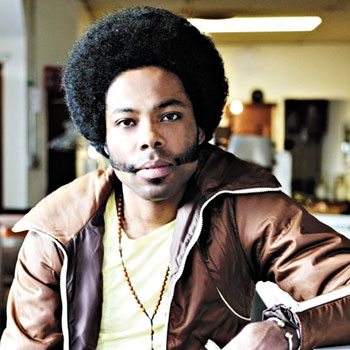
Alex Cuba was born into a musical family in Artemis, Cuba, just outside of Havana. He played percussion on TV as a child and remembers the feeling well. It’s the one he still gets just before he goes onstage.

Hot on the heels of a recent Grammy Award nomination for Best Latin Pop Album and with a growing legion of fans, Cuba is no longer a kid about to take his first performance steps. He’s a hot commodity around the world with a huge Next Big Thing sign stuck in his sizable, trademark Afro.

“The way I feel, this is my moment to shine,” says Cuba, on the phone from Las Vegas where he’s performing at the BMI Latin Awards. “It is what I’ve wished for.… And we did it ourselves. It is a very empowering situation.”

Cuba has released three solo albums through his own record label resulting in two Juno Awards for World Music Album of the Year: in 2006 for Humo De Tabaco, and 2008’s Agua Del Pozo. But it is Cuba’s latest self-titled release that has resulted in his growing international fame. When Cuba came to Canada, he was 24, and his dreams did not include pop superstardom. All he wanted to do was bring the bass.

“I came to Canada with my bass on my back, and my dream was to become some famous bass player,” he says. “Alanis Morissette, who knows? I just wanted to become somebody’s famous bass player.”

Cuba (real name Alexis Puentes) learned to play guitar when he was six, and switched to bass when he was 14 and started writing his own songs. When he was 17, he sent his dad some songs he had written, and the results tempered his musical dreams. “I wrote my first song, and my dad listened to the song I wrote,” says Cuba. “He said, ‘Oh, I love it. Try this word here and there, but don’t sing. You don’t have a voice. You’re a bass player.’” Ouch.

Things changed when Cuba moved to Canada to be with his wife, Sarah Goodacre, of Smithers, B.C., whom he met while travelling with his father’s band for a Cuban solidarity concert at Simon Fraser University.

Living in Victoria, B.C., at the time, Cuba applied, as a bass player, to be part of a workshop that was advertised at a local music store.

“It cost $85, and I think I had $90 in pocket, so I would run out of money for the week, but my wife says, ‘Ya, let’s do it.’” explains Cuba. “I got approved, you know. And the second day, during a break, I got relaxed or something, asked for a guitar, played for a second, and I started singing.”

The workshop leader heard and asked him to play guitar and sing at the workshop’s showcase concert the next evening.

“It was in a theatre in Victoria, and when I got up and started singing, the whole place stood up and started to cheer. They loved my voice, but I still wasn’t convinced.” Enter the father. After recording an album with his twin brother, Adonis, on which he sang two songs, he sent it back to his father. “He always told me I wasn’t a singer, but one song I’m singing made him cry. He couldn’t listen for about three weeks.”

Convinced of his new path, Cuba didn’t look back. Being squirrelled away in a far-flung corner of B.C. 14 hours away from the nearest major city has afforded Cuba the opportunity to forge his own identity as an artist.

Cuba’s music is a unique cultural hodgepodge of influences, thanks, at least in part, to his leaving the Latin music scene behind and adding a variety of genres to the mix. The eclectic fusion combined with Cuba’s soulful voice make for a moving combination. Add in an Afro that defies description, and it appears to be a recipe for success.

Cuba appears at the Glenn Gould Studio on April 9. For info, go to www.masseyhall.com.

Steady Second City show has one shocker of an ending

0

I remember going to Second City decades ago, when it first opened, and watching Dan Ackroyd, John Candy and Joe Flaherty do their groundbreaking work. I couldn’t afford the cover back then, so I’d show up for their improv set after the show. For free. I miss the ’70s!

Second City’s 67th revue, This Party’s a Riot, recently opened, and I went to opening night. You could feel a pressure in the room. The previous show was a critical and financial smash, and everyone was waiting to see if the new show would measure up.

The good news is that I found the new show one of the most consistent in recent memory. Every sketch had a good reason to be included, but gone were the flashes of brilliance found in the last show.

The cast was the same except for newcomer Carly Heffernan. But she’s the same comedic type as four-time vet Dale Boyer, which I thought limited the show’s scope.

Boyer, who is in almost every scene, is the glue that holds the show together. But like the show itself, she’s consistently good but missing the “crazy.”

Those wild flashes of brilliance come from Inessa Frantowski. I never knew what she would do next, and she was often involved in my favourite moments of the show.

Kris Siddiqi has a lot of talent, as evidenced by earlier shows, but he’s underused here. Rob Baker has some very good moments as the greying elder statesman of the bunch. Adam Cawley, who I enjoy, seemed to perform every character at the same over-caffeinated pitch. There’s a point at which his manic energy is too much.

As usual, the title provides no clue and no obvious theme, except for the opening, which takes place at a dance club and the night after. I found it trite and dated, the only sketch in the show I didn’t like. But the show immediately recovers with a painfully honest duo of wedding speeches by bride and groom.

Then there’s a funny/touching two-hander between a boomer father and his generation X son, which ratchets up the irony as granddad shows up to reminisce.

A sketch about people in the Middle East whose rebellion keeps getting interrupted by the arrival of the Internet and other technologies is a winner, both funny and provocative. I also liked a piece about hoarding in which the actors go into the audience and talk about audience members as if they were antiques and bric-a-brac. Very funny, especially when CBC’s Jian Ghomeshi was dismissed as a “piece of crap.”

Relationships and family dynamics have always been a mainstay of Second City revues, and this one is no exception with a wonderfully convoluted sketch of a family confrontation between a son, his mother and stepdad.

I wouldn’t want to have missed Frantowski’s bizarre turn as an unhappy office worker, nor the sketch about a nurse and man in a coma, in which we hear his thoughts in voice-over as she natters on. But some sketches play at a lower level.

Usually, the cast ends its shows with a musical number, but not this time. Instead, there’s an improv piece that feels laboured and unfocused until the final punchline that I guarantee will leave you gasping with shock and delight.

Definitely a show worth seeing, but don’t reveal the ending of the last sketch, or I will have to hunt you down. As I say, it’s a shocker!

Post City Magazines’ humour columnist, Mark Breslin, is the founder of Yuk Yuk’s comedy clubs and the author of several books, including Control Freaked.

Which side is winning The GTA’s war on cars?

0

We humans like our wars. We have a war on drugs, a war on terror, a war on crime, and now it seems, a war on cars. The latter “war” has entered the political vocabulary in Toronto, where the city’s mayor is driving the agenda in the opposite direction, and in Vancouver where city council has been trying to reduce reliance on private automobiles.

It’s not really much of a war, though. If anything, it’s just a bit of catch-up to create better public spaces and to allow more sensible forms of transportation some room in our car-dominated cities. Let’s take a look at some of the casualties.

In Toronto, the term became a rallying cry leading up to and during last year’s civic election. Numerous headlines in business-friendly newspapers raised the alarm about the city’s war on cars, with one newspaper even referring to it as a “nutty war on cars.” It was all because the city council of the day was spending money on public transit and bicycle and pedestrian infrastructure and, according to opponents, not enough “to make it easier for cars to move throughout the city.”

Rob Ford, who won the election to become Toronto’s mayor, campaigned on ending the war and, in his first speech after taking office, announced, “Ladies and gentlemen, the war on the car stops today.” He had already declared a new war “on the streetcar” and promised to rip up bike lanes. Part of Mayor Ford’s battle includes ending the city’s Transit City plan, even though the city has already spent $137 million on it and committed to another $1.3 billion in contracts. The plan, seven years in the making, had also received funding commitments from the provincial and federal governments.

If there is or has been a war on cars, the cars are winning. Cars — often with a single occupant — still rule our cities and roadways, and they’re still relatively inexpensive to operate. Despite minor reductions in parking to make way for bike and pedestrian infrastructure, most North American cities still devote way more valuable land to parking spaces than necessary. In the U.S., there are eight parking spaces for every car. We also devote an incredible amount of real estate to our ever-expanding road systems, often at the expense of public spaces.

As for casualties, 32 per cent of the 44,192 accidental deaths in Canada between 2000 and 2004 were from motor-vehicle accidents, 70 per cent in the 15 to 24 age group, according to Statistics Canada. Add to that the numerous injuries caused by vehicle accidents — often caused when cars come into contact with pedestrians and cyclists — and you get a pretty good idea of which side has the upper hand in this “war.” And, much of the health-damaging pollution and greenhouse gas emissions that contribute to dangerous climate change come from private automobiles.

So, if there were a war on cars, we would have to conclude that people are on the losing end. Of course, there is no war on cars. The only battle regarding cars is a propaganda war, and, as Guardian writer George Monbiot points out, it’s “about private interests trumping the public interest, about allowing people to pursue their desires, regardless of the cost to society.” Maybe it’s time we really did wage a war on cars.

Post City Magazines’ environmental columnist, David Suzuki, is the host of the CBC’s The Nature of Things. David is also the author of more than 30 books on ecology.

Road-tripping troubador

0

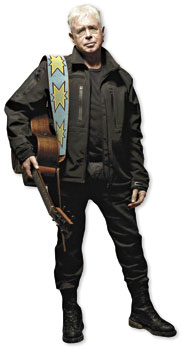
Bruce Cockburn has always been a free spirit, a traveller both near and far. But his music has never been so closely aligned with his wanderlust as it is on his stylish new album, Small Source of Comfort, the 31st in the catalog of one of the most influential and enduring singer-songwriters in Canadian music.

“I do a lot of highway driving, and the songs reflect that more on this album. I’ve been doing more in the last few years than I have been,” says Cockburn, on the road from California to his home in Kingston, Ont., to prep for a tour that brings him to Massey Hall this month. “I’ve always loved it. Any chance to get out on the road is welcome to me. A lot of imagery comes from that and shows up in the songs.”

One particularly moving travel experience was a trip Cockburn took to Kandahar, Afghanistan, in 2009.

“I’ve always been interested in playing for the troops, but it never came up for some reason,” says Cockburn, who performed the classic song “If I Had a Rocket Launcher,” among others, during the trip. “For some reason, no one had seen fit to send me.… My brother joined the army three years ago as a doctor. After a career in medicine, he decided to join, and he was sent to Kandahar for six months to work in the hospital over there. When I found out, I thought, ‘OK, this is my chance. This is a clear PR angle for the army.’”

And although it wasn’t easy, Cockburn was invited to join a Team Canada mission to the country along with rock band Finger Eleven and hockey great Guy Lafleur, among others. But the trip took on a sombre tone almost immediately when, upon landing at the base, the party was caught up in a ramp ceremony (for fallen soldiers).

“A C-130 came in with two young Canadians killed that day, and we became part of the ceremony honouring them,” Cockburn explains. “The coffins were taken off the plane by their buddies, peers and comrades, and we were standing right by the ramp. It was very moving, you know, and it sort of set the stage. And throughout the experience of the week that followed, which was all exciting and fun, I never forgot what it was really about.”

He wrote “Each One Lost” about the experience just days after landing as well as the intrumental “The Comets of Kandahar,” but Cockburn says the experience didn’t change his views on war.

“I regard war as a kind of inescapable part of human nature,” says Cockburn. “I don’t think it is a good thing. I don’t think of myself as a pacifist, but nobody with a brain wants war.”

Although the songs are a bit of a side trip on the album, the emotion and poignant beauty of “Each One Lost” is well worth it.

Of the 14 tracks on the record, five are instrumental, with Cockburn’s guitar virtuosity on full display. Guesting on Small Source of Comfort, produced by Cockburn’s long-time studio mate Colin Linden, are two newcomers to the fold: Montreal-native Annabelle Chvostek and Brooklyn-based violinist Jenny Scheinman, who contributes on a number of songs and will head out on the road with Cockburn in support of the disc.

Cockburn first met Scheinman while she was playing alongside the great Bill Frissell at a concert in New York City.

“She sounded cool, and we talked for a couple of minutes after the show, and she said, ‘Whenever you’re touring, I have this little gig, in this tiny club in Brooklyn,’” Cockburn explains. “A few weeks later, we’re walking in Brooklyn and see this sandwich board in front of a little club, and Jenny’s show was going to start in 15 minutes, and I heard the most amazing concert.”

One show led to another and another, and soon Cockburn was back in that same club performing alongside Scheinman and passing the hat after the gig, just like Yorkville 40 years ago when he was breaking into the music business. At one of the gigs, a Hollywood music director was in attendance and asked the duo to record some material to accompany a movie he was having trouble scoring. And although the project didn’t pan out, their working relationship flourished.

“We got to work together a bunch, and I was convinced, before even but certainly after, that I wanted to work with her on my next album and tour if possible,” says Cockburn. “And it turns out, both were possible.”

Cockburn says the band will be touring across Canada this month and next, followed by forays into the United States and Europe before returning to Canada for more dates, finishing up with some festival dates toward the end of the summer. For more information on the album and tour dates, go to www.brucecockburn.com.

British decor all the rage thanks to royal wedding

0

The invitations have gone out, dress design is underway (though despite speculation, we still don’t know by whom), and a honeymoon to Canada is booked. As the royal wedding details fall into place, feverish anticipation for Prince William and Kate Middleton’s big day is spreading across the pond and enrapturing even the most unlikely anglophiles — not just British expats and now-grown women who had crushes on William in their teens. Everyone seems to be caught up in the excitement, and that frenzy is translating into trends in fashion, food (fish and chips, anyone?) and especially home decor.

From left, Union Jack decorative pillow from Jan Constantine, cup-and-saucer candles from Labour of Love boutique and a punk-inspired art piece by artist Daniel Bombardier at Design Republic

Characterized by patterned wallpaper, upholstered furniture and an eclectic blend of traditional and modern elements, the more playful British style is beginning to replace the ultra-modern, cool, clean-lined aesthetic that has dominated North American interior decorating for the past several years.

“People are really craving texture,” explains Dana Solomon, principal designer at Sterling Solomon Design in Toronto. It makes sense then that we’d look to a nation with a rich, layered history for our design inspiration.

Appropriately, English icons like the Union Jack, Big Ben, double-decker buses and classic red telephone booths are more popular than ever as design motifs, showing up on bedding, furniture, wall art and accessories like rugs and cushions.

While incorporating these on-trend items will add a touch of cheeky charm to your home, be careful not to go monarchy mad — or your living room might end up looking like the set design for an Austin Powers movie.

Solomon recommends taking a more restrained approach by incorporating a few carefully chosen pieces. “You don’t want too many items competing in one space. If you buy a Union Jack emblazoned piece, let it make the statement and keep the rest of the room subtle.”

She suggests anchoring the bright blue and red of the British flag against soft greys and taupes — colours that evoke Britain’s notoriously rainy weather. Keep more expensive, big-ticket items, like sofas, in this pale palette so that, if the trend fades or you become tired of it, you can easily switch it up.

“Throw blankets, pillows and wall decals are all things that you can get fairly inexpensively and they’re easy to put away — and to bring back out when the trend swings around again.” Maybe we’ll see a resurgence when Harry ties the knot! Taking Solomon’s advice, we scoured the city and cyberspace for the best British accessories to give our homes that distinctive English allure. Here are our favourites:

Patriotic pillows
Hand-embroidered with British bulldogs, quintessential black cabs and declarations such as “I love London,” Jan Constantine’s bold decorative pillows have become sought-after collector’s items in the U.K. Her newest collection — which celebrates the royal wedding with a heart-shaped Union Jack motif bearing the names of the betrothed — is flying off the shelves at Harrods and Liberty of London. Lucky for us Canucks, these chic cushions can also be ordered online and shipped overseas from janconstantine.com.

Spot of tea
Few things evoke essential Englishness more aptly than a cup of tea. Montreal-based bath and beauty brand Château Gateau is putting a playful twist on the tradition by using antique cup-and-saucer sets as casings for handmade citrus and vanilla soy candles. Available in Toronto at Cabbagetown’s Labour of Love boutique (242 Carlton Street, 416-923-8988, www.thelabouroflove.ca), these candles look pretty lined up on a kitchen window sill or grouped with a decorative vase and other objets on a side table or mantle. They also make the perfect host gift for your anglophile friend throwing a wedding-watching party on the 29th.

Fly the flag
Spray-painted and paint-splashed, this Union Jack artwork is part patriotic, part punk—evoking not just the current Brit-mania, but also England’s unrivalled record of turning out the world’s best rock music. Hit the right note by hanging this plywood painting over an understated sofa or above a bed frame for an alternative to a headboard. An original piece by artist Daniel Bombardier, it’s exclusively available at DesignRepublic (639 Queen St. W., 416-603-0007, mydesignrepublic.com).

Your own throne
If your penchant for all things British isn’t just a fleeting fancy, consider investing in this statement-making sofa from UpCountry (310 King St. E., 416-366-7477, upcountry.com). A perfect example of the English juxtaposition of old and new, the plush button-tufted sofa is a traditional style made modern with bold, bright upholstery. Remember Dana Solomon’s advice and let this piece be the focal point of your living room by keeping other elements subtle and sophisticated — like the Royal Wedding itself, this couch commands attention!

Time traveller
Transport yourself to 19th-century Paddington Station with a vintage-inspired London Rail clock from Restoration Hardware (2434 Yonge St. and other locations, 416-223-2055, restorationhardware.com). Its metal frame and antique finish will look great in most rooms: display it over a mantle or as an eye-catching accent in a hallway or stairwell. This practical piece’s timeless (pardon the pun) aesthetic will transition easily into room redesigns down the road, and in the meantime, it’s the perfect accessory for counting down to the big day.

Wallflowers
A less literal approach to the trend is to incorporate a traditional English design element, like floral-patterned wallpaper. This modern peony print from Dorset’s Farrow & Ball comes in 20 different colours (our favourite is a beautiful cornflower blue that evokes Ms. Middleton’s stunning sapphire engagement ring!) and is handmade using the renowned heritage brand’s environmentally friendly water-based paints. Available at Farrow & Ball’s showroom in Rosedale (1054 Yonge St., 416-920-0200, farrow-ball.com).