
Home Blog Page 922

Big Ben’s Little Tibet

0

MY KARMA HASN’T been very good lately. The potential termination of my day job has been all over the news, and my wife’s been asking me to sleep on the couch (she blames my snoring and a rough work week, but still).

Anyway, when I heard the Dalai Lama was coming to Toronto this month, I figured it was the perfect opportunity to find my life balance and get things back in order.

I headed south one morning on Atlantic Avenue off Queen Street and went in search of the mythical Little Tibet. I’d heard Atlantic Avenue was the best bet for finding Little Tibet in Toronto,but follow Atlantic south and all you run into is the metallic clang of the GO train. Of course, I had begun my search after a very, very long night, so I decided to pack it in for the day and try to find my Zen in the bottom of a bag of Cheetos on the couch.

But then, through dumb luck, a funny thing happened. On my way home, I ran into Tibet Touch on Dundas Street, not far from Ossington and also not very far from my house.

“You may find some Tibetan monks on Atlantic, but the majority of them are on Queen Street right by Jameson,” said the shop’s owner, Chon Yi, beneath a framed photograph of the Dalai Lama above her cash register.I look at the picture and hold Yi’s hand as she tells me her story.

Like most Tibetan refugees, her family fled their country when the Chinese invaded, and she was raised in Nepal. She saw the Dalai Lama,when he last came to Toronto in 2008, and believes that someday Tibet will be free.

“His Holiness lives in India now, but someday we will return home,”Yi says as she gives me a tour of her funky bazaar under his Holiness’s beatific gaze. Tibet Touch sells prayer beads and linen MC Hammer pants, and I look to buy something for my wife that will keep me off the couch.

“What’s hot right now in Tibet style?” I ask her, and she shows me a spangly muumuu dress that screams Lindsay Lohan, post-rehab. I check out the price tag and figure that for $7.99 maybe my wife will learn to like it.

Chon Yi lights some anti-stress incense (I’d told her about my day job worries), and while I’m reading the Tibetan Book of the Dead,she asks me the magic question: “Do you like dumplings?” she sweetly says.

“I thought you’d never ask,”I reply, and she tells me where to find the best place in Toronto for authentic Tibetan dumplings: Le Tibet, which is owned by Tenzin T.Valunbisitsang, one of the city’s Tibetan restaurant pioneers.

I grab my wife’s eight-dollar muumuu and enough anti-stress incense to get through the week and head back toward Queen Street to spot me a monk and get something fried and authentic to eat.

If I were a Buddhist monk, however, the last place I’d want to be is Queen Street and Jameson Avenue.When I find Chon Yi’s recommended nosh spot, it’s only after I wade through a dozen homeless men and nearly as many Coffee Times. Finally, I find the restaurant, and, beneath the same massive framed portrait of the serene Dalai Lama, I take my hangover to lunch.

“Would you like Tibetan tea? It’s made with butter, milk and salt,” asks local legend Tenzin T. Valunbisitsang after I introduce myself.The real answer to that, obviously, is no.

“Sure,” I say, because, after all, I’m working, and he pulls up a chair and schools me on Parkdale and Little Tibet.

“The community is seeing more Tibetans by the day,” he says,and explains that he’d opened Tibet Kitchen five years ago, sold it and then opened Le Tibet.

“People from Toronto know now, if they want real Tibetan food, they head to Parkdale,” he says, adding that his Buddhist temple is at Dundas and Keele.

I’m still after the world-famous Tibetan dumplings, but Valunbisitsang also recommends a dish called phingsha, which is beef with black mushrooms, bean thread and potatoes.

“The monks like the phingsha,” says Valunbisitsang.“When you invite them to your house to pray,that’s what they like to eat.”

“I’ll have that then,” I tell him, and I order a beer and am tempted to ask him to change his Bollywood movie to the Bills game, but that probably wouldn’t be good for my already shaky karma.We talk about the situation in Tibet while I eat, and it really is a tragedy how Tibetans can just “become disappeared” and how the Chinese government won’t allow foreign journalists to enter the small country.

“I don’t want to change my food to the North American flavour. What’s most important to me, more important than making money, is giving Canadians an authentic understanding of my country,” says Valunbisitsang, who runs the restaurant with his wife.

The 2008 Olympics were held in Beijing despite widespread public protests, and both America and Canada have come under Chinese consternation for allowing the Dalai Lama his official visits.

“Tibet has to be free,” Valunbisitsang says, as I drink my beer. “That’s why the Dalai Lama brings such excitement. For our people, he’s an agent of hope.”

Properly nourished, I visit the Tibetan Emporium beside the restaurant, and there’s a 28-year-old behind the counter selling DVDs in his parents’store.

“Our country’s but a small ant trying to fight a big elephant, but we believe in karma and we believe in his Holiness,”the son says.

I ask him what his tattoo means. “Karma,” he replies. “We believe that the world can change.”

I buy a red and yellow toque from the son that costs more than my wife’s muumuu, but it reads, “Save Tibet,” and though I’m sure it will look ridiculous, I feel good when I head back onto Queen Street.

I’m standing before a Tibetan butcher with a sign on its door that reads, “We have goat meat,”when I feel a tug on my arm.

“Excuse me, sir. Do you have a dollar?” a homeless man asks me.

“Sorry,”I say, and move on. Ben Kaplan is a writer at the National Post.


Brits like it rough when it comes to comedy

0

AND HOW DOES Mr. Comedy spend his honeymoon? A European trip, of course. But with a long stop at the Edinburgh Fringe, a world-famous comedy festival, thrown in.

The Edinburgh Fringe has been around for more than 40 years. There are over a thousand shows, and a full third of them are comedy.

The shows, like most fringe festivals, aren’t curated, which means the quality varies wildly. But with some research, you can usually find the gems.

I saw 15 shows in four days, and there wasn’t a clunker among them.

Sometimes Canadians take the plunge and produce their shows over there. This year the only Canadian entry was MTV Canada’s Darrin Rose.

Emo Philips, called the best joke writer in America, and also MC at my wedding this past summer, was selling out all his shows in a college lecture hall that seated about 200.

Emo told me that his reaction in Scotland was better than it was in North America. The audiences in the U.K. have no problem with his sick, twisted and sharp one-liners.

His show was brilliant, a mix of new material and classic Emo.

An Aussie comic named Brendan Burns blew me away with his unstructured rants that brought to mind the late Sam Kinison. Too unstructured, perhaps.

A lot of the show meandered as the audience waited for him to ride a hot topic, which he inevitably did. Eliminate the slow spots, and Burns could be a huge star for those who like their comedy way out on the edge.

Janey Godley, a Scottish housewife and comedian was brilliant with her no-nonsense Glaswegian take on family life.

Proudly blue collar,Godley swung through takes on her married life with an Asperger’s patient.

I also saw Godley tear it up at the Stand, Glasgow’s comedy club the week before, which has the best stage backdrop I’ve ever seen: a huge Howdy Doody–style cartoon with a gun to his head.

But it was Jim Jeffries who was the most memorable. A man at the peak of his powers, he roamed the cavernous stage as he told painfully honest tales of his life.

I saw his last monologue a few years ago and failed to see what the fuss was all about. But this show converted me.

The entire second half of his act was a long shaggy dog story of helping his friend’s quadriplegic brother lose his virginity. Hilarious, touching and way politically incorrect, it proved that Jeffries is a contemporary master of stand-up.

And I suppose I can’t leave out Storm Large, who was listed as cabaret rather than comedy but there were plenty of laughs.

Imagine Sandra Bernhardt mixed with Janis Joplin and you’ll have the idea. The Portland, Oregon, native brought a crack four-piece band to accompany her ribald autobiographical songs and snappy stage patter.

There were more serious shows I enjoyed as well, such as the musicals based on the lives of Linda Lovelace and Ian Dury. But the variety is precisely the point. I could have stayed another week, and next year, perhaps I will.


Mind-altering drama unfolds at prized local theatre

0

NOW AND THEN, one has that rare experience of discovering a new play at one of our finest all- Canadian theatres.

I was deeply impressed, and occasionally astonished, by Calgary playwright Stephen Massicotte’s The Clockmaker — at the Tarragon until Oct. 24 (seen during previews). There are good reasons why this moving, thoughtprovoking drama received the city’s 2009 Outstanding New Play Award.

The Clockmaker’s plot appears simple: a shy, nervous clockmaker named Heinrich Mann (played by Christian Goutsis) finds himself in a mysterious place that appears to be a kind of after-death limbo, questioned morbidly and accusingly by Monsieur Pierre (the solid Damien Atkins).

Then, we see the clockmaker in his repair shop, visited by a lovely young woman carrying a shattered clock that soon becomes a metaphor for her shattered life, as she is married to a brutal, violent husband.

The woman, Frieda (Claire Calnan), stomps off in a rage after being told that her clock is beyond repair.

But then so is the clockmaker who has fallen head over heels in love with her. She returns home where she is taunted and beaten by her sadistic husband, Adolphus (a very scary Kevin Bundy).

Not too interesting, you think? Think again. The play is so much more than the sum of its parts. It confronts the big questions of life: What is love? and why is it so often intertwined with anger and control? What is the meaning of time and of memory?

When we hear it announced, “Welcome to eternity!”at the play’s end, it is nearly as moving as the eternity depicted in the last act of Thornton Wilder’s marvellous play Our Town.

Bob White’s direction is crisp and intelligent, much like most of this play.

The Clockmaker is far from perfect, and it can be confusing at times. But this is an often extraordinary play. Don’t you forget the name of the playwright, Stephen Massicotte. It is well worth remembering.

When we think of Cirque du Soleil, we think giant tents, haunting music, astonishing acrobatic acts and clowns. Their latest production, Banana Shpeel, is a marked departure in the cashcow formula that has thrilled audiences around the world since 1984.

Banana Shpeel got miserable reviews on Broadway last year, but in its present incarnation, it’s very good.

Forgettable music aside, the clowning has never been better, and several of the acts echo Cirque at its singing, dancing and contortionist best. And the costumes are also some of the most garishly colourful of all time.

When you see Vanessa Alvarez juggle with her feet, you are in awe.

Tuan Le, keeping a half-dozen hats flying (both in the air and on and off his head) will have you gasping. Dmitry Bulkin’s “sports acrobatics,” with his perfect body, will make your eyes bulge with pleasure. And the three female Mongolian contortionists will have you shaking your head in awe.

Banana Shpeel is hardly great theatre, but it’s far more than simply clowning and circus acts.

This is a very entertaining experience, and my ears are still ringing from the non-stop howls of laughter from the young children sitting behind me.

Check out Banana Shpeel and see how good modern vaudeville can be. Ed Sullivan must be looking down from heaven and grinding his teeth in jealousy. Banana Shpeel runs at Mirvish’s Canon Theatre until Oct. 10.


Down with capitalists?

0

JOURNALIST AND author Linda McQuaig has long been fascinated with economics and society’s financial elite, a topic she lays on the table in her new book, The Trouble with Billionaires.

Coauthored with Neil Brooks, professor of tax law at Osgoode Hall Law School, the book was released last month.

In the book, McQuaig sets out to discuss the rise of the billionaire glitterati and what the concentrated wealth means for society in North America.

“I think people are aware of it,” says McQuaig, about the ascent of the wealthy elite, “but I think it really hasn’t been appreciated.” She calls the rise “wildly out of control.”

McQuaig talks about the economic changes in the past 30 years, including the unequal distribution of income. The top 10 per cent of earners have enjoyed a large income growth, she says, the top one per cent, even more.

Meanwhile, for the majority of earners, there hasn’t been much income growth at all. She offers the example of American investor Warren Buffett who once admitted he was taxed at the same rate as his secretary.

“The middle class,” she says, “if they’ve kept up at all, it’s only because they have two income earners.”

The income increase among the wealthy, she says, is justified by excuses like the need to provide incentive, the need to increase performance.

“But in fact,” she says, “the performance isn’t better.”

McQuaig argues that this income dichotomy is directly tied to social breakdown, poor health care, even financial instability.

“We haven’t seen so much concentrated income since 1929, which, of course, was the year of the big crash,” she says.

The book attempts to explain the phenomenon and offer potential solutions for the gap in income, including a proposal that top earners’ taxes should go toward an education fund for children across the country.

McQuaig’s resumé includes journalistic stints at the Globe and Mail, the National Post, Maclean’s and the Toronto Star, where she is currently a columnist.

The Trouble with Billionaires is her ninth book, which follows in the wake of her other best-sellers, including It’s the Crude, Dude: War, Big Oil and the Fight for the Planet and Shooting the Hippo, which was shortlisted for the Governor General’s Award for non-fiction.


True colours

0

DALLAS GREEN IS on a bus racing through rural Germany toward a tour date in Italy. His bandmates in punk outfit Alexisonfire are scattered around him and, in typical rock star tour bus fashion, are trying hard to kill time without killing each other.

Some are reading books, others are watching DVDs, while Green is telling me about the best pad Thai he’s ever eaten. “It’s at this place near my house, in the Yonge and Eglinton area, called Sorn Thai,” he says, his cellphone occasionally cutting out thanks to a nearby mountain range and the vagaries of trans-Atlantic satellite communication. “It’s some of the most amazing Thai food I’ve ever had anywhere.”

Surprisingly, the multi-platinum-selling and Juno Award–winning singer-songwriter spends more of our interview talking about his favourite restaurants and films than he does his music. “That’s all my wife and I do in our free time — eat and go to the movies,” he says a bit sheepishly.

Green is at the top of the Canadian music scene with not one, but two very successful projects — Alexisonfire and City and Colour.

Yet the two are so jarringly different — punk vs. folk. So it’s easy to wonder how he keeps it all straight.

“I’m a big fan of all kinds of music, and I end up writing different types of songs. And sometimes I like to play my guitar loud and sometimes I like to play soft,” he says, as though it were as simple as that.

With a bit of prodding, though, Green does allow for a small elaboration.

“Obviously, Alexisonfire is very collaborative and it’s a different kind of music, so when I come up with a song that’s heavy, I know it’ll likely be something I bring to the band. If it’s gentler, more personal, maybe more introspective, then it’s for City and Colour,” he explains.

“Other than that, it’s just a matter of knowing whether or not I need to bring an acoustic guitar to the show or not.”

Somewhere in the middle of it all, he’ll get to spend some time with his wife of three years, Leah Miller, of MuchMusic fame.

Despite their growing celebrity, the frequently plaid-clad rocker says he and his wife are both pretty low-key about the whole thing. “It’s not like we’re getting recognized everywhere we go,” he says, sounding embarrassed to even be talking about his star status.

Indeed, fame and fortune don’t appear to be much of a concern to Green. He gave his gold and platinum records to his parents, and other than owning a house “in a great neighbourhood near Yonge and Eglinton” and a car, he and Miller hardly live an extravagant rock star lifestyle. “I don’t really celebrate my success. I mostly just worry about it,” he says.

Alexisonfire kick off a Canadian tour next month in support of their new album Old Crows/Young Cardinals.


Five shows to rock your fall

0

THE STANDOUT STAND-UP

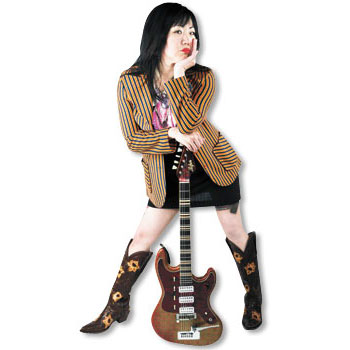
MARGARET CHO

How do you characterize your stand-up act for someone who has never seen it?

Raunchy and political. Gaysian.

You’re on the current season of Dancing with the Stars. What were you most scared of heading into it?

I’m not really sure. There’s so much fear from everyone about every aspect of the show. It’s kind of like Fear Factor with rhinestones.

Speaking of dancing, what’s your most embarrassing high school dance story?

That I never went to a dance.

You were the opening act for Jerry Seinfeld for a time. What was the best piece of advice he ever gave you?

To quit school and pursue my dream.

Oct. 22, Massey Hall, 8 p.m.


THE MENTALIST

THE AMAZING KRESKIN

You’re a famous observer of body language. What is Toronto’s saying these days?

There’s a stronger inner peace compared to other cities and cultures.

Who is T.O.’s next mayor?

Boy, you know how to put me in trouble. If I predict who will win, I antagonize half the audience. If I’m wrong, I disappoint the other half.

Which of the late night shows is your favourite to appear on?

Jimmy Fallon has really impressed me. I find him extraordinarily talented and charismatic.

The Amazing Kreskin Glenn Gould Studios, Oct. 13 and 14


THE LITERARY LION

EMMA DONOGHUE

Room is about a mom and son held captive. What was the inspiration?

The Fritzl family in Austria was the spark, but I was ready for that spark because my kids were four and one at the time, so I was full of things to say about parenthood and childhood.

Was it a challenge to bring levity to such a dark topic?

Somehow I can never keep the levity out. Humour is a crucial sweetener when persuading readers to follow me through dark passages.

International Festival of Authors 235 Queen’s Quay, Oct. 22


THE HIGH-HEELED ONE

TONY SHELDON

Explain the plot of Priscilla in one compelling sentence.

If you’re going to get hopelessly lost driving a pink bus through the Australian Outback, make sure you’ve packed a ghetto blaster and your highest heels!

What kind of mental shift is needed to play Bernadette, a post-op transsexual?

Putting on makeup and seeing a different person in the mirror does a lot of the work. It helps that I socialized with a lot of transsexual people when I was younger.

Priscilla, Queen of the Desert Princess of Wales Theatre, Oct. 12–30


THE JOLLY JOKESTER
 

GERRY DEE

Your stand-up act centres on your days as a teacher. What’s the cheekiest thing a student ever said to you?

Let’s just say there was an “F” followed by a “U” followed by two more letters. Then he added the words “go” before and “yourself” after it. That’s pretty cheeky.

What was your reaction?

I swore back at him! Just kidding. I stood there like an idiot. I didn’t know what to do. I think I called his mom and she cursed at me, too.

Richmond Hill Centre for the Performing Arts, Oct. 8


Homage to ’80s high on style not substance

0

THIS TOWN IS overrun with burger joints. And you don’t need to be a vegetarian to feel the strain.

Restaurateurs who decide to open up yet another place for patties best have a dedicated, original spin on the theme. Retro Burger approaches the trend with a 1980s angle, and in this way, they succeed. Unfortunately, the ’80s weren’t exactly an era worth remembering in terms of fast-food experiences.

Custom-made comic book-like collages — complete with “OMG I’m so retro!” speech bubbles, coming from blonde damsels in distress and Atari logos — hang on wall sections painted bright orange and yellow. Grey tiles under foot run up to hip height, a colour mirrored in the ceiling above.

Dark wood chairs screech back and forth under marbly topped, woodframed tables. It’s a loud, upbeat space, serenaded by the likes of Madonna and Duran Duran on the speakers.

Despite the moniker, Retro’s menu lists only two kinds of burgers: a veggie patty and a fiveounce beef burger done up in seven different ways — with swiss and mushroom, say, or with tomato, feta and Greek sauce.

There’s more variety in the list of chicken options, with souvlaki, fingers and a crispy chicken sandwich. Also up for grabs: fish (with chips or salad or on a bun), hot dogs, Philly cheese steaks, plus the usual smattering of sides — four kinds of poutine, fries, onion rings, sweet potato fries.

Two salads seem the healthiest of plates, although Retro — embracing a less health-focused food era — may not feel the guilt.

Patrons choose their meals from the wall-mounted menu, place their order with the cashier at the back, then sit down to wait for their number to be called. Orders are announced from the back open-kitchen area, and the hungry line up to direct staff on how to dress their burgers.

The classic burger ($3.79) sees a five-ounce patty on an untoasted and unremarkable white bread bun. The burger’s biggest flavour is char grilling, made interesting with choice of the usual ketchup, mayo, mustard, relish, raw or fried onions and hot peppers (free), plus bacon, various kinds of specialty cheese or mushrooms ($0.50 to $1).

It’s a good meat-to-bun ratio, but the “100% premium burger” (which means what, we’re not sure) is processed tasting and dense and therefore hard to finish.

Elsewhere, the halibut fillet, hand dipped in simple batter, is expertly timed, but the deep-fryer renders the assembly so greasy that even the paper wrapping can’t absorb the excess oil.

A white rectangular cardboard box opens up to reveal a substantial serving of plain-Jane skin-on fries, from frozen[CK frozen].

No little crunchy bits here; these are standard cut and soft ($2.49 on their own or as part of a combo).

Classic poutine (this time in Styrofoam) uses the same fries, but makes a passable choice, with real cheese curds and gravy ($3.99).

The excellent homemade vinaigrette on garden salad ($3.39) refreshes with just enough vinegar and balanced seasonings.

Bottled water, milk, decent milkshakes that stand up to the straw test and help-yourself fountain sodas round out the offerings.


Three sisters of Thanksgiving

0

Corn, beans and squash are known as the “three sisters” of Thanksgiving.

There are, of course, countless variations of side dishes that contain these ingredients, so this year I have picked recipes that are delicious, comforting, good for our waistlines and easy to prepare.

Acorn squash maple-cinnamon wedges

Herbed chickpea, corn and carrot loaf

Mediterranean bean, olive and artichoke salad

Post City Magazines’ culinary columnist, Rose Reisman, is the author of 17 cookbooks, a TV and radio personality and a health & wellness expert. Visit Rose at www.rosereisman.com.

Better off red

0

IF YOU’RE LOOKING for a wine experience above the humdrum — that is, a wine of real character that speaks of the soil in which it was grown — have I got a selection for you.

Sandhill Small Lots Viognier 2009 has recently landed on the Vintages’ shelves. This wine is a consistent award winner at national and international competitions.

The wine is a light golden colour with a bouquet of stone fruit preserve and white blossoms. It’s dry and full-bodied, viscous on the palate with a lingering, warm, fruit-saturated finish ($24.95, Vintages #126862).

I have always been a great fan of the village-named Côtes du Rhône reds. These well-priced blends are usually made from Grenache, Syrah and Mourvèdre, but for Perrin & Fils Peyre Blanche Cairanne Côtes du Rhône 2007, the winemaker has gone heavy on the Grenache with a mere 20 per cent of Syrah added.

The result is a dense purple-coloured wine with a nose of raspberries, violets, white pepper and licorice. It’s full on the palate with ripe flavours of raspberry and black cherry with earthy-herbal notes and a very long finish ($17.95, Vintages #650960).

And here’s another delicious wine from the southern Rhône, part of the Vintages September release: Vignerons de Caractère Les Hauts du Castellas Vacqueyras 2007 has that unmistakable nose of Syrah — blackberries, roasted herbs and a note of the barnyard.

Believe me, this is a compliment. The wine is full-bodied on the palate, rich, but not overblown, with lots of flavour and soft tannins. It’s also a great value ($18.95, Vintages #177634).

In April, Huff Estates South Bay Chardonnay 2007 was named White Wine of the Year at the 2010 Ontario Wine Awards, and this wine has carried off other trophies since.

This medium-bodied dry Chardonnay has a nose of tropical fruits, sweet lemon and vanilla oak. On the palate it has a creamy texture with a spicy note. The fine spine of acidity carries the tropical fruit flavours to a long and satisfying finish ($29.95, Vintages #88955).

Viticcio I Greppi Greppicante Bolgheri 2007 is a wine that uses the three Bordeaux grapes: Cabernet Sauvignon, Cabernet Franc and Merlot. It’s intensely coloured deep ruby with a beet purple core.

The nose is an amalgam of cassis, mint and sweet oak. The seductive palate is rich and full with black fruit flavours tempered by toasty oak and licorice ($23.95, Vintages #170381).


Real-life lessons can be learned from fairy tales

0

WHEN WADING through the words of pundits and the babble of political posturing, I can’t help but think of some of the simple truths we learned as children.

Remember those stories from Aesop, Hans Christian Andersen, and the Grimm brothers that enthralled us while imparting powerful messages?

I thought of one of these tales while listening to the CBC’s Peter Mansbridge interview Prime Minister Stephen Harper earlier this year.

The prime minister claimed Canadians were only concerned about the economy and that Canada’s possible involvement with torture in Afghanistan was not a serious concern. Mr. Harper ignored the massive public demand for leadership on climate change that preceded Copenhagen. The tale that comes to mind is the story of the emperor who wore no clothes.

Long ago, a vain emperor was overly concerned about his appearance. Two crafty weavers promised to make him a fine outfit from material that could not be seen by those who were stupid or unfit for their position.

When the weavers pretended to display samples, the emperor couldn’t admit he was unable to see them, for that would be an admission of incompetence or stupidity. His courtiers and ministers were likewise unable to admit they saw nothing. When the weavers came with the finished outfit, everyone “oohed” and “aahed.”

Putting on the imaginary clothes, the emperor paraded outside so the public could admire his new attire. Everyone in the crowd, enthralled by the status of the king and bowed by their desire to be seen as clever and fashionable, remained silent. Only a child, innocent of the claims of the weavers, pointed out the obvious: “The emperor has no clothes.”

We are living in a time when ecological degradation is occurring everywhere. B.C.’s northern forests have turned red, victims of mountain pine beetles no longer killed by winters that have become too warm. Farmers know harvest time is later; birders report birds migrating north two weeks earlier and departing weeks later than normal; competitive skiers tell us European meets are being cancelled for lack of snow.

But where the emperor and his sycophantic subjects were blinded by vanity, we are prevented from seeing by the cloak of economics and politics.

Let’s throw off the blinders and see the world as any child can.


Offers pour in for one of T.O.’s hottest young chefs

0

After nearly five years at Vertical, one of the business district’s busiest restaurants, Chef Tawfik Shehata has parted ways with management.

Shehata, a creative genius in the kitchen, described the split as “amicable.”

“We weren’t really seeing eye-to-eye on some things,” Shehata told PostCity.com.

Shehata, who trained under legendary chef Keith Froggett at Scaramouche and spent time in the kitchens of Auberge du Pommier, Winston’s, Boba and The Rosewater Supperclub, is one of Toronto’s most sought after chefs.

He tells us he’s already fielded calls from some of Toronto’s top restaurateurs (including one who owns several of the city’s best regarded eateries), has an invitation to help open the new Daniel Boulud restaurant in Singapore, and is mulling the possibility of opening his own boîte.

As for his immediate future, he’ll be getting what most chefs who handle a large kitchen can only dream of: a little rest.

Over at Vertical, no plans have been announced as to who will replace the talented Shehata. The loss follows a summer in which Vertical’s outdoor patio became a tough place to dine due to massive construction on the First Canadian Place.


First impressions lunch at Fabbrica, McEwan's new eatery

0

Celebrity Chef Mark McEwan has created a beautiful modern Italian space with Fabbrica, complete with huge, leather-appointed booth seating and rooms done in dark and light woods with gun metal blue appointments.

The centerpiece of it all is the grand wood-burning oven imported from Italy.

The pizza isn’t as thin as Queen Margherita or Libretto and, at first, it makes you wonder because it doesn’t defy gravity the way pizza aficionados in Toronto are used to.

But, don’t be mistaken, this is authentic Neapolitan-style pizza and, once you start eating it, the slightly thicker crust and quality of the ingredients shines through.

Our favourite was the Capicollo – mozzarella, hot capicollo, basil and tomato – and we couldn’t get enough of the sauce, a real show stopper.

The skirt steak, served over wild arugula, smoked tomato, and pickled onion, isn’t cheap at $19 but it’s a definite winner as well. The steak, served medium rare, comes out on a large wooden plank and is well portioned.

The menu is dominated by pizza, pasta, salads and salumerie and they have their own beer on draft – pricey at $9 but also very solid.

Considering they’ve only been open for two days, staff were fairly competent and attentive.

Fabbrica, 49 Karl Fraser Rd., 416-391-0307.