Home Blog Page 637

Drink This: Hudson Kitchen’s Earth to Grapefruit

0


Brad Pitt. Jennifer Aniston. (Different nights.) By now, those who care to know about Toronto’s restaurant scene are certainly aware of DuWest’s latest addition: Hudson Kitchen. While the celebs got their sneak peek during TIFF, us rubes had to wait until last week to sample the goods coming out of chef Robbie Hojilla’s kitchen.

Drink-wise, a tiny bar up front acts as the home base for the cocktails. Bar manager Jay Meyers’ menu is short and sweet, with just six cocktails served. The Earth to Grapefruit ($13) is Meyers’ redefined version of the classic Greyhound: Beefeater gin is shaken with Campari, Cointreau and fresh lemon juice, and is finished with a rim of sugar and dehydrated grapefruit rind.

Hudson Kitchen, 800 Dundas St. W., 416-644-8839

Karolyne Ellacott is a features editor at Post City Magazines. She pedals around town in heels, eating sandwiches and drinking cocktails. She writes about that, and about about other stuff too. She is also on Twitter.

For more must-try Toronto cocktails, check out our Pinterest page


Chef Tip: an easier way to peel beets

0

When fall rolls around, root vegetables like beets are a hearty seasonal favourite. Roasting beets is one of the best ways to bring out their natural sweetness, but there is an added benefit to cooking them this way. 

Beets can be tricky to peel without staining your hands or making your kitchen look like a crime scene. So instead of peeling them beforehand, Chef Geoff Hopgood of Hopgood's Foodliner peels his beets after roasting them. He wraps them in foil, which helps steam them. As the beets cook, they pop out of their skin, decreasing the labour of peeling them yourself.

Every week, we reveal a quick kitchen tip from a Toronto chef to help make cooking at home a little bit easier. Chef Tip appears on Wednesdays.

From tragedy comes beauty: Basia Bulat releases her most personal album to date

0


Basia Bulat had a rough year; someone close to her passed away, and she did what she had to do to get through it. She wrote songs. A lot of them. And in so doing, the young Toronto native has crafted her most personal and moving record to date in Tall Tall Shadow, which was released yesterday.

“I just needed to deal with it, and it really came out in all the songs,” she says.

“I feel really lucky to have a way to sort of talk about that stuff. It is really hard for me to talk about.”

This is grown-up Bulat, with her trademark autoharp taking a back seat to piano and the addition of electronic elements. Her vocals have never sounded better, her sound much more expansive. This is breakthrough record material not unlike what, for example, Serena Ryder has done with her new album.

Unlike previous efforts, Bulat took a cue from Tony Dekker, of Great Lake Swimmers fame, and looked for unique locations in which to record some songs for the album.

She found the ideal place in an old union hall in the Beaches neighbourhood of Toronto.

“It was this old dance hall. It was a real flashback, blue and yellow. I just wanted to find somewhere interesting, and I was looking around in different places,” she explains.

“It was around lunchtime, and there was this jazz band playing, and it just sounded so great. And I thought, there is live music happening, this must be the place.”

Bulat grew up in a musical household in Etobicoke and started taking piano lessons when she was just three years old (her mother was a piano teacher).

“Music was a big part of my life growing up,” she says. “My brother plays percussion, and we were always playing together. My brother plays all the drums on my records.”

She moved to London, Ont., to attend the University of Western Ontario (now Western University), where she took her first steps performing.

“London has always been so supportive of me. I feel like the city really adopted me,” she says. “It wasn’t part of a larger commercial music industry but a small, close-knit scene, which was kind of nice.”

At first, she was safely hidden from view at local campus radio station CHRW. She remembers encountering the aforementioned Great Lake Swimmers singer Tony Dekker at a local show, shaking like a leaf. A lot has changed.

The first time she appeared onstage, at the urging of her friends, was to appear as the opening act for Julie Doiron of Eric’s Trip fame.

Since then, Bulat has turned out two critically acclaimed albums and toured relentlessly, building a solid reputation for her songwriting, her enthusiasm for the autoharp and for her drop-dead gorgeous voice.

With her new, very personal album, things could change for the better. But Bulat is just hoping for a little understanding. 

“I hope people connect to something in it even though it’s a pretty personal thing I’ve made,” she says. “I hope it reminds them of something they are going through and maybe see themselves in there somehow. I really wanted to send something hopeful out into the world, and I’m hoping that maybe I achieved that.”

Basia Bulat appears in concert at the Polish Combatants Hall on Oct. 10, 11, 12

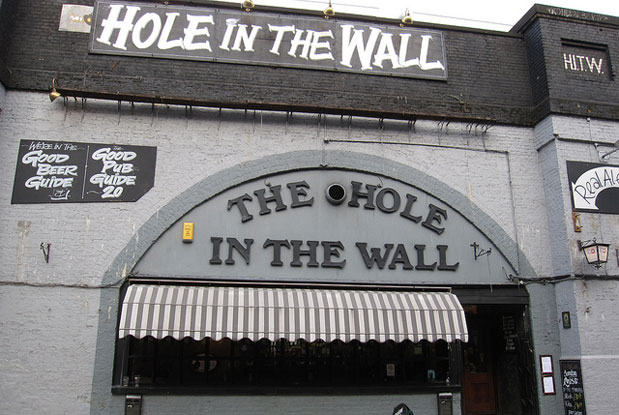
You know what Toronto really needs? Another hole-in-the-wall

0

I’ve been dining in Toronto restaurants for a long time, and I’ve even written about some of them for this very publication. As such, I think I’ve got a pretty good handle on what makes a Toronto restaurant popular, so I’ve decided to open my very own spot.

In the interest of giving the city even more buzz-worthy dining options, I’m going to share the idea so that other prospective restaurateurs out might learn from my studies.

My restaurant, which will be called Höl, will be merely a rough-hewn cavern in the side of a pile of dirt unearthed by a nearby condo development. In order to achieve a rustic ambiance, I’ll adorn the dirt walls with torches, and on weekends, I’ll add a stack of flaming newspapers, which will be locally sourced from the nearby TTC station.

Expanding on a trend that’s recently been embraced by other Toronto restaurants, Höl will not only eschew reservations, but it will provide less chairs than there are diners. What buzz we’ll generate when the hostess leads guests to the men’s room, where their meals will be served on the back of the urinals (think of the selfie potential!).

As anyone knows, the most important thing about opening a restaurant is the food. That’s why I’ll stick to the sort of truly unpretentious and basic fare that’s enjoying popularity in Toronto right now, and I’ll serve it in a no-nonsense way. Two of our signature dishes will be a flatiron steak, which the kitchen will refuse to serve any way other than raw ($58), and a penne primavera served without any utensils ($43). As an appetizer, Toronto foodies will die for Höl’s artisanal salad, which will be quite simply a handful of organic (read: still-dirty) vegetables in a bowl, served with a knife. ($22).

In lieu of table-side service, diners at Höl will be asked to to write their orders on a piece of scrap paper using the restaurant’s lone pencil, which will have to be wrestled from the clutches of an angry homeless person. To keep things fun, orders will then be placed in a lottery-style cage, where they’ll be plucked and prepared by the kitchen at random. You’ll never know what to expect at Höl!

Given that this establishment seems destined to be massively popular, nobody will be able to get a table. Ever. But not to worry — once things take off, I’m thinking of opening a second location in a dumpster on Dundas West (no strollers, children or sad looking middle-aged people, please).

When he’s not opening Toronto’s hottest restaurant, Ben Johnson writes about beer on Ben’s Beer Blog. You can follow him on Twitter: @Ben_T_Johnson.

Sewell: Toronto police could learn a thing or two from the city’s hospitals

0

Some city institutions have found ways to tackle intractable problems and bring about positive change. It raises the question: can other city institutions learn?

I think particularly of the difficulty Toronto police have delivering good, safe services to those in mental crisis. The police talk a good game, but this year, three people in mental crisis have been killed. Some hospitals in Toronto have found new ways of addressing problems that used to seem insoluble. Can police learn from hospitals how to do things differently?

The University Health Network (UHN) includes the city’s largest hospitals: Toronto General, Princess Margaret, Toronto Western and Toronto Rehab. Like other hospitals, it tries to cope with the big problem of acquired infections, such as methicillin-resistant Staphylococcus aureus (MRSA), which kill more than 10,000 people a year in Canada.

The good news is that MRSA infections in UHN have been reduced 80 per cent in the last half dozen years. The way that change happened is the big story.

UHN tried all the usual approaches. Senior officials in the hospitals gave strict orders that staff had to wash hands between patients (since MRSA exists on flesh and is transmitted by touching). That didn’t work. They gave more frequent and stricter orders. That didn’t work. Rewards, such as Tim Hortons gift cards, were offered to staff for washing their hands. That didn’t work. Compliance rates remained in the 30 to 40 per cent range. But in the last four or five years, new approaches were tried and compliance rates for handwashing at UHN sites are now 88 per cent.

“We turned everything around,” says Dr. Michael Gardam, the head of infection control at UHN. “We didn’t tell staff what to do; instead, we asked them what to do. No more orders from the top. We told unit leaders to allow front-line workers to figure it out.”

“We haven’t had an outbreak of MRSA in our organization for seven years,” he says, “although unfortunately those outbreaks still happen in other hospitals.

“And we don’t have one hand hygiene program at UHN — we have 20. Different units do what is right for them. In one unit, a senior nurse started by washing surgeons’ hands for them until doctors started doing it for themselves. Obviously you can’t replicate that in other units. But the program spread virally as one unit saw what another was doing and then made their own plan for hand hygiene.”

It was a major cultural change,” says Dr. Gardam. “We learned that to get the best results, you don’t order senior staff to tell people under them what to do. Instead, they should ask local staff what they need. Leave it up to front-line staff and the important change will happen.”

Dr. Gardam says you can take this program elsewhere successfully, and indeed he has, through Ignite, a company established for this very purpose. Ignite works collaboratively with hospitals in upper New York state. The same approach has been used there to reduce falls by patients and to reduce bed sores, again with spectacular results.

Not only does the approach solve problems that seemed intractable, the results are substantial financial savings. Apart from human costs, the financial cost of a single case of MRSA in a hospital is in the order of $50,000 or more, given the need for isolation, extra staff and so forth. Finding a way to control infections by asking front-line hospital staff how to do it not only deals with infections, but saves money and makes staff feel more wanted and useful.

Can Toronto police learn from this UHN program to reduce the killing of individuals in mental crisis, such as Sammy Yatim, and to reduce the use of conducted energy weapons (Tasers) to maintain order?

Toronto hospitals have learned that the command-and-control culture doesn’t work in getting the desired results. Can police departments learn this lesson?

It makes sense for senior management at Toronto police to talk with Dr. Gardam and his colleagues and implement some of these front-line ways of working before millions of dollars are invested in Tasers that don’t make the city safer. That would be a start.

Post City Magazines columnist John Sewell is a former mayor of Toronto and the author of a number of urban planning books, including The Shape of Suburbs.

Wanted: this versatile, snake-print embossed handbag from Mackage

0


2013 is the Year of the Snake, and appropriately enough, snakeskin prints are coming back in a big way. No, we don’t mean head-to-toe monstrosities like this spectacular ensemble. The snakeskin prints for fall 2013 are tasteful and subtle, and come in a variety of colours like green, cranberry and cobalt blue. They are also being used in non-traditional pieces such as skinny jeans, exotic cuffs and leather sneakers.

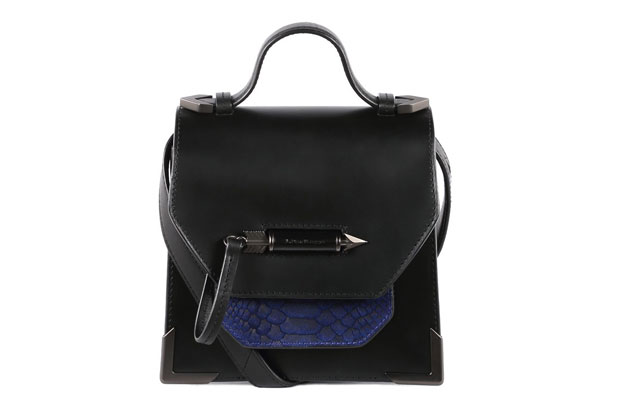
It’s with this in mind that we present to you the Rubie handbag in cobalt blue from Montreal’s Mackage, one of Canada’s biggest fashion success stories. Having made its name in leather outerwear, Mackage now turns its attention to leather accessories with a 12-piece debut handbag collection.

This bag is produced primarily from buttery black leather, and features snake-print embossed blue suede detailing on the sides and front flap. It’s super versatile, as it can be held by the top handle, or worn over the shoulder and across the body via a removable strap. The nickle-tone trim on the bottom corners and top handle, as well as the arrow-shaped front clasp, give the accessory an elegant edginess, something that Mackage excels in.

$295. Available at Aritzia, 50 Bloor St. W., 416-934-0935, and online at www.mackage.com

Queen Margherita Pizza has just landed one of the best chefs in the country

0

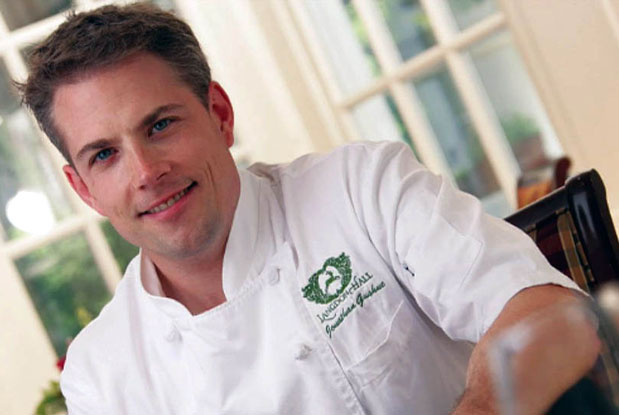
When news broke earlier this week that a chef changeup was going on at Langdon Hall in Cambridge, the question on everyone’s mind was, “Does that mean chef Jonathan Gushue is coming to Toronto?” According to a press release sent out today, the answer is yes.

Gushue has teamed up with the owners of Queen Margherita Pizza to redesign the menus at those pizzerias and — here’s the best part — to open his own restaurant in partnership with the Queen Margherita team in 2014.

The reason this is good news is because Gushue is one of the most lauded chefs in the country. Under his guidance, Langdon Hall earned a spot on S. Pellegrino’s list of the world’s best restaurants in 2010 (very few Canadian chefs have appeared on this list). He has also received numerous other important accolades.

The name of Gushue’s upcoming restaurant has not yet been revealed, and neither has the specific location, but it will be in the Financial District. Queen Margherita’s co-owner, John Chetti, tells us that Gushue will have a high degree of creative control.

“Jonathan’s talented, so we’re not going to stand in his way of doing great,” Chetti says.

Meanwhile, Langdon Hall is preparing to take on chef Jason Bangerter, who is wrapping up his tenure as executive chef at Luma at the TIFF Bell Lightbox. Bangerter will be starting his new gig by mid-October.

Tony Aspler’s Weekly Wine Pick: a versatile food wine from Tuscany

0

Great value from the house of Frescobaldi. Medium straw colour; minerally, apple nose; light on the palate with apple and pear flavours. A versatile food wine.

Food match: Caesar salad; chicken breast

Frescobaldi Albizzia Chardonnay 2011, Tuscany, $12.95. LCBO #266585


Post City Magazines’ wine columnist, Tony Aspler, has written 14 books on wine and food. Tony also created the Ontario Wine Awards and has been inducted into the New York Media Wine Writers’ Hall of Fame. He can be heard on 680News.

Weekend Warrior: Bourbon Week, David Bowie at the AGO, TUM, Toronto Vintage Festival, Foodival

0

It’s Thursday and the weekend is fast approaching. Need stuff to see or do? We've got you covered. In this edition: a carnival just for eating, a weeklong celebration of bourbon and David Bowie comes to town (in spirit, at least). 

Toronto Bourbon Week

When: Sept. 27-Oct. 3
Where: Various locations
Details: What separates this festival from other festivals taking place in Toronto this fall is its sheer simplicity. Seven days, seven bourbon-focused events, each with a different theme and bourbon selection. Created to celebrate a great drink within a vibrant city, Toronto Bourbon Week will include events such as a bourbon brunch, bourbon tastings, and food pairings


David Bowie Is Here: Official Opening Party

When: Sept. 27
Where: The Art Gallery of Ontario
Details: David Bowie is here! Well, in spirit. Be among the first in the city to see the buzz-worthy David Bowie exhibit, which kicks off with a bang at its official opening party this Friday at the AGO. Enjoy food and drinks, and dance to DJs spinning Ziggy Stardust’s signature tunes all night long. 


Toronto Underground Market

When: Sept. 28
Where: Evergreen Brick Works
Details: One of the most exciting food events of the year, the Toronto Underground Market (affectionately and appropriately referred to as TUM) goes down this Saturday at the Evergreen Brick Works. The third annual TUM is designed to give new chefs and food entrepreneurs a platform to showcase their creations, as well as to provide hungry foodies with fresh and unique gustatory experiences. Inspired by the San Francisco Underground Market, TUM also features local craft beers, wine and cocktails. 


Toronto Vintage Clothing Show

When: Sept. 28
Where: Metro Toronto Convention Centre
Details: To all the tired thrifters who have become disheartened by one too many fruitless attempts at sifting though weathered polos at Value Village, prepare to pop some tags at the Toronto Vintage Clothing Show. Featuring vendors from Toronto, Montreal, Ottawa and more, the show takes place this Saturday at the Metro Toronto Convention Centre. Treasures will abound for reasonable prices, and for those looking to make some money this weekend, vendors will also buy vintage clothing.


Foodival

When: Sept. 29
Where: 99 Sudbury St.
Details: Everyone’s favourite part of going to a carnival is the food, right? Foodival has (definitely not literally) trimmed the fat from your standard carnival experience by creating Toronto's first carnival-themed food festival. Who really wants to ride roller coasters when you're full anyway? Foodival hosts vendors from across the city showcasing their reinvented versions of childhood favourites and carnival foods, and proceeds are in support of Real Food for Real Kids.

Comedy king applies his talents to the written word

0


Improv comedy is easy to do poorly and hard to do well. The thrill of watching the mind game of creation loses its hold if the comic doesn’t have a near-infinite bag of tricks at his disposal.

Toronto is home to one of the best improvisers in the world, the esteemed Colin Mochrie, star of Whose Line Is It Anyway?

The supremely talented funny man is enjoying another bold moment in the spotlight right now, with the return of Whose Line Is It Anyway? The show, probably the only successful improv series in television history, enjoyed a long run in the ’90s in the United Kingdom before the American version appeared in 1998 and ran under the leadership of Drew Carey until 2006.

Mochrie was a standout player in both versions. It made him famous, but it’s an odd kind of fame. An improviser can bury himself so deeply within the characters and scenarios he creates that his own character can seem vaporous and chimerical. What makes Mochrie so good? For one thing, he brings a gift of understatement to a genre of comedy known for manic, flailing, overcooked performances. There’s an elegance and ease to him, an almost aristocratic mien that contrasts with so many other players in the scene.

You can still see him perform live with Whose Line co-star Brad Sherwood at any number of large venues across the country. You can also see him at local events with his wife, the sublimely talented sketch actress Debra McGrath. I always catch them, out of the corner of my eye, still holding hands after all these years.

This fall, he’s delving into another art form. Due out this fall is Mochrie’s first book, Not Quite the Classics.

Most comedians, when they write books, write thinly veiled autobiographies, but Mochrie’s ambitions are more literary.

There’s an improv game called “First Line, Last Line,” where an audience member shouts out a first line of a sketch, a second audience member the last line. Then the performers construct a scene that fills in the gap. What Mochrie has done is applied the idea to famous novels and poems.

The dozen chapters are not parodies of the originals, but whimsical flights of fancy that go wherever his mind takes him. The texts he uses include Sherlock Holmes, George Orwell’s 1984, Slaughterhouse Five, The Great Gatsby and others.

I liked his take on the poems he chose, including “Casey at the Bat,” with the baseball story transposed to hockey, and a great punchline at the end of the story. But my favourite piece is “A Tale of Two Critters,” which somehow takes the Charles Dickens novel and twists it into a monologue by the Coyote of the Roadrunner cartoon. It’s bizarre and very funny.

My favourite bit is from his skewed take on Kurt Vonnegut’s Slaughterhouse Five, about the unluckiest man in the world: “Billy Jonah was the unluckiest man in history. Unluckier than Tsutomo Yamaguchi, who was having breakfast in Hiroshima at 8:45 a.m. on Aug. 6, 1945, when the A-bomb detonated and destroyed his apartment building. Tsutomo survived, but three days later he traveled to Nagasaki to convalesce.”

I think even Vonnegut himself would have approved.

Post City Magazines’ humour columnist, Mark Breslin, is the founder of Yuk Yuk’s comedy clubs and the author of several books, including Control Freaked.

First Draught: St. Bernardus Abt 12, a beer that tastes like it was brewed by Trappist monks (but wasn’t)

0


Remember when Toronto beer aficionados lined up to buy a $75 six-pack of Westvleteren 12 at the LCBO? What if I told you that you could have a very similar beer for way less money? Is that something you might be interested in?

The near-copy is the St. Bernardus Abt 12, and the main difference between it and the Westvleteren 12 is the marketing. Monks have been making beer for centuries, and they occasionally sell it to support their monasteries and charitable works. By the middle of the 20th century, increasing demand and other factors led many of the monastic orders to enter into licensing agreements with commercial breweries for off-site production.

After WWII, the Saint Sixtus monks of Westvleteren outsourced their brewing to a company now known as St. Bernardus. The monks provided their recipes and yeast strain, and for almost 50 years the public could buy the same beer the monks drank — Westvleteren 12, essentially — minus the romance of monastery brewing.

Eventually, the monks realized that people would pay for this romance, so they decided to reclaim their beer production and market it under the protected “Trappist” trademark. Westvleteren 12 is now made with a slightly different strain of yeast, but St. Bernardus continues to use the Westy 12 recipe and the original yeast strain for the Abt 12.

This beer pours a dark, chestnut amber with a full, but quickly dissipating, cap. Its aroma is all malt and yeasty esters with darker hints of earth and leather in the background. The medium-sweet flavour is balanced by a slightly bitter, hoppy finish, along with notes of dark or dried fruits: raisin, prunes and figs. There is plenty of palate-cleansing carbonation.

Quadrupels — the Belgian abbey name for what is essentially known as “barley wine” in the U.K. and the U.S. — are great candidates for cellaring because of their relatively high alcohol content and live yeast in the bottle. This one is no different. The St. Bernardus 12 is perfectly fine to drink now, but it will mellow after a year and become more complex (though it will lose some of its carbonation between years one and five).

This is the perfect accompaniment for quiet contemplation, such as considering whether the monk on the bottle’s label — who looks like he’s in rather festive spirits — is meant as an homage or cheeky satire.

St. Bernardus Abt 12, $8.95 for a 750 ml bottle, LCBO #346197

In addition to covering beer, new restaurants and food trucks for Post City, David Ort writes about food and drink for several Toronto publications including his own site, Food With Legs. He is also the author of the upcoming Canadian Craft Beer Cookbook. For more of his thoughts on food, beer and life in general, follow him on Twitter or get in touch at [email protected].

Station declared one of the most beautiful in the world

0

According to the Toronto Transit Commission (TTC), in 2012 an average of 9,330 people per day boarded or exited subways at Bayview station on the Sheppard line on weekdays. But riders may be surprised to know of all they’re missing. Travel magazine BootsnAll declared Bayview one of the 15 most beautiful subway stops in the world in 2011.

The station appeared among a list of eye-catching stations from Taiwan, Russia and more. It is one of only three North American stations featured on the list (the others being Champ-de-Mars station in Montreal and the Federal Triangle station in Washington, D.C.).

One reason for Bayview’s inclusion on the list was the public art on the station’s walls and floors, trompe l’oeil designs local artist Panya Clark Espinal was commissioned to do as part of the 2002 Sheppard Subway Public Art program. The collective art is entitled From Here Right Now.

Espinal designed the pictures to appear proportionate only from certain angles. “As the viewer approaches and passes by, the images deconstruct and become distorted, forming abstract and nonsensical designs,” Espinal said, in a statement regarding the piece.

Richard Stevens, whose firm, Stevens Group Architects (now IBI Group Architects) designed the station, remained humble when comparing the station to others in the world. “It’s a nice station,” he said. “But there’s lots of pretty nice subway stations.”

TTC spokesperson Brad Ross said that all of the Sheppard stations were designed with the intent of creating eye-catching spaces. “The whole Sheppard line was designed so that it would be a very welcoming environment,” said Ross.

Ross said that the TTC also has a mission to fill its new stations with art. “The Toronto York-Spadina subway line, which is under construction now, will have very dramatic and beautiful spaces,” he said. Ross was not aware of BootsnAll’s recognition of Bayview station, but he said that he is not surprised.