
Home Blog Page 579

Homes: Take back your backyard

0

With urban neighbourhoods getting denser, backyard privacy is becoming more important and harder to achieve for homeowners. The good news is there are easy solutions to enhance backyard privacy.

Plants: Regardless of whether you’re working with a large urban backyard or a smaller downtown plot, adding some low-maintenance greenery can optimize privacy, while adding some visual appeal. Alternatively, you can plant tall grass in raised planters, which create a nice blind while allowing the wind to pass through easily.

If greenery isn’t enough, buy fast-growing trees that work with your backyard location, which can offer privacy and shade. You can also use shade canopies for extra coverage as they can mount to three stationary points to create a great UV blocker. 

Pergolas: Overhead privacy structures and pergolas provide endless possibilities to add style, privacy and shade to your backyard. It’s a great outdoor investment that also increases the value of your property much like a deck would. It also creates the sense of an outdoor room, framing the space and making it more inviting since it gives you a little more privacy.

To add personality, plant climbing vines to gradually colonize the structure for a natural, soothing canopy. And try trailing fashionable vintage lights or lanterns to bring a touch of the indoors outside.

Horizontal privacy: Horizontal or woven privacy screens are also a great esthetic addition that can help create that separation in your backyard from neighbours. They also provide seclusion and a cool lounge feel to any outdoor space.

Many of my clients are looking to build more sustainably and are more aware of the ecological impact of certain materials.

An industry secret is MicroPro Sienna, which is an eco-friendly pressure-treated wood that’s affordable and only about half the price of cedar. I always remind my clients to protect their outdoor investments: once your Sienna project is complete, apply a water repellent finish to protect the wood.

Upcycling: I’m a big fan of transforming unwanted old furniture or doors into unique outdoor accents. You can easily make over a vintage door into a privacy wall to add a personal and vintage touch. A fun and affordable project that also reduces our carbon footprint!

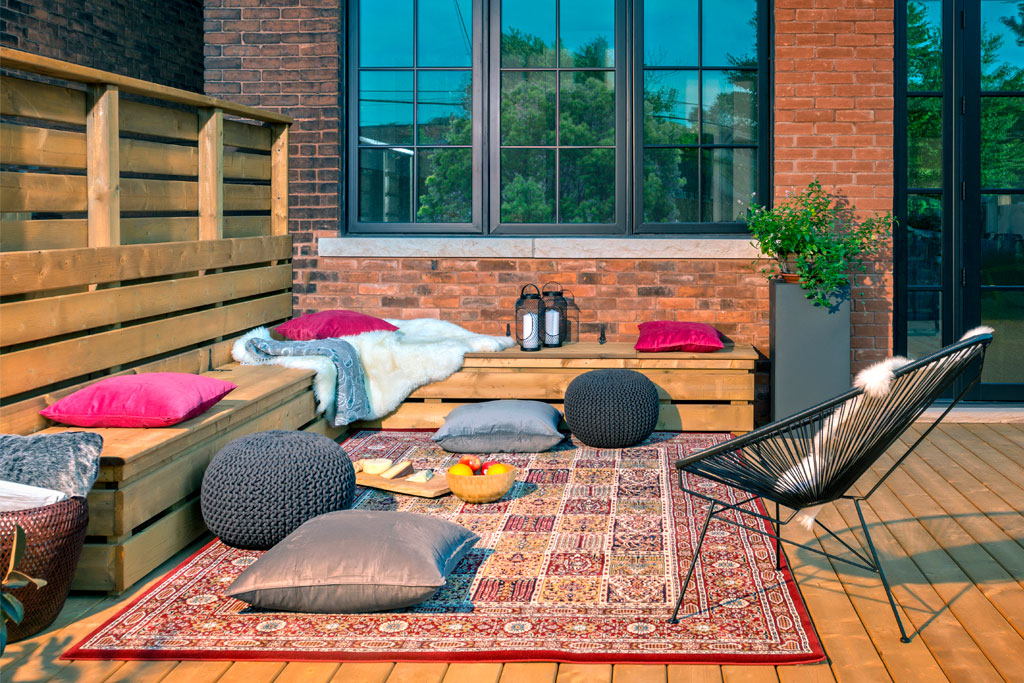
Furniture and accessories: Brighten up shady corners with vivid jewel tones, shades and vibrant patterns. If your backyard feels like you’re on vacation, then every time you step outside will be as invigorating as a holiday. Feel refreshed with sunshine yellow bistro chairs, bright blue accessories and modern white tables to entertain your family and friends behind colourful, multi-tasking privacy curtains. With summer heating up, privacy curtains add some much-needed shade to your beautiful backyard space, making it the ideal place to cool down and relax this summer.

Chris Palmer is a regular guest expert on the Global Morning Show and is the owner of Handcrafted by Chris Palmer. 
Parent Hacks: Eight tips on how to raise free-range kids

0

“We never used to come in until the streets lights went on,” is something I’ve heard many of my friends say, somewhat wistfully, with their heads down texting their kids to see where they are, every minute of the day.

Of course, it’s only natural to want to know that your kids are safe and that you’re aware of what they’re getting up to, but the more we constantly keep tabs on them, the less independence and personal responsibility they learn. Are we the ones holding them back?

With the long, lazy days of summer ahead, what can we do to loosen the reins and let the kids have a “throwback summer” this year, without feeling we are putting them in danger or worrying ourselves silly?

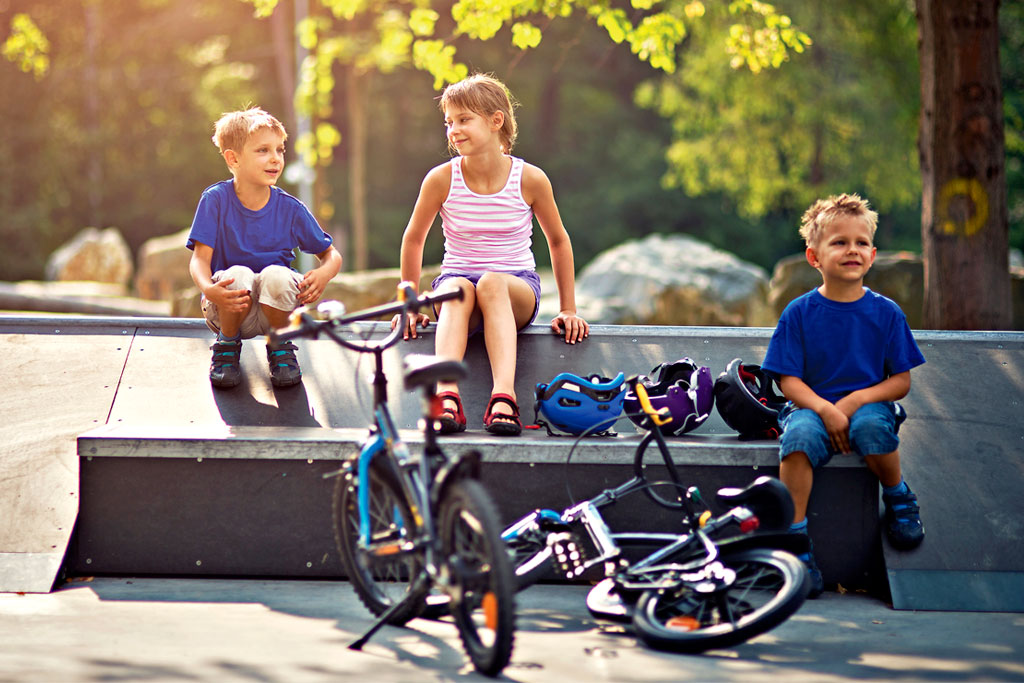
1. We can start small. Let them walk to a friend’s house, with that friend. And back again. You might want them to check in when they leave and when they get there. Try not to check in with them at all while they’re there.

2. Have them call on a friend. Not call a friend or text a friend or message a friend. I mean, ride their bike over and ring the doorbell.

“Can Liam come out to play?” is one of the best sentences they’ll hear.

3. The next time you go to the park with your kids, tell them the rules of play. No hitting, leaving the park, teasing, etc. Then, leave them alone at the neighbourhood park for 10 minutes. Then 15, 20, etc. You know your kids’ limits. Come back to the park, and watch them for a few minutes before they know that you’re actually there. If it appears all the rules are being followed, let them know you noticed that and that you’re glad you can trust them.

4. Instead of constantly texting them “Are you OK?” or “Please text me back,” set up a contact time that they have to adhere to. Have them call or text you at that time to let you know they are OK. If they forget and don’t bother to check in, maybe they lose a privilege until they can teach themselves to be responsible and proactive.

5. Get to know the kids your kids are hanging out with. Have a sense of the things they might be doing while hanging out together, without actively grilling them. Often your kids’ friends will be more forthcoming with information than your own children.

6. Build your village. If you see some of the neighbourhood children hanging out, without an adult, please don’t panic immediately. If they are engaged in innocent play, let them be.

7. Teach them some outside games. Kick the can? Hide and seek? Red rover? Loved these as a kid. Not sure parents today support red rover as you run full force into each other, but boy, it was a fun game to play. Send them on a scavenger hunt in the neighbourhood. Resist the urge to creep along behind them, hiding behind bushes. Buy them some sidewalk chalk, set up the sprinkler in the front yard and then quietly slip inside and try to read a book.

8. Pick an activity you enjoyed doing as a kid, and let them try it. My brothers used to enjoy blowing the heads off my Barbie dolls with firecrackers. Maybe don’t start there.

Shop Talk: The city’s hautest fashion influencers

0

NAME: HAWLEY DUNBAR
BLOG: SIDEWALK HUSTLE
INSTAGRAM: 156 K followers

One half of powerhouse brand Sidewalk Hustle, Dunbar is known for her edgy-chic street style and eye for footwear. 

What shoe are you really feeling this season?
I’m all about flatforms and sneakers. Flatforms are so easy to rock with nearly anything, almost as much as sneakers. You can make waves by tossing on a fun sock too. 

Any amazing recent finds from a Toronto designer?
I’ve been obsessing over this new polka-dot choker from Biko. It gives this great edge to every single look.

How do you plan on dressing at festivals?
It’s the one time of year anything goes (except floral crowns #HardNo). You’ll see me in looks that are likely bright, patterned and possibly metallic. 

NAME: JAY STRUT
BLOG: JAY STRUT
INSTAGRAM: 57.5 K followers

Known for his outré style, Strut is a fixture in fashion scenes in Toronto and abroad, hanging with Donatella Versace et al.

Current go-to piece for summer dressing?
My go-to piece is my scissors for sure! I cut and crop everything when the weather starts getting like this!

How do you plan on dressing at festivals?
It’s going to be all about the glam — makeup that is! 

What shoe are you really feeling this season?
I’m torn between the Balenciaga thigh-high Knife boots and the Yeezy Season 4 knit ankle boots! #HELP.

What trend shan’t be gracing your bod?
Please don’t come at me with a man romper! 

NAME: ALYSSA GARRISON
BLOG: RANDOM ACTS OF PASTEL
INSTAGRAM: 64.8 K followers

Noted style blogger Garrison can be spotted thanks to her pastel pixie esthetic dusted with a pinch of quirk.

What’s your essential summer accessory? 
A teeny tiny colourful backpack for cycling around the city. Currently obsessed with every custom-embroidered bag that Stojka makes.

Any amazing recent finds from a Toronto boutique? 
LoversLand always has an amazing selection of sexy little dresses, and their stock at the moment is no exception.

What shoe are you really feeling this season?
Mules! Specifically metallic, embellished and fun coloured mules. They’re comfortable and look good with almost any outfit you can dream up. 

Construction beside John Fisher P.S. to begin this summer

0

The developer of a 35-storey tower proposed for next door to John Fisher Junior Public School has reached an agreement with the Toronto District School Board (TDSB) that will allow construction to begin this summer. But parents argue certain elements of the recent risk assessment have been ignored.

“The parents are very concerned that the TDSB … is watering down the clear recommendations of the risk assessment to justify their pre-determined outcome,” said Etienne de Villiers, a parent whose child attends the school.

The risks identified in the assessment by Environmental Consulting Occupational Health (ECOH) include diesel exhaust, air quality, noise, traffic and fire. 

At a public meeting on May 3, Om Malik, CEO of ECOH, said the assessment also took learning hazards into account.

“Small children are more vulnerable to certain risks. They are developing. Their health and safety is not only affected, but [also] their attention span and their learning environment,” he said.

ECOH recommended 14 measures to mitigate risks related to the construction, which include the hiring of a credible third party to monitor construction each day. If a third party is not on site daily, the assessment stated the risk would fall within an unacceptable range and ECOH would not recommend occupancy of the school during construction. Although ECOH found the mitigation measures proposed in the new agreement to be acceptable, De Villiers claims the language leaves too much room for interpretation.

“The agreement has a TDSB third party monitor the site ‘as frequently’ as daily,” he said. “They could attend one time only with the language that was adopted.”

As part of the agreement, the developer KG Group will erect a 12-foot hoarding wall between the construction site and the school before excavation; use safety netting; and install double-height guards across building openings.

The TDSB will also put some of its own safety measures in place. 

Angelos Bacopoulos, associate director of facilities with the TDSB, said the playground will be moved to the east end of the school, and the windows on the west side of the building will be replaced by the fall of 2017. The TDSB will also put up a second hoarding wall between the site and school.

The TDSB board approved the plan on May 24.

In the meantime, parents must decide if their children will attend the school next year. De Villiers, for one, said his child will not be returning.

When kid-sick is the new homesick

0

Parenting news these days is about how to get your kids ready for camp, how to know if they’re ready and what to pack. You know that already. But how about getting parents ready for camp?

We all understand that sending a child to camp is a huge developmental challenge for them. Leaving home for the first time to go away without their family calls on them to grow and stretch, to tolerate sadness and make it through the homesick blues. We know that’s normal. We’re psych-savvy, so we know to normalize homesickness and tell them it happens to most new campers (and some not-so-new), and they’ll get through it.

But who does that for us? The bad news is that my kids are 31 and 28, and I still get worried and kid-sick when they’re far away. The good news is that I always know that this too shall pass.

It is inherent for parents to worry when we give over our children into the hands of others for many days (and nights!!) on end. This is in our DNA. It kicked in when our kids were born and it never goes away. Mama and Papa Bear are alive and stalking. They are us. And they get hellishly provoked when we send our kids to camp. We can’t help worrying when our kids leave home, beyond our control.

This is not the interesting part. The interesting (and important) question is what we do in response to these out-of-control feelings. Our first impulse is to share them, because we’re an oversharing generation. Sharing them with our kids can be direct but is more likely indirect. Probably you know enough not to share any of your own unpleasant summer camp experiences with your kids … like your horrible homesickness … or how cold the lake was … or the bad counsellor … or the awful cabin mate(s).

The more confusing oversharing is the overidentification we all do with our kids. You’ll know you’re overidentifying if you hear yourself saying the words: “We’re going to camp … this summer.” You’ll also know it if, when your child expresses trepidation about going to camp, you start to get uptight.

The trick here (and I’m not saying it’s easy) is to work to separate your child’s feelings from your own. As a parent, I find that affirmations help a lot. Cheesy but true. It goes like this: my 31-year-old daughter leaves my house after dark on her bike, and I get scared. My impulse is to ask if she has her lights and her fluorescent vest and tell her to call me when she gets home. When I’m good, I take a deep breath (this part is important) and use an affirmation: I say to myself: “She is going to be fine. This is my fear talking. It’s not helpful.” And then I tell her I love her and kiss her goodbye.

Transpose that into your child talking about camp fears. Kids are super smart. They can tell when they express a fear and we share it, even silently. So buck up and work on deciding to believe that your child will be fine at camp. You chose the camp carefully. You trust the directors to get it mostly right. Key word: mostly. 

There will be skinned knees and bruised egos at summer camp, just like in the real world. This is not preventable, and nor is it desirable to prevent. Because of the blessings of the skinned knee. Which will send you home a child who is more resilient.

So your job is to communicate to your child that you have 100 per cent confidence that they can manage at camp, even when there are challenges. This message will infect them with confidence. Believing in their competence matters enormously. If you step in too much, it telegraphs that you don’t have faith in their ability to manage.

What can you do with your worries? Don’t bury them; that’s not usually helpful. Talk to other parents going through the same thing. Seek adult support. That will help avoid leaking worry to your camper.

Also, what’s going to happen to you when they’re gone? That’s harder. If your life up till now has been focused almost entirely on this child who is now leaving you, it’s time to attend to you. Because summer camp is a rehearsal for when they leave for university. It’s also a rehearsal for when the storms of adolescence cause them to separate from you: usually not tidily or pleasantly.

None of this is easy. The emotional umbilical cord lives forever in our hearts.

Taste Test: Celebrity chef Mark McEwan joined us to test the city’s top charcuterie boards

0

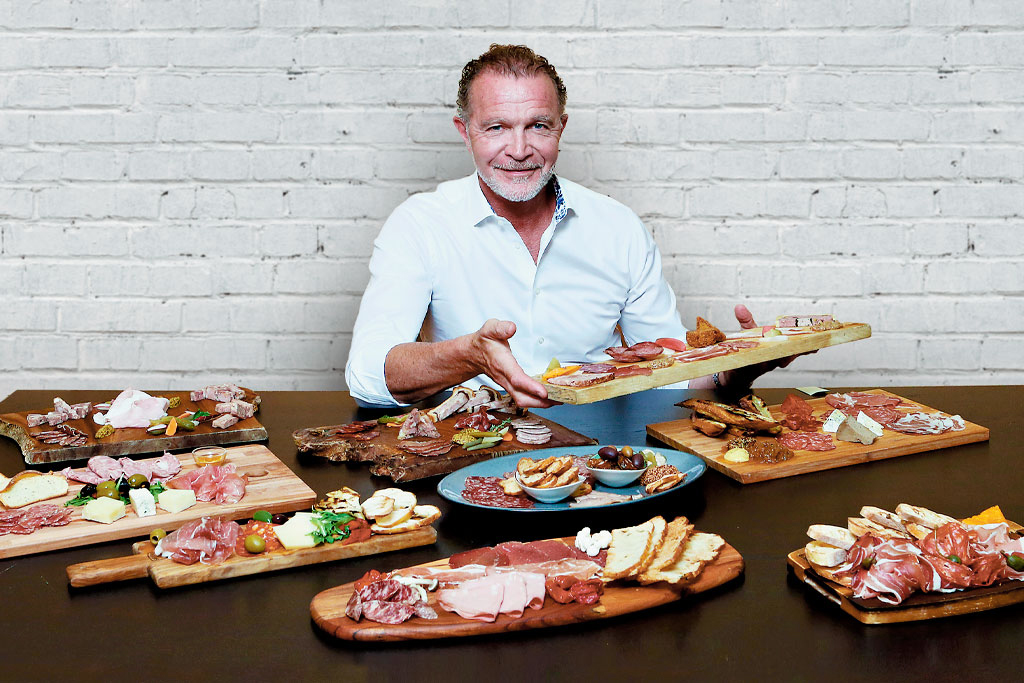
When it comes to this summer backyard favourite, McEwan says the selection is key — you want a variety of meats, a terrine or pâté en croûte, one cheese for contrast, the perfect bread and a fruit component. Who nailed it? Read on.


Winner: Selection of champions
Richmod Station, 1 Richmond St. W., $17
“This one has a very nice and broad selection. There are nicely pickled vegetables, and you can tell that they’re certainly making the terrine and the pâté en croûte. I suspect the salami [near the bottom of the board] is house made, and I like the croquettes,” says McEwan.


House-made heaven
D Bar, 60 Yorkville Ave., $28
“When I look at this board, I can tell they put in some work on it,” says McEwan, noticing that the salamis, the headcheese, the pickled vegetables and the pâté en croûte all look to be house made. “The headcheese is tasty and the presentation is artful, nice and clean,” he says.


Plated perfection
Thompson Lobby Bar, 550 Wellington St. W., $24
“This one is presented very well. I want to eat this one the most. It has fewer details, but it looks the most appetizing. It’s got caper berries, but it’s missing the pickling or olives. It’s got a nice cheese, but I’m not sure it’s the best choice, and the bread should be smaller,” he says.


Variety is key
Terroni, 1095 Yonge St., $23
“It’s a nice selection. So you have salami, one from the headcheese family, prosciutto, three variables on cheese and toast. The toast is a little bit generic for me, and I would prefer a combination of pickled vegetables and forget the arugula. This would also be great with a spicy mustard,” says McEwan.


Cured creations
Baro, 485 King St. W., $24
“The only problem here is the colour of the plate; it’s making everything look a little grey,” says McEwan. “The selection is good. They’ve got a triple crunch mustard that is heavy on the seed side, and they’ve added some pickled vegetables as well as the house-made olives.”


Breaking bread
Barnsteiner’s, 1360 Yonge St., $18 
“I like the fact that they grill their bread. They really nailed their bread. They have two mustards and an apple jam. It certainly has a very broad selection. It doesn’t have a terrine, but it has the liver. The grainy mustard is a great choice. I don’t think it needs the Dijon as well,” he says.

How They Met: 9/11 shaped the love story of the couple behind ‘Come From Away’

0

Come From Away, the musical about the town of Gander, N.L., that temporarily doubled its population in the wake of 9/11 when planes were redirected there, is the broadway hit of the year, snapping up seven Tony Award nominations. We chatted with the play’s creators, Torontonians David Hein and Irene Sankoff, ahead of the Tony Awards on June 11, about how the events of 9/11 shaped their love story.   

How they met
We met on the first day of frosh week (which is as crazy as it sounds) at York University. It was a welcome barbecue (David thinks it was a pancake breakfast, but he’s wrong). What we can agree on was that we liked each other from the start, but we were dating other people. 

The first date 
We had been friends for about two years, and at one point, David said to me, “Can I take you out sometime?” I was shocked. I confessed I liked him for a long time and he said, “I’ve liked you for a long, long time,” and that was it. We had our first date at Pizzadelic near Yonge and Bloor in the late ’90s. It was late winter, early spring, because it was still cold, but the days were getting longer. We jumped into a photo booth at one point, and we still have those pictures somewhere.  

The proposal 
We were at a pancake place, and I said to David (who is an American citizen and I’m Canadian), “You want to come to New York with me when I go to grad school, so, I have a business proposition for you. Let’s get married so I can get my citizenship.” I know, romantic. He nearly passed out. He said he wanted to do a real, romantic proposal, so a little while later, I came home to candles and rose petals strewn everywhere. Except he needed more time to set everything up, and he wouldn’t let me in. He asked me to come back in five minutes. Romantic.  

The wedding 
We were living in New York. It was about a month after Sept. 11, and we were already planning our wedding a year later, when David said to me, “What are we waiting for?” We were part of the post-9/11 seize-the-day mentality that a lot of New Yorkers had during that time. We got legally married at city hall in New York City in October 2001. It was a beautiful, small wedding with David’s cousin as our witness. 

We didn’t tell almost anyone at all that we had gotten married, so it was both romantic and in some ways really, really sensible because it was this sacred thing that was just about us, not anyone else’s expectations or beliefs. I think it’s a part of what gave us such a solid foundation.

After, we went with David’s cousin to retrace the path she had taken to escape the World Trade Center a month earlier. None of us really thought about how we hadn’t been downtown in a month. I think we were all, honestly, in some sort of stage of shock. In many ways, that day reminds us of Come From Away — this celebration of love in the shadow of this horrible event. 

A year later we had our previously planned wedding with family and friends back at Heintzman House outside Toronto. Then we took a wonderful trip to Rome, Venice, Florence and Lago Maggiore. 

The kids
Molly is almost four and has two cat siblings, Elphaba Pretzel, 9, and Gambo Jetpack, 6. Molly has also grown up next to Come From Away, so some days it feels like she and the show are siblings. We always say it takes a village to raise a child, and it takes an even bigger village to raise a musical while raising a child, and Molly’s been raised by our Come From Away team, the best community we could ask for.  

Working together 
We started writing together because, between day jobs and night jobs, we never saw each other. And now we’re together 24/7. It’s tricky to find the line between work and life, so we have rules: we don’t talk about our shows when we’re tired, angry, hungry or in the morning for me (I’m not a morning person). 

Come From Away will return to Toronto in February 2018 at the Royal Alexandra Theatre.

Rarely does a ballet begin in a mental institution

0

For every Nutcracker and Cinderella, the National Ballet of Canada offers the flipside of the tutu coin. This month, it’s the Canadian premiere of the explosive ballet A Streetcar Named Desire, choreographed by John Neumeier. A production that could come with its own warning for graphic subject matter.

The ballet, based on the Tennessee Williams’ play, features Jurgita Dronina, Svetlana Lunkina and Sonia Rodriguez dancing the role of Blanche DuBois.

It opens where the play ends, with Blanche in a mental institution. Through her character, different aspects of the story are revealed through a series of flashbacks.

“In his [John Neumeier’s] ballets, it is an impression of what the play is for him,” says Rodriguez.

“It’s not like watching the play. It’s his version of that, his imprint. The whole ballet is through Blanche’s eyes.”

With the ballet, because the focus is on Blanche, there is a back story to her life we don’t get in the play.

“You do have some idea who she is and where she comes from,” says Rodriguez. “There is a lot more depth to what her life was like and how she got to be who she is when the play starts.”

Rodriguez was born in Toronto and as a child moved to Madrid, Spain, where she first learned to dance. She joined the National Ballet of Canada in 1990 and was promoted to principal dancer in 2000. She lives in Forest Hill with her husband Kurt Browning and family.

One of the reasons she was excited to set to work on A Streetcar Named Desire was the opportunity to work with American choreographer John Neumeier, recently awarded the Prix de Lausanne Life Achievement Award.

“He’s one of my favourite of all time,” Rodriguez explains. “I tend to always hope to be in his ballets when we get a chance to have him.”

What the ballet offers dancers is the opportunity to hone their dramatic chops. It’s not just about physical movements. It’s also about conveying some serious emotion.

“What’s wonderful about working with ballets that John has choreographed is that there is always meaning and a reason for every single step and movement that you do,” she explains. “Any action, any step, any gesture, it comes from an emotional place. There is always an intent before you even move.”

One might think there is some risk to adapting a story with names such as Marlon Brando and Vivien Leigh firmly attached to its history. 

But given the nature of the story and how it unfolds differently in the ballet, audiences should be open minded.

“It’s not a copy. It is different and it’s about her experiences,” Rodriguez says. “He could have picked another character with the same story, and it would be a very different ballet.”

The play is divided into two acts, one more nostalgic, the second, when the story shifts to New Orleans, Rodriguez describes as “more hectic and distorted.”

She also says the ballet is “very graphic,” suggesting that the company is likely to issue a warning for younger audiences.

“The play is very raw, and he did not hold back at all with any of the subject matter,” says Rodriguez. 

“It is a very explicit and graphic ballet, so that is something to keep in mind. There are some shocking scenes happening.”

A Streetcar Named Desire runs June 3 to 10 at the Four Seasons Centre for the Performing Arts.

Cabin etiquette: Why annoying kids matter

0

Now is the time of year when camp directors most often receive calls from parents about their child’s cabin placement. The days lengthen, the mercury climbs, thoughts turn to summer and anxiety ramps up.

This column is about cabin placement, but let me digress briefly and talk about anxiety. They’re connected. You’ll see. Every year in late March the American Camp Association holds its Tri-State Camp Conference. This is the largest annual gathering of camp directors in the world and my favourite. This because almost 4,000 camp directors come together to learn from hundreds of relevant experts.

Can you guess what the most popular topic was at the 2017 conference? Try. Anxiety. There was a session on camper and staff anxiety in almost every time block. Dozens of different sessions, same issue. Because anxiety stalks so many young people.

Which is not helpful to parents, whose anxiety ramps up in response to so many aspects of parenting. We worry about our kids’ physical safety. We worry bad guys will get them. We worry about dangers on the streets. We worry about abuse. We worry about bullying. And we worry about our kids’ relationships: Especially at this time of year when we can so easily indulge in the comforting (but false) illusion that we can help matters, socially speaking, for our kids, by getting involved in the cast list of their summer companions, whether it’s day camp or overnight camp.

Our own anxiety causes us to forget what Wendy Mogel so eloquently labelled “the blessing of a skinned knee.” The social equivalent of a skinned knee is the undesirable child in the cabin.

This is the child who’s bossy or impulsive or who gets easily frustrated and yells at other kids or who doesn’t quite get social cues so maybe gets in people’s personal space, or doesn’t get the joke, or their stories go on for too long, or they misinterpret things other kids say.

Years ago a very wise man said to me: “It’s much easier to get the cool kids to accept the nerdy kid than it is to get the nerdy kid to stop being nerdy.” I was borderline appalled, first at his use of such pejorative labels and second at his apparent pessimism.

But now that I have 28 years of camp directing under my belt, I know the man was right. The so-called nerdy kids in the cabin are almost always the kids who struggle socially. They are pretty much always doing their best to fit in, desperately hoping to do so, and not quite managing.

These are the kids you don’t want in your son or daughter’s cabin. These are the kids you phone us about.

And these are maybe the most important kids to have in our kids’ cabins. Seriously. They add more than the cool, socially competent kids. Way more.

Think about it this way: Who do we learn from, the easy people in our lives or the more difficult people? From the latter group we learn patience and tolerance and kindness and empathy. If everyone around us were easy all the time, we’d lack for opportunity to learn those lessons.

In my family, we have conflict. I think that makes us normal. Oftimes the conflict is generated by somebody being a “bad actor,” a.k.a. annoying or difficult.

When someone starts complaining about that person, I always (being predictable and boring) say: “Oh yeah, that’s the annoying kid in your cabin. What do we do about the annoying kid?” And then I remind them about patience and tolerance and that not everybody is as socially competent as they are.

They usually hate this. Just like parents hate it when they call and ask me not to put “that kid” in their child’s cabin, and I do not comply.

Because “that kid” in the cabin awakens and calls upon our children’s compassion and patience. Can you think of any more important skills to manage our most important lifelong relationships, at work and at home?

Taste Test: T.O.’s top rib joints

0


WINNER: Big and meaty
Adamson Barbecue, 176 Wicksteed Ave., $18/pound
“This is a proper rib. It’s got a bark to it, and the size is good. You can tell these guys are proper, and this is really good. It doesn’t fall off the bone, it’s got a good bite to it, it’s super moist and it has a peppery crust, which is good. That’s a solid rib, hands down,” says Corrado.


Bring the heat
Stack, 3265 Yonge St., $20 for a half rack
“They’re cooked really well. I’m not getting a ton of the smoke flavour, but I think that’s because the barbecue sauce is kind of dominating. But the sauce is also really good. It’s sweet and it finishes with a little bit of heat, which is nice,” says Corrado of the double-smoked baby back ribs.


A secret sauce
Boneyard Grill, 1554 Avenue Rd. & 10 Disera Dr., $19.95 for a half rack
“These are not the most flavourful,” says Corrado of the baby back ribs that are cooked in a signature house-made sauce that boasts 20 secret ingredients. “They’re cooked well and the sauce is fine, but I just wish there was more depth to the flavour.”


Smoked sensation
Cherry Street Bar-b-que, 275 Cherry St., $19.95 for a half rack
“The sauce is really good. It’s got good vinegar, and it’s peppery. And you do taste the smoke in it. It’s got a nice chew. They’re not falling off the bone, which is a good thing in barbecue. It should really hold up and not fall off the rib,” says Corrado.


Dry rub rules
AAA Bar, 138 Adelaide St. E., $15 per order
“These ones are nice and meaty. I can taste a bit of the smoke, but I think that smoke flavour could be a bit stronger,” says Corrado. “These ribs are dry rubbed and cooked really well. They’re also really moist and the meat is holding up well on the bones.”


Powerful pepper
Barque, 299 Roncesvalles Ave., $19 for the 5-bone ribs
“I can definitely taste the pepper,” says Corrado of the baby back ribs that are cooked in a lemon pepper rub and served with a lime wedge. “These ribs have a good kick to them. I like that but they are just a little bit dry, and I wish there was more meat on them overall.”

From Piano Piano to the Cancan

0

Two years ago, Victor Barry and his wife, Nikki Leigh McKean, promised each other to not open a new restaurant for at least a year. It was a difficult proposition for a chef still glowing from his latest venture — transforming the fine dining restaurant Splendido into the wildly successful Italian eatery Piano Piano. But when the Harbord Room closed in October 2016 and the space went up for sale, Barry couldn’t resist temptation.

“My wife and I started dating at the Harbord Room,” Barry says. “It has a huge history, not only with us, but with so many people in Toronto, and I just couldn’t get it out of my mind.”

Barry and McKean, along with Piano Piano co-owner Brendan Piunno, had finally transformed their Italian eatery into well-oiled machine. The number of meals served has grown from 180 to more than 280 on the busiest evenings, and the restaurant has earned spots on “best of” lists along the way. The married couple also had the important duty of raising their toddler-aged children, Sofie and Charlotte, on their busy plate. 

But the three business partners  jumped at the chance and purchased the space, beginning renos to transform it into a casual French diner named Café Cancan. 

Barry’s dedication in the kitchen dates back to the age of 11, when he spent weekends at his uncle’s Niagara Falls pizzeria. (“It was probably illegal,” Barry says, joking.) He then found work at the Prince of Wales Hotel as a co-op student, which segued into a full-time position after graduation.

There, Barry excelled, developing an impressive work ethic that saw him rapidly ascend the Prince of Wales’s culinary totem pole. On days off, he’d head into the restaurant to learn how to clean fish. 

“At 17 years old, I was working the fish station, which people were just livid about,” Barry recalls. “I was cooking food that I should never have been cooking at that time in my career.”

Following the departure of a trusted mentor at the Prince of Wales, Barry moved to southwest England’s Gidleigh Park, equipped with a ruthless dedication needed to survive in the two Michelin–starred restaurant. 

“Everyone was willing to cut the legs out underneath you to get ahead,” he recalls. “I learned discipline, and it built an incredible amount of character in me.”

After two years in England, Barry moved out west before joining T.O.’s Splendido as an assistant pastry chef. But his first stint was short-lived. Frustrated by the kitchen dynamics, Barry shipped off to Bermuda, where he worked as the sous chef of the Waterloo House Hotel. 

It was there that Barry prepared a life-changing meal for his vacationing former Splendido boss, David Lee. “I cooked him dinner, and the next day, he offered me the chef de cuisine job at Splendido,” Barry says. “Then I bought the restaurant in 2009.”

“I truly believe that the best cheese on a cheeseburger is American.”

Under the cloud of the financial crisis, Barry downscaled Splendido to a stylish trattoria. But the allure of fine dining nagged, and he found himself returning to $180-a-head tasting menus replete with half ounces of caviar, king crab and foie gras.

“We worked really hard for two years and became the fifth best restaurant in the country,” he says.

But the stress of running a high-end restaurant was piled atop a slew of changes in his personal life since taking ownership. Barry and McKean had two daughters, his father passed away and McKean was diagnosed with cancer. Something had to give. So Barry closed Splendido on New Year’s Eve 2015 and reopened with much trepidation as a mid-range Italian restaurant a few months later.

“It’s quite incredible how busy we’ve been and the positive press that we’ve had,” says Barry.

This time around, Barry calmly approaches Café Cancan’s early summer opening date.

“I’m more confident with Café Cancan than I was with Piano Piano,” Barry says. 

Following Piano Piano’s formula of classics “done right,” Barry hopes his new restaurant will achieve similar success. On Cancan’s menu, diners can expect reinterpretations of French staples like rib-eye steak and trout sorrel. His eyes widen with excitement as he describes the spatchcock chicken, cooked in a wood-burning oven and topped with a ginger-vanilla jus de roti.

Alongside these refined menu options, Barry has made a few deliberate additions to remind guests that Cancan, which will open at 10 a.m., isn’t Splendido 2.0. 

“It will be a café where you can grab a coffee and a croissant,” he says. “We’ll have classic French baguette sandwiches for lunch, and there will be eggs on the menu all day long.”

Notably, Barry will offer a double-patty cheeseburger with none other than an oozy square of fromage American in its centre.

“I truly believe that the best cheese on a cheeseburger is an American cheese slice,” Barry says.

Processed cheese and all-day eggs will leave Barry’s Splendido-era fans aghast, much as Piano Piano’s pizzas and pastas did at first. With Café Cancan, T.O.’s fine dining champion cedes yet again for the modest mid-range. But he’s found a sweet spot, balancing well-made food with affordability.

“It’s important to me that people feel like they can have a really good time and not worry about how much it’s going to cost them.”

Grey Gardens, Jen Agg’s brand new Kensington hot spot delivers on all levels

0
restaurant closings COVID-19

When Jen Agg — the diva of the Black Hoof and Rhum Corner — opens a new restaurant, the whole world (at least the Toronto food world) takes notice. And for good reason. Ms. Agg, while neither chef nor server, is the muse, the talent scout, who dreams up a new restaurant and pulls it all together, with more pizzazz in her little finger than most of her competitors have in their whole body.

Her new oeuvre, Grey Gardens, reminds me of the Black Hoof in its early years. She hired a super-talented young guy as chef and we have no idea what transpired between them. Did Ms. Agg simply give Grant van Gameren his head? Or was her artistic input part of what made meat magic?


Same deal at Grey Gardens. There is a ferocious fast-moving army of young cooks behind the open kitchen. Their output is more than dazzling, simultaneously light and assertive, loaded with flavour and backstopped with brilliant textures. This is wow food. Good luck getting a res, ’cause too many people know it already. Our dinner starts with sweet fat slices of impeccable raw sea bass spiked with star-shaped cut-outs of raw green apple with ultra-thin celery shavings and pickled jalapeños for jazz. We go on to raw sweet shrimp with long thin curls of compressed watermelon radish — the sweet and the puckery, the soft and the crunchy combined. Then cometh al dente sous vide rutabaga with scatters of deep-fried shallot, Belgian endive shreds and PEI cheddar. A clever play of textures and flavours, sweet, salty, soft, crunchy.

Then there is uber-sensual ravioli stuffed with creamed squash and roofed with black truffles, awash in the lightest possible butter sauce flecked with baby chives. On the side, for dipping, two fabulous dollops: burnt applesauce and 20 per cent cream.


Of course Ms. Agg’s team could never settle for the post-prandial prosaic. Hence their dessert homage to spring: there are small cubes of pink poached rhubarb looking cute with discrete delicious dots of pistachio mousse, tiny celery fragments and celery sprouts for savoury, buttery crumble for sweet, small cubes of mochi rice cakes for soft, and house-made yogurt ice cream for creamy bite.

The room is like the dessert —carefully curated, it’s a grey on grey tone poem, not fancy but pretty. Thoughtful. Noisy, thanks to being incessantly full, with tables turning on a dime. Attention to detail abounds: the wine glasses are monogrammed, and the napkins and the shiny formica tables sound different colour notes, all variations on greyish.

Ms. Agg prowls the room. She doesn’t serve and only clears the occasional plate. So what, one wonders, is she doing? Aha, it’s the aesthetic she’s ensuring. For Jen Agg is a visionary. She dreams up restaurants and then builds a team to make it happen. As for the grit to make it happen night after night, that’s the invisible work she’s doing as she prowls Grey Gardens.