
Home Blog Page 575

How to turn the 9 in 10 kids who don't get enough daily activity into outside kids

0

Society grows more technologically advanced daily — and human beings more digitally savvy and connected with each generation.

There are benefits to this — faster information flow across distances, advances in health care and other vital support systems — but social and environmental impacts are not always so obvious. 

Where might one look to see the perils of this societal evolution? Try the social development of children. Today’s children spend increasingly less time outside and more inside, their faces often lit by the glow of screens.

A 2016 study showed fewer than one in 10 Canadian children age five to 17 gets the single hour of daily heart-pumping activity they need. More than three-quarters surpass the recommended daily maximum of two hours of recreational screen time. As a result, our children are becoming less healthy. They’re even having problems sleeping.

How to buck this troublesome trend?

Think back to your own childhood. What were some of your happiest, healthiest times?

I reflect fondly on the time I spent fishing with my father and the many days I spent exploring nature, catching insects in swamps, hiking forests and mountains, encountering animals, immersing myself in any natural setting I could.

As time went on and my interest in sciences grew, I developed a deep appreciation for our embeddedness in nature. We are a part of nature, after all. Like other animals, we rely on clean air, soil and water to live. 

Yet I find it remarkable how easy it is for many of us to forget this in a world of paved streets, skyscrapers, computer tablets and desk jobs. In such a world, jobs — and thus, the economy — become our top priority, and we fail to recognize our utter dependence on nature for our health and survival.

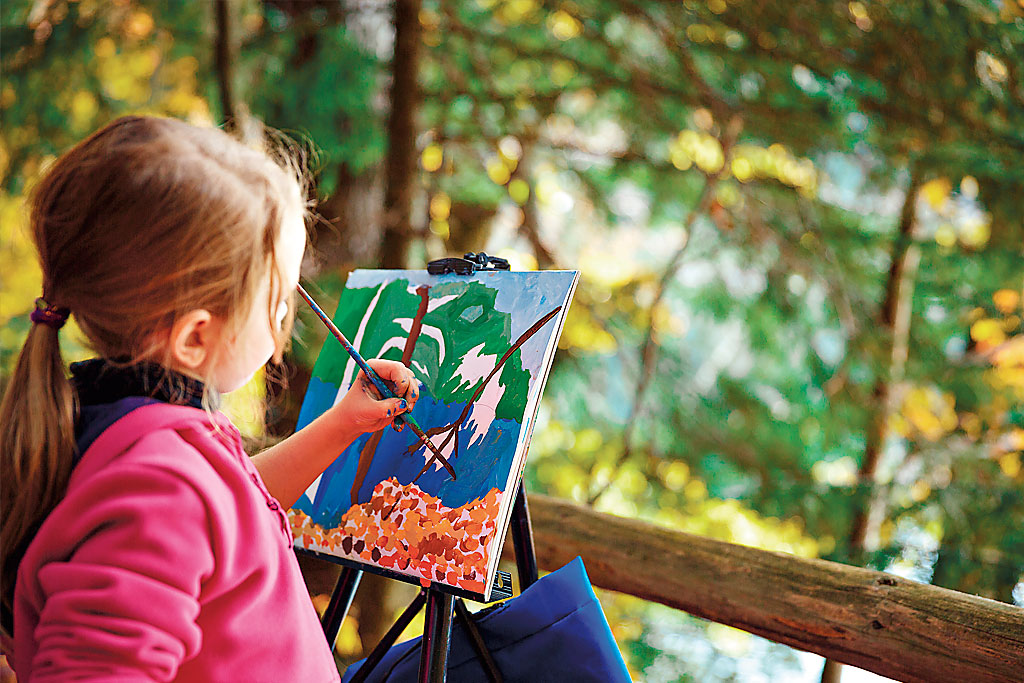
The first step in nurturing “eco-friendly” young people is to immerse youth in nature. Provide them with opportunities to discover the wonders of nature daily. Speak of nature as it truly is: Our lifeblood, not some external force that humans “manage.” When it comes to the challenges facing our natural world, like the worsening effects of climate change, explain to them that we are responsible for much of the recent phenomena — and we have the ability to change our ways and create a sustainable world. 

Let’s start with the easy stuff — getting outside.

Over the past two decades, researchers have documented what most of us know intuitively: Access to nature is good for people. It helps with learning, physical health and overall happiness and well-being. Being outdoors can reduce stress and symptoms of attention deficit disorders while boosting immunity, energy levels and creativity. 

Even in built playgrounds, kids spend twice as much time playing, use their imaginations more and engage in more aerobic and strengthening activities when the spaces incorporate natural elements like logs, flowers and small streams, according to research from the University of Tennessee at Knoxville.

Where to start? 

Many children are inherently curious explorers, so you may not need to do much to cultivate a connection. Just take them outside. If you’re having difficulty, you can do many things to introduce children gently to their natural surroundings.

With September and school here, many parents will face the challenge of balancing recreation time with work and school schedules. If you need help, the David Suzuki Foundation’s four-week, back-to-school superhero challenge provides materials to help get kids back outside to learn about critical environmental issues. 

Access to nature means happier, healthier children — and getting kids outside can be easier than you think. What’s most exciting is the longer-term impact of connecting young people with the natural world: Children who spend time in nature are far more likely to care about protecting it later in life. As humanity faces climate change impacts powerful enough to damage our planet irreparably at best — or literally end our species’ time on this planet at worst — what could be more important.

Years ago, I wrote that “A baby nursing at a mother’s breast is an undeniable affirmation of our rootedness in nature.” But soon after that beautiful introductory stage of life, many of us lose sight of that connection. 

Humankind needs to shift the way we see our relationship with nature, to remember this embeddedness within it. It starts with teaching children to do better than we did. 

It may seem as simple as a hike in the forest or a day at the beach, but the survival of humankind depends on it.

Sarah Richardson has a new show

0

Rosedale resident and HGTV Canada personality Sarah Richardson is embarking on her seventh home design series, Sarah Off The Grid. This time she’s getting the whole family involved as she’s sharing the general contractor role with her husband Alex and getting input from her daughters as they build their dream family home out in Creemore, Ont. What makes this home extra special? It is going to be entirely off the electricity power grid. That means solar panels to generate electricity and digging a well to bring water to the home, among many other eco-friendly tactics. Richardson hasn’t said goodbye to the city, though. Her Midtown house and downtown office are still home base. Sarah Off The Grid premieres Sunday, Sept. 10, at 10 p.m.

Outreach programs open the door to Toronto private schools

0

Toronto private schools, such as Upper Canada College and Branksome Hall, are known as some of the most prestigious in the country, and they have price tags to match. Outreach programs, like African-Canadian Christian Network (ACCN), provide opportunities for students to excel in an enriched environment, helping to bridge the gap between students from lower income areas and private schools.

Angelous Ginanena is one such student. The athlete and science buff was connected to UCC through ACCN in Grade 8, and he’s now heading into Grade 11 in the school’s International Baccalaureate (IB) program.

As a strong basketball player, diligent student and humanitarian (he travelled to Kenya with Me to We to build a school this past March), Ginanena has success in all areas at school. He says his time at UCC has made him a well-rounded team player, and he doesn’t regret the decision to enrol in high school outside of his hometown, Markham, despite the long commute times.

“Having to balance basketball and other extracurriculars with my school work has really helped me become more of a focused person,” he says. “All the things I’ve had to juggle and being in a UCC environment where they preach thinking ahead and planning have really helped me become a more disciplined person.”

Ginanena says his plan is to go to medical school after graduation, and he’s still deciding between pathology and pediatric neurology.

His mother, Levina Kahunba, says she began researching schools offering the IB program when she learned her son was gifted and needed more of an academic challenge than the public school system could offer.

“He was doing well in school, but he was really not challenged. I thought maybe he should go to an IB school, and I heard about the financial aid program at UCC through ACCN, so I thought, ‘Let’s try this; if you get it, you go,’” she says.

Kahunba says the UCC community has welcomed her family and she’s grateful that her son had the opportunity to switch over to the private school system.

“The broader goal is to ensure our students are part of a pluralistic society.”

“I really appreciate the fact that they’re giving these opportunities to our kids. It’s been a great way to network, and it’s an environment where everyone is down to earth and so inviting. All the driving and picking up and dropping off has been worth it,” she says.

David McBride, vice-principal of enrolment management at UCC, says ACCN has connected the school with some of its brightest students. This fall, UCC will have 17 students who have come through ACCN.

“We’re trying to make ourselves a much more accessible school,” he says. In a city as multicultural as Toronto, he says pluralism should be a goal of every school. “While financial assistance ensures a more diverse student population, the broader goal is to ensure our students are part of a pluralistic society and will help to ensure that Toronto, and the world, will be more accepting of different points of views and perspectives in the future.

Tuition costs at UCC total $31,000 for one year, which McBride estimates only one per cent or less of the population is able to afford. He says the financial aid the school offers and outreach programs like ACCN are essential because they provide opportunities for talented children to receive an enriched educational experience including quality facilities, small class sizes and one-to-one mentoring.

Branksome Hall also partners with ACCN as well as the Stephen Leacock Foundation to provide opportunities for low-income families. Kimberly Carter, director of enrolment management at Branksome Hall, says the school’s outreach programs have enabled several outstanding students to attend the school.

“We’re very proud of the fact that we have $1 million in financial assistance to partner with families and make a Branksome education possible. ACCN is one organization we work with to introduce us to some great families who may not otherwise consider Branksome Hall,” she says.

Carter says one outstanding student in particular comes to mind: Kiana Romeo, a scholarship student who graduated this past spring. For her Grade 12 project, Romeo created art pieces to showcase her experiences as a financial aid student at Branksome Hall and how the school positively impacted her over four years. Romeo’s project motivated her classmates to raise $84,000 to make more scholarships possible for future students.

“It was Kiana sharing her experience that motivated her peers to take action, and now we will have another full scholarship that will be available going forward,” Carter says. “We want to make sure that families are aware that there are financial assistance programs available because a Branksome Hall experience is not as out of reach as some families may think.”

Baby got Akira Back!

0

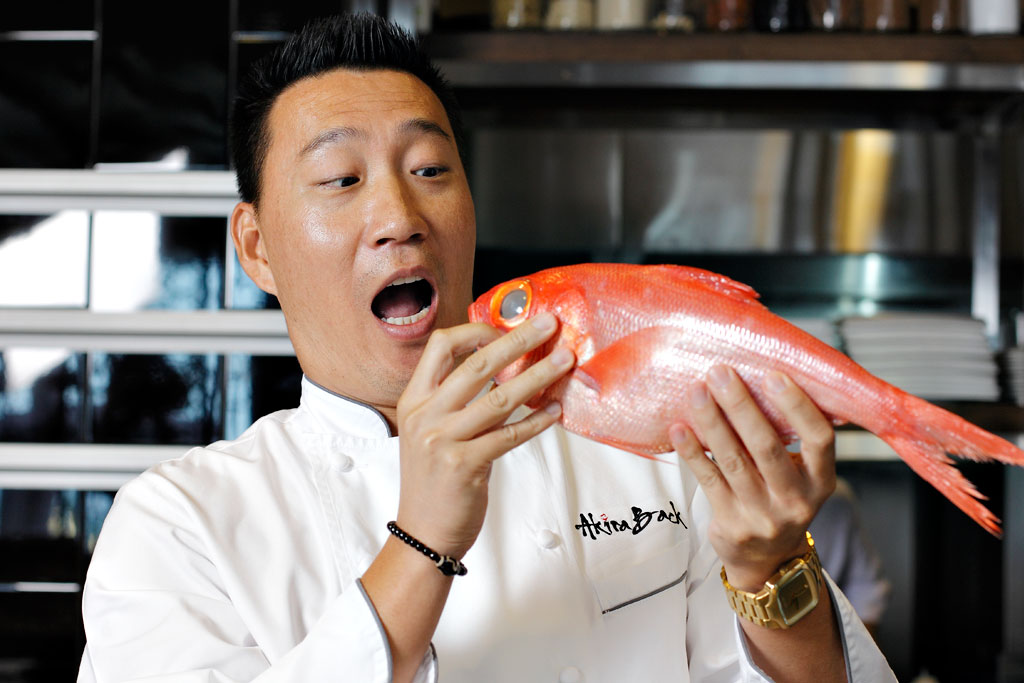
Ketchup chips aren’t necessarily the first thing you’d expect to find at an upscale Japanese restaurant. But Akira Back — a hipster celebrity chef who made his bones in Las Vegas  —  has crafted a name for himself by doing the unexpected. And come October, chef Back, along with T.O.’s powerhouse restaurateurs Charles Khabouth and Hanif Harji, will be opening Akira Back in the 44-storey Bisha Hotel Toronto, found at 80 Blue Jays Way. Et voila! Ketchup chips shall officially join the world of upscale cuisine.

“I’m currently working on dishes featuring essences from this city,”  the 43-year-old Korean super chef says. “One of them being incorporating the idea of ketchup chips into a dish and creating something unique.”

“There will be some of my signature dishes from Akira Back brand restaurants around the world featured at Bisha,” Back says. The chef’s eponymous Entertainment District eatery will seat 110 patrons and span 3,000 square feet in a space designed by Alessandro Munge of Studio Munge. Diners can expect Akira Back tacos, crispy pork belly and his famous jeju domi, which Las Vegas Weekly called “one of the best raw fish bites” in town. “I’d like to use freshly picked organic microgreens and also source as many ingredients as we can locally,” Back says.

Back’s path to the top was somewhat circuitous. The chef grew up in Seoul and was influenced by the cooking of his mother, who would make great Korean dishes for his family and friends. But it wasn’t the culinary world that first drew him in; the athletically inclined Back got his start in baseball before making a name for himself as a professional snowboarder. 

Following a good chunk of time on the circuit, Back switched lanes and went to culinary school in Colorado. The ambitious young chef-in-training worked his way up through the ranks to become the youngest executive chef for cooking god Nobu Matsuhisa,  of Nobu restaurant fame, before setting out on his own.

Back has also had plenty of screen time, having cooked against Bobby Flay on Iron Chef and prepared his trademark big eye tuna pizza on Good Morning America

In short, Back’s Korean-influenced Japanese cooking — crispy pork belly rolls, Korean short ribs and his take on sushi — is poised to take Toronto by storm. Fittingly, given Back’s backers, it’s not only chef’s food that’s sure to wow diners, but also his flair. At his Yellowtail restaurant at the Bellagio Hotel in Las Vegas, for example, Back casually sells a US$5,300 sake to patrons. It’s no wonder the likes of Taylor Swift and Pink have been wooed by his culinary offerings.

This wow factor is something that Khabouth and Harji, the muscle behind Patria, Estia and Byblos, are also well versed in. 

“Our goal is to create a young and hip atmosphere with great vibrant energy and provide a unique experience,” Back says. “I’m excited to jump into the melting pot of cultural diversity in this city and establish my own identity.”

As far as identities go, it’s hard to improve upon Back’s. The world-renowned chef has restaurants in New Delhi and Jakarta, but it was his work in Las Vegas that caught the eyes of Khabouth and Harji. The Toronto duo dined on the entire menu at Back’s Yellowtail Japanese restaurant before making the hot chef an offer. 

“We felt like the volume he does and the quality he maintains is incredible and, after meeting him, we understood quickly that he speaks our language,” says Harji, adding that he expects the chef to cook at Bisha’s October opening and otherwise to be here six or seven times a year.

“For a major metropolitan city, Japanese food is under-represented in Toronto,” Harji says. “Bringing Akira to the city is exciting because there’s a major gap in the market we can fill.” 

Of course, Back doesn’t like to talk about the marketplace or anything to do with the business of running a restaurant. Instead, chef likes to talk about flavour and, in Toronto, he looks forward to pushing his oysters and kobe beef like he’s done all over the world. Back says he’s excited to jump into his new kitchen, hire his staff — which will include some of his team from Vegas — and turn out Japanese fusion dishes the city has never seen.

“Akira Back Toronto will offer modern Japanese cuisine with a Korean accent,” Back says. His food will also be influenced by his experiences and adventures while travelling.

When asked how he believed ketchup chips could work in an upscale dining environment, Harji demurred, saying simply that he trusted chef Back and that he was pleased to be working with one of the most creative and coolest chefs in the world. In October, Torontonians will count themselves among the lucky ones who get to sample Back’s unique Asian blends.  

“I know he has great restaurants all over the globe, but we think his work in Toronto is going to be truly special,” says Harji. “Toronto’s such a melting pot that he’s going to take real advantage of our great flexibility of flavour.”  

You heard it here first folks: that flavour is sure to include ketchup chips.

Kids Tech Gear: What the class of 2050 might find in their schools

0

These gadgets, from virtual reality to robot pals, might be part of the classroom of the future.

A) 3D printer
Teachers can use 3D objects to illustrate hard-to-grasp concepts to students. $499

B) Digital interactive touch desk
The Makitso Sslab Jr. is a digital desk that creates a visual, interactive, touch screen experience for students.

C) Humanoid robot
NAO, Softbank’s first humanoid robot, motivates students to learn and interact with programmable technology. $6,000

D) Virtual reality
Vive is a virtual reality headset that can be used across many academic subjects to immerse students in a new environment. $1,149

E) Eye tracker
Goggles that track eye movement can be used as a tool to show students how visual attention can be applied to many research fields.

Teen wolf Quinn Ngawati ready to bring rugby to the masses

0
Toronto Wolfpack back home in Toronto

It’s been a crazy summer for newly minted professional rugby player Quinn Ngawati. He just graduated high school, turned 18 and flew across the ocean to compete for — and subsequently snag — a coveted spot on the Toronto Wolfpack’s League One rugby team. The club is Canada’s first professional rugby team and the latest to join the English Rugby Football League (RFL).

While Ngawati was playing for the Under 17 Canadian rugby team, a coach mentioned the upcoming Wolfpack tryouts to him.

“We thought that I might as well just go and give it a shot, maybe get my name on the radar of a professional side,” he says, hoping that at least he’d get some pointers to improve his game.

“I never really thought [an offer to play] professional would come this soon.”

Ngawati took part in the Wolfpack tryouts in Vancouver before 18 hopefuls got invitations to a week-long camp in England. Out of the contenders, only three made the team. Ngawati was the only Canadian. His teammates have already nicknamed him “the Quinnadian.”

Ngawati’s father is from New Zealand where he played rugby and where the wildly popular sport  prevails. Even as a young boy growing up in Victoria, B.C., Ngawati was drawn to the sport more than the typical Canadian sporting staples.

“Every Canadian kid goes through that period of enjoying hockey or enjoying football, but it’s [rugby]  kind of in my blood,” says Ngawati.

“It comes pretty easy to me.”

He went to schools in New Zealand and B.C., competing in rowing, basketball, rugby and swimming at St. Michael’s University School in Victoria.

As the youngest member of the Wolfpack, Ngawati is humble enough to know there’s a long road ahead to develop his skills. But he has the drive.

“I was able to come into the environment and prove to the coaches that I was ready to play this year for those games that they needed me to,” he explains.

“But obviously I still have a lot of work to do.”

The Wolfpack is in Toronto for several weeks playing matches against teams who cross the Atlantic Ocean to compete.

The team’s home turf is Lamport Stadium on King Street West, and the team resides at George Brown College, where they also enjoy daily meals prepared by a chef, says Ngawati.

A fast-paced, seven-person version of rugby was introduced into the Olympic Games in Rio de Janeiro last year, and Ngawati thinks that will help bring awareness to the sport in general in North America.

He says it’s a good option for kids to play, too.

With proper training to avoid injuries, he thinks more Canadian kids would enjoy the sport if they tried it.

When asked what he liked best about rugby, Ngawati hints at the tradition and history that has allowed the sport to thrive for more than a century.

“For me it’s the rugby culture,” he says.

“All across the globe rugby’s recognized, and the way that people act, I think it gives good structure for kids growing up. It obviously gives you an active and healthy lifestyle.”

You can purchase tickets to watch Ngawati and the Wolfpack take a bite out of the competition from their website.

Lucian Matis on his upcoming show at Toronto Fashion Week

0

Lucian Matis, the designer behind Sophie Grégoire Trudeau’s iconic purple and orange gown worn at the state dinner with the Obamas, is kicking off TFW as the first runway show on Sept. 5 at 5 p.m. Here he dishes on his upcoming collection.

What has the “Sophie effect” been like?
Having her wear two of my pieces on her historic visit to the White House was a dream come true. The attention it brought to the brand and to the industry in general has really helped it grow and develop. Sophie Grégoire Trudeau shone a light on the exciting and deep talent pool of fashion design in Canada. The world has become more aware that Canada has hot designers from a very cool place. 

When did you become interested in fashion?
I learned to sew and design in my mother’s tailor shop in Blaj, Romania. I started working directly with clients from the age of seven. My teachers were some of my first. Later I noticed that I was able to use fashion as an excuse for skipping school, and I think this propelled me further down the path I currently find myself on.

Are your pieces made in Toronto?
All of my pieces are proudly designed and produced in Toronto. This is a very deliberate decision as it allows me control over the quality of my garments, the supply chain for raw goods and reduces the ecological footprint. The problem with fast fashion is that someone somewhere is paying the price for your $5 T-shirt. 

What inspired your fall/winter 2017 collection?
I was inspired by the glam rock revolution. It’s reminiscent of rock icons and cool, edgy nightclub looks over the decades.

Can you give us any hints about your upcoming show at TFW?
You’ll have to come to TFW for the big reveal, but the spring/summer 2018 collection is called Flight. You can expect luxurious fabrics, a nod to the wonder and beauty of nature and a breezy, free and light feel. 

Planet-friendly packs

0

Jeanne Beker sifts through the city’s most exciting, sustainable and style-conscious school bag options that’ll make you — and the earth — a little happier.  

A) Annie Thompson, anniethompson.ca, $285
“This is very graphic, very appealing, very pop!”

B) Cambio Market, cambio.market, $130
“This reminds me of going to camp, but it looks a little polished in an earthy way.”

C) Matt & Nat, mattandnat.com, $145
“This great Canadian label does wonderful vegan leather accessories.”

D) SoYoung, ca.soyoung.ca, $55
The little foxes and the evergreen trees are charming. We all know how hot foxes are as a design motif.”

E) Fresh Collective, 401 Roncesvalles Ave., $80
“This is vegan leather; a lot of kids are going that route.”

F) Formosa Brands, etsy.com, $99
“I love that this is made from bamboo fibre that looks and feels like paper.”

G) Advice from a Caterpillar, 8 Price St., $104
“This is very no-nonsense with a wonderful message.”

H) Re-Kånken from Fjallraven, fjallravencanada.com, $105
“The mustard yellow colour really makes it for me.”

I) EcoGear, ecogear-products.com, $19
“I love the fact that they’re making these bags out of recycled water bottles.”

J) Pixie Mood, pixiemood.com, $85
“Really cute with a little bit of punk edge.”

K) Mariclaro, mariclaro.ca, $399
“This is upcycling the leather interior of a 1999 BMW 501. That is very, very cool.”

Taste Test: T.O.’s perfect pie à la mode

0

September is apple-picking season around these parts, so we rounded up the city’s most decadent apple pies and matched them with this town’s best gourmet ice creams in search of the perfect dessert pairing. Which duo did chef Mark McEwan crown tops in T.O.? Read on to find out.

;

Pie Winner: Rolling Pin
1970 Avenue Rd. $25 
“This definitely has the best pastry. It has a nice bite to it, good crunch and the best balance.”

Charmaine Sweets
115 Vanderhoof Ave., $15 
“There’s lots of cinnamon in this one. It tastes good, but the apple feels just a little bit raw.”

Summerhill Market
446 Summerhill Ave., $12.99
“They really cook their pastry. It’s actually a very good pie. I really like the apples and the way they’ve managed the apples.”

Dessert Lady
12 Cumberland St., $11  
“This is a classic apple pie, and it has a nice golden colour to

Phipps Desserts
1875 Leslie St., Unit 21, $14.95 
“This is very well seasoned. There’s some nutmeg, cinnamon. Nice colour on the apples.”

Ginger’s Cupcakes and Desserts
10220 Yonge St., $25
“It’s a nice idea. Apples and bacon can go together, but the bacon should be crispy, and the apples should be caramelized.”

Ice Cream Winner: Bean and Baker Malt Shop
326 Harbord St., $7 / pint
“This is the best ice cream. I like the way they’ve left the vanilla in it. I like the colour of it; this is a more natural colour.”

Dutch Dreams 
36 Vaughan Rd., $8.71 / half litre
​“This is good ice cream; it eats well. I really like the use of the egg yolk. What I like is it’s not too sweet, so you can eat more.”

Summer’s Ice Cream 
101 Yorkville Ave., $8 / half litre
​“This ice cream is super smooth.”

Put A Cone On It 
633 Bloor St. W., $8.50 / pint
“This has a very different taste,” says McEwan of the egg-free ice cream that uses pandan (screwpine) leaves.

Ed’s Real Scoop 
920 Queen St. E., $8.50 / pint
“This has more of the classic vanilla ice cream taste.”

Greg’s Ice Cream 
750 Spadina Ave., $7.75 / half litre
​“This sweet cream ice cream is very rich. Very rich.”

From the Annex to the Olympics

0

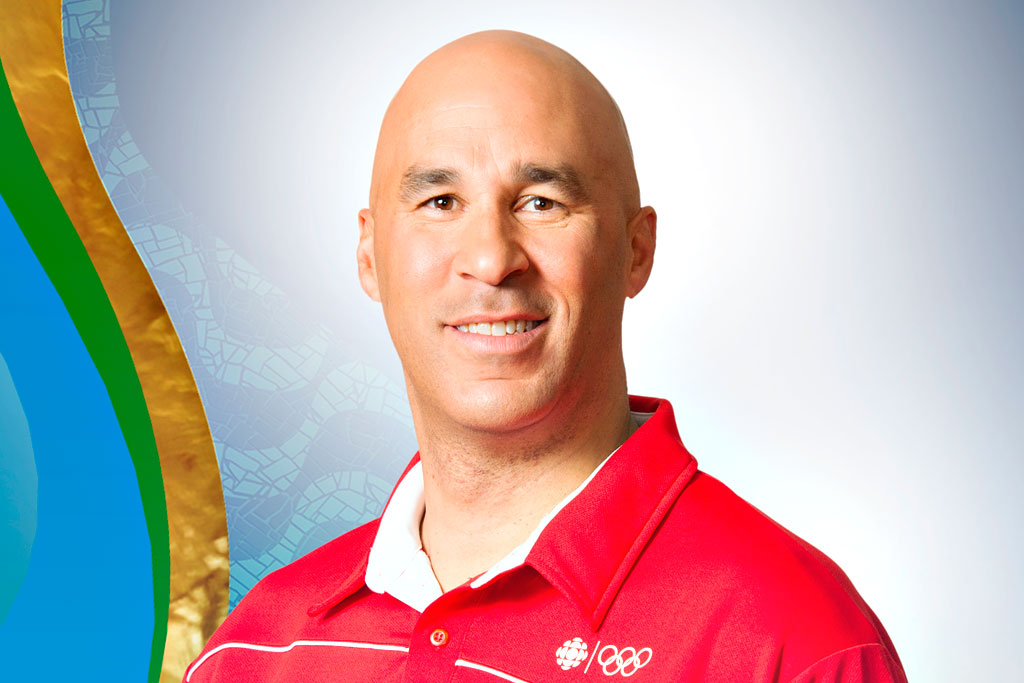
For Michael Smith, his Olympic and medal-winning career as a decathlete is only a part of his story. 

After winning medals and breaking records at events such as the Commonwealth Games, the World Championships in Athletics and the Götzis International Decathlon and being Canada’s flag bearer in the 1992 Olympics, Smith has gone on to broadcasting track and field events for the CBC. 

The Central Technical School graduate says he always had an interest in high performance, whether sport related or not. 

“That interest just happened to start in sports, but the criteria of high performance — the schedules, the focus, the hard work, the diligence, the surrounding yourself with great people — certainly transferred into different aspects of my life,” he says. 

Smith says his interest in sports started at age three when he would watch the older kids play different sports. 

“I have an innate feedback system loop where I could watch someone play basketball and watch how they shoot, and my body could just do it after I watched it,” he says.  

Growing up, Smith says he had access to a variety of sports instead of being pigeonholed into one. 

“The fact that I got to try so many different sports was a huge asset for me. Every sport I would try and have fun at,” Smith says. 

That led to him eventually being recruited by the Canadian Olympic decathlon coach, who encouraged him to move to Toronto for training and to complete his last year of high school at Central Tech.

Smith views the coaches and mentors in his life as instrumental to his success. 

He cites Canadian decathlon coach Andy Higgins as the reason why he chose to pursue decathlon instead of other offers for sports such as basketball and football. 

“Beyond being a world-class Canadian Olympic coach, he was a great salesman as well, and he sold me on the possibility of the Olympic dream,” says Smith. 

Mentoring and coaching has continued to play a big part in Smith’s life, like coaching his young daughter in house league soccer. In his business career, which he first became interested in while at Central Tech, Smith helps entrepreneurial clients reach their goals. 

“That’s where I feel like I’ve transferred my athletic background into coaching skills, not in sport, but in wealth management and finance. Helping somebody reach their goals is really satisfying,” he says. 

In broadcast, Smith describes his agent Elliott Kerr as a great friend and business person who helped him into the industry with CBC. 

When it comes to mentors in the community, Smith says he looks up to sportscasters Don Wittman, Geoff Gowan and Mark Lee whom he also considers friends who made his sportscasting experience so enjoyable. 

“I remember when Cathy Freeman won the 400 metre in Sydney. I still get goosebumps talking about it … but even with all those performances on the track, if I didn’t work with great people, it wouldn’t be fun. It wouldn’t be worth it,” says Smith.

“Good people, good projects, that’s kind of my mantra. When I focus on those things, good things seem to happen all around.”

Smith just wrapped up broadcasting the IAAF World Championships in London, England where sprinter Usain Bolt ran his last race. The event turned out to be a disappointment for the Canadian team with zero medals. 

Restaurant Review: Next of Kiin

0

I have been to Thailand three times now. They say an army marches on its stomach, and this I, as a frequent traveller, can confirm.

I learned to love the fragrance of lemongrass, the sweet exotic tang of Thai basil, the salty back story of fish sauce against the sweet of palm sugar, all with the crunch of toasted peanuts. It’s a cuisine of great complexity, of big flavours in careful balance. If you can get past the chilies.

Chef Nuit Regular and her husband Jeff have made a delicious niche in Toronto catering to us, the not-so-hot-chili people. And now Kiin, their fourth restaurant (after Pai, Sukhothai and Sabai Sabai), a pale and lovely room.

Kiin’s focus is royal Thai cooking, although they do other Thai food as well. Royal cooking is what happens when normal Thai cooking becomes more painstaking and detailed, fruit and veg deseeded, fish deboned, presentations get pictorial and elaborate. Fit for a king.

The signature app is roy Thai, a jewel of a platter with four small bites, each prettier than its neighbour: mha hor is sweet pickled turnip carved into a pineapple flower and stuffed with savory/sweet coconut and peanut paste. Chor ladda is a purple flower-shaped dumpling (made from jasmine rice dyed with butterfly pea blossoms) topped with crispy deep-fried Thai garlic. Rhoom is delicate lacy egg net wrapping up minced seasoned chicken. Thoong thong is a cute little deep-fried wonton filled with beautifully spiced minced chicken and shrimp and sitting in a cucumber box. One bite each, all wondrous. I’ve eaten lots of appetizer platters in Thailand, specially in the north, where they favour such things, and none has come close to this opus.

But it’s small, so bulk up apps with their warm sweet/savoury spread of peanut, tamarind and coconut studded with satisfying chunks of shrimp and crab, to spoon onto crisp rice crackers.

I rarely think of rice as a main course, but khao yum is a contender. It comes in a big golden bowl, three slender pyramids of dyed rice: red from beets, purple from butterfly pea flowers and yellow from turmeric.

Around the pyramids are small piles of finely chopped lemon grass, long beans, Thai sawtooth coriander, kaffir lime leaves, cucumber, toasted coconut, pomelo (kissin’ cousin to grapefruit), fried chilies, sunflower sprouts and Thai white turmeric. The server tosses it all together with a sauce of tamarind and soy paste. We inhale it gratefully.

The other main we favour is gaeng boombai nua, beef short rib braised, gentled into moist tenderness with tamarind, cucumber and cute little pearl onions. This too was inspired by the kitchens of the royal family.

To be eating Thai royal cuisine at this moment of history, in Toronto, is surely an homage paid to her homeland by Nuit Regular.

King Bhumibol Adulyadej of Thailand died in October 2016, and the country declared a year-long period of mourning. During his long reign, the king was revered throughout Thailand. There is still black and white bunting with His Majesty’s picture every few blocks all over Thai cities. Kiin seems a fitting memorial to a lost and beloved monarch.

Kiin, 326 Adelaide St. W., 647-490-5040

Kids: 905’s next little big thing

0

As the saying goes, age ain’t nothing but a.… At the positively ancient age of 10, thespian Millie Davis has put in some serious time in front of the camera. Davis got her start playing the take-no-nonsense Ms. O on Odd Squad back when she was seven years old. For the uninitiated, the hit TVOKids show follows a gaggle of mini agents who solve crimes with their math smarts.  Now, 80 episodes later, she’s just tucked the second season into her back pocket. Stay tuned for Davis to show up on the big screen come November, when she’ll be seen in the feature flick Wonder alongside Jacob Tremblay, Julia Roberts and Owen Wilson. Oh, and she also met Barack Obama a few years back. No big deal.