
Home Blog Page 573

Sewell on City Hall: Tax increases based on market value assessments could ruin main street

0

“Sleepy” would not be the word to describe the Toronto municipal political scene during the last few months. All sorts of things burst onto the scene from Doug Ford announcing a 2018 mayoral run to chief planner Jennifer Keesmaat announcing her resignation and Amazon announcing it was looking to establish a second headquarters for North America,  employing some 50,000 people, perhaps right here in Toronto. 

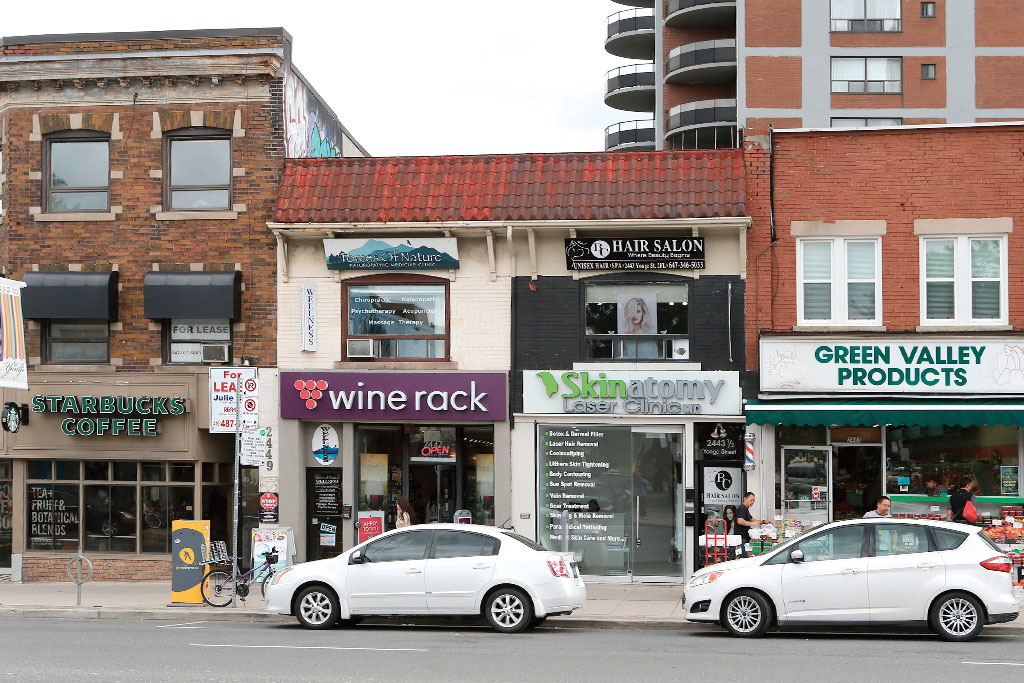
I thought the most intriguing news was that small shop owners on Yonge Street have objected to the steep rise in property taxes. 

It’s a story we will hear much more of in coming months, since its a general problem and not just affecting a few.  

The issue is market value assessment (MVA). 

The tax rate is applied to the assessed value of a property to create the property taxes that must be paid, and that assessment is based on market value. With the rapid escalation in sale prices in the city — particularly in the Yonge Street corridor where the condominium market is hottest — market values of many properties have risen quite astronomically. 

The provincial agency responsible for determining assessments eyeballs a particular area and then applies the increase in the value of a property recently sold for condos to determine the assessment of neighbouring properties, making their property taxes increase significantly. 

It is very unfair, since the small shop owner has done nothing to merit this large increase. 

In many cases the shop owner is a tenant, not a property owner, but the lease requires the tenant to pay the property taxes. 

Market value is a great way to drive out small shops even though they are often the lifeblood of a neighbourhood. 

Market value assessment affects others as well — it is the problem faced by the complex of very creative arts and culture businesses at 401 Richmond St. W., and it affects some older families without the incomes to cover the higher taxes on homes they have owned for decades.

Mayor John Tory responded to the complaining Yonge Street merchants by asking the provincial government to intervene. 

Certainly provincial legislation is at the root of the problem —MVA was introduced by then premier Mike Harris as he led an assault on cities with his many pieces of legislation (including imposition of the megacity against the wishes of 76 per cent of voters who opposed it in referenda) at the turn of the millennium.

But what’s needed are some alternatives to MVA as a way of calculating property taxes. 

Should taxes be based on revenues and expenses if it’s a commercial property? On family income if a residential property?  Should it relate to use? Purchase price? A combination of these things?

Sadly, tax systems are not something the public likes to talk about and understand: witness the difficulty the federal finance minister is having with legislation to close some tax loopholes that informed opinion seems to agree should be closed. 

If the public isn’t interested in talking about a subject, chances are that politicians won’t wade into it. I learned that lesson when I was mayor and led a process to revise the property tax system, only to find that few councillors wanted to grapple with the issues, and the reform proposal disappeared after the next election.

But a discussion on MVA must begin and it should happen at the municipal level, which is where the problem is. 

We clearly need a strong initiative from Toronto City Council to look hard at the system we have now and put forward some ideas for change and improvement if we hope to convince the province to pass new legislation. The city has to step forward: it can’t keep acting like a crybaby to the province. 

Maybe we’ll need to wait for the outcry about MVA to become louder.
Dream Homes: 35 million to 1

0

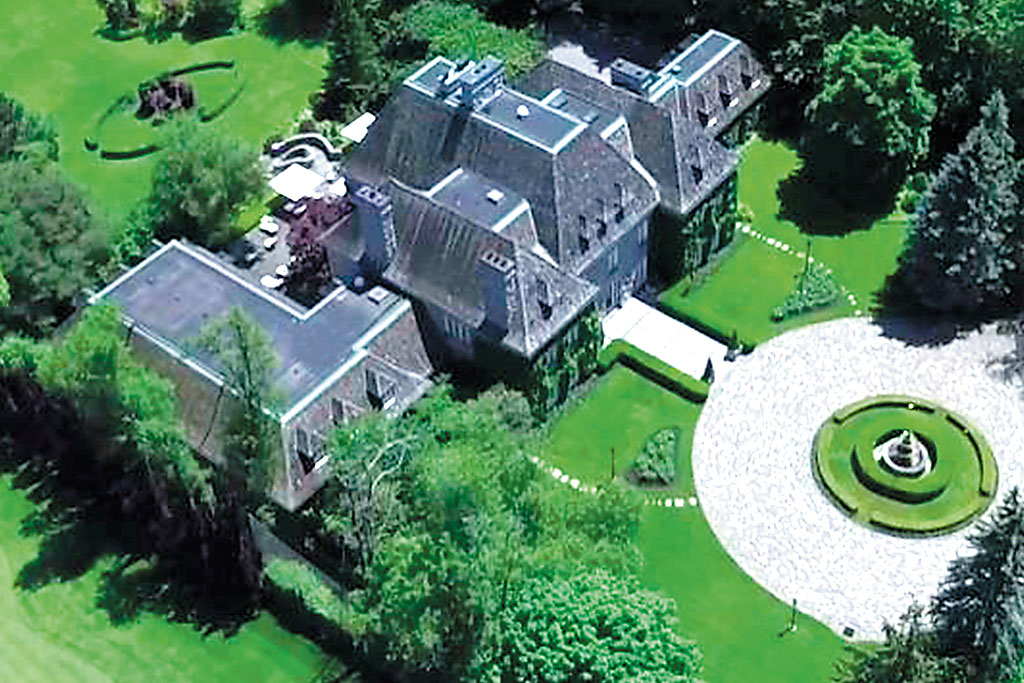
$35 MIL ON THE BRIDLE PATH
This gated French chateau at 68 The Bridle Path is on the market for a whopping $35 million. The elaborate home has played host to a fair share of notable persons, including Jane Fonda, Bette Middler and Pierre Trudeau. The expansive property includes more than four acres of manicured grounds to roam, a stately fountain, a circular drive made up of granite cobblestone and a stone patio. The three-storey mansion also boasts nine bedrooms and 14 bathrooms, a spacious indoor pool with high ceilings, a library with built-in bookcases and fireplace, a tennis court and, of course, a golf cart to get around in. The property is on offer with Re/Max Realtron Barry Cohen Homes Inc., Brokerage.  

VS.

$1 IN YORK MILLS
This palatial home at 30 Fifeshire Rd. has been on the market for more than 100 days and is currently on offer for the modest price of $1. Safe to say the price is probably too good to be true, since it appears as though no expense was spared in its construction. The 24,000-square-foot residence is teeming with luxurious details, such as custom-designed slab marble flooring, panelled walls, carved marble fireplaces and a grand marble staircase. Plus there is a frescoed ceiling reminiscent of Michelangelo’s Sistine Chapel masterpiece in the grand foyer. The three-storey home also includes a banquet hall that can accommodate 150 guests, an indoor pool, computerized golf simulator, wine cellar, and sauna. It is listed with HomeLife/Romano Realty, Ltd. Brokerage.

Cover Story: Sarah Gadon

0

The true story of Grace Marks dates back to 1840s Ontario, and Margaret Atwood’s novel, Alias Grace, was first published in 1996. Despite this, the themes and issues the story presents are just as relevant today, if not more so.

In the CBC’s new six-episode adaptation of Alias Grace, Toronto-born actor Sarah Gadon plays Grace Marks — the poor Irish immigrant housemaid who is accused of murdering her employer. Equal parts psychological thriller, true crime and romance, the series flashes back and forth between the 1840s and 1850s, when Grace is imprisoned for the murder and working with a progressive, young American doctor to piece together the memory of what really happened.

Complex and mysterious, Grace’s character would be a challenging yet rewarding part to play for almost any actor. Gadon says she was thrilled when writer Sarah Polley and director Mary Harron called to say she had been chosen for the part.

“I met Sarah and Mary, and I auditioned for them, and the next day, they called me and said, ‘Could you do the scene just one more way?’ I feel like that experience was a telling sign of how the project was going to go because there are endless possibilities for what things mean, how scenes can be played.… Your work is never done,” Gadon says.

Gadon began acting at a young age and her television career took off in her teens with roles in popular series such as Being Erica. She then transitioned to film where she became a muse for Toronto filmmaker David Cronenberg appearing in many of his films, from A Dangerous Method in 2011 to Maps to the Stars in 2014. 

For this miniseries, Gadon and the show’s international cast members had a grand tour of Ontario with filming locations in Toronto, Richmond Hill and Kingston.  

“We shot in farm country, which was beautiful in the summertime, and we did some stuff in Victorian mansions around U of T, and then we were also able to shoot on Lake Ontario, which was amazing,” she says. “We really got a sense of Toronto and the GTA.”

Gadon, a Toronto native who attended local arts schools, such as Claude Watson and Cardinal Carter, acted as a tour guide for her British and Irish co-stars, showing off a few of her favourite foodie destinations in the city.

“I got to host everybody and take them out on weekends,” she says. “We would always go out for dinners to Bar Raval, Bar Isabel, Woodlot, Union, Buca, Snack Bar.”

Although Gadon was able to let loose with her castmates on weekends, during the week, it wasn’t all fun and games. The show paints a picture of what it was like to live as a working-class woman in the Victorian age, and Gadon immersed herself in Grace’s world to embody the role. 

Part of her training included learning how to quilt — a running motif throughout the novel and the series symbolizing the weaving together of memories. 

“I always loved the imagery of quilts in the novel,” she says. “Textiles for women, especially during that time, were about who they were, where they came from, and it was about their ability to weave them into these articles and pieces for practical use in everyday life. These quilts tell stories, and that motif kind of extends into memory.” 

Gadon’s duties didn’t stop at quilting, though. She also had to learn how to speak with a Northern Irish accent, milk cows and perform other manual tasks — all while wearing a corset. She says playing the part of Grace opened her eyes to the hardship of the 1840s and ’50s, and the hot, heavy clothing was just one more layer women had to suffer under. 

“I think, on a large scale, women were trapped, and Grace was furthermore trapped because of her class, being working class,” she says. “In the Victorian era, women weren’t allowed to say how they felt; they weren’t allowed to express desire; they weren’t allowed to express love; they weren’t allowed to express all these different kinds of feelings which we oscillate between so freely now.”

Canadian writer, actor and director Sarah Polley transformed the story of Alias Grace from a novel to a six-episode script for television. She says that although many things have improved for many women around the world since the Victorian era, it’s crucial that stories like Grace Marks’ are continually told for the women whose voices are still so repressed. 

“A woman at that time of that class had so little power and so little agency and their life was so completely dangerous,” she says. “They were prey and they had to think as prey. The life of a woman in that time was terrifying; it was without freedom; it was back-breaking; and sadly, that’s the life of so many women today.”

Polley says there’s still much work to be done for women around the world. The story of the Grace Marks trial may seem distant now, but she says it’s only fairly recently that women have begun to take back their own narratives.

“If you were an alien from outer space, and you landed on planet Earth, and you were shown the timeline of women’s rights, there were millennia of no rights at all and then this tiny little blip toward the end of the 20th century going into the 21st century. You would see nothing about that as permanent,” she says. “In order for it to be something that actually gets held on to, it requires enormous recommitment to fighting for it over and over again.” 

Although themes of feminism, the underdog and the fight towards equality are prevalent in the show, Gadon says Alias Grace has so many more layers and elements that will keep viewers hooked until the very end. 

“It’s this thrilling psychological tale and a whodunit, but at the heart of it is this obsessive love story going on between these two people, this cat and mouse game,” she says. “When I was reading the novel and when I was watching the show, as much as you’re tangled up in Grace’s psychology, you’re also engrossed by her relationship with Dr. Jordan. My hope is that people love that as much as I did.”

Alias Grace airs Monday nights, starting Sept. 25, on CBC.

Toronto’s fab fall theatre guide

0

LUKUMI (THE WATAH THEATRE)
This exciting new work is billed as an “Afro-futurist Dub-Opera set in post-apocalypse Turtle Island in 2167” and is penned by award-winning local playwright and actor d’bi.young anitafrika. The world premiere of Lukumi at the Tarragon Extra Space, beginning Sept. 22, could be one of the most exciting theatrical events of this season (Tarragontheatre.com). 

CONSENT EVENT
So this is a bit of a cheat to get a couple of plays mentioned, but the fine folks at the east end’s Crow’s Theatre are kicking off their second season with back-to-back powerful works delving into modern sexuality. First up is Asking For It, by Ellie Moon, that reflects on the Jian Ghomeshi scandal at CBC, followed by Lo (Or Dear Mr. Wells), by Rose Napoli, which investigates the student-teacher relationship. Both plays have mature content warnings (Crowstheatre.com).

UNDERCOVER
The Annex’s beloved Tarragon Theatre kicked off its new season on Sept. 19 with Undercover, the latest from powerhouse Rebecca Northan, creator of the award-winning Blind Date. Like Blind Date, an audience member is plucked from the lobby to participate in the production, this time as part of a whodunit caper as a rookie detective following a murder on the Tarragon stage (Tarragontheatre.com). 

FLASHING LIGHTS
This new production slated to open at the Theatre Centre on Oct. 7 looks at how digital technology impacts lives and is reshaping human evolution. And of course, there is a lot of technology used in Flashing Lights, created by Bad News Days and Ahuri Theatre. The work combines an absurdist narrative on a brave new world with physical theatre using technology (Theatrecentre.org).

REFLECTOR
Theatre Gargantua is celebrating 25 years with the world premiere of its new work Reflector, created by Jacqui P. A. Thomas. This new work also explores technology, and more specifically photography and its role in our lives and our collective memories. In addition, there is technology blended into the work, with large-scale projections and more. Reflector opens Nov. 3 at Theatre Passe Muraille (Passemuraille.ca).

POISON
The east end’s upstart storefront Coal Mine Theatre hit the ground running with The Aliens kicking off its new season. Award-winning Dutch play Poison, by Lot Vekemans, is up next. The heart-wrenching drama about love and loss opens Nov. 15 (Coalminetheatre.com).

BAT OUT OF HELL
With any jukebox musical — creating some sort of framework around a collection of hit songs — there are risks. There have been many poor productions, but also some real winners. Mamma Mia! anyone? Now we have Meat Loaf’s hits from his iconic Bat Out of Hell album in musical form, set against some sort of dystopian landscape with a West Side Story–esque plot device involving two young lovers. Could go either way, but the reviews have been very positive (Mirvish.com).

THE GOAT, OR WHOIS SYLVIA?
Soulpepper has two works by American playwright Edward Albee in its 2017–18 season. A Delicate Balance is set for January 2018, but first up on Nov. 8 is The Goat, or Who Is Sylvia?, which premiered in N.Y.C. in 2002, when it won the Tony Award for Best Play. The Goat, or Who Is Sylvia? tackles the topic of marital infidelity and its impact on families, but in typical Albee fashion, the objective of affection is not another woman, but a cute barnyard animal (Soulpepper.ca).

The exit interview: Jennifer Keesmaat

0

Under your tenure, city planning prioritized public engagement, but aren’t you concerned that everyone is being called a NIMBY?
I don’t think the word NIMBY really applies in Toronto, to be honest. We are the fastest growing city in North America, so Torontonians are not only tolerating change, but they are supporting a tremendous amount of change right now. Do people sometimes oppose a project? For sure. Is that what happens the majority of the time? No. The vast majority of times projects are supported by area residents. Part of that is the conversation we continue to have at the city. When people come out and want to talk about city building, it’s not a good thing for us to be dismissive and not have that conversation. We are moving the dial and having different conversations than we had five or 10 years ago. 

Even Margaret Atwood, when she spoke against an Annex development, was called a NIMBY.
I think it was unfairly applied. She raised issues about trees being cut down. She raised issues about the fact that affordable housing wasn’t being built. She got labelled as being anti-growth. She’s not anti-growth, and she wasn’t opposing growth. So I think what’s important is that we do create the space where we can have conversations in the city about change without suddenly sticking a label on people that is meant to shut down the conversation. And I think that’s what happened in that instance, and I wasn’t impressed. 

You use social media to connect and tell us what you think, but that hasn’t always gone over well. Have you ever felt muzzled at the city?
No, I never felt that I was muzzled. I did feel like there were some invisible lines, and I would discover where they were as I crossed them.

It was suggested the next chief planner would "stick to the knitting.” What are your hopes for your replacement?
I think there is a firm trajectory that has been established over the course of these past five years. I know the mayor is very supportive of that trajectory, and it’s one that is based on a vision-driven approach to creating complete, livable communities. I think we will have a very open environment for growth as long as we continue to have those conversations about the future city we are working to build. At the same time, the next chief planner will have to find his or her own way in this universe.

What is your favourite development in the city?
That is a ridiculously hard question, but I’m going to say Parkway Forest at Don Mills and Victoria Park. There are so many things, I think, that are exceptional about that project.… It’s become this little jewel in the heart of the suburbs where an environment that was once feeling disconnected and desolate now feels like a very urban place with a strong sense of community where families can really thrive. 


Proust Questionnaire, Toronto style. 

Describe your perfect Toronto day?
A bike ride through the ravine system with my kids. 

What is your Greatest fear?
That we forget, as Torontonians, that the city needs to continually be nurtured. I believe the city is vulnerable to whims and fads, and my greatest fear is that we take our hand off the rudder. 

What one skill would you most like to have?
I’d love to be able to speak many languages. 

Starbucks or hip indie coffeehouse?
Hip indie coffeehouse. 

Streetcar or subway?
Depends on the circumstances. Sometimes I want to be above ground and see the city, and sometimes I want to just move really quickly. 

Raptors or Maple Leafs?
I’m sorry — Raptors. 

Bicycle or car?
Bicycle.

Where in the city would you most like to live?
I live there, at Yonge and Eglinton. But I could live anywhere in this city, including in Princess Anne Manor in the suburbs of Etobicoke to the Beach to South Core to Toronto Island. I could pretty much live anywhere in this city and be deliriously happy.

What is your most treasured possession
It’s a T-shirt that I got when I attended Obama’s first inauguration, and it has a picture of Obama, and it says, “Hope, Dream, Change.”

Doug Ford or John Tory? 
Please don’t do that to me. Obviously John Tory. 

Unique side of Toronto on display in three new novels

0

Toronto has a long history of literary works that celebrate the city, from Michael Ondaatje’s In the Skin of a Lion to the more recent Fifteen Dogs by Andre Alexis. This fall, three very different novelists were inspired to use three unique Toronto settings in their new works. We asked them why and what they loved about these neighbourhoods. 

DAVID CHARIANDY, BROTHER, SCARBOROUGH'S ROUGH VALLEY
I tried to capture the beauty of the Rouge Valley, and this is the thing about Scarborough. It’s often understood to be a very dense, almost urban space, but snaking throughout Scarborough is this extraordinary valley of green. And it’s just incredibly beautiful. You can walk down there and imagine for a moment that you’re not in the Scarborough of traffic and congestion and all of these sorts of things. And for the brothers in the book, it is very important that there is this other Scarborough that exists within walking distance of their homes.… I think, in certain ways, it’s a place of escape from the streets of Scarborough, and for them, the streets are at times dangerous or places where they have to perform certain identities or postures of toughness, and in the Rouge Valley they can simply be, differently. 

LINDEN MACINTYRE, THE ONLY CAF´E, 972 DANFORTH AVE.
I started going to the Only in the early ’90s because it was a cool place. It was casual and, in those days, a little dark for reading, just a beer parlour, and it was noisy with music and stuff. I liked it, the sort of weird ambience, and it was the kind of place where you actually got to know the person behind the bar.… There was this young Israeli-Canadian fellow that showed up there and for many years was a fixture behind the bar, and we became friends. I wasn’t a habitué. 

I would go there periodically, and I just found it a comfortable place. And then I noticed a strange anomaly: this funky 1970s bar in an area that was becoming increasingly Islamic and in fact was a half block away from a large and growing mosque, and I just found that all interesting, and chatting with the Israeli bartender, things started to jell in my mind. 

It turned out he’d been in Lebanon. I had been there a lot. He had served in the Israeli defence force, and he was an intelligence officer at one point, a highly unlikely intelligence officer who was deeply into mysticism and philosophy and stuff like that. I then realized, at one point, the very best intelligence officers are the ones that seem the least likely. The whole thing started to jell, and so I started to write. 

MICHAEL REDHILL, BELLEVUE SQUARE, KENSINGTON MARKET
I set Bellevue Square in Kensington Market because that was where the story came to me, and the setting was a huge part of the inspiration. It also allowed me to return over and over to the same space and deepen my connection to it while imaging the story. My Toronto is a crossroads as well as a vanishing point, and it’s a logical setting for ghost stories. 

Kensington Market is layered with history and phantoms. I still love being in the market, although they closed and dug up Bellevue Square recently, and I’m a hopeless coffee addict, so every visit includes a stop at either Jimmy’s or Pamenar. 

And I’m crazy for pupusas and empanadas and arepas.…

Who ya gonna call?

0

The Royal Conservatory of Music kicks off its 2017–18 season with a special gala presentation at Koerner Hall featuring the one-and-only Bill Murray, and get this, he’s going to sing. The acclaimed actor and comedian is also slated to sling around a few words from “Song of the Open Road” and “Song of Myself,” by iconic American poet Walt Whitman, as well as words by Hemingway and Mark Twain. And, apparently, there might even be a tango! Murray is scheduled to release a classical music album, New Worlds, on Sept. 29. An ensemble, led by Murray’s friend cellist Jan Vogler, will perform works by Bach, Piazzolla, Ravel and Bernstein as featured on the forthcoming recording. For ticket information go here.

Prepping your kids for the new events added to the 2020 Olympics

0

The 2020 Summer Olympics in Tokyo are bringing a quintet of new or revisited sports to the competition, so why not get your kids participating in these fun and exciting sports? Maybe your child could represent Canada in a future Games!

Do the dojo
Karate is wildly popular, with schools and classes across the city. Start your budding karate master in a white belt class, and he can chop and kick his way through the rankings. The City of Toronto offers beginner, intermediate and advanced karate classes year round, or join programs at places like Summit Karate, Northern Karate or Ki Karate School.

Getting your child interested in martial arts can provide a positive outlet for physical expression, as well as building a focused and disciplined personality.

Freewheeling
Once your kid has chosen a skateboard and customized it, you can take her out to one of Toronto’s 14 public outdoor skate parks. There are also seasonal indoor skating spots at Jimmie Simpson Recreation Centre and Malvern Recreation Centre, as well as privately owned indoor skate parks around town.

You can also check out various skateboarding camps or sign up for a session to build your own boards at Roarockit skateboard workshops.

Rock it out
If your little one is always climbing the furniture, then sport climbing might be just the thing. It differs from traditional rock climbing in that permanent anchors are fixed to the rock for protection. So it’s easier and less technical than traditional climbing.

Your kid can literally climb the walls at True North Climbing at Downsview Park or Basecamp Climbing in the west end. Many locations offer options for all ages and skill levels including day camps and birthday parties.

Hang ten
Yeah, dude, surfing in Toronto is possible, although not ideal due to inconsistent waves and the absence of buoyant salt water. But there are options. Toronto Island SUP offers surfing and stand up paddleboarding lessons for children. Surf Ontario also provides surfing and SUP camps on demand during the summer, and Toronto Windsurfing Club has a youth camp for kids.

Swing time
All your kid needs is a bat, a baseball and a glove to get started. Toronto has over 200 baseball diamonds, so you won’t be able to hold back the feels when you play catch with your kid for the first time. Then, sign her up for a local T-ball, softball or baseball league. Plus you can always go to a Blue Jays game and watch how the professionals do it.

How creating graphic novels helped one Toronto teen thrive

0

For Evi Tampold, dealing with attention deficit hyperactivity disorder (ADHD) as a child was both a curse and a blessing. A curse because she grew up with frustrating bouts of hyperactivity and rage, and a blessing because it drew her to the world of graphic novels.

Due to her condition, Tampold wasn’t able to concentrate enough to learn how to read at an early age, so she gravitated toward comics. It wasn’t a school book that taught her how to read, she says, it was Bone — a legendary series from comic creator Jeff Smith.

Perhaps it’s not surprising, then, that she showed an aptitude for drawing from an early age and throughout her years at Alpha II Alternative School near Bloor and Dufferin.

“Drawing has been my language since I was young,” Tampold says.

Now, the 18-year-old Toronto resident is an up-and-coming graphic novelist herself. The medium does not have many big-name creators who are under 20 years old, but Tampold has gotten an early start.

She produced her first comic strip story, “Black Thread,” at age 14. For someone not immediately proficient at reading and writing, the experience was a crucial one.

“It was life-changing to be able to create a story,” she says. “The fact that I could produce a story that was in my head was incredible.”

Soon after, she created her first solo graphic novel, The Hallway Closet, at the age of 16. Intimate, emotional and startling in its maturity, it is an autobiographical account of Tampold’s experience with ADHD.

It recalls the story of how, when her behaviour spiraled out of control as a young child, her mother would place her in an area devoid of sensory stimulation — the titular hallway closet — until she calmed down.

Eventually, Tampold’s outbursts receded, and as she grew up, she says she largely forgot about her ordeals with ADHD. That was until she decided she wanted to participate in the Graphic Medicine conference, an initiative that examines the usefulness of comics in medical education and patient care.

When brainstorming a potential project for the conference, memories of her ADHD — and her encounters with the closet — slowly surfaced. So she began to draw, and more memories returned. The Hallway Closet was born.

It was an emotional process, but one that was also cathartic, she says.

“I had to think about the experience and what it meant,” she says. “I was able to give it worth.”

With the help of her mom and dad — who were blown away at the level of sophistication of her work — Tampold self-published The Hallway Closet and took it around to comic shops around Toronto to get it stocked on their shelves.

Tampold followed up The Hallway Closet with Keeper of the Clouds, a collaboration with University of Toronto teaching assistant Liza Futerman on the topic of dementia.

“When I was making comics at that age, I never in a million years would have ever made something that was that emotionally raw and thoughtful,” says Miles Baker, managing director of the Toronto Comic Arts Festival. “What I find even more impressive is that she took The Hallway Closet and found even more courage to approach stores and zine fairs to promote, share and sell the work.”

These days, Tampold is a student at Goddard College in Vermont and is at work on her latest comic, Just to Talk, the true story of a Toronto doctor and her decision to become a psychiatrist. Tampold is also artist-in-residence at Yorkville Design Centre, where she creates one-of-a-kind residential art pieces.

“I want to push myself and see how far I can go with this,” Tampold says of her burgeoning graphic novel career. “I’d like to consider myself to be a professional.”

Tampold’s work can be found online or at comic shops across Toronto, including Page & Panel at the Toronto Reference Library.

Eat this Minute: ‘The Pile’ at Parkdale’s Tennessee Tavern

0

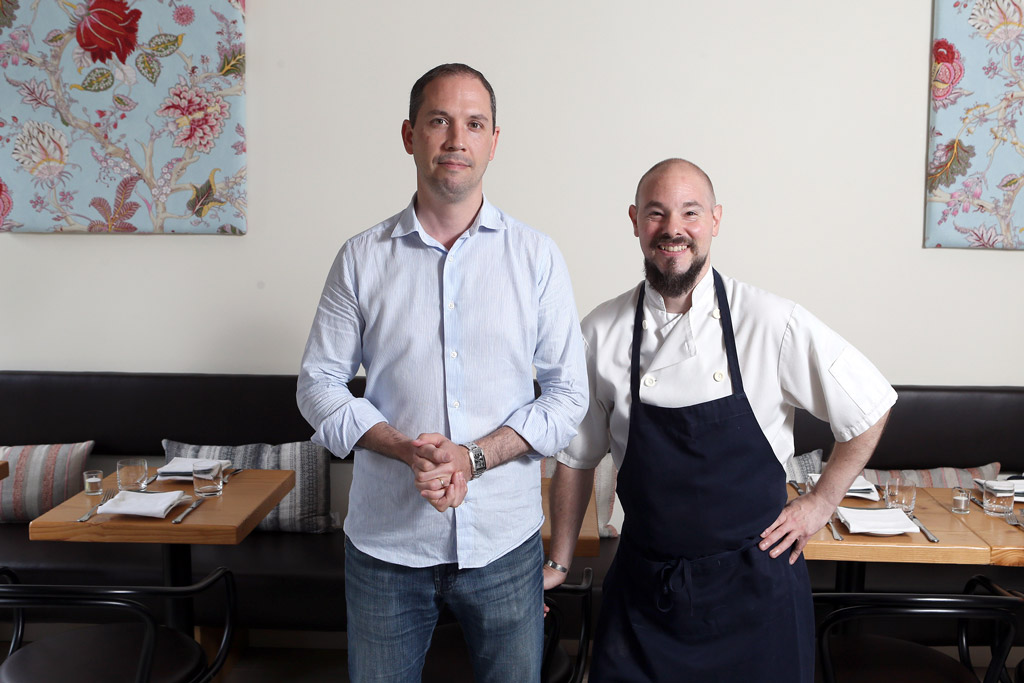
This quirky new Grant van Gameren haunt offers up a smorgasbord of eastern European fare.

What a find
When Parkdale’s scruffy watering hole by the name of The Tennessee came on the market, there were only two options. 

“It was either going to become another really bad bar,” says co-owner Alec Colyer, “or we could take it and do something a little more fun with it.” Colyer, along with partners in crime Grant van Gameren and Max Rimaldi, opted to snap the space up, transforming it into an eastern Euro tavern that has little to do with Tennessee.

Inside, the cavernous space acts as a backdrop to a hodgepodge of antique curiosities, reaching from a collection of wall crucifixes to a gigantic birdcage to a gorgeous wooden bar that lived a former life as a Polish steel workers’ bar in Buffalo, New York.

Authenticity be damned
“The great thing about being Canadian, being a tavern and being an easygoing place in Parkdale is that we don’t have to be true to any country or region or style,” says Colyer, who skipped over to Tennessee after managing Bar Isabel for years.

Although Colyer, van Gameren and Rimaldi all have ties to Europe (Lithuania and Poland), there was never any desire to do an entirely authentic eatery. “The style of food that comes out of the Balkans and Poland are very different,” says Colyer. Picking and choosing regional favourites excited the team, making for a far more dynamic menu. And although there was no doubt that there’d be cabbage rolls and perogies anchoring the offerings, a carnivore’s dream platter was another must.

That pile though
Charmingly dubbed “the pile,” the Tennessee Platter boasts a heaving mass of meat that skips from region to region ($42.95). 
In the kitchen is Brett Howson, who hopped into the tavern thanks to his enthusiasm. “Brett was really interested in exploring a style of food that none of the chefs in the city are playing with,” Colyer says.

The platter begins with schnitzel, six-ounce veal cutlets that are dried out overnight, pounded until super thin, dredged in spices, egg yolk and flour and finished with bread crumbs. Next up, the smoked pork loin is brined and cured, smoked and then sliced per order. The Hungarian-style debrecyna sausage isn’t made in house. After many a gruelling testing session, they settled on the Sikorski’s version of the paprika-spiced pork links. 

“I ate endless amounts of sausages,” Howson says and laughs. He notes that the smoke levels on the Sikorski ones are what cemented the love. Finally, the house made ćevapi (which are found across the Balkans) are caseless sausages made with a ground beef mix from local producers.

Lest we forget, pickles, carrot salad and hard-boiled eggs are also housed on the platter. 

Tennessee Tavern, 1554 Queen St. W., 416-535-7777

Restaurant Review: Atlas is a boîte with bite

0

I completely don’t get it. As a business owner, I fail to understand how a restaurant with eight tables (10 or 12 if you make them deuces) can make a living. Even if it’s full every night. Which Atlas is, and for good reason. These people who opened Atlas specialize in the tiny perfect bistro. Their French resto Chabrol in Yorkville is even smaller than Atlas. Cava, their original resto, is bigger. But not big.

It’s interesting that while chefs all around them are expanding, often looking for a bigger canvas on which to paint (or shall we say a bigger footprint to scale up profits), partners Doug Penfold (the chef) and Niall McCotter are adding restos, but tiny ones.

My concerns about scale and profitability aside, their oeuvres are all superb. I continue to adore the food at Cava; Chabrol is a triumph of la cuisine française; and Atlas, their third resto, follows their model of both impeccable food and service.


Chef Penfold was inspired by his travels in Morocco. Out of that came Atlas. For we who are ignorant of Moroccan cooking, the servers are both schooled and helpful. We start with harira, a fabulous lamb soup enriched with marrow, smooth and hearty, and a classic Moroccan dip, a bit rich for my taste, called amlou. This is pulverized almonds puréed with argan oil and honey, served with Maldon salt, to counteract the sweetness, and harcha — wonderful warm skillet bread made of semolina. Harcha makes pita feel like a poor cousin.

They also do splendid sardine kefta. A sardine “meatball?” You bet, and it works beautifully, thanks partly to its rich tomato sauce spiked with celery and ras el hanout. This translates into “head of the shop,” because it’s the Moroccan mother spice. Its key notes are coriander, cumin, cardamom, clove, allspice, nutmeg, ginger, cinnamon, turmeric and paprika.

For foodies who like to try everything, the tagines are a little awkward, since they’re for two or four people only. And there are only two of them — fish or goat. We’d like more flexibility on this, because the tagine is wonderful. First the ceremony of bringing the hot tagine with its conical ceramic lid to the table, lifting the lid and letting the aromatic steam escape. Then the flavours, savoury and sweet, deep and complex.

I confess to having avoided the goat tagine. No love lost between me and goat. But the codfish tagine was magnificent. Big chunks of tender cod with zucchini, potatoes and green peppers in a strong rich sauce with hints of sweet spices. I counsel ordering a tagine, but skip the steamed carrot and raisin salad with orange blossom water and arugula, for it is bland. In fact I’d do more of the dips and harcha as apps and use the calories up front, because the dips ’n’ harcha are more fun than the Moroccan-inspired desserts. I don’t love lavender in my food, and other sweet scents like rosewater are, to me, best left in my perfume. And I didn’t find enough pistachio flavour in the pistachio ice cream that tops the dense chocolate tart.

But all in all, Atlas is adorable — a tiny jewel of a gift to the city.

Lawsuit over sale of Wekerle chapel closed

0

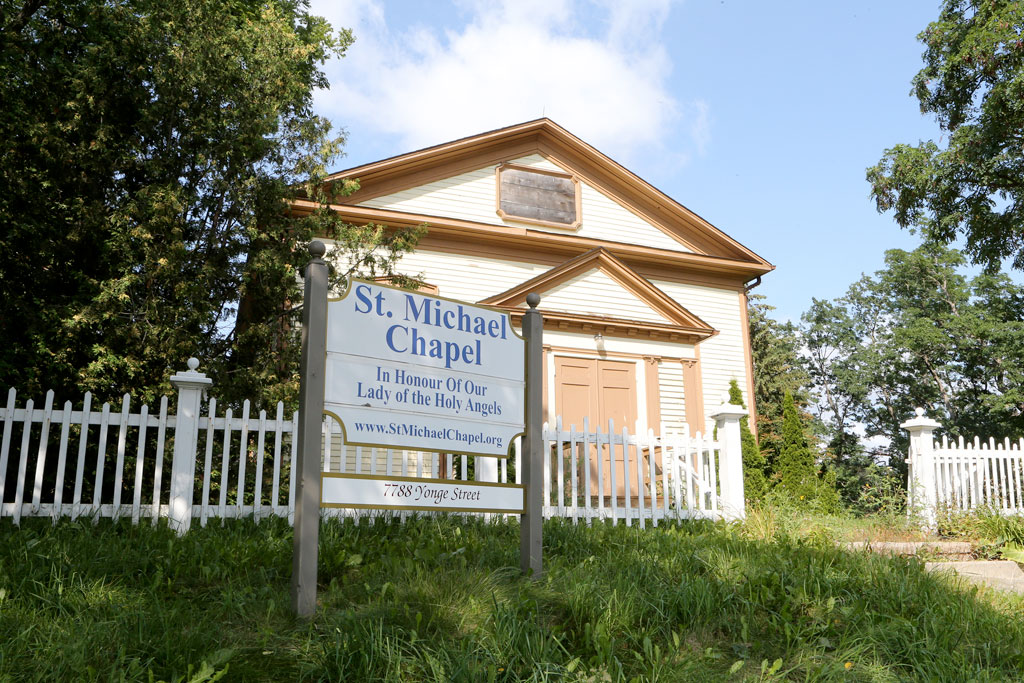
An Ontario judge has refused to enforce the sale of St. Michael Chapel in Thornhill, putting to bed a year-long family dispute between the Wekerle siblings: Dragons’ Den star and investor Michael, his sister Carolyn and their mother, Hermine, vs. sisters Caron and Christine and principal architect of Urbanscape Group, Ali Malek-Zadeh.

St. Michael Chapel was built in the 1840s, identified as a significant historical property in the 1970s and designated as a heritage site in 1982. It is one of six Thornhill properties with its own designation under the Ontario Heritage Act.

“It’s really quite historical, as are a number of the other homes in that area,” said Ward 5 councillor Alan Shefman. “And of course, the entire Thornhill village is designated as a historical village.”

According to Rob Bayley, from the City of Vaughan, Urban Design and Cultural Heritage Department, the chapel’s congregation moved out of the building in 1959 after a new church was built nearby to accommodate the church’s growing numbers.

“Protecting a heritage property is not a matter of ‘freezing’ a property in time but guiding change in such a way as to preserve, as appropriate, its contributing elements,” Bayley wrote in an emailed response to Post City.

According to court documents, the dispute began last summer when Caron agreed to sell the family chapel, located at 7788 Yonge St., for $1.5 million to architect Malek-Zadeh, who had plans to turn it into an office. After lengthy litigation over whether or not Caron Wekerle had the right to sell the property, Malek-Zadeh filed a lawsuit seeking closure of the sale. According to the court documents, he was drawn to the chapel because of its historic nature and uniqueness as it relates to his business as an architecture firm. In order to rule in favour of Malek-Zadeh, however, the judge would have had to find evidence that “its substitute would not be readily available,” based on the use of the term “unique.” In his ruling, judge Herman Wilton-Siegel wrote, “The applicants [Ali Malek-Zadeh et al.] have done no more than establish that, in the opinion of Ali, the Property is unique based on his assertion that it is a heritage property.”

In his closing remarks, the judge noted that Malek-Zadeh can now move to determine whether or not there are any damages owed for breach of contract.