
Home Blog Page 544

Hot new restaurants opening in Toronto

0
Planta

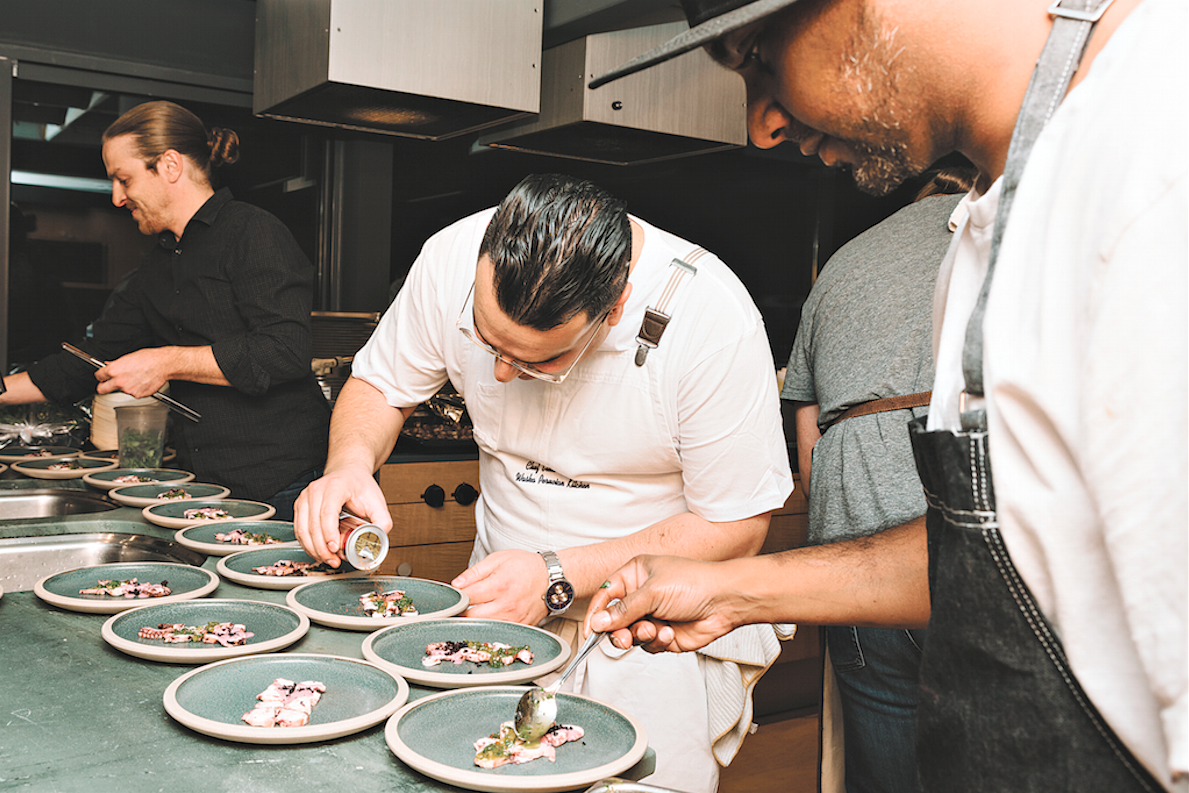
Chef David Lee’s new Planta Queen (180 Queen St. W.) opened up in his former Nota Bene spot in late March, promising plant-based interpretations of chef’s favourite childhood dishes.

After a closure due to storm damage last summer, Drake’s sushi bar Pick 6ix reopened late March as Pick 6ix Sports (33 Yonge St.).

Thornhill just got a cute new Vietnamese grill with the family-run Tara Vietnamese Grill (87 Green Ln., Unit 4.). Get ready for house-made banh mi and creamy satay soup.

Now you can go to the gym without breaking a sweat. The Gym (782 St. Clair Ave. W.) is a new sports pub in midtown, taking over the former space of the Pipers Pub.  “Honey, I’m going to the gym!” you’ll say. And this time, you’ll mean it.

Foodie finds

We spy a new business coming to the former location of our dearly departed Black Hoof. Bar Vendetta (923 Dundas St. W) promises wine and pasta.

Sometimes influencers can influence for the greater good: After accepting a challenge by Instagram star and Canadian model Joel Hansen, Frank’s Pizza House (1352 St. Clair Ave. W.) created the biggest pizza in Canada. Coming in at 26 pounds (416 ounces — cheeky!), their 416 Pizza is now available for special orders for anyone with $130, a big party and a family-sized stash of lactose pills.


Giro D'Italia
A Giro D’Italia spread

Save yourself the airfare and enjoy all the flavours of Italy at this year’s Giro D’Italia festival, which will see restaurants across the city pay homage to specific regions of this powerhouse of a country by serving special prix fixe dining menus from April 4 to 14. Restaurants include Ufficio, L’Unità, Parcheggio and 17 others.

Toronto-bred chef Amanda Cohen, of New York’s award-winning Dirt Candy, will be taking over the kitchen at Ufficio on May 6, slinging a special Ghanaian brunch as part of the 2019 Terroir Symposium. She’ll be cooking with Selassie Atadika, of Trio Toque in Senegal, and Olivia Simpson, who has worked in some of the finest kitchens in Toronto and New York.

Coming soon

Top Chef judge and owner of Yorkville’s Trattoria Nervosa and LA’s hugely popular Felix Trattoria, Janet Zuccarini has set her sights on Corktown for her next big project. GUSTO 501 (King St. E.) is set to open in the fall. The 8,000-square-foot restaurant is being built by the architecture and design firm Partisans (Chubby’s Jamaican Kitchen, Bar Raval) and promises a more veggie-forward, inclusive take on modern Italian.

Sushi master Masaki Saito is leaving New York, where he earned two Michelin stars for his restaurant Sushi Ginza Onodera, and will be opening a new eponymous restaurant in Toronto. Masaki Saito (88 Avenue Rd.) will specialize in the new Edomae-style sushi he’s famous for.

The ink on the lease isn’t even dry from Byblos Uptown, but Charles Khabouth’s company Iconink is at it again. Shook Israeli Kitchen (77 Portland St.), a vegetarian restaurant inspired by the open air markets of Israel, is slated to open in May.


Maison Selby’s eggs Hemingway

Housed in the historic 124-year-old C. H. Gooderham House, O&B’s new Maison Selby (592 Sherbourne St.) promises early-to-late food service in a homelike setting — that is, if your home were a stately Victorian mansion with an endless supply of caviar for daily high tea. If not, this maison will be open early April.

Ascari Enoteca, the intimate, little neighbourhood Italian restaurant in Leslieville, is expanding westward with the new 120-seat Ascari (620 King St.), open this spring.

Suzanne Barr’s (Kid Chocolate and Saturday Dinette) buzzy Queen East brewpub is almost upon us. The Avling (1042 Queen St. E.) will pair Barr’s signature comfort dishes with seasonal brews.

Sad to see you go

Chef Doug Penfold’s beloved midtown Moroccan restaurant Atlas (18 Dupont St.) served its last meal on March 16 after two years in business.

Omaw (88 Ossington Ave.), the hip southern American joint by Matt Blondin and the Food Dudes, closed quietly in late January. Thankfully Sara and Rasa are still around to offer their shoulders to cry on.

The lease ended on Copetin (107 King St. E.), Claudio Aprile’s ambitious modern Canadian restaurant, in December. It was recently announced that taking over the location will be Score, a Vancouver-based sports bar known for its giant caesar cocktails. But Aprile always lands on his feet: he’s hinted that there’s a collaboration with the Liberty Group in the works on King West.

Alinea’s Canadian connection

0
Chef Dan Perretta
Chef Dan Perretta (right) with chef Grant Achatz of Alinea

Dan Perretta has wanted to be the greatest since he first started cooking. And he is well on his way. During a bout of shoptalk he may precede any mention of his current boss, Grant Achatz, with the words, “one of the best chefs of his generation” with no hint of exaggeration.

As a teenager, Perretta spent his summers working at his uncle’s restaurant in Richmond Hill — Ponte Vecchio, a stalwart of the 905 food scene.

Now, he’s the executive chef of Michelin one-starred Roister in Chicago, an à la carte restaurant in the Alinea Group of restaurants. At Roister, he’s playing with fire — literally. He’s hanging bananas around a hearth in the middle of the restaurant, which will produce a sweet, smoky, creamy nectar accompanying ember-infused brown butter ice cream for the restaurant’s play on a classic banana split. And they’re smoking fish carcasses for up to 18 hours to make a crystal clear one-bite dashi course.

After working with Grant Achatz for the better part of the last decade, Perretta is now an ambassador for the brand best known for manipulating food to its most playful, often unrecognizable but always awe-inspiring form.

“I’ve never cooked over the hearth like this, but I think that six or seven years of thinking outside the box at Alinea has allowed me to work closely with chef Achatz on how do we really get creative with this fire?” Perretta says. “What can we do with this fire that will bring the element of surprise?”

Chef Achatz is an institution in his own right. His restaurant Alinea, in Chicago, has had a Michelin three-star rating since 2010 and been a staple on S. Pellegrino’s 50 Best Restaurants in the world since 2007. Achatz is a six-time James Beard Award recipient, among a growing list of accolades, for his whimsical brand of culinary alchemy. You may have seen Alinea’s edible green apple helium balloon or Bacon, Butterscotch, Apple, Thyme, which suspends a single strip of dehydrated bacon wrapped in apple leather in mid-air like a Newton’s Cradle. You may have even been at one of his four restaurants, of which two have Michelin stars, and one, Next, is so exclusive it regularly sees scalpers selling table reservations online for upwards of $500. A pioneer of modernist cuisine, Achatz and his brand have become the Zeitgeist, rather than simply a chef in a restaurant.

So it’s true: Achatz is one of the best chefs of his generation. Perretta knows because he’s worked with a lot of the best chefs — with Ferran Adrià at the legendary elBulli in Spain, and with Heston Blumenthal at the Fat Duck in the U.K.

His first job was local — at Harbour 60, laying out slabs of steak alongside grilled asparagus in the centre of plates — and he was happy for the opportunity.

“For me, it was revolutionary at the time,” he says. “I didn’t realize that a steak house wasn’t really a fine dining restaurant per se. For me, a restaurant job was a restaurant job. And when I was there, I wanted to be the best steak house chef.”

His first foray into modernist cooking was at Senses Restaurant and Colborne Lane with Claudio Aprile, himself a trailblazer of experimental cooking techniques in Canada. It was a revelation for him.

“Every dish had upwards of 10 components,” Perretta says. “There were knife cuts that were very meticulous. There were sauces and dots on plates that had to be in exact spots.”

Through a connection Aprile had with Alinea’s sous chef, Perretta did a stage for Alinea when the restaurant was just two months old. That started him on a worldwide culinary tour, working at the most impressive kitchens on the planet.

“He had written a letter to the Fat Duck,” recalls Aprile, “and he said, ‘Chef, I’m not sure what I’m going to do. I got a response from the Fat Duck, and I have an opportunity to work there. What should I do?’ I looked at him and I said, ‘You’re fired.’ ”

Aprile recognized this as a pivotal time in the young cook’s career.

“I forced him to resign,” says Aprile. “I said, ‘This opportunity is going to open up every door in the culinary world, doors that you didn’t even know existed.’ ”

At the time, modernist cuisine was gaining global popularity, innovated by chefs like Adrià, Blumenthal, Wylie Dufresne and Achatz. It was treated equally with public fascination and skepticism for its mad scientist techniques, involving the use of liquid nitrogen, dehydration and spherification.

For Perretta, it wasn’t just the chemistry and the cool gadgets that captivated him –– it was the discipline and the meticulousness of the food preparation.

“You’re looking at photos of a place in Spain on the beach and a guy who is making bubbles out of carrot juice and wondering how he’s even doing it. And then all of a sudden, you’re there,” says Perretta. “Really, you’re not there to learn how to make carrot bubbles. You’re there for the discipline and for the repetition of the actual techniques to take hold one day when you become the chef of a restaurant. It’s not about the recipes. You don’t go to these places to learn recipes. You go to be surrounded by like-minded people who just want to keep pushing themselves.”

He joined the Alinea team in 2007. On his first day, Grant Achatz dialed into the restaurant from a hospital in New York via video conference. He announced that he had been diagnosed with stage IV tongue cancer that was rapidly metastasizing to his neck.

“I remember that basically the entire staff immediately started crying,” Perretta recalls. “It was a bleak moment.”

But later that week, he says, Achatz went back to work.

“I remember him being in the kitchen before everybody else, probably at 8 a.m., leaving at 10:30 a.m., when we would arrive, to go to chemo or radiation. And he’d come back, continue to prep, eat staff meal, work the entire night. And we would leave, and he would still be there working,” says Perretta. “He was doing that seven days a week. He was on a mission to not let it affect the restaurant at all.”

As he grows his presence in the Alinea Group, Perretta says he finds it’s harder to come back home. He tries to make it back once a year at least. He’s been following Patrick Kriss on Instagram and wants to try Alo. His parents still live here. But Toronto’s just one city in a much bigger world.

“Twenty years ago, Danny was that young cook who wanted to work with one of the great chefs,” says Aprile. “He has now become one of the great chefs.”

But Perretta is a little more diplomatic.

“I just work as hard as I can, every single day,” he says.

Table Talk: Joanne Kates reviews Bar Buca

0

Bars are not what they used to be. Witness Bar Isabel. The Carbon Bar. Momofuku Milk Bar. And now — oh joy — Bar Buca.

Son of Buca is the ne plus ultra of the process that started when restaurants lost their white tablecloths. Along with losing comfy chairs, reservations and any semblance of welcome. And what a wow that when the super-smart guys at the fabulous Buca opened a branch, they had the savvy to maintain the key elements of hospitality, rather than aping all the other spinoffs in town with too-loud music and scant grace.

Bar Buca’s chairs are comfy even though they’re at communal high-tops. The music is not too loud to carry on a civilized conversation. But most of all it’s about the service (really a lost art in most of our hot restos — like, for example, my recent meal at The County General — son of Splendido — where we ordered apps and mains and they all came at once, after which nobody ever offered us dessert).

Bar Buca’s servers resemble the servers at Buca in all the right ways: They’re beautiful, they’re gracious, they describe what they’re serving in mouth-watering detail, and they pace the meal like a genteel minuet.

In a bar!

It may morph into an actual bar with loud music and intrusive singles after the dinner hour. But that’s so past my bedtime I couldn’t care less. Especially not when they ply me with nutty little chunks of snazzy parmigiano reggiano and hot sausage upon arrival. It’s a cool tall space decorated with steel wine racks and an open kitchen, with an Italian menu that’s deceptively casual but built on fine ingredients.

Bruschetta of duck yolk with beech mushrooms and truffles is what happened when tomato sauce got classy. Vongole alla carbonara is perfectly cooked clams jazzed with guanciale and knit together with egg-enriched sauce. Spiedini (aka skewers) come in various protein permutations but my heart belongs to mozzarella. They skewer ultra fresh balls of mozzarella with lemon leaf and half-dried tomatoes and run them under the salamander (hot hot flame) so fast that the outside goes golden while the heart melts. But does not get drippy.

They do warm focaccia sandwiches, the most fun of which is porchetta: Lean roast pork (for once!) with apple mostarda for sweet, mascarpone for creamy and agliata (garlic and vinegar sauce) for punch. And for the adventuresome, big heat comes from crostini of salty fermented baby smelts with chili and bur rata.

But don’t stop there. Now that L’Unità’s cannoli has lost its soft touch, here is the best cannoli in town: Delicate, crispy and filled with addictive creamed ricotta flavoured with candied orange and chocolate. Inhale, and don’t lose hope — if this is the future of Toronto restaurants sans tablecloths — then we’re safe.

BAR BUCA, 75 Portland St., $45 Dinner for two

Joanne Kates trained at the Ecole Cordon Bleu de Cuisine in Paris. She has written articles for numerous publications, including the New York Times, Maclean’s and Chatelaine.

Double the laughs, double the fun

0

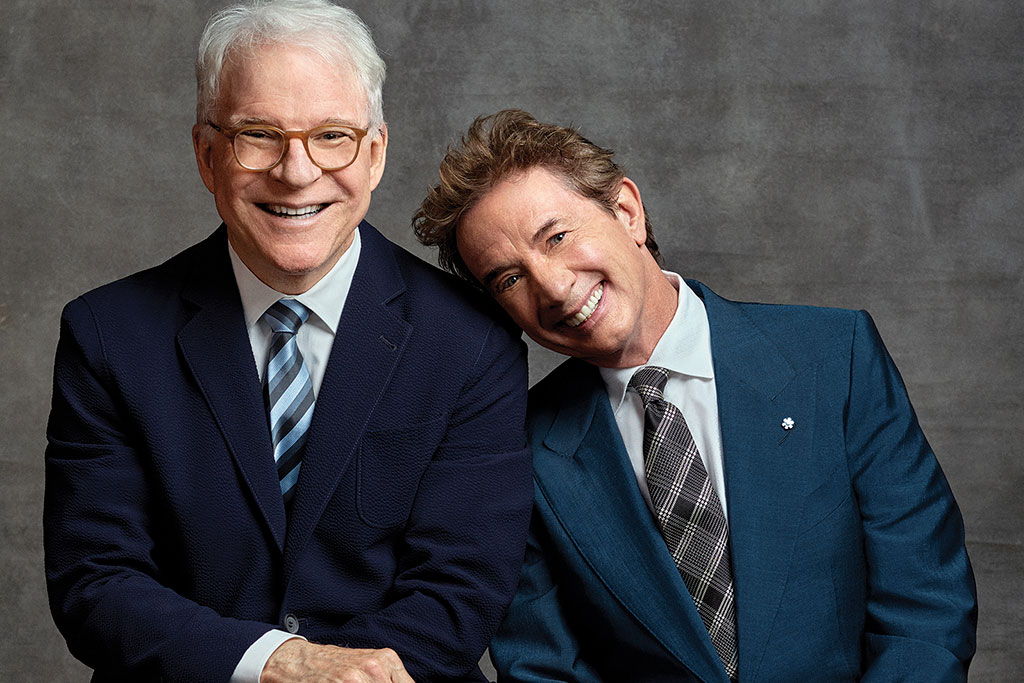
Legendary comedians Steve Martin and Martin Short bring their critically acclaimed stage show Now You See Them, Soon You Won’t, to the Sony Centre for the Performing Arts, April 12-13.

When did you first decide to put together a stage show?  

Short: We’d been asked to close the Just For Laughs comedy festival in Chicago, just to interview each other. And we did it, and it went very successfully. But also, more importantly, we really had fun doing it. So when we were asked to do it again, we did it again. And we did it a few times, and then thought wait a second, what if we evolved this into a real show, not just us talking about our lives. So it evolved.

You guys have a really fast and furious back and forth. Is some of that improvised or is a lot of it really rehearsed? 

Martin: Some of it is improvised, but you never know when you’re going to improvise. So you need to have a solid routine that we like to do in case we’re not in the mood to improvise, or if nothing comes up. So it varies from night to night.

Short: You want to make sure that the people who are paying handsome prices for tickets certainly get their money’s worth, so that’s where the structure comes from.

Martin: By the way, that was a good use of the word handsome.

Short: Thank you.

Mr. Martin, what do you enjoy most about performing with Martin Short?

Martin: Marty and I have performed together enough now that we can sort of read each other’s minds. And it really makes for a good show. Just timing wise, we have very similar timing. Whatever timing is. I’ve never been able to define it. And we have fun onstage, and we have fun offstage. So it’s like a perfect environment, it’s not like work is hard.

Mr. Short, you are coming back to Toronto to do these shows. Are you going to change anything up for the hometown crowd?  

Short: Oh, I don’t know, I might. It’s interesting. When I was a kid, my parents used to take me all the time to the O’Keefe Centre. which is now the Sony Centre, so I’ll certainly talk about that a little bit, that kind of, that was my connection to international show business, driving in from Hamilton and seeing, you know, Tony Bennett.

Martin: One thing I’m going to change for Toronto is when I say, Hello Toronto.

You’ve had guests join you onstage from time to time. Are you able to hint if anybody will be joining you in Toronto? Any local favourites such as Eugene Levy?

Short: Well you can’t hint at any of that because that would take away the secret.

Martin: But actually no. No we probably won’t because we want to do our show, and I don’t like to be too loosey-goosey with the show. We like to say, “Here’s our best shot.” And when you have somebody who is coming on for the first time, you don’t know what.… We want to really do well in Toronto, we want to be loved.

Short: Well I already am.

Martin: That’s why I say, if I could get up there with you.…

Short: Well that’s not going to happen, but I like the ambition. I think that’s what’s kept you so relevant.

You don’t tend to do a lot of political material. Is poking fun at leaders like Donald Trump just too easy or just not part of what you guys like to do onstage? 

Martin: Well you know what, we might do more in Toronto. Because it’s a different country. We don’t like to do it in America because everybody has a stake in it, and we’re not there to divide the audience.

When you’re in Toronto, are there places you like to frequent, anywhere that you’ll try to hit up while you’re here for a couple of days? 

Short: Well that’s my second home. I’m in Toronto a third of the year. But I would say my son Henry’s home I’ll hit. He lives there.

What is your pitch for why our readers should check out the show? 

Martin: Well, we can’t really beg people to go. We’ve been in comedy our whole lives, and that’s probably why the people would like to go, maybe to see what we’re doing now. But we do feel we do a good show. So that’s all I can say. There’s nothing more I can. I mean, they can come to see how much I’ve aged.

Interpretation of Chekhov’s ‘The Cherry Orchard’ takes the stage in Toronto

0

Armenian-Canadian actor Arsinée Khanjian is pensive as she considers her starring turn as Lyubov Andreyevna Ranevskaya in the timeless Anton Chekhov play, The Cherry Orchard.

“The play deals with time and space. The duration of life.… The contradiction that time is constantly moving yet has moments where we feel it’s not moving until we take action,” says Khanjian, before going on to praise  her collaborator, award-winning Iranian-Canadian director Soheil Parsa.

“It’s really an amazing project and adventure. I’m sure it’s going to be very special and different, with Soheil directing it and the choices of actors he has made,” Khanjian says.

Khanjian first came to Canada when she turned 17 and lived in Montreal, where she met her Canadian filmmaker husband Atom Egoyan. They moved to Toronto in 1984, where they lived around Spadina before eventually settling in Summerhill where they currently reside. The couple has a son, Arshile, now 25.

“Arshile is an amazing writer,” says the proud mom of the young screenwriter. “Perhaps he will do like his father and write and direct.”

Although Khanjian and her husband are perhaps best known for their work together, including the acclaimed films The Sweet Hereafter, Exotica and Ararat, Khanjian has been increasingly active in human rights issues in Armenia and around the world, while also working on her own projects in film and theatre, particularly in Europe.

She recently wrote, directed and performed a play called Auction of Souls staged in Berlin, which will return this April.

In Paris, she appeared in Code Inconnu with Juliette Binoche, and she also performed in a French-language stage production of Dancing at Lughnasa that ran in both Paris and Tokyo.

Though Khanjian was born in Beirut, Lebanon, she identifies as Armenian-Canadian because her parents and grandparents were Armenian. Her grandparents were survivors of the Armenian genocide, which she has been working to have recognized.

“Armenia represents my spiritual home,” she says.

In 2016, she starred in a French film titled Lost in Armenia, a dramatic comedy which highlighted the relationship between Armenia and France.

As she contemplates her upcoming stage turn, Khanjian finds connections between Chekhov’s final play, penned in 1903, and the present day.

“The story is powerful because it is timeless and universal,” says Khanjian. “I think every generation has an invention or social and economic reality [that shifts our way of life].… When I look back 30 years, at film technology, and what has happened today to the film industry, it’s crazy how time has shifted that. The way the Internet has become part of our daily life. Cellphones are like extensions of our body.”

The Cherry Orchard follows an aristocratic Russian landowner (Khanjian’s character Lyubov) who returns to her family estate (backed by a cherry orchard) to pay the mortgage just before it is auctioned. The story explores the changing status of the Russian aristocracy at the turn of the 20th century, after the abolition of serfdom and the rise of a new middle class, along with the bourgeoisie’s attempt to find meaning in its newfound materialism.

Lyubov sells her beloved cherry orchard out of what she feels is necessity.

When she returns to the place of her childhood, Lyubov encounters a small provincial town that had stopped moving, in a way.

“Once she comes, suddenly the clock starts ticking and going incredibly fast. She becomes the trigger of that reality, of times changing. Every generation lives this, when things suddenly shift and bring change,” Khanjian says.

“Our time is really short on this planet. Toward the end of it, or middle age even, suddenly time starts moving so fast.… We are all in the midst of changes constantly,”

She points out that, in addition to change, there is also an environmental theme to this theatre classic.

“There’s also the idea that people get rid of nature in a pragmatic way, the notion of money being earned at the expense of this kind of loss. Look at the way we’re looking at nature these days, with companies that want to exploit nature, that don’t have regrets about ruining the environment. Even in Canada we have those issues,” she says.

At home in Toronto, one of Khanjian’s favourite places to spend time is in the Beaches neighbourhood, particularly at the R. C. Harris Water Treatment Plant.

“It’s a magical place. It’s like a palace. When Soheil offered me the part in The Cherry Orchard, I took a copy of the book and went there and did my first reading.” Khanjian recalls.

“I knew the play but hadn’t read it in a long time. I sat in front of the lake in front of this building, and when I would take breaks and look out, the landscape is gorgeous.”

Roncesvalles also holds a special place in her heart.

“There’s still a film theatre there, and I’ll have my popcorn with the huge screen in a half-empty theatre. Unfortunately they don’t get filled up nowadays. I love going to old theatres. Maybe it’s the Lyubov in me.”

Catch Arsinée Khanjian in The Cherry Orchard, playing at Streetcar Crowsnest Theatre, March 26 to April 13, crowstheatre.com.

Toronto and Markham at odds over subway expansion

0

If Premier Ford is successful in wrestling the subway from Toronto City Council and uploading it to the province, it will be the easiest part of his battle. The bigger challenge will be to deliver on all the promises he made during, and since, the election campaign to expand the subway within the city and then into far and away places like Markham and Pickering.

By far the biggest obstacle for subway expansion is money.  Building subways is expensive, and even with a plan to pay for construction over time, the province will need to commit billions of dollars annually to realize its ambitions. Given the province’s fiscal reality, spending billions just on transit alone on an annual basis is highly unlikely, and using the potential of land development to finance major transit projects is not realistic. The only way to finance these infrastructure projects is through borrowing money.

However, even if by some miracle the transit fairy delivered billions of dollars in funding, the next obstacle is political.

Premier Ford’s supporters are in Scarborough and the suburbs, so prioritizing those subway expansions is good for his re-election strategy. Practically, there are only two transit projects that are pressing, replacing the Scarborough LRT and building the Relief Line.

From a ridership and system perspective, these are good investments.

From a political perspective, the return on investment (ROI) is less convincing to the current government.

The situation in Scarborough is becoming dire. While council has floundered around for the last four years on what should be built in the most underserved part of the city from a transit perspective, the current surface light rail is well past its replacement date.

It is not reliable, and a solution is needed for the 40,000 daily riders, and the current one-stop extension will not be an adequate solution.

The Relief Line is aptly named because once the Eglinton LRT is operational, the Yonge subway at Eglinton will be as overcrowded as Bloor station.

The Relief Line is needed to support the population east of Yonge. For anyone living near Yonge between Lawrence and Union Station, the only project that makes sense is the Relief Line, which will give riders an alternative to the overcrowded Yonge Line.

Although the need has been demonstrated for the Relief Line, there is very little political support for the line within the Progressive Conservative caucus because so few members will benefit politically from the investment.

To make matters worse, the mayor of Markham has a signed shovel from Premier Ford promising the extension of the Yonge subway to Markham that the mayor will wave at every transit funding announcement. The shovel will either be used to break ground in Markham or to dig the grave for the political future of the PC MPPs in York Region.

If the Yonge Street subway gets extended to Markham before the Relief Line is built, no one living south of Sheppard will be able to get on the line in the morning. It will be packed with commuters coming from the 905.

It’s a pipe dream to expect politics will not impact such major spending decisions.

As long as there are scarce resources, which there are when it comes to transit investment, governments will always consider the political ramifications of how money gets allocated.

Premier Ford may wish to leave the transit headache to the city.

New players in Toronto real estate are saving home buyers and sellers thousands

0

Home buyers and sellers in the GTA have been left with the same model for decades, one that is costing customers thousands of dollars.

In just a decade, home prices have increased dramatically, meaning that agent commissions have also increased. Yet, if anything, technology and access to online information have made buying and selling homes easier than ever.

As it stands, someone selling a home for $1 m​illion is paying out $50,000 in commissions. That’s more than a year’s salary for some people.

Fortunately, a number of fresh alternatives are emerging. In recent weeks, a deluge of new players have entered the GTA residential real estate market, promising changes to the industry.

But not all disruptors are created equal, and consumers need to pay close attention to what is being offered in order to ensure they make the right choice to suit their needs.

All inclusive services and fair, transparent fees

Justo Inc., Brokerage is the first to disrupt the industry with a focus on fairness and transparency. The Canadian-owned company offers low listing fees for sellers and large cashback for buyers.

Sellers working with a Justo agent pay only 50% of the standard listing fee (typically 2.5%) taken by most brokers. When Justo represents a buyer, they split their commission (paid by the seller) 50/50, giving a buyer thousands in cashback.

“We feel Canadians deserve great service and reasonable fees, and we’ve clearly hit on something with our new model, because demand is even stronger than we anticipated,” said Daphne de Groot, CEO and co-founder of Justo. “It’s only a matter of time before the rest of the industry starts to adjust their pricing, but those getting into the market now should really consider what we’re offering. Otherwise, they’re just losing a lot of money.”


Daphne de Groot co-founder and CEO

Justo also bundles in many extra services at no additional cost. Sellers get free staging or virtual staging, 3D virtual tours, professional photography and enhanced advertising for their listings, while buyers receive free home inspections and lawyer services. Best of all, Justo customers are under no obligation and can change agents at any time.

Justo has recently launched a new program for those seeking to purchase new construction condominiums, beginning with an arrangement with CentreCourt Developments on its Transit City 4 project. Following its huge success with the resale market, Justo is now applying its cashback model to the new construction space: As with resale homes, they are splitting their commission (typically 4% of the unit cost) with their buyers 50/50.

Justo’s website lets visitors view all MLS listings and immediately see the amount of cashback they can expect for each property.

Other options

The most recent entry into the Canadian market is US-run Redfin, which offers low listing rates for sellers — between 1% and 1.5%, depending on the market – and some cashback incentive for buyers.

Like Justo, Redfin agents are compensated in part based on client satisfaction, ensuring superior customer service throughout the transaction process.

UK-based Purplebricks is an option for sellers seeking to list on their own, offering assistance and guidance for an upfront, flat fee, usually around $3,000.

There is also good news in the mortgage space. Startups like Homewise make saving money on a mortgage easier than ever. They offer a simple online application, then negotiate for clients to provide several options.

New options are putting customers first

These new players are flipping the traditional client-agent relationship on its head. Buyers and sellers are getting better customer service than ever before.

There’s a lot to learn about these new options. As with other companies who’ve disrupted their markets, like Amazon or Uber, there will be some who embrace this new trend, and others who will take some time to adjust. But, as a result of so many great new options, early adopters in the residential real estate market now have more power in their hands than ever before.

The best basics for a capsule wardrobe

0

Whether you’re packing for a spring vacation in a carry-on or overhauling your wardrobe for a fresh start, a capsule collection of basics with a twist is the go-to solution.

A) WRAP IT UP
“These wrap coats are really all the rage now, and nobody does outerwear of any kind better than Canadians.”
Mackage at Andrews, Bayview Village, $690

B) STRIPED TWIST
“I love the stripe detailing down the front. That’s really fun. It’s beautifully fitted. There’s something very feminine about this white, crisp shirt.”
Want Boutique, 9301 Bathurst St., $289.95

C) HEAR ME ROAR
“Leopard print has become such a classic that you have to have a nod to it, and Equipment does the best silk shirts.”
Over the Rainbow, 101 Yorkville Ave., $298

D) THE ULTIMATE BLAZER
“It’s a great jacket that you’ll love forever but has a modern feel, because it’s done by Smythe.”
Andrews, Bayview Village, $695

E) DREAMY JEANS
“A nice high rise in a great cut, and they’re Levi’s, so you know they’re well-made.”
Over the Rainbow, 101 Yorkville Ave., $118

F) PLAID PARTY
“I love the check on these pants. They’ve got a great stretch and a nod to menswear with the cuff at the bottom.”
Poor Little Rich Girl, 2094 Yonge St., $105

G) GREY DAYS
“Who doesn’t love a cuddly cardigan? This one almost has a hand-knitted feel to it.”
Canopy Blue, 2582 Yonge St., $224

H) CROCHET CHIC
“Beautiful crochet-looking detailing with shots of black thread going through it.”
ShopCloakroom.com, $145

I) CALL ME CAMI
“This silky, sexy cami with fine lace detailing is a nod to lingerie in day dressing that is very simple and beautifully feminine.”
Parpar, 1766 Avenue Rd., $75

J) TIMELESS TURTLENECKS
“This fabric feels like a second skin.” (Navy) Andrews, Bayview Village, $190
“A great berry colour with a less snug fit.” (Burgundy) Parpar, 1766 Avenue Rd., $49.95

K) NIFTY NEUTRALS
“The stripe detailing on the cuff in neutral colours just takes it up a notch. It makes it fun, not your boring black sweater.”
Intermix, 130 Bloor St. W., $505

L) PENCIL IT IN
“You know that a little pencil skirt like this is going to be ultra sexy. This is going to hold you in like a pair of Spanx.”
Poor Little Rich Girl, 2094 Yonge St., $129

M) LITTLE BLACK JUMPSUIT
“I love jumpsuits because it’s a one-piece that takes you anywhere. You can wear this forever, and it’s seasonless.”
Parpar, 1766 Avenue Rd., $155

Is Toronto’s dating scene inherently racist?

0

Navigating the dating world — on and offline — can be a challenge in a world of 280-character posts, 1.6 billion swipes per day and a dishonesty rate of 53 per cent in online dating profiles.

But for people of colour (POC), the challenges are compounded by racial discrimination and fetishization that are inherent to the wider culture and reflected in the dating world.

Scrolling through apps and online postings, you’ll find users who indicate so-called preferences and aversions to specific races.

“I’ve seen posts that read, ‘Black = blocked’ and ‘seeking hot Asian love,’” says downtown dater Andre.

Toronto erroneously prides itself on being post-racial, but most folks aren’t as open as they claim or believe themselves to be.

“They say they’re open to interracial dating, but they aren’t open to dating people from other cultures themselves,” says Karen Donaldson, a Toronto-based communication coach. “The word ‘preference’ has become the veil for racism. When you overtly state ‘no Blacks’ or ‘no Asians,’ that’s not a preference — it’s racism. A preference is choosing who you choose without the need to outwardly exclude an entire race.”

Matchmaker Carmelia Ray sees so-called racial preferences in her GTA practice, where her clients have specified racial, religious and even height requirements.

“If they had a bad experience with an ex-partner and blame a breakup on cultural differences, they often avoid dating those of the same race as an ex,” Ray says. “The consequence of eliminating an entire dating population based on race alone is obvious. They are narrowing and severely limiting great opportunities to meet a perfectly compatible single.”

A Toronto blogger who asked not to be named explains that he faces discrimination based on race, and intensified by his sexual orientation and weight.

“When I don’t conform, I face rejection — not based on the person I am, but based on assumptions they draw from my skin colour and weight.”

“It’s one thing to be Brown. But because I’m a fat, Brown, gay guy people have certain expectations, and when I don’t conform, I face rejection — not based on the person I am, but based on assumptions they draw from my skin colour and weight.”

The way intersections of race, gender identity, income, sexual orientation, ability and weight get interpreted can make dating exhausting and take a toll on your self-esteem.

Single Girl Problems podcast host Andrea Bain says that people don’t often ask her about race, but as a Black woman she is aware of the conflicting messages.

“I grew up with a very diverse group of friends, and although their parents liked me, I understood that they would never allow them to date a Black guy, which was a strange world for me to exist in as a Black person,” she says.

Socially prescribed norms with regard to beauty and desirability also play a role in dating.

“Many of us in Canada have been groomed to believe that blonde hair and blue eyes equals gorgeous,” says Donaldson. “For most, it [this belief] is social conditioning — not an intentional choice.”

Bain explains that, when she was young, she couldn’t picture herself with a white guy because none of the depictions to which she was exposed — from magazines to the big screen  — included interracial couples. They were simply all white.

As for me, I recall growing up with the belief that I couldn’t possibly be as attractive as my white friends, and this was reinforced by reminders that I was pretty “for a Chinese girl” or skinny because I was Chinese. I can’t count the number of times I’ve been hit on by guys laughing that they had yellow fever, which I was expected to take as a compliment.

Being reduced to your race is dehumanizing and psychologically burdensome. So how do we overcome racism in dating?

“When we start to choose to define beauty based on a person’s core, their attitude, how they treat themselves and how they treat you, only then will things start to shift for the better,” says Donaldson.

We also need to address systemic racism (and colourism) and not be afraid to call it what it is. It is impossible to be colour-blind. Claims of colour-blindness serve to erase the experiences of POC.

Racial biases have been ingrained into the way we think so deeply that the insula (the brain region that registers disgust) is activated in response to photos of interracial couples, but doesn’t engage when exposed to photos of same-race couples. This means that we have to make a conscious effort to dismantle these inherent biases.

We can begin by acknowledging our own privilege (and looking for ways to use it to support folks who don’t reap the same benefits), checking our defensiveness and centring the stories of those who face racial discrimination every single day in the city of Toronto — in dating and beyond.

Toronto shines its culinary spotlight on Peruvian fare

0

It’s been just over a year since the first modern Peruvian restaurant, Kay Pacha, opened its doors on St. Clair West, introducing diners to a new facet of this globally rising cuisine. And on the heels of Kay Pacha came Mira, a snazzy new King West eatery inspired by executive chef Stuart Cameron’s travels through Peru. This spring will see the highly anticipated launch of Chotto Matte, a 10,000-square-foot  restaurant and lounge making its first Canadian foray via London, with its splashy Tokyo-inspired decor and a menu built around traditional Japanese-Peruvian cuisine.

Dining experts and influencers have been calling it for years: Peruvian is having its moment, definitely. The World’s 50 Best Restaurants 2018 list, for example, includes three restaurants from Peru. Two of them are in the top 10. One of them, Central, in Lima, was named the Best Restaurant in South America.

The uptake of modern Peruvian cuisine in Toronto has been surprisingly slower than in other big cities, like London and San Francisco, but the quality of Peruvian food overall has gone up since chef Elias Salazar arrived here in 1996 from Callao, a port town just west of Lima. He came with his mother and little brother in the wake of growing political and economic turmoil in his home country.

In the last few years, he’s been making his name as the pioneer of modern Peruvian food in the city, first under the catering brand Limon Modern Peruvian and then as chef and co-owner of Kay Pacha, which he launched with restaurateur Ricardo Chico. He has since left the restaurant to pursue his own projects.


A spread of Peruvian fare at Kay Pacha IMAGE: YVONNE TSUI

“Back [in 1996], there wasn’t much Peruvian food in Toronto, and what was available was very badly represented,” says Salazar. “Trying the food, I realized that there were a lot of flavours missing. A lot of people were cutting corners with ingredients.”

And today?

“You do have your rustic Criollo where you get a mountain of rice and a massive steak — and that’s all good stuff — but Peruvian cuisine has evolved a lot since those days. So there isn’t really any good representation of the cuisine that I can speak of.”

The cuisine itself is a hard one to nail down. It can be Creole–South American–style dining (Criollo, the aforementioned mountain of rice and massive steaks is generally considered Peruvian comfort food). It can be Chinese-Peruvian (known as Chifa) fried rice and noodles. There’s also Italo-Peruvian and Nikkei, which is Japanese-Peruvian, and which integrates ingredients like soy, wasabi, ginger and miso.

“The diversity of Peruvian cuisine is just insane,” says Salazar. “Wherever you go, there’s something different — a different ingredient, a different potato, a different pepper, a different corn.”

“The unifying thing about Peruvian cuisine is its diversity.”

That diversity comes, at least partially, from the rich biodiversity of Peru itself. Flanking the Pacific and with the Andes Mountains, Sechura Desert and Amazon all within its borders, the country has vastly different culinary traditions. Some of them derive from Peru’s Indigenous populations, others from 500 years of immigration from west Africa, China, Italy, Japan, Spain and beyond.

“The unifying thing is its diversity,” says Ricardo Chico, the current owner of Kay Pacha and Salazar’s former business partner.

“In a city as multicultural as Toronto, it makes so much sense to have Peruvian food be a focus.”

After all, many will say that Toronto’s own unifying quality is our diversity. Chico believes that the reason Peruvian cuisine has taken off so easily in this city is diners’ existing familiarity with the individual influences that are woven into the food.

“For the most part, people know Thai food, people know Chinese food, people know, more or less, Japanese food. Everyone can recognize Italian food,” Chico says. “It’s not so much a discovery of flavours, but rather a reintroduction of flavours that are somewhat familiar.”

And, for the most part, what makes these familiar flavours distinctly Peruvian is the use of truly Peruvian ingredients.

“The potatoes, the different range of peppers, the aji amarillos, the aji panca, the aji mirasol,” Chico says. “All these peppers are Peruvian. These peppers combined with Japanese flavours makes something Nikkei.”

Elias Salazar left Kay Pacha in May 2018, over what he describes as “creative differences.” He is getting ready to launch his own restaurant, Waska, which translates roughly to “To eat, drink and enjoy” in the Quechua language.

Although a location hasn’t been locked down yet, Salazar is envisioning a fine dining, tapas-style restaurant with a pisco and cocktail bar. He has partnered with a hot pepper farm in Fort Erie, which grows aji amarillo and other quintessentially Peruvian peppers that form the backbone of the cuisine.


One of chef Elias Salazar’s latest creations

He also has a line of Peruvian food products, including a purple corn juice (currently available for pre-order), a botija olive sauce, a chimichurri and a huancaina sauce — a staple of Peruvian kitchens, made with queso fresco and the aji amarillo.

“But I think that the direction of the cuisine is here to stay for the next 10 or 15 years, maybe even more,” Salazar says. His goal is to open at least five or six restaurants in the city.

“There’s so much you can do with it. And that’s the mission I have. That’s the goal I have.”

But until then, there’s still plenty of Peruvian in this city to dine out on –– and from the looks of it, a lot more coming.

Mayor Tory talks Toronto’s homelessness crisis

0

How do you respond to critics who suggest that your continual references to mental health issues could stigmatize the homeless?
I think anybody who evens suggests that, and I know it’s been suggested by a couple people, including in an article I think in Now magazine, that somehow I’m sadly mistaken or that I’m trying to stigmatize people, couldn’t be further from the truth. I will accept the fact that there will be some people for whom mental illness may have arisen as a result of homelessness. But I will suggest from my own conversations with people, when I visit the shelters and actually talk to them, that far more will say that their mental illness or addiction problems preceded their homelessness and was a contributing factor to their homelessness.

But why mention that so often?
One of the reasons I mention it so often, in the case of mental illness and addiction, is because there are people in the shelter system now in relatively large numbers, the majority with mental health issues, and were on ODSP [Ontario Disability Support Program], and so forth, but what they could not find was supportive housing. And that’s why I mention it, because it’s the truth.

How often do you visit the shelters?
I would say often. I won’t tell you I’m going once a week. But I’m going often through the course of summer and winter. The last time I was in one was two weeks ago — both the new women’s shelter on Davenport Road and the longer established women’s shelter that is on Dundas Street.

Did you see the hidden camera video that was sent around showing the sorry state of one of the respite centres? 
Look, I guess, of course I would rather first of all that they didn’t exist, but second of all if more of them could look like the one on Davenport, which was brand new and not a chip of paint off that wall and so on. Interestingly, one of first things I asked about when I visited Davenport was where the storage space was for people’s stuff. And they showed me. And, although these rooms may prove too small for stuff, one of the big reasons why they [older shelters] look the way they do is not just because people are obviously living close together but also because they have a lot of stuff that is spread around that makes the places look, I think, like a place that isn’t necessarily welcoming as we’d like it to be.

How will you measure success in tackling this issue?
The one that is going to be the biggest and easiest to measure, with the size of the operation we are running now, is a decreased size in the shelter system itself because you have found housing options for those who are presently going to the shelter system as a place of last resort. Second is what I call the people living rough, street homeless. Easiest way there will be to see what the census says, but also just to look with your own eyes and see if there are fewer people who are sleeping on the street.

Why don’t we just increase the property tax and get those people in off the streets?
I would say to you, if you look at the value of the land that we put up, most recently the 11 pieces of land [City of Toronto’s Housing Now plan includes 3,300 units of affordable housing in mixed-use developments on city land. Construction will start in late 2020], a huge parcel worth hundreds of millions in value. And, on top of that, in order to increase the supply of affordable housing, we have agreed as part of that same program, further tens and ultimately hundreds of millions of dollars, to ensure they will remain affordable for 99 years. If you asked me, if I raise taxes, would I be able to do more? I’m not sure the answer would be yes.

Why is that? 
[Because] it has nothing to do with money. It has to do with the capacity of the industry to actually produce [3,300 units of] affordable housing within the context of a viable business plan. And so that’s why we’ve gone with Housing Now as a first step.

Torontonians are frustrated and embarrassed by what is happening. What do you say to them, from your gut?
I’m not happy with it either, and I’m not proud of it. And I’m very concerned for the people, more particularly. I’ve been out on numerous occasions since I’ve been mayor, and indeed before, to talk to the people sleeping on the street. I’m obviously concerned about their well-being and more frustrated by the fact that, when you talk to them and ask what could we offer you to cause you to come in off the streets, they certainly don’t view the answer to that question as a shelter. In the end, those people want a home, a decent home they can stay in with some support associated with it, and that’s why I’m pressing hard for it. They need an affordable home, and we are in dire straits when it comes to a supply of that.