Intimate supper club dinners may be off the literal table for a while, but the chefs and restaurateurs behind these secretive series are finding creative ways to bring their experiences into our homes.
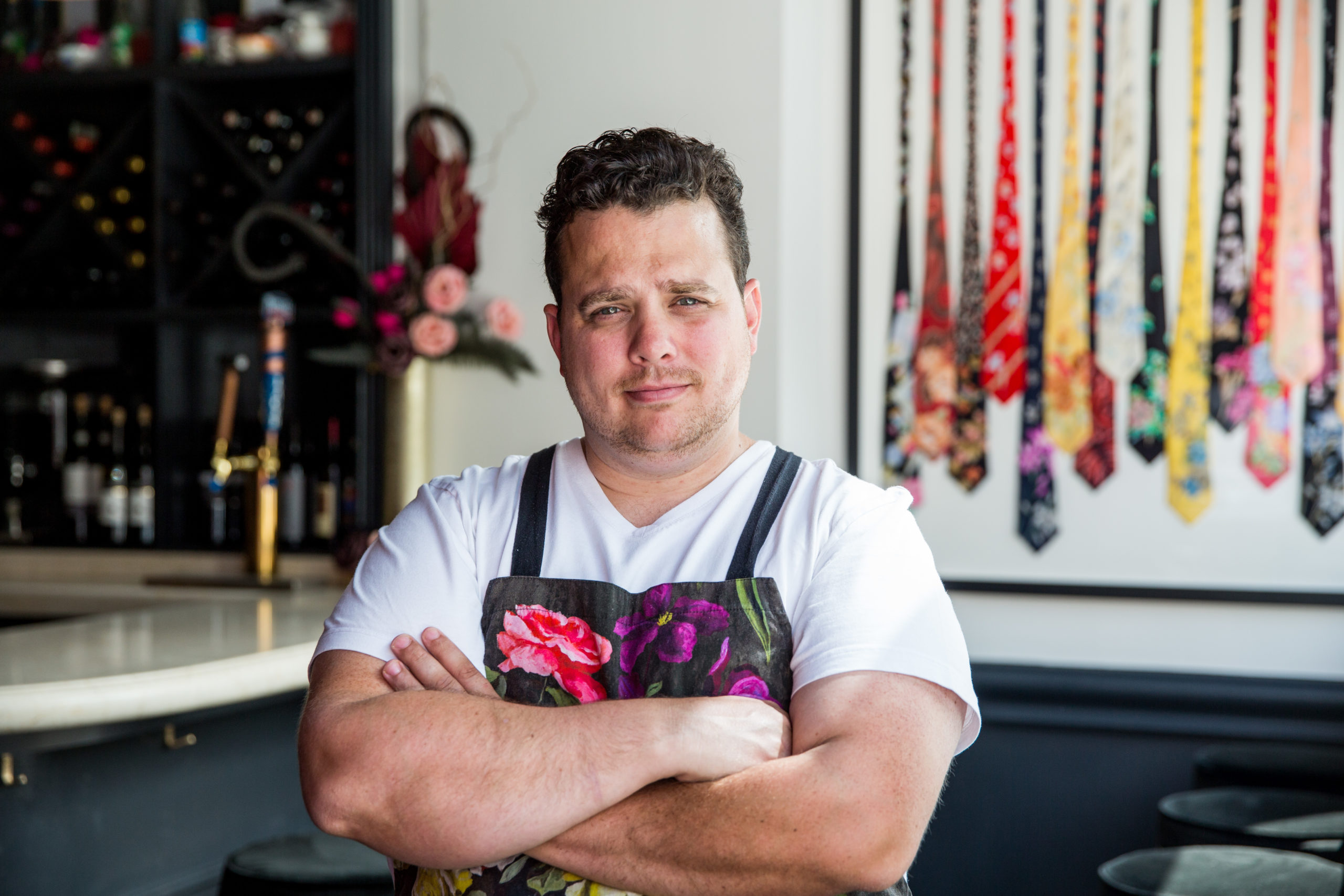
Chef Luke Hayes-Alexander’s popular supper club, which previously popped up at secret locations around Toronto, is now offering weekly delivery. Each week, L.U.S.T @ Home features a set, three-course meal that’s designed to be reheated at home.
The program kicked off last Sunday with a comfort food-themed menu that included cheesy macaroni pie with salsa verde and chocolate brownies with Vietnamese coffee pudding. Menus for upcoming weeks will be released on Sundays, and dropped off via contactless delivery the following Saturday.
While his innovative Monday night dinner series, K.Dinners, is on pause, chef Ken Yau has pivoted to selling hand-rolled dumplings. Packaged frozen with instructions for cooking at home, the dumplings are currently available in three flavours: pork and chives; chicken and shiitake; and vegan kimchi.
According to Yau’s loosely video game-themed site, we can “unlock” more flavour options once he sells over 5,000 dumplings. Orders can be placed through the site, and Yau is doing the deliveries personally on Thursdays and Sundays. Yau’s dumplings can also be purchased at Strange Love Coffee on Spadina.
The much-lauded Charlie’s Burgers pop-up dinner club series is on hold for now, but their monthly wine program is still going strong and giving back to a good cause.
Beginning in early April, the CB team pledged all profits earned from their home delivery wine case sales to the COVID-19 research response fund at Sunnybrook Health Sciences Centre. This week, CB announced they were able to make their first donation of $32,000 to the centre.
Chef Massimo Bruno has long hosted supper clubs that highlight Italy’s diverse culinary regions. Now, he’s delivering some of those comforting classics to your door as part of his new Giovedì Mercato (Thursday Market) program. Every week, Bruno and his team will share a new menu of premade homestyle dishes.
This week includes cannelloni stuffed with spinach and ricotta, saffron risotto, and Tuscan vegetable soup, among other soul-warming items. Orders must be placed by Tuesday each week for pickup at his St. Clair West cooking studio or contactless delivery on the following Thursday. The program soft-launched this week, with a full debut set for May 7.
The Depanneur is known for hosting a regular line-up of supper clubs, as well as workshops, pop-up dinners, and other imaginative food events. The venue’s culinary happenings are now available to-go as part of their Pick-Up Dinner series.
Priced at $48 for two people, dinners are prepared by a roster of different chefs and feature themes ranging from Tibetan momos to Middle Eastern mazeh. They’re also doing a regular Filipino brunch on Saturdays. Orders can be placed online and picked up on set days at the Depanneur’s west end space.
Mayor John Tory has announced a new plan that aims to close curb lanes and widen sidewalks at 100 different hotspots across the city.
The new plan, called CurbTO, seeks to identify retail main streets that continue to see a lot of foot traffic despite the citywide lockdown due to COVID-19. CurbTO will install curb lane installations and pedestrian safety zones wherever potential crowding is possible. The hope is that wider sidewalks will provide pedestrians with room to access and lineup for essential services at a safe distance from other people.
The announcement on April 27 came after residents across Toronto voiced concerns over a lack of social distancing on city streets.
One Toronto resident even went so far as to create a homemade “social distancing machine” to draw people’s attention to how difficult it is to find space on Toronto’s narrow sidewalks.
A lineup outside Cobs Bread in Leaside
CurbTO will also create 10-minute parking pick-up zones that will allow drivers to carry out quick food or medicine pick-ups nearby.
“CurbTO is a common sense initiative which starts with 10 sites right now and will expand to more than 100 locations across the city,” said Tory. “This is one more way the city government is working to protect public health and stop the spread of COVID-19. Transportation and mobility in all forms will be key parts of the city’s recovery and restart process. I have made it clear to Toronto Public Health and Transportation Services that we want those options fully examined and included where appropriate, as we implement the plan to reopen our city once we have reached the appropriate thresholds with respect to the virus itself.”
Here are the locations that have already been affected:
1. Carlton Street and Church Street – pedestrian zone
2. Danforth Avenue and Broadview Avenue – pedestrian and parking zones
3. Dupont Street and Lansdowne Avenue – pedestrian zone
4. Bay Street and Yorkville Avenue – parking zone
5. Front Street East and Berkeley Street – pedestrian and parking zones
6. Gerrard Street East and Parliament Street – pedestrian zone
7. Gerrard Street East and Broadview Avenue – pedestrian and parking zones
8. King Street West and Spadina Avenue – parking zone
9. Bloor Street West and Bathurst Street – pedestrian and parking zones
10. Queen Street East and Carlaw Avenue – pedestrian zone
Businesses can apply and learn more about eligibility criteria and program guidelines at toronto.ca/covid19BusinessTO.
Toronto’s favourite Raptor Serge Ibaka continues to engage Toronto fans throughout the COVID-19 pandemic, whether through his Instagram Live talent show or through his philanthropy efforts. On April 9, the six-foot-10-inches power forward pledged to match up to $100,000 through his organization to support Fred Victor’s COVID-19 Emergency Fund — and the organization is reminding fans that the donations will be matched up until April 30.
“Let’s keep the ball rolling!” The foundation said in a recent Instagram post. “Make Serge proud and donate today.”
Fred Victor is a social service charitable organization that provides programs and services to the homeless and those living in poverty across Toronto. The organization offers everything from affordable and transitional housing to job training, counselling, health services, and community mental health outreach. This COVID-19 emergency fund will specifically support the organization in its response to the pandemic to improve the health, income, and housing stability to the city’s most vulnerable during this difficult time.
“We are incredibly grateful for this generous gift and for Serge’s compassion and commitment to vulnerable people in Toronto. This pandemic has presented us with many challenges, but it is in the face of these challenges that we have seen people stepping up and giving back. It really does make a difference knowing that people like Serge are thinking of us and doing what they can to help,” said Keith Hambly, CEO of Fred Victor in a press release.
According to Progress Toronto, 9,000 people are homeless or precariously housed in the city, and more than 181,000 people are waiting for affordable housing in Toronto, but they often have to wait seven to 10 years before getting an apartment.
The Fred Victor organization notes how the COVID-19 outbreak has highlighted how precarious the lives of homeless people really are.
“As the COVID-19 outbreak continues, we need to recognize that people experiencing homelessness are among the most vulnerable to the spread of the virus. A lack of proper nutrition, compromised immune system, and chronic health conditions put homeless people at a greater risk,” the organization stated in an Instagram post last month. “When you are homeless, you have limited access to clean facilities and don’t have opportunities to wash your hands numerous times a day. If infected, you don’t have a home and can’t go into self-isolation.”
The Serge Ibaka Foundation has been a generous supporter of Fred Victor. Last March, they collaborated to create the Fast Break Meals Partnership — an initiative that provides free, nutritious meals to residents struggling with food insecurity.
Mother’s Day gifts don’t have to be as difficult to choose as you might think. These local shops are making it easier for you to treat your mom this year for Mother’s Day with curb-side pickups and delivery right to her door.
Get your mom some fresh traditional buttermilk scones from The Kitten and the Bearor get a pack of frozen ones and pop them into the oven for a crumbly warm treat later on. While you’re at it, pair the scones with their handcrafted French confiture style fruit preserves and jams. The Kitten and the Bear offers a variety of Mother’s Day gift bundles that can be picked up curb-side at their Dundas West location or delivered straight to Mom’s door. You can place orders on the website.
For moms who are also wine lovers, The Vine Agency, a family-owned wine agency, has a wide portfolio of wines but you may want to check out the refined Sauvignon Blanc, hailed from Erica & Kim Crawford’s organically farmed family estate in New Zealand. Place your orders online. $275.40 per case of 12 ($22.95/bottle).
Van Rijk Jewellers has the perfect diamond studs for your mom, a timeless expression of love and beauty. Available in many sizes and price ranges, diamond stud earrings are the perfect accessory that will go with everything. Their online store remains open and ships to any address across Canada.
Whether you are together or apart this Mother’s Day, it’s more important than ever to tell her how much you love her. Helene Clarkson Design helps you celebrate your mom with beautiful gifts under $100: PurseN’s Mini Jewelry Case ($59), Materia Design’s Filamento Bracelet from Italy ($75), a convertible 3-in-1 backpack ($59), Secrid Miniwallet ($99) or let Mom choose with a heleneclarkson gift card.
Cynthia Findlay Antiques has a wide variety of jewellery or unique decorative antiques. They specialize in the Victorian, Art Nouveau, Edwardian, Art Deco, Retro and Mid-Century Modern periods. Check out their online shop and you’ll find flatware, art glass, art pottery, fine porcelain and collectibles, and all kinds of stunning jewelry.
Gidon Aesthetics carries award-winning skinbetter products that can be delivered right to your home, or if you opt to purchase a gift card, you may want to go for the oxygenating three-in-one facial that will revitalize and exfoliate the skin. For gift cards contact the team at [email protected].
Every piece of jewellery from Penwarden Fine Jewelleryis made with ethically-sourced precious metals and gemstones and designed by local designer Linda Penwarden. You can get each item custom made or choose any classic piece online and get it delivered to your mom by Mother’s Day.
Narnia Boutiqueoffers an array of classic trends that are versatile. Pair their pieces with runners for a casual look or heels for business-casual. You can visit them online or check out some of their newest pieces on their Instagram page.
Treat your mom to Mary Macleod’s Shortbread cookies. Chose from a variety of flavours including her original chocolate crunch which has been a hit since she started making them 35 years ago in her small shop under the marquee of the Capitol Theatre. Order online through the website.
Give your mother the gift of ultimate comfort from Legs Plus & Bra Boutique. The shop has a variety of styles, brands and sizes online. They’re now offering virtual and phone fittings and are available to answer any questions you may have. Check out the website to see their selection and to make purchases.
Along with top chefs such as Vancouver’s Vikram Vij and Montreal’s Dan Geltner, Victor Barry has launched the Canadian Hospitality Worker Relief Fund (CHWRF) to support restaurant and hospitality industry workers who have been financially impacted by COVID-19.
The fund will provide one-time $500 grants to cooks, servers, dishwashers, bartenders, delivery people and others who are in urgent need of items such as groceries, medication and other health products but don’t have the financial means to purchase these items.
“The hospitality community is my extended family,” said Barry, who owns Piano Piano and Café Cancan in Toronto. “Since I was 11 years old, I’ve had the privilege of working side-by-side with the exceptional people who make, serve and deliver your food. And now more than ever these hardworking people need our help, which is why I’m proud to support the Canadian Hospitality Worker Relief Fund initiative.”
The fund will be administered by the Design Exchange registered charity and industry workers can begin submitting their applications on Wednesday, May 6.
The fund was made possible by its founding partners — which include Uber Eats, Garland and Welbilt Canada — who have pledged more than $1 million.
“The restaurant industry has rallied around this health crisis to feed Canadians and help keep our country safe,” said Lola Kassim, general manager of Uber Eats Canada. “We welcome the opportunity to be a founding partner of the Canadian Hospitality Worker Relief Fund, and the contributions it will make to impacted workers, including delivery people.”
Workers who hope to receive the $500 grant must meet certain eligibility criteria which includes being over the age of 18, having worked in the industry for at least 90 days in the past year, and having experienced a decrease in wages or loss of job on or after March 10. Full eligibility criteria can be found at chwrf.ca.
Several other initiatives have launched since the onset of the pandemic to help restaurants and hospitality workers such as #TakeoutDay, SaveHospitalityCA and an initiative in the U.S. called Werbig who is calling out insurance companies for not helping restaurants in this time.
In Beijing, Shanghai, Singapore, Hong Kong and Taipei, restaurant hosts must now act as medical bouncers. Before a table is seated, every member of the party must have their temperature checked. Should one of the customers register a fever, the entire reservation is refused entry.
In areas of Asia that have lifted their lockdowns, restaurants have returned to dine-in service, but it’s not business as usual. Staff don gloves and masks, and compulsive disinfecting has become ubiquitous — surfaces are being constantly sprayed and wiped, and diners douse themselves in alcohol before entering.
In many cities, restaurant capacity has been capped at 50 per cent, with groups (max four to a table) spaced out. In restaurants where it is impossible to create a buffer of one and a half to two metres between tables, acrylic space dividers have been improvised.
Some restaurants have gone above and beyond state-mandated pandemic dine-in policies. A disinfectant machine that sprays a cloud of alcohol at all who enter (spotted in Shanghai by a Twitter user) does little to stop the spread of the pandemic, but it’s one restaurant’s way of assuaging its diners’ anxieties. Other performative hygiene practices include tableside disinfecting of cutlery and flatware and customer-facing screens that live stream kitchens so that guests can see the kitchen outfitted in masks and gloves.
Hong Kong hospitality group Black Sheep Restaurants is going further by asking its staff to pay extra attention to the tidiness of their hair, nails and uniforms because, according to their self-published COVID-19 playbook, “guests are very sensitive to hygiene and anything that even looks messy will translate to unclean in their mind.”
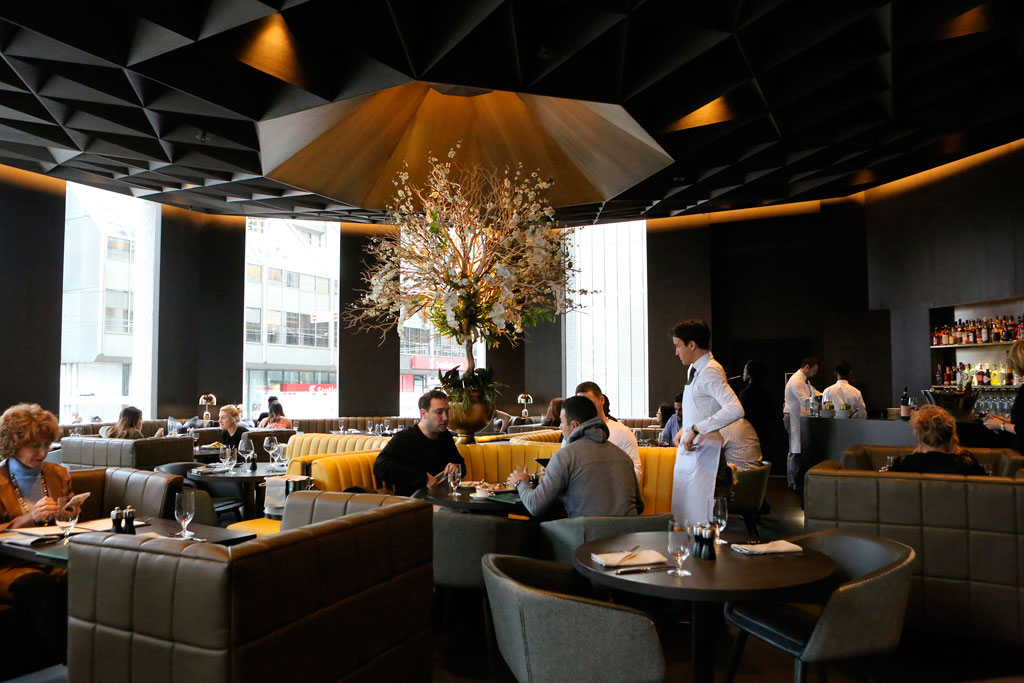
Dining pre-COVID at Arthur’s Restaurant in midtown
Mainland China is employing contact tracing (the government traces every place a COVID-19-positive person has been and tests everyone they could have potentially infected) to keep the virus in check. At every restaurant, diners must sign a sheet that details their name, state ID number, the time they entered the establishment and their temperature upon entry.
Hong Kong is taking a less techno-authoritarian approach to keeping COVID-19 under control, so some restaurants are stepping up. Yardbird and Black Sheep, for instance, are requesting guests sign a health declaration, before they dine, and they will refuse service to any guests who have travelled abroad in the past 14 days. Black Sheep also uses the information from these health declarations to alert their customers about any potential COVID-19 spreaders who dined at their properties.
Meanwhile, in South Korea — thanks to their extremely effective digital contact tracing efforts — it’s business as usual. In bustling Seoul, restaurants aren’t necessarily jammed with diners (anxiety still hangs in the air), but people are eating out unfettered by social distancing demands.
Although it seems Ontario is still weeks (if not months) away from being open for business, we spoke to a handful of Toronto hospitality industry leaders about what the future of dining in during COVID-19 looks like. Here are their thoughts.
Our plan is to reduce seating (50 per cent restaurant capacity), space tables at least two metres apart and limit party sizes. Our team members will adhere to non- negotiable processes on top of our already strict practices — taking temperatures, wearing gloves and masks, using UV lights to ensure proper cleaning, no hugging or handshaking. We are looking into downloadable menus, and no-touch payment options. We have talked about having our team members tested for COVID-19 antibodies and issuing an “immunity passport” to let people know they can safely interact with guests and fellow team members. We’ll likely set up hand-sanitizing stations at all of our restaurant entrances.
ANDREW OLIVER, President, Oliver & Bonacini Hospitality
The worst thing we could possibly do as a country and an industry is rush a reopening. Not only would it be unsafe, but the costs would be high. A false start would be costly operationally if we had to shut down and do it all over again, and it would erode the public’s trust. In Canada, we have an advantage by being behind other countries with the onset of the virus, and reopening. This will allow us the opportunity to watch and review how their measures work, and then we can tailor a plan that works for us. I could see capacities being reduced by 25 per cent or even 50 per cent to start. One idea that could have traction on re-entry is having guests look at menus on their phones, reducing a contact point and allowing us to change our menus as business levels dictate. Some dining trends may change. Takeout might remain a larger segment than before. But ultimately, I think dining out together is going to be so important once we start to normalize.
Once we reopen, I expect that, like China, we will have our seating capacity cut in half for at least three to six months. This 50 per cent loss of revenue — on top of the three months of debts we incurred during our closure — will affect the bottom line. The heartbreaking reality is that many restaurants won’t survive. Numbers don’t lie and for most, “bums in seats” is necessary to cover fixed expenses. As an owner, my Reyna family is everything, and knowing that I won’t be able to bring back my full team is both stressful and gut wrenching. In this new climate, thousands of workers in the hospitality industry will continue to be unemployed. Those who will come back will have to deal with new rules like wearing masks and gloves. On our end, we’re creating a Reyna market that will offer DIY kits and other goodies for people to enjoy at home, which I pray will help the survival of our business.
Hanif Harji of Mira, Figo and Byblos to name a few
The challenge for the industry is being able to provide people an enjoyable experience without being overly invasive. We want to ensure we have the most significant protections, but we don’t want them to be so cumbersome that a night out loses its charm. We always have and will continue to leave no stone unturned in looking for the best ways to prevent communicable diseases of any nature in our restaurants. Some of the things that we are looking at run the gamut from using more disposable items such as menus and cutlery to looking for ways to eliminate high touch items such as card readers that go from hand to hand. I think payment processing will evolve as a result, and more people will be reliant on their own devices to complete transactions via apps.
ROBERT CARTER, Managing Partner at StratonHunter Group (an industry partner of Restaurants Canada)
I have studied consumer behavior at restaurants for over 15 years, so I have a unique and focused view on the dynamics of our industry. Of the $70 billion in restaurant industry sales during 2019, over 65 percent of those sales came from on-premise dining. So what does the future look like for our industry, if more than half of it is shut down? The main shift will be an overall change in operating models for restaurants. Relying heavily on a bricks-and-mortar location will become less relevant and more focus will be placed on multiple revenue streams such as expanding offerings beyond a core menu (think alcohol, groceries, meal kits). We will also see more off-premise dining (delivery, drive-through). Outsourcing core functions (marketing, finance, IT) will increase, innovation will accelerate and poor performing restaurants will close. We will be in a highly competitive industry, moving forward.
When restaurants reopen we will need to shift in a variety of ways, our industry is ripe for change. For too long we’ve been investing in premium suppliers, decor and other distractions instead of putting our focus into the most important ingredient: people. Sick days don’t often exist in a lot of restaurants. Every kitchen is equipped with first aid kits but most kitchens have little to no tools to discuss mental health or emotions. COVID-19 will have lasting implications overall but the consequences are dangerous with regards to mental health and substance use. The food and beverage industry already had an epidemic on its hands before COVID-19, the pandemic has simply exacerbated it. There is more pressure on key factors that increase the rates of mental health crisis and suicide including job loss, financial insecurity, isolation and hopelessness. We will need to be prepared for this with social connection, resources and a support network and plan. Even though we may still be practicing physical distancing, human connection is more important now than ever before.
Mark McEwan inside one of his gourmet grocery stores
I hope restaurants can get back in motion soon, but health and safety are most important. Very tight standards on the restaurant level are expected, for example usage of sealed menus that can be sanitized, proper distancing when seating guests, sanitizing tables between turns, sanitize all public spaces constantly (our service staff must sanitize every 20 minutes), available sanitizers for quests in obvious areas etc. No shared plates for guests and zero tolerance for any obvious signs of symptoms/illness. Good personal practice on the part of the client is imagined as well.
TREVOR LUI, Culinary curator at Stackt, and owner of Pop Kitchen Hospitality and Makan Noodle Bar
In terms of new hygiene mandates issued by public health, whatever they may be, implementing them shouldn’t be a problem for restaurants. We’re used to abiding by public health regulations. However, these new mandates, which will likely involve staff wearing PPE, will be costly and many restaurants are already struggling to stay afloat. The restaurants that survive this will need to re-create themselves — which we’re already seeing as restaurants pivot to offer meal kits and groceries — you can’t afford to stay in business paying full rent while operating at 50 per cent. The ability to pivot and create a dynamic online merchant service will be vital. I expect that there will be a big shift as small business owners move away from third-party delivery platforms, which take enormous commissions. Delivery, not dining-in, will continue to be a business driver for the coming months.
Actor Ayisha Issa earned a Prix Gemeaux for her portrayal of Brittany Sizzla in the highly acclaimed French Canadian series Unite 9, a role for which she also nominated in 2017. Currently, Issa stars as Dr. June Curtis in the CTV series Transplant.
The series follows Dr. Bashir “Bash” Hamed (Hamza Haq), a Syrian doctor who flees his country with his younger sister Amira and arrives in Canada where he works to navigate a new environment and forge new relationships after earning a coveted residency at a hospital in Toronto. It airs Wednesday nights at 10 p.m.
While in quarantine, Issa has been on a “self-help rampage,” will all her newly found me time.
“While I’m currently exploring 10+ self-help workbooks the books I’m recommending today had a significant impact on my outlook and productivity in all areas of my life,” she says.
Ayisha Issa is the fifth in our series of Quarantine Reads. Here are five books that matter to her:
I’ve suffered from anxiety for most of my life and learning to give a little less of a f*ck made a huge difference. This book takes a humorous, down to earth and carefree look at life. It reminds you of the ways in which you might be taking yourself a little too seriously and shows you how that might be getting in the way, of getting what you really want out of life.
This book sat on my shelf for two years. One day I decided I needed to address some of my own intimacy issues in order to better serve a character I was playing. It’s about the underrated power of vulnerability and how fear and avoidance of being vulnerable can set off a chain of dysfunction, taking you further and further from yourself and keeping you stuck. I went from being a proud vulnerability avoider to an advocate. I still fall asleep to the audio version some nights.
I had a hard time with this one at first but it quickly became one of my favorite motivators. This book is broken up into small chapters and usually starts with a quick story about real people who achieved amazing success simply by facing down the obstacles in their lives. As a small business owner, it can be scary. Especially during times like this when the future is uncertain. This book reminds me of the silver lining and opportunities that exist in all situations for those who are relentless in seeking them out. I recommend this as bedtime audio as well.
I’m a scatterbrain. I was put on Ritalin in high school and still struggle with the typical symptoms of adult ADD. It’s always been difficult for me to stay focused enough to form any regular routines and change habits, mostly because I’m too distracted. This book broke down how habits work. How they are formed for better for worse and how we can use that understanding to form habits that help shape the life we want. Pairing the formula for habit building I found in this book with a tip found in the first chapter of The Obstacle is the Way, I quickly made a consistent habit of making my bed every morning. That sounds lame for a 36-year-old but it was a big deal for me and it set off a chain of habit-building that is keeping me both productive, relaxed, healthy, and feeling pretty good about this quarantine situation. On the flip side, understanding the negative habits I’ve developed in different areas of my life almost instantly robbed them of their power making them easy to repair nor replace. Again, I also own it on audiobook (lol).
Another one that sat on my shelf for ages. This is the first of over 10 workbooks I plan to complete over the next couple of months. I bought this one after finding out my ex had cheated on me but didn’t open it until I finally left almost four years later. This book is my new thing. It’s informative, easy to read, relatable, and gives you practical exercises you can do right in the book to help you work through some of the vile and toxic things you’ve been saying to yourself. I didn’t realize how hard I was on myself (and subsequently those around me) until completing this book. Messaging that is programmed into us as kids and evolves over time becomes a tool we unknowingly use against ourselves day in and day out. The consequences of this effect if and how we pursue our goals, who we date, our sexual health, depression anxiety, parenting, and everything in between. I don’t recommend the audio for this one, but you’re going to want to dedicate a notebook and a pen to how to show yourself some well-deserved self-care.
A survey released by food service industry group Restaurants Canada paints a sobering picture of the state of the Canadian restaurant industry amid the pandemic.
According to the survey, which polled close to 1,000 food service operators across the country, one out of every two independent restaurants does not expect to survive over the next three months without intervention. Additionally, 75 per cent of survey respondents said they are either very or extremely concerned about their current level of debt.
Although the Canadian government has introduced significant relief measures since the COVID-19 outbreak, restaurant advocacy groups like SaveHospitalityCA have pointed out that these funds do not adequately address the unique needs of restaurateurs, who are grappling with different kinds of operating costs and challenges compared to other small business owners.
Over three-quarters of respondents in the Restaurants Canada survey identified rent as a main source of debt for their operations. The Canada Emergency Commercial Rent Assistance Program (CECRA) for small businesses, which was announced last Friday, offers possible hope.
Although it’s a step in the right direction, critics, including the NDP Party, have pointed out issues with the program. Most concerningly is that CECRA relies on landlords to apply for the relief, rather than the businesses that are struggling to pay rent. It’s difficult to yet determine if the program is enough to provide the meaningful relief that restaurant owners need right now.
Restaurants Canada stresses the importance of sustained support for restaurant operators over the coming months. As part of the survey, the group is recommending “continuing rent relief measures until businesses have returned to a fixed percentage of pre-COVID-19 revenues,” giving restaurants time to rebound as consumer spending picks up. CECRA is currently set to run until June.
South of the border, some US restaurant owners are beginning to pressure insurance companies, rather than the government, to provide the financial support needed to weather the COVID crisis.
A new advocacy group backed by a group of industry heavyweights that includes chefs Wolfgang Puck and Daniel Boulud is lobbying for restaurant operators who have paid premiums for business interruption insurance and think they should be paid out as a result of the pandemic.
Business interruption insurance typically covers profits lost as a result of property damage, such as a flood or a fire. Insurance companies have therefore argued that business interruptions caused by coronavirus are not covered.
Numerous restaurant operators are beginning to file suits against insurance companies in the US, and the movement may even be gaining a hold in Canada. Merchant Law, a British Columbia-based law firm, has filed a class action lawsuit against over a dozen top Canadian insurers for breach of contract over their refusal to pay business interruption claims related to the COVID-19 outbreak.
Whether the support comes through fulfilled insurance claims or government relief funds, it appears the restaurant industry still needs more significant interventions to survive the pandemic.
Food delivery app Foodora is shutting down Canadian operations as of May 11 after five years of operation, according to a company press release issued on April 27.
“I’m very proud of what foodora has accomplished over the last few years. I’ve been able to witness food delivery grow from its infancy into what it is today, and helping to build a brand I’m proud of,” said David Albert, managing director of foodora Canada. “However, there’s been some challenges along the way. We’re faced with strong competition in the Canadian market, and operate a business that requires a high volume of transactions to turn a profit. We’ve been unable to get to a position which would allow us to continue to operate without having to continually absorb losses.”
The company explained that it has “not been able to reach a level of profitability in Canada that’s sustainable enough to continue operations, competing against strong local players and a highly saturated market for online food delivery.”
Food delivery apps operating in Toronto have had some criticism as of late directed at the substantial fees charged to local restaurants already struggling to survive.
Foodora, which says it works with 3,000 restaurants in 10 cities across Canada, is reportedly putting a package together for employees and other creditors.
Foodora’s parent company Delivery Hero is billed as the “world’s leading local delivery platform,” which operates in 530 cities in 44 countries and has over 22,000 employees.
The program allows you to order individual grocery items, as well as beer, wine, and liquor (just remember that booze orders have to include food as well).
They’re also offering special chef-curated boxes, priced between $35 and $93, which feature a selection of produce, protein, or pantry staples. The pantry box, for example, contains basics like all-purpose flour, eggs, and milk, while the protein box is packed with frozen halibut and two 10 oz beef striploin center cuts, among other meat items.
You can also order heat-at-home meals, many of which are O&B restaurant favourites, like Bannock’s tourtiere, Lena’s beef empanadas, and Parcheggio’s lasagna. They’ve also partnered with Pizzeria Libretto to offer ready-to-reheat 12-inch veggie and pepperoni pizzas.
The small selection of non-food and drink items covers a few personal care basics aimed at preventing the spread of COVID. There are bottles of Dillon’s alcohol-based hand sanitizer, with a note explaining that purchases help fund Dillon’s effort to continue providing sanitizer to Ontario front line workers free of charge.
For the next two weeks, delivery dates can be booked on Wednesdays, Fridays, and Sundays with spots available on a first-come, first-served basis.
Contactless deliveries are dropped off between 9 a.m. and 9 p.m. on your selected date. There’s a minimum order of $150, and the delivery zone currently spans from north of the water, south of Finch Ave, east of the 427, and west of Victoria Park.
If you don’t feel like cooking, some of O&B’s restaurants have reopened for takeout and delivery. R&D, Liberty Commons, and Beauty BBQ are all offering to-go meals, with Beauty BBQ also serving pasta from Parcheggio.
Scott McGillivray is a real estate investor, contractor and entrepreneur who has been helping homeowners for more than a decade. In his latest HGTV Canada series, Scott’s Vacation House Rules, he helps homeowners unlock the rental potential of even the most uninspired properties. Tune in Sundays at 9 p.m.
Being stuck inside while the weather starts to turn is never ideal, but there are ways to take advantage of this mandatory at-home time with little projects around your property. These projects will help keep you occupied and increase the property value. Win-win. Here are my tips for the simplest renovations to take on this spring.
Start outside
Gardening and landscaping are always a good idea. They show pride in your property and impress your neighbours, visitors, and in-laws! Consider planting a garden in the backyard, or flowers alongside the house, and even digging up those pesky weeds.
If self-isolation is getting to you, gardening can also be very soothing and relaxing. If you listen to your favourite music or podcast while in the garden, you can really get lost in the activity and give your brain a mental break.
Your family can also participate — get your kids involved in pulling weeds or planting their favourite vegetable. Keeping the lawn neat and tidy also gives a sense of organization to the whole property. Think about it — you feel much more welcome when you pull up to a friend’s driveway and their lawn is in order as opposed to when it is a disaster.
A quick refresh
Painting is an easy way to refresh a space. One new coat can make all the difference. If you want to start small, consider an older piece of furniture that you love, but looks dated. Take it outside and give it one good coat of paint. You may be surprised at how it can change the entire piece.
Baseboards are also often overlooked, and these can be fairly easy to touch up. For those who are more adventurous, try tackling a full room. However, my tip here is to make and adhere to a timeline. Having an open-ended project during this time of self-isolation may not be good for your mental state, or that of your family’s — no one wants to be living in the middle of a mess right now.
Outdoor chores
Another way to make use of your time and take advantage of some fresh air is cleaning your outdoor spaces. Think about your deck, porch, or even a balcony. If you have been neglecting them, now is the time to give them some attention. Chances are they need at least a good sweep.
Also look at any outdoor furniture that may need to be replaced, repaired, or cleaned in time for the summer season. Do your balcony windows need a wash? Is there an old cracked planter in the corner by some cobwebs? By giving your outdoor spaces a little TLC, you will also have a reason to get out of the house. That being said, remember to stay on your property and maintain proper physical distancing.
While the art of baking sourdough bread has a long history, these leavened loaves are enjoying a renaissance across Toronto right now. With only water, flour, salt, and yeast, residents are hunting down beginner recipes, watching masterclasses on Youtube, and chatting via social media to find out how to make the flavourful bread at home.
Since mid-March, however, grocery stores have been repeatedly knocked out of their stock of flour. This scarcity has started some impressive grassroots movements within Toronto communities like Leaside, where neighbours are sharing recipes, tips, and even adopting out jars of their own mother doughs.
“It all started when we had to figure out a long-distance plan for the kids’ schooling,” says Angela Lam Perieteanu, an estate lawyer who lives in Leaside. “My husband took on the academics and I decided to take on life lessons. It was really fun for them, but shortly after, we couldn’t find any yeast. I noticed my daughter was reading Little House on the Prairie, and I thought: if Laura Ingalls can do this without commercial yeast, we can too.”
Lam Perieteanu’s own sourdough creation
Flour, water, and five days later, Lam Perieteanu had a sourdough starter. She adopted out one jar of her mother dough to a neighbour asking for help in their community’s Facebook group. But as word of the “Leaside Sourdough Lady” began to spread, a local bread baking collective was born. As of now, Lam Perieteanu has adopted out 117 jars via porch pickups for neighbours in Leaside and Davisville Village. She’s even started a blog, as it’s now impossible to text each person with her step-by-step instructions and photos. Lam Perieteanu’s mother dough has even bred other small baking collectives, as neighbours split out their sourdough starters for friends and family.
Tips and tricks for the perfect loaf abound right now (avoid bleached flour, use bottled water without fluoride and chlorine). But as Lam Perieteanu has worked through existing recipes to craft her own through trial and error, she’s discovered two top tips for anyone who might soon rise to the occasion.
“For really consistent results, I suggest weighing instead of measuring your ingredients,” says Lam Perieteanu. “And one important lesson I’ve learned is you can’t watch the clock, you have to watch your dough. Temperatures in houses differ, and your dough will tell you when it’s ready.”
Where to find other key ingredients
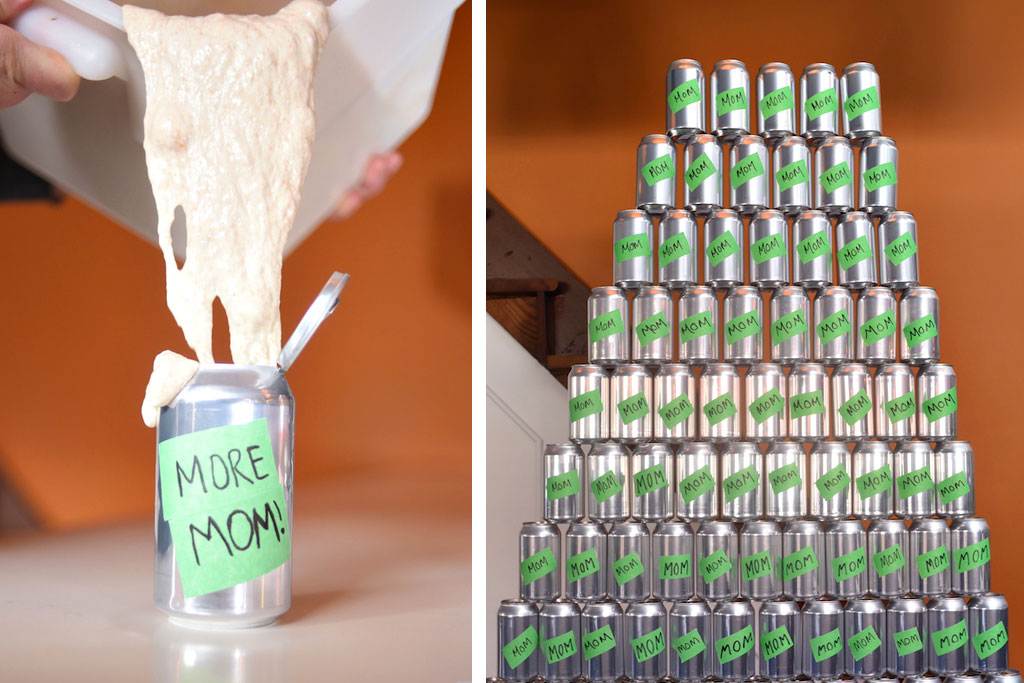
As for where to get flour, Costco has reportedly been stocked up recently. Bulk Barn has delivery and curbside pickup options for their current inventory, and if you’re willing to wait a few weeks, some artisanal mills are delivering as well. Summerhill Market has been doing incredible things since the start of the pandemic, like packaging their own supplies of flour and selling it at cost when no one could find flour. They’re still delivering, and even have a priority service for seniors. And, if you want to skip the step of making your own sourdough starter, Burdock Brewery has been selling cans of their homemade sourdough starters for $3 with all proceeds going to charity.
Burdock Brewery’s sourdough starters
“You’ve got to find something during this isolation to not go stir-crazy,” says Lam Perieteanu. “Work is work, and housework is housework, but you need things for yourself. We can’t get together, but we can share our baking successes and failures. It’s just another way of bringing people together.”