

Home Blog Page 450

Cottage Life stars Colin and Justin pen new book

0
home design
© Jeremy Kohm, Great Canadian Cottages/Cottage Life

What’s the one thing on every Torontonian’s mind this time of year? Getting away. Anyone who had a vacation planned for this year likely had to cancel it due to the pandemic, leaving us all dreaming of the perfect escape. Well, interior design duo Colin McAllister and Justin Ryan have put those dreams on paper with their new book, Escapology: Modern Cabins, Cottages and Retreats.

The book features 24 unique escapes from right here in Canada to destinations in the U.S., Mexico, Scotland, England, Norway, Sweden and South Africa. The book also features a couple of their own projects, such as a log cabin in Muskoka and their own cabin that they use as a rental. Readers can escape to them all from the com- fort of their couch through the book’s 236 pages.
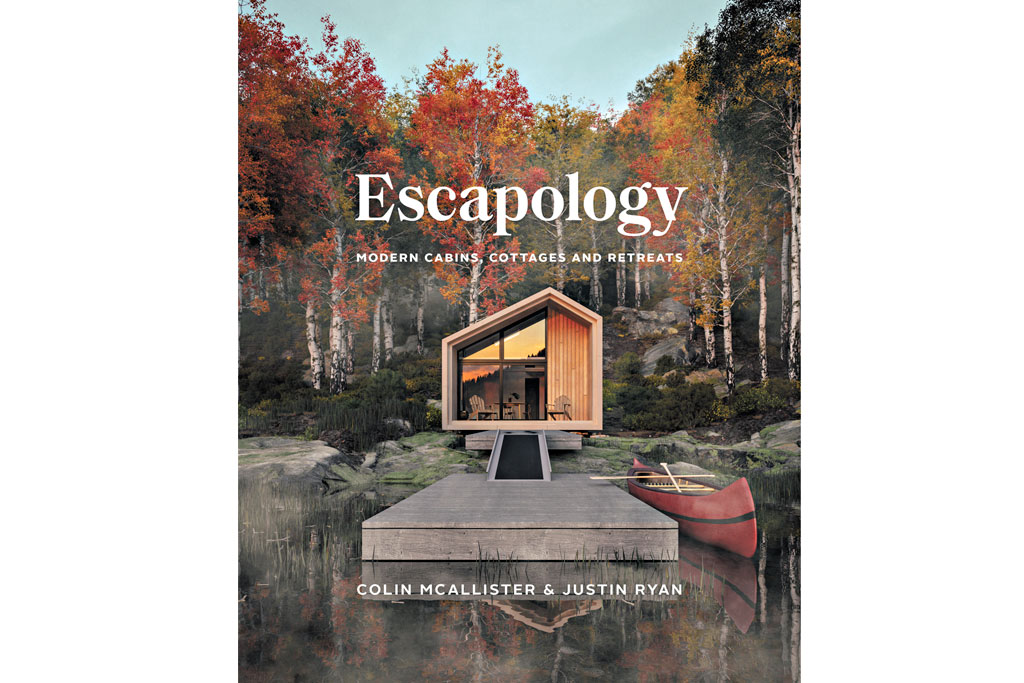
 

escapology
The book cover for ‘Escapology’

“Escapology, to us, is the social science of ‘getting away’. In its essence, it’s all about retreating to a special place – a cottage, vacation home or cabin – to decompress. It’s all about shaking off the stresses of our fast spinning world to unwind in a peaceful spot,” said Colin and Justin in a press release about the new book.

The pair have specialized in designing vacation homes for the past decade and have fallen in love with the rural real estate landscape that they have been exposed to through this work.

“We adore the forests and lakes around which we navigate in Canada, and love the various cottages and cabins we visit whether filming our TV shows, remodelling vacation homes for clients or reporting upon cottage ‘innovation’ for newspapers and magazines, both nationally and internationally,” the pair said.

Along with a network of designers, architects and home owners, Colin and Justin put together a list of 100 potential cottages to include in the book. They then whittled the list down to 50 properties and eventually down to what they call the hot 24.

“Creating Escapology has been little short of joyous: as lovers of the rural idyll, it’s been our pleasure to curate such a stunning inventory of beautiful abodes to inspire and excite, we hope, in equal measure,” said Colin and Justin.
Five safe ways to celebrate Halloween in the city this weekend

0
halloween casa loma
Spooky Walking Tour at Casa Loma

It would be an understatement to say the pandemic has put a damper on 2020 and all its festivities. Many of us have had to cancel or change plans for holidays such as Thanksgiving, and Halloween will be no different.

This year, the province has advised against trick-or-treating for kids in Toronto and other regions that were placed in a modified Stage 2. Instead, health officials are encouraging families to celebrate at home with virtual parties or Halloween-themed arts and crafts such as carving pumpkins.

However, necessity is the mother of invention, and people are adapting quickly to come up with creative variations on familiar traditions. There’s no reason why Torontonians can’t celebrate Halloween in a safe and socially distant manner this year to add a little spine-chilling fun to their lives.

Here are five pandemic-friendly ways to celebrate Halloween this weekend:


Casa Loma’s Spooky Walking Tour


View this post on Instagram


A post shared by Casa Loma (@casalomatoronto) on

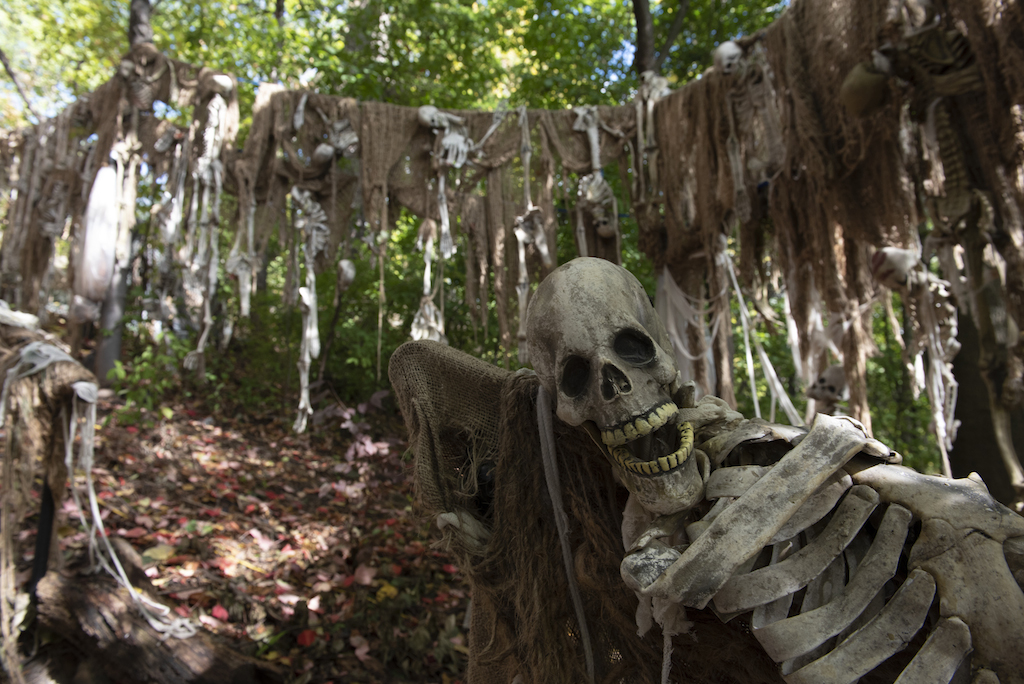
Although Casa Loma had to cancel its Legends of Horror event this year, you can still visit the castle at 1 Austin Terrace to walk around the grounds and check out the over-the-top Halloween sets scattered throughout the gardens and tunnels. Hang out with skeletons and gargoyles amongst eerie graveyards, cobwebs and more for a thrilling good time. The sets are open until 10 p.m. on October 31, and the event is open to all ages. Buy tickets at CasaLoma.ca.


Toronto Horror Hallways


View this post on Instagram


A post shared by Toronto Horror Hallways (@horrorhallways) on

With strict COVID-19 protocols in place including mandatory mask wearing, extra sanitizing and temperature checks at the door, Horror Hallways is a great way to get spooked this Halloween without putting yourself at risk. Visit the dark, twisted maze at 37 Stoffel Dr. with up to five friends but beware — these haunted halls are filled with ghouls, demons and skeletons unlike any you’ve seen before. Buy tickets at TorontoHorrorHallways.com.


Haunted Drive-Thru


View this post on Instagram


A post shared by Toronto Shines (@toronto.shines) on

Engage in a spooky immersive experience featuring a graveyard, a giant kraken and a haunted pumpkin patch without leaving the comfort of your car at Toronto’s Haunted Drive-Thru at 176 Cherry St. Complete with plenty of props, animatronics and ghoulish lighting, the event is the perfect way to experience all the terrors of Halloween minus the COVID-19 anxiety. Buy tickets at TorontoShines.ca.


Drive-Thru BOOmobile at the Toronto Zoo


View this post on Instagram


A post shared by Toronto Zoo (@thetorontozoo) on

Looking for a safe, family friendly way to celebrate Halloween this year that won’t scare the pants off your little ones? Look no further than the Drive Thru BOOmobile at the Toronto Zoo: an educational experience featuring a beautiful Hay-lloween town exhibit complete with hay bale art made by the zoo’s staff and insightful commentary about how the animal kingdom ties into our favourite Halloween traditions. Buy tickets at Tickets.TorontoZoo.com.


Ontario Place Drive-In


View this post on Instagram


A post shared by Ontario Place (@ontarioplace) on

Miss going to the movies? Head to Ontario Place at 955 Lake Shore Blvd. W. for the next best thing: a good old-fashioned drive-in movie experience. Pack your car with blankets and pillows, grab some popcorn and enjoy the show for a fun and COVID-friendly way to spend Halloween night. Although The Nightmare Before Christmas and The Descent are sold out for Oct. 31, you can still purchase tickets for Scott Pilgrim vs. The World on Saturday or The Nightmare Before Christmas on Nov. 1 at OntarioPlace.com.

And if none of these activities appeal to you, there are always plenty of fun and festive Halloween activities you can do from home, quarantine-style. Dress up, carve pumpkins, bake some Halloween treats or have a scary movie Netflix binge session — the options are endless!

Elvis Costello on his new album and whether he would come back to play at Toronto’s El Mocambo

0
Elvis Costello
Santiago Felipe/Getty Images

Elvis Costello is set to release his incredible new album Hey Clockface on Oct. 30. Post City caught up with the legendary songwriter while he is holed up in British Columbia waiting out the COVID-19 pandemic.

One of your best-known albums in Canada is a recording of a live show you played at Toronto’s El Mocambo. What do you recall from that concert and album?

Well, I think that the Rolling Stones played at the El Mocambo just before we did. So I think my manager said OK, we could play a different place, but let’s play that same place, too, you know because then it’ll be like they have to think of us the same way.

And had you played here before then?

I think that was our first time in Toronto.

So how did the album come about?

We happened to go out on a radio broadcast. So it circulated. In those days, there were vinyl bootlegs of a few of our performances. Because, you know, we were often only playing either a club or small theatre, one way to be heard by more people was to allow them to broadcast the show. And quite often, the show will be promoted by a local radio station. There were only a handful of radio stations in the whole of North America that wanted anything to do with them [our performances]. But some of them did make it on the vinyl, and that one became circulated more than others.

That album kind of took on a life of its own since it wasn’t a regular release. Why?

I think it was a pretty good snapshot. I wouldn’t say it was by any means the best show we ever played, but it was a pretty good impression of the way the band sounded in ’78. And it certainly got people’s attention a little bit.

That club has recently reopened and is state-of-the-art everything. Maybe you’d come back and play that album, again here in town at the El Mocambo. What do you think?

Well, I mean, I know how to play all those songs. I don’t know whether anybody would want to hear that…. I don’t want to go back and try and recreate it. I’m trying to think about how to sing them at the next show, not go back and sing them again, the way I did them, you know. They change shape as you play them. So I’d be looking at how they might sound in the company of some songs from this record and the last record or the records from over the years. That’s an intriguing puzzle, but it’s a good puzzle to have to solve. Because it means you’ve got more than one song to sing.

So, that’s not a no then, at any rate. You’re releasing a new album in the middle of a pandemic. How does that feel for you?

Well, I think it feels better than going down in the basement and, you know, just closing the door and never wanting to come out again, which would be one of the possible reactions, wouldn’t it?

True. It’s a good position to be in, I would think.

I’d much rather be doing this. I’m very fortunate to do what I do. And I had the idea of making a record, doing something that sounds impossibly extravagant, you know. Not extravagant in terms of how much it costs, but just the idea of flying to another country to do something differently, something beyond our wildest dreams.

How did this all come about then?

I was on my way to start a tour in England, so a detour to Finland seemed good. You know, get up there and get the bracing air and make some music and then go to Paris and do the same thing. I didn’t know that, when I was forced to come home unexpectedly before we could complete that tour, that I’d still be here in British Columbia [where he lives with his wife Diana Krall].

You made this album in a very unique way, like something almost from a bygone era.

I never really have any kind of big master plan when I go into a record. I just have the songs that I have. I definitely have the intention of making some rock ’n’ roll records that didn’t sound like the ones that I’ve made.

It’s all rock ’n’ roll?

I mean, the sort of official diagram for a rock ’n’ roll band says bass guitar and drums and electric guitar and some- times keyboard. But if you look back to the beginning of rock’n’roll, Elvis Presley didn’t have a drummer on his first records. Jerry Lewis didn’t have a bass player. So you know, there are no rules. If you’re making a noise and you got the rhythm driving you, you’ve got the song you want to sing. I started with that idea.

New art installation at Dupont and Dufferin is a kaleidoscope of colour

0
jacquie comrie
Sharon Mendonca

There’s a new mural on the corner of Dupont and Dufferin that’s purposely hard to ignore. The mural, named The Renaissance of Mother Gaia, is by local artist Jacquie Comrie and draws upon colour psychology to help brighten pedestrian moods.

“My work has always been inspired by colour and the incredible impact it has on our wellness and mental health,” says Comrie in a press release. “It’s been a difficult year across the world, and now more than ever, I wanted to create a space for people to take a break, nurture themselves and experience the healing power of colour.”


Jacquie Comrie
Jacquie Comrie (Credit: Selina McCallum)

Panama City-born Comrie is called the queen of colour for her love of vibrant colours that are anything but boring and is known both locally and internationally for her bold use of geometric shapes. Comrie released this time-lapse video of the mural’s completion on Instagram.


View this post on Instagram


A post shared by JACQUIE COMRIE (@jacquiecomrie) on


Comrie’s work often brings life to everyday objects, including a recent TTC streetcar installation and rainbow-painted park benches alongside abstract portraits and mixed-media pieces. Her work has been featured across Toronto and in Miami, Madrid, and Panama City. Comrie’s work is for sale on her website and through her Instagram account, and her larger murals can be seen across the GTA.

ELAD Canada commissioned the Dupont and Dufferin mural in conjunction with the STEPS initiative to help revitalize Toronto’s West End. The Renaissance of Mother Gaia spans 86 feet wide and 22 feet tall and is hosted on the west exterior wall of NEXT Plumbing Hydronics Supply.

The mural unveiling coincides with the launch of Galleria III (the most recent addition to the Galleria on the Park condominium project). Galleria on the Park will feature additional artwork installations, including an upcoming piece that will wrap around the Galleria site. Existing installations include a 60-foot tall mall pylon transformed into a neon landmark beacon, and a series of six rainbow murals. Both installations are by local artist Thrush Holmes.

Local group wants city to act now and change Avenue Road

0
avenue road safety coalition

Karen Stintz is a former city councillor, elected in 2003, and was a chair of the TTC. She lives in Ward 8.


Traffic is an ongoing issue for the city. Residents call their local city councillors to complain about cars speeding through the neighbourhood or the volume of cars on local roads. Many communities have reconfigured streets, added day and time restrictions that prohibit the use of local roads or have installed physical barriers to help keep pedestrians safer.

While I was a councillor, Avenue Road between Eglinton and the 401 was a sincere source of complaints. Cars and trucks would exit off the 401 and continue at high speeds south into the city. Along the way, traffic would exceed speed limits and pass neighbourhood stores, schools and residential houses.

Early in my tenure, a cyclist was killed on Avenue Road by a truck. Toward the end of my term, two teachers from Allenby Public School were struck by a vehicle during broad daylight, and just a few years ago, there were two serious collisions on that stretch of Avenue in a 40-minute period. As a result of these tragedies, the makeup of Avenue Road north of Eglinton underwent changes including turning restrictions, road markings and an electronic speed sign in front of Allenby school helped to slow traffic.

Now there is a local community organization that is trying to do the same on Avenue Road between St. Clair and Bloor. The community group has named itself the Avenue Road Safety Coalition and represents residents, cyclists and parent councils.

According to a traffic study that was conducted before the pandemic, the 2.1-kilometre stretch of Avenue Road carries 30,000 vehicles per day, and 85 per cent of drivers exceed the 50 km/h speed limit. Compounding the problem is that the sidewalks are less than two metres wide.

Following a period of inactivity, recently the coalition set to work again. There was a Safety Awareness Day to highlight the need for improved infrastructure and reduced speeds. The action plan includes widening sidewalks and reducing speeds to 40 km/h.

City councillors Josh Matlow and Mike Layton are bringing a motion to city council to explore reducing the speed limit and creating more pedestrian space through barriers.

The community group was strategic in the timing of the Safety Awareness Day. The city has gone to great lengths during the pandemic to repurpose roads for multiple uses. The bike lane network has expanded significantly.

The only stretch of Avenue Road that hasn’t been altered is the part the Avenue Road Safety Coalition is representing. When Avenue turns into Queen’s Park Crescent south of Bloor, a network of dedicated cycling routes has been introduced. Similarly, University Avenue south of College also has dedicated bike lanes and turn restrictions. These alterations have slowed traffic.

It would be devastating if the city didn’t take this opportunity to be proactive but instead had to respond to the types of tragedies that occurred on Avenue Road north of Eglinton.

Double-crested cormorants are being blamed for historical declines of Great Lakes fish in Ontario

0
double-crested cormorant

David Suzuki

David Suzuki is the host of the CBC’s The Nature of Things and author of more than 30 books on ecology (with files from Rachel Plotkin).


Blame culture is rampant in wildlife management. Across Canada, governments are implementing culling programs, blaming predators for declining wildlife populations, even though humans are the problem.

Nature is complex. It’s difficult to determine whether culling even works, and some studies show tampering with nature by isolating and killing one species can do more harm than good.

Yet on July 31, the Ontario government announced a 106-day fall hunt on double-crested cormorants starting Sept. 15, allowing hunters to take 15 birds daily with no obligation to report kills and no provincial oversight of total birds killed. The hunt is likely a result of lobbying.

“Ontario sport and commercial fishermen have expressed concerns that increasing DCCO [double-crested cormorants] numbers are having adverse effects on fish stocks and that steps should be taken to control cormorant populations,” states the province’s cormorants management review.

The same review, though, finds cormorants haven’t been the main cause of dwindling fish populations.

“Historical declines in the Great Lakes fish populations that led to the DCCO control program appear to have been caused by overfishing, invasion by sea lamprey, and loss of aquatic habitat (e.g., loss of spawning grounds and contamination by pesticides and other toxic chemicals).”

Along the Pacific Coast, seals and sea lions are often blamed for declining salmon populations. The U.S. recently granted permission for hundreds of sea lions to be killed. According to a spokesperson, Fisheries and Oceans Canada is considering similar actions here. But sea lions and seals eat dozens of other fish.

More than 100 marine predators eat salmon. According to David Suzuki Foundation senior scientist Scott Wallace, “There are about 140 different species in the ocean that eat salmon, and we’ve chosen to highlight seals and sea lions. There’s a long history of villainizing and scapegoating seals and sea lions, but I think it’s quite short-sighted to think that we can manipulate an ecosystem to enhance a single species.”

In Alberta and B.C., governments have sanctioned and paid to kill wolves, bears and cougars in efforts to keep imperilled caribou herds alive. Research shows these culls are having “no detectable effect” on recovering caribou. It’s true that wolves and other predators are affecting struggling caribou populations, but it’s mainly because roads and other industrial disturbances increase overall predator success by providing sight lines and travel corridors.

Industrial activity is the primary cause of boreal woodland caribou decline, but wolves and other predators are taking the hit.

The role of any animal within its ecological niche is far more complicated than the single predator-prey interaction that culling purportedly tries to control.

Our blame game is growing tired. Humans must grow up, take responsibility and stop scapegoating other species for our mistakes.

Vesuvio’s alumni introduce a new pizzeria with old traditions

0
Juniors Pizza Toronto
Juniors Pizzeria

Named after Vesuvio’s late head pizza maker of over 40 years, Juniors Pizzeria is run by the junior staff of the now-closed Dundas West favourite that was best known for its pepperoni pizzas and authentic Italian fare.

The website states that Juniors is an homage to a time when pizza was an art form. The team is using locally-sourced, high quality ingredients and maintaining the values and traditions of Vesuvio’s.

Juniors Pizzeria is now open on Roncesvalles Avenue, not too far from the old Junction spot that was home to Vesuvio’s. Many of the staff members have decades of the experience from their careers at Vesuvio’s and are confident they can restore the style of pizza that local fans had come to love.

Most of the pizzas at Juniors — just like Vesuvio’s — come with mozzarella toppings of three types. They are blended to perfection with distinct levels of fat and moisture to create that exact browning and softness, which their predecessor was famed for.

One of the most popular pizzas is the Boomshakalaka, priced at $18 for a medium. It comes topped with calabrese salami, hot capicollo, and crunchy hot peppers and lots of spicy chili oil. Another house favourite is the Mr. White, $23, and like the name suggests, it is an avalanche of potatoes topped with asiago, red onions and garlic built on an olive oil base.

Square slices are available too for $3 each, with pepperoni, cheese and a variation of veggies – just like it was at Vesuvio’s. For those looking to add some greens to their meal, the menu also offers house, caesar, caprese and arugula salads.

Though the spot is still fairly new, Juniors has been overwhelmed by the response of patrons.

“The last week has been simply amazing. The support from our community, and customers old and new has been incredible. We are so excited for the future and look forward to hearing from you,” said the team in an Instagram post.

Toronto’s oldest steak house relaunches its butcher shop

0
barberians-toronto
Barberian's Butcher Shop

Barberian’s Steak House was among the many Toronto restaurants forced to pivot earlier this year when dining rooms closed amid the pandemic. As a temporary solution to meet the demands of steak lovers citywide, Barberian’s launched an online butcher shop specializing in premium cuts of meat, spirits and wines.

The butcher shop was put on pause when the steak house reopened for sit-down dining, but with dining rooms mandated to shutter once again this month, Barberian’s Butcher Shop is back up and running.

“Weekly, we provide a feature meal package for two, which is posted on the website on Tuesdays. We take pre-orders for Thursday, Friday and Saturday for delivery,” says Victoria Colbeck, one of the managers at the Butcher Shop.

This week’s meal package, ‘Nightmare on 7 Elm Street,’ has a spooky theme in honour of Halloween.  Priced at $149, it comes with a dry-aged 32 oz rib steak, a baked potato kit, prepared mushrooms and butternut squash soup with apple chutney and croutons. A chocolate ‘haunted house’ mousse and a portion of cheesecake provide a sweet finish to this special package.


View this post on Instagram


A post shared by Barberian’s Butcher Shop (@barberiansbutchershop) on

“Our butcher has been managing and aging our steaks to perfection,” says Colbeck. “The bone-in rib steak, for instance, has been a huge hit among those who enjoy cooking on the barbecue.” She adds that the restaurant arm of Barberian’s will begin its own takeout program later this week. Keep an eye on the restaurant’s website and Instagram for the menu.

Butcher shop orders can be placed online, with delivery offered through the GTA or pick-up at the restaurant available Tuesday to Saturday.

Why Toronto restaurants are opting out of third-party delivery apps

0
delivery

Back in March when Ontario first began to implement restrictions to reduce the spread of COVID-19, the Ford government ordered Toronto restaurant owners to shut down indoor dining rooms.

No longer able to welcome patrons for dine-in service, thousands of eateries, ranging from mom-and-pop joints to full- fledged restaurant chains, had to find new ways to turn a profit. Some businesses went largely unaffected, such as pizza restaurants, which have long thrived on a delivery service model. But for restaurants that didn’t offer delivery or had not made it a focus of their offerings a serious financial problem arose.

Popular third-party delivery apps, including Uber Eats, DoorDash and SkipTheDishes, made it easy for diners to still enjoy restaurant favourites from the comfort and safety of their own homes.

But for many restaurants, the choice to partner with a third- party app brewed more stress than profit. Major delivery app companies can legally charge restaurants up to 30 per cent of the purchase price.

Effective Oct. 10, the City of Toronto was mandated by the Province of Ontario to return to Stage 2 protocols once more in order to slow the rising spread of COVID-19 cases across the Greater Toronto Area.

As a result of this order, after less than two months of relief for the indoor dining model, Toronto’s restaurants, once more, were ordered to suspend their indoor dining for a period of 28 days — with the possibility of an extension, depending on the circumstances.

Although Premier Ford has repeatedly urged third-party delivery services to reduce their fees, the city and province have not followed the lead of major U.S. cities like New York, Seattle and San Francisco by legislating a fixed cap on commission rates.

Unable to sustain the high service fees attached to third-party delivery service apps, some restaurants in Toronto are starting to launch their own in-house delivery services. And others are partnering up with a growing number of local delivery services that are looking to put the control back in the hands of restaurant owners.

The Ontario Restaurant Hotel and Motel Association (ORHMA), which currently represents more than 11,000 establishments across the province, is one organization committed to calling out the issue of staggering service fees that third-party apps can charge, as well as building alternative options for restaurants.

The organization is working with Cena On-demand Technologies, Ltd. operating as Cena Eats to come up with a solution for the restaurant industry.

“The goal is to ensure that restaurants cut down the high commission costs,” says Tony Elenis, president and CEO of ORHMA. “The industry has been devastated during COVID-19. They [restaurant owners] are at the edge, and they need all the support that can be offered, not only from our government, but also from providers. For many, food delivery is the only option to be sustainable.”

There needs to be a control of fees, especially during this pandemic

ORHMA plans to launch its new delivery service later this year and will cap its service fee at 9.5 per cent — a far cry from the rates charged by larger industry players. It will also employ its own employees as drivers, instead of contractors, effectively solving an even bigger issue faced by third- party delivery services, which is the disconnect between the restaurant and the customer.

In April of this year, one month after restaurants were instructed to close indoor dining, Roger Yang, founder and owner of Avelo Restaurant (Awai Hospitality) launched localEats.TO, an online delivery service that enables customers to order from restaurants directly, without going through third-party apps.

With localEats.TO, restaurants pay only the direct cost of delivery to the customer, without additional service fees that third-party apps usually charge. Like ORHMA’s model, delivery drivers are employees, who are paid fair, hourly wages and protected by insurance.


View this post on Instagram


A post shared by Pizzeria Du (@pizzeria.du) on

“From a restaurant perspective, one of the worst things about Uber is that it cuts off the relationship with customers, and in the long term, everything is about customer relationships,” says Yang. “Uber Eats only exists because we [restaurant] told our customers to order from them, and now they’re a parasite on the industry.”

LocalEats.TO is in the process of adding more restaurants to its platform, with a long-term goal of providing restaurants with an alternative delivery service that doesn’t require them to relinquish control to third-party apps.

Additional local delivery services are slowly popping up across the city and are gaining traction with restaurants and customers alike, as their lower sign-up costs allow restaurants to keep overhead costs down amidst an economic landscape still struggling with the effects of COVID-19.

“Current commission fees charged are excessive,” Elenis concludes. “Restaurants are willing to pay for services rendered but at a fair price. There needs to be a control of fees, especially during this pandemic.”

THIRD-PARTY APP RESPONSE

SKIPTHEDISHES

New support initiatives have included a 25 per cent cut on commission rates for restaurants in the three Ontario regions affected by the modified Stage 2 restrictions.

UBER EATS

The brand is now waiving activation fees and reducing fees for restaurants that offer pickup or use their own couriers for orders made on the Uber Eats platform. Uber has not stated it will reduce restaurant commission fees.

DOORDASH

DoorDash is waiving delivery fees in Toronto, Mississauga and Ottawa until Nov. 6, but the brand has not made a statement about reducing commission fees for restaurants.

Momofuku Kojin launches an approachable new takeout menu

0
Momofuku Kojin
Photo Credit: Nadia Alam

Since indoor dining was first closed in March, high-end restaurants across the city have gradually traded fancy tasting menus and artful small plates for more casual, takeout-friendly dishes that appeal to diners eating at home. With dining rooms temporarily shuttered again this month, Momofuku Kojin is the latest Toronto restaurant to enter the takeout game with a new menu focused on sandwiches and pizzas done with Momofuku-style flair.

Chef Eva Chin, who joined the Momofuku team as Chef de Cuisine in the spring of this year, has led the restaurant’s menu overhaul. Born and raised in Hawaii, Chin has Chinese, Singaporean and Samoan heritage, all of which have served as inspiration for the new menu, according to Nadia Alam, a spokesperson for Momofuku.

“A lot of what we were doing before was heavy on meats, which is a bit difficult to provide for takeout and delivery because by the time it gets to a guest it’s obviously colder than you would get at the restaurant,” says Alam. “I also think the price point is really accessible and that’s something that was a main focus for us. How could we convey the message of what this chef is about and her heritage and all of the things that are important to her, but then also make it accessible and affordable?”


View this post on Instagram


A post shared by Momofuku Toronto (@momofukutoronto) on

Highlights of Kojin’s takeout menu include pizzas topped with eclectic ingredients like mapo pork or East coast clam chowder. The restaurant’s smash burger is a riff on loco moco, a common Hawaiian dish that typically consists of white rice topped with a hamburger, a fried egg and gravy. Kojin’s take on the dish sees a 7oz wagyu beef patty seasoned with furikake, layered with a fried egg and tonkatsu gravy, and served on a toasted Martin’s potato roll.

For the Hawaiian pork patty melt, Kojin makes its own spam in-house. “We make this giant cube of spam and then cut it up and slice it into bologna-like slices,” explains Alam. “Then we layer it with cheese and create a patty out of that and then fry it and then layer more cheese on top of it.”

Kojin’s takeout menu is available for delivery via Uber, as well as pick-up via Ambassador. There’s no set end date for the temporary menu just yet, but Alam says it will only be available while indoor dining remains closed.

Toronto chefs remove lobster from their menus in solidarity with Mi’kmaq fishers

0
Coast's chef Matt Dean Pettit

Several Toronto chefs have removed all lobster-affiliated dishes from their menus in an act of solidarity with Nova Scotia’s Mi’kmaq fishers, whose right to fish off-season is currently entangled in a confusing treaty dating back hundreds of years.

The Peace and Friendship Treaties, enacted by the British crown in 1760 and 1761,  have sparked tension between Nova Scotia’s Indigenous and non-Indigenous fishing communities for centuries. It reached a boiling point in mid-September when non-Indigenous fishers began sabotaging Indigenous-owned lobster traps that were set off-season, claiming that a Mi’kmaq fishery that was set up in St. Mary’s Bay on Sept.17 is currently threatening lobster stocks.

By federal law, lobster fishing in that particular area had closed for the season on May 31 and wasn’t due to open until Nov. 30. However, under legislation put forth by the treaties, Mi’kmaq fishers are not bound by the same rules as non-Indigenous fishers and have the right to fish off-season, so long as the sole purpose of the act supports a “moderate livelihood.”


View this post on Instagram


A post shared by COAST by MDP (@coastbymdp) on

Though all of its lobster was sourced sustainably from northern New Brunswick, rather than Nova Scotia where the conflict is taking place, chef Matt Dean Pettit, owner of Coast, a delivery-only, ghost kitchen restaurant concept that launched earlier in October, has removed all lobster from his seafood-focused menu.

“I have always believed in and supported sustainable and ethical seafood. This to me also extends to those who work in the fishing industry,” Pettit said. “I am deeply upset and outraged by the violent dispute in Nova Scotia between commercial and Mi’kmaq fishers. We stand in strong support of the Mi’kmaq rights to fish and condemn the violence and racism taking place. We are no longer offering lobster on our menu until further notice.”

Coast’s lobster roll, lobster topped surf & turf smash burger and lobster poutine were previously its top three selling items. Although the restaurant has launched a new Ocean Wise shrimp roll to help fill the void, they have seen a noticeable sales decline as a result of taking lobster off the menu.

Oyster Boy, a staple for oysters on Queen West, is also boycotting the sale of lobster until an agreement between Indigenous and non-Indigenous parties is reached.

“We are working towards sourcing our lobster directly from First Nations fisheries,” a post on Oyster Boy’s Instagram dated Oct. 21 reads. “We do not condone violence of any kind and will always strive for our practice to reflect our ethics and sustainability.”

The Chase, a high-end venue known for its raw bar and all things seafood, has pledged to discontinue ordering lobster from Nova Scotia suppliers, and instead, will source from suppliers in Prince Edward Island.

“We will be removing Nova Scotia lobster off our menu at the Chase immediately to stand in solidarity with Mi’kmaq fishers,” said Steven Salm, president and CEO of Chase Hospitality Group. “It is important for us to seize any opportunity to support our Indigenous communities and this is the least we could do. We are committed to transparency in our supply chain and ensuring ethical practices are followed throughout.”

How to make Marben’s sticky toffee pudding

0
Marben sticky toffee pudding recipe

“This dish is a very classic British dessert that we serve at Marben and has been a guest favourite for a long time,” says chef Chris Locke of his recipe for sticky toffee pudding.  “We always bake them to order so, although they take a little longer, they are always sticky, soft and gooey,” he adds.

If you feel like letting Marben do the prep work, you can also now order a frozen sticky toffee pudding from the restaurant for takeout or delivery and heat it up at home.

INGREDIENTS

  • 44g unsalted butter, softened
  • 70g brown sugar
  • 1 large egg, beaten
  • 90g all purpose flour
  • 1/2 tsp baking powder
  • 1/4 tsp ground ginger
  • 1/4 tsp baking soda
  • 1 tsp espresso
  • 90g dates, stoned and chopped
  • 110g water, boiling

METHOD

1. Cream together the softened butter and the brown sugar with a wooden spoon in a bowl.

2. Add the egg and beat in.

3. Sift together the baking powder, ground ginger and all purpose flour and fold into the butter, egg and sugar mix.

4. Take the chopped dates and baking soda and pour over the boiling water and espresso. Let sit for 30 minutes.

5. Mix together both mixtures until combined into a runny batter.

6. Place into six 3 inch ramekins or a small loaf tin. The aim is for the batter to sit approx. 1 inch deep in the tray.

7. Bake for 15 – 20 minutes in a preheated oven at 375F. The cake should be firm and springy when cooked.

BUTTERSCOTCH SAUCE

  • 50g  unsalted butter
  • 70g  brown sugar
  • 30g 35% cream

METHOD

1. Melt the butter and sugar together in a saucepan and whisk until the sugar has completely dissolved.

2. Add the cream, bring to a simmer and whisk together.

3. Pour over the pudding and serve.

SERVING SUGGESTION:

Ice cream, gelato or whipped cream are perfect accompaniments for sticky toffee pudding.