

Home Blog Page 396

Meet Toronto’s first family of ultimate frisbee

0
Kyle MacKenzie/flickr

For some, frisbee is the ultimate in summertime serenity. Lazily tossing around a disc with some friends can be the perfect way to catch up with the latest in each other’s lives while enjoying the great outdoors.

The group playing frisbee at Varsity Stadium on one scorching August afternoon isn’t into all that. As heat waves radiate from the artificial turf, the Toronto Rush do battle with the Ottawa Outlaws in the American Ultimate Disc League’s Canada Cup tournament. A few hundred fans have congregated in the bleachers, along with a handful that peer through the gaps in the wrought iron fence that surrounds the field. In the middle of the action are James and Wilkie Lewis. For some, frisbee might just be a casual way to relax. For the Lewis brothers, the sport has been in their blood since birth.

The same rings true for their sister, Molly. A veteran on the Toronto 6ixers, she’s been on the city’s premiere women’s team since its inception in 2016. Since a monumental win over the Vancouver Traffic in 2017, the team has competed on both the national and international stage, as well as in the Club Women’s Division of USA Ultimate.


View this post on Instagram


A post shared by Toronto 6ixers (@6ixersultimate)

The trio were first introduced to ultimate by their father. A mainstay in club leagues and fuelled by a passion for competition, he instilled love for the sport in the trio of future superstars from a young age. “When we were really little, our dad would take us to his league games in Toronto,” Wilkie says. “We would be like his little cheer squad.” Their father even went on to coach James and Wilkie at the high school level.

Although high school wasn’t that long ago for the Lewis siblings, they still notice major differences in the way the game is played now versus back in the day. “There was a lot less integration in terms of fitness,” Molly said. “Practice was practice, but people didn’t lift weights, they just did track runs.”

The school system has also further embraced the sport since the Lewis family moved on. “When I was in elementary school, there was only a South Division in Toronto competing,” says Wilkie. “By the time I finished elementary school, there were North, East and West Divisions.”

As for what keeps the Lewises coming back to ultimate, it’s all about the community. “There isn’t a community I’ve ever experienced like the frisbee community,” James said. “People care about each other and want to see the sport grow.”

The communal aspect of ultimate ties in with the concept of the ‘spirit of the game.’ Described by Ultimate Canada as a “defining characteristic of the sport,” the spirit of the game is at the centre of any ultimate match and puts the onus of playing by the rules on the players as opposed to a third-party observer. “The spirit of the game instills in you a greater sense of belonging,” Molly says, “because you feel like everyone is on the same side at the end of the day. In other sports, you win at all costs and the onus is on someone else to uphold the integrity of the game. The fact that it’s given to the individual in ultimate is why we love the sport so much and why we feel responsible for its direction as players.”

The sport is slowly becoming more inclusive for women and LGBTQ players. Photo Credit: Triple Crown Tour/USA Ultimate

One way that the Lewis family want to see the direction of the sport shift is in regards to inclusivity and accessibility for all. “The sport has started to recognize that it’s not as inclusive as it could be,” says James. “I think it’s one of the only sports that is starting to push more heavily towards inclusiveness compared to other sports.” Ultimate has recently advocated for more attention on the women’s game, as well as increased support for LGBTQ players and fans. “We want to make sure no group is left out,” James says, “and also broadcast to the rest of the world that this is something that can be done because that will encourage other sports to follow. We’re at a point right now where if that’s the focus from the beginning, then as it grows [inclusivity] can become a core part of the sport so that it becomes reinforced in the future.”

As we all know, nothing is immune to the pandemic, and the trio’s team schedules have incurred some serious impacts from COVID. Instead of playing a rolling schedule in the United States, the Rush are playing an all-Canadian schedule against Montreal and Ottawa. Their final game goes Sept. 4 in the nation’s capital. As for the 6ixers, the virus has kept the team away from the best competition down south, but they’re holding out hope that a trip to nationals could still be in the cards later on in the year. For now, the only firm date on their calendar is the Canadian Invitational in the first weekend of October.

What is private equity, really?

0

For many investors, private equity can be intimidating. Beyond the learning curve associated with the market, this attractive investment can present significant barriers to entry for individual investors

The lack of transparency in disclosure requirements, restricted access to enough quality opportunities to create a diversified portfolio, high minimums, and fees, among other drawbacks, deter most investors from participating in this asset class that otherwise may be a standout contributor to an individual’s well-balanced portfolio. Meanwhile, institutional investors continue to increase their allocation to this attractive asset class, yet it continues to be out of reach for most individual investors.

THE CONVENTIONAL APPROACH TO PRIVATE EQUITY

Like publicly traded equities, private equity denotes an ownership stake in a company that’s meant to generate a return in the form of capital gains and possibly dividends. We say private because the companies involved do not list their shares on a stock exchange and are not required to disclose their financial statements to the public. They generally keep their affairs private.

At the institutional level, most private equity investments are made through funds, managed by specialized asset managers, known as sponsors or general partners (GPs). These funds have a finite life, often ten to fourteen years, during which the manager buys, manages, and sells their investments in private businesses. GPs raise money from other investors, known as limited partners (LPs), to buy these private companies, they make changes to the businesses aimed at increasing profitability, and then they sell them at a higher price to another buyer or into the public markets. The whole process takes anywhere from five to 12 years.

Private equity is considered its own asset class because there are important differences in the way it behaves compared to the stock market. An investment’s value does not oscillate with every quarterly earnings report or shift in investor sentiment. Not only does it tend to generate higher returns than other major asset classes, but the lack of significant valuation swings results in consistency which helps reduce overall portfolio risk.

What stops more investors in participating in private equity are the high barriers to entry. Fund managers typically demand large minimum investments, often $10-million. Beyond that the management fees they charge are substantially higher than those of public equity and fixed income managers on the grounds that they help run the companies they buy. These management fees are charged on committed capital, not how much is put to work, which causes the effective management fee to be markedly higher than what is posted. On a $10-million commitment, and a typical 2% management fee, the investor is paying $200k/year in management fees from day one, regardless of how much is actually deployed into investments. Also notable are the drawbacks related to private equity funds’ lack of liquidity—you are not be able to withdraw funds in an emergency.

HOW NICOLA DOES PRIVATE EQUITY DIFFERENTLY

Uniquely in Canada’s investment management industry, Nicola Wealth attempts to solve, or at least ameliorate, every one of these disadvantages for its clients. We address concentration risk by working with multiple fund managers, spreading the risk across many investments, and diversifying across sectors, from space travel to refrigeration, company sizes and and geographies. By contrast, a typical private equity fund might invest in just ten companies that may share many characteristics.

Importantly, we also structure the Nicola Private Equity Limited Partnership to be “evergreen” in that it participates in a rotating series of closed-end funds and direct co-investments at different points in their life cycles at any one time. This way, investors can invest at a time of their choosing. And where single private equity funds may take years to put all your capital to work, Nicola Wealth clients can rest assured their contributions will get invested almost im- mediately in a well diversified manner.

The evergreen format has another key advantage: liquidity. Where traditional private equity offerings do not offer any redemption options – liquidity happens only when the underlying businesses are sold or pay a dividend —Nicola Wealth offers clients the ability to sell their position for fair value when in a pinch, for whatever reason.

With respect to management fees, Nicola Wealth keeps fees in check by focusing on opportunities where if there is a management fee, its only charged on invested capital, not committed capital that is waiting to be invested. “We invest in funds that are managed by sponsors such as Northern Private Capital, Regimen Partners, Harbourvest Partners and Partners Group,” says Kazuki Nohdomi, Portfolio Manager at Nicola Wealth. “In addition to these funds, we also participate in co-investments where we invest directly into businesses alongside a GP, often on a no-management fee, no-performance fee basis.” The result is that the fees passed on to clients invested in the Nicola Private Equity LP are significantly cheaper than the old two-and-20, and we continue to look for ways to trim those charges.

HIGHER PERFORMANCE, LOWER RISK

Remarkably, all these unique advantages do not sacrifice anything in the way of returns, judging by the Nicola Private Equity LP’s performance since its launch in 2012. As of June 30, 2021, over the past three and five years, it has gained an average of 13.7% and 11.9% per year, outstripping the Canadian stock market by 2.9% and 1.1% percentage points on average per year, respectively.

But it’s not an either/or. Private equity is meant to complement, not replace, publicly traded stocks in your portfolio. Having both asset classes provide exposure to smaller, high-returning, less liquid private companies alongside larger, readily tradeable public ones. Including private equity in your portfolio should not only boost your overall returns but also help reduce the risk of capital losses and preserve your wealth in adverse market conditions.

Visit some of Hollywood’s most iconic movie locations right in Ontario

0
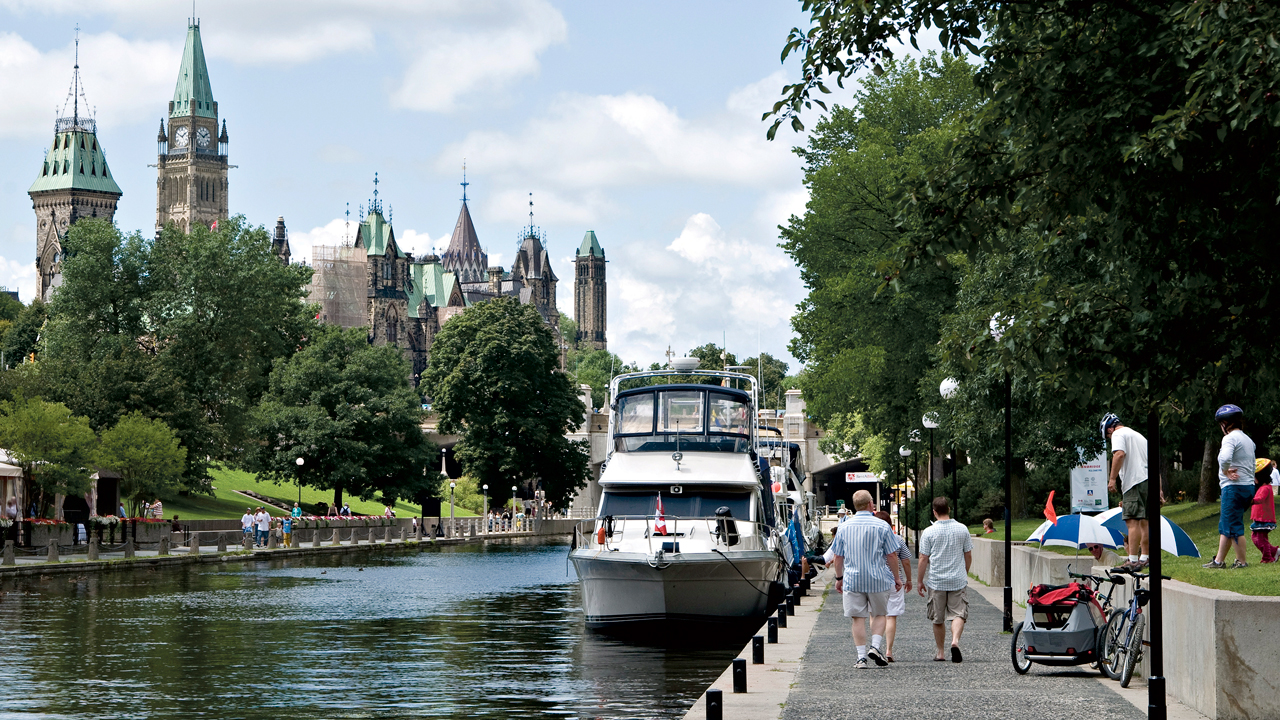
Ottawa’s Rideau Canal

Natalie Preddie is a travel and lifestyle writer, speaker and guest expert on Cityline, Your Morning and Global’s The Morning Show.


When walking downtown in Cambridge, Ontario, you might catch a succession of red capes as Elizabeth Moss and her fellow Handmaid’s Tale cast members haunt the Grand River. This past summer, Jason Momoa was spotted in Bloor West Village between takes of his latest flick, and the cast of Suicide Squad were often spotted dining on Queen West during filming in Toronto.

Ontario has always played a lead role in some of the biggest blockbusters. With beautiful landscapes, historic towns, and bustling city centres, it is clear why this province makes the perfect filming location. Here are some Ontario locations to travel to that have been the backdrop for some of our favourite films and television shows. You might even catch a glimpse of a few movie stars on set!

Find remnants of your favourite battle scene in Kingston

With historical buildings and a long, prolific past, Kingston is an ideal filming location.

In 2019, Kingston Penitentiary hosted over 80 different shoots and has confirmed production of a new series and feature film this year, although their titles have not yet been announced. We do know that Titans, Alias Grace, Murdoch Mysteries and Star Trek: Discovery were all filmed on location at Kingston Penitentiary with great success. Book a trip to Kingston to feel a bit like a movie star yourself while going on a boat cruise, shopping on Princess Street and grabbing a slice of pizza at Wooden Heads!

Recreate that Hallmark movie romance on the Rideau Canal

Ottawa is a popular Christmas movie shoot location with its picturesque views, and you guessed it: snow. ByWard Market has unique shops, trendy restaurants, and romantic cobbled courtyards; Confederation Park feels like New York City Central Park; and Cumberland Heritage Village Museum boasts an early 20th Century church, picturesque gazebos and a rural town square, all ideal for playing a variety of locations ­– and for a vacation!

Rideau Canal, a UNESCO World Heritage Site, is a huge tourist attraction all year round, creating the ideal backdrop for boating and running in the warmer months and flying along The Skateway in the winter. With historic and cinematic architecture lining the river, the Rideau Canal creates an emblematic landscape for many productions. Famously, The Boy in Blue (starring Nicholas Cage, Christopher Plummer and Cynthia Dale) was filmed on the Canal, as was award winning Michael: Every Day. Every year Hallmark films many of their Christmas movies along the water so keep your eyes peeled for couples looking way too in love.

After a skate along the river, visit one of Ottawa’s many national museums, stop by Westboro Village for one-of-a-kind boutiques and plan a bar crawl through ByWard market.

Catch a glimpse of a Guillermo del Toro movie set in Hamilton

For years, historic Hamilton has been the main filming location for many major motion pictures. Robocop, Repo Men, Detroit Rock City, Cinderella Man, Four Brothers and the Resident Evil film franchise are just a few of the famous flicks that have been shot here over the years.

With century old factories, a sparkling waterfront, a University and a vibrant city centre, Hamilton meets location requirements for many movie studios. Gage Park and its beautiful greenhouses, waterfalls, palm trees and unique subtropical plants is always a stunning backdrop. Westfield Heritage Park attracts filmmakers with its 204 hectares of woodland and meadows and 35 carefully restored historical buildings, as does Ferguson Station, a historic CN railway station that takes train passengers through the vibrant International Village down to Hamilton’s waterfront. All the elements that make Hamilton a beautiful place to visit also make for the ideal movie set!

Award winning director Guillermo del Toro has shot three films in Hamilton, his most famous being the Academy Awards’ Best Picture, The Shape of Water. His latest, Nightmare Alley, was filmed at The Cotton Factory and will star Bradley Cooper and Cate Blanchett. Next on the production schedule is The Man From Toronto, a film starring Kevin Hart, Woody Harrelson and Kaley Cuoco.

Complete your visit to this movie set hub with a trip to the Royal Botanical Gardens, a tour through the city’s best waterfalls and experience the New York Times–approved culinary scene at the Heather, Quatrefoil or Saint James Espresso Bar.

This Michelin-starred restaurant is moving into Yorkdale and it’s going to be delicious

0
@konjiki_ramen

Japan’s top-rated ramen is coming to Yorkdale!

Konjiki Ramen has been part of the GTA food scene since 2017 when Chef Atsushi Yamamoto opened up shop on Yonge Street. Following Yonge’s popularity, Konjiki opened downtown, and now the Michelin-recognized ramen restaurant is headed to the Yorkdale Mall.

This world-famous restaurant received a Michelin Star in 2019, and has received the Michelin ‘Bib Gourmand’ award several years in a row due to meticulous presentation at a reasonable price. The Bib Gourmand award is given to restaurants that offer excellent and moderately priced food and is difficult to obtain as price and quality do not often go hand-in-hand.

The new mall location will likely serve the same award-winning noodles that made Chef Yamamoto famous, so you can shop and slurp noodles in one trip. Konjiki began as a small 8-seat restaurant in Tokyo in 2006 and came to Toronto shortly after that.


View this post on Instagram


A post shared by Konjiki Ramen (@konjiki_ramen)

Since coming to Toronto, Chef Yamamoto has been at the helm of the restaurant chain. Noodles are made fresh and off-site and brought to various locations. While the Toronto versions of Konjiki Ramen do not reflect the intimate setting of the original Tokyo noodle bar, Toronto’s present locations do not disappoint.

There’s no exact opening date yet, but a ‘Coming Soon’ sign on the Yorkdale Mall website promises to deliver news about the ramen bar shortly. Konjiki does fill up fast at other locations, so you may have to wait in line at the mall if you arrive around lunchtime (who doesn’t want to eat at an affordable Michelin recognized restaurant?), but we promise the wait will be worth it.

Konjiki’s GTA locations also offer the only vegetarian options (you won’t find these in Tokyo), making enjoying a bowl of ramen enjoyable for everyone. If you aren’t into ramen, Konjiki also serves up some delicious Gyoza (Japanese dumplings) that are entirely worth making a trip to the mall for.

The Yorkdale Mall is located at 3401 Dufferin Street and is open from 10 am to 8 pm on weekdays and Saturdays and from 10 am to 7 pm Sundays. The mall can get crowded, and Konjiki is sure to be a popular lunch spot. Arrive early and enjoy the best noodles this side of Japan.

A Torontonian’s guide to the incredible arts happening this fall

0
Fall for Dance North by Skye Weiss

The arts are back – with a bang! With a mix of outdoor and indoor venues according to public health protocols, get your fix of music, dance and more as the arts scene in Toronto springs back to life. Check out everything from theatre in High Park to performances at the new and improved Massey Hall this fall!

Theatre

Jordan Tannahill’s latest work ‘Is My Microphone On?’ opens at Dream in High Park

Most theatres are looking at January 2022 to open new shows. Outdoors is still the venue of choice for live performances, and there are a few. For instance, Soulpepper is bringing The Howland Company and Native Earth Performing Arts’ new show The Home Project to its outdoor stage in the Soulpepper Courtyard Sept. 21 to Oct. 3. This intimate theatrical experience combines live performance, sound and digital media to examine the idea of home. The Dream in High Park series continues into September, including the Canadian premiere of Is My Microphone On?, the latest from playwright Jordan Tannahill. And Blindness continues its run indoors and on the stage at the Princess of Wales Theatre. This intimate Mirvish production only allows 50 patrons per show, increasing to 80 this fall, sitting on the stage to experience this auditory delight. The work is an adaptation of the Nobel Prize–winning novel Blindness by José Saramago, reinterpreted as a sound installation.

Dance


View this post on Instagram


A post shared by Fall for Dance North (@ffdnorth)

The big dance event of the early fall season is Fall for Dance North, which is set to hold its largest festival to date with seven weeks of programming from Sept. 11 to Oct. 29. Festival highlights include a new outdoor performance series as well as filmed and live stream virtual presentations featuring both Toronto-based and international artists from India, Cuba, London and New York City. There are also two immersive dance exhibitions slated for the fall at 1 Yonge St. One, Looking for the Dance, opening Sept. 18, is an exhibit featuring the photographs of ballet legend Mikhail Baryshnikov. The other, Touch, is an immersive dance experience created by the National Ballet of Canada’s Guillaume Côté. Touch, which features both live performance and projection, runs Sept. 29 to Oct. 17.

Music

Feist is coming to Meridian Hall in October for a new and intimate performance. (Photo: Easternblot/flickr)

Although concerts will move slowly indoors, now that many venues are being up front about requesting all patrons be fully vaccinated, it should make concert goers and the venues more comfortable about reopening. But what do we have to look forward to so far? The most intriguing concert on the fall schedule is Leslie Feist’s Multitudes, running Oct. 20 to 30 backstage at Meridian Hall, which is described as an “intimate, radically communal albeit topsy-turvy concert that will muddle the roles between audience and performer.” The crowd for the shows are capped at just 200. She is one of the city’s, indeed the country’s, best songwriters and performers, and this event should be something special. The ticket price is steep, but this kind of opportunity doesn’t come around often. And later this fall, the rise of the legendary and substantially renovated and revitalized Massey Hall will be the talk of the town. The season begins with Gordon Lightfoot, but the real gems to circle on the calendar are Buffy Saint-Marie on Nov. 30 and the five-night run with City and Colour, Dec. 9 to 12 and 14. In October, the new Drake/Live Nation venue History will open its doors for the first time. So far, the first concert is slated as rock band All Time Low on Oct. 22, but we are happy to state right now that the venue will not open for the first time with this decidedly average southern rock band. After all, Drake has a new album set to drop any day now. Rest assured there will be something special in the works. The venue is also scheduled to host some great fall shows including the Flaming Lips on Nov. 19.

Visual Art


View this post on Instagram


A post shared by cate mcphee (@catemcpheee)

The big Art Gallery of Ontario Andy Warhol show runs until Oct. 24. The Luminato Festival, which runs throughout October mostly as a virtual arts happening, is set to premiere a new work from acclaimed photographer Edward Burtynsky. The new work, In the Wake of Progress, was commissioned by the festival. The digital experience is designed for the screens surrounding Yonge-Dundas Square and filmed by Bokeh Collective for the 2021 online audience. In keeping with Burtynsky’s recent work, In the Wake of Progress tells the epic tale of humanity’s impact on the planet.

Bike lanes on Yonge are the first step toward a cyclist-friendly city of the future

0
bike lanes
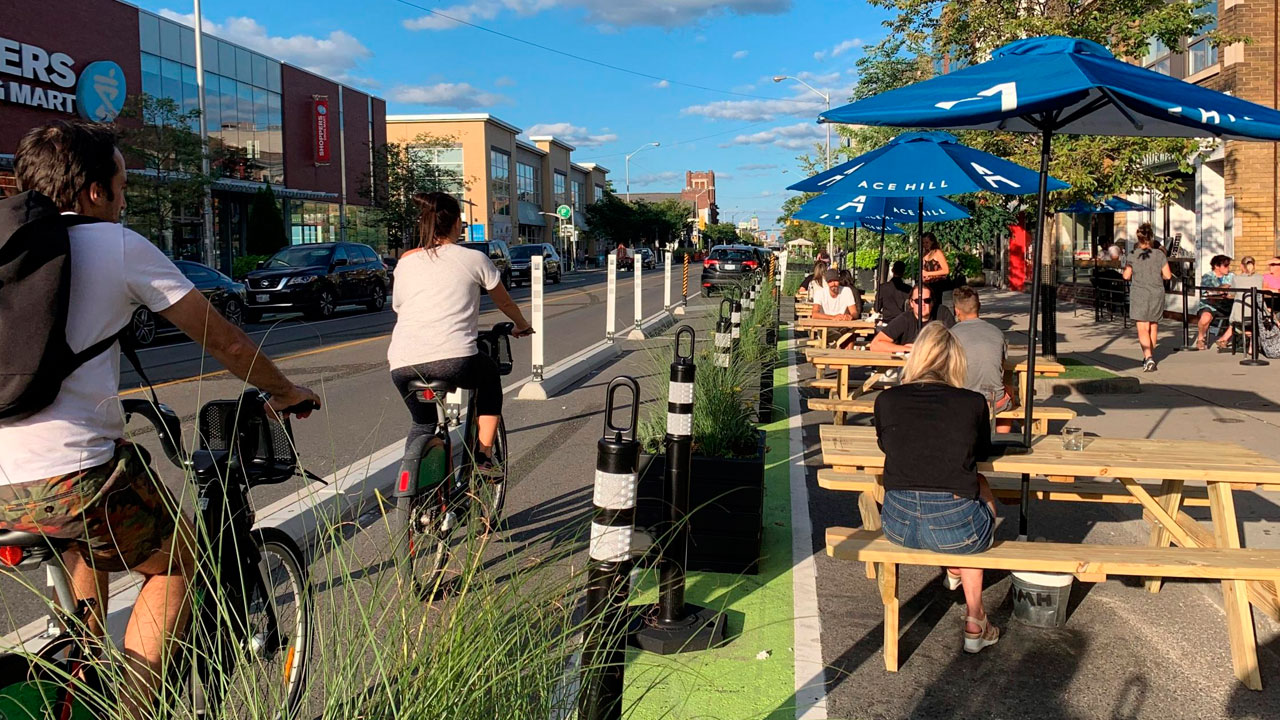
The Yonge Street bike lanes are a pilot project and not yet permanent. © NACTO/Flickr

Although dedicated cycling lanes are much less controversial than they used to be, there is still some grumbling about where they have been implemented. I ride my bike to work, not every day but often enough to appreciate that bike lanes help make the trip feel a little safer. In the interest of full disclosure, I work in Scarborough, so I have not yet used the bike lanes on Yonge that were installed in June as part of a pilot to expand the cycling network across the city. I don’t use the bike lanes on Danforth because I prefer Mortimer, which is a much quieter street.

By and large, I support the expansion of bike lanes that replace on-street parking with an alternative method of transportation.

Street parking on an arterial is the worst use of road space imaginable.

I also support the installation of bike lanes on Yonge. The logic of the plan was that a network of cycling lanes would be better utilized, and Yonge is the vital link to the network. Last year, there were more than 150 groups that advocated for the bike lanes. Part of their argument rightly predicted that many former subway users would prefer to cycle downtown during the pandemic.

In addition to providing a cycling route, the bike lanes provide a pleasant buffer between the cars and the street patios. Having enjoyed patio dining north and south of Davisville, there is no question for me that the patio experience is more pleasant where there are bike lanes between diner and idling car.

My own informal survey of those who live in the area support the bike lanes; however, those in support are also the ones who use the lanes to get downtown. For those who drive, there is no question the area is more congested and traffic is often brought to a standstill at intersections that allow right and left turns.

There are also legitimate concerns about how the lanes are marked, sightline obstructions and, in the case of Danforth, the continued use of on-street parking adjacent to bike lanes. There will always be controversy over how scarce resources are divided.

The bike lane pilot project on Yonge between Davisville and Bloor has a feel of permanence with the installation of separation barriers and planters.

As more people return to the office and may not feel comfortable taking the subway or cycling, it is likely that car use will increase in the short term. The winter will also be telling to see how well Yonge functions when the patios are gone and the bike lanes may not be as well utilized. Change is difficult at the best of times and the reality is that Toronto is not Amsterdam.

Amsterdam is the most bike-friendly city on the planet, and the average family owns almost two bikes per person. That is not to suggest that we can’t get there, but, in between now and then, pilots should be reviewed to ensure the street continues to function and that markings, barriers and turn restrictions continue to make sense.

This will help ensure that more people buy into the change and, in the process, make the changes more sustainable.

Toronto’s Simu Liu brings his superpowers to Marvel as the franchise’s first ever Asian superhero

0
simu liu
© George Pimentel Contour by Getty Images

Toronto’s own Simu Liu, best known as Jung Kim on CBC’s Kim’s Convenience, is making history as the lead in Shang-Chi and the Legend of the Ten Rings. Liu will be Marvel’s first ever Asian superhero as the star of the movie based on Marvel Comics character Shang-Chi. In 2014, Liu tweeted at Marvel asking them when they would create an Asian-American superhero. Now, seven years later, the Canadian actor is making his wish a reality. Liu was greeted by screaming fans at the world premiere of the hotly anticipated film in Los Angeles on Aug. 16, where he brought some friends from Toronto and his parents!

He also was greeted by some other friendly faces at the premiere; Shang Chi co-star Michelle Yeoh and Canadian queen Sandra Oh.

Liu’s return to Toronto was marked by a massive welcome home sign for the actor – a billboard that was placed above the Eaton Centre entrance.

Canadians will be able to watch Liu’s epoch-making performance on the big screen starting Sept. 3.

Stratford’s take on Romeo and Juliet features blind actor in lead role and it is awesome

0
The Stratford Festival's production of R+J.

The Stratford Festival began in 1953 when Alec Guinness spoke the first words of Shakespeare’s Richard III  inside a giant tent erected at the side of the Avon River. Now, 68 years later, the pandemic has forced the Stratford Festival to return to its roots, and it has proven to be a delightful experience for patrons.

The town is as charming as always, the restaurants, thanks to the nearby chef’s school, just as delicious. And the swans? They still line the river banks. All of which combine for a fantastic summer or fall road trip for a day or weekend.

The festival has been forced to close its three indoor theatres including the gorgeous and newly built Tom Patterson Theatre due to the COVID-19 pandemic. But, with canopy tents in place, the largest classical repertory theatre festival in North America has returned with a program that is limited in size but voluminous in creativity.

For instance, when we headed down Hwy. 401 for a day at Stratford, we had the opportunity to take in the new production R&J adapted for the small stage by Toronto’s Ravi Jain, who is also the director.

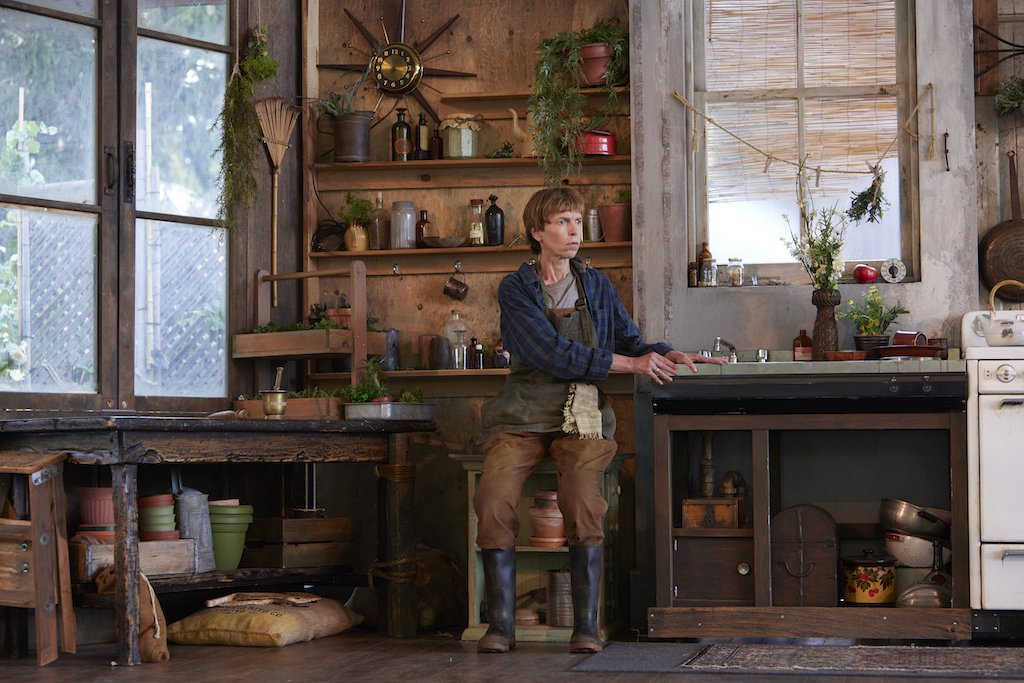
Alex Bulmer as Friar in R+J. Photography by David Hou.

The adaptation has the play unfold through a series of flashbacks by Friar, who, one might recall, was the one who was inadvertently responsible for the whole tragedy in the first place.

For this play — a co-production with Toronto’s Why Not Theatre — the Friar is portrayed by blind actor Alex Blumer. Indeed, the entire play is constructed and performed to be accessible to those who are blind or have low vision.

For instance, at the beginning of the play characters introduce themselves to the audience, describe how they look and what they will be wearing. There are also scene cues throughout the play. It is an addition to the production that is appreciated and enjoyed by all.

The small company performing the work includes some of Stratford’s best veteran actors in Tom Rooney who plays Nurse and Rick Roberts who plays Capulet. Rooney is fantastic as Nurse, adding a few well-placed comic asides and turning in an overall warm and inviting performance. Roberts as Capulet didn’t have a large role but sent shivers through the audience upon his attack of young Juliet who dares to not follow through with the family’s plan for her arranged marriage.

But, of course, the play lives and dies with the performances of Romeo and Juliet. And, here is another interesting turn we don’t find often: age-appropriate casting. As we know, way back when, they married ‘em young. And, in the play, Juliet is just 14 years old. Creepy. But, Jain, always as honest and open a director as possible, casts young Eponine Lee in the lead role.

The Toronto actor is a Grade 8 student and a real charmer with a wonderful singing voice, as evidenced by the two songs she performs in part.

Romeo is portrayed by the older and equally charming and enthusiastic Dante Jemmott.

Dante Jemmott (left) as Romeo and Eponine Lee as Juliet in R+J. Photography by David Hou.

The use of actors the same age as the characters in the play is not often done. Anyone who has seen film versions or other stage versions of the play will attest. In our society, it’s illegal for a 14-year-old to even have sex.

So, it adds a little edge to the work in that way, and it constrains some of the romantic sides. It’s all through the words and the looks and gestures, nothing more. In this way, it is true. But, it’s atypical. There are no kisses or anything else for that matter.

The play is full of surprises and they are all good. But the root remains Shakespeare’s romantic language and some of the most beloved lines and scenes in the Bard’s canon. And, in this respect, Jain holds true and focuses energy on the go-to scenes that matter.

R&J, which runs until Sept. 26, clocks in at just over 70 minutes with no intermission and it leaves audiences content that they’ve witnessed not only one of the most classic and popular Shakespearean works, but also something new and entirely different.

The second work currently running at Stratford is the Freedom Cabaret, a songbook helmed by the also amazing Beau Dixon. This concert offers a history of Black music and is performed by some incredibly talented people in Dixon, alongside singers Robert Ball, Alana Bridgewater and Camille Eanga-Selenge backed by a sharp house band.

The Freedom company. Photography by David Hou.

Freedom Cabaret covers a wide gamut of Black music dating back to church hymnals and the blues, jazz, rock ’n’ roll, R&B and rap.

Dixon and company weave a powerful story of the influence of Black music evoking the power of song as a tool in the struggle for freedom in the past and the present. It’s a moving experience.

Freedom Cabaret as well as this interpretation of Romeo and Juliet are both productions that could and should draw in younger audiences than the typical Stratford patrons.

These productions teach, they don’t just entertain. And there are valuable lessons to be learned.

Once the shows are complete, be sure to check out the town and dine in one of the many fantastic restaurants.

For instance, on the main street, Mercer Hall offers up a modern bistro-style menu with an Asian influence and a fantastic selection of craft beers.

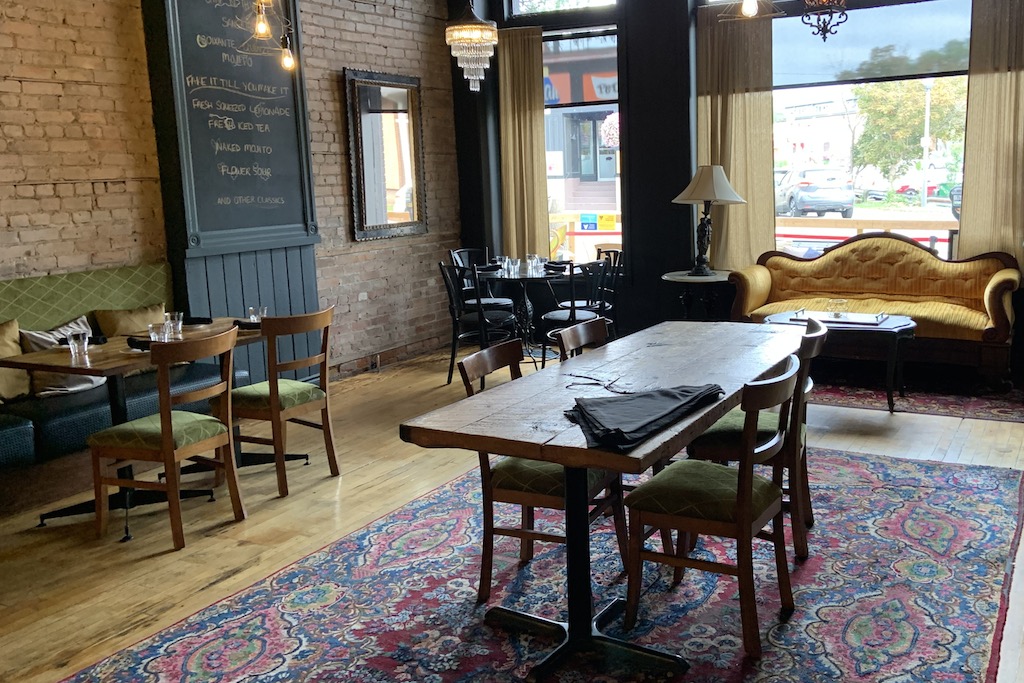
The Common’s comfortable dining room

The Common is a delightful bistro with an interior that is colourful and comfortable, a perfect match to the globally influenced comfort food menu.

The town also has a picnicking program that allows for local restaurants and takeout food shops to sell alcohol with picnic packages that can be consumed outdoors along the Avon River in designated areas. We suggest picking up a basket between shows and heading to tiny Tom Patterson Island, which is located in the Avon River just opposite the Festival Theatre.

The important thing is to not rush home. Stratford has many charms; stay awhile and enjoy the slower pace, the smiling faces and the delicious food.

New dynamic duo to host HGTV’s Making it Home featuring Toronto homeowners

0

The latest season of a top-rated HGTV Canada home reno show is bringing a new power duo to screens across the country.

Realtor icon Kortney Wilson will be joined by Big Brother Canada alumnus Kenny Brain to co-host a new season with a new name – Making it Home with Kortney & Kenny.

The show’s first season saw Wilson reunite with ex-husband and Masters of Flip partner Dave Wilson to reignite their renovation chemistry, remaking Nashville homes on a budget.

The new hosting pair will bring a fresh perspective to help GTA homeowners make the homes of their dreams come true (HGTV put out a casting call for fixer-upper homes in Toronto earlier in the year).

Catch new episodes of Making it Home with Kortney & Kenny every Wednesday at 9p.m. on HGTV Canada starting Sept. 1.

Michelin-starred chef opens intimate eight-seat chef’s table in Toronto

0
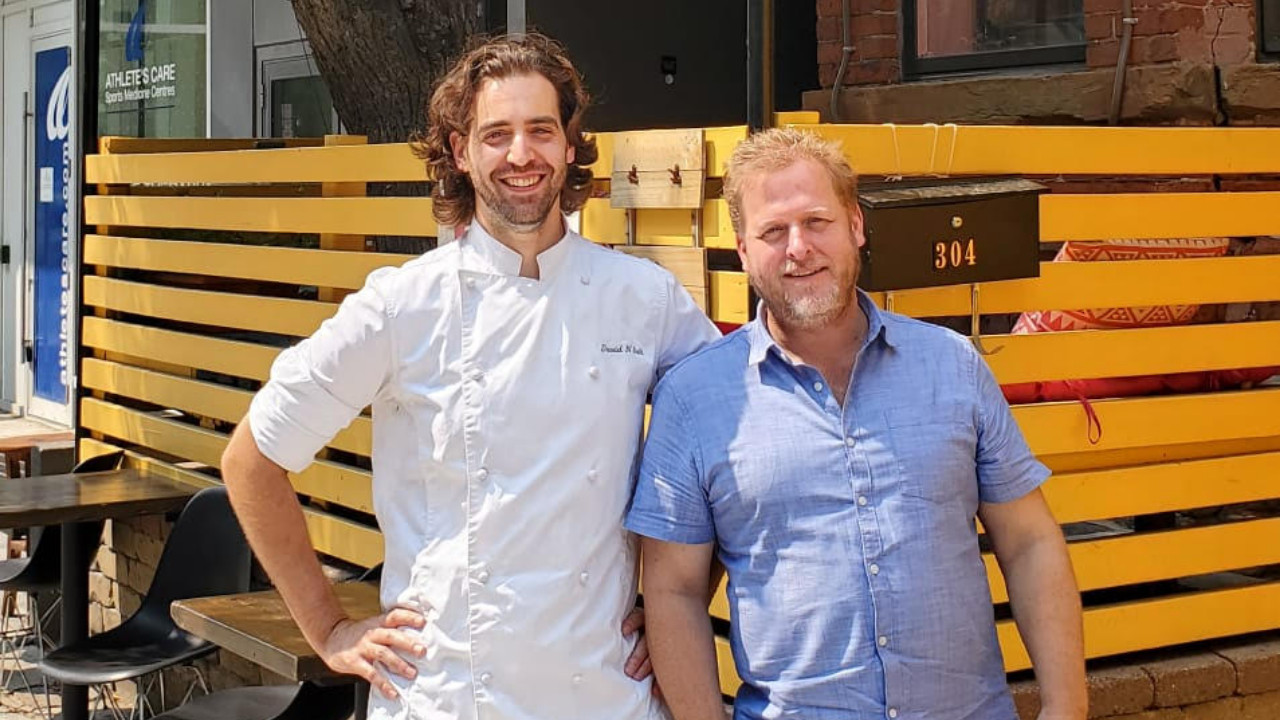
Chef David Salt with Bruce Wallner opened Drifter’s Solace in Toronto after a stint in the United Kingdom

“Travelling truly does broaden your horizons — both in and out of the kitchen — and pushes you to think beyond the idea that seasoning, and life, is more than just salt and pepper,” says David Salt. “I have been extremely fortunate to have been born to a family who enjoyed travelling to and living in other countries. The biggest influence is being exposed to so many flavours, food cultures and people, which has shaped my own style and flavours.”

Born in Toronto, Salt grew up in exotic locations around the world, spending time in Canada, Papua New Guinea and the United Arab Emirates. He returned to Toronto for culinary school, only to leave again, this time to England, where he spent 14 years in kitchens of some stellar restaurants in the United Kingdom. That included Pascal Aussignac’s one Michelin–starred Club Gascon in London where he was awarded the role of head chef. He returned to Toronto in the summer of 2018 and began to host various culinary pop-ups around the city.

Fast-forward to the beginning of the pandemic when Salt found himself inspired. Having spent his whole culinary career working for someone else, the chef decided he wanted a change. So he tapped master sommelier Bruce Wallner, and an idea was formed — Drifter’s Solace.

“Drifter’s Solace did not exist before the pandemic, so I guess the influence the pandemic had was to push me to do something for myself,” Salt says.

And thus, Drifter’s Solace was born.

“I started with meal kits but always had the intention to have people sitting in at some point. The experience of cooking for people is impossible to replicate in a kit.”

Now, Drifter’s Solace is a unique, multi-course chef’s table experience serving a small collection of people at a time.

“I have always wanted to have a small place,” Salt says. “The space we have fits eight people comfortably, though we can take more if we move into the room next door, and once you get into those lower numbers, a chef’s table is a natural choice. The experience is more personal in a smaller place. It’s just fun.”

Located on Richmond Street, the chef’s table eatery shares a location with Grand Cru Deli and Sommelier Factory, each of which was opened by Wallner and predates the Drifter’s Solace opening. Before the pandemic, Grand Cru Deli was a restaurant, but with the pandemic the business pivoted to become more of a wine bar. A natural, given Wallner’s expertise.

“This left the kitchen space empty and unused. And that’s how I chose the space: it was an empty kitchen! And Bruce came with the building. It’s a good deal for me,” Salt says. “I like how out of place the building seems. It’s an old house sandwiched between two newer builds, and I like the small dining space attached to the kitchen, which makes the chef’s table possible.”

Calling the restaurant Drifter’s Solace, in a way, pays homage to Salt’s own life experiences.

​​”The name comes from the thought that we are all drifters in some small way or at least have the potential to be,” he says. “We move from place to place or job to job or even just from one stage in our lives to another. But there is always a yearning to seek out familiar comfort or solace, and that can often come in the form of shelter and a good meal. So Drifter’s Solace is just based on this simple idea that you can come in from the outside world to find food and drink and shelter.”

As for the decor, guests and diners can expect it to be simple and tasteful, without distracting from the taste of the food. The chef’s table is all about the experience of the cuisine, the enjoyment of the dishes themselves, rather than an extravagant, over-the-top showing. There’s also a level of privacy and seclusion to the space, as there’s no sign and it’s on the second floor of the house. It’s intended this way, creating more of a homey feel.

“I want people to feel relaxed and enjoy themselves, like they are in the dining room of a friend’s house. I think there is often a lot of pressure on guests and restaurant staff to act a certain way, which ends up seeming unnatural, which is not what I want,” Salt explains. “A big part of the experience we are trying to create is a little bit of an antithesis to the typical North American or Toronto restaurant experience. That is, most places are huge spaces with intentions of getting as many people in and out of the doors as possible.”

The menu itself changes to accommodate locally sourced, seasonal ingredients and is $125 per person. The day’s menu can be found on Tock, and the current offering includes, amongst other things, foie gras, rice pudding and eggplant peperonata available until October. Salt’s favourite dish, though, is an entree. He favours the lobster and glazed pork belly with corn veloute, he says, for a few reasons.

“It is the season for corn,” he explains. “There are a lot of opposing flavours, which come together well on the dish, and I have fun putting it together.”   Drifter’s Solace is located on the second floor of Grand Cru Deli, at 304 Richmond St. W. The restaurant accepts reservations on its website and through Tock.

Toronto Yogen Früz founders invest $100 million in popular U.S. cannabis retailer MedMen

0
@crystalweed/Unsplash

Two Canadian companies are providing a much-needed lifeline to a U.S.-based cannabis retailer in recent deals that would give Thornhill’s Serruya Private Equity and Toronto-based Tilray Inc. an eventual entrypoint into the U.S. cannabis market.

The U.S. is following in Canada’s footprint once again (and why shouldn’t it?) by moving along with steps to legalize and decriminalize cannabis at a federal level. As more and more states are passing legislation to legalize recreational marijuana use with growing support for federal legalization, Canadian companies are working their way into getting a share.

On Aug. 17, MedMen, an American cannabis retailer with 25 retail locations across the country, announced that Serruya Private Equity is leading investors in purchasing US$100 million of units at a price of US$0.24 per unit. This investment will allow MedMen to expand its operations in key markets across the country after a tricky few years in which the company’s market value dropped under US$200 million.

Serruya Private Equity is a global private equity firm based in Markham. This firm is most notably behind the Yogen Früz chain which the Serruya family first opened in Thornhill in 1986 before the company expanded across almost 50 countries globally.

A few years back, Serruya  purchased Thornhill’s Promenade Shopping Centre alongside Liberty Development Corporation. The mall features 150 stores and is the location of the Serruya brothers’ original Yogen Früz. Serruya’s other global investments include Pinkberry, with 280 stores in 22 countries, and Swensens, with over 480 outlets worldwide.

As part of the deal, MedMen has appointed Michael Serruya, managing director of Serruya Private Equity, as its seventh member to its board of directors.

On the same day, MedMen announced that Canadian cannabis giant Tilray bought most of MedMen’s convertible debt. This purchase will eventually lead to a minority stake of 21 per cent in the company, dependant on federal legalization in the U.S.

However, hopes for legalization have stalled, after a federal legalization bill brought to the U.S. Senate in July didn’t pick up much steam. Cannabis stocks plunged 50 per cent from their highs in February 2021. But Canadian companies are still holding out hope, and getting their investments in early while they can in preparation for a head start in the American market.

Tilray is not the only Canadian cannabis company making moves to enter the U.S. market. Canopy Growth Corp. recently reworked a deal to buy U.S. peer Acreage Holdings once cannabis is federally legal in the country. Similarly, back in June, Toronto’s Cronos Group announced an investment in another leading U.S. cannabis company, PharmaCann.