Home Blog Page 978

Canadians produce more than their share of great comedians

0
comic hogtownhumour butt

A few years back a publisher approached me about writing a book on the history of the Canadian comedy scene. Funny, I thought, I’ve been doing that very thing in these pages for more than five years now.

But it was to be an audio book no less, well, how could I refuse? I’d already been giving the story of Canadian stand-up a lot of thought; all I would have to do is focus it.

One key issue was the way that Canadian comedy reflects rural and small town life in the beginning (around 1960) and is then challenged by a more urban vision in the mid-70s.

This city-country divide is a tension that continues through the present day with Brent Butt as a key player as he combines the two in Corner Gas, which is rural yet sophisticated at the same time.

Another thread is the way that comedy starts out dominated by middle-aged white men and then explodes into a rainbow of diversity as women, gays, and people of colour become increasingly important.

Parallel to that story, the history of standup is primarily a Toronto phenomenon until the late 1980s and then expands to include every region of the country.

I excluded the province of Quebec in this survey and kept to English language comedy to keep the playing field level.

The entire process brought me back to my roots. I made contact with comics of the era that I hadn’t spoken to in decades, and it brought back a lot of warm and crazy times. A few comics had passed away, and I had more than one session in the studio with moist eyes as I edited the work of late great comics such as Gary David and Paul K. Willis.

And then, with all the material in tow, I entered the studio to record the material. I’ve never been a fan of my own voice; it’s always seemed to be a bit shrill to my ears. So I made sure one of the engineers sat right in front of me, so I could lower my voice to an intimate range. As long as he looked at me with rapt attention, I supposed I was getting it right.

Over the years it’s become well known throughout the world that Canadians produce more than their share of great comedians. But listening to the book in its entirety suggests something even more: that the image of Canadians as a shy, retiring people is false and out of date. The comedians in the book, if any example at all, are eccentric, vibrant, and deliciously mad, and I think the ultimate point of the book is that we are actually a nation of strong personalities.

I knew I had room for a lot of comics, and I vaguely divided the discs into past, present and future, but right from the beginning, I knew I’d get some unhappy calls from comics I had to leave out.

Two years in the making, The Yuk Yuk’s Guide to Canadian Stand-Up is a five-CD audio book spanning 50 years of comedy history.

With more than 40 audio clips by famous and esoteric comics and more than an hour of commentary by yours truly, the book is a great introduction to Canadian comedy.

I would never use this column to suggest that the book makes an excellent gift for the upcoming holidays, so let me just wish my readers a very happy season and best wishes for the new year.

Midday meal as modern art

0
Cheapeats BianaZorich

Marc Thuet’s Summerhill experiment, Petite Thuet, dovetails seamlessly into the Rosedale neighbourhood — with its high-end breakfast pastries; lunches of boxed sandwiches, soup and salad; prepared dinner staples for reheating at home; and desserts.

A helpful server mans the glass cases. His thick French accent — France French, not Quebec French — adds authenticity to the ordering and shopping experience. The most worthy visual element of the wood-laden room are the mismatched shelves displaying all things pickled, geléed, jammed, and vinegared — imported 50-year aged balsamic vinegar or house-made pickled Ontario heirloom carrots, wild Quebec sumac and squashberry gelée or fig and port jam. Mental note: a good source of holiday gifts, albeit pricey, for the person who has everything.

Those who don’t mind spending a pretty penny on a breakfast snack line-up to splurge on a sumptuous café au lait and pastry: a buttery, moist croissant, say, or apple Danish. Fibre fans opt for granola with fruit and organic yogourt.

The menu’s soups entice —onion soup, curry sweet potato, and Jerusalem artichoke — but stocks have been depleted.

Roasted cauliflower salad ($4) is a standout. This textural knockout combines crunchy toasted almond slivers, matchstick dried apricot pieces, chewy raisins, crisp romaine lettuce and soft, wee cauliflower florets roasted to perfection. A mild buttermilk [CK] dressing brings flavours together.

Even though it’s just minutes after noon, less than a dozen sandwiches remain: today, three assemblies to choose from.

Pretzel roll, akin to a saltier, shorter, rounder baguette, sandwiches crunchy chopped romaine, moist organic turkey and thin slabs of cool brie ($7.95).

The roll also envelops a spread of lobster salad ($9), but this time, the pretzel is decidedly more yielding and more fresh than the one cozying up around the turkey. Shredded Nova Scotia lobster and crab dominate the generous spread, pulled together with a spiced mayo that complements, not dominates, the flavours of the crustaceans.

A packaged charcuterie offers six distinct flavours in one: prosciuttini, Rose de Lyon, saucisson sec, saucisson Alsacien, Hungarian salami and chorizo. Ideal for those carnivores among us who just can’t decide.

Creative dinners, like venison lasagna and truffled chicken wings, are rounded out by daily specials. All cater to one theme: comfort food made from high-end ingredients in thoughtful combinations that can be heated and served from your kitchen.

Macaroon maniacs trek from far and wide to sink their teeth into Thuet’s inventions ($1.95), in a respectable array of flavours, such as caramel or coconut. Two thin, almond “cookies” sandwich a thin spread of sweet ganache, and in each one the thinnest of outer layers gives way to soft, light brownie-like interior. The perfect finish.


Petite Thuet
1162 Yonge St.
416-924-2777
Lunch for two excluding tax, tip and alcohol:
$25

McLean spins another chart topper

0
books vinylcafe
books vinylcafe

The holidays and Stuart McLean and his fictional family from the Vinyl Cafe stories go together like Jerry Seinfeld and Festivus. It hardly seems possible that there wasn’t a time when one existed without the other.

A Toronto native, McLean brings his Vinyl Cafe tour to Convocation Hall, Dec. 11 to 13, in support of his latest book, Extreme Vinyl Cafe, the sixth in the Cafe canon.

It all began for McLean in 1994, when the Vinyl Cafe radio show first appeared on the CBC in 1994. And for the past 15 years, he has brought the world of Dave, owner of the fictional record shop Dave’s Vinyl Cafe; his wife Morley; and their kids Sam and Stephanie to life on the radio, on his live touring shows and in the pages of his books. It is laugh-out-loud funny, but it allows McLean to explore issues of importance to him on a personal or a national level. For instance, in his latest work McLean addresses the divide between French-speaking Quebec and the rest of Canada by having Dave and Morley visit a cottage in the Laurentians owned by a Quebec veterinarian. What transpires — a donnybrook with a drugged up cockatoo and the partial demolition of a historic cottage by accident — is hysterical, but it is much more than that.

Of course, that doesn’t mean he has any idea as to the reason for their popularity.

“You know, I don’t even have an understanding of it being popular,” McLean explains. “I know in some way people come and see the show, buy the books, but I don’t feel that in any deep way. What’s going on inside my head is how can I make a story better.”

Part of McLean’s success is that he understands the value of a good editor. Whether it be someone on the show or through some input from a member of his live audience, he listens.

“I’m not one of those people who’s precious about your work,” says McLean.

“I do my best and listen to others, including my audience, whose contributions are not insignificant.”

Whatever works, says McLean, whose approach has won him the Stephen Leacock Memorial Medal for Humour three times.

“I love what I do. I’m a very lucky man,” says McLean. “I guess if I could toss them off, the stories I mean, I wouldn’t find them fulfilling.… But I find them difficult, puzzling, engaging, and I can say things important to me. I get taken up by them.”

New museum rolls into Downsview Park

0

Downsview Park will serve as the new home of the Canadian Motorsport Heritage Museum.
 

Recently construction began on the $1 million, 13,000-square-foot facility at 39 Carl Hall Rd. The museum previously occupied a 2,500-square-foot space in Halton Hills.
 

“When you consider that Canada is a very small country and for four months of the year we’re under snow, we have a remarkable list of achievements and a very richheritage in racing,” said Brad Brown, executive director of the Canadian Motorsport Heritage Museum.
 

The new facility will feature a theatre showing continuous racing footage; a new race experience centre complete with simulators; and a number of new vehicles given to the museum on permanent loan, including Canadian driver Greg Moore’s first race car. A number of events — including those specifically geared toward women — are also planned, Brown said.
 

The proximity to Highway 401, William R. Allen Road and the Yorkdale Shopping Centre were part of the site’s appeal to house the new museum.
 

“It’s just far, far more accessible than we’ve ever been,” Brown said.
 

The future plans for Downsview Park — including residential developments — were also a factor in the museum’s location.
 

“I think it’s exciting to be there on the ground floor, and we’re looking forward to growing with them,” Brown said.
 

Downsview Park president and CEO Tony Genco said the partnership represented a good match.
 

“We thought that this museum, both from the standpoint of its transportation focus as well as from the standpoint of the celebration of Canadian culture, was a perfect fit,” he said.
 

Genco added that the facility would work alongside the Canadian Air & Space Museum located at the park.
 

Brown, who has been “overwhelmed” by volunteer offers, said that success of the museum will be based on its ability to engage visitors.
 

“Our challenge, which I believe we can do very well, is to create enough of a rotation of content to keep the offering consistently fresh and therefore engage people,” he said
 

The facility is expected to open sometime next spring.

How to cook a perfect 'mess o' crabs'

0
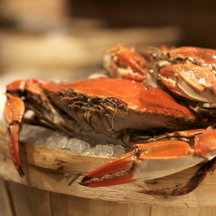
A crab
A crab

I love the taste of crab in the morning… or evening for that matter. The sweet taste of cooked and chilled fresh crab, picked from the shell, over a glass of Sauvignon Blanc would make anyone feel better after a hard day of work.

I was in Brussels on my honeymoon (September 1991, yes that is a long time ago!) when I first tried the cold crab. On Rue des Bouchers, every seafood joint will put out a seafood display to entice the passersby to come in for supper. Each place tries to out-do the other on the daily ritual of displaying the seafood. Oysters, mussels, lobster, crab and all types of fish were laid out.

We chose one place and ordered the seafood tower and a bottle of crisp white wine. Sitting on the narrow patio and watching the people walk by, sipping and snacking on cold crab was a treat not to be forgotten!

A friend, George Dowdle, told me he could get dome Rock Crab from New London Bay, PEI, so I thought I’s give it a try. Some good, as they say down east. Small in stature, bigger than a blue crab, and the same shape as the dungeness crab, the PEI rocks are as good as they come! Sweet and crabby goodness comes in Monday and Thursday with the Green Gables Oysters, until Mother Nature says they’re done.

To cook a "mess o’ crabs" it is best to get them cold in an ice bath first. This gets them into a hibernate state. Sometimes, if you cook them straight out of the box, the little legs will pop off.

Get a salted stock (water salty enough to taste like the ocean), a few veggies to make a court bouillon, and a bottle of beer and bring it all to a rolling boil. Skim off the veggies and plunk in your crabs and boil for about 15 minutes, or until they start to float to the top. Once they are cooked, either eat them right away, or put them in an ice bath to chill them down quickly.

Shuckingly yours, Paddy

Patrick McMurray is the owner of Starfish Oyster Bed & Grill and The Ceili Cottage. He is also a World Champion Oyster Shucker. Catch his blog weekly at PostCity.com.

Sip a molecular masterpiece at barchef

0
A barchefYYZ4
A barchefYYZ4

Craft breweries are one thing and wine bars another, but if you’re looking for a new adventure in alcohol, take to barchef — part science lab, part lounge and the leader of Toronto’s burgeoning molecular cocktail scene.

Push through the heavy double doors on Queen West (just east of Bathurst), let your eyes adjust to the low light and pull up a stool in front of Frankie Solarik, executive barchef and owner. He’ll be decked out in Queen St. uniform of fedora, vest and skinny tie, chipping from a massive block of glowing ice that sits on the bar, whipping up any of the 30 artfully designed liquid concoctions on the menu.

For the brave of heart (and deep of pocket — the Vanilla Hickory Smoked Manhattan: $45), the Molecular menu will suit your tastes best. For $18, the Fire and Ice cocktail mixes absinthe with bitter almond liqueur, fresh grapefruit and black pepper.

For three bucks more, The BarChef Martini Three Ways combines vodka or gin, classic, rosemary alginate, nicoise snow, rosemary infused, green olive and rosemary air. That we know what only two of those things are makes it taste even better.

And while cocktails are generally more of a Sex and the City thing, barchef isn’t just for the ladies (remember how cool Tom Cruise was in Cocktail?). Penny-pinching patrons can play it safe by sticking to the $8 Classic menu, where the drinks are infinitely more creative and tasty than the rum ‘n’ cokes at the Swiss Chalet around the corner, which cost almost as much.

The "Four Seven Two" mixes bourbon, cola bitters, fresh limes, muddled mint and mint syrup, and will please the straight-laced sipper in the crowd. The "Professor" (Vodka, in-house bitters, lavender essence, mint syrup, fresh lemon) is a more tart alternative.

Each masterpiece can take up to 15 minutes to create, so don’t expect zippy service. But while you wait, munch on some edamame, take in the black-and-white vintage film projected on exposed brick, shoot sideways glances at the beautiful people nestled in on the zebra-print couch in the corner or the handsome couple at the high-top or just zero in on the tunes being spun by the DJ in the back.

Whatever your inclination, you’ll leave barchef feeling noticeably hipper (not to mention more inebriated) than when you entered.

barchef is at 472 Queen St. W
416 868 4800
 

Get a hot holiday dress at Forest Hill's Kitsch

0
Kitsch1
Kitsch1

Whether you’re looking for a dress with a load of frills or a versatile staple, Kitsch is a must see on your hunt for the perfect holiday dress!

Although Kitsch is known in the spring for having beautiful prom gowns, many of the dresses in the Holiday Collection are quite sophisticated and suit a wider age range.

I was especially impressed by the colour options available at Kitsch. So often all we see are black dress options — and they definitely have these — but Kitsch owner Karen Wood has done a great job sourcing colourful options too. I loved all the navy, pops of pink and red, and bright yellow – she’s really covered the whole colour spectrum!

Designers like Nicole Miller, Tracey Reese, and Laundry are the names behind some of my favourite Kitsch cocktail dresses. The clean lines, and interesting details on each of these dresses make them easy-to-wear classics with personality!

While you’re at Kitsch remember to check out the upstairs for more casual clothing options, and their “bargain basement” for discounted pieces from other seasons.

Kitsch Boutique is located at 325 Lonsdale Road in the heart of Forest Hill Village – 416.481.6712

Always exploring Toronto’s best boutiques!

Wendy

As a personal style coach with THE REFINERY, Wendy Woods translates the world of fashion into a personal style that makes her clients shine, while introducing them to Toronto’s unique boutiques.

Midtown's Person of the Year: David Crombie

0
Cover MD Crombie
Cover MD Crombie

In Toronto’s school pools, teenagers with disabilities leave wheelchairs behind. Seniors swim laps and get respite from achy joints. Future Olympians taste competition for the first time. Adults train for triathlons. Children escape the heat on a hot summer day.

Some 19 months ago, when the district school board had announced 39 pools would close, all these programs were at risk of being cancelled.

Until, that is, problem-solver extraordinaire David Crombie stepped in.

The 73-year-old former mayor and former federal cabinet minister didn’t just figure out how to fund the pools. He built bridges between parents, the province and the board, transforming the pool situation from hostile and bleak to communicative and hopeful. For his actions, we select David Crombie as our Midtown Person of the Year.

Ask Crombie about the pools — as he sips coffee at a café near his Yonge and Eglinton condo — and he’s quick to deflect credit. “It has been a wonderful expression of community strength,” he says. True, but Crombie guided the community, the board and the province to work together. “He’s a consensus builder,” says Ontario Education Minister Kathleen Wynne.

Due to changes in the school board’s taxing powers in the ’90s, the board struggled to keep the pools afloat, often using money earmarked for other programs. And so, in April 2008, the board said 39 pools would be closed within two years. Parents, students and community groups were outraged.

Each level of government shifted the blame to another; nothing was being solved. Next, on April 16, 2008, the board voted to layoff lifeguards. The situation appeared headed for ruin. That same day, the board asked Crombie to find a long-term funding solution for the pools, something that had eluded the board for a decade.

Crombie, the distinguished former politician — he’s an Officer of the Order of Canada and has several honorary degrees — and well-known problem solver seemed the perfect fit.

“What really drove me to say, ‘OK, I’ll take on the pools’ was when they built these pools it was a vision that said schools are for community use. When the pools were built, they were considered a big advance.

“And because we couldn’t organize it bureaucratically or politically — we’d so siloed ourselves — we regarded pools in schools as a problem. We had really lost our way,” says Crombie, who learned to swim at Humberside Collegiate.

And so Crombie began trying to get things back on track. At his request, the board not only postponed draining but transferred management of the 39 pools temporarily to the Toronto Lands Corp. That meant the city, Queen’s Park and the public didn’t have to talk to the board about the pools. They could talk to Crombie.

Irked by the board’s decision to close the pools, parents and community members had formed the advocacy group Let’s Make Waves to pressure the board to reopen the pools. Crombie listened to the group’s concerns and asked them to help find a solution.

Members of Let’s Make Waves and anyone else interested in the pool issue were invited to join the Aquatic Working Group, an advisory group Crombie would chair that would present suggestions to the board. “David was instrumental in helping diffuse some of the anger that some of the public swim groups felt,” says school trustee Sheila Ward.

Healing public anger is one thing. Getting Queen’s Park to deliver cash is another. Throughout the summer, Crombie and Karen Pitre, a consultant hired to work on the pool file, spoke with provincial officials. The duo explained $4 million was needed to assess the pools’ conditions and keep the pools operating the year the pools were assessed.

In August, the province agreed to provide the cash. “That gave us the road to run on,” Crombie says. The pools wouldn’t be drained for one year. Experts were hired to examine which pools needed repairs. Members of the Aquatic Working Group measured the community usage of each pool.

Based on the findings, in March 2009 the Aquatic Working Group presented the board with a report stating 24 pools could easily be made viable, eight pools were salvageable, but seven should close.

Danforth Tech’s pool was among those recommended for closure. Annette Wilde, whose two sons attend the school, says she appreciated Crombie’s direct approach. From the beginning, “he said if we couldn’t make the pools self-sustainable, the school board wasn’t going to pay for them to stay open. He never set up anybody’s expectations to be different.”

The Aquatic Working Group’s report also asked that the province pay $12 million for essential pool repairs and upgrades. If Queen’s Park picked up the one-time cost, there was a reasonable chance the pools’ incremental costs could be paid through sponsorships and permits purchased by those who rent the pools.

On April 21, Premier McGuinty announced the province would pay for pool repairs and upgrades. The next day the board agreed to reopen 13 of its most profitable pools.

The board’s decision to reopen those pools inspired parents, community members and Crombie to work even harder to find sponsorships and permits to cover incremental costs at the pools under probation. As a result, in June the board agreed to reopen six of the 39 pools. Four more were saved in September.

The work isn’t over. Led by Crombie, the Aquatic Working Group is building a strategy to reopen the nine pools scheduled for closure at the end of the year. Volunteers are working around the clock to garner sponsorships and permits for the pools at risk. It’s inspiring “watching folks grab ahold of something important to them in a thoughtful and energetic way,” Crombie says.

That Crombie agreed to wade into a political minefield deserves praise. That he brought the board, the province and the public together to find a funding solution is also award worthy. But he deserves a parade for doing all this for free. Crombie’s work on the pools — the meetings with politicians, discussions with community groups, phone calls with potential sponsors — has been purely volunteer. “I get a kick out of this stuff,” he says, with a smile.

School trustees, provincial officials, community groups, students and parents are grateful. Thanks to Crombie, 23 Toronto school pools — once set to be drained — are open.

“David is a pillar of our society,” says Heidi Wilson of Let’s Make Waves. “If there was an opportunity for him to run for mayor next year, he’d have my vote.”


Thornhill’s Person of the Year: Marc Kielburger

0
Cover TH MarcKielburger

Marc Kielburger is one-half of two enterprising brothers whose surname has become synonymous across Canada and around the world with social responsibility and philanthropy.
Marc is the chief executive director of Free the Children — the international development charity founded by his brother Craig in the basement of their family’s Thornhill home 13 years ago.

Marc, who is six years older, is the quieter of the two, but his actions have had a resounding impact in 2009.

By all accounts, Marc, who admits he’s “shamelessly idealistic,” lives his life philosophy of finding personal happiness in helping others.

Aside from regularly rubbing shoulders with politicians, celebrities and the world’s top movers and shakers and penning several best-selling books, including Me to We: Finding Meaning in a Material World, Marc is a recipient of the Order of Canada, one in a long list of other awards.

But despite these grand accolades, the 32-year-old says he’s humbled at being named Thornhill’s Person of the Year.

“The award, in a way, is a representation of what Thornhill stands for and the people that make up the community,” he explains. “Thornhill is really where it all started. Our first office was at Lick’s Hamburgers on Yonge Street near Highway 7. Our first real mini-conference was at MacDonald House and 25 people came out.”

On Oct. 5 of this year, the third annual “We Day” took place at the Air Canada Centre with an audience of 30,000.

Part conference, part concert, We Day Toronto drew the likes of Michael “Pinball” Clemons and Robert Kennedy Jr., to give motivational speeches, as well as performers like Hedley and the Jonas Brothers to entertain the 16,000 students gathered from across Ontario. “The atmosphere was electric,” recalls Marc. In all, students from more than 1,000 Ontario schools came out, and every student there made a commitment to work on social change in the coming year. The goal: changing kids’ mindsets from “me” living to “we” living.

Me to We is a social enterprise that helps financially support Free the Children. In his role as Me to We’s director, Marc spends about two-thirds of his year on the road, speaking at conferences or, as he says, “getting the word out and continually trying to meet as many young people as possible to try and get them engaged.”

“Me to We does things that Free the Children can’t do as a charity, like operate things like volunteer trips and travel programs, fair trade and a socially responsible clothing line,” he explains. “When people make a donation to Free the Children, they get a tax receipt and they know it goes to projects, but Me to We is more of a lifestyle. It’s not a donation per se. They receive something back in product.”

Having been so intrigued by Free the Children’s various projects, which he witnessed in operation first-hand during a trip to Kenya, and impressed by the work of the Kielburgers, Clemons committed to funding the building of 131 schools over a five-year period.
“If I could characterize Marc’s greatest strength, it would be that he has a mature power,” says Clemons. “He has an indomitable spirit combined with great intellect and can command any stage but is content in the front or in the back and will always praise others over himself.”

This year alone, Marc and Craig expanded Free the Children, opening regional offices in Montreal and Vancouver and expanding into the United States, opening an office in the San Francisco Bay area of California. They are currently planning an expansion into Europe. Of the future, Marc says, “One day, eventually, we want to put ourselves out of business. The worst forms of poverty will no longer be there, and we think that’s very feasible in our lifetime. You know, we’ve built 5,000 schools, but that’s literally the tip of the iceberg. There’s so much work to be done.”

Marc’s destiny in aid work was cemented at a young age. When he was 13, the future Rhodes scholar headed to Jamaica on a school program, working at a leper colony, an experience that had a profound impact on him. A few years later at 18, he spent eight months volunteering in the slums of Bangkok, caring for people with AIDS. Upon returning home, he set about to launch Leaders Today, an organization that aimed to empower youth through leadership education.

Going on to do his undergraduate degree in international relations at Harvard, Marc then headed to Oxford University to get a law degree. In fact, if he weren’t working at Free the Children and its sister organization Me to We, Marc says he would most certainly be putting that law degree to good use, practising human rights law, “something with a great deal of meaning and substance,” he says.

Although Marc and his wife of nearly two years, Roxanne, who also works at Me to We, now live downtown, Thornhill remains a source of pride and fondness for him. “It’s such an amazing place that it’s been able to foster such social activism and also support its citizens and its community in such a profound way,” he says of the place where he grew up.

Greg Rogers, Marc’s former high school rugby coach and vice-principal at Brebeuf College says, “[Marc] was willing to challenge if he thought there were some injustices happening and was always up for helping build community spirit on campus when it was needed. This idea of building community is just a part of the fabric of who he is.”

Rogers, recalling how, when Marc was in Grade 12, he took it upon himself to become a team leader on a week-long orientation at Camp Olympia for Grade 9 students: “At the end of the week, we had a debrief meeting, and I said, ‘Are there any questions?’ And Marc said, ‘Yeah, coach, we did a great job on that. What else do you need done around here?’”

North York's Person of the Year: Patrick Chan

0
Cover NY PatrickChan

For all his ordinariness — he likes movies, music, video games, Jessica Alba, hanging at the mall — Patrick Chan is anything but a typical teenager. He has a particular obsession with climbing mountains, both literally and figuratively. This year, for example, when he wasn’t scaling 8,000-foot peaks in Banff, Chan was triple Axeling his way to skating glory. He won his second consecutive Canadian Men’s Figure Skating Championship gold medal, the Four Continents crown and a silver medal at the World Championships.

Now, the 18-year-old, who makes his home with Mom and Dad near Yonge and York Mills, is gearing up for the biggest competition of his life, the 2010 Winter Olympic Games in Vancouver. Chan is one of the most recognizable faces of Team Canada, and he’s widely considered a frontrunner to reach the podium. On top of all that, he’s just so darn, well, nice. So is it any wonder that we’ve named him our 2009 Person of the Year for North York?

“Patrick is a wonderful role model for all Canadians,” says Canadian Olympic Committee CEO Chris Rudge. “He represents the best of what we like to see in all our young people. He shows the positive influence that sport can have in a person’s life, whether they’re going for gold at the Olympics or just participating for fun.” Obviously Chan is a dedicated athlete. You can’t win national and world titles by being a typical teenage slacker. Not that he didn’t try sometimes.

“Patrick is a terrific student and a good person all around,” says Chan’s coach Don Laws, who helped guide Scott Hamilton to Olympic gold 25 years ago in Sarajevo. “It’s been a lot of fun to work with him.” Unlike Hamilton, though, Chan presents his own unique challenges for the veteran coach. “There are days when he’ll come to the rink tired because he had been up late playing video games the night before, but once he’s on the ice, it’s all work.”

Perhaps if there’s a knock against Chan, it’s one of the very things that makes him so remarkable — his youth. As with many young people, he’s known for saying what he thinks without worrying about how it might be perceived. It’s his guileless off-the-cuff nature that led to a very public war of words with French skater Brian Joubert during this year’s World Championships in Los Angeles.

Joubert won the Worlds in 2007 but finished second to Canadian Jeffrey Buttle in 2008. Heading into this year’s competition, Joubert complained at length about the lack of elite skaters capable of performing a quadruple jump while those skaters like him who did perform the quad were not being given enough credit by the judges. He went so far as to say it was a miscarriage of justice for a guy without a quad to win the world championship.

Chan responded in atypical fashion for a Canadian athlete — he blasted Joubert right back in interviews by calling him a “sore loser” who makes excuses for bad performances. “It’s not sportsmanship. Tiger Woods is not going to say, ‘Mike Weir sucks because he can’t hit it as far as I can,’” Chan said at the time. Then, after talking the talk, Chan walked the walk, er, skated the skate, out duelling the Frenchman with a pair of triple Axels that relegated his rival to bronze. It wasn’t exactly a Tonya Harding versus Nancy Kerrigan–style tire iron to the kneecap, but it did grab media attention, and it proved that despite his age he wasn’t about to be pushed around or intimidated by the competition.

“Patrick has always been his own person, very confident, self-assured,” says Christine Popiel, Chan’s guidance counsellor at Ecole secondaire Etienne-Brûlé, which he graduated from in June. And while Chan may have been a champion figure skater, Popiel says you’d never know it from the way he carried himself at school. “He was so respectful and gracious, and I think he was really very shy about his skating, in a sense. He took it very seriously, but he didn’t want to come across as anything other than just another student at the school.

“It was also remarkable the way he was able to handle all the newfound attention — the media, TV commercials — being a public figure all of a sudden,” she continues. Figure skating is one of the most popular winter sports in Canada, and with back-to-back Canadian titles and a silver at the Worlds, Chan has fast become an athlete celebrity, one with a great shot at Olympic gold.

Olympic gold. It has a nice ring to it. But that’s a lot of pressure on a kid making his Games debut in front of what is essentially a hometown crowd. “It’s a daunting task, but you have to believe, having watched what he’s been able to do, that there’s every reason he will handle it,” says Tracy Wilson, a commentator for CBC and NBC who won bronze at the 1988 Calgary Games.

There are probably six or seven skaters with a chance at the podium in Vancouver. Chan has admitted he’s a little scared although not for the reasons you may think. “Everyone seems to hold back and kind of go in their own corner,” said Chan in a recent interview. “I think I’m the type of person who’s really outgoing and always really friendly. But it’s really scary. I’m scared to smile because I’m scared the next guy’s going to think I’m laughing at him or something. They’re just so into what they’re doing.”

And that’s when you realize that, no matter how seriously Chan takes figure skating, no matter how much of his time is spent practising and competing, it’s not his whole life. He does it because it’s fun, not because it’s a job. Heck, he says he can’t even imagine competing after the 2010 Olympics.

“He really loved the business and law courses he took in school,” says Popiel. “And he always talked about going into business at university, that skating was just something he did right now. It never seemed like it would be his whole career.” Earlier this year, Chan received a $3,000 World Chinese Entrepreneurs Scholarship that he may put to use when it’s time to head off to university.

One thing is for certain: right now Chan is focused on adding to his medal collection in Vancouver. As Rudge says, “Olympic athletes, even the really laid-back ones, don’t dream of finishing 12th and listening to the German national anthem being played.” When Chan takes the ice in February, the eyes of the nation, especially those of his North York neighbourhood, will be on him.

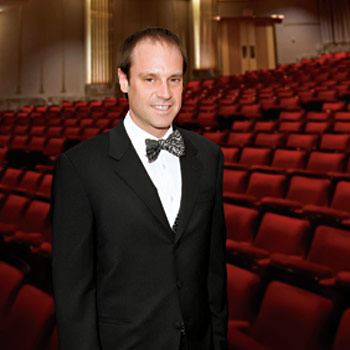
Bayview's Person of the Year: Jeff Skoll

0
Cover B JeffSkoll
Cover B JeffSkoll

If you were filling up your car in Bayview 30 years ago, you might be surprised to learn that the high school kid pumping your gas would grow up to be a billionaire. Jeff Skoll, former president of EBay, founder and chairman of the philanthropic Skoll Foundation and Participant Media (the film production company behind some of the decade’s most socially conscious films) got his start pumping petrol just down the street.

Toronto doesn’t produce a lot of billionaires, but if we did, we should hope that more of them turn out as Skoll did. Because Skoll isn’t just any old billionaire. Nor is he just a businessman or philanthropist.

The 44-year-old Skoll moved to Toronto from Montreal with his family when he was 13. Skoll is now based in California but returns to Toronto often to visit family (his sister now lives in Richmond Hill) and attend the film festival. He’s got fond memories of his old stomping grounds near Bayview and York Mills. He lived up the street from York Mills Collegiate, where he attended high school — or, more often than not, cut class to play ball hockey with his friends.

“I was small and socially awkward,” he admits. “I always showed up for tests and passed, but I hated going to class.” He graduated with a BASc with honours in 1987 from the University of Toronto where he is still fondly remembered by his old professors. (The endowments the Skoll Foundation has given to U of T probably don’t hurt either.)

“He certainly looked like someone who was going to succeed,” says professor Safwat Zaky, who was Skoll’s adviser on his graduation project. “His initiative and independence were always very striking. He had his own ideas, and he didn’t hesitate to pursue them.”

Skoll has been driven to help save the world since he was a kid. “When I was in school, a teacher had us do an exercise where we wrote down what we’d want to have written on our tombstone,” he says. “I wrote that I wanted to have made a difference in the world.”

Back then, he thought he’d make that difference by becoming a writer, and he was determined to become financially independent as quickly as possible so that he’d be able to concentrate on the things he cared about. “I was good at math and science, so I went into engineering,” says Skoll. After graduation, he started up a computer rental business in Toronto called Computers on the Run. “The name turned out to be very apt,” he says wryly. “The computers kept getting stolen.”

That’s when he decided to learn something more about business, and he headed to Stanford University to get an MBA.

“He’s special,” says his friend and colleague Roger Martin, the dean of the Rotman School of Business and a member of the board of the Skoll Foundation. “He got rich the right way — by co-creating and growing a great business that has made the world a better place.”

That business was EBay, which still uses the same basic business plan that Skoll designed while he was there. Skoll was its first president from 1996 until 1998. His years and stock in the company are what turned him into a billionaire. But after leaving EBay, he didn’t just rest on his laurels — or his cash.

“Growing up middle-class in Toronto, I never thought about philanthropy,” says Skoll. “But suddenly I had all this cash, and I could really do something myself.” And he did do something. “Rather than sit back and count his vast fortune, he set off to work as hard as he could giving it away in the most strategically impactful ways,” says Martin. “Not just one way, but multiple ways.”

The accomplishments facilitated by his foundation are too numerous to list thoroughly but include significant grants to the Toronto-based organization Free the Children as well as the microloan organization Kiva.

Participant Media has produced some of the decade’s most socially effective documentaries, such as An Inconvenient Truth, The Cove and more. This year, Participant began its expansion into the publishing world with Food, Inc.: How Industrial Food Is Making Us Sicker, Fatter and Poorer — and What You Can Do About It, a companion book to their documentary film of the same name.

Participant doesn’t just release films and hope people get the message. Part of the company’s mission is to facilitate social change as well as to inspire it: the company hopes their films will ignite people to act, and it aims to help people make a change. Each film they release is accompanied by a related social activist campaign.

Actions to take are listed clearly on Participant’s main website, and the company recently launched a beta site called Take Part, a social media site aimed at young people who want to become socially involved but are unsure where to begin.

It works, too: the campaign that accompanied The Cove this year was effective in shutting down the Japanese dolphin hunt. In addition to the ongoing achievements of his foundation and production company, Skoll works tirelessly to expand his empire of social activism.

In April of this year, he announced the formation of the Skoll Urgent Threats Fund, a new organization that will target issues like climate change and nuclear proliferation. “We’re still in the planning stages,” says Skoll. “We’ll be announcing our strategy and our first grants soon, and we’re going to Copenhagen next month for the conference on climate change.”

But despite his global ambitions, Skoll hasn’t forgotten his hometown. Not only has his foundation given some significant endowments to his alma mater, the University of Toronto’s engineering department, but this year, Participant made an equity investment in Me to We, a Toronto enterprise started by Free the Children founders Marc and Craig Kielburger, whom Skoll clearly admires. “Those guys are very impressive,” he says. “Free the Children is one of my favourite projects.”

It’s a nice full-circle moment: the expat Torontonian philanthropist supporting the young Torontonian social entrepreneurs. Maybe Torontonians can save the world, after all.


Forest Hill's Person of the Year: Belinda Stronach

0
Cover V BelindaStronach

Belinda Stronach is a philanthropist, power broker, socialite, former public servant and our area’s latest high-profile resident. Sitting in a Yorkville coffee shop close to home — her long, straight blond hair hanging over a soft-looking magenta sweater with matching scarf — she talks of her recent trip to Haiti. She and partner-in-charity Wyclef Jean watched as a group of Haitian former child soldiers stood up on their graduation day. They were finally turning their lives around after being forced to commit crimes for people who threatened to kill their families.

All they wanted now, they said, was a washing machine so they could have clean clothes. Stronach and Jean agreed to buy it. Small gesture, big impact. Today, over coffee, she is elegant, urbane and radiant — and looks about as far removed from the slums of Haiti as one can get.

And that’s exactly the dichotomy at the heart of our choosing Stronach as Village’s Person of the Year for 2009. She’s been fodder for tabloids and Ottawa gossip and painted as a spoiled heiress to a rather robust family fortune. Indeed, at 43, Stronach possesses the wealth and connections to do just about anything she likes. But it’s her decision to put her privilege to good use, to quietly and consistently help others in need — from a hospital in Toronto to a small village in Africa to a school in Haiti — that makes her so deserving.

“I feel very fortunate in that, when you have the resources and the means and the platform to effect change, I think you have a responsibility to do that,” Stronach says, pouring a cup of green tea.

Like those former child soldiers, she has dreams. One of them is to help people in poverty. It’s one of the reasons she established The Belinda Stronach Foundation. It works with other organizations and focuses on helping girls, women and Aboriginal youth as well as fighting malaria.

In conversation, Belinda Stronach is honest and optimistic. She says that she’s been lucky in life and does what she can to help others who aren’t so fortunate.

One of the focuses of her foundation is to help underprivileged girls in developing countries get an education.

In September, Stronach’s foundation and the Clinton Global Initiative formed a $1 million partnership to help NGOs and the private sector co-ordinate efforts to get issues faced by women and girls on the agenda at next year’s G8 and G20 summits in Huntsville and Toronto. Her foundation plans to launch the One Laptop Per Child program next year and this year secured $2 million from private companies toward the goal to provide a computer to every Aboriginal child in Canada between ages six and 12, so they can get online and connected with the world.

She’s also heavily involved with Malaria No More. Her foundation raised more than $2 million in 2009 alone as part of its commitment to send 250,000 malaria prevention bed nets to Liberia and Rwanda through Spread the Net. It is now only 75,000 nets short of its goal. Stronach says she hopes her efforts are successful.

“I’m an optimist by nature,” she explains. “I look at the future and how I can look at the past.” But sometimes it seems her personal life has been splashed across the front pages more than her charitable or business deals.

She was in the papers when her relationship with now Defence Minister Peter MacKay fizzled after she famously crossed the floor from the Conservatives to join the Liberals. Later, the wife of former Leaf Tie Domi filed divorce papers accusing her husband of having an affair with Stronach. 

Stronach managed the gossip swirling around Canadian water coolers with grace and dignity. “What doesn’t kill you makes you stronger. There is some proof to that,” she says with a laugh. “You have to really self-evaluate what is important to you and be able to look in the mirror at the end of the day. I’m comfortable with my decisions, with my principles, and I can’t worry about the judgments others make,” she says. One of those decisions was which treatment to choose when she found a lump in her breast two years ago.

Several surgeries, a mastectomy and a breast reconstruction later, she is cancer-free.  “I feel better than ever,” she says. “I was always really health conscious beforehand, and now I’m more health conscious. I probably say ‘no’ a little more often than I used to.”

Now that she’s recovered, she helps others who are going through cancer treatment. She hosted Live to Tell, an intimate concert with singer and breast cancer survivor Sheryl Crow in May. The show raised $375,000 toward a new breast cancer centre at Sunnybrook Hospital. She isn’t shy about revealing she wanted a surgery that would save her nipple, which wasn’t available in Canada at the time. So she went under the knife in the U.S. “At the time, the surgeries, the outcomes that I was offered didn’t involve keeping the nipple, and that was important to me as a woman,” she says.

Since her recovery, she has raised $2 million to establish the Belinda Stronach Chair in Breast Cancer Reconstructive Surgery at Toronto General Hospital to help bring this type of surgery to Canada where it is covered by OHIP.

“I think I’m a very positive person. On one hand, I think I can be a very shy person, which is interesting, but on the other hand, if it’s a good cause you find the energy and the strength to put to it,” she says.

With her second chance, she continues to follow her dream of helping those in need. She also encourages young people who have their own ambitions to follow their passion and stick with it. “Don’t be afraid to dream big because if you can’t dream big you won’t get there,” she says.

“You don’t have to wait for everything to be perfectly in line. I’ve met many great entrepreneurs.… They had a dream, they had a passion. They didn’t have all the answers, but they figured it out as they go along,” she says. One way she says young people can learn to find their passion and become socially engaged is to witness poverty with their own eyes.

“You take less for granted when you see a woman sitting on the side of a desert road digging for water.”