
Home Blog Page 916

Greta and her glass slippers

0

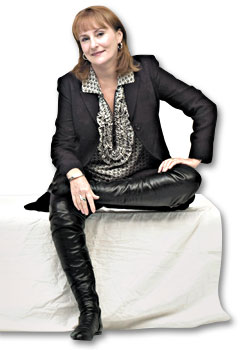
GRETA HODGKINSON IS in the midst of a tour of Eastern Canada with the National Ballet of Canada. The stunning principal dancer is celebrating 20 years in a National Ballet tutu and will be on stage in Toronto this month when the company remounts the popular James Kudelka ballet Cinderella, Nov. 11 to 20.

“IT FEELS GREAT. I mean, I’ve always loved the company, and certainly, when I joined in 1990, who could have really foreseen what happened [staying 20 years],” says Hodgkinson. “The ballet is the kind of career that takes you all over the world and changes all the time. I didn’t really set out to necessarily do that, but the company has been unbelievable to me throughout my career.”

Hodgkinson, a product of Providence, Rhode Island, started her career at the age of 11, far from home, plunked down in the middle of big, bad Toronto as a student at the National Ballet School.

Was she homesick? Of course.She was 11! But, while most youngsters her age are usually tossing around career ideas, such as professional wrestler and official pizza tester for D o m i n o ’ s , Hodgkinson already knew what she wanted to do — dance. And she set about doing just that.

“The hardest thing was being away from home. I was incredibly homesick,” Hodgkinson explains. “But as for coming to school, adjusting to the curriculum, I loved it. That’s all I wanted to do.”

Fast-forward to 1998, Hodgkinson, now one of the bright lights of the National Ballet, is heralded as an international ballet superstar in the making by Dance Magazine as well as the next great muse of choreographer James Kudelka, who promoted her to principal dancer in 1996.

She has lived up to that billing and much more. Since joining the National Ballet as second soloist straight out of the National Ballet School, Hodgkinson set about becoming one of the stars of the company. And she didn’t stop there, expanding her artistic horizons by travelling the world as a guest artist working with some of the greats of the modern era, including choreographers William Forsyth and Jiri Kylian and dancers such as the great Roberto Bolle.

Who is, Hodgkinson assures me, “huge.” In fact, Hodgkinson and Bolle were featured in a series of advertisements for the Gap and fashion shoots in GQ Italia in addition to numerous performances throughout Europe from the La Scala opera house in Milan to St. Petersburg,Russia.

In addition, Hodgkinson has been recognized for her dancing on numerous occasions, including being nominated for the Prix Benois de la Danse — an international award for excellence in ballet — for her role as Odette/Odile in Swan Lake, as well as being awarded Best Performance by a Female Dancer by Dance Europe for her role in Swan Lake and her role as Summer in Four Seasons.

Bolle is something, but Hodgkinson can also stake a claim to that “huge” moniker.

“I’ve had amazing opportunities,” she says. “It’s been very fruitful in that way. It has been very nice for me to get to travel but also perform in some of the greatest theatres in the world, being exposed to different audiences. It is great for me to have that balance.”

Magdalena Popa, the National Ballet of Canada’s principal artistic coach, has been working with Hodgkinson since she graduated to the company back in 1990. At once, she worked on the young dancer’s positioning, crafting a technique that worked easily with the dancer’s sublime movements.

“I remember, trying to work very hard on her technique,”Popa explains.“When we started working together, there was a lot of potential,and I had to kind of make her understand how to change some of the things that she knew up until then.

“Since then, we’ve had the most wonderful relationship.…What I found in her was an extreme intelligence with a lot of depth and a lot of intensity.”

Hodgkinson is currently in Quebec City following a performance of 24 Preludes by Chopin at the Grande Theatre du Quebec. The opportunity to travel across Canada to show what a true national ballet company can do is something that excites the veteran dancer about the future.

“Just being able to be here and showing what we can do across Canada, it is so important to a national company to bring that awareness back,” says Hodgkinson, who talks with excitement about the new touring opportunities under the stewardship of artistic director Karen Kain. “She is bringing that awareness back, and I think the company is reaching out on a new level, trying to educate the public that we are not just elitist. People can come who are not sure they’d really like ballet, and they might see something modern, edgy and sexy, and they love it.Karen is really trying to touch everybody, in terms of exposing them to what we are about.”

When Hodgkinson returns to Toronto to star in Cinderella, it will mark her fourth appearance in the ballet.

Of Hodgkinson’s portrayal of the famous girl in the glass slippers, Kena Herod of Maisonneuve magazine says, “Once again, Hodgkinson demonstrated why she is one of this country’s best dancers.…Watching Greta Hodgkinson perform Cinderella, I realized one reason for my fascination is the breathtaking scale of her movement.”

She first starred in Cinderella in 2004 when Kudelka originally created his adaptation for the National Ballet.

“It is a really great take on the story, very funny, and, you know, it’s enjoyable,” Hodgkinson says. “It is family friendly and all that.” And “family friendly” is something Hodgkinson, who is married to Etienne Lavigne, a first soloist in the company, is starting to understand. Last Christmas Eve she gave birth to her first son, Maxime Ashod Lavigne.

“Knock on wood, I’ve never had any injuries to keep me off, so that was the longest time I’ve been away from the stage,and that was kind of different,”says Hodgkinson. “But I feel like it has enriched my career in a lot of ways.”
 

New stand-up documentary I Am Comic roars

0

MANY DOCUMENTARIES have been made trying to capture the essence of the stand-up experience, and most fail. The films are either too reverent, too serious or just sloppy.

I must get asked for an interview once a month. I sit dutifully, answering the same unimaginative set of questions, knowing the film will never be seen.

What a delightful surprise to encounter I Am Comic, which just finished its brief theatrical run and has been released on DVD.

It’s the first stand-up documentary to really take the viewer inside the world of contemporary stand-up in a witty and insouciant way. Shot in Los Angeles, New York and Florida, I Am Comic features dozens of well-known and obscure masters of the craft talking about what it’s like to entertain crowds night after night with only a supply of jokes and a microphone.

Previously, Jerry Seinfeld’s Comedian was the only reference. It wasn’t bad, but to see the game solely through the eyes of one comedian, no matter how great, is limiting.

I Am Comic’s through line is a comic named Ritch Shydner. During the ’80s, Shydner was one of the top touring club comics on par with a Seinfeld. But Shydner never made the leap to the next level. His alcoholism burned him out, and he transitioned into a comedy writer, working with some of the best, including many of the comics on the Blue Collar Comedy tour.

Many years sober, Shydner wonders if he might still have what it takes to perform live, and the cameras catch his difficult steps, beginning with painful experiences of bombing at open mic nights in sports bars. It’s as pathetic as it sounds, but by the end of the film, he’s killing at Hollywood’s Laugh Factory.

Along the way, dozens of comics are interviewed and edited to appear at a brisk pace. The comics speak frankly about things like drugs, working conditions and joke theft.

A wonderfully funny segment involves the comedy condo, a condominium bought by a club owner too cheap to put the visiting comics in a proper hotel.

These condos are rarely cleaned week to week, and the comics’ stories of the filth are a scream. The best segment involves “redneck” comedian Jeff Foxworthy. Caught backstage after a performance, the man radiates joy from having the best job on the planet. He tells an anecdote about his first appearance on The Tonight Show.

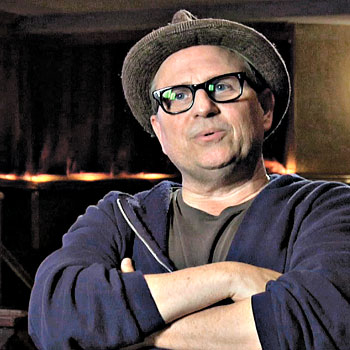
Given six minutes to perform, no more, no less, his planned set goes awry when he gets an applause break early on. As he drinks in the accolades, he realizes he has to cut one joke later in the set to make up the time lost to the applause break. It proves just how technical and precise the job can be. A lot of the comics talk about the experience as a calling. “I don’t do it ’cause I want to do it, I do it cause I have to,” says Dana Gould. Bobcat Goldthwait, who returned to stand-up recently, may be more honest: “I missed the audience.

And I needed the money.” That’s the kind of honesty that keeps I Am Comic fresh and watchable.


Salesman deserves a theatrical retirement

0

SOULPEPPER, ONE OF the finest theatre companies in Canada, has a thrilling upcoming season for 2011 and is wrapping up the present one with a dubious classic: Arthur Miller’s Death of a Salesman.

The more I see this modern tragedy,the less I like it,no matter how great the production.

There are exceptions, of course: the late Al Waxman’s starring role as the nowiconic Willy Loman — the name a subtle but clever play on “Low man on the totem pole of society”— at Stratford a dozen years ago was devastatingly effective, but it was clearly Waxman’s compelling title performance that made it work; he was utterly brilliant and heartbreaking.

Watching the only occasionally powerful Albert Schultz–directed presentation in its final preview at Soulpepper in late October only strengthens my belief that Miller is inferior to such contemporaries as Tennessee Williams and David Mamet in the United States as well as Tom Stoppard in the U.K.

In many ways,the Soulpepper production is top-notch: the expressionistic set is stunning, echoing the inspired original Broadway set from 1949; the lighting, music and staging, superb. Joseph Ziegler, a talented director and quality actor, is a fine Willy; Nancy Palk (Ziegler’s actual wife), as Willy’s long-suffering spouse Linda, is very satisfying. But the evening is nearly stolen by Tim Campbell in the role of Happy and by Ari Cohen as Biff — the two mediocre, self-loathing sons of Willy and Linda.

Cohen wowed Toronto audiences in Clifford Odets’s vastly superior play Awake and Sing, at Soulpepper recently, and he embodies Biff in a way that has never been more perfect, and I’ve seen a dozen productions of Miller’s play.

But the play! As a play about memory, Salesman can be moving with the emotionally and spiritually exhausted Willy Loman throwing himself into the past and talking with his rich Uncle Ben and his more successful neighbours as the audience pieces together the false values of Willy and his two sons. (Stolen footballs laughed off, unstudied-for exams too easily forgiven and an obsessive need to believe that “being well liked”by others is more important to success in this world than hard work.)

This production, for all its frequent peaks of excellence, is a case in point for why Arthur Miller is no giant. Harold Clurman, the astute American critic and director, proclaimed Salesman “one of the outstanding plays in the repertory of the American theatre,” but the extraordinary Canadian theatre critic Nathan Cohen always insisted that society was not to blame for Loman’s troubles.

Toronto’s greatest theatre critic found Miller’s play to be guilty of giving “society and the audience a useful way out. It is criticism which pulls back before it becomes really dangerous.”That’s a flaw seen in too many North American plays, Canadian ones as well.

Soulpepper’s production of Death of a Salesman runs until Nov. 13 at the Young Centre for the Performing Arts, 55 Mill St., www.soulpepper.ca.


Former mayor resists urge to purge

0

DAVID MILLER COULD have written a tell-all and set the record straight on any number of issues.

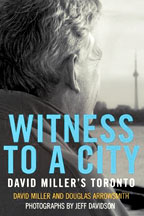
But he didn’t. His new book, Witness to a City, highlights the lives of 18 Torontonians including former councillor Anne Johnston, (and one bridge) that, for Miller, represent the unique fabric of our city. This was the book he was compelled to write. And the first name on his list was Mohamed Gilao.

Fleeing a civil war in Somalia, Gilao arrived in Toronto with one mission: to keep his children safe, but he ended up working in the Somalian community to create opportunities for new immigrants.

“What a great story, someone who flees a civil war and creates basically volunteer organizations to help others.… Then his son was tragically killed at the Phoenix, shot, nobody really knows why,” says Miller.

“That is a real tragedy, and a human story, and I wanted people to see the face of Loyan, who was a marvellous young boy, as more than a headline: ‘Another young man gunned down, oh it’s drugs.’ Well, it isn’t. Maybe sometimes, but it often isn’t. So I wanted to push against our stereotypes. I also wanted to show the dignity of this family.…It still brings tears to my eyes.”

When talk turns to last month’s municipal election, Miller’s back doesn’t physically bonk the ceiling, but it is up.

Over the past two years, he says, he’s been saying he wished people could see Toronto through his eyes. His reasons are twofold: He wants people to understand the human side of public policy initiatives the city undertook during his tenure, such as Streets to Homes and the community safety strategy, but he also wants people to take another look at their city that was in the middle of a very negative election campaign.

“Torontonians need to understand the nuance of this city, which has accidentally become quite relevant during this election because, you know, three of the four leading candidates always talk about the city as if everything is a disaster,” Miller explains. “It’s not.

We’ve got an incredible city and these stories show why.” Miller is tight-lipped over his next move after he hands in the keys to the mayor’s office.

Maybe he’ll further his work in the environmental field, or maybe he’ll get to that tell-all after all. “There are stories I’d like to tell, but the jury is out on that one,” Miller explains.“My own story, I’m not as compelled. Maybe I’m too used to it.”


A real Page turner

0

STEVEN PAGE IS dead. Long live Steven Page.

After a tumultuous period marked by an arrest, a divorce and the breakup of the Barenaked Ladies, one of the most successful bands in Canadian music history, Steven Page is finally starting over with the release of his first post-everything solo album, Page One.

A genre-busting affair that pulls from decades of musical history from ’60s soul to ’80s pop.

“This feels like the real thing, the other ones were all done as side projects,” says Page.

“All the other projects, as much as I loved doing them, I couldn’t devote 100 per cent of my time or effort to. It was like having an affair on the side. This one is a marriage.”

In many ways, the album is vintage Page, including the sweet lo-fi cover graphic. But the musical ground covered is much broader than in years past. The lyrics, ironically, are more upbeat and positive than one might expect, and the pipes are in fine working order, thank you very much.

With his newly found freedom from BNL commitments, Page says he relished the opportunity to sequester himself at his farm and work away at a song until it matched the original idea in his head. A process that was muddied in collaboration.

“For me, it was an opportunity to attack all kinds of genres,musical and lyrical ideas without the fear of rejection,” says Page.

“Collaboration is a wonderful thing, and my bandmates in BNL always brought great things to the table I wouldn’t have thought of, but sometimes the original idea gets lost.”

The album’s first track, “New Shore,” was penned with Craig Nothey (Odds) just weeks after the BNL breakup, and it reflects the theme of the album: new beginnings and hope.

Despite the lack of a band, Page did have a large crew to work with on various songs, production and engineering, including the opportunity to work with Pete Thomas, the drummer from Elvis Costello’s band. There are a number of tracks written before the BNL breakup, including a few with long-time songwriting partner Steven Duffy, a founding member of Duran Duran.

And the band Page has assembled to work on the record and to tour includes Jesse and Jay Baird, from Feist’s band, along with Kevin Fox and Karen Graves. Page and company are preparing to tour in support of Page One, and should be playing in Toronto early in 2011.

“I’d like to think I’m still delivering that thing that has connected with audiences for so long. I enjoy the process of being artistic, of taking chances and not knowing what might come next” says Page. “It’s been very liberating to make this solo record as there’s been no ‘conflict’ with other projects. That in itself has been a true pleasure.”


Doctor’s dancing steps leave lasting footprint

0

A FEW TIMES a week renowned surgeon and digestive disease expert Zane Cohen sneaks away to a small studio where he meets a choreographer. While he will likely never throw down his scrubs to become a professional dancer, the rigorous training is not all for fun.

The local doctor is honing his moves in preparation for Baycrest’s Dancing With Our Stars night, a fundraiser put on by the health centre taking place Nov. 4.

On that night, five prominent Torontonians will perform a dance routine in the hopes of being crowned a star. “I’ve been practising a lot,” says Cohen. “It’s completely out of my comfort zone. It’s a lot of repetition to make me remember.”

Thus far, Cohen has raised more than $100,000 for the fundraiser, which supports Baycrest’s centres for innovation and aging.While it’s the first time Cohen is donning his dancing shoes, he is no stranger to good causes. He’s fundraised for several different hospitals, schools, Jewish organizations and cancer organizations.

Even his work is fuelled by earnest intentions. After obtaining an MD degree in 1969 and becoming a surgeon, Cohen specialized in digestive diseases in an attempt to help his father, an ulcerative colitis sufferer. “It was an easy sell,” says Cohen.

Throughout the years, Cohen has worked as a professor with University of Toronto’s department of surgery, and for years he was the surgeon-in-chief at Mount Sinai Hospital. He is also the co-founder and a former president of the Canadian Society of Colon and Rectal Surgeons.

Most recently, he’s been involved with his namesake centre, the Zane Cohen Centre for Digestive Diseases. There he works with 24 clinical researchers, focusing on colon cancer and inflammatory bowel disease research. Currently, he says his main focus is to build support for the centre, which he will continue to do after retiring. “That will be a legacy for me,” he says.

As for his dancing legacy, although Cohen is tight-lipped about the routine he is to perform in front of hundreds of people, he did say he is not in the competition to win. “While I don’t want to make a fool of myself onstage, this is not about me,” he says. “It’s about the centres for innovation and aging. I’m in it for Baycrest to win.”

The Post salutes Zane Cohen for his tireless efforts in the field of digestive diseases and for busting a move in support of Baycrest health centre.


Five shows for a November to remember

0

THE PLAY

SEANA MCKENNA IN THE YEAR OF MAGICAL THINKING

You’re a Stratford icon. How will it feel to get out of town for a spell? Well, I was born in Toronto, so it’s like coming home for me. I live out in the country, so it’s also a question of country mouse becoming city mouse for a while — pretending that I’m an urbanite.

The Year of Magical Thinking is a play you’ve done before. It is, but it’s never the same when you go back to a piece. It’s going to change. I don’t know what it will be like this time. It will be the same set and production, but already I am going, “Why did I say the line like that?”

When your impressive stage career is over, who will play you in the biopic of your life? Hmm… Patricia Clarkson? Laura Linney? Oh! Meryl Streep would play me. As for me as a youngster, I really like Emma Stone, but that would be flattering myself.

From Easy A? Do you see yourself in her? Only in the attitude.

Tarragon Theatre, Nov. 2 to Dec. 12


THE COMEDY SHOW

JOHN LEGUIZAMO

Is your upcoming comedy show a family friendly affair? Yeah, if you don’t like your family. Your kids got to be through puberty at least, not virgins. This ain’t the Abraham Lincoln story, you know.

So what can audiences expect? All the stuff I tell my therapist and my agent and I don’t want anyone to know.

You’ve worked with lots of Hollywood types. Who is the biggest diva you’ve ever worked with? Steven Seagal. He wouldn’t come out of his trailer when he had his death scene, he was always late, and he didn’t know his lines.

Berkeley Street Theatre, Nov. 9 to 20


THE READING

MARGARET TRUDEAU LIVE

What gave you the strength to talk so openly about your bipolar disorder? Gratitude. My life was such a roller coaster ride … that once I got my diagnosis and the help I needed then I got the tools to live with [it], so I am able to live a very happy, balanced, full life, in spite of the fact that I live with a mental illness.

How did Pierre handle your sometimes erratic behavior? He was bewildered.… I left the marriage, but he stayed as a very important part of my life [and] recovery.… As we were more informed about bipolar disorder, he was less bewildered.

Toronto Reference Library, Nov. 10


THE CONCERT

ROYAL WOOD

You and Don Draper: who inspired whom? I was inspired by old movies and my father. Both of which knew that class and professionalism were part of being a successful man.

What’s the most unusual thing you saw on your most recent tour? A woman who asked me to rub her polished white stone for luck, and another who asked me to autograph and give her my tie.

Now that you’re back, what’s the first “Toronto thing” you’ll do? Walk in Trinity Bellwoods Park. I need to see the trees.

Queen Elizabeth Theatre, Nov. 26


THE EXPERIENCE
 

PSYCHICS, MYSTICS & SEERS EXPO

I understand you can talk to animals. Yes. Basically, I have X-ray vision, so I can see through the body.

You have X-ray vision? Yes. I see if there are any physical imbalances, and if [the animals] have any requests, they’ll tell me.

What do they say? They’re different. I had a horse named Tango who told me he was having bad headaches because they were playing Pavarotti too loud in the stables.

Can people bring their animals to the venue? If they like, but it’s not necessary. [Venue does not allow animals into the building.]

Charlotte Szivak at the International Centre, Nov. 5 to 7


Toronto is among the safest cities in Canada as crime rates plunge

0

HE WAS 29 when it happened. Police found him on Oct. 16 in the Danforth and Warden Avenues area, slumped over in a car, the victim of a gunshot wound to the head. Isba Hassan Ismeil was Toronto’s 50th homicide of the year.

While these scenes may seem too familiar, they contrast a subtler truth coming from the numbers. Crime levels have been dropping steadily:Toronto is getting safer by the year.

Every year Statistics Canada measures the severity of crimes reported across Canada, weighing the number of homicides committed over the number of minor thefts.

Between 2008 and 2009, in Toronto, the seriousness of the crimes committed dropped four per cent. The only metropolitan areas in Canada where crimes were less grave were Guelph and Quebec City; even then, the difference was minimal.

In Toronto the rate of crime over the past decade has also been dropping. Compared to 2000 statistics, in 2008 there were 2,643 fewer breaking and enterings, 167 fewer sexual assaults, 3,887 fewer non-sexual assaults and 9,657 fewer Criminal Code offences committed.

So what is Toronto’s secret? What do we have going for us?

Howard Moscoe, a former councillor for the Eglinton- Lawrence ward, says he has seen, over the decades, a large decrease in crime rates for Division 13, which includes Lawrence Heights.

He says having police engage the community is key. “They’re getting to know the people in the community, and through getting to know the community, it becomes safer,” says Moscoe.

This was also a technique that the provincial government and the municipal government agreed upon back in 2005. That year had been dubbed “year of the gun”; there were significantly more shooting deaths in the city, including the Boxing Day shooting of 15-year-old Jane Creba outside of the Eaton Centre.

In response to this surge, the province gave a grant to Toronto police Chief Bill Blair to address the crime problem. The grant resulted in the Toronto Anti-Violence Intervention Strategy (TAVIS).

One of the main components of TAVIS is community engagement. The TAVIS officers can be seen in Scarborough giving cooking lessons, or they’re playing soccer with kids in the Jane and Finch area.

A current city-wide project,called Light the Night, is an initiative between Toronto Hydro and TAVIS to install light bulbs in porches and rear laneways.

“People tend to conceal themselves in darker areas. If we can light it up, they’re no longer anonymous,”says TAVIS coordinator Sgt. Jeff Pearson.

He says the program also allows officers to engage more with locals as they go door to door, so that if there is a violent crime in the area there’s a better chance it would be reported to police.

Another key aspect of TAVIS, says Pearson, is that the program allowed the city to hire 72 more police officers, who provide extra patrol support in neighbourhoods with higher crime rates. Pearson says the initiative has been quite effective: this year alone, the officers have seized 39 firearms.

“These were dangerous people, dangerous situations,” he says. According to Statistics Canada, one area of crime that did increase by 10 per cent in Toronto between 2008 and 2009 was attempted murder. Perhaps these numbers are more in line with what mainstream media portrays, such as a shooting in Lawrence Heights last month that left two men wounded.

William Schroder, the executive director of the Crime Prevention Association of Toronto, says these types of crimes tend to happen more in priority neighbourhoods such as Flemingdon Park or Lawrence Heights, rather than Yorkville.

However, the recent revitalization of priority neighbourhood Regent Park has had a positive effect on crime rates, meaning there is hope that Toronto’s remaining crime issues will be reduced as well.

This is a hope Moscoe has for Lawrence Heights, which is about to undergo a revitalization project similar to Regent Park.

He says making the area a mixed-income community will help to reduce the concentration of problem residents; the design of the new community, which includes replacing the existing units and adding 4,792 new ones,will also help reduce crime.For instance, many of the townhouses will back onto a park.

“If there’s a lot of people who have a clear view of the park, you’d expect that there would be less crime that would take place,” says Moscoe. “It’s the old theory of eyes on the street.”

According to Pearson, it’s also the community crisis response groups in these areas, that are crucial.

“Filling cells is not going to change anything,” says Pearson. “It’s about building relationships. There are a lot of people doing a lot of great work in our neighbourhoods.”


The $600 dinner for two

0

Masaki Hashimoto likes pizza and rock ’n’ roll. It’s a surprising and amusing admission given that he has dedicated his whole life to mastering the art of kaiseki, a unique and immersive Japanese dining experience.

Kaiseki dates back to the Tokugawa shogunate in the 17th century. Hashimoto is the master chef and owner of Kaiseki Yu-Zen Hashimoto, in the Japanese Canadian Cultural Centre near Don Mills and Eglinton. It’s the only restaurant of its kind in Canada and one that definitively proves there’s more to Japanese cuisine than the middling maki and tempura served up by Toronto’s countless sushi shops.

“Kaiseki is not a style of cooking, but a whole concept,” says Hashimoto through his son, Kei, who translates. “It is about the feeling you obtain from the meal, the experience of the meal, not just the eating of the food itself.”The goal, Hashimoto explains, is not to fill your stomach, but to fill your heart with the spirit of Japan. And it’s no exaggeration to say that kaiseki can provide a somewhat religious experience as it very much delivers a journey into traditional Japanese culture.

Hashimoto and his son are seated at a small dining table surrounded by rice-paper walls and tall dried reeds, all painstakingly handcrafted by Hashimoto to reflect the all-encompassing nature of his devotion to the kaiseki experience.They sip hand-whisked cha (green tea), imported from Kyoto, from centuries-old hand-painted porcelain cups while they talk.

The only nod to the modern world is a Mac laptop that Hashimoto occasionally refers to as he discusses the intricacies of kaiseki. “Kaiseki is about creating harmony,”he says,“harmony between the chef and the customer and harmony between everyone and the food.” To fully understand this relationship,it’s important to realize that kaiseki isn’t dynamite rolls and sushi pizza. In fact, it isn’t sushi at all.

Kaiseki is as much an art form as a style of cooking and food preparation, and it has its roots in ancient Buddhist and Shinto beliefs about the primacy of nature.

“Before every meal we say ‘Itadakimasu,’” says Hashimoto, referring to a simple grace that literally means “I shall take” but more specifically acknowledges the sacrifice that nature has made to provide the ingredients for the meal. Food is prepared to demanding specifications — Kei Hashimoto is in training to become a chef but is not yet allowed to even step foot inside his father’s kitchen.

Next year, he will travel to Kyoto, much as his father did, to apprentice there, spending as long as three years learning each of the stations of the kitchen, starting with handwashing the dishes.

“Washing dishes is crucial,” Kei Hashimoto says, likening the process of becoming a kaiseki chef to becoming a karate or aikido black belt. “You first must master the roots of kaiseki, and how you treat the dishes reflects upon everything else.”

Similarly, meals are delivered to the table with the precise choreography and attention to detail as in a traditional Japanese tea ceremony, which Hashimoto invites every customer to participate in after they’ve eaten.

As for the menu, it consists of nine predetermined courses based on the four seasons and the demand for perfect freshness — with a fixed price of $300 per person (not including tax or tip).

“This is not fast food,” says Hashimoto with a chuckle.“You are experiencing Japan.”

All of the ingredients, from the seasonal fish, sea urchin and roe to the Kyoto red carrots to the wasabi and salt, are imported directly from Japan. Hashimoto tells his suppliers in Japan to send what is fresh and in season, and then he creates the menu.

“Traditional Japanese cuisine calls for Japanese ingredients,” Kei Hashimoto says matter-of-factly.

That’s one of the reasons why reservations are required at least one week in advance.

“Even if the President or the Queen were to call, we would not be able to welcome them for at least one week,” says Hashimoto.

Presentation is an art form, with each dish given equal care and attention, each morsel shaped and carved with the Zen-like care of a bonsai master, and each is served in a clean and uncluttered manner, from the shapes, colours and textures of the food to the shapes, colours and textures of the dishes and utensils.

“It’s not about making it elaborate, it’s about simplicity. Each ingredient must be in balance, in harmony with all the others,” Hashimoto explains.

Likewise, the meal must flow, each dish a chapter in a larger story.

“Soft textures and gentle flavours give way to coarser textures and stronger flavours, each complementing and contrasting in very specific ways, each part of an experience that embodies Japanese culture,” Kei Hashimoto adds.

Hashimoto, who was born in the southern island of Shikoku, spent 10 years training to be a kaiseki chef in Kyoto before moving to Canada in 1983.

In 2007 he returned to Japan to compete in the Japanese Culinary Arts Competition. He was named one of the top five chefs in Japan and was awarded the technique award, using his signature dish, the crane carved out of a Daikon radish, as the prizewinner.

Still, he says that kaiseki is a lifelong process.

“I am always trying to become better,” he says. “Training yourself close to perfection takes a lifetime. You are never really finished.There is always more to learn.”


CARLA COLLINS

0

IN HER OWN words, Carla Collins is “like Olive Oil in a zumba class on Ritalin.”

It’s as apt a description as any for the flamboyant actor, comedian and author of the self-help book Angels, Vampires and Douche Bags who will be playing a series of stand-up shows in southern Ontario this month.

Spend a few moments with her and you’ll find yourself strapped into the “Mulholland Drive” of conversations as it takes turns both scatological and sarcastic at breakneck velocity while also breaking sharply for poignancy and sincerity.

She talks with equal ease about boob jobs (hers) and addiction (her father’s) before switching gears to explain the utter awesomeness of Top Gun and Groucho Marx and why Shemp is the thinking woman’s Stooge.

But I’ve caught Collins in a quiet — or at least, quieter — and more reflective mood when I call her at her Malibu home on a recent Sunday afternoon. “It’s a gift when I’m quiet,” she says.

Collins was out late the night before — she was headlining at the Jon Lovitz Comedy Club although she hesitates to make a big deal about it — and now she’s enjoying some serious cuddle time with Dr. Zira, a Chihuahua–miniature pinscher mix, and Miles, a comically conceived Chihuahua-Great Dane mix.

“Can you imagine the logistics? There must have been a trampoline involved,” she says.

Collins is a huge animal rights advocate, and both Dr. Zira and Miles are dogs she rescued. She has a tattoo of the paw of her last dog, Buster, on her rib cage and even wears the late black Lab’s dog tags.“Dog is man’s best friend, but a white woman’s soulmate. But I’m not one of the crazy ones who think they are my children.That would make me hairier,” she says, “and a bitch.”

Just like that, she’s punched the clutch and dropped the conversation into fourth gear with the top rolled down.

The former host of Entertainment Now, Collins admits she’s still adjusting to life in la-la land. She moved there from Toronto a few years ago and is now happily married to Tyrone Power Jr., the son of the swashbuckling screen legend.

“No one in Los Angeles gets sarcasm. I make an outrageous statement like ‘I have to get home to feed my five monkeys,’ and people respond by asking their names. Anything’s possible here, and it turns out there actually is a lady who lives here and her house is full of monkeys. She actually had to move into the guest house so the monkeys could have the main house.”

Collins was born and raised in Sault Ste. Marie, which she says is a lot like L.A.

“They’re both one-industry towns,” she says. “But there are more cabs in the Soo.”

She was both prom queen and valedictorian of her high school graduating class and got her start in show business as a Weather Network host in 1990.

More TV and radio gigs followed, ranging from playing “anchorwoman” in Universal Soldier 2, with Burt Reynolds and Gary Busey, to a regular stint on Paradise Falls to her first stand-up special, The Wonder Bra Years, in 2001.

More recently, she starred in two seasons of the Carlawood, a reality TV satire that follows her as she tries to make it big in Hollywood and start a new business with her husband called the Grin Reapers, which provides personalized comedic entertainment at wakes, funerals and memorials.“It’s not like we’re doing Andrew Dice Clay at these events,” she says.

But even while she’s getting comfortable in California, she’s never far from home.

Her mom lives in Toronto, as does her first husband, Jon Burnside, who is running for city councillor — “Ward 26 Don Valley West represent!” — and for whom Collins and comedian pal Colin Mochrie hosted a fundraiser.

“Los Angeles is a whole festival of crazy,” Collins says.“Toronto is my town. I get nosebleeds north of Lawrence.”

That’s why, when she’s here, you’ll find her having lunch at Joso’s in Yorkville, doing yoga at Downward Dog, working out at Roland Semprie Rosedale and shopping for clothes at Long Legs, “which is at 2717 Yonge Street,” she says. “It’s a great store for any woman over five foot seven. It’s a magical place where a woman with a white girl flat ass and orangutan arms can find clothes that fit.”

Oh yeah, and once a year she visits the Advanced Laser and Cosmetic Surgery Centre at 120 Spadina Rd., “where I believe they inject me with the blood of young teenage boys in order to maintain my youthful appearance!”

On Nov. 6 she’ll be in the city to host the Children’s Aid Society’s Teddy Bear Affair, and then there are her upcoming shows in Belleville (Nov. 19), Cobourg (Nov. 20) and Oshawa (Nov. 21). Called Venus Envy, “the show is for women (and men in drag) only,” Collins says. “How do your legs look in heels?”

And then there are all of the appearances to promote her book. “It’s the one thing I’ve done that’s gotten all positive reviews,” she says, tempting fate. “I wonder who will be the one to ruin it?”

Collins is a big fan of self-help books, like The Secret, but she finds so many of them aren’t really that helpful. “There’s a hypocriticalness to a lot of them: ‘I was born fabulous, I’m fabulous now.’That doesn’t really make anything better,” she says. “Mine is a little more down-to-earth than some of those others.”

While not strictly an autobiography, Angels, Vampires and Douche Bags is a candid yet comedic account of Collins’s life, including coping with her father’s severe gambling addiction that forced him to lead a secret double life.

“I don’t mean to sound trite, but writing the book taught me to write from the heart,” she says. “There are some pretty poignant things in there that I’ve never talked about before publicly.”Which is saying a lot given Collins’s inhibition when it comes to using her personal life in her stand-up routines.

“Just don’t expect any Mackenzie Phillips–type secrets being revealed,” she adds. “My book is fairly tame by comparison. I’m not a Russian doll of mystery. It’s simply the world’s longest drunken Tweet.”

What certainly isn’t a secret is Collins’s close relationship with her mother, who even edited Angels, Vampires and Douche Bags before Collins sent it to her publisher to edit.

And she wasn’t looking for family skeletons to stick back in the closet — she was checking the spelling. “It was like cleaning the house before the cleaning lady comes. She wanted to make sure I made a good impression with my editor.”

As the interview winds down, the conversation turns randomly to Top Gun, the Tom Cruise fighter jock blockbuster. It’s a film she’s watched countless times, including on one of her first dates with her husband.

“He watched it, and all he did was talk about how unrealistic the dogfights were, how they would never last that long,” Collins says. “He just didn’t get it.” Of course that didn’t stop her from marrying Power.


ANTON RABIE

0

AT THE WANING end of his thirties, when other middle-aged men are dreaming of quitting their jobs and buying choppers, Anton Rabie had an epiphany.

He’d spent years helping build an empire out of Spin Master — the toy-manufacturing juggernaut that’s brought giddy children irresistible diversions like Devil Sticks, Air Hogs flying toys and, let’s not forget, contraband to many an infuriated elementary school teacher, Tech Deck finger skateboards — but Rabie, 39, decided it was time for a change of pace.

Waking up one day, the thought of being a millionaire, winner of an Ernst & Young Entrepreneur of the Year award (in 1999), co-employer of around 900 people worldwide and president of a company that’s now bringing up the rear of a North American toy-triumvirate led by the indomitable Hasbro and Mattel seemed, well, slightly cursory. And along came Rabie’s latest passion: philanthropy.

“In my twenties, I was just incredibly intense and was all about growing the company and focusing on myself,” he says. “One day I woke up, and it was almost like flicking on a switch, like the day when I had a child. I said, ‘It’s time for me to begin the second half of my life, which is all about giving.’”

Those who know Rabie intimately — many of whom happen to be conglomerated in Thornhill, where he spent a good chunk of his formative years — say that he’s never been one to meander when he sets his sight on a task. A humanitarian-oriented Rabie could very well fatten the coffers of his chosen causes with the effectiveness of an altruistic cyborg.

He is, after all, an efficiency machine. He’s a fanatical, obsessive delegator.

He’s able to break down the structure of his weekdays with mathematical precision: “My mind engages from the minute I wake up,” he says. He’s out of bed at 6:30. Checks emails. Has breakfast of steel-cut oats with blueberries or 10- grain pancakes with eggs. Weights, cardio or tennis for an hour (loves tennis; he’s got a mean forehand, heavy on the topspin).Works from nine until six. Eats constantly: four small meals throughout the day, plus dinner. Takes phone calls on the commute home. Puts the Blackberry away. Spends two hours with his daughters.Takes the Blackberry back out. Goes to bed, always on an empty stomach, for health reasons.

He likes to break things down into percentages and numbers. He hasn’t watched a television show in 21 years.

He watches one movie per year (two thumbs up to Slumdog Millionaire).

Fifty per cent of the time, he’ll work a second mini-shift from home in the evening.

Twenty per cent of the time, the slings and arrows of managing an empire mean he’s too distracted to be totally in the moment during his allotted weekday daughter-time.

He has three, count them, main passions: parenthood, exercise and charity. “I only do a couple of things,” he says, “and I try to do them well.”

“Whatever he did at a very small age, there was no grey area,” recalls his older brother Lawrence, an online entrepreneur based out of Thornhill. “If he was going to work out, he was going to work out harder than anybody else, or he wasn’t going to work out at all.There was never time for play.”

And as a youth, Rabie worked out compulsively, often flexing wistfully in the mirror in search of results. He was remarkably tiny until around the age of 18, smaller than most of his classmates, which made him ambitious, his brother says.

That ambition was always readily visible in his earliest entrepreneurial efforts.As a teen,he sold lamps at a local flea market and sold fertilizer, lots of fertilizer, door-to-door around his Thornhill neighborhood.

“Anton and I worked in a phone room selling paid TV,” the elder Rabie says, recollecting his brother’s budding work ethic.

“He was the top seller immediately at 14.Then he sold grass seed during the summer, and he was the top seller. He worked, and he was the best worker.”

While attending Thornlea Secondary School, the future toy magnate had a penchant for helping members of Thornhill’s sizable South African Jewish community acclimate to Canadian society.

He was himself born to a Jewish family in Cape Town.

When he was seven, he and his family left their affluent lifestyle in South Africa to escape apartheid (his father,a well-to-do clothier, was almost shot during a riot and decided enough was enough).

Rabie was fourteen when the family headed to Thornhill.

There, he would play tennis, sell things and hang out with other South African newcomers, going for walks in Thornhill’s parks or taking them to parties.

One such émigré, Jonny Varkul, is now one of Rabie’s closest friends. He recalls being immediately struck with Rabie’s disciplined intensity.

“To him,it’s always been about focus,” Varkul says. “He’s focused with everything he does. He enjoys the experience that comes with focusing. If you’re playing tennis with Anton, you’re playing tennis with Anton. He’s also focused on his diet and focused on his health and he’s focused on making sure he’s assessing his environment appropriately.”

As an outgoing, socially adept youth, Rabie partied the way he worked: with purpose. Going out on the town, he always made sure to dress with exact appropriateness for the particular club he was going to,arriving at the club at an exactly appropriate time. “Because that’s what we were doing, we were focusing on that,” reminisces Varkul, who used to tag along. “Focusing on how we could extract the most utility from that particular event.”

When he isn’t focusing on his work or being a parent, Anton now focuses on charity. Of particular interest to him is autism. He sits on the board of directors at Autism Speaks Canada.

He raised over $135,000 for a Dancing With our Stars event this month, the proceeds going to Baycrest’s Centres for Innovations in Aging.

At the event, happening November 4, he will dance in front of judges and an audience, despite, by his own admission, being of the double left-footed breed. But he’s not one to shy away from a challenge.“I like to tackle things that require heavy lifting,” he says, in his strangely appealing mechanized way.

In the meantime, Spin Master continues to grow exponentially. For the past five years, it’s grown about 20 per cent per year.While Rabie won’t dish on his company’s annual revenue, in 2009, Businessweek pegged it at over $700 million.

A recent venture into girl’s toys, a notoriously difficult market to crack, has proven successful.

And, according to Rabie, Spin Master is expecting one of its latest enterprises, a series of collectible, ridiculously cute fantasy animals known as Zoobles, to bring in tens of millions this Christmas.

With Rabie doing his thing, Spin Master’s two other co-founders, long time pals Ben Varadi and Ronnen Hararay, have little reason to expect a premature end to the success. It doesn’t take an epiphany to realize that.


JERRY STILLER

0

JERRY STILLER IS on the phone from his apartment on Manhattan’s West Side. He is gracious. He is congenial. He is calm. His voice, possessing a grandfatherly gruffness, barely rises above a polite whisper.

In short, Jerry Stiller is nothing like the abrasive loudmouth characters he’s bestknown for, especially the career-defining Frank Costanza,the TV Guide-obsessed, Mannsierre-wearing, long-suffering and insufferable father of Jason Alexander’s George Costanza on Seinfeld.

And while it doesn’t come as a shock — after all,Stiller is an actor with dozens of film and TV credits, from Hart To Hart and Simon & Simon to The Love Boat and Murder She Wrote to LA Law and Law & Order – it is a little disappointing that he’s not more… Costanza-esque.

“I hear that a lot,” says Stiller, with a chuckle. “Everybody wants to know if I’m like Frank Costanza. It’s tremendous to be associated with a character and a show that people have such an affection for, although I do find it a bit surprising sometimes.”

Hardly a day goes by that someone — a diner at Stiller’s favourite deli, a cab driver, a tourist near Times Square — doesn’t lob a Costanza catchphrase in his direction: “Serenity now!” “Festivus for the rest of us!” “Hoochey momma!”“Del Boca Vista!”

“It’s incredible. I love that,” he says, with genuine enthusiasm. In fact, Stiller fully expects to hear a few of his famous lines shouted from the audience when he brings his one-man show to the Richmond Hill Centre for the Performing Arts on November 23.

The show, derived from his memoir, Married To Laughter, will consist of Stiller getting on stage and telling stories about his life and career, from his New York childhood listening to Eddie Cantor on the radio and dreaming of a Jew in the White House, to appearing on The Ed Sullivan Show (36 times!) with his wife and comedy partner Anne Meara, to starring in his son’s blockbuster comedy Zoolander.

Maybe he’ll tell the story about the time Groucho Marx invited him over for dinner. “We watched A Night at the Opera but I couldn’t laugh,” says Stiller. “He kept stopping the projector to tell stories and explain things.”

You can also be sure there will be plenty of anecdotes from his days on Seinfeld and King of Queens, on which he played another cantankerous father.

“I’ve been in plays,movies and all that, but this is something that I’ve always wanted to do, to be up there as a standup comedian,” he says. Telling his own story is something Stiller began to think about when he would find himself alone at parties.“People want to be around the most famous people, the biggest stars or celebrities, and I would be off in the corner wondering, ‘Why isn’t anyone talking to me?’ If you want to be the centre of attention at a party and you’re not Tom Cruise or George Clooney, then you better have something interesting to say. So I started putting stories together and that’s the show.”

If you’re wondering where the yin to Stiller’s comedy yang will be while her husband’s getting all the laughs on stage, never fear. Stiller says not to be surprised if Meara’s the one heckling him from the front row.

“My wife always says, ‘You go on too long. You’ll bore the hell out of people with your stories,’” he says with obvious amusement. “And she always says, ‘It’s always about you.’ Well, of course it’s about me. It’s my show.” Stiller says he’s excited about the opportunity to perform in front of the Richmond Hill audience. The way he sees it,they’re people who probably aren’t much different from him. “They might not be actors or comedians or be on TV, but I think they’ll relate to the stories of my life,” he says.

He is also looking forward to being back in Toronto, where he made the movie Hairspray. “Toronto is one of the best cities in the world. It’s especially great for entertainment, for shows and concerts and plays,” he says. “And the mentality is better than in the U.S., in terms of how people think. What you call ‘health care,’we call ‘socialism’.” At age 83, Stiller is at the peak of his popularity. He credits Seinfeld and King of Queens with turning his career into a phoenix rising from Arizona (as Frank Costanza would say). “I’ve been on what you’d call a hot streak,” he says, matterof- factly.

But it hasn’t always been this way. In fact, there were a lot of lean years before he became a pop culture icon.

The oldest of three children, Stiller grew up in Manhattan’s Lower East Side during the Depression.He tells the story of being so poor that during Passover his family would show up at relatives’homes unannounced.“We were seder crashers,” he says.

His bus driver father would often take him to Vaudeville shows and he caught the acting bug early on — he recalls one of his earliest roles was playing Hitler in a comedy — and took acting classes with the likes of Steve McQueen and Charles Nelson Reilly.

When he told his father he wanted to be an actor, his father suggested he become a stagehand instead because at least it was a steady gig. Undaunted, Stiller made ends meet by selling ice cream, washing windows and mixing cement.

He studied drama at the University of Syracuse and made his professional acting debut in a theatrical production of The Silver Whistle opposite Burgess Meredith of Rocky fame. He joined the Compass Players, an improv troupe that would later become Second City, where he met Meara. The couple married and began touring the club circuit and Stiller eventually found himself on Broadway in shows like Hurlyburly, The Ritz, Two Gentlemen of Verona and Guys and Dolls.

A Stiller & Meara sitcom fizzled.

Seinfeld was in its fifth season when Stiller joined the cast, replacing another actor as George’s father. “I didn’t even know who Jerry Seinfeld was. I wasn’t the first choice for Frank Costanza; I wasn’t the first choice for King of Queens, either,” he says with mock indignation. “I’m never the first choice.”

Originally, Stiller was to play Costanza as a meek, henpecked husband who continually bore the brunt of his shrill wife’s outrage.

But Stiller quickly realized that playing the character that way would get him fired, “just like the last guy,”he says.

So he suggested playing the character his way. When Estelle Harris, who played his wife Estelle Costanza, began shrieking at him, he bellowed back. Frank Costanza was born.

Seinfeld and King of Queens may be behind him — although the reruns play endlessly — but Stiller says he’s just getting started. He’s re-teamed with his wife for a series of two-minute segments in which the couple discuss whatever’s on their minds and bicker.

The bits are viewable on the couple’s website, stillerandmeara.com.

“We’ve invaded cyberspace,” he says. “We get to talk about whatever we want — baseball, politics, Lady Gaga. The show is produced and directed by a young fella named Ben Stiller. He’s a smart guy and I think he’s got a bright future ahead of him.”