Home Blog Page 834

Raising a revolutionary

0

As the events of the Occupy Toronto movement dominate our media, the issue of social justice has become a ubiquitous topic of discourse. It’s a discussion that no doubt has reached even your children. Thanks to virtually instant access that kids have to information and ideas via television and the Internet, they are more exposed to a socially conscious dialogue than any generation before. And as naturally inquisitive beings, they are going to ask questions. They may even want to know how they can become involved in various political or social movements.

These are all good things, according to journalist and social activist Michele Landsberg, who recently released Writing the Revolution, a collection of her articles on second-wave feminism.

“People were shocked to hear we’d discuss politics with our children,” says Landsberg, who is married to UN Special Envoy Stephen Lewis. “But our children were very eager to participate.” With their family being so civically minded (her youngest son, journalist Avi Lewis, is now married to activist Naomi Klein), discussing politics at the dinner table might have come more naturally compared to some other families. But Landsberg reminds us that “it’s about respecting [children’s] capacities. You need to establish and instill that their opinions are valued,” regardless of how inclined they are to discuss social issues.

The degree to which your children will ask questions and voice their own interests depends on how open the communication is within the family. Simply starting a dialogue will encouraged kids to get involved. “Kids want to be part of adult lives,” Landsberg says. “They’re keen to participate because their family is.”

But what if your family isn’t that socially active? How do you supply an opportunity for your curious child to learn and become more engaged within the community around them?

Start with small actions. “It doesn’t matter what the task is,” says Landsberg. “It’s about what you really care about as a family.” Landsberg suggests asking your family what’s the most important issue that, together, you can tackle. It could be as simple as wanting to cook meals for a senior couple in your neighbourhood or as grand as volunteering to build schools overseas. What’s essential, according to Landsberg, is that parents “become authentically involved with the cause. Whether it’s a food bank or a political cause, talk about it, which engages the child.”

In many cases, children don’t need to be pushed, they’re often naturally socially and politically active, more so even than their own parents. Landsberg cites Free The Children founder, Thornhill’s Craig Kielburger, who was only 12 years old when he started his charity, which encourages youth to get involved to make a difference for their peers in the developing world.

The charity is just one example of a handful of local organizations that help young people become more engaged with the issues that are important to them. For the politically minded child, the City of Toronto offers two programs: the Toronto Youth Cabinet, where kids work with city councillors to provide a forum for young people, and InvolveYouth, which enables community-based organizations to include young people in their decision-making.

For the social butterfly, check out Youth Assisting Youth, which connects teen volunteers with young children in need of mentoring in their community.

“Kids can do so much more than we give them credit for,” Landsberg says. Parents can help provide the opportunities for them to excel.

It’s their party and they’ll misbehave if you let them

0

When parenting young children we suffer exhaustion, we’re overwhelmed and we’re hungry for free time and sleep. And also blissfully in control. Until kids hit adolescence, there’s not much they can do without us knowing about it; our locus of control is wonderfully large. The awful thing about them growing up is that we’re no longer in charge. Before I had teens, I enjoyed the illusion that one magical day they’d become sensible grownups, and until that moment I’d be in charge.

Hah!

The way it really works is that our little angels begin to test their wings around the time of puberty. Their growing up process requires them to individuate and separate from us. By definition that includes doing stuff that a) we don’t want them to do and b) they hide from us. As parents we hate that. After 14 or 15 years of enjoying pretty much total control over their lives, and using that control to keep them safe, we have come to rely on our ability to protect them.

And then suddenly it’s gone. They start doing things we abhor. They withhold information. They un-friend us on Facebook. They lie.

One of the toughest parental challenges in this phase is their parties. In my perfect world, no parents would ever go out or away and leave their teenagers unsupervised on a Saturday night. Why? Because all teens are always looking for “an empty,” and when they get it, the crowds arrive with alcohol and drugs. No engraved invitations necessary. The average 15-year-old can gather a crowd of 80 kids in about 22 minutes using Facebook.

Will your child tell you that’s what’s happening at their friend’s house tomorrow night? Sure, and Santa Claus is coming down your chimney next month. It can happen at your house too.

So what is a parent to do? First off, don’t stay out after 11 on Saturday nights or they’ll be at your house. Don’t go away for the weekend and leave a powerless nanny in the basement, because they’ll ignore her and party anyway.

Can you stop other parents from doing that? Fat chance. Because too many parents have their heads in the sand about teen partying behaviour. So let’s keep it simple: Our primary goal is to keep our children safe. Which means they don’t die of alcohol poisoning or get in a car with an impaired driver whose parents were stupid enough to give him/her the car that night.

The simplest way to do that is to acknowledge to yourself that your child will be going to those parties, and help them to learn to set their own limits. Which means starting off by keeping them on a very short leash. When they first start going to parties, make them give you the address of where they’re going to be, and phone you every 45 minutes. Keep them on the phone chatting for two minutes. The phone call is a natural limiter of their behaviour. Tell them that if you don’t receive the phone call on time, you’ll get in the car immediately and go get them. They don’t like it? Too bad. Stay home.

Curfews are great too. A well-enforced curfew helps teens learn to build their own internal limits. Have a midnight curfew and enforce it aggressively. Fifteen minutes late means no going out next weekend. An hour late costs two weekends out. Meet them when they come home. Talk for a few minutes. Watch them walk. Having to interact with you is another natural limiter.

The phone calls and the curfews can begin to ease up over time, as teens develop an internal compass and learn how to keep themselves safe out in their social world. It takes years. Then they will be ready for first year university — and making their own choices without reference to you. Roots and wings.

Parenting columnist Joanne Kates is an expert educator in the areas of conflict mediation, self-esteem and anti-bullying, and she is the director of Camp Arowhon in Algonquin Park.

How shark fin became banned in Toronto: a timeline

0

City Council voted in favour of banning the posession, sale and consumption of shark fin in Toronto yesterday. Though it's served as a delicacy in many Chinese restaurants, environmentalists deem shark fishing unsustainable and cruel. Here, we take a look at Toronto’s shark fin journey.


March 2007:
Rob Stewart's film Sharkwater airs in Canada. It’s an eye-opening look at a day in the life of a shark, and helps further Canada’s discussion of shark conservation.

December 2007:
The United Nations recommends that countries strengthen their policies on shark finning (the practice of hacking off a shark's fins and then throwing it back into the water, often still alive). It also suggests for sharks to be landed with fins still attached.

July 2010:
Hawaii trail blazes the shark protectionist movement and enacts a law prohibiting the sale, possession and distribution of shark fin products.

May 17, 2011:
Brantford becomes the first jurisdiction in Canada to introduce a bylaw that bans the sale of shark fin. While no restaurants in Brantford serve the controversial delicacy, the monumental legislation is intended to bait larger cities like Toronto.

Oct. 12, 2011:
Mississauga's council hops on the banned bandwagon, making the sale of shark fin products illegal in the city. After weeks of debate concerning the possible negative impact on local Chinese restaurants, Mississauga’s council goes one step further by calling on the federal government to enact a nationwide ban.

Oct 25, 2011:
Toronto City Council decides to make the sale, possession and consumption of shark fin products illegal in a landslide vote of 38-4.

Band of the Week: The Danger Bees

0

The music of The Danger Bees covers a lot of the same ground as a band like Bright Eyes: failed romance, women being mean to you, booze, you being mean to women, booze, self-pity. But where Conor Oberst wrapped his misery in dark poetic fantasy and quasi-philosophy, The Danger Bees’ singer-songwriter David Macmichael wraps his in humour. And that’s why it works.

Macmichael is pale, bespectacled, scrawny — actually, he looks quite a bit like someone who might, er, write a weekly music column for Post City Magazines. And in The Danger Bees press materials, we see the notion of “Dave” as the weak-kneed nerd played up for laughs, rather than swoons. Instead of a shadowy concept photograph of Macmichael brooding, here’s him panic-breathing into an LCBO bag, band looking relatively unconcerned. LOL, right?

But hold on. Actually listen to the music. (Here’s that MySpace link again in case you missed it.) Didn’t see that coming, did you? Go figure: this cat (pun: he loves cats) can really sing. Rather than Oberst’s pained, gyrating warble or the nasal whine of some lunatic folk-geek, we get a smooth, hearthrobby Bublé-by-way-of-indie. His band, meanwhile, does an extremely professional job of blowing up Macmichael’s songs into the dynamic range expected of soft indie rock, pulsing in subtle, gradually-expanding layers rather than doing a trite “lead singer plays by himself until 1:30, at which point all four of us kick in full-blast.” Which is probably why The Danger Bees’ newest three tracks — squeaky-clean, shiny, sometimes upbeat (!) tracks about why Macmichael’s life is horrible every day (it’s not) — have appeared on Degrassi: The Next Generation and in film.

Macmichael and I talked about his work and what makes it work. He also sent me a copy of his attempt at writing a “happy album” and gave me permission to share it for free. (Note: not a “happy album,” but funny.)

There’s a pretty interesting story behind the Danger Bees. You’re from Nova Scotia, originally; you loved, you lost, you drank, you wrote. If you’re not sick of telling the story, could you give us the reader’s digest version?
Sure thing. The band originally formed in Dartmouth, the underdog capital of Nova Scotia, around 2007. Eventually we decided that we were going to do better in a bigger city where the closest nice place to play isn’t an eight hour round trip in a van held together with duct tape and silly putty. We booked 11 shows between Nova Scotia and Ontario and left in November of 2009. Once we got here we had no money or jobs or food, and through a combination of busking, begging and borrowing, managed to not die before we found jobs. Actually, it’s probably worth mentioning that I answered an employment ad from a girl asking for someone to pretend to be her boyfriend for $50 a pop. I wasn’t exactly sure what the gig entailed but I was hungry and desperate. Sent in a head shot and never got a response. Oh well. 

How much of the real David Macmichael makes it into what you do with The Danger Bees? Part of what makes your material punch is the presence of a really strong narrative with "Dave" (mentioned by name in "Why Won’t You Listen") as the narrator. "Dave" is smart, shy, way too sensitive and a loser in love. But David Macmichael is a very charismatic vocalist and, if your YouTube vids are any indication, a self-assured performer. What’s the relationship between the two?
Thank you very much! Unfortunately, it’s pretty much all true. I can only write convincingly if I’m being personal and specific, so that’s what I have to do. I often find myself erasing lines that I think are maybe just too much information to share with hundreds of people. I’ve been writing and performing my own material since I was 12 or 13 and fronting a band since I was 14, so I guess the time just has a way of giving you confidence, but I’m still not very confident and often times deathly afraid of getting on stage. Lorazepam was prescribed to me for my extreme anxiety issues and I’ve found it does wonders to appear relaxed in front of an audience. Also roller coasters.

Let’s talk about another kind of relationship: booze. It seems to have served as an inspiration and stumbling block for you. For writers and musicians (and you seem to be both), there’s a weird relationship between work and drink, in that it drives a wedge between you and the people you love. Yet, as Christopher Hitchens put it, many people just do their best work three sheets to the wind. What does that relationship look like for you today?
Unfortunately, there’s a very real relationship, or problem, that most of the band shares with alcohol. I’d say we were struggling with it, but no one is putting up much of a struggle. Wherein I only write about bad stuff that I do, I guess alcohol helps the writing process greatly. “Why Won’t You Listen” is a song exactly about that — the wedge booze drove between my ex-girlfriend and I. I’m working on a new song I’m pretty excited about that goes into the ménage à trois between alcohol, panic and myself. I can’t live with or without it.

“Awkward Guy” grows out from a quiet intro in an almost Sufjan Stevens sort of way, but it’s also got a Celtic kind of folky waltz-lilt to it. Then other tracks are more straightforward indie pop. Are you guys going to continue exploring these two personalities or do you have a singular direction in mind?
As a songwriter, I automatically default to gentle, quiet acoustic material, especially on the piano. I have to force myself to write the uptempo stuff; it doesn’t come naturally. Although “Awkward Guy” does have a Celtic feel, that was by design as the girl I wrote it for was Irish. But we’re always going to have the gentle quiet music represented. I could put out a record with all the quiet songs I’ve thrown away this year. Anyone who likes that track is definitely going to be interested to hear a new song called “Not So Heartless Jane” that I wrote over a country-esque riff that Josh Gillard, our rhythm guitarist, brought to the group. That is, as it stands, the only co-write that we’ve ever used.

What’s next on the chopping block for The Danger Bees? I know you guys had "Why Won’t You Listen" appear on Degrassi, and "Awkward Guy" was in a film.
Hopefully lots! Our new label, Daycare Records, was able to arrange all that stuff for us, and we are very thankful. We’ll be turning out our next three song e.p. before the end of the year and will then be trying to find placements for those as well. Degrassi helped us to afford our new van, so I guess we’re planning on touring soon but nothing is set in stone except a weekend in Vancouver and Vancouver Island that Ed Kramer (lead guitar) and myself will be doing as an acoustic duo (called The Dave-Ed Bees). We’re also shooting a promo music video for “Awkward Guy” for the movie the song is used in, Moon Point.

Recommended track: “Good Year”

The Danger Bees are:

David Macmichael — Piano, lead vocals
James MacNeil — Drums
Mike Dorton — Bass
William 'Josh' Gillard — Rhythm Guitar, backing vocals
Ed Kramer — Lead Guitar, backing vocals


Q&A: Corrine Anestopoulos, the designer behind local jewellery line Biko

0

Corrine Anestopoulos is the mastermind behind Toronto’s increasingly popular jewellery line Biko. Recently spotted on, oh, the sides of streetcars, Anestopoulos spoke to us about which local designers she hopes to collaborate with, her big-ticket item and her favourite things to do in the city.

The modern friendship bracelets have been extremely popular. What is it about them that has really captured people’s interest? Have you found that your generation in particular has really connected with them?
I think the modern friendship bracelets bring people back to their childhood days, when bright, embroidered arm candy was all the rage. This nostalgic element, paired with ‘grown-up’ materials, seems to be the perfect combination for a fun and modern bracelet. I’m surprised to say that even the generation older than mine is in love with these updated friendship bracelets.

Can we expect to see an updated friendship bracelet for spring/summer 2012?
Yes, think more mixed materials and different types of chain incorporated.

The materials you’re using for the spring/summer 2012 collection seem to have more of a tribal feel to them. Could you tell us a bit about what you have in store for next season and the inspiration behind it?
There will be more African tribal elements, paired with bright pops of colour and geometric, industrial hardware.

What is your preferred material to work with?
I love brass, old and new. It makes me feel warm and safe. Of course, I do love to mix brass with many other materials, creating an interesting juxtaposition between colours and textures.

You made a seemingly seamless transition from student to full-time business owner/designer. To what do you attribute your success?
There was nothing to lose at the time, so I just jumped right in. I believe that the ability to take risks and not fearing the outcome is one of the main reasons I am where I am today.

Despite the snowball effect of Biko, you’re still making appearances at events like the One of a Kind Show and the Queen West Art Crawl. Why does this customer interaction remain important to you?
It’s important to me to have one-on-one time with customers. This allows for feedback directly from the end user of my product. It also helps to remind me of the type of customer I’m designing for, as well as get an insight into where the industry might be heading next.

Are there any particular jewellery designers you look up to, past or present?
I have a great respect for jewellery designers who have created a new way of doing things; Coco Chanel was the first to popularize the idea of costume jewellery, making it chic and desirable. More recently, Alexis Bittar has inspired me in his use of lucite and paint to create beautiful textural and colourful pieces. The list can go on and on.

Accessories can make or break runway shows. Have you worked with any designers? Do you have any future collaborations up your sleeve?
I have collaborated with fashion designers such as Common Cloth in the past, but haven’t done so recently. Within the next couple of years, I would love to work with Ken Chow of Krane or Rita Liefhebber.

On the Biko blog, you’re often posting images that you find inspiring; is there any photographer whose work you’re particularly smitten with?
This is a tough one. There are many, but most recently I’ve become obsessed with the film, fashion, and video projects of Jason Last.

You’ve a born ‘n’ bred Toronto gal. What’s your favourite thing to do in the city?
I love going for dinner with my girlfriends at several of the new restaurants around the city. I also love relaxing in [Trinity] Bellwoods park and biking along the waterfront towards the beaches east and west of downtown.

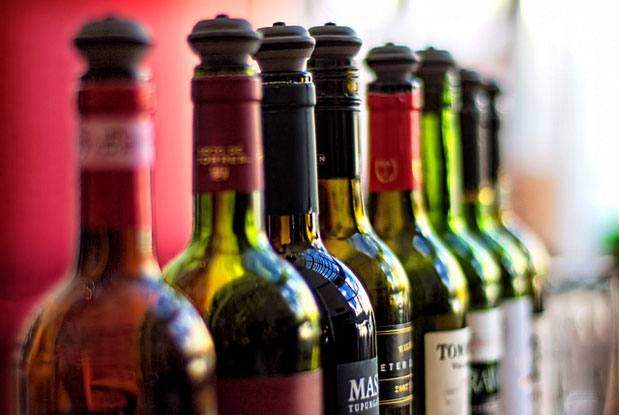
Beyond sangria: cocktails get character with red wine

0

My head is still swimming from a pilgrimage I made to a magical land called Niagara recently: the sun was golden, the vineyards were cloaked in blankets of mist and the grapes were practically begging to be plucked, squished, fermented and imbibed (I dutifully obliged in the latter). 

Apart from being far too easy to consume, red wine is securely stitched into the patchwork of civilization; a libation so iconic that it’s daunting to even nick the surface of its historical significance. 

In the interest of brevity, chronology and questionably handy trivia, it’s fitting to start with Bacchus (a.k.a Dionysus), the Greco-Roman god of the grape harvest, wine and orgiastic bush parties. Bacchus and his followers were all about wine and revelry; the god’s festivals laid the foundations for Greek theatre. 

Wine was a driving force behind the symposia of Plato and his pundit peers, sparking philosophical discussions and coining an epic epithet: in vino veritas (in wine there is truth)

The first and finest vineyards in the civilized world were cultivated by the Romans, whose city streets were lined with wine bars. The Romans exported wine and winemaking to the rest of the continent.

The Renaissance is accredited with many cultural triumphs, including the development of wine appreciation and distinct varietals via the discerning taste buds of the European elite. By the mid eighteenth century the wine trade was in full swing, especially in France, where Bordeaux distinguished itself as a preeminent appellation.

Yes, wine has come a long way since fuelling classical Greek orgies, riddling the Bible with references and allegedly poisoning historical bad boys like Napoleon and Rasputin.

Like wine itself, cocktails that incorporate fermented grape nectar are ancient news. From sangrias (the ubiquitous pitchers of fruity juice-laced wine that every Torontonian who’s ever sat on a patio in the summertime knows too well) to mulled wines (warm, spiced vini sipped throughout Europe and Scandinavia) there are plenty of wine-based fusions in the world. 

Here’s a roundup of some Toronto bars that are taking advantage of red wine’s complexities to add character to cocktails. 

The Black Hoof’s Gypsy Woman (da da dee, da da daa) combines red wine with bourbon, cherry syrup, lemon, lime, sour cherry bitters ($12).
923 Dundas Street West, 416-792-7511

The Bellevue in Kensington Market tops its Bloody Caesar with red wine ($7). The result: increased potency and richness.
61a Bellevue Avenue, 647-340-8224

The Sangria Americana ($10.95) at Milagro is a startlingly smooth mixture of red wine, Bulleit bourbon and Archer’s peach.
5 Mercer St. Toronto, 416-850-2855

The Breakfast Hub: Toronto bans shark fin, snakes found in west-end apartments, baby born on Air Canada flight

0

Toronto will officially be shark-fin free. Councillors voted to ban the Chinese delicacy yesterday in an overwhelming 38-4 majority.
[Toronto Star]

Toronto’s west end is awash in snakes, apparently. Police responded to two separate snake-related calls from adjacent apartment buildings yesterday, including one for a python that was found in a toilet.
[CBC]

Passengers and crewmembers on an Air Canada flight from India to Toronto had an eventful trip as a baby girl was born at 11,000 meters.
[Globe and Mail]

Progressive Conservative MPP Frank Klees has decided to run for Speaker of the legislature, which could potentially provide the Ontario Liberals with the majority they narrowly missed.
[CTV]

City council has voted to send elephants from the Toronto Zoo to a sanctuary in California.
[Toronto Sun]

We hit up the Toronto Underground Market over the weekend. Here’s what we had

0

Saturday evening we made the lengthy trek (via TTC) out to the Evergreen Brick Works in hot anticipation of the second Toronto Underground Market. Offering a venue for the city’s talented home chefs and caterers to peddle their wares, this foodie event has quickly become a sought-after experience, with the $5 tickets promptly selling out (limited door tickets were made available due to begging).

Our only complaint? The space can get pretty chilly once the sun sets, so be sure to bundle up (and wear finger-less gloves suited to sampling) for November’s date. Below are our top picks from the night, in no particular order.

Ukoy

These shrimp and pumpkin squash fritters from Tita Flips were the perfect textural mix: a slightly gooey center paired with a crispy shell. Back in the Philippines, this family business specialized in Filo dishes for just under 30 years; when they moved to Toronto the demand was there to continue. They now create foods from their homeland alongside dishes from other cultures.    


Lobster Churros

Chef Lauren Mozer has been in the biz for nine months, wowing friends and family alike at parties before evolving into her own catering company, Elle Cuisine. Her teeny tiny melt-in-your-mouth lobster churros were served with lemon aioli and lime salt, leaving you wanting more.


Jalepeño Cornbread Grilled Cheese

The line-up for these puppies grew at an exponential rate, and we understand why. Comida Del Pueblo’s version of the grilled cheese sandwich housed refried black beans, cheddar cheese and veggie tinga between two slices of jalepeño corn bread. Topped with guac, sour cream and cilantro, it made for a hearty sandwich, perfect for a lazy Sunday brunch (or, well, a Saturday night). However, it could have packed a little more heat.    


Butternut Squash Agnolotti

Hailing from Thistletown Collegiate Institute, this vendor had a slightly different story from the others: the high school kids were raising money for a trip to Italy, using fresh veggies grown from their school garden to create their three dishes. Their butternut squash agnolotti was beautifully done, with homegrown squash and sage topped with a roasted garlic sage pesto and drizzled with brown butter.


Arancini

The Thistletown kids also served up arancini: wild mushroom risotto balls that were stuffed with mozzarella, coated in panko, drizzled with white truffle oil, shrouded in parmesan and plated with both an heirloom tomato and a wine cream sauce. Judging by the number of people devouring pasta dishes, we’re quite certain the trip to Italy is in the bag.


Macarons

We sampled a trio of macarons from Three Macarons in maple bacon (pink), sea salted caramel (yellow) and pistachio (green).


Mini Cupcake

Picking just one out of the lineup of scrumptious-looking cupcakes from Sullivan & Bleeker was the hard part. We opted for the chocolate chip cookie-topped version; perched above a vanilla cupcake (and nestled into some creamy icing), it revealed a gooey chocolate center when bit into. There were no regrets.

Coming Soon: Raw Canvas, where art unites with food and wine

0


Toronto has been all about combining food and drink with other fun activities as of late, and now it’s time for a bit of artistic inspiration. The Vancouver-based art and social lounge Raw Canvas is set to open its first Toronto location by summer 2012.

Eat, drink and make art. Those are the principles behind founder Steve Merkley’s concept, which combines a lounge and wine bar with a painting pit, where patrons can buy a canvas and get to work with provided paint and brushes.

Prior to his foray into Raw Canvas, Merkley spent time as a yoga instructor in Hong Kong. He had no experience in art (grade school art classes aside) when a friend took him to an art studio known as ART JAM.

“I just kind of fell in love with it,” Merkley says. “It was a spiritual moment where I forgot about life and social roles. It kind of locked me into the moment for a few hours.”

That moment made him want to bring the experience back to Canada and craft a venue that would loosen inhibitions and inspire creativity. Vancouver was the natural starting point — Merkley was born and raised there — but he won’t let his personal mission end there.

“I want to reach out to as many people as possible, to get as many people as possible into some kind of awakening, some kind of moment.”

Vancouver’s Raw Canvas boasts a modest menu of ecologically conscious charcuteries, cheeses, desserts and wines, but the focus on art is equally as important. Toronto can expect similar inspirations for the menu, but of course, there will be a local influence.

The look and feel of Toronto’s Raw Canvas won’t be an exact replica of Vancouver’s, but the general concept will be the same. A specific location is still in the works, and while Merkley expects to be in town for several weeks prior to the opening and after, his Toronto partners will oversee the day-to-day operations. 

Merkley hopes Toronto patrons will be inspired by displayed works of local artists, along with the general atmosphere and more importantly, the painting pit. Who knows? It could even bring about a moment of spirituality.

Love it or hate it, UGG has opened its first Toronto concept store

0

For the last ten years, UGG boots have been a love ‘em or hate ‘em fashion marvel, publicly sported by celebrities like Kate Moss and Snooki, along with everyday ‘tweens and soccer moms. Everyone in between has either sworn them off or adored them at some point.

But the brand is about more than extra warm (and totally non-waterproof) women’s footwear. UGG began as a sheepskin men’s boot, worn by surfers who needed to keep their feet warm between waves down under, at Byron Bay. By the late ‘70s, Australian Brian Smith brought the sheepskins to California and began the casual men’s sportswear line. By the early 2000s, the brand expanded to a high-end casual fashion brand, placing ads in Vogue and setting up shop in New York City.

Earlier this month, UGG Australia launched its first Toronto concept store in Yorkville. The store, designed in a trendy surf culture motif, is big: 3,060 square feet of zebra wood decor and frosted glass. And the items go well beyond women’s sheepskin slipper boots. There’s an impressive men’s and women’s collection of leather boots, wool-lined lace-up boots, Chukkas and accessories such as gloves and purses.

The collection has impressed previous skeptics, and is sure to draw in Yorkvillers and UGG lovers passing by.

UGG Australia, 23 St. Thomas St., 416-963-9468

The Breakfast Hub: Rob Ford calls 911, marathon runner denied Guinness record, Toronto is one of the most innovative cities in the world

0

Mayor Rob Ford called emergency services yesterday after being accosted outside his home for an interview with parody news show 22 Minutes.
[National Post]

Fauja Singh, the 100-year-old man who ran the Toronto marathon, has been denied entry into the Guinness book of records because he cannot produce a birth certificate. What, a letter from the Queen isn’t enough?
[Globe and Mail]

Toronto is one of the top 10 most innovative cities in the world, according to an Australian consulting firm. We’re not really sure what that means, but it sounds nice.
[National Post]

Mayor Rob Ford agrees with protesters who have been gathering outside City Hall to demonstrate against a potential ban on shark fin soup in Toronto.
[Toronto Sun]

Toronto city councillors have voted in favour of privatizing garbage collection from Yonge Street to west of the Humber river.
[CTV]

Theatre Review: Murder on Ossington

0

When invited to see a play called Murder on Ossington, it’s safe to say that one expects to see, well, a murder on Ossington. So imagine my disappointment at the play’s curious ending when (spoiler alert) there wasn’t any murder. Actually, there was a murder on Ossington, at one point. It’s what inspired the play, it just didn’t occur during it. So why is Pandemic Theatre’s newest piece called Murder on Ossington? That’s a very good question.

Site-specific theatre is the production form du jour in Toronto (The Toronto Fringe Festival introduced it this past summer to much acclaim) and it works very well to this piece’s advantage: the play takes place in a house on Ossington, and it gives the production a mysterious, if not creepy, allure.

Another gimmick that’s grown in popularity around these parts: withholding the location of your play from the public. This means that only the chosen few who are able to obtain tickets to the show know where it will take place. I suppose it’s to give the audience members, as well as the play itself, a sense of exclusivity. Admittedly, when I received my email from the company a day before the show, I did feel like I was a part of a secret club, and so again, it’s another ploy that works in giving the show an eerie appeal.

But that’s where the spookiness ends for Murder on Ossington. Aside from the face-painted-ghoul of an emcee (played with acidic relish by writer/director Alex Rubin), the production isn’t scary; it’s just weird.

As soon as the fifteen “VIP” audience members are rounded up at the “secret” house on Ossington, we’re thrust inside the living room and split into four groups to watch four separate scenes in the rooms upstairs.

The disjointed scenes are extremely intimate, to say the least. Imagine doing what you do in your bedroom or bathroom and having complete strangers watching you do it up-close-and-personal. It very unnerving during the first two scenes (one concerned a near-sexual-assault and another a man bathing himself), but I eventually settled into my role as a Peeping Tom for the last two scenes (which featured a S&M scene and a couple fighting).  

What kept my interest piqued throughout the 60 minute show was my expectancy for this so-called murder to occur. Were any of these dysfunctional characters the murderer or the victim? The play obliges the audience to make a link that isn’t clear, so in this regard, I’m going to go with: neither.

Though the emcee had warned us at the beginning of the show that “every house can kill you,” it turns out he might have been speaking metaphorically. Did he mean that we all die a little doing the things we do? Or did he mean your house can literally kill you? I can’t be sure what the message of the play is, but I’m pretty sure it has something to do with “you never know what happens behind closed doors.”

As the audience leaves outside into the chilly night, confused and bemused at the “did this really just happen?” climax we witnessed, we all asked ourselves: was that it? Is the show really over?

It was.

Conceptually, I have to give credit to Rubin and Tom Arthur Davis, the writing and directing team, for their creativity. Their play really is perfect for this time of year, with Halloween just around the corner. But overall, I can’t help but wonder about the necessity of a piece like Murder on Ossington, as well as the necessity of watching Davis wash his junk in the bath tub.

Murder on Ossington, Pandemic Theatre, secret location. Runs until October 30. For tickets, email [email protected].