Home Blog Page 817

Theatre Review: Hair

0

Regular readers of my monthly theatre column in Post City Magazines may be aware that the subject of my doctorate in theatre and english back in the late ‘70s was the theatre criticism of Nathan Cohen, who was the finest critic in Canada at that time and for several decades before. In his later years — he died young, in his 40s — Cohen was once stopped on the street by the fan of a certain popular musical at the time.

"Mr. Cohen," the fan hissed, "do you honestly believe that the millions of people who know and love Brigadoon are all wrong, and you are right?"

Without a moment's hesitation, the former critic at CBC Radio, the Toronto Telegram and finally The Toronto Star, plucked his ever-present cigar from his mouth and smiled, "yes."

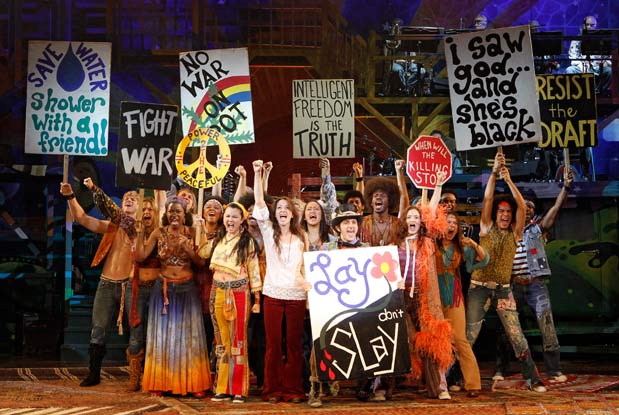
With that charming recollection, let me begin my review of the Mirvish production of Hair, the "first and most famous" rock opera of all time. It ran for over a year in the same location — the Royal Alexandra Theatre — back in the late ‘60s, and then seemingly forever on Broadway. It ends its present, thankfully brief run at the Alex on Dec. 31.

I cannot imagine a more dreadful way to end 2011 other than investing belatedly with Bernie Madoff's former partners. It is, inarguably, an abomination; a waste of time; a shockingly boring evening of theatre. It is a terrible recollection of the "hippie" era, the struggle against the war in Vietnam, racism and everything else the show once seemed to stand for. This actually won the Tony for best musical revival a few years ago? Oh, heavens.

Yes, there are a number of classic songs from the repertoire of over 30 — you read right, over 30! — which run almost non-stop through the evening: "Aquarius," "Easy to be Hard" and, of course, "Let the Sun Shine In." But the script is so empty and silly that it would be given an "F," or perhaps a "Q," from a grade five English teacher.

Are there fabulous voices? No question. Is this a show "for the ages?" Perhaps if the ages are between nine and 17, and perhaps if the audience is determined to figure out why this musical was once so loved and obsessed over. The dozens (and dozens) of songs zoom by almost unheard, many are 45 seconds, or less, in length.

Put simply, this is amateur night, in spite of its historical importance. Fine voices, some pleasant stage business, but that is it.

As Nathan Cohen would have told his editors at The Star: "can you please send someone else to the Royal Alex?"

Hair, Royal Alexandra Theatre. Runs until Dec. 31.

Allan Gould is Post City Magazines’ theatre critic. He has a Ph.D. in english and theatre from York University and has written over 40 books. His writing has appeared in Toronto Life, Chatelaine, en Route, Canadian Business, Good Times and Financial Post. He is married with two children. Aside from his family, his major passions are theatre and film, because they enrich life with pleasure and meaning.

Grab of the Week: a ‘70s-style crewneck sweatshirt (approved by Drake)

0

All month, we’ve been bombarded with frantic “but, what should I get them!?” questions in the lead-up to Christmas. From girlfriends in Germany, boyfriends in Britain to loved ones right here in Toronto, our answer is always the same: go heritage, and go Canadian.

The re-birth of the heritage brand has been quite the trend as of late, and we especially love to support those that are maple leaf-certified. The latest to appear on our radar? North Star, the classic Canadian sportswear company that was founded by Bata Corporation in the late ‘40s in Batawa, Ontario. The brand is back and cooler than ever, producing a sportswear line inspired by its storied archives.

In particular, we can’t get enough of this “All Canadian” ‘70s-style crewneck sweatshirt, recently spotted on hometown hero Drake. We think its safe to say that sweatshirts don’t get much cooler than that, so who wouldn’t love it?

$70 (womens) $75 (mens). Available at Drake Hotel General Store.

The Breakfast Hub: gravy at Toronto’s water department, the business card brouhaha, the Biebs gives back

0

Toronto’s water department has found some gravy: it will apparently save around $500,000 next year after a recent review found the department had 41 unneeded vehicles.
[Toronto Star]

The mayor’s office has destroyed records related to the purchase of embossed business cards from the mayor’s family-owned company, Deco Labels and Tags. The documents were deemed “transitory.”
[Globe and Mail]

The Biebs is giving back this holiday season. Yesterday, he took a young child from the Children’s Wish Foundation of Canada on a skate with the Toronto Maple Leafs, and he helped out at Toronto’s Daily Bread Food Bank.
[Toronto Sun]

The U.S. Food and Drug Administration has approved a Canadian-developed HIV vaccine for human studies.
[Toronto Star]

The Grid compiles its first annual Menschies (Yiddish expression: person of integrity) list. The list is composed of 50 Torontonians that made the city a little bit better this year.
[The Grid]

Who’s got a cause? Any cause?

0

The medieval philosopher Maimonides suggested there were various moral levels to charitable deeds. The highest level, he thought, was to give and not let anyone know. But Maimonides didn’t have the pressure of a monthly deadline, so let me tell you about the exciting charity work I’ve been doing.

Comedy and charity go well together. There are very few performers who would say no to lending their name to help others.

The granddaddy of comedy fundraisers was Comic Relief, spearheaded by Billy Crystal, Robin Williams and Whoopi Goldberg, which raised a lot of money for the homeless from 1986 to 1998.

I was lucky enough to attend a number of these extravaganzas and they were among the best comedy shows I’ve seen.

Now charity events tend to be one-offs, although the long and healthy run of It’s Always Something in Toronto to benefit Gilda’s Club is a valued exception. This year’s collection of talent includes Russell Peters, Fred Willard, Catherine O’Hara, Martin Short and Eugene Levy.

I’ve always been available to help any variety of causes, although my reputation of onstage edginess doesn’t make my phone ring off the hook. But just this month, I was involved with a number of interesting charity events.

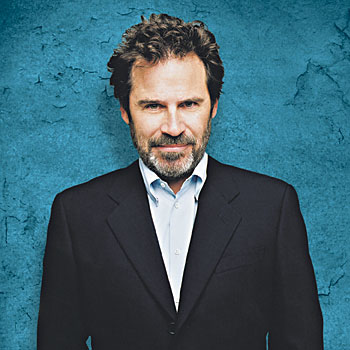
The first, Humour Me, is the brainchild of David Goodman, CEO of Dundee Wealth and a fine stand-up comic. Humour Me is the outgrowth of the former Stand Up for Kids, which put on a big comedy concert each year with some big name stars such as Steven Wright. But this year, Goodman wanted to try something different. So he approached some kingpins in the financial services industry and challenged them to do four minutes of stand-up at the Winter Garden Theatre, hosted by Dennis Miller.

The evening of the big show, there were three judges onstage, American Idol style, who made sport of the CEOs’ attempts to be funny. I was one of those judges, and you know what? All three financial gurus made the crowd laugh. But it was Kevin Sullivan of GMP Capital who took home the gold. The event raised more than $400,000 in support of youth at risk.

A more low-key affair, but no less entertaining, was the Rendezvous with Madness benefit in support of CAMH. And only a week later, I found myself auctioning off gold ingots and hockey tickets. I had gotten a call from Ms Bobbi Lewin asking me if I could somehow bring some levity to her cause, Put Up Your Dukes, established to raise money for a teen lounge at CAMH.

I didn’t think that comedy would work in that kind of emotional environment, but when I found out she was planning an auction, I volunteered to be the auctioneer — where I could bring the fun, if not the funny. And so I did.

Then I came home and checked my voice mail: another call to host yet another mental health benefit. Anybody notice a pattern here? The word must be out.

It’s reassuring to know that if you don’t find your cause, your cause will find you.

Post City Magazines’ humour columnist, Mark Breslin, is the founder of Yuk Yuk’s comedy clubs and the author of several books, including Control Freaked.

Rosedale’s king of comedy gets top nod

0

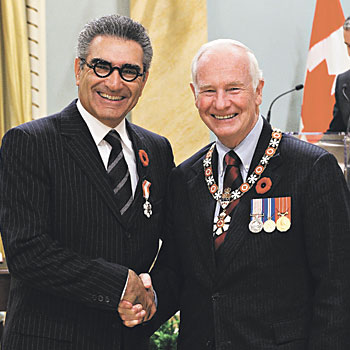
Rosedale resident Eugene Levy was recently invested into the Order of Canada at a Rideau Hall ceremony. Levy is among 39 recipients recognized for their exceptional achievements and commitment to their communities. Beginning as a Second City comic, he went on to appear in more than 50 films, including National Lampoon’s Vacation and the more recent American Pie series.

In a press release, the Governor General’s office said Levy was recognized for his exceptional work as an actor, director, writer and producer, as well as his contributions to the country.

“He is still in touch with his Canadian roots as a mentor of Humber College’s comedy students, and through his engagement with such organizations as Shalom Village, in Hamilton; the Autism Society; and the National Arts Centre Orchestra,” said the release.

Fellow Order of Canada recipients from Toronto include soprano Mary Lou Fallis and novelist Nino Ricci.

“I’m really so impressed and in awe being here today, actually wearing my medal, that words kind of escape me right now,” the usually never-at-a-loss-for-words Levy said of the honour.

Academy Award winner accepts role at film centre

0

Paul Haggis, the man behind the Academy Award–winning films Crash and Million Dollar Baby is taking on a role that will see him teach a master class at the locally based Canadian Film Centre (CFC). The centre recently announced that the multi-talented director, producer and writer has agreed to serve as chair of its film programs.

“This is a very exciting chapter for the CFC. We are so fortunate to have an accomplished and gifted storyteller such as Paul lend us his expertise,” said CFC founder Norman Jewison.

In addition to teaching one master class per year, Haggis will work to draw international attention to the centre’s programs and talent. “It’s an honour to accept this position and contribute to Norman’s legacy of an organization that supports and fosters creative talent,” Haggis said.

The Cineplex Entertainment and short dramatic films programs are designed to put editors, producers, writers and filmmakers through intensive training, with equal attention paid to the artistic and commercial sides of the business. The centre’s alumni includes the likes of Clement Virgo and Vincenzo Natali.

Weighing in on obesity

0

Obesity is an epidemic in this country and many others. Fifty-nine per cent of adult Canadians are obese or overweight, and obesity rates in children have tripled. Heading into the calorie-heavy holiday season, we tracked down Dr. Glenn Berall, of North York General Hospital, to get some info.

We've all heard that childhood obesity is a growing problem, but what are the long-term impacts?
Consequences include heart disease, diabetes, sleep apnea. In children, we have seen the slippage of growth plates in hips. We’re seeing a lot more type 2 diabetes in children. This is a obesity-related illness, which used to be called adult-onset diabetes.

How much exercise do children realistically need to get each day?
Sixty minutes a day, but that’s a minimum. I always say as much as possible.

Does this include low-impact activities such as walking or playing catch?
It does include that, but there should be a mix of activities. You need to be doing different levels of exercise.

What about active game consoles such as Wii?
If the child is actually using the physical activity part of it, yes. It’s not as intense as being out on the field playing soccer, but it’s better than nothing.

Although just nine per cent of Canadian boys get the recommended amount of exercise per day, for girls that number drops to a startling four per cent. Why the gender gap?
First of all, nine per cent and four per cent are both atrocious numbers, but yes, there is also a tendency for girls to lean toward more sedentary activities, particularly when they become teenagers.

What can parents do to encourage more activity in their kids?
They can be active themselves; there is nothing like modelling behaviour. If the parent comes home to eat in front of the television, they’re setting a pretty strong example. Some parents sign their kids up for active activities, like hockey or swimming lessons, and I think that’s helpful, but free active play is an important component, too. Maybe that means walking to school, instead of driving. Maybe on the way back it means stopping at the park to let them play.

What’s your opinion on the great debate about soda pop in schools?
I look at school as the place where we put students to learn how to be constructive citizens. If you put them in an environment where there is pop, there is a nuance that this is normal and you’re supposed to drink this. It’s different than seeing pop at the corner store. The school is where they should be learning to do the right thing.

Does including nutritional information on menus and packaging deter people from eating unhealthy food?
I don’t know if it deters them, but it helps them make more informed decisions. This is a public health battle. If you look at smoking, it’s on the decline because there was a concerted effort in education, policy and labelling. It’s important to take a similar approach to healthy eating and lifestyle.

What do you say to people who think the government is overstepping by regulating our eating habits?
I am a great believer in freedom of choice, but many of the unhealthy changes in our society have actually been supported by the government. As they support mass transit, computerization, cafeteria policy, the question for me isn’t “Should the government be involved?” They are already. The question should be what we want the regulations to be.

So is the freedom of choice lobby fighting a misguided battle on obesity?
The freedom of choice lobby should really support nutrition labelling, so people can actually make informed choices. It’s not called “freedom of guess.”

Talking about obesity can seem like a bit of a lost cause in December. Any tips?
I think people should have an enjoyable Christmas dinner where they can eat what they want and not worry. The trouble is when Christmas dinner lasts seven meals. You can’t stretch your holiday eating out for long without facing the consequences.

Adding a splash of colour to live theatre

0

Canadian Stage’s new production of Red, by screenwriter John Logan of Gladiator and Aviator fame, is a rare kind of theatre in that it confronts another art form — in this case, painting. Specifically, the life, attitudes and times of one of the most talented and loved abstract impressionists, Russian-born American Mark Rothko.

Now, how to make a study of modern art interesting, especially to an audience who may not know Rothko’s work, even if they do recognize the references to Matisse, Picasso, Jackson Pollock and the rise of pop art and Andy Warhol? For starters, the excellent program that is handed out, filled with profiles of Rothko and others, is great reading for anyone who is not a devotee of modern art.

It’s not essential that you know or love painting to enjoy this 100-minute play that runs without an intermission. It is a study of father/son, teacher/student, male/male relations as much as of the world of modern art, but the cries of “Let the painting embrace you!” and “These pictures deserve passion!” can be shattering, and lines such as “There’s tragedy in every brush stroke!” could well raise your respect for the art form.

And there are some verbal exchanges between the two painters that recall George and Martha’s in Edward Albee’s Who’s Afraid of Virginia Woolf of nearly five decades ago. Red is not totally successful as a work of theatre despite all its Tony Awards, but I’m glad to have seen it and to recommend it to audiences: it is both a brave and powerful work. And it forced me to think a lot more about the act of creation in the modern world.

It doesn’t always work, as this is not a physically active show — there are only two characters: one, the aging artist, and the other, a young painter who becomes Rothko’s assistant at the peak of the artist’s career in his late 50s. But there is a striking moment when a giant canvas is painted before our eyes, leading to spontaneous applause and joy from the audience.

Director Kim Collier is a wonderful craftsperson working with a triangular stage and curtain, upon which Rothko paintings and dates of the action are often projected.

She could not have found or directed a better performer than Jim Mezon, whose career I have followed with appreciation and great love for several decades, and whose Big Daddy in this past summer’s Cat on a Hot Tin Roof at the Shaw Festival was a highlight.

Alongside Mezon is a remarkable new talent in David Coomber, a recent graduate of the Ryerson Theatre School. I foresee a great career ahead of him based on his powerful, often stunning performance as Rothko’s assistant.

Red runs until Dec. 17 at the Bluma Appel Theatre. For more information, go to www.canadianstage.com.

Is seven billion people too many?

0

Somewhere in the world, the seven billionth person was just born. In my lifetime, the human population has more than tripled. (I know I’m guilty of contributing to the boom.) But is overpopulation really the problem it’s being made out to be? And if so, what can we do about it?

First, supporting more people on a finite planet with finite resources is a serious challenge. But in a world where hunger and obesity are both epidemic, reproduction rates can’t be the main problem. And when we look at issues that are often blamed on overpopulation, we see that overconsumption by the most privileged is a greater factor in resource depletion.

I once asked the great ecologist E. O. Wilson how many people the planet could sustain indefinitely. He responded, “If you want to live like North Americans, 200 million.” North Americans, Europeans, Japanese and Australians, who make up 20 per cent of the world’s population, are consuming more than 80 per cent of the world’s resources. We are the major predators and despoilers of the planet, and so we blame the problem on overpopulation. Keep in mind, though, that most environmental devastation is not directly caused by individuals or households, but by corporations driven more by profits than human needs.

The nonprofit organization Global Footprint Network calculated the area of land and water the world’s human population needs to produce the resources it consumes and to absorb carbon dioxide emissions. If it takes a year or less for nature to regenerate the amount we use in a year, that’s sustainable. But they found it takes 1.5 years to replace what we take in a year. That means we are using up our basic biological capital rather than living on the interest, and this has been going on since the 1980s.

As people in developing countries demand more of the bounty and products we take for granted, environmental impacts are bound to increase. The best way to confront these problems is to reduce waste and consumption, find cleaner energy sources, and support other countries in finding ways to develop that are more sustainable than the ways we’ve employed — to learn from our mistakes. Stabilizing or bringing down population growth will help, but research shows it’s not the biggest factor. A United Nations report, The State of World Population 2011, concludes that even zero population growth won’t have a huge impact on global warming.

But, just as it’s absurd to rely on economies based on constant growth on a finite planet, it can’t be sustainable to have a human population that continues to increase exponentially. So, is there any good news? Well, population growth is coming down. According to the UN report, the average number of children per woman has gone from six to 2.5 over the past 60 years.

Population, environmental and social-justice issues are inextricably linked. Giving women more rights over their own bodies, providing equal opportunity for them to participate in society and making education and contraception widely available will help stabilize population growth and create numerous other benefits. Reducing economic disparity will lead to better allocation of resources. But it also shows that confronting serious environmental problems will take more than just slowing population growth.

David Suzuki is host of CBC’s The Nature of Things and author of more than 30 books on ecology.

There’s something about Mae

0

After a meteoric career leap that took her from Toronto to Boston to New York City, sportscaster Hazel Mae made her grand return to her hometown last month as the newly minted lead anchor on Sportsnet Connected. And she wouldn’t have it any other way.

Even though her sports reporting career had exploded in Boston as the lead anchor on the New England Sports Network, and it boomed with the MLB network in New York, Mae knew Toronto was where her heart was.

Having Sunday night family dinners in Markham, spending quality time with her hockey team of nieces and nephews and hanging out in her hometown with her husband, Kevin Barker, a retired minor league baseball player, Mae knows she made the right decision.

“I felt I was missing out on all of the celebrations: birthdays, anniversaries and holidays,” Mae says.

Her fiery passion for sports was ignited by her father, a Filipino immigrant who spent countless hours with young Mae watching the Toronto Maple Leafs on their one television.

Her dad’s love for the game solidified in Mae an obsession with competitive sports. With a melodious voice and quick laughter, it’s easy to understand why she was offered hosting jobs in the U.S. for news, weather and entertainment programs. Though lucrative, she turned them down. Mae explains, “I get paid to do what I do anyway.”

Mae’s career began with campus radio sports updates at York University.

She also bartended at a hockey rink just to be close to the games.

When Mae learned that the Sportsnet radio station was looking for a female voice, she immediately put together a tape, and a natural sportscaster was born. Mae admits, “I knew that I could get into games for free if I worked in sports media.”

And having a job in which she gets to do what she is most passionate about is still a dream come true for Mae.

She has seen sports reporting transform over the course of her career, particularly with the number of female reporters now on the scene. Because of the “pioneers,” as she calls them, of 20 years ago, it is now rare not to see a female sideline, pre- or post-game host. And Mae is proud to be one of these women in a field that is no longer solely dominated by men. Mae says, “I’m just the chick who loves sports,” which appeals to both a younger and an older demographic of women.

For Mae, this is one of the nicest compliments because approval by women, and someone’s grandmother at that, reaffirms her reliability. Though her huge male fan base may partly be based on her looks, it is also because she’s knowledgeable, personable and extremely well-prepared.

“I would like to appeal to men for being credible,” Mae says.

A genuine sports fanatic, her enthusiasm jumps off the screen.

It is this contagious enthusiasm that has some women, who are normally less than thrilled by a day spent watching sports, turning on Mae’s program. Female viewers are intrigued by the drama, suspense and emotional highs and lows Mae brings to her reporting.

“[The games are] like a huge soap opera. You’ll never have the same game two days in a row,” she explains.

Still surprised by fans who approach her to sign their baseballs, Mae always makes sure that they really want her name on their precious treasures.

“I don’t want to compare myself to a professional athlete,” she says. “Also, I feel like they may stop asking.”

Enjoying her moment in the spotlight, Mae is touched by her supporters’ interest in her. Even the most overzealous of followers gain her sympathy.

When a lovestruck fan camped out at her Boston station until he met her, she was disconcerted but also felt compassion toward someone who had formed a connection with the person he saw on television. When another fan etched her name on a writing desk and offered it as a gift to her, she declined but appreciated the gesture.

Now home, Mae reminisces about her career highlights: in Toronto, during back-to-back World Series wins for the Blue Jays, New York during the Yankees World Series triumph, Boston when the Celtics were crowned the NBA champions, and New England when the Patriots scored their Super Bowl win.

But witnessing the Boston Red Sox win the 2004 World Series after 86 years of losses was incomparable.

“I’ve never seen anything like that,” she explains.

The Red Sox were actually in St. Louis, but Mae was reporting from a packed Fenway Park when the almost century-old losing streak finally ended.

“People were screaming. Grown men who had lived to see the Red Sox win were crying, and people spilled out onto the streets,” Mae remembers. She describes the swarm of people at cemeteries, toasting and draping Red Sox memorabilia over headstones of those who didn’t live long enough to watch their hometown team finally defeat their competitors.

Mae has had the amazing opportunity to interview some of the most influential people in the sports world, including the iconic Nolan Ryan, Hall of Famer and owner of the Texas Rangers. However, were she to choose someone she would most like to interview, it would be Jerry Jones, owner of the Dallas Cowboys.

Mae says, “Jerry Jones has his hand in everything. He transcends sports into business and entertainment.” His drive, which mirrors her own, fascinates her.

Being in Toronto again means hockey, and Mae is excited by the challenge.

“It’s a bit like cramming for a test.” She laughs because, after eight years of being away, though the game itself hasn’t changed, the faces certainly have.

Mae advises keeping an eye on Ryan Nugent-Hopkins, the number one overall pick in the 2011 NHL Entry Draft and current sensation for the Edmonton Oilers.

Mae laughs when talking about what she does on her off time because, really, she watches sports with her husband.

But after landing in Toronto, she couldn’t wait to have her three favourite things: Swiss Chalet, a bloody Caesar from the Keg and an iced cappuccino from Tim Hortons: all uniquely Canadian. Her cherished things also include Canada’s sports teams.

In game seven of the last Stanley Cup, the Boston Bruins faced off against the Vancouver Canucks. Who did Mae cheer for? “There’s no contest. Canada always trumps.”

And so does Toronto because Hazel Mae is home where she belongs.

Jake was a punk

0

You’ve got to wonder what they put in the water on the set of Degrassi. The Canadian teen TV drama series has a record of churning out stars — hip hop idol Drake and Shenae Grimes of TV’s 90210, the iconic U.S. series, to name just two. Jake Epstein could soon follow in their footsteps after landing the lead role in a touring production of Green Day’s American Idiot.

Epstein — who portrayed bipolar musician Craig Manning on Degrassi: The Next Generation — is set to make his debut in the stage show on Dec. 28 in Toronto.

“It’s a childhood dream coming true,” Epstein, 24, says about starring in the first national tour of the Tony and Grammy Award–winning musical that recently completed its run on Broadway.

Epstein plays Will, a disillusioned young man who sees his two long-time buddies flee to the big city from life in suburbia, while he stays home with his pregnant girlfriend.

The musical is adapted from Green Day’s hit album, and the lyrics were written by lead singer Billie Joe Armstrong, who would sometimes guest star in the Broadway show.

Ironically, Epstein’s first live concert experience was going to see Green Day perform in Mississauga when he was 13 and says the night was magical for him.

He says it was music that got him through his adolescent years.

Inspired by a musical cousin whom he thought was “cool,” Epstein started playing guitar at the beginning of high school and played in bands throughout.

“All of my friends were musicians,” he recalls.

Before being cast in American Idiot, Epstein toured with a U.S. production of Spring Awakening, another teen rock musical that was a Broadway hit, winning 11 Tony Awards in 2007 and drumming up controversy for its themes of suicide, sexuality and abuse.

Epstein played the pivotal role of Melchior, a contemplative student heartthrob.

“It was probably my favourite role of all time,” Epstein says. “Proving to people I could lead a show like that gave me huge artistic satisfaction.”

Epstein says he went through a major learning curve while touring the U.S. with a controversial show.

“We went from red states to blue states — so as a performer, I had to develop a thick skin,” he says. “We’d have walkouts in the Midwest and standing ovations in Miami and D.C., which were like rock concerts.

“I learned to stay grounded in the material, to trust myself and not get too concerned with what people are thinking — just to focus on telling the story.”

It was through his role in Spring Awakening that Epstein got an audition for American Idiot.

“It’s definitely the closest thing to a rock concert that has ever been put on a stage.”

Once the tour concluded, Epstein was looking for an apartment in Toronto and needed an employer as a referral, so he turned to his former producer in the U.S.

Rather than talking real estate, the discussion turned to casting.

“She said to me, ‘We’re starting a new tour — it’s too bad you don’t play guitar.’”

Epstein countered with “I play guitar really well.”

Four auditions later, Epstein signed on to the cast of American Idiot and promptly forgot about the apartment. The tour begins in Toronto and will touch down in 11 states, including stops in cities such as Boston, Chicago, Dallas and Los Angeles.

Epstein says the show pushes the boundaries of what most people think of as a musical.

“It’s definitely the closest thing to a rock concert that has ever been put on a stage,” Epstein says.

“It’s punk rock that is operatic.”

Born in Toronto, Epstein grew up in North York with his parents — his father, a lawyer, his mother, a children’s writer — and his older sister, Gabi, who is also an actor.

Beginning in Grade 4, he attended Claude Watson School for the Arts and was encouraged by his acting teacher to go out on a few auditions.

In no time, he was landing gigs, which led to him signing on with an agent. Epstein continued on in an arts program at Earl Haig Secondary School while he was filming Degrassi.

He considers his role on the show a major break in his career. He won a Gemini Award for Best Performance in a Youth Series in 2003, and he says having a recurring part on the TV series really taught him how to act on-camera.

Degrassi was sort of my first really serious acting experience, so everything I did felt like learning,” he says.

“I also had a great character and didn’t know what would happen to him, so it was a really creative process.”

But after five seasons on Degrassi, Epstein’s contract was up and he felt ready for change. He auditioned at the National Theatre School in Montreal, where he studied for three years.

“My heart has always been in theatre,” he says about the choice.

Degrassi had done all it could for me creatively, and I wanted to put some technique around my acting.”

Acting school taught Epstein how to connect with his body while onstage, something that has proven invaluable given his new musical theatre direction.

“It teaches you to treat your body like an instrument,” he says.

Epstein — who also performed in the Toronto production of the hit musical Billy Elliott last summer — says he sees his work in musicals as a coming together of his two passions, acting and music.

“Music has always been fun for me, and acting has been a profession.”

When Epstein isn’t touring, he makes the most of his spare time, playing his own music at open mic nights in Toronto.

“I play shows in the city when I can,” he says. “Just to get in front of people and start singing.”

Most recently Epstein has been frequenting the Tranzac Club in the Annex and Clinton’s in Little Korea. Sometimes he’ll play piano, sometimes guitar, and he mixes it up, playing cover songs and music he’s written himself.

He says he’d love to release an album although he’s not sure what direction he would take since he’s a fan of many music genres. But most of all, what Epstein would really love is to land a role in a Broadway production.

With two leading roles in touring productions of Broadway musicals on his resumé, it would certainly seem that Epstein is on his way.


Q&A: Sam James on opening up an indie coffee shop in the financial district

0

Yesterday, The Grid revealed some interesting news for coffee fans in Toronto. Espresso guru Sam James is set to open a third location of his eponymous shop, and he’s opening it in the financial district. More specifically, he’s opening in the knot of tunnels that is PATH, beneath the Sun Life Financial building at 150 King Street West. We caught up with him to talk about the new location. 


I think many people are surprised by your decision to open up on the PATH. I was surprised to hear about it. But I know you’ll never sell out, that it’s physically impossible for you to sell out. So can you tell me about your decision to open up in that location?
I think it’s a smart decision. After I opened the Coffee Pocket [a tiny, takeout-only spot at Bloor and Clinton], I realized that it was very limited in what it could do by its size. So I thought, if I did a third location, how would I do it in a way that made more sense? How would I make it more efficient, more effective and able to produce more and be an all-round smarter business?

Will we be seeing something along the lines of the Pocket?
It will be closer to Harbord, but it will definitely be unique. It will look a lot like the Pocket, but it will feel more like Harbord. The physical size is closer to Harbord.

Seats?
No seats, not my style.

How about the menu? Will it be a standard Sam James menu?
Yeah, it’ll be a super limited menu. I’m just doing exactly what I do, but making it for the biggest audience in the city. Where else can you put a shop that’s not played-out as far as the neighbourhood goes, somewhere totally untapped and unexpected?

What kind of equipment are we looking at?
I’m actually going to be running two machines out of the space. That’s going to really help with moving that kind of volume. We’re physically setting up two coffee shops within one space. I’ll be running La Marzocco Lineas that have been custom built with updated GB/5 group caps, like the one at the Harbord location. The same water filtration system.

We’ve talked about the expansion conundrum before: you want to expose as many people as possible to good coffee, but then there’s the issue of spreading yourself too thin. Are you worried that that’s going to be a problem?
Quality control comes from the top down. If you can’t get to those stores, if the locations are randomized and spread out and inaccessible, then you can’t be there to make an impact or see what’s going on or advise. But these locations are all fairly accessible for me. I can get to them on the subway or on my bike. Between these three stores, I’m going to have about 13 staff, and that’s not a lot. It was interesting opening up the Pocket, because it was a very nice way for me to test expansion without jumping head on into doing another full location. I’ve had two shops now for over a year, and they’re both doing well, and I think the coffee’s better than it’s ever been. So I’m going to give it another crack.

Do you see yourself having to make any compromises at all? Will this still be the kind of place that if you haven’t pulled a perfect espresso, you’re going to dump that espresso?
Yeah, that’s what we do. If it’s too much for someone to wait in line, there are plenty of other coffee shops around. There’s a Tim Hortons, there’s a Starbucks, there’s an Aroma. And that’s what makes them them, and that’s what makes me me. I’m not going to serve a shitty product just to move lines faster. I don’t intend to do that.

How much time did you spend exploring PATH, getting to know the area and finding an ideal spot?
Dude, I’ve gotten lost in there so many times. It’s like a maze. But I have a pretty good feel on it now — I know when I’m going north or south. I wanted to see what the best times were down there, when the most people where walking by. I talked to a lot of people who work down there. A lot of my current customers come to my shop on the way to work and ask me, “when are you opening up downtown?” I think I had a lot of misconceptions about downtown before. I thought it was super uptight and conservative. I thought it wasn’t my scene. But the more I talk to people down there, for every douchebag there’s like 100 regular people who just happen to work in finance. The financial district in New York City is crammed with businesses; in Chicago, Intelligentsia has locked down the financial core. And Toronto’s financial district has nothing, but there are a ton of people who are looking for something good.  

Do you see yourself expanding more in the future? Is there a limit for you?
As you grow, obviously it becomes more difficult to manage more and more staff. But I see people doing it in other industries. There are restaurants — single restaurants— with 40-50 people on staff, and they make it work. So if they can do it, I can do it. I don’t want to say whether I will or I won’t expand more at this stage. I like to make my decisions very measured and thought out. There are other things I’d like to get into before opening more stores, maybe roasting, but it’s hard to say right now what I will or won’t do.

Will we see the same kind of indie vibe? Same kind of music?
I plan on it. There’s nothing in my lease that says I can’t play music or that I can’t wear a T-shirt. A lot of businesses down there suffer through ass-kissing and mediocrity because they feel like they have to. I’m not trying to have an attitude about what I do, I’m just trying to make good coffee. And I’m going to do it my way.

The newest location of Sam James Coffee Bar is tentatively slated to open in February of 2012.

This interview has been condensed and edited.