
Home Blog Page 810

Chef Alex Bruveris’ breakthrough dish was braised rabbit

0

Some recipes are universal; most memories are not. The process of shaping raw ingredients into something palatable — and the events that surround this endeavour — can lead to all kinds of unforgettable moments: kitchen disasters, severed digits, epic struggles with newfangled culinary gadgets and, sometimes, personal triumphs. So why not ask some of the city’s top chefs for their most memorable recipes? Why not, indeed? No, really — that’s what we did, and will continue to do weekly.

This week, we asked Chef Alex Bruveris, Maléna’s current head chef, for his “breakthrough” recipe. Only 23 years old, Bruveris has worked in a number of notable kitchens (including Auberge du Pommier and Enoteca Sociale). His passion for his craft is undeniable: the man has vegetables tattooed on his bicep. Herewith, Bruveris shares a recipe for braised rabbit and explains the significance of this particular dish.

Says Bruveris:

“I’m a big fan of braising. It’s a wonderful way to introduce a ton of flavor into a protein, and turn more affordable cuts into something very special. This rabbit dish is something I’ve made several times — and utterly ruined once. How did I ruin it? I tried to pressure-cook a rabbit, and in a hurry to get it on the stove, didn’t check how much liquid I was putting in. Twenty minutes later, I was greeted with a half-inch of cinder on the bottom of my ruined pressure cooker. 

Why braised rabbit? Well, when I was first starting out, I didn’t think any parent could be over the moon about their son or daughter cooking for a living. Hours are long and hard, and it doesn’t pay well. But the most important meal I’ve ever cooked was for my father a few years ago; I feel like this was the meal that made him see I was doing the right thing with my life. We seldom saw one another, and I had invited him over for dinner on a night off — and bought a rabbit.

Here’s my recipe for a rather simple braise, celebrating rabbit, rather then altering its flavour. It’s also a dish that uses every single part of the animal." 

BRAISED RABBIT

Ingredients: 

1 rabbit

2 cooking onions

2 stalks of celery

1 carrot

1 bulb of fennel

6 or 7 bay leaves

10 sprigs of thyme

300 grams of olives

1 cup of dry cooking white wine

Preparation:

To start, break down the rabbit. I take the fore and hind legs off the body and take the loin off of the rib cage. Then, I split the skull, save the brain, and harvest the rest of the offal, (set aside the kidneys, liver and the heart as well) for later use. I break up the rib cage with a few whacks of a cleaver, and caramelize the bones in a hot cast iron pan (until bones are browned all over). Once the bones are browned, degrease the pan, and add just enough water to cover. Then let it all cook for about an hour, while prepping the rest of the ingredients. Next, prep the vegetables: pit the olives, medium-dice the carrot, onion and celery, and if you like fennel, it works really nicely here as well. Start pre-heating a pan on medium high, while you season your rabbit legs, and as soon as the oil is hot, start searing off those legs.

Once browned on both sides, set the legs on a plate to the side, add in your vegetables, and turn down the heat to medium. Sweat off your vegetables with the olives for a good twenty minutes, until translucent, then add your thyme, bay leaf, a few cracks of black pepper, and cook for another five or so. At this point, you’re ready to start putting everything together, so deglaze your pan of vegetables, and in a suitable braising dish, add the legs, your vegetable mixture, and top it up with the rabbit stock from earlier.

Now your mixture has to simmer for a good hour and a half or so (until tender), but the special bit I think is in how the dish is finished. Once the legs are tender, and the braise is on low, add in your rabbit loins, and the offal, and cook for another five minutes — making sure not to overcook the loins.

To serve, plate a braised leg (or two of the fore legs), some of the vegetables, a slice or two of what should be a beautifully cooked loin, and a heart or kidney. This is a dish that would also go wonderfully with a nice thick slice of crusty country sourdough, like what we make at the restaurant. (It rivals the best in the city!)

When I ate this dish with my dad, it brought him back to Argentina as a boy, eating offal at home. Being able to bring someone back to somewhere special was, and is, the biggest treat.

Vinyl + vintage fashion = Of a Kind, a new shop on College

0

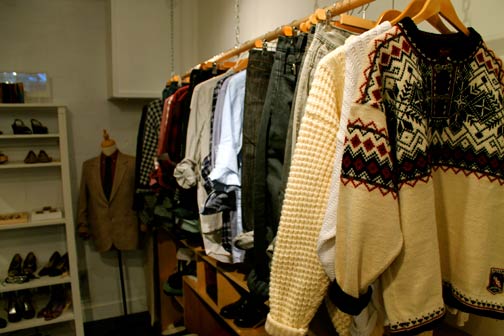
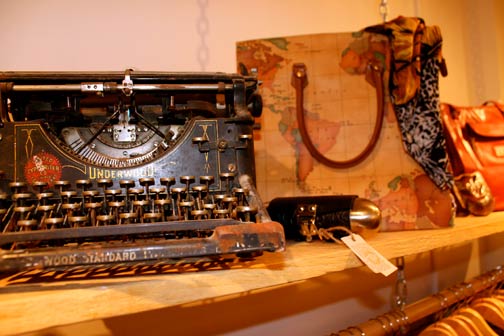
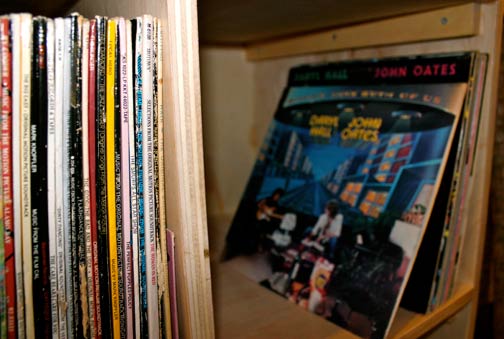
“We’re aiming for the world’s biggest Hall & Oates collection,” Kyle Turner says as he points to a shelf with vinyl reserved solely for the duo. “Though we do have a ways to go.” Turner — along with girlfriend Storm Luu, old pal Rob Moseley and Tamara Salpeter rounding out the bunch — owns Of A Kind, a shiny new store on College Street hawking both vintage fashion and vinyl.

In general, the guys are responsible for the vinyl — which takes over the front of the shop —while the girls deal with the vintage in the back, but the borders aren’t strict, and there’s plenty of input coming from both sides. Salpeter has worked with Fresh Collective, while Luu recently won TIFF’s Kelly Style Challenge, which was judged by Jeanne Beker.

Housed on shelves built by Mosley and another mutual friend, the vinyl consists of vintage selections and new releases, with some of Turner’s current faves including Bibio,  Dan Deacon and Kensington regulars Promonium Jesters (which also happens to be Mosley’s band).

Vintage vinyl offerings include the likes of Herbie Hancock, some “hazy, ‘60s garage pop” from The Ventures and The Safaris, and, of course, Hall & Oates. Pricing ranges from about $10 to $27 (or more, for less common releases), with haggling possible, depending on what the purchase entails. Artwork displayed on the wall above the records is from local artist Jeff Blackburn, and features renditions of recording artists’ mug shots.

Both guys and gals can shop the clothing, all of which is priced very reasonably (“we’re not on Queen Street,” Turner stresses). The men’s section is commendable. Plenty of striped, checkered, plaid and denim shirts are to be found (from $25), alongside a selection of jeans (around $35) and more eye-catching pieces such as an ‘80s Olympic sweater from Lake Placid, complete with silver clasps (“I’m a sucker for clasps,” Turner says).

Meanwhile, in the women’s section, we found some woven leather belts ($5-$15), a cream lace shrug ($26) and a cummerbund dotted with beads and stones ($12). We loved both the coin earrings ($24) and the twisted asymmetrical vinyl earrings from jahyu ($54). With the store closing at 10 p.m. (8 p.m. on Sundays) — and the promise of parties to boot — it’s bound to become a late night haunt.

Of A Kind Vintage & Vinyl, 1037 College St., 647-344-1091

Got haggis? You should — it’s Robbie Burns Day

0

Robert Burns was born Jan. 25, 1759. His birthday is celebrated all over the world. Best known for having written “To a Mouse” and “Auld Lang Syne,” he also wrote “Address to a Haggis,” an ode to Scotland’s notorious national dish. Burns called it the “great chieftain o’ the pudding race,” but if you find it hard to think of haggis as a delicacy, think of it as sheep recycling. In honour of Burns, let’s consider the haggis, which he immortalized with a “grace as lang’s my arm.”

They say those who love sausages wouldn’t want to know what goes into making them. That goes double for Scotland’s chieftain of sausages. How haggis is made is a simple question to answer: take a sheep’s heart, liver, lungs and anything tasty that might be stuck to them, mince them up with onions, oats and suet (or maybe sweat), fry it all up and sew it into the sheep’s stomach or intestine (whichever you find more appetizing). The next question is “why?” It is a way to enjoy and preserve those precious, tasty bits that might get you through a few cauld winter nichts.

Haggis, which basically means “hash” (or hacked up bits that no one would eat if they were identifiable), is not nearly as horrible as you might reasonably imagine it to be. Granted, before it’s cooked it starts off looking like road kill, but once it’s been hacked, minced, fried, stuffed, stitched, boiled and roasted, it comes out looking like, well, cooked road kill.

By the time it gets to your plate, haggis no longer looks like, um, anything in particular. In taste and texture it’s kind of like a spicy shepherd’s pie. As if that weren’t fancy enough, haggis is generally served with a side of tatties ’n’ neeps (a lovely pair, especially when they’re mashed together). That may sound a bit risqué, but it’s actually just vegetables: potatoes and turnips.

Once you’ve gone through all this trouble, don’t just sit in front of the telly and chow down. You have to dress up in your kilt, parade the haggis to the table marching in step with your household bagpiper and then recite the “Address to a Haggis” in your most obnoxious faux-Scottish accent and pretend you know what it means.

Then you pour a wee nip of whisky from the teapot and toast Burns, then toast the lassies. Repeat until the teapot runs dry.

Get haggis locally at The Healthy Butcher or go out and experience one of the many events around town.

Q&A: singer-songwriter Joanna Chapman-Smith on living in Toronto, traveling and her upcoming album

0

Joanna Chapman-Smith is a charming and breezy folk singer who mixes sounds from around the world in a hodgepodge of delectable musical delights. She's performed in more than 100 cities in four countries and those travels shine through her music. Recently, she settled in Toronto after a decade-long stint in Vancouver. If you don't know her yet, you're in luck: she's playing at Hugh's Room tonight. We checked in with the sultry songstress to find out what's new.

You're previewing your new album, Love Me Deeply, at your Hugh's Room show. What can you tell me about it?
It is a departure from my last album — which had the Bohemian flare of east Vancouver with accordions and waltzes. This album is elaborate and orchestral (thanks in large part to the interesting arrangements by Vancouver's Elliot Vaughan). The songwriting is personal and a step up from my previous work. It is accessible, but has a lot to discover and engage with. It is an album for listeners.

How has your music evolved since your first record?
My music tends to be quite nuanced and varied. That was already the case early on, when I was listening to more traditional folk. However, as I traveled and worked with people all over the world with a variety of styles, my music has become quite cosmopolitan as well. You can hear klezmer, dance rhythms, pop and jazz come into my writing as you move through my catalogue. I love to experiment with new sounds. I believe my range of rhythms and styles reflect the rich array of influences I have had living in multi-cultural cities like Vancouver and Toronto.

Was there anything particular that inspired or informed the new album?
I had a strange experience in 2008 where it became painful to talk or sing. It took me a few months to track down the help I needed to solve the problem — but in the meantime, I was afraid I might lose my voice forever. So when I got it back, I began singing and writing several songs about losing and reclaiming my voice, literally and figuratively. The result four years later is this album — and I am thrilled to be releasing it later this year.

I'm sorry to say I'm just discovering your music now. How is that even possible? And don't say it's all my fault!
Sorry — it's all your fault Ron. Well, I have been touring mostly in B.C. and Europe — so I am just getting going over here in Ontario — but I have some big plans to make some noise here in the next few years, so more than a few people will hear it! To get noticed these days, it takes a lot of hard work and a lot of generosity and support from the people you meet. Luckily, there is still a great love of music out there, and I am so often surprised by the help I get from my agents and my community at large. So glad you've heard the music now Ron! 

You've been described as having a "slinky" voice. Now, I'm not sure what that means, but certainly it is one of those voices that can be sultry at times, also fun and lilting at times, but always with some power underneath — fair enough?
Thanks for the review — sounds nice to me! Yes, I believe I have a very powerful voice, but I tend to use it quite softly at times, and I really get into the sensual and tactile quality of singing. I truly love to sing.

What inspired you to get into music, and who were your early influences?
I always sang. My dad used to sing me and my siblings to sleep, and we starting singing along in harmony when we were still little. He was my biggest and earliest musical influence and making music just never stopped. Now that I'm grown I still sing casually throughout the day, especially if I'm in a good mood. 

I gather you've spent a lot of time traveling. Does that really inform your music?
You bet it does. I pick up little bits and pieces I hear all over. Like when I went to Brazil a couple of years ago and there was a popular style called forró playing in the bars. The next song I wrote had a forró-ish feel underneath it. I also get a lot of wonderful recommendations of new music from people I meet abroad or who send me recommendations over the Internet.

So you’re back in Toronto now?
I capped my stay at 10 years in Vancouver, and now I am back in Toronto. Loved my time there and I miss the mountains and people, but I am truly loving being back here. There is a lot of get-up-and-go in this city that I find invigorating.

You do a lot of house concerts, which seems to be a growing trend around here these days. What do you like about that style of event?
House concerts are some of the most intimate, respectful and fun shows to play. The hosts are usually music-enthusiasts, generous by nature and like to have a good time — so in my experience the results have always been good so far. Some of the people I have played house concerts with have since become great friends of mine, and some of my most memorable experiences have been at house concerts around the world. In Ede, Netherlands, I played one house show that was not only a wonderful concert, but then afterwards we all went outside around a fire and jammed for the rest of the night. 

What can we expect at your show at Hugh's Room tonight?
Expect wonderful musicianship — Jaron Freeman-Fox and Rosa Smedley will be accompanying me on violin and stand-up bass, respectively — a cozy venue with a knack for creating a vibrant listening atmosphere and the feeling that you were glad you made the effort to leave the house.

When and where can we get the new album?
The sneak preview sampler will be available at live shows this year – starting tonight. But the album will be released in the fall. You can pre-order it now, or visit my website to see how you can support its production and to find out about JCS news and tour information.

Joanna Chapman-Smith, Hugh's Room, Jan 25.

Save money (and the environment) at this week’s Preloved sample sale

0

Sustainability and sale: two words we love to hear when it comes to fashion. Preloved, Queen West’s staple of redesigned vintage, has filled its shop floor with one of a kind samples and warehouse stock to be sold from today until Saturday.

Most of the items are at least 50 per cent off (if not more), and everything in the store is between $10 and $70. Run, walk, drive or crawl over to snatch up these pieces, made from reclaimed vintage fabrics.

You’ll be in good company. This fashion and environment-conscious brand is adored by the likes of Julia Roberts, Kirsten Dunst, Anne Hathaway and supermodel Daria Werbowy.

Preloved, 881 Queen St.W., 416-504-8704. 2012 Sample and Warehouse Sale, Jan. 25-28.

Trending in Theatre This Week: Penny Plain, Cruel and Tender, A Brimful of Asha, No Exit, Caroline, or Change

0

Penny Plain

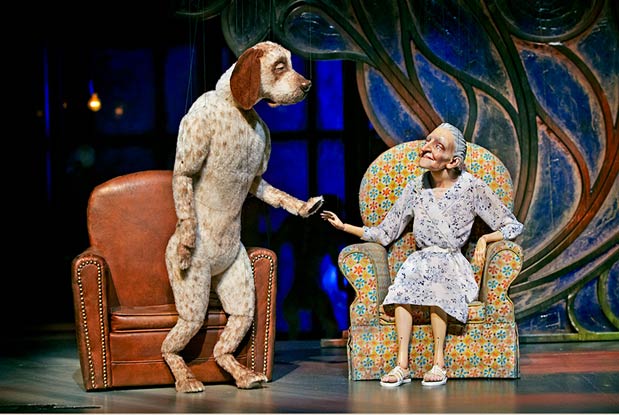
Ronnie Burkett Theatre of Marionettes presents an end-of-the-world romance that includes talking dogs and a cross-dressing banker. Warning: despite the usage of puppets, this show is definitely not for children.
Factory Theatre, 125 Bathurst St., 416-504-9971. Jan. 24 – Feb. 26.


Cruel and Tender

This Martin Crimp play, a modern take on SophoclesTrachiniae, is not only the first play that acclaimed Canadian film director Atom Egoyan has tackled since ‘89, but it’s his first time collaborating onstage with his actress-wife, Arsinée Khanjian.
Bluma Appel Theatre, 27 Front St. E., 416-368-3110. Jan. 26 – Feb. 18.


A Brimful of Asha

Mother-and-son team Asha and Ravi Jain keep it in the family by sharing their story (and the stage) about generational and cultural clash. Bonus: select Sunday performances take place at Dish Cooking Studio, which include a cooking class with Asha and a shared vegetarian meal.
Tarragon Theatre, Extra Extra Space, 30 Bridgman Ave., 416-531-1827. Jan. 26 – Feb. 18.


No Exit

Artists and existentialists alike will have a hankering for this Jean-Paul Sartre play about three deceased characters who are punished by being locked into a room together for eternity. “L’enfer, c’est les autres,” non?
Theatre Passe Muraille, Backspace, 16 Ryerson Ave., 416-504-7529. Jan. 24 – Feb. 4.


Caroline, or Change

This multi-award winning musical (it’s won a Tony, an Olivier, and an Obie, among others) centers on an African-American maid named Caroline and the son of her Jewish employer, who are both struggling with extraordinary life changes.
Berkeley Street Theatre, 26 Berkeley Street, 416-368-3110. Jan. 25 – Feb. 12.

Finding Ford

0

Etobicoke is Ford country. A suburban, mom-and-pop enclave that is home to Toronto's boisterous mayor Rob and his councillor and big brother Doug. The houses are nondescript post-war bungalows, ranchers and side-splits with wide lots, driveways and actual backyards. It seems like there are more Tim Hortons per capita than most city neighbourhoods, and the big shopping attractions are clustered in strip malls. I'd say it’s leafy and idyllic, but it’s the middle of January and too darn cold. I'm in the belly of the beast on a mission: track down the mayor.

Earlier, I'd been in front of his house, the place that's gotten so much attention recently, with his sister's ex-boyfriend paying an unwanted visit and, of course, the prank gone wrong by 22 Minutes comedienne Mary Walsh.

His house is remarkable in its simplicity. It is the picture of suburban life — nothing less, nothing more. There are blue bins yet to be put away on his driveway, and the small single-level white brick home doesn't look much more expensive than my own row house in Little Portugal. Say what you will about politicians, but there's no way someone like Michael Ignatieff or George Smitherman lives as simply as Mayor Ford.

In his backyard, there's a Molson Canadian umbrella and toys scattered about in the snow. It’s all part of the everyman appeal that rocketed Ford to the mayor's chair in 2010.

But the mayor isn't at home, and the search continues at a local high school near Casa Ford. Bingo.

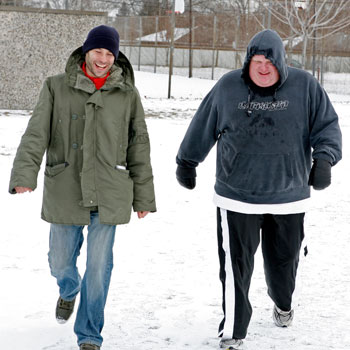
When I see Rob Ford on the track, the first thing I want to do is apologize. I'm in Etobicoke near his house, and I've been scouting out the mayor of Toronto like he's Angelina Jolie and I'm the paparazzi. At first, I see this large frame on the opposite side of the parking lot from where I'm standing, and I wonder if that could really be him. The figure is wearing a hood and walking purposefully, briskly and swinging its arms with a mighty force. Is it possible that the mayor is out here alone?

The track is snow covered and it's NFL playoff Sunday. Even though Rob Ford, who weighs 330 pounds, has publicly announced a Cut the Waist program, in which he and his brother are trying to lose 50 pounds by this June, I can't get over how the mayor looks like any other guy. Rob Ford is supposed to be an intimidating man. And not just for his politics.

When the figure on the track finally turns toward where I'm standing, it's unmistakably him. The mayor, dressed like Sylvester Stallone in the first Rocky -— wearing a cotton hooded sweatshirt, sweatpants and a winter cap and gloves — says I can talk to him if I follow him around on the track. His teeth are yellow and crooked, but he's smiling. And even though his face is red and he's short of breath, he seems in good spirits.

"Gotta do it," he grunts, when I say how impressed I am that he's out here alone in the cold on the second biggest football day of the year. Just around the block, Ford coaches the sport at Don Bosco, and despite everything I've heard about the man — his dislike of the media, his heavy-handed dealings with unions and his stubbornness toward simple olive-branch gestures such as walking in the Pride Parade — it's impossible not to like him.

When I see him at the track power walking, I'm not only impressed, I'm inspired.

Rob Ford is working his ass off, and every time I say something akin to how impressed I am by the effort he's exerting all alone in the cold, walking circles, he shrugs me off and grins. "I'm getting down," he says, and he seems like such a regular guy that it doesn't even occur to me to talk about politics. He's sweating underneath his winter cap and hood, and he's huffing and puffing and short of breath. I meet him on lap 13 of his intended 20, and instead of talking about libraries or budgets, we talk about the afternoon games.

"If Ray Lewis can get at Brady, the Ravens stand a chance," huffs the mayor, and as he briskly power walks his circles, struggling, sweating, briskly swinging his arms like two giant mallets, he compliments me on my running strides.

I tell the mayor that I started running because I wanted to change my lifestyle. That, for me, running circles is important, not only because of what it gets me doing on Saturday morning, but what it keeps me from getting involved in on Friday nights. The mayor smiles his understanding. For him, the running and the trips to the local gym are going to save him from fairly serious obesity. He wants to cut down on ice cream and late night snacks. One in four Canadians suffer from obesity, so although the mayor's weight has become a punchline for local city columnists and free weeklies, it's admirable, even important, watching the mayor work.

When he seems to be running out of oxygen, I ask him if I can bring him some water. "I'm OK," he retorts.

This is probably part of Ford's appeal to voters. He doesn't put on airs and he doesn't use fancy words and he isn't easy on the eyes. When I see him at the track power walking — the track just a few kilometres from his house and the same one where he went to high school — I'm not only impressed, I'm inspired. There's not a fancy bone in his body. Nor is there a security detail or media handler. Instead, it's just Mayor Ford outside, by himself in the cold in Etobicoke — face red, heart pounding, ticking off laps. 

Eventually, I feel embarrassed about the intrusion and ask him to recommend a spot for me to get something to eat. He suggests the Dundas Street Grille, a diner with Formica tables that's been serving burgers for the past 28 years.

When I first saw the mayor on the track near his house, I was filled with all sorts of emotions. I'm preconditioned to not like the man. But he smiled when I approached him, his teeth accenting his goofy grin.

The mayor allowed our photographer right up in his face when he knew he must've looked horrible. And, what's more, he told me he was attempting to walk 20 laps, though I doubted he would be able to complete 15.

Rob Ford is sort of a boogeyman for large swaths of Toronto. But when I met the mayor on his home turf, I was impressed by his toughness and how open he was. We pounded fists before leaving, and I wished him good luck. 

"The most important thing is that I keep this up," said the mayor. "If I do this every day — if I'm able to keep going — I'll be all right."

Microchips, nanoparticles and Jean-Luc Picard: Nerd Nite hits Toronto

0

Nerds. They’re practically cool these days. And they’re gathering. Last week, Toronto nerds descended on a local community centre for a monthly get-together of learning and nerdy debauchery known as Nerd Nite. In between pints, they got schooling from brethren on just about anything a nerd may want to know about.

The first lecturer, biomedical engineering PhD student Justin Besant, gave a clever — and to those of us who are not engineers, entirely understandable — talk about microchips.

“You can put microchips in bugs and control how they move around,” he told the nerds.

Another nerdy tidbit: “Microchips are getting so small, we’re getting down to the point where the size of an atom will limit us.”

He explained that researchers (most likely, nerds) are working on replacing silicon, the material currently used for microchips, with graphene, a material that’s one atom thick.

“Layers of graphene form graphite,” Besant said. “When you write with a pencil, you’ve made the world’s thinnest material.”

Inevitably, someone in the crowd yelled, “who uses a pencil?”

That’s nerd debauchery for you.

Toronto nerd boss Virve Aljas said Nerd Nite is all about balancing.  

“Nerd Nite is pretty tongue in cheek,” she said. “We’ve had someone talk about nanoparticles, so now we’re having someone talk about bars.”

That night, the bar lecture was given by Toronto writer Christine Sismondo, author of America Walks into a Bar: a Spirited History of Taverns and Saloons, Speakeasies and Grog Shops.

Sismondo gave examples about the role bars played in social movements, going back to the Salem witch trials and the Stonewall riots. She went from the gross (at one point, an entrepreneurial barkeep put urinals at the foot of his bar so that he wouldn’t lose customers who left to relieve themselves on the street) to de-bunking the myth that first wave feminists were responsible for prohibition in the U.S.

“The real money that shut down the bars was from the anti-saloon league trying to shut down labour groups,” she said.

At break time, concerned nerd citizen Daniel Moneta took the mike. He said he found a Jean-Luc Picard bookmark while leaving Spadina Station on his way over.

“It must belong to someone here,” he said. “Come see me.”

Nerd Nite started back in 2003, when a Boston hole-in-the wall asked a regular, ornithologist Chris Balakrishnan, to give a slide show about his recent trip to Cameroon to research the indigobird.

Like many Phd-ers who study ultra-specific fields, Balakrishnan wasn’t used to discussing his day-job outside of the lab. He grabbed the opportunity and apparently attracted lots of nerds. Nerd Nite blossomed, eventually spreading around the globe.

In Toronto, nerds have started speed dating. Sarah Rogers, the Toronto nerd speed dating organizer, said she is aiming to get 15 girls and guys together for the next night.

“We’ve done it once already, and had great success stories,” Rogers said. “People here have a lot in common.

The nerds are gathering. And soon, they’ll be breeding.

The next Toronto Nerd Nite event is scheduled for Feb. 23. Free (donation asked for lecturers).

Vancouver’s $100 hot dog versus Toronto’s erstwhile $100 burger

0

The biggest news of the day, without question, is bound to be the announcement that a $100 hot dog is now available in Vancouver. Too bad Toronto went through this whole thing last year (get with it, Vancouver) with the now-infamous and hugely unsuccessful $100 burger. The two PR stunts are pretty much exactly the same, so why not do the obvious and compare them head-to-head? 

Name

$100 hot dog: The Dragon Dog
$100 burger: $100 BRGR
Winner: $100 hot dog

Origin

$100 hot dog: Vancouver’s DougieDog, which is also the first hot dog delivery location in Canada.
$100 burger: m:brgr, a Montreal hamburger joint that lasted less than six months in Toronto, a city that loves hamburgers more than pretty much anything else.
Winner: $100 hot dog

Price

$100 hot dog: $100
$100 burger: $100
Winner: close call, but we decided on a draw

Perks

$100 hot dog: truffle oil, fresh lobster, secret picante sauce and kobe beef infused with century-old Louis XIII cognac.
$100 burger: two kobe beef patties, foie gras, bacon, brie, porcini mushrooms, garlic roasted ham, grilled pear, fig jam, bacon, asparagus, black truffle carpaccio, honey truffle aïoli and piave vecchio cheese.
Winner: $100 burger

Grand prize

Overall, the perks of the $100 burger trump everything else. While century-old cognac sounds nice, at the end of the day it’s all about truffles, foie gras and bacon. Now that this is settled, it’s high time for a $100 poutine.

Meet a comedy troupe: Shoeless

0

Shoeless, already one of the largest-in-size sketch comedy troupes in the city, got a little larger when acclaimed Toronto comedian Ron Sparks joined the team late last year. In addition to Sparks, the troupe landed another comedic coup: they’re headlining a comedy series at Hard Luck Bar. We talked to Shoeless’ Andrew Kines about the influences and history of this troupe, which could end up becoming the next Picnicface.

Established:
January, 2008.

Current Cast:
Inga Breede, Andrew Kines, Stan MacDonald, Ned Petrie, Ron Sparks (newest addition), David Tichauer, Ryan Turner, Kyra Williams and London correspondent Jamie Murray.

Influences:
The Second City, SCTV, The Kids In The Hall, SNL, Mr Show.

Biggest Achievement to Date:
The 2009 Canadian Comedy Award nomination for best sketch troupe, which we received barely over a year after forming. During the whole awards week, we thought it was all an elaborate prank -—one that Gordon Pinsent and Sean Cullen were in on, apparently. That and being invited to play at Toronto's Just For Laughs in 2010.

Where did the cast receive its comedic chops?
The original members of the troupe met at The Second City Training Centre. We learned through improv and going through the [Second City] process. We aren't beholden to it though, and we generate material in any number of ways. Whatever chops we have, we have from spending a lot of time together performing frequently and under difficult circumstances (10 people on a postage stamp-sized stage) and finding ways to make it work. We've also spent a lot of time performing for each other and finding ways to make our work better and mostly doing it without bloodbaths and knife fights.

How would you describe your style?
After polling the group you'll notice the word “silly” shows up a lot. But the answers look like this: “Absurdist with flashes of heavily choreographed dance numbers,” “Classy, yet destructive” or “two chicks, seven dudes — you figure it out.”

How did your troupe come about?
As much as you would like to hear a fantastical story where we came from the ends of the earth blah blah blah, we all took Second City classes together, and then Ron just appeared one day.

What would you tell a newcomer to expect at your show?
Expect to see a lot of different styles and tones, like a nice visit to the art museum. Some of our scenes are long. Like, “bring popcorn” long. But we also manage to fit in choreographed dance numbers, even though I don't think any of us have any formal dance training. We all come from different backgrounds and have slightly different styles of humour, so I think the show appeals to a wide range of audience members. That, or people will think we're not consistent. I'd like to think it's the former.

What’s the hardest thing about doing a show like yours? Controlling such a huge cast! We're a lot bigger than the typical Toronto troupe, and sometimes it's like wrangling a bunch of crazy monkeys.

Funniest thing that happened on stage that wasn’t supposed to be funny?
There was a time early in our career where we did weekly shows in a small theatre. For the first five or six shows, only one person ever showed up: a woman who would bring a footlong sub sandwich. She would sit and look at us while eating said sandwich —without laughing — and leave as soon as it was finished. By the last scheduled performance, we couldn't face the sandwich lady so we decided to just not go. We went to a bar and got a call from Andrew's girlfriend that a dozen random people were there. We ran back and had a pretty good show.

What’s next on the horizon?
Other than introducing Ron as our new member? We're headlining more shows than ever. Having a few big shows every month is going to keep us pretty busy. We're also going on the road to Montreal and New York. We're doing these regular once a month gigs at the Hard Luck sponsored by Bite TV. We're also hoping to do another revue show sometime this year. There is talk of doing shows in NYC but that's still in the planning stages with nothing confirmed.

Jan. 24 and Feb. 28: The Hard Luck Bar, 772 Dundas St. West, 416-617-4973
March 13: The Rivoli, 334 Queen Street W., 416-977-5082

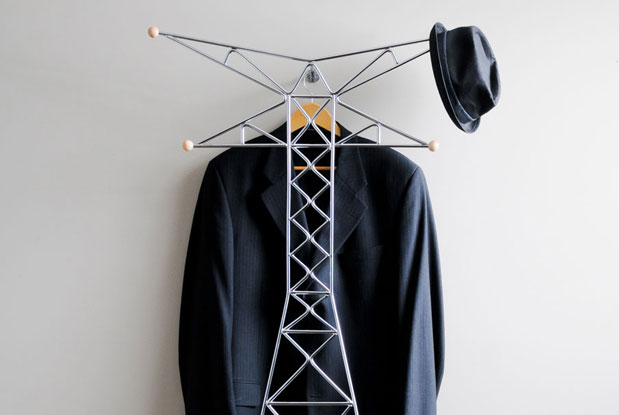
Meet four innovative exhibitors from this week’s Interior Design Show

0

This week’s Interior Design Show is bound to rouse every design lover out of their January slumps. The largest contemporary design fair in Canada, this year’s show is drawing the likes of design greats Piero Lissoni and the inimitable Karim Rashid (who also happens to be DJing at the opening night party). We chatted with four innovative young exhibitors who have produced some exciting work of late: Alex Jowett of Contact Voyaging Co. and Atelier 688; Bettie Cott; Palette IndustriesSamuel Ho and Jason Wheeler of Wheeler’s Studio.

How did you get into design?

Alex Jowett: After travelling the world as a freelance photographer and writer for close to 12 years, I returned to Toronto to do an art show at The Spoke Club. After deciding to stay for a while, I fell into designing some lighting and soft furnishings at my studio Atelier 688. This later led to teaming with David Barclay to create Contact Voyaging Co.

Samuel Ho: The three of us [Samuel Ho, Ian Campana and Nathan Tremblay] studied together at the University of Alberta in the design program. After a few yearson our own, we ended up in Calgary and decided to start the collective there.

Jason Wheeler: I got into design at a very young age; I was invited to take part in an extended art program, which strongly influenced my direction in life. I started working on hot rods before transitioning into furniture design.

How does being Canadian influence your designs?

Alex Jowett: Well, I actually have more than one citizenship; so I would say my love of travel and the outdoors have strongly influenced my designs more than any one thing.

Bettie Cott: I grew up, like most Canadians, going camping and spending time outdoors, hiking, fishing and swimming. I gather a lot of inspiration from nature and have fond memories of campfires, landscapes and visiting my grandparents’ farm. I believe that many aspects of my childhood come up often during my design process and have a powerful visual effect in my work. 

Samuel Ho: As Canadians, we are heavily steeped in a rich melting pot of cultures we can borrow from. We also tend not to take ourselves too seriously — we sometimes like to translate that into our designs.

What is your design philosophy?

Alex Jowett: I recently read the book 'The Architecture of Happiness' by Alain de Botton, which basically states that one of the great causes of both happiness and misery is the quality of our environment: the kind of walls, chairs, buildings and streets we're surrounded by etc.  While this might be a bit simplistic, I do find it to be quite true; my philosophy is essentially that our environments can elevate our spirits on a day-to-day basis, so long as we are creating them to stimulate our personalities.

Samuel Ho: Most of Palette Industries’ design philosophy stems from emancipating theories, narratives and stories from substance-rich objects, breathing life into our designs beyond just form and function. We strive to construct unique situations that explore the intrinsic nature of own embedded narratives, personally and communally, creating a continuously evolving dialogue between the object, the individual and the environment. In other words, we like to tell stories through our creations.

Jason Wheeler: I like to design more on the industrial side of things, adding elements of modern design. I use color to bring attention to the piece and keep it playful. I always design with the thought of the piece being in my home, helping me stay true to my aesthetic.

What is your favourite material to work with and why?

Alex Jowett: I can't say I have a favourite material really.  My main interest is in contrasting materials and colours. [I like] taking old, sometimes discarded materials, ideas etc. and making something new and unexpected.

Bettie Cott: I mainly work with wood and metal, but also enjoy using textiles and other materials in my work. I like attempting to combine different materials in interesting ways. The opportunity that wood gives you to manipulate its properties is very intriguing and I love trying out various methods and techniques. It's incredible to watch a straight piece of wood wrap around a curved form after sitting in a steam box for a couple of hours. It really is a genuinely impressive material.

Samuel Ho: I think I speak for the group when I say any type of hardwood. From its raw form to being sanded and finished, the natural feel, smell and strength of it still affords so much about its origins.   

Jason Wheeler: I like to work with hard woods. I believe there is something rooted deep within us that draws us to the material. Working with it is really relaxing.

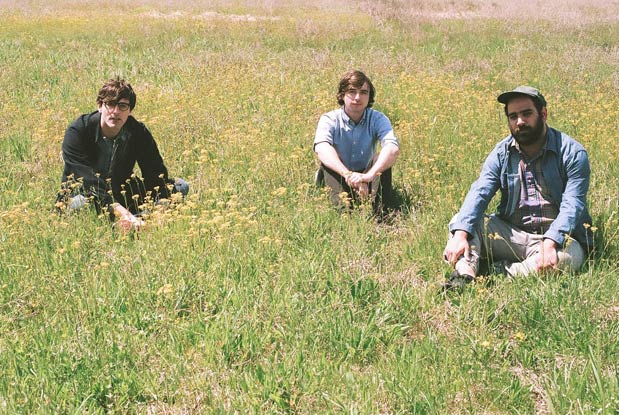
Real Estate rocks a sold-out crowd at Lee’s Palace

0

Real Estate has grown up quickly. Just this past summer, the band was playing to a half-attentive Toronto crowd at The Garrison. On Friday night, only half a year later, they quickly sold out Lee’s Palace, and this time around the crowd was completely tuned in.

When Real Estate was here last, they were road-testing songs that would later be released on their critically acclaimed new album, Days. The songs sounded good, but they hadn’t reached their full potential yet. At Lee’s Palace, the band sounded excited and confident. Even the notoriously shy Martin Courtney (lead vocals, guitar) seemed to be fully embracing his role as the band’s frontman.

The opening pairing of “Green River” and “Suburban Beverage” set the tone for what would be an energetic evening. Beers were raised as Courtney, lead guitarist Matt Mondanile and bassist Alex Bleeker chanted off party-ready lyrics: “Budweiser, Sprite do you feel alright?” Only two songs in, and Real Estate already had the audience in their pocket.

Next came a string of new tunes off of Days. Both “Municipality” and “Green Aisles” had the band locking into hypnotic, multi-guitar-driven grooves that had the complexity of good Built To Spill jams. Bleeker was turned way up in the mix, and his bouncy bass lines helped fuel the jams. An avid and outspoken Phish fan, you could tell Bleeker was channeling his inner Mike Gordon with his super melodic playing.

Towards the end of the set, Bleeker teased the crowd, claiming that “All The Same” (the longest song on Days) would be played for 25 minutes. That didn’t happen, but the song’s concluding jam was stretched out as the band ventured through numerous tempo changes and intertwining guitar melodies. It was here that Real Estate proved that showy guitar solos aren’t integral to great instrumental segments.

Before the end of their set, the audience sang Courtney a heartfelt rendition of “Happy Birthday,” though I’m still unsure whether or not it was actually his birthday. It seemed like more an ongoing prank led by Bleeker, as Courtney was hesitant to come on stage during the song.

Real Estate then played a quick rendition of “Kinder Blumen,” a song that’s apparently about German hippies in WWII, before launching into their most popular song, “Beach Comber.” Time and time again this song has proven to be the perfect show-ender, and it was no exception on Friday.

Early in their career, Real Estate were labeled mellow and shoe-gazey, mostly thanks to under-produced albums. The popularity of Days has given the band a newfound sense of confidence, and it’s only a matter of time before they’re labeled as one of the most exciting live bands on the touring circuit.