Home Blog Page 800

Townhouses a concern on York Mills Road

0

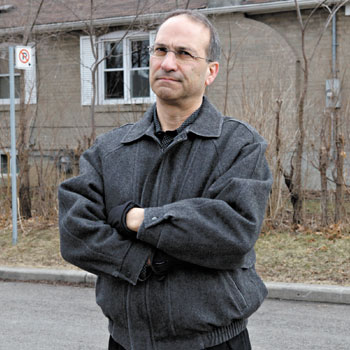
Local residents fear that recent developments on Bayview Avenue that were rejected by city staff and Toronto City Council but subsequently approved at the Ontario Municipal Board may have paved the way for townhouses on York Mills Road. According to local Mitchell Shnier, a developer’s agent informed the St. Andrew’s Ratepayers of a planned application to build 11, three-storey townhouses on York Mills Road, three blocks west of Bayview Avenue.

“It’s completely unacceptable to be doing that,” Shnier said. “It’s against the zoning. Nobody driving by, nobody that owns houses nearby would want it to happen.” Beyond the issue of compatibility, Shnier identified aesthetic, privacy and setbacks as key concerns with respect to townhouses. In light of the time and money required to fight these applications individually, his group teamed up with other local residents’ associations and went to city staff and the local councillor to see if anything could be done to deal with them more comprehensively.

Steve Forrester, a senior planner for City of Toronto: North York District, confirmed that the site is currently zoned for detached single-family homes and would need to be rezoned to permit townhouses. But, under the official plan, this area has a neighbourhood designation, which does allow for townhouses. If a rezoning application came forward, Forrester said, it would be measured against a number of policies.

“One of the criteria is that new development should respect and reinforce the existing physical character of the neighbourhood,” he explained.

When applications for townhouses on Bayview Avenue started coming in north of Sheppard Avenue, challenging the city’s policies there, it conducted a study of the area. It’s something the city could consider doing here, Forrester said.

Coun. Jaye Robinson could not comment on the anticipated application, as she was not approached by the developer’s agent.

Former Olympian opposes policy to close arts stream

0

Bill Crothers, a former Olympic athlete and York Region trustee chair, has criticized the school board for considering a policy that would close the exclusive arts stream at Baythorn Public School.

Crothers, who served as a York Region trustee for 22 years and the trustee chair for 15 years, said Policy 316 does not make sense.

“The policy is contradictory,” Crothers explained. “It’s a red herring.… To me, the logical thing is to replicate the program.”

The exclusive arts stream at Baythorn has been at the centre of a battle between parents and trustees. Trustees claim Policy 316 was drafted to promote equity and consistency among all students — something the exclusive audition process did not uphold. But parents argue that the 25-year-old program promotes their kids’ learning and appreciation of drama, dance, music and visual arts.

In an open letter to trustees, Crothers challenged their proposal to scrap the exclusive program.

“One of the negatives that first impacted the Toronto Trustee Board was the belief, and the practice, by the elected trustees that they knew more about education than their senior staff .… The most recent example is the initiative by the [York Region trustees] to terminate the elementary arts program at Baythorn in Thornhill,” Crothers wrote in the letter.

Crothers added that while he is no longer directly involved with the school board, the policy prompted him to take action.

“The board believes that all students should have the right to learning environments in which they feel motivated, accepted, inspired and valued,” said York Region’s current trustee chair, Anna DeBartolo.

Parents who were at a board meeting on Feb. 21 said they were denied the right to speak, on the grounds that the trustees had already heard their concerns. “They’ve barred all concerned citizens from actually providing input in this lovely democratic process,” said Mitchell Levine, whose daughter is enrolled in the arts stream at Baythorn.

DeBartolo has maintained that she continues to respond to comments from parents.

“There is no reason why all Baythorn students could not continue to enjoy a vibrant arts program within its new context as a community school,” she said.

But Levine disagrees and said, “If this policy is passed, it does away with all specialty programs, any unique teaching methodology,” Levine said. “Some don’t learn in a traditional classroom setting.”

The policy decision is expected in March or early April.

The parenting tool that does it all

0

Curfews are one of my all-time favourite parenting tools. Let’s think of parenting like a building project (We’re building great people!), which requires us to have a kit bag filled with good strong tools. Tools that withstand the heavy lifting that the job requires.

What defines a good parenting tool for adolescents? For me, it ought to do several jobs. I like a multi-purpose tool — like a multi-head screwdriver. A good tool does three things. A good parenting tools teaches the child something important. It also communicates that we, the parents, care deeply about them. And it should grow a skill that they’ll need in order to grow up to be great people.

Curfews offer all three of those marvellous opportunities for parenting. Many parents hate curfews because they’re such a battleground. I, rather, see the curfew as an opportunity for us, the parents, to do some of our best work.

It starts with being clear about who is the parent and who is the child. We do not parent by committee or by consensus. We, the parents, are in charge. That’s our job. We sometimes wish to shirk it because it’s painful when they get really mad at us for setting limits, but we don’t negotiate curfews, because our goal as parents is not to be liked. It’s to parent. We’re the ones in charge and it’s not fair to our kids to get into a partnership that ignores our responsibility to be the ones doing the teaching and leading.

A curfew lets us teach, show how much we care and help them grow a skill. First we teach by setting a firm limit. “Your curfew is midnight. If you miss curfew you’ll be grounded next weekend.” From our refusal to back down they learn to accept limits. Which is step one, the precursor and precondition, to acquiring internal limits. Being teenagers, they will break those limits and come home after curfew. Our next job is to enforce the consequence — calmly and without anger. From our refusal to back down on the consequence, they learn to live with limits. Which gives them the chance to develop their own internal limits. They’ll need those very soon.

Second, the curfew, and its consequences, show how much we care. Teens who have no boundaries feel like they’re free floating in space — not a comfortable feeling. Teens experience boundaries as annoying — and safe. Their happy place is to be pushing against boundaries and complaining about them. The pushing isn’t pretty, and when we stand up — lovingly — to them, they know how much we care. Despite appearances to the contrary, it helps them feel loved. If you’re lucky they’ll tell you that when they’re 21.

And third, the curfew grows a skill they need for life. When parents provide external regulation of our kids’ lives, it allows the kids to develop the skill of self-regulation. Making healthy decisions about sleep, what you eat, ingest or inhale is called self-regulation. When kids go off to university, if they haven’t learned the skill of self-regulation, they tank.

And self-regulation is a learned skill. It comes with practice. Which comes after a parent who cares enough and has forced the teen to learn it via external regulation. Which is a fancy way to spell C-U-R-F-E-W.

Parenting columnist Joanne Kates is an expert educator in the area of conflict mediation, self-esteem and anti-bullying, and she is the director of Camp Arowhon in Algonquin Park.

Down to the wire

0

Is wireless technology in schools harming children? That was the question posed recently by the Toronto Catholic District School Board. So what gives? We tracked down Tony Moots, PhD, an adjunct lecturer at the Dalla Lana School of Public Health at the University of Toronto’s faculty of medicine. He has been studying such things since the early ’70s when he started work at Health Canada, looking into the bio-effects of microwaves.

Schools are worried about the health risks associated with Wi-Fi, should they be?
Well, I mean, I think it is reasonable for everyone to be concerned about things they don’t know about. It is quite natural. To me, that’s the basis of science.… The issue comes down, in my opinion, to more of a matter of psychology or sociology, you name it. People either having a willingness or not to accept authority in certain areas. Until they learn, it is not surprising that people may express concerns.

OK, but what is the answer?
There are no health effects. That is the scientific consensus coming from all the agencies across the world that are involved in establishing these guidelines.

Are Wi-Fi and cellphones governed by the same guidelines?
It is the same kettle of fish.

Has anyone studied the long-term, low-exposure risk?
That’s a good question. I guess the short answer is that we don’t know 100 per cent. We have experience of this technology pushing 100 years, if you think of when the radio was first invented.

So over that period of time, scientists would have noticed something if it were there?
It would be similar to X-ray technology at the outset. It wasn’t clear what might be detrimental effects. Very early on, dentists were probably the first major group of people that showed up with detrimental effects, and that led to a better understanding of what consequences of exposure to radiation were. In the beginning, dentists were holding films in the patients mouths with their fingers, and they got overexposed, and that led to cancers and extreme effects of aging of skin tissues akin to sun exposure.

What kinds of research methods are used?
You name it. You look in the literature and it is everything from atomic, molecular, cellular tissue level to population level — all sorts of study over the years. From a scientific perspective, we are just trying to see if there is anything — but nothing has been established.

Can the research keep up to the pace of change?
That’s a good point. I guess it does or it tries to, but it can’t absolutely. Again, back to the X-ray example … it was three or four decades before dentists showed up with the effects they did get.

Do you exercise any caution regarding wireless use?
No, personally I do not. I have grandkids now, and the youngest just turned one, and the oldest is four now. I don’t have the slightest qualm.

What about when the World Health Organization said using cellphone technology could increase the risk of developing certain tumours?
That is another important point. An agency called IARC recently advanced cellphones to, I think, category 2B, and what 2B relates to is possible human carcinogen. But, to give some context, coffee also falls into that same classification. It means that there are studies indicating associations, but the associations are not established.

Do you think people are blowing it out of proportion?
The bottom line is, from a scientific perspective, it is reasonable and gives scientists an indication of where careful research should look more closely. But the fact is that even a heightened awareness to some is deemed to be beyond the pale already.

Is this turning into a ‘don't sit too close to the TV’ kind of thing that is more about rumour than hard evidence?
I truly think so. If you want to do some rooting around, look at some of the websites and what all they are connected with — you’ll find things like crystals and so forth.… To me, I find that kind of distressing, the level of credence those approaches are given.


Council approves townhouse complex

0

Richmond Hill Council has approved a proposal for a townhouse complex, just south of Bayview Avenue and 16th Avenue, despite protests from the local ward councillor and neighbouring residents.

Originally submitted by Olimpia Del Zotto, the proposal sought zoning bylaw and official plan amendments to permit a 95-unit townhouse complex but has since been reduced to 69 townhouses and four detached houses at 24 Briggs Ave. But Ward 6 councillor Godwin Chan was the only one to vote against the proposal and said that, although the revised proposal addressed many of his and neighbours’ concerns, it is lacking in one major aspect — traffic.

“The traffic is not something that we were given enough information on to make the decision,” Chan said. “I still have concerns, and certainly there are concerns from the neighbouring residents, too.”

Chan said there is only one way in or out of the complex, which limits accessibility for emergency vehicles. To accommodate the vehicles, Chan said the developer and planners need to come back with an alternative emergency route.

However, the town’s planning staff, including traffic engineers and fire services, reported that they had no outstanding concerns and were satisfied with the revised proposal from the developer.

Chan still disagreed and said, “I still feel that for 73 units, from a safety standpoint, only one way in and out is not good enough.”

Neighbouring residents, including Anne Kessler, said the complex will add more traffic to an already congested area.

“There are already huge lineups because of the traffic, and I can only imagine this will get worse,” she said. “Another [development proposal] on Bayview is around the corner, and we’re sandwiched in between.”

Chan said the next step will be to consult with transportation staff, and he added, “It is my duty to stand up for the residents and advocate fearlessly for their concerns.”

Developer challenges Lawrence Heights plan

0

A developer appealed the Lawrence-Allen Secondary Plan to the Ontario Municipal Board (OMB) earlier this year and said his development proposal was unfairly overlooked by council.

Property owners of 50 and 52 Neptune Dr., located just north of Bathurst Street and Ranee Avenue, in the heart of the Lawrence Heights neighbourhood, originally submitted a rezoning application in 2009 to permit a 14-storey condominium and approximately 190 units. But in 2011, councillors approved amendments to the official plan to accommodate the Lawrence-Allen Secondary Plan — an initiative to revitalize and redevelop the Lawrence Heights area’s social housing community — further complicating the developer’s plans.

Coun. Josh Colle said not only did the developer have ample time to voice concerns, but its application is not suited to the area.

“There is probably not another plan in Toronto’s history that has had more consultation,” Colle said. “They’ve had dozens and dozens of opportunities to be involved, and they chose not to.… This process has been going on for three years. It really was far too little too late.”

However, David Bronskill, counsel for the developer, argued the process was unfair, as the Lawrence-Allen Secondary Plan was approved after their original rezoning application was filed.

“It is not fair or appropriate to use the Lawrence-Allen Secondary Plan process to create new site-specific policies that could frustrate our clients’ rezoning application, especially without actively consulting our clients,” he said.

Colle said he and residents think 14 storeys is too high for the area, especially on a side street off Bathurst Street, largely due in large part to a nearby synagogue, seniors’ home and school.

After working on the plan for years, Colle added that he was disappointed and said, “Once someone goes the OMB route, it’s pretty much out of my hands at that point.”

Parents up in arms over school boundary changes

0

More than 100 elementary school children are being forced to relocate after trustees announced their school had exceeded capacity.

Parents and students from McKee Public School, just north of Yonge Street and Finch Avenue, were told that overcrowding prompted the boundary changes. Their children will be moved to Finch Public School, near Bayview Avenue and Finch Avenue, in September, much to the dismay of parents.

“What was really upsetting was the way the trustee and the Toronto District School Board (TDSB) handled everything,” said Anu Gupta, whose 4-year-old son and 6-year-old daughter fall within the new boundaries. “We were given six months’ notice. They’re being kicked out with no consideration.”

Gupta, alongside other parents, proposed building portables as one method to ease enrolment pressures. However, McKee’s trustee Mari Rutka disagreed and said that with the current 744 students at the school, there is not enough space.

“The problem with McKee is that it has a very small schoolyard,” Rutka said. “The yard really can’t take anymore portables. If we put in more, there won’t be any room for the children to play.”

Many families moved into the area solely to be within McKee’s boundaries, including Gupta, who said that in order to attend McKee she could not buy a condo built after 2003.

“I had to do my due diligence to ensure the building I bought in would let my kids go to McKee,” said the single mother. “That had a premium: I paid $20,000 more for my kids to go to McKee only to find out a little more than a year later they cannot go to the school anymore.”

Because of its high Education Quality and Accountability Office of Ontario (EQAO) test scores, McKee appeals to parents. Some even go as far as to forge documents, Rutka said.

“There are people that deliberately lie to get into the schools,” said Rutka. “They falsify documents. We have people willing to turn over guardianship of their children to someone else who lives in the area. There are stories of condo managers falsely verifying [families] live in the condo, when they don’t, for a little sum on the side. We’re not the RCMP. We can’t prove that,” she added.

Rutka explained that the problem stems from intensification along the Yonge-Sheppard corridor, originally intended to ease urban pressure on the downtown core. But the TDSB was not prepared for the increase in population, which has seen many young families steadily moving into the area for the past 25 years.

Further boundary changes will be facing the area in the coming months, Rutka added.

Bold theatre that asks the big questions of our time

0

How often do we get the opportunity to wrap our heads around the big questions of our time and really flex that muscle between our ears? Seeds is that opportunity. It is a stunning and vastly important piece of documentary theatre by the much-admired Montreal playwright Annabel Soutar, and it is only onstage until March 10 at the intimate Young Centre for the Performing Arts in the Distillery District.

As the artistic director of the Porte Parole theatre company, this gifted young writer has written, rewritten and rewritten again this intriguing work since 2005 — yes, more than seven long years. It tells the story of an established Saskatchewan farmer named Percy Schmeiser and his four-year court battle with ginormous biotech corporation Monsanto.

Now in its umpteenth reincarnation, this production includes the benefit of the writing and directing assistance of Chris Abraham, the artistic director of the phenomenal Crow’s Theatre company. His deeply moving and beautiful production of John Mighton’s The Little Years, at the Stratford Festival last summer, was the most satisfying show in that stellar company’s season.

Seeds is fun to watch, as the seven-member cast (every one of them superlative performers, including Eric Peterson, arguably the greatest male actor in Canada today) plays nearly three dozen different characters — from the Bruno, Sask., farmer with the almost-comical name of Schmeiser to scientists from Canadian universities to a Johannesburg radio interviewer. Even the playwright herself, Ms. Soutar, is included, along with her husband, struggling to raise their two daughters while his wife hops across Canada and across the globe interviewing dozens of people to put together this documentary play we’re witnessing.

The Big Question behind Seeds is truly one of the biggest of our time: what are we doing to our food? Should scientists be deciding what and how to “improve” the food that you and I put into our mouths and stomachs — and those of our children? Are giant companies like Monsanto “playing God” with their products for mere profit, or are such firms truly making the world safer for its billions of inhabitants?

Seeds is frequently a highly praiseworthy work of art. It is not always easy to follow the scientific arguments and the legal disputes, but the writing is scrupulously fair to both sides as well as occasionally very funny: Did farmer Schmeiser really steal the patented Monsanto seeds and plant them consciously across his hundreds of acres? Or were they innocently blown unto his land by God’s own breezes and storms?

Indeed, playwright Soutar opens this irresistible play with an actor walking into the audience, which is seated in front of the stage — where a giant screen shows us images of leaves, DNA, giant typed words such as “LIFE?” — and holding a microphone under the face of a sweet young schoolgirl. “What is life?” the performer asks the audience member, laying out the plot and theme of this vital play.

“Oh, animals … persons … God.…” replies the child.

Perfect.

For more information go to www.crowstheatre.com.

Avenue Road may lose some popular shops and restos

0

A recent application to build a seven-storey, mixed-use building on Avenue Road between Brookdale Avenue and Fairlawn Avenue has brought into question the future of the current shops and restaurants on that stretch of the upscale strip.

One notable address included in the plans is that of Bistro on Avenue, a popular chicken wing restaurant. The development plans propose to demolish all existing buildings, which would be replaced by a mixed-use building with commercial uses on the ground floor and residential uses from the second floor up. This would include 233 parking spaces with access from Brookdale Avenue and Fairlawn Avenue.

According to Coun. Karen Stintz, the property owners along that strip are still in talks with the developer. As for the application, she said it fits within the guidelines of the Avenue Road Avenue Study.

A preliminary report from city staff is expected to go to North York Community Council on March 20.

Band of the Week: The Victim Party

0

The Victim Party exists somewhere between homage and innovation, taking liberally from the punk rock canon and packaging it into a joyous fist-pump of danceable, sing-along anthems. The list of bands that current members have played for in the past reads like a downtown bathroom stall wall, coated in the stickers of some formidable GTA bands.

But despite their lineage — or maybe because of it — The Victim Party are masters of taking the old, familiar furniture of punk rock and arranging it into something new, vibrant and exciting. It’s impossible not to get excited when listening to their first full-length album, The Worst Party on Earth, which contains nearly equal parts pop-hooks and youthful snarl.

So, with that in mind, we caught up with lead singer Colin Lichti to talk about pop punk, this Friday’s release party at Sneaky Dee’s and how hard it is to get six people into the same room to write a song together.

First, can you talk a bit about how the band got together?
When Patrick and I were still in Hostage Life, we had the idea to do a poppier side-project with Adam — who I used to play with in Marilyn's Vitamins. After several false starts we decided to try again after HL broke up. We wanted it to sound a little different than any of our previous bands so we asked my then-fiancée — now wife — Tabi to come in as a second vocalist. Somewhere in there we got the idea that playing in a band with Dean would be pretty fun, which it is. And, anyone who's ever been in a band knows that in order to even be remotely listenable you need a solid drummer, so we convinced Adam's brother, Kyle, who was, and is, still playing with Adam in The Little Millionaires to come abroad. The whole thing came together pretty easily because our mandate was to just have fun. Nothing about this band is very serious.

I know a lot of you have played in bands with each other in various capacities before. Has that made the song writing process easier at all?
When we started writing together, our mandate was to make it poppy, catchy and fun. We're lucky because we're all on the exact same page in terms of how we want the band to sound — there's no conflict about direction so we find ourselves churning out a lot of songs with little struggle when we actually sit down and concentrate.

A few of those bands have seen some amount of success. Do you think that's helped you out at all, or do you find yourself trying to escape the shadow of your former groups, so to speak?
It's helped in the sense that it's easy to get shows because between the six of us, we know a lot of people in the Toronto music scene. Other than that we haven't had to live up to, or live down, any of our past bands. 

The music seems a touch more poppy, more light-hearted than some of your previous outings. Was it a conscious decision to go in that direction?
It was completely intentional to be a pop punk band. 

So, the new album's coming out soon. How long have these songs been kicking around?
Some of the songs are really old. A few of them were Hostage Life and Bombs Over Providence songs that never really saw the light of day. 

How was the recording process?
Shawn, who was in Marilyn's Vitamins and Bombs Over Providence, and is the current Little Millionaires guitarist, recorded the album for us at the Lincoln County Social Club in Liberty Village over a few weekends in the early summer. It was an awesome time. Probably the most fun I've ever had in a studio. Anyone that's met Shawn knows that he's a super laid-back dude, and that makes him an incredible engineer and producer. He tells you what thinks of your take, but never comes off as a dick. 

What's next for the band? Any plans to tour?
It took a while for The Worst Party on Earth to be mixed and mastered just due to some schedule conflicts, so during that time we just wrote, wrote and wrote. As a result we have a 7-inch that we plan to record in the spring, and our next album pretty much completed. We hope to get both recorded and out this year. We're not trying to tour that much. I think of this band as like playing softball — it's just for shits and giggles. We get together, drink beer and practice, and every now and then we play a game. Life on the road can be kind of grueling and stressful and we're all about comfort when we party.

The Worst Party on Earth is streaming in its entirety here

The Victim Party are:
Patrick Mathers: Guitar
Dean Richards: Guitar
Kyle Cook: Drums
Adam Cook: Bass
Colin Lichti: Vocals
Tabi Irani: Vocals

Afternoon explainer: The leap-year media frenzy

0

Ever wondered why we have a leap year, who thought of it and whether you're working for free today? Clearly you have because it's the fifth most popular search term on Google right now and every news outlet is carrying the story. We grabbed a coffee and sampled the buzz around the net.


Feb. 29 comes every four years, right?

Yes. And no. According to the BBC’s impressively in-depth post about the subject of leap years, we get a Feb. 29 every four years, unless the year is divisible by 100, in which case it must also be divisible by 400. Confused? You can blame Pope Gregory XIII for that, he came up with the system in the 16th century. 

It's all Cleopatra's doing

A search for “Leap Year” on Twitter yields dozens of fixed-salary staffers musing on whether they're working for free today. If you're one of them and looking for someone to blame, National Geographic invites you to direct your ire at Cleopatra. Apparently, the Egyptians were among the first to use a leap year. At some point, pillow talk between Cleo and Julius Caesar must have turned to the general inferiority of the Roman's 350-day calendar, and when Caesar got back to Rome he tore the whole thing up and gave the Western world the 365-day system we still broadly use today.

It’s about frogs, too

Capitalizing on the amphibian connotations of the word “leap,” Toronto Zoo is holding Leap Frog Week. Until March 4, it's offering the opportunity to "get up close and personal" with species of frog never before seen in the zoo. Since one of those goes by the name Splashback Poison Dart Frog, we're not sure how strong uptake is going to be on that offer. 

Feb. 29 is a big news day

The CBC has charted the “many momentous things” that have occured on Feb. 29. Included in the list: Pierre Trudeau retired from politics, The Beatles won their first and only Grammy, and Hugh Hefner opened his first Playboy club in Chicago.

Chef Mike Angeloni’s breakthrough dish was beef tongue ‘love letters’

0

Some recipes are universal; most memories are not. The process of shaping raw ingredients into something palatable — and the events that surround this endeavour — can lead to all kinds of unforgettable moments: kitchen disasters, severed digits, epic struggles with newfangled culinary gadgets and, sometimes, personal triumphs. So why not ask some of the city’s top chefs for their most memorable recipes? Why not, indeed? No, really — that’s what we did, and will continue to do weekly.

This week, we asked Mike Angeloni, chef at L’Unita, to share his breakthrough recipe with us. As an alum of The Hoof Café and Splendido, Angeloni has spent time in a number of kitchens here in Toronto, and recently won a “Top 30 under 30” award from the Ontario Hostelry Institute. Herewith, Angeloni — who outs himself as a real nonna’s boy — shares one of his favourite pasta dishes.

Says Angeloni:

“Making pasta takes me back to my childhood, when my cousins and I were shipped off to nonna Angeloni’s in Etobicoke to prepare Sunday family dinner. I still remember those days; we were like a little army down in that basement, and I, being the youngest, was the source of entertainment for the others.

The pastas, the meats, the smells — the whole experience was just amazing! I still love making pasta, and at L’Unita, I have five different pastas on the menu every night — all of which are made in-house every day.

Love letters, the recipe I’m sharing with you, were among the many types of pasta we used to make back when I worked at The Hoof Café. When I cook, I love to use everything I can from an ingredient — whether meat, vegetable or even ends and scraps. Things that most people would normally just throw away. It’s a great way to use your creativity and have some fun with no worries about wasting expensive ingredients. 

The love letters were developed because we just had too many beef tongue scraps. The now-famous beef tongue sandwich at The Black Hoof was selling like crazy, and with that, we were sitting on a lot of trim. One day Geoff Hopgood (former chef of The Hoof Café, now owner and chef of Hopgood’s Foodliner) came to me and said that we need to find a way to use all of this tongue.

I remembered back to my days at Splendido, where I worked with Maurizio Verga (now chef at F’Amelia, and one of the best pasta makers in the city, in my opinion). Verga had showed me a pasta filling called “cassincelle,” which is made from the ends and leftovers of charcuterie. So Geoff and I set out to figure out this pasta dish, and this is what we came up with. 

I think pasta-making is one of the great arts in cooking, and it’s a nice way to bring your family together. Enjoy!”

Beef tongue love letters

Filling:

1 lb. cooked beef tongue trim
½ lb. cooked smoked pork belly (double smoked bacon works also)
½ lb. salami ends and trim (any kind works. Your local deli should be able to supply you with ends and trim for very little money)
½ cup extra virgin olive oil (this may seem like a lot but it’s not)
½ head garlic, sliced thin
1 onion, finely diced
2 sprigs rosemary1 cup white wine 
½ cup golden raisins
2 handfuls rocket, finely chopped
½ bunch parsley, finely chopped
1-2 tsp freshly grated nutmeg
2 lemons, zested
Salt and cracked black pepper, to taste 

Pasta dough:
400 g. o’o pasta flour
100 g. semolina 
230 g. egg yolks 
1 whole egg
5 g. salt
Water, as needed

Sauce:
3 tbsp. butter (unsalted)
½ lemon, juiced
1 parsnip, peeled and thinly sliced
1 handful dandelion greens, washed and picked
1 tbsp. honey
1 chunk pecorino romano 

Directions:

  1. First, in a large mixing bowl or on a clean counter combine the flour, semolina and salt and create a well in the center. Mix the egg and yolks lightly, beat them together, and pour into the center. Now using your hands, slowly incorporate the flour. As you are doing this, you may notice that the dough is too dry; in this case, add a little water, but be careful however not to add to much. Once dough comes together, begin to knead it until a smooth ball is formed, then transfer to a plastic bag or a bowl cover with a damp towel. Leave to rest for at least one hour.
  2. To make the filling, first place the olive oil in a pot and heat over a medium-low heat, then add the onions. Sweat the onions on low, ensuring there is no color (approximately five to ten minutes). Once the onions are translucent, add the garlic and rosemary and continue to cook for a further five minutes. Now that the garlic has cooked, add the wine (be careful: it will splatter up a touch), turn the heat up, add the raisins, and let the mixture boil for five minutes. Remove the rosemary, and pour the mixture into a dish and place in the fridge to cool.
  3. While the filling mixture is cooling, grind all of the meats through the large size die on a meat grinder. Prep all of the remaining ingredients and add to the meat mix. By this point, the onion mixture should be cool, and you can also add this to the meat mixture. Now put some gloves on, or, if you don’t mind getting a bit dirty, just give your hands a good wash and start mixing. Grab a little of the mix and give it a taste-check for seasoning. If you’re happy with the flavour, then you’re ready to start stuffing some pasta.
  4. Now, using a pasta machine, roll the dough down slow, working through the machine until you are happy with the width and texture of the dough, then begin to roll it down with the lowest setting on your machine. Using a knife, cut the dough into rectangles 3.5 by 4 inches (they should be very rustic). Now take a big heaping tablespoon of the filling, place in the center, and dampen the edges with water and fold over into a triangle. Place on a tray dusted with some semolina.
  5. Bring a large pot of water to a boil and heavily season with salt. In a large frying pan place 2 tablespoons of butter on high heat and let the butter brown. Add the lemon juice to halt the browning. Add five of the pastas into the boiling water. Add about five tablespoons of the pasta water to the pan and bring to a boil. Add the parsnip. By now, the pasta should be cooked. Add it to the pan as well the greens and honey and swirl in the remaining butter. Taste for seasoning.
  6. Now, place the letters on a plate, then add the parsnips, greens and finally drizzle the brown butter around the plate. Finish with coarsely grated pecorino and eat!