
Home Blog Page 663

The Music Issue: Hayden

0


Paul Hayden Desser is not dead. Far from it, actually. For two decades, the Thornhill native (better known simply as Hayden) has managed to slip in and out of music’s limelight.

He stopped touring in 2008, and after quietly releasing The Place Where We Lived in 2009, he declined all interviews and then practically fell off the radar. He was even declared deceased at one point, and by Wikipedia, no less. But now, our king of folk-rock is back.

No one is sure what it was that wrested Hayden from his hiding, although one could argue that life got in the way — not long ago the 42-year-old singer-songwriter became a father to a little girl. But his once-starved fans should now be satisfied — this past February Hayden released his hotly anticipated seventh full-length Us Alone.

And this time, he’s doing things a little differently.

For one, the majority of Us Alone was written at his home in Toronto and chronicles Hayden’s life and career. Warm, pensive, nostalgic and, at times, eerily dark, his latest album is a testament to the fact that Hayden has been contemplating heavy themes in the vein of a Leonard Cohen or Neil Young. Take “Instructions,” for instance, a track through which he instructs someone (who, exactly, is anyone’s guess) on how to dispose of his body once he’s dead, or “Almost Everything,” a throwback to his days playing small bars as a fledgling musician.

Of those eight tracks, Hayden says, “They're usually a mixture of storytelling, creative writing and elements of my life … things that are going on … that’s kind of generally my subject matter.”

Then, of course, there’s the whole record label change up. Whereas previous albums were released via Universal Music and his own Hardwood Records, this time, Hayden signed with Toronto-based mainstay label Arts & Crafts. The man is now in good company, joining the likes of Broken Social Scene, Feist, Bloc Party, Stars, Zeus, Cold Specks and countless other heavyweight bands.

The timing could not have been better, as this year also happens to mark a decade since Arts & Crafts’ inception, and the label is celebrating with a smorgasbord of events, the biggest being this month’s Field Trip music festival, which features top performers from the A & C roster at Fort York, where Hayden is one of a slew of top headliners.

Even the recording process itself had the singer-songwriter charting unknown territory and flirting with different instruments.  

“I think of myself as a part-time musician. Not like a serious player … you know, maybe I’m more of a songwriter in my mind,” he says before laughing. “I’m not like a studio-type musician.… I just feel that, when I add instruments to my recordings, I’m doing a very specific thing or my own thing.”

So it comes as no surprise that, when laying down the tracks, he strayed from the typical acoustic-based songs we’ve grown accustomed to and instead decided to tickle the ivories.

“There’s actually only one song with acoustic guitar on it. It’s not so much experimentation — that’s another strange way that I work,” he says of the new record, on which he played almost every instrument, including guitar and piano.

Years ago, back when he was growing up in Thornhill, Hayden remembers his first and only street hockey game, played with fellow 905er Jian Ghomeshi, host of CBC radio’s Q and who grew up only about a block away from Desser’s.

“I was never a sports person at all, and my recollection of street hockey was one game that I ever got involved with, and I do believe he was there," Hayden recalls. “It was the quintessential moment of a bunch of people between eight years old and 12 years old, and there’s two captains, and they’re both picking teams — and it’s that moment where no one picked me. So the final captain had to pick me because I’m not athletically inclined. I think Jian was picked a lot earlier than I was. Or maybe he was even one of the captains!”

As for being back on the road, Hayden says that could be fleeting.

“I’m just one of those people where too much of anything gets irritating. It’s still fresh and we’re still having a lot of fun with it, but even in the best scenario, for me, probably months from now, I’ll be desperate to record and start writing again.”

Hey, we’ll take it.

Kensington Market’s Hogtown Charcuterie closes out of the blue; Rasta Pasta takes its place

0

After opening in Kensington Market’s El Gordo food court last November, Jamaican-Italian food stand Rasta Pasta will soon move into more permanent digs at 61 Kensington Ave., in the spot formerly occupied by the just-shuttered Hogtown Charcuterie.

“Right now we’re renovating,” says Rasta Pasta co-owner Magnus Patterson, “but we plan on opening before the next Pedestrian Sunday on June 30.”

The new space is getting a facelift, and the addition of seating out front will appeal to those who demand instant gratification.

In terms of the food, patrons can expect an expanded menu, with more pasta, more vegetarian options and new picks like escovitch and steamed fish.

“It’s such a small food court,” says Patterson of his current space, “so we can’t do what we want.”

Rasta Pasta’s signature jerk chicken — which is marinated for a couple of days before being cooked in a charcoal drum — will remain a menu highlight.

Rasta Pasta, 647-501-4505

[h/t @coreymintz]

Update, June 5: Hogtown Charcuterie has indicated on its Twitter feed that it is currently looking for a new, bigger space. The business is still operating on a wholesale level and will be appearing at The Junction Farmers Market on Saturdays.

Sewell: is it time for the ’burbs to pay their fair share?

0

Just as a stopped clock gets the time right twice a day, someone with whom you fundamentally disagree can forcefully say something revealing. That’s how I felt when I came across these words in the Globe and Mail, straight from the mouth of Mayor Rob Ford at a council meeting in early May. He was replying to a question from city councillor and TTC chair Karen Stintz.

“You don’t support subways. I support subways. You support LRTs. I do not support LRTs. You support streetcars. I do not support streetcars. Fine, you support tax increases. I don’t. You support higher fees, implementing user fees, implementing new taxes. I don’t. We’re two different systems.”

Mayor Ford’s system seems to be one where his subway wishes are funded by others. He doesn’t like the idea that you have to pay for things you want.

Low-density communities are never able to generate the revenue to pay their costs, and they never would have been built if subsidies had not been put in place.

It was a few years ago, when writing the book The Shape of the Suburbs, about the development of Peel, York and Durham regions, that I realized that those low-density suburban communities were founded on the principle that they should not have to pay their own way.

The practice of suburban subsidies started with the first large corporate suburb, Don Mills, in 1952. 

North York Council didn’t have the money to provide the sewage services needed for the project, so the developer, E. P. Taylor, who saw the new style of development as something of a gamble, anted up the money. That got him the approval he needed, and the North York government was not out a penny.

When Mississauga needed a sewage and water system in the late 1960s to service the astounding amount of new low-density development, it pressured the province to build it — without servicing, development would never happen.

The province shouldered the cost of the South Peel servicing scheme, providing a very large subsidy for sprawl.

A few years later, the province agreed to give the same kind of subsidy to build the “Big Pipe” in York Region and Durham.

No formal accounting has been done, but I estimate the subsidies put in by the province for these services amounted to some $1 billion.

Ever since, suburban politicians have been hooked on subsidies as a way of life. 

Now, when it is apparent that low-density communities can not provide viable transportation options, suburban politicians demand money from the province.

Mayor Rob Ford wants subways in Scarborough, and he thinks the province should pay for them. Mayor Hazel McCallion wants the province to fund $1.5 billion for an LRT running through the middle of Mississauga.

It didn’t used to be that way.

The former city of Toronto and Metro worked on the principle that local government had to pay its own way.

Development had to be dense and compact enough to generate the property taxes and other charges to cover the costs of water and sewage services, roads and community centres and services. Toronto’s Yonge Street subway was funded with the surplus that the city’s transit system captured during the Second World War. (Indeed, the TTC broke even, meeting its costs from the fare box, until 1972 when the two-fare zone system was abandoned and service to the suburbs was expanded.)

The newer system — Mayor Ford’s system — is to get someone else to pay. It’s a bizarre way to run a city, but there seem to be a lot of politicians who treat this as a first principle.

The old-fashioned political system says that if we want to build more transit, we’ll need to pay for it. That means raising taxes — property taxes, sales tax or whatever — or levying tolls.

Being bold about the link between expenditures and revenues might be a brave thing to do today in the public sector, but isn’t that precisely what we need right now?

The Music Issue: Lights

0


One of five children born to missionary parents, Lights grew up in the Philippines and Jamaica before eventually settling in Toronto. She released her first record in 2008 (a few years after securing her first publishing deal — at 16 — in 2003). The album, a self-titled effort, is dance music driven, as well as pure pop, and the singer was well on her way to becoming a female Bieber.

In 2009, she snagged the Juno for New Artist of the Year, a feat that might have cemented her place in pop as a top prospect, except the singer had different ideas. For instance, she plays guitar and piano but isn’t much for choreographed dance steps, and, despite the accolades, her latest album, the gritty Siberia, released in 2010, has rough, experimental edges surrounding every bright chorus. She even worked with a pair of beat makers called Holy F–k. Suddenly, you weren’t so sure you wanted Lights left alone with your kids.

“I didn’t change genres but evolved it, twisted things. You can’t always aim for the same people. You have to bring in new ears, and those that don’t walk along with you, probably wouldn’t have anyway,” says Lights, who was born Valerie Anne Poxleitner but has already legally adopted her stage name. The kid’s nothing if not all-in.

When Lights finished Siberia, she loved it. Her record label, however, was less than enthusiastic, and she was dropped from her deal stateside. This was after she’d already spent years in the business, but the singer remained undeterred. Rather than switching her vision, she changed labels, and the album was released without a single drumbeat being tweaked.

“You can’t get too overwhelmed with the politics, that’s the dark side of music, the least creative side,” she says. “If you get too overwhelmed with the business and numbers, you forget why you make music in the first place.” 

Although the dance music she makes has suddenly become Top 40, Lights is again switching directions. Her new version of Siberia — released last month — is entirely acoustic, featuring a string section, guest vocalists and arrangements that best represent how she originally wrote the songs. While pop stars are competing to write the next “Call Me Maybe,” Lights is channeling Fleetwood Mac. She says the new record sounds like the music her father used to play for her when she was young.

“I can remember the specific moment I fell in love with music when I was a kid. In the Philippines, I used to get scared at night and it was hard for me to fall asleep. But every time I had a problem sleeping, my dad would play his acoustic guitar and everything would go away,” she says. “I realized then, and I must’ve been like seven years old, but I realized there’s power in someone playing, how it’s affecting me and makes me feel safe, much more than someone just saying, ‘You’re fine.’ It touches you in places that words can’t, and that’s when I decided to play music. It’s really a dark art.”

A resident of Midtown, Lights says she likes living north of Bloor Street where she’s a few stops on the Yonge line from the bars of Queen Street and the clubs of Richmond but still can escape whenever she wants to.

“My area is nice because it’s close to downtown, but it has an old, residential feel, which is much more relaxing than being in the thick of it.”

So far, Lights has staked out an unusual path, but she’s been rewarded for each difficult step that she’s taken. Although Siberia was greeted with problems from her label, it was highly regarded by critics and even nominated for the Pop Album of the Year Juno.

The acoustic record is just one more curious step along her uncharted journey, and she still isn’t sure where she’ll wind up. Asked about her next record of new material, the singer admits that she’s clueless.

“I feel like I’m 17 again and trying to figure out what I want to make. I’ve written a lot of songs, but nothing’s right and it’s frustrating but makes you realize you’re not going to settle for making the same thing over and over again,” she says. “There’s so many things that I feel like I’ve already done. It’s frustrating, but I just have to rediscover myself once again, and then triumph.”

360 Screenings blends live theatre with cinema

0

It’s time to get on board with 360 Screenings lest it ride a wave of excitement and intrigue without you. The immersive, theatrical and mysterious movie experience presents its fifth iteration this weekend, expanding on the four previous events and offering something decidedly different.

For the uninitiated, 360 Screenings looks to place you within a film classic (cult or otherwise), bringing the world of the movie to life using actors, props, set decoration and an exceptional level of interaction. Guests chat with actors playing parts from the film — be it main characters or bystanders — while drinking and noshing and engaging as many elements as possible. Each event has been held in a different site in the city.

When you buy a ticket, however, you won’t know where the location is until 24 hours prior, and you won’t have a chance to know what the movie is until you show up, and even then you may not fully realize it until the credits. As a new installment approaches (Friday was a sold-out show, but there are two more shows today at 2 p.m. and 7 p.m.), excitement is building for which film will be revealed.

“We basically had the whole event planned for this one before the [last] screening,” says Ned Loach, co-founder and artistic producer of 360 Screenings. Loach and co-founder Robert Gontier began the series nearly one year ago at the historic Burroughes Building on Queen West.

There is a great deal of planning and thought put into this and every event. “We knew we wanted to do this at this venue, and it’s a film we wanted to do since the very beginning,” Loach says. “It’s a bit of a new genre, and as you’ll see, it has a very distinct setting.”

That’s about all the help you’ll get in trying to figure out what the secret movie is. In addition to learning the location but a day before, guests are told what to wear, and what, if anything, to bring or say. The second installment saw people dress in black and report to the Fermenting Cellar in the Distillery District for what turned out to be Fight Club, while the third installment, which took place near Halloween, was at the Berkeley Church and featured 28 Days Later.

“With each of the films, we challenge ourselves to try and think of new ways of immersing our guests and augmenting our interactions,” Loach says.  “We plan our season to offer a wide range of genres and ways to use historic buildings in Toronto.”

With about 250 people in attendance for the last event, held at Artscape Wychwood Barns on Valentine’s Day and featuring the whimsical French romance Amélie, the fifth iteration is being held at a smaller location, but it now offers three shows. The first was held on Friday night, and participants were asked to hold their tongues until the two Saturday shows are complete.

While it’s the same event at each of the three shows, Loach explains, you may not necessarily get the same experience each time. “Each person is getting an intimate exclusive scene. If you are going with a group of people, everyone will get their own special experience.”

Loach and Gontier are already working on new installments of the show, and they’re always looking to expand and create unique and memorable movie-going experiences: more performance, more interaction and more possibility. And of course, lots of anticipation.

“This is gonna be a fantastic film,” Loach says.

360 Screenings, May 31 – June 1

Coming soon to Leslieville: Bero, a new restaurant from chef Matt Kantor

0

Toronto has been waiting for a restaurant from chef Matt Kantor for a long time now. After his plans for a west-end Spanish-influenced restaurant called Baiko fell through last year, the man behind Secret Pickle Supper Club and Little Kitchen catering service has partnered up with the owners of The Commissary to open Bero, a new restaurant that’s set to launch in July.

Bero will be opening at 889 Queen St. E., in the space currently occupied by The Commissary, so fans of that place will have to bid it adieu. Kantor and his team will be giving the place a minor physical revamp but a major culinary one — the menu will be completely different.

“A lot of people think of me as a Spanish cook,” Kantor says, “and that will be the beginning of this restaurant.”

But the food won’t be a straight-up Spanish, he says. It will have a myriad of other influences, mostly European. Kantor will be heading up the kitchen as head chef.

The restaurant is set to open by July 10.

Bero, 889 Queen St. E.

Tony Aspler’s Weekly Wine Pick: a Prosecco from Toronto restaurateur Franco Prevedello

0

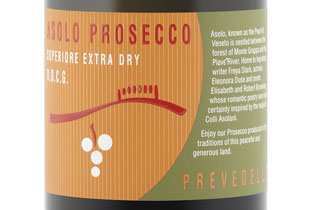
This is restaurateur Franco Prevedello’s own Prosecco, grown in his hometown in the hills above Venice. Almost water-white in colour, this delightful sparkler is off-dry with white peach flavours; elegant and refreshing with good length.


Prevedello Asolo Superiore Extra Dry Prosecco, 2011, Veneto, Italy, $17.95.
Vintages #262881

Post City Magazines’ wine columnist, Tony Aspler, has written 14 books on wine and food. Tony also created the Ontario Wine Awards and has been inducted into the New York Media Wine Writers’ Hall of Fame. He can be heard on 680News.

Shop Talk: Rinascimento opens two locations in the GTA

0

Featuring womenswear made exclusively in Italy, Rinascimento recently opened its doors in two GTA locations — the Promenade and Sherway Gardens — on May 1. The new shop specializes in fast fashion (“rinascimento” is an Italian term that translates to “rebirth”), which means it surveys the current trends in the fashion market, then creates clothes and gets them to the buyer as quickly as possible.

On one side of the coin, this means the clothing within the store is always current and on-trend. Fast fashion also tempts customers to frequently return to a store as there may be new clothes on the rack that were unavailable two or three weeks ago. However, on the flip side, this makes the clothing fall under the “buyer beware” category, because expediency is the priority.

As a result, Rinascimento is a store for the knowledgeable fashion consumer. The store’s collections provide customers with up-to-date trends, but it’s up to the consumer to ensure that the fit and functionality of the clothes work to their benefit. And though the fast fashion pieces are from Rinascimento’s own line, customers will find other labels such as Gil Santucci, Imperial and Northland on the racks, all labels that keep in line with Rinascimento’s high-end European styling.

Rinascimento’s selections range from trendy T-shirts with floral prints to business wear to formal dresses, along with a few pieces that can be used to transition from afternoon brunches to evening cocktails. On one rack hangs a flowing Rinascimento dress (currently on sale for $99) with silk lining and a polyester front in three colours: blue, black and coral. In the formal section hangs a polyester black-and-white dress complete with a chain belt (also on sale for $99), perfect for the woman searching for that Audrey-Hepburn-in-Rome look.

Accessories and handbags are also available. Earrings, jewelled bracelets and necklaces hang on the front table, and on the back shelf are a black suede purse ($189), a leather tangerine handbag with gold accents ($225) and a beige leather purse with laser-cut details along the top ($259), among others. There are also numerous shoes to match your outfit, from ankle-cut leather boots with metallic accents to leather knee-high boots to your average heels and pumps.

If you consider yourself a vanguard fashionista, one of the two new Rinascimento locations could be up your alley. You might not leave the store with a handful of shopping bags, but at the very least, you’ll leave with knowledge of what’s new and exciting in the fashion world.

Rinascimento at the Promenade, 1 Promenade Circle, Thornhill, 905-764-0020

The Music Issue: Maestro Fresh Wes

0


Almost a quarter century ago, a youthful Wesley Williams (better known as Maestro Fresh Wes) got the nation moving to the dance floor–friendly beat of “Let Your Backbone Slide.” The single went gold and paved the way for the Toronto-born Williams to become one of Canada’s most successful rappers. His debut album, Symphony in Effect, remains the country’s best-selling hip hop album ever.

But in recent years the “Godfather of Canadian Hip Hop” has been rather quiet musically, apparently more focused on his acting career, taking on parts such as a recurring role on the CBC comedy Mr. D. So it was with delight that fans greeted the release last year of his EP Black Tuxedo, his first new material since 2005.

But the Juno-nominated EP was just a taster for Orchestrated Noise, Williams’ first full-length album in 13 years, which is set to drop on June 25.

When your fans have been waiting more than a decade, it’s fair to say the pressure is on to deliver something special. So where does an iconic hip hop artist look for inspiration for his long-awaited comeback album? The opera house, of course.

Orchestrated Noise, which Williams says is his most ambitious work yet, is a collaboration album featuring a host of major names, including Chuck D from Public Enemy, T.O. hip hopper k-os and Sam Roberts. But also on the list is a track with Measha Brueggergosman, a Juno Award–winning soprano from New Brunswick who is usually seen performing with the Toronto Symphony Orchestra or singing at places like the Vancouver games. Not, you’d think, the most obvious choice to provide vocals on a hip hop track. And for Williams, that’s the appeal. Although he emphasizes there are tracks on the album that will be more “accommodating” to his old-school fans, the 45-year-old rap star is unashamedly mixing it up on his new album.

“I’ve set the bar at a certain level, but at the same time, too, there was a level of comfort,” he says, “Meaning it’s OK for me to experiment and do certain things based on what I’ve already accomplished. The competitive edge in me is still saying, ‘Let me show the hip hop world I’ve still got it,’ and the more brave and fearless side of me is like, ‘Listen, man, just do stuff that’s not been done before. You don’t gotta conform.’ ”

Fusing hip hop and opera might seem like trying to mix oil and water, but it is one of the tracks on the album of which Williams is most proud. “That track with Measha, an opera star, that’s never been done in hip hop,” says Williams. “That type of fusion between two genres, I’m very excited about that.”

Born and bred in Toronto — he was brought up in Scarborough and now lives near Yonge and Sheppard — Williams is unashamedly proud of his Hogtown roots. Although his music and acting careers have taken him to Vancouver, L.A., New York and, perhaps less glamorously, Halifax (it’s where Mr. D is filmed), Toronto is where he is most comfortable.

Like a one-man reflection of the city’s famous multiculturalism, Williams happily flits between upscale parts, like the Distillery District (where he’s planning to launch his album), neighbourhood eateries on the Danforth (Embrujo Flamenco tapas joint is a favourite) and everyman bars in his neck of the woods (where he sometimes likes to watch the boxing on TV). That’s when he gets a spare evening, which he readily admits is not often.

Williams’ own career certainly continues to last, and he has the Juno and Gemini awards to show for his 25 years singing and acting. Once the album drops he has a mini-tour planned and then he’ll be working on some projects, but he won’t divulge the details, saying he never announces in advance what he’s up to. For now, though, he’s just concentrating on launching Orchestrated Noise.

“This music project, it’s been in the making for a couple of years, and I think it’s poetic justice how on June 25 — and its black music month, by the way — I will be celebrating my 25th anniversary in the business. I think it’s fitting. I try to align things properly.”

How to select sake: a guide for noobs

0

The popularity of Japan’s national drink is exploding in Ontario, but how can you choose a sake out of the dozens of varieties available at the LCBO, or even from half a dozen options at a sushi bar? For those of us not fortunate enough to have a ticket for tonight’s Kampai Toronto Sake Festival at the Distillery District, here is a rundown on selecting sake.

According to sake expert John Gauntner, the price of sake is usually a reflection of the quality; that is, the more expensive sakes generally have the best ingredients and the most involved production. Sake has no vintages and it is not to be cellared. Like beer, sake is a brewed drink and is to be enjoyed now. Price aside, drink what you like best. There’s no way to know until you try a few!

There are two styles of sake:   

  • Junmai (pure rice style) = rice + water + yeast + koji (mould, but in a good way)
  • Fortified = rice + water + yeast + koji + distilled alcohol

Don’t worry, both styles have alcohol (as do wine and fortified wine).

There are different grades of both junmai and fortified sakes. The major distinction is that the higher the grade, the more polished the rice is, and the more polished the rice is, the more fragrant and refined the sake becomes.

The three grades of junmai sake are:

  • Junmai: unspecified degree of rice polishing
  • Junmai ginjo: medium-polished rice
  • Junmai daiginjo: highly polished rice (at least 50 per cent of the grain is milled away)

Fortified sake comes in four grades:

  • Futsu-shu: (a.k.a. “the cheap stuff,” representing about two thirds of sake sold) little or no polishing of the rice
  • Honjozo: slightly polished rice
  • Ginjo: medium-polished rice
  • Daiginjo: highly polished rice (at least 50 per cent of the grain is milled away)

In either style, daiginjo — characterized as fruity, aromatic and the most complex variety of sake — is the fancy stuff and will likely be the most expensive (it’s recommended to drink the best sake chilled, not warmed). But hey, maybe cheap is your style.

There are other characteristics to consider, such as cloudy versus clear, the gimmicky but agreeable sparkling sake and place of origin — from your preferred region of Japan or from right here in Toronto at the Ontario Spring Water Sake Company in the Distillery District.

So now that you know how to choose your sake, kampai!

Kampai Toronto Festival of Sake, The Distillery District, 55 Mill St., May 30

Evan Andrew Mackay is a Toronto playwright and humorist who writes about culture and social justice.

Weekend Warrior: Festival of Clowns, Waterfront Blues, Halal Food Fest, Riverdale Art Walk

0

It’s Thursday, and the weekend is fast approaching. Need stuff to see or do? We’ve got you covered. In this edition, a blues festival, clowns take Toronto, an art walk in the east end and more.

Toronto Festival of Clowns

When: May 29 – June 2
Where: Pia Bouman School
Details: In light of recent scandals, Toronto could use some new clowns to laugh at. These ones are sure to entertain, but be warned: this festival is not for kids, and it ranges from the playfully weird to the downright disturbing.


Waterfront Blues Festival

When: May 31 – June 2
Where: Woodbine Park
Details: This blues fest will gather some of the jazziest, funkiest and most soulful musicians from across Toronto and North America. The jam-packed weekend will feature Juno winners, musicians both new and old and tons of groovy blues.


Halal Food Festival

When: June 1-2
Where: The International Centre
Details: New flavours? Worldly tastes? Free entry? Check, check and check. Expect a diverse showcase of food samples at this festival, including a halal rib and grill fest, halal cheese and even sushi.


The Lost Episode Festival Toronto

When: June 1-2
Where: Bloor Cinema
Details: LEFT features indie short films that fans of cult TV shows have created to resemble “lost episodes” (thought we don’t imagine that anyone will be able to adequately recreate an old-school Star Trek fight scene). This is a festival full of original movies, fictional trailers and hilariously fake commercials.


Riverdale Art Walk

When: June 1-2
Where: Jimmie Simpson Park and Queen St. E.
Details: Art and nature often overlap, so why not enjoy both? Over 125 artists will display paintings, photography and other artwork throughout Jimmie Simpson Park and nearby galleries, providing you with the opportunity to soak up the sun and the culture (no promises regarding the weather, though).

First Draught: Cuvée des Jacobins, a world-class sour ale from Belgium

0

Brace yourselves, folks, the Cuvée des Jacobins from Bockor Brewery is the sourest beer I’ve written about here. Like the other two sour ales we’ve discussed (Panil Barriquée and Rodenbach Classic), it’s a Flemish red.

Bockor uses the traditional lambic technique to spontaneously ferment this beer. The Coles Notes explanation of the process is this: the brewing proceeds as usual until the cooling stage, when, in this case, the wort (unfermented beer) is stored overnight in shallow metal containers (called coolships) that are exposed to the night air by strategically placed holes in the brewery’s roof. Whatever strains of wild yeast and bacteria happen to be carried by the breeze (or live in the brewery itself) take up residence in the wort and ferment it into beer.

The special red malt used to make that wort gives the finished beer an auburn hue. The nose balances acetic acid (clean and tart) with lactic acid (funky and herbal) and sweeter aromas of ripe berries.

A mouth stuffed alternately with handfuls of sour cherries and raspberries is the only way to describe the flavour. And it’s no surprise that 18 months in French oak barrels give this beer a well-rounded complexity with a hint of vanilla and a wine-like tannic finish.

I think it’s worth the risk of being repetitive to again mention that great beer is really quite affordable. How many world-class bottles of wine can you find in Ontario for three bucks a serving?

That comparison is especially relevant because this beer substitutes tart and tannic for bitter and hoppy, and I think it will appeal to wine drinkers. While we’re on the topic of wine-related comparisons, I’ll encourage you to go ahead and purchase a case of this beer. As with other sour ales, that 2015 “best before” date is really more of a “things will start to get interesting by” date.

Brouwerij Bockor Cuvée des Jacobins Rouge, $3.30 for a 330 mL bottle, LCBO #318758

In addition to covering beer, new restaurants and food trucks for Post City, David Ort writes about food and drink for several Toronto publications including Spotlight Toronto and his own site, Food With Legs. For more of his thoughts on food, beer and life in general, follow him on Twitter.