Home Blog Page 577

Gender-bending King Lear shines in leafy High Park production

0

When it comes to Shakespearean roles, there are a few that every classical actor dreams of playing, such as Prince Hamlet, King Macbeth and King Lear — the starring roles in plays most of us read in high school.

The issue is that these roles are all written for men — a problem that actually worsened in western theatre after Shakespeare, with so few 19th- and 20th-century playwrights writing substantial roles for women.

But a recent trend in casting and interpreting classical work is seeing the best stage roles reimagined as gender neutral. 

This spring, Toronto’s Why Not Theatre produced its Prince Hamlet adaptation with actors Christine Horne, Maria Vacratis and Dawn Jani Birley (who is a deaf performer) in the key roles of Hamlet, Polonius and Horatio respectively.

And last summer, Shakespeare in the Ruff’s production of Romeo and Juliet in Withrow Park also featured gender-neutral roles, with Vivien Endicott-Douglas playing a gender-fluid Romeo.

Reinterpretations such as these can mean female stage actors actually have roles available to them when so few are written for middle-aged and older women especially. 

This can be a boon for audiences, who can witness great performances and interesting interpretations, so long as they’re open-minded enough not to get hung up on the original gender of roles.

That’s very much the case at Canadian Stage’s Shakespeare in High Park production of King Lear, with Diane D’Aquila, a Stratford Festival veteran, as the mad king, now queen. D’Aquila imbues the complex Lear with imperious authority and arrogance early in the play, righteous fury that turns to unbridled mental turmoil — as her queen is usurped by her scheming older daughters Goneril (Naomi Wright) and Regan (Hannah Wayne-Phillips) — and pathos as she begins to view the world through different eyes.

D’Aquila’s Lear is accompanied by Jenni Burke as the faithful Countess of Kent, a role traditionally reserved for a robust leading man type.

The show isn’t a complete triumph, but a production of King Lear hinges on the title role, and D’Aquila is terrific; when she raged in her storm scene, a sudden sustained gust of wind blew through the amphitheatre, in a pique of pathetic fallacy.

We’ll be back again to see Twelfth Night, which plays in repertory with King Lear, in part to see Amelia Sargisson, so good in her brief stage time as loyal princess Cordelia, in the plum role of Viola. 

Shakespeare in High Park runs until Sept. 3.

Mexico meets Japan

0

Mi’Hito Sushi Laboratory has all the bases covered when it comes to trendy Japanese fare. Originating in Mississauga a handful of months ago (hey, we never said the ’Sauga wasn’t cool), this petite-but-burgeoning sushi empire is hopscotching into the foodie epicentre: Toronto. With one location open (285 College St.), one nearing completion (4 Edward St.), and another coming soon in Yorkville Village, this, erm, lab is bringing in more sushi scientists and diners by the minute. The menu includes sushi burritos, poke bowls, sushi nachos and the ne’er before seen sushi taco. Swapping out rice for a tortilla, these puppies come loaded with sushi-esque ingredients like tempura shrimp and spicy tuna. Another option is to feast on a well-wrapped burrito instead. Yum.

Sewell on City Hall: Enough! Or Too Much

0

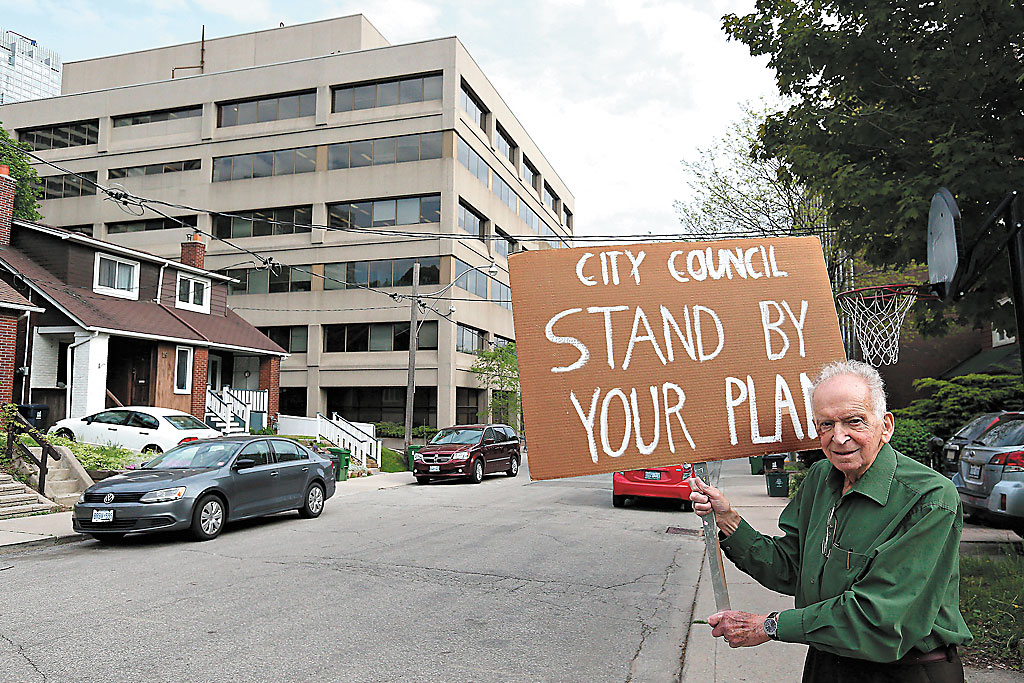
The English poet William Blake was prescient in summing up the current development challenges at the intersection of Yonge and Eglinton. In his collection of aphorisms titled “Proverbs of Hell,” Blake writes the classic words, “Enough! Or Too Much.”

Some people think there is not enough development around the Yonge-Eglinton intersection. City planners have given approval to a 24-storey tower at 90 Eglinton Ave. W., replacing a solid-looking six-storey structure. North York Community Council brushed aside strong local opposition, including from local councillors Josh Matlow, Jaye Robinson and Christin Carmichael Greb, and recommended the development to Toronto City Council at the next meeting.

I suspect any reasonable person wandering the sidewalks of Yonge and Eglinton would conclude the area has fallen into the Too Much category. The Eglinton Centre on the northwest corner has seen the open space in front of its two towers taken over by a new six- and seven-storey structure. A giant tower is being constructed on the northeast corner, and the two-storey shops to the north along Yonge will surely be replaced by a large development. 

The southeast corner was developed in the last few years, and the two large Minto Towers to the south are now being outflanked by a larger structure being erected on the next block south, formerly home to the Art Shoppe. Across Yonge the mammoth Canada Square buildings loom, hiding the TTC bus yard — also up for redevelopment.

Only the south side of Eglinton west of Duplex seems reasonable: a four- or five-storey relatively new police station and then some modest four- and six-storey brick apartment buildings from the early 1950s. Turn your head and they might be under attack too.

It’s a fine time for developers who like the Too Much scenario. They can seize on the provincial policy that requires municipalities to intensify development around rapid transit nodes. With the Eglinton LRT construction well underway, this will be a big node.

The provincial policy doesn’t have any upper limit to the desirable degree of intensification. The Places to Grow plan estimates that Yonge-Eglinton in 2011 had more density than expected for 2031, and a lot has been added in the last six years. The sky is the limit, apparently.

And when it comes to the work of city planners, one comes away with the notion that there has been far Too Much planning. There’s the Employment Lands Study that says that to protect the balance of jobs/residents in the city that jobs should not be replaced by residents — a sound policy in a city like Toronto under such significant growth pressure.

The 90 Eglinton W. development only protects half the jobs now in the existing structure to be demolished, and the planners say that is close enough to be acceptable.

There’s the Eglinton Connects study that shows how everything will be better for everyone along the LRT line. And the Yonge Eglinton Secondary Plan that looks favourably at opportunities for change in the area. There’s the Midtown in Focus Study and the Tall Building Design Guidelines. All of this planning has resulted in Too Much development and Not Enough good thinking.

The planners have papered over the problems.

Even if city council takes the reasonable position of saying no to the 90 Eglinton W. development, one fears the Ontario Municipal Board, even in its new reformed clothes, will give it the green light. Recognizing when there’s Enough before it becomes Too Much requires modesty of the kind that Blake understood well but that many decision makers do not.

One fears too many people have swallowed another of Blake’s aphorisms, also found in “Proverbs of Hell”: “The road of excess leads to the palace of wisdom.” The more we can pack into Yonge-Eglinton, the better it will be. Sure.

Estia lacks the direction needed to compete at the top level in Yorkville

0

NAO is no more.

The high-end Yorkville steakhouse from Charles Khabouth and Hanif Harji has been replaced and reinvented by them and their very talented executive chef, Ben Heaton (the Grove, One) as Estia.

NAO never really seemed to take off possibly due to a winter opening in a summer location or perhaps residents never took to its non-traditional steakhouse style, and in the end, it was eclipsed by the more traditional U.S. import STK, which opened just down the street.

Estia specializes in Mediterranean fish and seafood and skews to the high side in price.

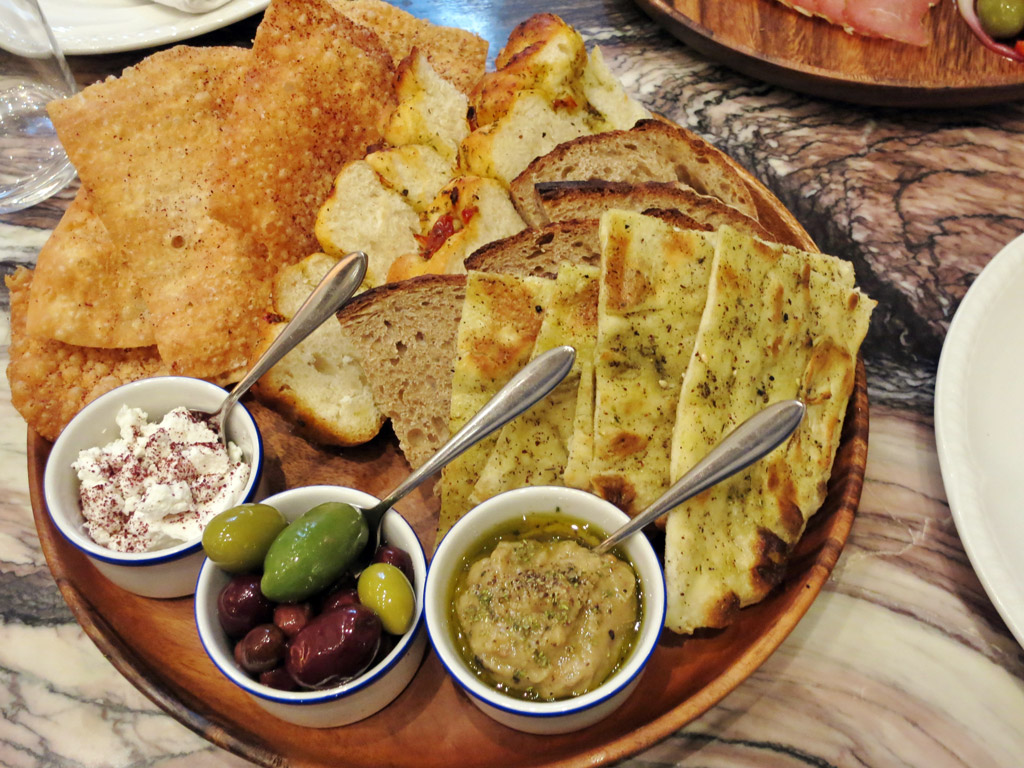
Wood-fired bread and za’atar-spiced pitas fresh from the oven, smoked melitzanosalata (eggplant spread) and feta cheese are all house made and accompanied by warm olives at $6 for a half order, which is, trust me on this, plenty of bread and spread for up to four people. This bread course is the menu’s one nod to value.

The other appetizers priced close to $20 each are also for sharing, and portions are a bit less than generous. The clams and the octopus were the standouts, with the clams, steamed in a buttery white wine and fennel sauce, clearly the better of the two.

Salads are large and easy to share. At $9 a half order, the asparagus salad is a nice change from traditional greens. Long ribbons of fresh and roasted white and green asparagus are tossed with a sherry vinaigrette and topped with Parmesan petals and crushed roasted hazelnuts for texture.

The set mains run the gamut from pasta to lamb to wood-fired chicken.

However $55 for a chicken is pushing the boundaries of my food-costing tastes. I suggest steering towards the massive list of fresh fish and calamari all cooked in the wood-fired oven and available with your choice of seasoning.

Snapper cooked with salsa verde and pepperoncino is the standout. On this night, a pound-and-three-quarters piece costing $64 could feed three people well. It arrived at the table already filleted and was expertly plated by our server.

For sides, the grilled broccolini with almonds and romesco was well executed. The Yukon fries spiced with wild oregano served with a house feta aïoli seemed more of an obligatory potato dish than anything else.

So what’s the skinny on Estia? Sadly, the whole concept seems soulless. Messrs. Khabouth and Harji don’t skimp on the decor or the ingredients, but their Yorkville restos, starting with La Societe, NAO, and now Estia, have somehow missed the mark.

The lack of a full-time dedicated head chef in each location works fine for downtown watering holes Patria and Weslodge and their true shining light: Byblos.

However, when you come uptown and compete in Yorkville against the likes of Keith Frogett’s Scaramouche or Doug Penfold’s Chabrol, you need a steady, inspired hand on the tiller every single night.

You need someone adjusting specials and using fresh ingredients on the fly.

And you need to give well-heeled Midtown foodies a sense that the restaurant they have chosen has a mission and a soul.

Estia will never compete at this level without one.

Champagne Papi’s Park Lane palace

0

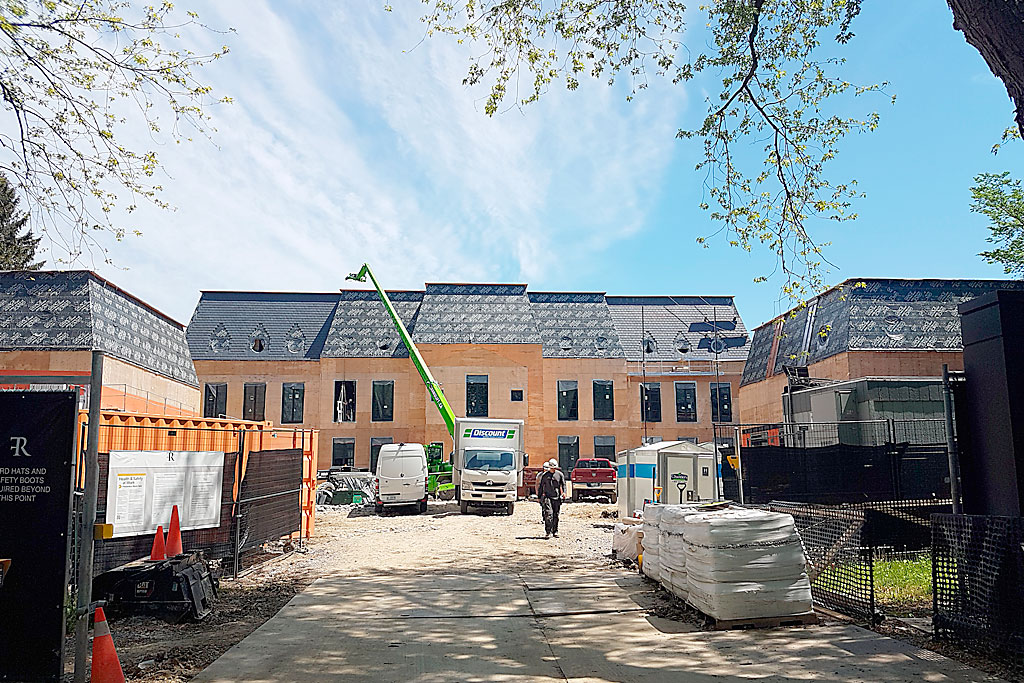
Drake’s new digs on 21 Park Lane Cir. in the Bridle Path are coming along. The 22,000-square-foot mansion, designed by Ferris Rafauli, now has a Mansard roof and detached garage since we last checked in on the property in March. Rafauli has been keeping fans in the know by posting updates to his Instagram account, including a drone video that shows the immense scale of the property. The rapper’s lavish new home will include a jersey museum, indoor basketball court and a room dedicated solely for awards. But we doubt it will have any trouble fitting in, since mega mansions already line the streets of the exclusive enclave. Gordon Lightfoot, real estate mogul Milton Winberg and packaging business titan Navin Chandaria are among Drake’s new neighbours.

Cemetery operator donates 23 acres in North York

0

The Mount Pleasant Group of Cemeteries (MPGC) held a ribbon-cutting ceremony on June 25 to announce their donation of 23 acres at York Cemetery near Yonge Street and Sheppard Avenue to the City of Toronto. However, the question of whether or not MPGC owns the land and has the legal authority to convey it still stands before the courts.

Rick Cowan, assistant vice-president of marketing with MPGC, said the donation has been two years in the making.

“We had land at the west end that essentially is unusable as cemetery land,” said Cowan about an area currently zoned as protective natural forest. “The cemetery operation felt it would be fitting to donate those lands to the City of Toronto, back to the residents, for Canada’s 150th.”

In 2013, Friends of Toronto Public Cemeteries (FTPC) asked the Ontario Superior Court of Justice to determine if MPGC’s board is legally constituted. It is their belief that the land MPGC claims to be in possession of actually belongs to a public trust. The legal battle is still underway.

Toronto councillor Kristyn Wong-Tam signed as a co-applicant on the case as a private citizen.

Wong-Tam said the deed for all of MPGC’s land holdings belongs to the trustees of the Toronto General Burying Grounds, according to an 1849 statue that was never repealed.

“The MPGC are creating a very big gesture of appearance because they are willing to convey these acres to the city. But at the core of it is whether or not they even have the legal right to convey these lands to the city if … the lands are public anyway,” she said.

Margot Boyd, of FTPC, said she was shocked to hear of the donation.

“Why would these people do this when there is litigation happening that questions the authority of the board?” asked Boyd. “As lovely a gesture as it is, they can’t give away the land, it’s not theirs to give.”

Toronto City Council voted to accept the donation in late May and  Wong-Tam said she was not present when the vote occurred.

“They are not in a position to make a donation of land to anybody,” said Wong-Tam.

Both Boyd and Wong-Tam said they anticipate a ruling to be released by the courts in the next few months.

Cowan said the matter is a difference of interpretation over the governance of the organization, but he would not comment further.

“We’ll leave it with the courts to sort it out,” he said.

MPGC also unveiled a new boulevard and memorial honouring 99 Canadian recipients of the Victoria Cross, between Senlac Road and Beecroft Road, at the ceremony in June.

What is Nathan Lawr's favourite protest song?

0

Art, by itself, cannot change the world. It can, however, inspire people to change it. A powerful protest song, for example, can rally a group of people to action. It can help them stay strong in the face of extreme opposition. It can act as a vessel for an idea, keeping it alive through periods of disfavor or until it can gain traction and return to popularity.

A good protest song speaks the truth in an artful way. It is brave and it is unabashed. It does not belong to any one style of music or genre. Some of the most powerful protest songs are not the Dylan/Seeger-style of acoustic strummy stuff. Nina Simone’s "Mississippi Goddamn" is a visceral challenge to the racist status quo of '60s America. Fela Kuti’s "Zombie" pulls no punches in its indictment of the Nigerian kleptocracy that ruled during his height of popularity. And is there a more riveting, absolutely gutting song than Strange Fruit by Billie Holliday?

One of my all time faves though is "Ohio" by Crosby, Still, Nash, and Young. I’ve found myself very often these days longing for a contemporary artist to do something as powerful and relevant. Recorded and released within days of the shooting at Kent State University, the song is brave, pointed, and obviously hooky as hell to boot. There are more than enough things in today’s world to inspire such outrage.
 

Protest songs alive and well 50 years after Summer of Love

0

It’s the 50th anniversary of the Summer of Love — you know, those godless hippies dancing around in their birthday suits to politically charged tunes on the Hair soundtrack. And with it comes a renewed focus on the role of the protest song, thanks to the likes of Donald Trump, climate change, Islamophobia and Black Lives Matter. 

Although the roots of the protest song stretch way back, much further than the hippie heyday of the late ’60s, the politically tinged folk music that came out of this time, from the likes of Bob Dylan and Buffy Sainte-Marie amongst many others, was one of the most powerful examples of the genre.

And there was no shortage of causes worth protesting including the Vietnam War as well as civil and women’s rights. 

I recall listening to the Clash and the Forgotten Rebels in high school, before graduating to the more refined protests of Me Mom and Morgentaler’s “Everybody’s Got AIDS” and the fiery folk of Ani DiFranco’s “Blood in the Boardroom.”

But what about 2017? Is the protest song alive and well? Canadian folksinger Steph Cameron thinks so. She has been influenced by the country folk of American songwriting legend John Prine, particularly his delicate but gut-wrenching anti-war song “Sam Stone,” released in 1971.

“What really struck me was feeling that this young man, and others in his situation, were really considered disposable by the state that sent him to war,” she says.

Cameron’s musical career stretches back to 2006, when she was the member of a political folk duo that played more often at punk shows than coffeehouses. Her latest and second album as a solo artist, Daybreak Over Jackson Street, has the powerhouse singer finding her way back to confronting social injustices through her music.

“It’s a really powerful way to energize people and energize movements,” she says. “It’s important that people rally around artists that do take their music in that direction because it brings people together.”

One movement that has created a profound response from artists is Black Lives Matter, which sprung up south of the border but has since become a global mantra for people of colour who continue to suffer under systematic racism.

Toronto musician Kaia Kater, who was born of African-Caribbean descent in Quebec, says that for years race was “too personal for me to speak about onstage.” 

That changed with Black Lives Matter, which she says provided “a way forward and a way to spur hope in people to survive and thrive because of its global context.”

“It felt like I still have a lifetime of activism ahead of me if I’m brave enough.”

Kater has garnered serious acclaim for her latest album, Nine Pin, that is at once modern but rooted in the history of American folk and bluegrass music. Although she doesn’t often write songs that carry a political message, when she does — as she did with her song “Rising Down,” about Black Lives Matter — it carries a profound wallop worthy of the best of the genre. 

Perhaps that’s why she was asked to play at a special celebration honouring the work of legendary folksinger Pete Seeger at the Kennedy Center in Washington, D.C., this past spring. 

“I played my song ‘Rising Down’ about the Black Lives Movement in order to honour Pete’s memory of activism and also to remind older audiences that loved Pete that there are still battles that have not been won,” she says. “It was great on many levels, mostly because Pete’s entire family was there, and it felt like a true tribute to a man who did much good in the world.”

Nathan Lawr, of the band Minotaurs, agrees, adding that a good protest tune can “act as a vessel for an idea, keeping it alive through periods of disfavour or until it can gain traction and return to popularity.” 

But he adds that protest songs don’t belong to any one genre and are certainly far from a folk music phenomenon. 

In fact, hip hop was borne of the social criticism of Grandmaster Flash and others in the New York City of the ’70s. His song “The Message” says that “It’s like a jungle sometimes, it makes me wonder how I keep from going under,” and it’s still a powerful testament to a time of poverty, violence and drugs. 

The protest song is a tradition that includes artists from Public Enemy to Kendrick Lamar. And, of course, much early punk music allowed disenfranchised youth a way to vent their political frustrations.

But a case could be made that folk music is a more subtle but equally potent rhythmic brew. Kater, like Cameron, knows the power of song when it comes to introducing people to new ideas, saying, “Music has a way of sneaking into peoples’ hearts and minds the way rhetoric and politics can’t.”

Although she doesn’t brand herself a protest singer, she is political, and her experience playing the Seeger tribute had an impact. “It felt like I still have a lifetime of activism ahead of me if I’m brave enough,” she says.

With the political climate of today and a myriad of ways for artists to get their ideas to the public, we can expect another creative renaissance in pursuit of a better world.


Second City gala features the legendary Bob and Doug McKenzie

0

For those of you who’ve been saying you’d give up a body part to see Rick Moranis perform again, it’s time to call your surgeon. You’re going to get your wish, but it will cost you.

On July 18, both Moranis and Dave Thomas will reprise their roles as the famous McKenzie brothers in a star-studded gala at Second City (tickets $500 to $2,500). The evening will not just include the duo but also appearances by Martin Short, Eugene Levy, Dan Aykroyd, the Kids in the Hall, all to benefit Thomas’s nephew who recently suffered a spinal cord injury.

Even without the McKenzie brothers, it would be an amazing night of comedy. With them, it becomes an historic  evening.

Moranis almost never performs. He claims he’s not retired, just very picky about his projects. Quite awhile ago, tragedy befell Moranis as his wife died suddenly. He chose to focus on bringing up his kids in New York and put comedy on the back burner, an admirable choice but one that took him mostly out of the public eye, except for a country music album in 2005. 

I was close with Moranis back in 1976 when he was one of the first wave of standup comics at Yuk Yuk’s. That’s right. He did brilliant standup in those years, a fact few people know, mainly because he secretly hated it.

“Like begging for laughs, “ he used to tell me. 

He also implored me not to call my comedy club Yuk Yuk’s, but something more generic and audience-friendly like Comedy Factory or Laugh Shop. 

Thomas, meanwhile, has been visible with a variety of subjects, including writing and performing on series such as Bones and The Blacklist. But the last McKenzie brothers project that involved Moranis and Thomas was a CBC reunion special in 2007. 

Thinking back to the heady days of the McKenzie brothers explosion, I am reminded of the curious circumstances that created the legendary bit.

SCTV was in its infancy, and their sketch comedy series was being taped in Edmonton. But government financing included a clause that there must be some content that was “distinctly Canadian.” So Rick and Dave were approached by the producers to come up with something that would satisfy the mandate.

Sneering at the idea, the boys decided to give them a piece of Canadiana that cynically checked all the boxes: beer, toques, plaid and the repeated use of the word “eh.” 

To their surprise, the Mackenzie brothers sketch “The Great White North” became the most loved and most successful part of the show.

Without the McKenzie brothers, there is no Trailer Park Boys, no Letterkenny, no standups such as Ron James, Jimmy Flynn and Derek Edwards, not even any Wayne’s World. For who are Garth and Wayne but suburbanized versions of Bob and Doug?

The hoser tradition celebrates the rural, down-to-earth, good-hearted goofiness of sweet-natured Canuck maleness. 

As an international image, it may present us as unsophisticated rubes, but funny ones, nevertheless. Knowing that it’s all an act brings us all in on the joke.

How CP24 Breakfast’s Pooja Handa met her husband Paul Pathak

0

CP24 Breakfast co-host Pooja Handa met her now husband, Paul Pathak, as they crossed paths (literally) at a birthday party. The couple, who recently bought a home in Lytton Park that they are rebuilding from the ground up, shared their love story with us.

How they met
We met the old-fashioned way … at a bar! We were both attending a birthday party at the Spoke Club. I was arriving and Paul was leaving. We passed one another as I came out of the elevator. I was with a boisterous friend of mine who yelled out a comment about us being a good match just as the door was closing to the elevator Paul was now in. I yelled out, “That wasn’t embarrassing,” expecting to never see him again. Turns out, Paul returned to the party in search of me. As fate would have it, we had a mutual friend there who introduced me to her husband who happened to be friends with, and was standing beside, Paul as apparently Paul had enlisted him to help look for me. Paul and I smiled at one another, knowing what went down hours earlier, shook hands and parted ways. The next day my girlfriend called me and asked if it was OK to give my phone number to Paul who had asked for it. I said yes. Minutes after I hung up, the phone rang. It was him! He didn’t waste any time and actually called instead of texting. We chatted and laughed and had a great conversation.

The first date
We met a few days after that for dinner at Terroni. We talked for hours and ended up being the last patrons at the restaurant. If they weren’t closing we probably could have kept talking. I knew he was husband material after that date. He said he knew I was the “one” within 15 minutes of our phone conversation. The date went so well that Paul invited me to our second date the very next night!

Memorable moments 
Our courtship didn’t last very long as we were engaged within three months. But we had many memorable moments. From a weekend trip to Napa Valley to attend a wedding, to surprise concert tickets to see a sold-out Coldplay show, the courting was on point. But perhaps the most special was when I met his parents. His mom had been hospitalized for three months and was unable to speak. Before she had been hospitalized she had been bugging Paul for years to get married. He was in his 40s and known as a forever bachelor who just couldn’t find the one. As soon as she was able to speak again, Paul arranged for us to see her to announce our engagement. She was thrilled. Her smile beaming to learn not only did Paul finally meet someone, but that we happened to be from the same town in Punjab and that, like her, I was a vegetarian. So much of my love for Paul comes from how good he is to everyone he knows, including his parents.

The proposal
Paul arranged for us to have a spa day at Hammam Spa. I thought it was just one of his thoughtful gestures, not realizing he had arranged in advance a special room scattered with rose petals, a bottle of champagne and chocolate. At first I thought we were getting a very fancy couple’s massage, but then he got down on one knee. He was shaking like a leaf as he asked me to marry him. I gladly said yes!

The wedding
We got married at a hall in Woodbridge. We had 700 guests at our wedding, so it wasn’t easy finding a venue that could accommodate us. We actually had two honeymoons, and yes, there’s a story! Paul had a friend’s 50th birthday golf trip planned a year in advance. Our engagement and wedding all happened so fast, and the only date we could secure our venue happened to be two days before his golf trip. So two days after our wedding, Paul left for Scotland. I’m not going to lie. It felt odd to get married and then be home alone days later. Paul felt the same way and decided we’d make the best of the situation. He cut his trip short and had me flown in to Paris to meet him for a weekend there. It was so very romantic. He insisted this was just our weekend honeymoon.  Our real honeymoon was in Hawaii a few months later.

Balancing work and marriage
We both have very busy lives, and hosting a breakfast show means I go to bed before most children do.  Paul is a corporate lawyer, but work never really ends for him as he is always available for his clients. That means we get very little time together during the week. Weekends are really our time to spend quality time together. Plus we miss one another all the time, which adds to the excitement of when we do get time together.

Betting on pot in the stock market

0

Since Justin Trudeau’s election, the Canadian cannabis space has seen  significant growth both in public and private sectors. The industry is gearing up for its entry into the legal recreational cannabis market set to open up by July 1, 2018. 

Although the new cannabis bill (C-45) introduced in April presents some uncertainty as to how legalization will roll out, it provides a new landscape for Canadian businesses and investors looking to cash in on the green rush. 

A recent study conducted by Deloitte puts the potential sales of recreational cannabis alone as high as $5 billion per year to start, “a number on par with the Canadian spirit market.” Taking into account the potential of ancillary business, such as security and transportation, as well as consumers “likely to consume,” this economic potential approaches $23 billion per year.

The publicly traded market saw its stock peak in November 2016 and in April of this year, with the introduction of Bill C-45, but has since taken a significant plunge. 

Growing pains of this nascent industry have led to issues related to insufficient product supply, pesticide misuse and uncertainty regarding potential distribution in the upcoming recreational market. Although the drop in stocks may be discouraging to some, for those with an eye on the long-term, now is the time to buy.

“With so many licensed producers [LPs], testing labs and other ancillary businesses going public and raising funds, there are ample opportunities to invest,” says Natasha Raey, an entrepreneur and leader of several cannabis- and non-cannabis-related ventures. “Since we’re essentially at the ground floor of legalization, there are a lot of merits in investing early.” 

There are 19 publicly traded LPs of medical cannabis eager to enter the legal recreational market. 

“As an investor, I look at how I can differentiate between the names [of the LPs]. I want to see what the financial numbers look like and who will capture the market from a sales standpoint,” says Mick Mitrovic, a Toronto portfolio manager and financial advisor.

Consider the business model, access to capital, expansion plans aimed at ensuring consistent supply and methods of production to determine the success of an LP. Production methods include closed box — an indoor growing model for high quality at minimal cost — or greenhouse.

“It’s important to understand the business models, the capital structure and the relative risk to investment,” says Alan Brochstein, founding partner of New Cannabis Ventures, an independent research analyst and influencer.

“Greenhouses could be riskier in the long run,” he says as the environmental control upgrades make it a more expensive option. 

So what will make one business succeed over another?

“The companies that will succeed in the cannabis industry are ones who are able to execute on their plans and adapt to a dynamic marketplace,” says Max Zavet, co-founder and president of Emblem Cannabis, a publicly traded LP.

We may not have heard much about cannabis brands up to this point — due to medical advertising restrictions — but brands are the connection to the consumer.

Brands provide an additional point of differentiation for consumers and a channel of producers to acquire customers and drive market value.

Michael Lickver, the incoming executive vice-president of strategy at Cannabis Wheaton, a streaming company that provides financing to existing LPs and applicants to build and expand their cultivation facilities, says those looking for a quick turnaround on their investment should know the cannabis industry is more of a long-term investment. 

“My understanding is that it took the legal alcohol industry approximately 15 years to catch up to the illicit market sales. Nothing is going to happen magically overnight here,” he says.

If Bill C-45 is any indication of how things will unroll, it will take time for the system to integrate and respond to the current demands.

Restaurant Review: Canis on Queen West fixes the prix fixe for Joanne Kates

0

I’m usually borderline hostile about fixed price multi-course menus. First off they offend my control gene. I like to choose my own food, thank you. Secondly I get impatient and don’t want to sit there for three hours while chef produces a parade of small artworks to impress me with his (it’s rarely a her) oeuvre.

Which is why I am doubly blown away by Canis. It’s four courses for $65, and for each of the four courses there are three choices. So the choice thing is taken care of. As for the time thing, when the server brought the third (and last!) savoury course, I whined. The food was so fabulous I would have been delirious to sit longer and inhale more courses.

Dinner starts with impeccable sourdough bread and two impeccable spreads: sharp goat butter sharp with chives, and ricotta with complex chimichurri.

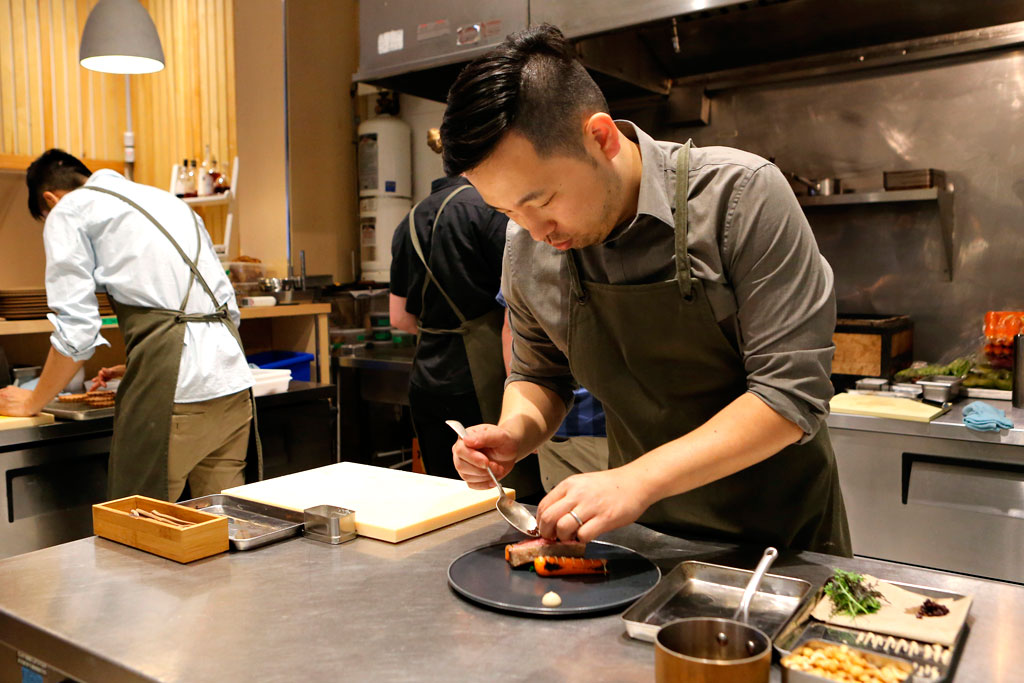
Then begins the parade of four courses. The first course can be carrots, scallops or beef tartare. The tartare is marvellous, hand-chopped and perfectly seasoned, with turnip shreds on top for bite. The scallops are splendiferous — raw, sweet and tender in strong mignonette with tiny onion bits to balance the sweetness of the scallops. For vegetably oriented foodies there is the carrot course: three kinds of carrots — fresh, dehydrated and pickled — atop creamy burrata with toasted almonds in light vinaigrette.

The second course is celeriac, squid or duck. Again the marvellously imagined veg option: it’s two forms of celeriac, one a braised chunk, cooked down to intensity. The other is slices, more fresh-tasting. With sweet/tart caramelized whey and nasturtium flowers for glamour. The squid is magnificent — super-tender squid in black ink sauce with romesco sauce and toasted almonds on top. The duck is melt-in-the-mouth confit sitting on rich caramelized onion purée, with grilled pearl onions on top.

By the time the third savoury course arrives, I have fallen all the way in love with Canis. The room and the tableware support the local and artisanal message of the food — vertical pine slats on one wall and all the dishware ceramic or wood. Course three is lamb, halibut or beef. Lamb is rare pink loin with pressed eggplant, toasted almonds and eggplant almond relish. Beef short rib is fork-tender and jazzed with toasted hazelnuts plus hazelnut miso and toasted carrot with miso ribbons. We had trout — fresh and moist, served with sweet buttery sunchoke pieces, sunchoke cream, green garlic and nettles. They’ve now replaced the trout with halibut.

And yes, we’re still ready for more, entranced, not hungry any more but blessed by the parade of delights. It ends with three desserts. I like the milk chocolate mousse with buckwheat ice cream and shards of meringue. I appreciate the thin crisp wafers layered with pear and almond cream. But my heart belongs to buttermilk snow with rhubarb curd and toasted hazelnut. Buttermilk snow? This is frozen balls of sweetened buttermilk foam playing very nicely with jam-like rhubarb curd and toasted hazelnuts. Only the most beautiful gastronomic mind could dream this dessert.

Canis, 746 Queen St. W., 416-203-3317