

Home Blog Page 571

It’s a balancing act for kids who must excel in both sports and the classroom

0

High school comes with a huge amount of responsibility for a young teen, but add the gruelling schedule of a high-level athlete to the mix, and it can be even more hectic. Schools that cater to elite athletes, like Blyth Academy Downsview Park, St. Andrew’s College and the Hill Academy, make allowances to accommodate the busy lifestyle of student athletes so they can stay on track with academics while pursuing their career goals.

As sole educator for the Ontario Hockey League and Toronto Football Club, Blyth Academy provides flexible class schedules for elite hockey and soccer players.

Former student Owen Tippet was drafted 10th Overall in the 2017 NHL Entry Draft to the Florida Panthers and is now playing for the team at just 18 years old.

Meanwhile, swimming phenom Penny Oleksiak also attended one of Blyth’s other campuses. For those living under rocks, Oleksiak became the youngest Canadian Olympic champ and the first Canadian to win four medals in one Summer games — two bronze, one silver and one gold — at the 2016 Olympics in Rio. During her bronze 4×100-metre freestyle relay, Oleksiak, along with her teammate Taylor Ruck, achieved something else: the pair became the first Olympic medallists born in the 21st century.

Noble Okello, Rocco Romeo and Julian Dunn are Toronto FC II soccer players and current students at Blyth. Due to their demanding training schedules, the students spend the mornings training and attend class in the afternoons, in addition to participating in an online course.

On a typical day, the students will report to the training grounds at 8:15 a.m., finish training around 10 a.m., then meet with their coach for a video session to go over technical and tactical performance points.

The students say teachers and staff at Blyth have offered them an invaluable support system throughout their time there.

“Blyth is very accommodating for students. They’re very flexible with our schedules,” Romeo says. “My experience here so far has been tremendous; the teachers are very open and approachable.”

In addition to Blyth’s online academy, which features over 100 online courses for students, the school offers a small average class size of about eight students per class.

Adam Hurley, principal at Blyth Academy Downsview Park, notes that the school places a high value on creating an environment where students have a chance to follow their dreams, instead of forcing them to fit into a certain educational mould.

“I find that I hear from parents a lot that the public system just really views these athletic regimens and commitments as kind of a detriment, where we should be praising and supporting them as much as we can,” Hurley says.

Blyth Academy is also the sole educator for the Chinese national hockey program, which began this year. Currently, 23 students from the program are attending Blyth to improve their hockey skills and prepare for the world championships in March. Fifteen of those students have come straight from Beijing, so English as a second language courses and Canadian culture lessons are also on their timetables.

“The program is coached by Steve Kasper, who played in the NHL for 13 years, coached in the NHL for the Boston Bruins and scouted with the Leafs,” Hurley says. “So it’s a really neat program and the long-term goal is to hopefully funnel some of these kids into the Olympic program, because Beijing is hosting in 2022, as well as provide opportunities for their KHL [Kontinental Hockey League] team in Beijing.”

St. Andrew’s Junior High School at York Mills and Bayview Avenue is another school that aims to support talented youth with its high performing athletes program. The school, which is within the Toronto District School Board, offers flexible hours to accommodate students with hectic schedules.

Sarah Pendergrast’s daughter Molly is in Grade 7 at St. Andrew’s. She says the school has been a good fit for the long hours Molly spends training in both high-level competitive diving and cheerleading.

“She trains in diving 15 hours a week, but she also is a competitive cheerleader on a level five team this year, so she trains at that about eight hours a week,” Pendergrast says. “Molly’s diving coach said it might be a good option for her because he could offer her a couple of training sessions during the day, which would free Molly up to train in the evening without it being super stressful rushing from the pool to the gym.”

Molly’s school hours begin at 8:45 a.m. and last until either 11:50 a.m. or 12:40 p.m., meaning she doesn’t have to wake up unreasonably early in order to fit class time into her schedule. Pendergrast says the teachers also aim to assign homework at least a week in advance so students can manage their time effectively.

“We chose to go there [St. Andrew’s] basically to allow her to have the flexibility in her schedule and accommodate the two sports, but I would have chosen it for her even if she was just doing diving so she can have that afternoon training time. It’s a bit quieter,” Pendergrast says. “She only started in September, but she loved it from the first day.”

Pendergrast says Molly’s ultimate goal for diving is to qualify for the international meet, and for cheerleading, she and her team will be trying out for the Canadian junior team. From the sounds of it, she’s well on her way.
The man rebuilding The Bridle Path

0

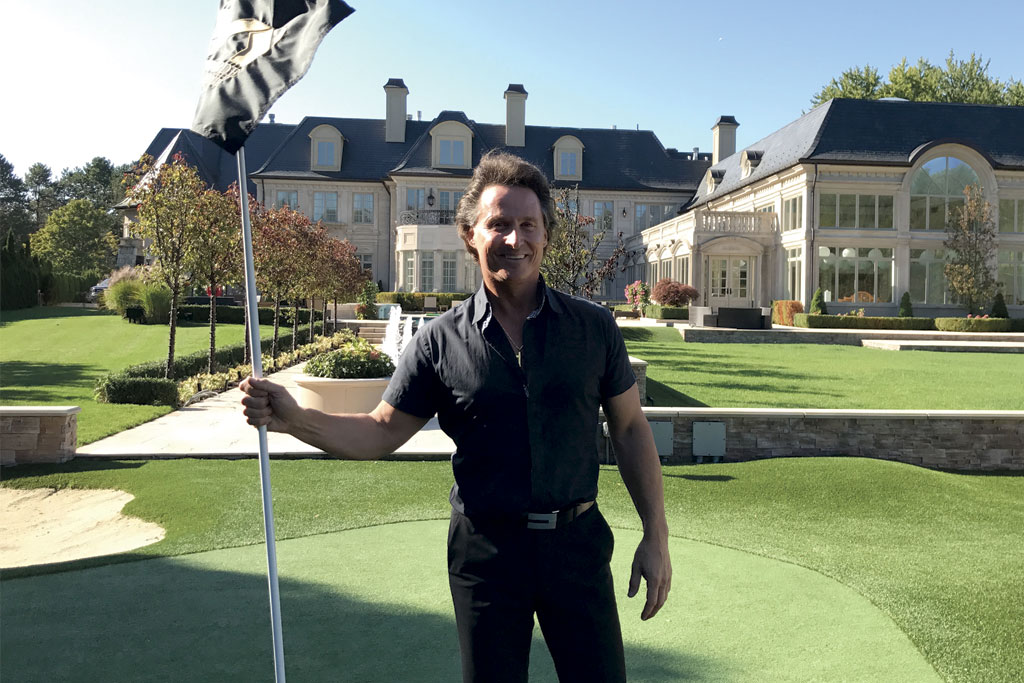
Since 2000, Paul Miklas, of Valleymede Homes, has transformed the Bridle Path neighbourhood with his unique and breathtaking custom-built mansions. After 16 completed projects and a 40,000-square-foot home ready for delivery, he has just broken ground on his biggest and the country’s biggest project to date: A mansion that clocks in at a mammoth 50,000 square feet. 

“This is going to be the pinnacle for us,” said Miklas.

The home is located on High Point Road, on what the builder said is the most desirable stretch of the city’s most upscale enclave. In addition, Valleymede Homes has two more homes over 30,000 square feet in the works in the same neighbourhood. 

Miklas, who starred, along with his wife Holly, in the HGTV series Mansion as well as a web-based version of Dragons’ Den for CBC, started out as a carpenter and then site supervisor for Green Park Homes, Canada’s largest building company. He started Valleymede when he was just 26 and built his first home in The Bridle Path 17 years ago. 

Building lots in the area go for upwards of $7 million, with the most coveted locale being the south end of High Point and Park Lane Circle. 

The Bridle Path neighbourhood has its share of celebrity inhabitants but received a boost in reputation when it was confirmed that hip-hop icon Drake was building a home, one that Miklas was originally approached to build.

As Miklas explained, most of his clientele are now from Beijing, China, where Valleymede is enjoying a growing reputation thanks in part to his Dragons’ Den series airing there. 

For his current 40,000-square-foot home, it is a two-and-a-half-year project from drawing to the final nail. The home is unique for many reasons, perhapsthe most startling being the gigantic 80-foot indoor pool. 

“It’s the biggest we’ve ever done,” said Miklas, of the pool housed in a separate wing extending to the south of the main building. 

The home also has a cutting-edge mechanical and electrical system including natural gas generators. 

“You can run the whole house if the power goes out,” he said. 

Miklas’s budget for the project is around $26 million not including the cost of the land. But as he explained, the homes he builds have enjoyed built-in equity. Just like when a condominium unit appreciates during the long construction process, a Valleymede home can as well. In fact, Miklas revealed that another buyer from Beijing offered to buy the 40,000-square-foot home for $40 million outright, but the owners refused. 

When finished, the mansion will be home to six residents, including a young child, as well as approximately four staff.

Dr. Jess on Sex: How writing your partner’s dating profile can be a rewarding experience

0

In March of this year, the New York Times published a moving piece, “You May Want to Marry My Husband.”

I read it on the plane and cried my way through the entire piece in which Amy Krouse Rosenthal describes her husband as though she’s writing his dating profile. The summary: he’s a catch. If I wasn’t happily married, I’d consider marrying him.

You’ll probably feel the same way once you read it. She was on her deathbed at the time and was still madly in love after 26 years.

She died 10 days after publication on March 13.

To say I was moved by the piece is an understatement. I called my husband in tears, but I couldn’t speak. So instead, I used it as inspiration and wrote my husband’s dating profile. I sent it to him in point form via text (because I’m romantic like that), and he was also moved to tears.

Because we were both so swayed by the article and the exercise, I decided to use both in my retreat the next day in Prague. After the first day of programming came to a close, I asked couples to read Rosenthal’s column and then write a dating profile for their partner as a reminder of why they love them and to help reignite the passion.

Each participant (and even the two Czech translators) struggled to contain their tears as they read the article and made a list of their partner’s best qualities. When they were done, they reported feeling more present, grateful, in love and intimate with their partners.

I continue to use this highly effective activity with both singles (pairs of friends) and couples across the globe and get teary eyed each time I introduce it. Consider trying it at home:

1. Read the article (it will come up in any Google search).

2. Jot down notes for your partner’s dating profile considering the following areas: personality, hobbies, attitude, profession, disposition, appearance, endearing idiosyncrasies, habits, parenting style, community involvement, family role and anything else that makes your partner wonderful. Don’t get hung up on the language — just let the words flow.

3. Share with your partner and soak up the positive affirmations.

Don Mills couple Kelly and Sean tried this exercise last month and were pleasantly surprised by the results.

“After seven years together, it was a powerful reminder of how much we love each other and how we shouldn’t take one another for granted,” Kelly says. “Writing it came very naturally, and I got butterflies in my stomach. I was excited, gushy and giggling.”

If you’re willing to give it a try and share your experience, email us: [email protected].

Parent-teacher messaging apps: Appealing or appalling?

0

Technology’s role in the classroom is becoming more prevalent with apps like Class Dojo, which parents, teachers and students can use to communicate privately, share progress updates and track behaviour.

Although some say tools like Class Dojo are helpful for keeping parents in the loop, others argue that the use of technology in classrooms is overstepping boundaries and making “helicopter parenting” too easy.

Alyson Schafer, family counsellor, author and parenting expert, says apps like Class Dojo are unnecessary and impinge on students’ independent learning experiences.

“Honestly I don’t see any positives from this app. I only see negatives,” she says. “I’m all for information and sharing and community, but the level of intrusion into the classroom of a parent through this app is too high, in my opinion.”

Schafer says technology is already enough of a distraction. Apps like Class Dojo put pressure on teachers to be in constant communication with parents, which could take away from teaching time.

“I think that, from a time management perspective, it means less time for the teacher to connect genuinely with the students in real time,” she says.

Michael Ianni-Palarchio, director of IT at Branksome Hall, says the teachers mostly use the Branksome portal to communicate with parents, but they also use a third party app called Seesaw for students in junior kindergarten to Grade 6.

“When it comes to parents, our objective is really to keep them engaged with the school so they can participate in that learning process with their girls,” he says. “We look to meet 21st-century parents where they are, but our philosophy is that, at the end of the day, students are accountable for their work.”

Whitney Baker, secondary school teacher and mentor for the Toronto District School Board’s Digital Lead Learner program, notes that with all technology, boundaries are necessary regardless of an app’s capabilities. He says that apps in the classroom aren’t the real issue — it’s how they’re used.

“I think that with any technology people can message people whenever they want to. But how and when people respond, how work hours are respected and that kind of thing, I think that’s a whole different ball game,” he says.

Baker says that parent-teacher communication tools are important, and everyone involved in the education system is learning more about best practices as technology advances.

“I’m quite thankful for the changes and leaps in technology in terms of being able to very quickly share evidence and achievement with the parents. There’s a great amount of flux right now,” he says. “There’s quite a spectrum still, and it’s a process in which all stakeholders have a role to play.”

Graduates: From Rio to Tokyo 2020

0

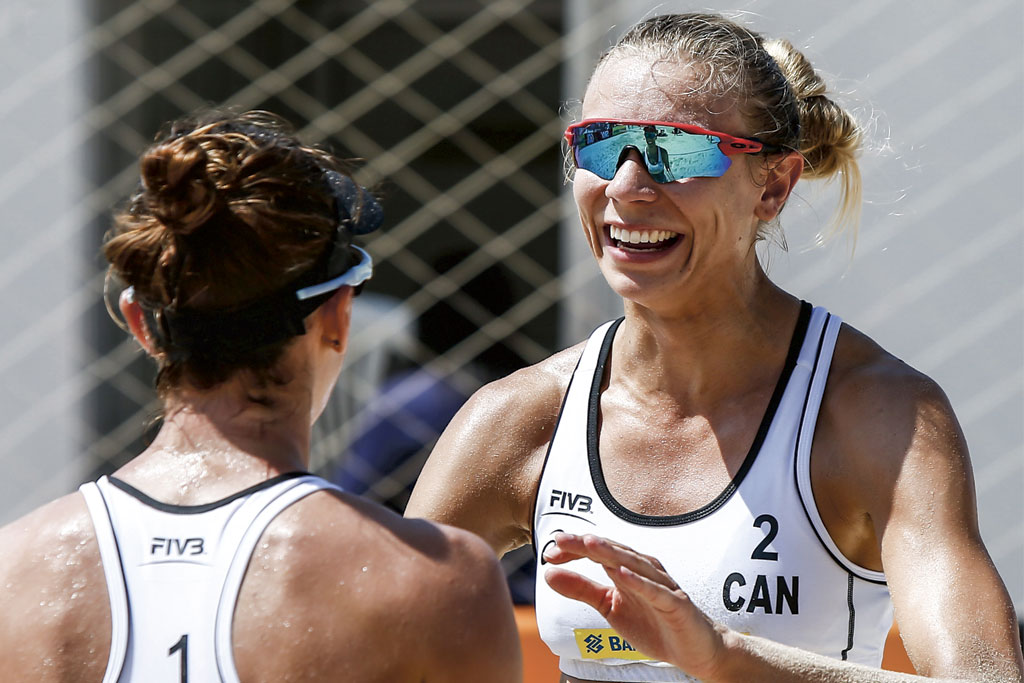
Olympian Kristina May first played volleyball while attending Havergal College, although she didn’t take it too seriously. 

“I wasn’t one of those crazy, sport nut kids who try everything,” she says. “My family was really into mountain biking and cross-country skiing, so I did that.” 

After graduating from Havergal, May went to the University of Toronto to study linguistics and played on the varsity volleyball team during that time. Her coach suggested she try beach volleyball in the summer to improve her skills. 

“I was definitely a bench warmer, so she told me to go out in the summer and use that time to get better, and I discovered that I just loved beach volleyball,” May says. 

Although she had never played the sport before university, she knew she wanted to try her best to make a career out of it. In 2010, she tried out for the national team right after graduating from U of T and made it, but her Olympic dream was still far away. 

“To make it to the Olympics, you have to be ranked top 16 in the world,” she says. “You have to prove yourself on an international stage, and only two teams per country can go to the Olympics, so you have to be the top two in Canada.” 

And prove herself she did, as she and then partner Jamie Broder were chosen as the second Canadian women’s beach volleyball team to qualify for Rio 2016 in June of last year, though the Olympic qualification process started back in April 2015.

“It was, first of all, a goal that I was even too shy to say out loud at the beginning of my career because I wasn’t that good, and I hoped, like anyone who wants to pursue a sport full-time, that you’re going to make it to the Olympics,” says May of aiming for Rio. 

May and Broder placed ninth overall at the Olympics, which is a career highlight for the pair, as was their record 2015 win. 

“That was in Fuzhou, China, in 2015, and we won a tournament on the world tour, which had never been done by Canadian women up until that point. That was pretty amazing,” she says. 

Now May has a new partner, Taylor Pischke, who she’s building a relationship with. 

“After the Olympics, a lot of the teams will break up and try things,” says May of her new partnership. 

They’ve been training together since January and have competed in eight tournaments, with their eyes on Tokyo 2020. 

“We’re both tall, which is such a big advantage, and some teams are actually doing what we did, taking two taller people who used to play at the net and sort of sharing the responsibility of taking over the whole court. It’s been interesting. It’s been a fun year,” says May. 

Although she’s excited for her new partnership with Pischke, May stays in touch with Broder. 

“We’re very good friends still.” 

Midtown stars speak out about Weinstein encounters

0

Last month, Forest Hill actor Mia Kirshner and North York filmmaker Sarah Polley came forward with personal accounts of inappropriate encounters with Harvey Weinstein, one week after the New York Times published a story detailing allegations of decades of sexual harassment against him. Polley, who wrote an op-ed in the New York Times, explained how Weinstein told her she would benefit from having a “close relationship” with him. Polley told him she was not very interested in acting and indicated he was wasting his time. Kirshner, who wrote in the Globe and Mail, chose not to detail her encounter with Weinstein but instead put foward a plan on how unions like ACTRA can help stop this culture of sexual harassment in the industry. The Weinstein scandal also kick-started the #MeToo hashtag across social media to show that nearly every woman has experienced sexual harassment or assault. 

Thriving in the shadow of Pusateri's: We talk to six of Avenue Road’s most innovative merchants

0

Vitality MD
Dr. Shari Caplan, owner
1769 Avenue Road, 416.792.1100

Year established? Dr. Caplan has been doing Integrative Medicine since 2010.  

Why Avenue Road? I live in the neighborhood and have always lived and worked in my community since it is important to me.

What inspires you to keep working in your field? I love what I do. Clients are always coming back and telling me they feel better now than they did 3 months ago, 3 years ago, etc. 

How would you describe your team?  We have an awesome team of Medical and Holistic providers who are all motivated to bring you the best in services. We all work hard to deliver you care and compassion.

What does your business do best? Special items or services?  Integrative Functional Medicine, Bio-Identical Hormones, 
Personalized Weight Loss and IV Vitamin Therapy and Genetic testing.

What makes your business unique?  We are a “one stop shop” to optimize your health. We offer many different services related to healthcare, fitness and spa. We are an oasis in the city! 

Who is your inspiration or role model?   My mother is my inspiration. She was a stay-home mom who helped everyone. She was very giving and smart. She died of Breast Cancer at the age of 44, when I was 19. My passion is to find safe solutions to treat hormonal imbalances while modulating genes to reduce the risk of breast cancer and improve vitality.

Karbouzi Restaurant
Jim Kostantakos, owner
2048 Avenue Road, 416.483.3846

Year established?  1970

Why Avenue Rd?  My parents started the restaurant. It’s a nice neighbourhood. They wanted to raise our family here.

What’s your fave thing about Avenue Rd?  It’s a great community. I’ve lived here my whole life. I live around the corner. 

Coolest customer ever?  Geddy Lee & Peter Donovan. Frank Mahovlich and other NHL, TFC & Raptors players frequently visit as well- it’s a big sports community!

What inspires you to keep working in your field?  Seeing the same faces coming in all the time. It’s nice to know the customers by name and know what they like. 

What makes your business unique?  We’re the only Greek restaurant on Avenue Rd. We also have a bar on the second floor. It became kind of a local hangout. 

How would you describe your team?  We’ve had the same staff for years. Everybody gets along. It’s nice, like a little family. 

What does your business do best?  We try to make everything in house. All the old Greek recipes that I was taught from my mom. 

Top selling items?  The souvlaki dinners.

Who is your inspiration or role model?  My parents. I started working with them when I was younger. They showed me the ropes.

Avenue Interiors
Mindy & Rick Gelman, owners
1900 Avenue Road, 416.781.3005

Year established?  May 1, 1986.

Why Avenue Rd?  We had a vision that this would be the up-and-coming area of Toronto. 

How has the community changed since you opened?  As the neighbourhood has become revitalized and younger families are moving in we are now working with third generation clients.

What inspires you to keep working in your field?  We enjoy working with people and we derive satisfaction from a job well done.

How would you describe your team?  Our team is A1. Truly outstanding. We wouldn’t be able to do without the team behind us.

What makes your business unique?  We offer a wide range of products and great customer service.

Coolest customer ever?  The Ontario Minister of Finance, Michael Wilson; he invited us for dinner to say thank you! 

What does your business do best? We’re known for our timely and professional installations.

Top selling items?  It’s our hardwood flooring and we offer one of the biggest selection of wallpapers in The City of Toronto.

What’s your fave thing about Avenue Road?  Being in the heart of the community – we love seeing familiar faces.

Linea Intima
Liliana Mann, owner
1925 Avenue Road, 416.780.1726

What inspired you to specialize in your field?  Since I was a young girl I've had a love for lingerie. My mother always taught me that "a lady dresses from the inside out and your undergarments have to be immaculate!" 

What is your secret?  We specialize in bra fittings and mastectomy fittings, and in our 20 years of business, we have acquired a great reputation due to the selection we offer and our expertise. We have bras and panties from around the world, the best of brands and products also in sleepwear, lounge wear and swimwear (at our Bayview store).

Why Avenue Rd?  I love Avenue Rd! It is central but not as crazy as Yonge St. I love the architecture of the houses and the many trees and greenery in the area. It is convenient and easy, with fast access to all our other stores. 

What is unique about your business?  I have been in the lingerie business for more than 35 years and with my vast knowledge, I am able to pick the best among the best! I can recognize the value in both price, quality and fit and bring it to our customers. Our collection of products is unique and we do not make compromises: we will offer and sell only the right product for you! 

How would you describe your customers?  We have the best customers! There is no age or size limitation and they know that coming to our stores is like visiting a 
trusting friend: you will get an honest yet sensitive opinion! 

Kahnert Furs and Outerwear
John & Dan Kahnert, owners
2078 Avenue Road, 416 781 8472

Year established?  1957

Why Avenue Rd?  My father opened up here, so I didn’t have to make that decision!

What inspires you to keep working in your field?  My wife and kids! It’s a niche business, there aren’t many like it in Toronto now. 

What’s your fave thing about Avenue Rd?  It’s a very diverse mix of businesses. It’s community oriented and is situated in one the best residential areas in the GTA. It attracts the type of customer and demographic that we require. 

What makes your business unique?  It’s a four-generation family business. My brother and I have both been here for over 33 years, and my father before us, and then grandfathers and theirs before. 

What does your business do best?  We have three product categories: furs, shearlings (lambskin), and a Canadian wool coat collection with and without fur trim. These products can be hard to find in a selection like the one we offer. 

Top selling items?  Shearling jackets, often ¾ length. 

Coolest customer ever?  Donald Sutherland and his wife came in, looking for a knit-sheared beaver product by Canadian designer Paula Lishman. They knew we carried the product so they came and bought a few things. He was very friendly, normal. Not arrogant or anything like that.

Bistro on Avenue
Louis Nemes, owner
1988 Avenue Road, 416.783.1928

Year established?  1984

Why Avenue Road?  One of the best neighbourhoods in the city… diverse, good residential and business area.

What makes your business unique?  It was pretty much the original chicken wing restaurant before all the others came on board. We have stuck to our secret recipe for our wings and expanded our menu so that all can enjoy the experience. It is a large space with one half being more of a bar area and the other half a more family friendly dining area.

What inspires you to keep working in your field?   My inspiration to keep working both in my business field and charitable endeavours is because it keeps me at a young 79 years of age.. both physically and mentally.

How would you describe your team?  Our team has pretty much stuck with me for many years and therefore are very much 
like family.

Top selling items?  Chicken wings, ribs and chicken fingers.

Most memorable moment in the history of your business?   We were located originally for the first 30 years at 1678 Avenue Rd. and last year moved to 1988 Avenue Rd. Our closing party at the old location and our opening party at the new location meant so much to me as all our loyal customers, friends and family attended. The speeches given were quite emotional and I was thrilled we could keep the Bistro legacy going.

Early Days

0

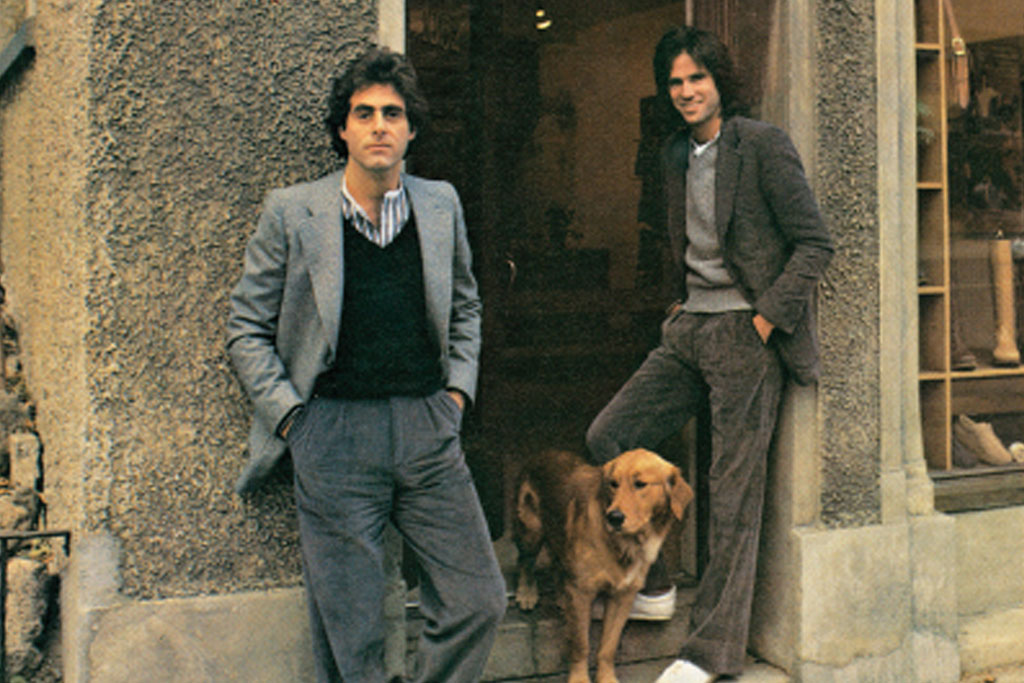
When it comes to leather goods, sweats and an iconic beaver logo, Roots is the market leader. The company was started in Toronto in 1973 by Forest Hill’s Michael Budman and Rosedaler Don Green, with its first store in Rosedale. Now, Roots is going public so we can all own a piece of this iconic Canadian brand. An IPO (initial public offer) was filed on Sept. 13, and $200 million was raised in its initial share sale. The company’s shares will be sold at about $12 when it hits the Toronto Stock Exchange. The retailer operates 116 stores in Canada, four in the United States and has 136 locations in Asia that are operated by a partner company. Proceeds from the share sale will go to Budman and Green as well as their private equity backer Searchlight Capital Partners. 

Celebrating 95 years of giant vegetables and butter sculptures

0

Bunnies, butter tarts and beeswax, oh my! Come crisper temps, hitting up the Royal Agricultural Winter Fair with the family is something of a tradition. Taking over Exhibition Place from Nov. 3-12, the 95th edition of the sprawling fair has got so much going on it’s hard to know where to begin. You’ve got your farm-to-table zone, where the kids can chat with beekeepers, take a virtual tour of a dairy farm and more. You’ve got Olympians flying through the air on horseback. You’ve got dogs tearing through obstacle courses at top speed (and bunnies, well, hopping along as they do). Oh, and anyone keen for a thrill can check out the brand new demonstration featuring birds of prey. Eek! And lest we forget, that butter sculpting is always pretty impressive.…

Parent to Parent: The building blocks of boundaries

0

When we think of saying no to kids, our minds most often turn to the terrible twos and how we, as parents, struggled to navigate those rock-strewn waters. I remember my then two-year-old, 29 years ago, ignoring me when I said it was time to leave the toy-strewn waiting room at our GP’s office.

These are the memories that surface. Not the teen ones. There’s a reason for that. As tough as it was to parent toddlers, it was relatively simple. We’re still sleep-deprived, they’ve just discovered the word NO, and our job is to figure out how to get them to do stuff they don’t want to do. Without having a tantrum. Us or them.

It sounds hard. And it was. But the terrible twos are easy street compared to the storms of adolescence — for one simple reason: Power. It all turns on power. Toddlers need us for literally everything in their lives. And they pretty much know it. Thus natural consequences work really well to motivate them to do what we want.

Example: I turned in a panic to the work of Rudolf Dreikurs re toddler intransigence (Children: The Challenge, A New Approach to Discipline: Logical Consequences and The Parent’s Handbook — inspired by Dreikurs, written by Don C. Dinkmeyer). It became easy to deal with refusals like getting moving from the fun doctor’s office (and other cool places): “Oh, you don’t want to come? That’s OK, but I’m going. Bye.”

And of course they come running along promptly, because the toddler knows they can’t get home (or indeed anywhere else) without us.

Not so for the teenager.

Which is the first reason why setting boundaries with teens is so challenging. They don’t need us for much. Nice that we pay the mortgage and provide meals and drive them around, but they don’t see life that way.

Teens are hard-wired to differentiate from their parents and to believe in their independence, however illusory. They like to think they don’t need us, and that we have no power over them.

This delightful (to them) illusion causes them to push back hard against the boundaries we set.

And then we shoot ourselves in the foot by buying into their agenda when they push back. This is where our emotional complications muddy the waters of parenting. When teens enact their in-built developmental mandate of differentiating and separating from us, it hurts. We can’t help but feel rejected when they take distance. Especially because they don’t usually do it very nicely.

So we feel sad. We want them back. They’re programmed to separate, but we’re not. We’re habituated by 15 years of parenting to keep them close.

What happens when we set a limit? They push back. They (both overtly and covertly) threaten to reject us more. We want them back. This is the first reason why we go soft on the boundaries. We feel sad. We feel rejected. We want them to like us. We cave.

The second reason is our fears for them. When they use emotional blackmail to push back, we get scared. What if my kid really is the only one not allowed to go to the party? What if my daughter suffers (more) on the cutthroat girl social ladder? And our resolve weakens.

To these two sources of flabby boundaries, at camp we say: Get a Q-TIP. Quit Taking It Personally. That’s what I teach the counsellors of adolescents at camp.

When you set boundaries, teens will get hostile and hurt your feelings. This is a given. Don’t give in, because when you do that, they feel unsafe. Teens need walls to push against just like blind people need to feel the walls of a room to know where they are in space. Same for teens.

Pushing against boundaries makes them both sullen and safe. Teens without firm boundaries flounder. We’ve all seen this. So get a Q-TIP.

Too Close to Call: Dancing for the dead

0

The Mexican way! Honouring my deceased loved ones, greeting them at the altar with offerings of special food and things that they enjoyed when they were alive.

How will you be spending Day of the Dead on Nov. 2? 

I will be tending to my altar at home, as taught by my grandmother. Also, I will be participating in a number of events as an Aztec dancer. 

My mother and grandmother.  Who are you remembering this Day of the Dead? My grandparents, my grand-aunties, grand-uncles, friends, some elders who were my teachers, people who are no longer here but left a special place in my heart.
Tequila! Do you prefer Tequila or Mezcal? ​  Mezcal! 
Our shows involve a mix of dance, singing, music and theatre, so audiences can appreciate the rich Mexican tradition and culture.   What’s the defining feature of your dance?  It is an Indigenous Mexican dance passed down for generations. Through the dances we give thanks to Mother Earth, and our outfits contain different meanings and symbols.  
They have the mistaken idea of confusing the Day of the Dead with Halloween. They are completely different things.  What does Canada get wrong about Day of the Dead? That Day of the Dead is just a party or that it is like Halloween! 
Nov. 5 at Evergreen Brick Works, 
550 Bayview Ave.  
When can readers catch your act? Oct. 28 at Artscape Wychwood Barns,
601 Christie St.  

Fashion: I wanna be per-sueded

0

A) On the fringe
Rewind Couture, 577 Mt. Pleasant Rd., $450
“I love the whipstitching. I love the colour, that neutral dove grey. It’s flirty, sexy, sassy. Looking for a suede statement? This is the way to go.”

B) A hot topic
Andrews, Bayview Village, $950
“MaxMara does such beautiful things. Clean lines, the suede is sumptuous. It looks like a little jacket Audrey Hepburn would have worn.”

C) At first blush
AllSaints, Yorkdale Shopping Centre, $890
“A blush pink moto jacket for fall speaks to a kind of luxury, to girlish femininity but done in an irreverent way. Super modern.”

D) Trompe l’oeil
Cloakroom, 1177 Yonge St., $118
“You’ve gotta love the quality of faux suede that’s coming out now. This looks expensive. It’s a great alternative to real suede.”

E) ’50s vibe
Gypsy Found Objects, 762 St. Clair Ave. W., $185
“How much do we love vintage clothing? When it’s right, it’s so right! This is just a cool tobacco brown that would go with anything.”

F) Made for walkin’
Cloakroom, 1177 Yonge St., $260
“They've got a ’70s vibe to them … a great chunky heel. These boots have an air of elegant ease!” 

G) Seeing circles
TNT, 388 Eglinton Ave. W., $795
“This is just great. Such an optimistic colour. There’s something really retro about these handles. You wanna put popcorn in this and take it to the movies!”

H) A strapping choice 
Zvelle, Yorkdale Shopping Centre, $535 
“Elle from Zvelle is just such a remarkable shoe designer. These have almost an S & M thing going on in a fun way.”