
Home Blog Page 564

Midtown teenagers targetted in a series of "swarming-style" robberies at Yonge and Eglinton

0

The midtown community is on full alert after a dramatic rise in swarming robberies in the Yonge and Eglinton area as young teenagers have been confronted by large groups and robbed, some at knifepoint. 

Police have arrested multiple young offenders in connection with the string of robberies that began in January of this year. Since that time, 11 incidents have been reported.

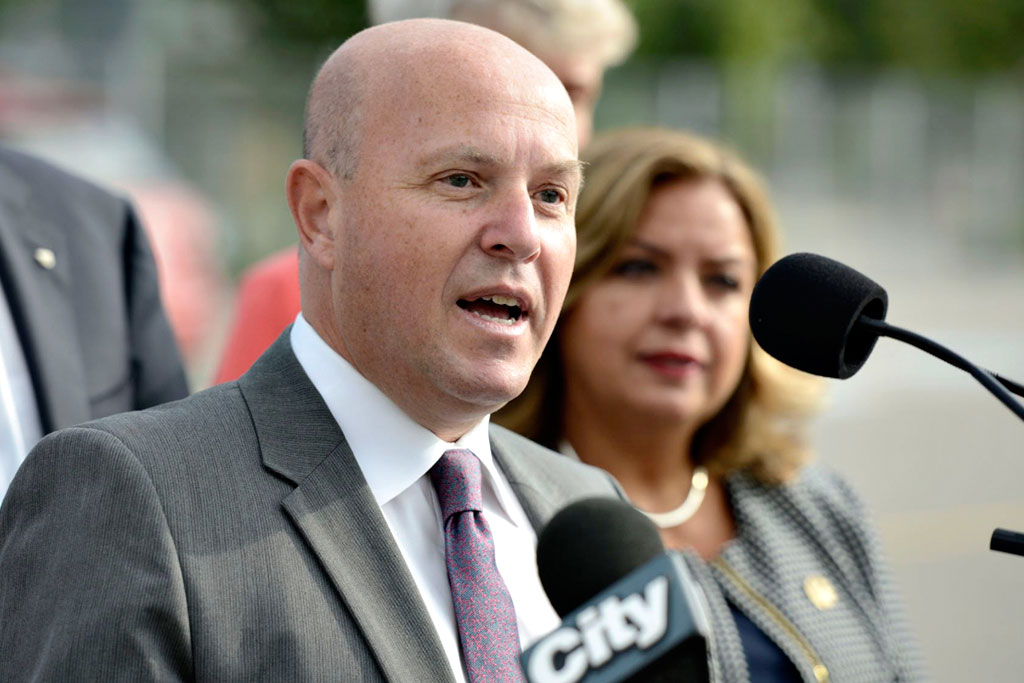
Constable Jenifferjit Sidhu, corporate communications officer with the Toronto Police Service (TPS), said the robberies have been hostile and frightening for victims.

“This has been going on now for a number of weeks. They’re swarming-style robberies where, out of nowhere, victims are approached, some are threatened, and they’re demanded to give up their personal property,” said Sidhu.

Sidhu said that, in total, six arrests have been made and 10 charges have been laid so far in connection with the incidents, and not all the robberies have been related to one another. 

She said there are still multiple outstanding suspects.

“We have had six young people arrested in total with regard to these swarming-style robberies, and they are not all linked. These are separate incidents, and we’ve got different groups committing this act of violence,” she said.

The first robbery occurred on January 17. 

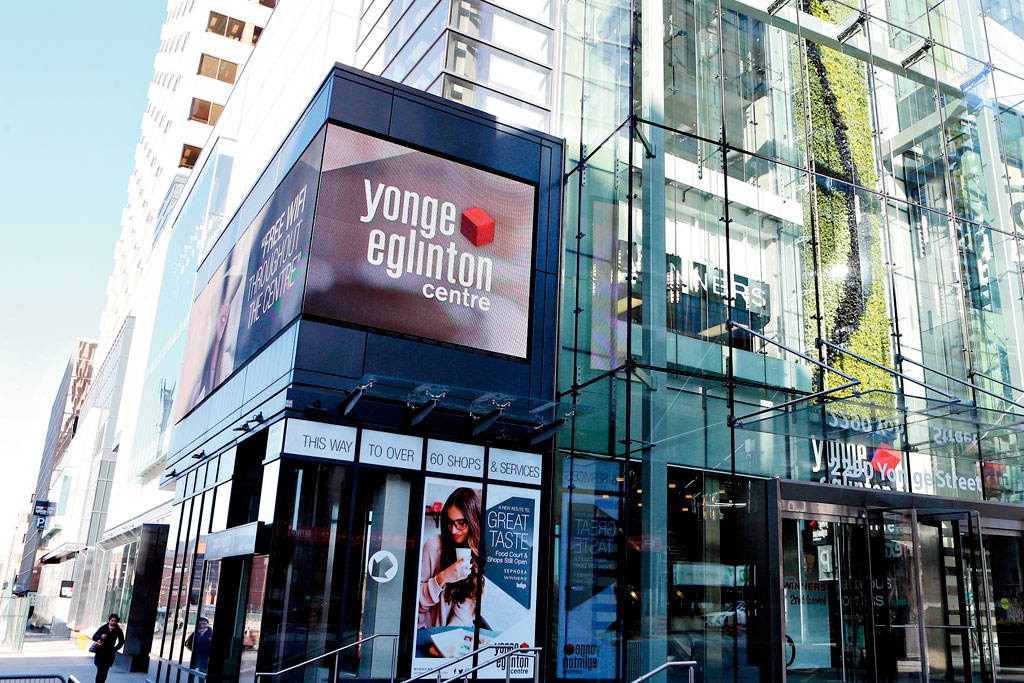
Allegedly, a 14-year-old boy was walking through the Yonge Eglinton Centre when a group of six boys called out to him, demanding he give up his personal property. One of the attackers pulled out a knife and became physical with the boy and took his jacket before the entire group fled the scene.

Later, on February 1, a 14-year-old boy was charged with robbery with an offensive weapon.

Another attack at the mall occurred on February 5, when two boys pulled another 14-year-old boy around a corner, one of them demanding personal property while the other watched for witnesses. 

Eventually, a security guard intervened, but the boys had already taken cash from the victim and fled the scene. Two days later, another 14-year-old boy was arrested and charged with robbery.

On February 8, a 14-year-old boy was selling tickets to a school event in the mall when a group of six boys started following him through the mall. When the victim entered a store in the mall, two of the six boys approached him, threatened him physically and took his backpack, cash and cellphone.

Later in February and into March, three more boys were arrested with robbery and possession of property obtained by crime under $5,000.

Another robbery occurred on February 23, involving a group of boys attacking three boys and a girl in the middle of the Yonge Street and Eglinton Avenue intersection. 

On March 1, a 17-year-old boy was arrested and charged with robbery with violence and possession of a schedule II substance.

In the most recent incident on March 8, TPS said the perpetrators made references to a handgun and showed a knife to victims.

“The majority of the acts are very violent and threatening, so we are urging the public to be vigilant, especially around Yonge and Eglinton. If anyone is a victim or a witness to these robberies, we do ask that they come to police or call Crime Stoppers if they want to be anonymous,” said Sidhu.

Andy Gort, president of the South Eglinton Ratepayers’ and Residents’ Association (SERRA), said residents are on alert.

“It’s very unusual. We are upset about it, and we’re concerned about it. We don’t have a lot of knowledge in terms of why or who did it, but we do hope that there is enough police presence in our area to make sure that the area is monitored properly,” Gort said.

Police are urging victims and witnesses with information to come forward, so they can put an end to the string of incidents.
5 historic Toronto events from Aprils of years past

0

April showers…or should that be April floods on the island? Post City cast a nostalgic eye over the historic events that happened in Toronto on this month across the years.

We rounded up five highlights from the past 160 Aprils.


On April 18, 1942, the Toronto Maple Leafs won the Stanley Cup, defeating the Detroit Red Wings in a seven-game series. And, yes, it could finally happen again. Prepare the parade route!


On April 4, 1990, Alannah Myles’ hit song “Black Velvet” hit number one on the U.S. singles chart. Yes, 28 years ago. Sigh.


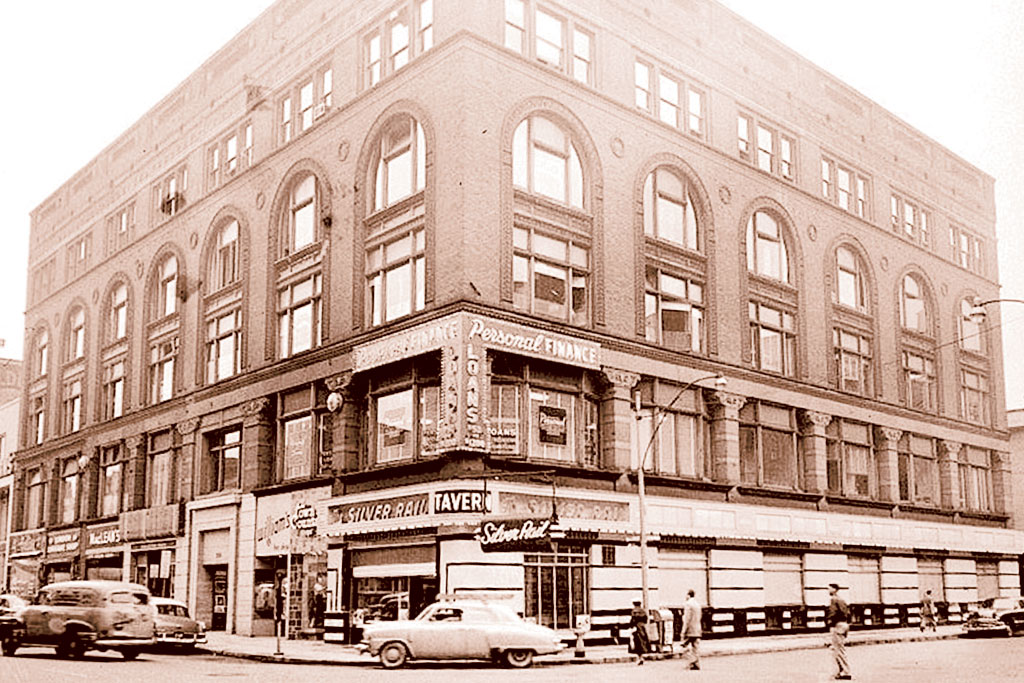
On April 3, 1947, the Silver Rail at Yonge and Shuter became the first Toronto bar with an LCBO liquor licence.


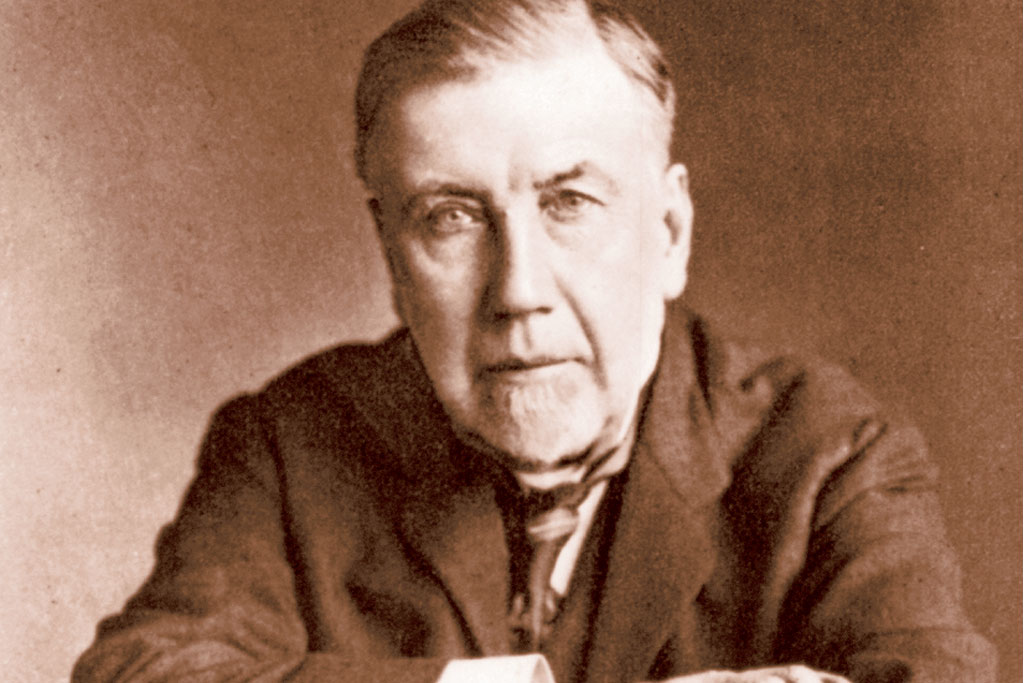
On April 18, 1878, John Ross Robertson founded the Toronto Telegram, a conservative newspaper to rival the liberal Toronto Star.


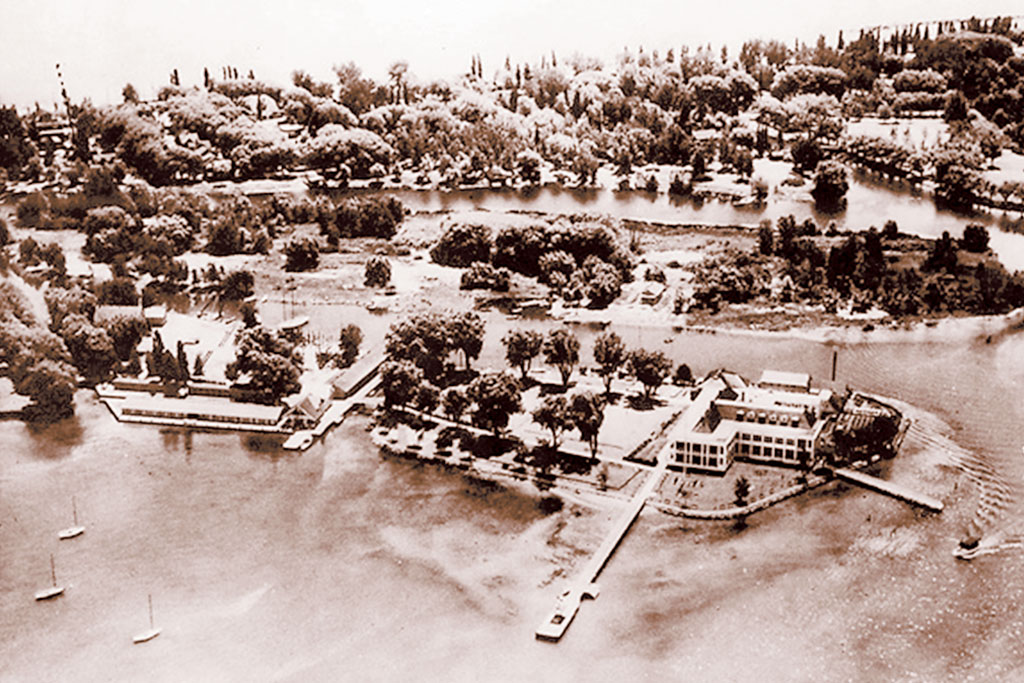
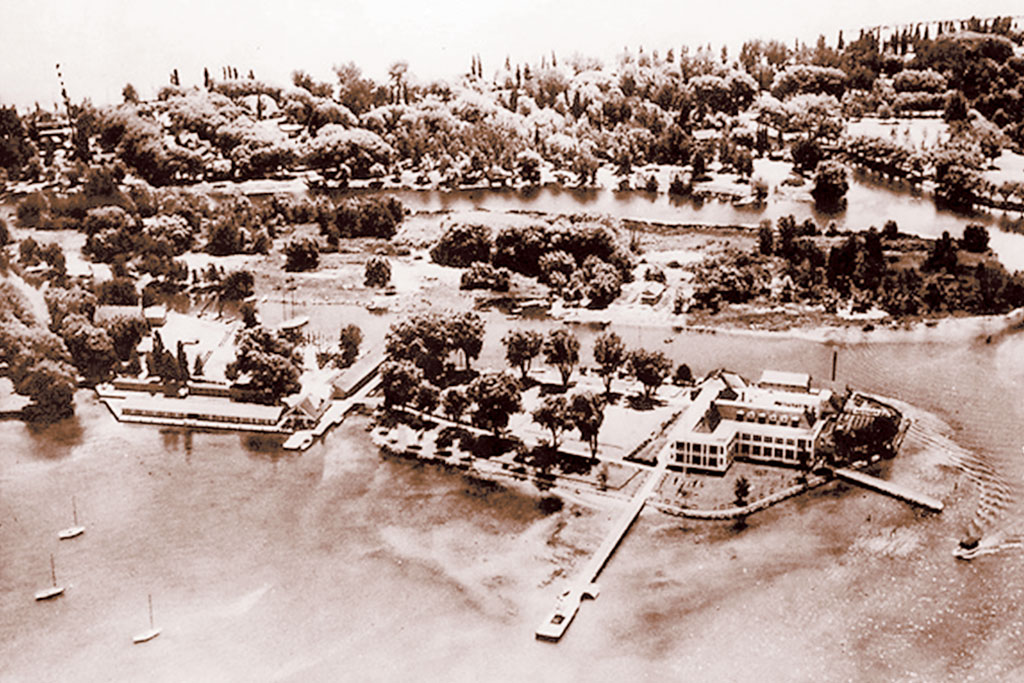
Last year wasn’t the first time Toronto Island was under water. The islands were formed back in April of 1858 when a storm washed over the area. Hopefully this spring we won’t get the intense rains that kept the Island off limits for far too long.

Jeremy Dutcher goes back to his Indigenous roots on masterful debut album

0

Jeremy Dutcher grew up around the traditional music of the Wolastoq First Nation in New Brunswick before delving into classical training in the opera program at Dalhousie University. On his debut album, Wolastoqiyik Lintuwakonawa, he takes archival recordings of traditional Wolastoq songs uncovered at the Canadian Museum of History and, using his skills as a composer and his incredible operatic voice, creates new music. The result is stunning.

What inspired this project?
My inspiration was one of the elders in my community, Maggie Paul. She set me on this path about five years ago. She knew I was interested in our songs, and she said, ‘If you really want to know about the old songs, you have to go to the museum.’

So what did you find?
I put in a request to view these old wax cylinders at the museum that were collected in the early 1900s in the area where my people are from. It’s sort of the earliest recording technology that exists before records or any of that.

Who thought to make these early recordings?
An anthropologist went into our community and collected over a hundred traditional songs. Even getting to read the field notes [was important]. He said that likely within a generation people won’t know these songs any more because people were no longer singing them.

Why was that?
Because of the Indian Act, which is the legislation that governs Indigenous people in Canada. Up until 1951, it was actually illegal for Indigenous people to practise their songs or culture in public.

How did hearing these songs impact you?
When I first heard these voices, you know, it sort of placed me within a continuity of those who have gone before me in terms of the Wolastoq song people. This project is very rooted within where I am from in New Brunswick, and I try to make sure it’s all in the language and it’s speaking from that place.

What are you hoping people take from this?
I built a fire, and some people can come around and warm themselves by the fire and stand around and think about it. But once you build the fire, you can just step away and watch it burn. For non-Indigenous people, it’s a chance to come witness what we’ve been doing and have always been doing, which is sharing our songs and rooting them in the culture and the language.

Jeremy Dutcher performs at the Canadian Opera Company, April 10.

Toronto resident launches cannabis delivery service Duber

0

Capitalizing on the growth of ride-sharing apps and the coming legalization of cannabis, on April 1 Toronto resident Saul Silver launched Duber, a new app that allows cannabis users to order their legal marijuana products and have them delivered by former Uber drivers.

Silver stumbled on the idea in an attempt to procure some cannabis after finding out his favourite local dispensary was raided by Toronto Police Service. Rather than wait 24 hours for the shop to reopen fully stocked and ready for business, Silver contacted random drivers until he found one that understood his request for “420 at 205 Repton Road.”

According to Silver, the driver was so courteous and efficient that the two struck up a conversation. As it turned out, the driver was a software engineering student at the University of Toronto, who drove to make ends meet. In exchange for a five-star review and a five per cent interest in the company, the driver sketched out the rough idea of an algorithm that would allow users to connect the Ontario Cannabis Store order line with the nearest driver. And Duber was born.

Silver, a Ceramics and Pottery major from Lethbridge, Alberta who was voted Most Likely to Play in a Grateful Dead Tribute Band by his classmates, has already received interest from other cities in adopting his platform and an IPO is pending.

Duber is available as a free download at the App Store. Use discount code: aprilfools for 10 percent off your first order courtesy of Post City.

10 spring restaurants we can’t stop talking about

0

Nashville hot chicken; Cold Tea gets a revamp; and Grant van Gameren is on fire. There’s plenty to take a bite out of this spring in Toronto.

Here are the restaurants you need to check out.

Juanmoto
Down a dimly lit hallway past two vintage stores is an unstaffed steel door: welcome to the market’s Cold Tea bar. The 60 Kensington Ave. joint was fully renoed at the end of 2017 and reopened not just with high-concept lighting, but a whole new identity: Asian–South American snack bar. Juanmoto is the brainchild of fusion-obsessed chef Leemo Han (Hanmoto and more), and his new kitchen’s oysters topped with salsa, tobiko and roe confirm it: the market is now upmarket.

Barcelona Tavern
Our fair city has enough tapas bars to populate entire “best of” lists, and it turns out love of Spanish eats is a cross-country affair. This month, Calgary’s Barcelona Tavern comes to Liberty Village at 109 Atlantic Ave. to dole out its tiny delicioso morsels and signature paellas to hungry condo dwellers.

Frankie’s Italian
As Leslievillians mourn the loss of Lil’ Baci, owners Mark Bacci, Riyaz Somani and Suresh Singh have been busy planning an on-site resto rebirth. Frankie’s Italian is their new baby coming soon at 892 Queen St. E. — if babies were handmade-pasta filled and came with a Negroni bar. This new member of their family will be headed by Annabelle chef Brandyn Koester.

Quetzal
Grant van Gameren is on fire. And now his food’s on fire too. He’s up to restaurant number seven, Quetzal (419 College St.), where chefs Kate Chomyshyn and Julio Guajardo (both of El Rey), and Owen Walker (the genius behind the bar) will cook traditional Mexican fare over a 28-foot-long open flame. Hot.

Paris Paris
Say yes to just “one” more glass at this unfussy all-day Dundas West wine bar.

Friday lunching ??? #tgif

A post shared by paris paris (@parisparisbar) on

Kay Pacha
Peruvian food gets its chance to shine on St. Clair W.

Five Points
Nashville hot chicken on Bloor: so hot, so delicious. Beware the Devil’s Breath.

Uncle Mikey’s
Korean bar snacks are where it’s aton trendy Dundas West. Don’t forget the soju!

Bacchanal
Classic French flavours with a few new tweaks near Queen West. You butter check it out.

Eupin
We love the sliced beef in chili oil from this tiny Chinese takeout spot at Yonge and Sheppard.

Anti-fur protestors rally against Drake and his Canada Goose partnership

0

Soon-to-be Bridle Path resident Aubrey Graham, a.k.a. Drake, has recently found himself on the wrong side of People for the Ethical Treatment of Animals (PETA) because of his partnership with Canada Goose, the popular outerwear company that uses goose down and coyote fur.

After Drake announced, over live stream Twitch, that he had embraced the vegetarian lifestyle, PETA sent him a gift basket accompanied by a letter commending his decision but urging him to reconsider his Canada Goose affiliation.

On Feb. 28, demonstrators with signs bearing graphic images of fur farms and grisly homemade props met to create an “anti-fur flash mob” to protest fur and the 6 God himself. Activists threw his albums in the trash and tweeted at him with the hashtag #DrakeFurShame. 

First Look: Buca’s Ryan Campbell brings Venetian small plates to Little Italy with Il Covo

Vongole – Canadian clams in Mandranova olive oil, lemonquat, garlic, parsley served with golden crostini.

Little Italy has long been the go-to place for authentic, old-school, Italian cooking. That is, until Il Covo came along. Ryan Campbell, co-owner and executive chef at the newly opened cicchetti spot may just be the breath of fresh air that draws back the younger crowd.

Campbell has worked at Buca on King West with Rob Gentile (who Campbell met a decade ago while working at North 44) as well as cooked at some of Italy’s finest Michelin-starred restaurants, but owning a restaurant has always been his dream.

Cicchetti is a way of eating that originated from Venice and are half portions of a main course. One might even call it Italy’s answer to tapas.

“It’s the way diners enjoy eating – it’s more about trying many things,” says Campbell. “Sometimes you don’t want to commit to a $45 lamb dish.”

The menu draws from “a little bit of everywhere”–– Rooted in Italian cuisine, there are also influences from Campbell’s personal culinary history. “I could eat Italian food, everyday of the week, 3 times a day and be very content,” he adds.

The charm of Little Italy was what convinced the team to call College Street home.


(IMAGE: YVONNE TSUI)

“It’s a very charming part of town, there’s lots of foot traffic and people enjoying the area. We thought it would be a fun place to do something a little bit different,” says Campbell.  “Il Covo is kind of a meeting point for us. We wanted to have a casual atmosphere where people can have a full dining experience.”

The space, designed by Brian Woodrow, pulls inspiration from Venice and also from the mid-1800s.

“A cicchetteria is a Venetian concept so there is Venetian influence throughout the space, whether it’s the peaks at the top of each side of the bar, or the banquettes or what not. We also wanted to give it a very old-world Italian feel as well,” says Campbell. There are hints of an almost saloon-like atmosphere, especially in the main dining room.

The menu is divided in sections: land, ocean, from the garden, from the oven. For starters, there is the Vongole – Canadian clams in Mandranova olive oil, lemonquat, garlic, parsley served with golden crostini.

From the garden is the Rape Bianche, turnips, sous vide then braised in  bay leaf, garlic, salt and roasted in pork fat and stuffed with an ‘nduja Abruzzese – which is mild unlike its Calabrian counterpart.


(IMAGE: YVONNE TSUI)

The Stella di Ricotta in Brodo is the showstopper.  You smell it before it arrives at the table. It’s a roasted Buffalo Ricotta dumpling in an aromatic hen’s broth topped with thyme.  This is one dish you may not want to share.


(IMAGE: YVONNE TSUI)

Desserts are equally enticing.  The Cassata, a traditional Sicilian cake here is made with sweet ricotta, pistachio, preserved cherry and candied citrus with a pistachio outer casing.


(IMAGE: YVONNE TSUI)

“There’s a lot of thought and effort that goes into the way we go about our front of house service and of course, a ton of passion involved in the food – the exact same thing exists in our dining room in creating an individual dining experience for everyone who comes in here,” says Campbell.

Just thumb through their wine list – a tome bound in leather that looks like something a wine nerd would swoon over.

Il Covo, 585 College Street, 416-530-7585.


(IMAGE: YVONNE TSUI)


(IMAGE: YVONNE TSUI)


(IMAGE: YVONNE TSUI)


(IMAGE: YVONNE TSUI)

Local Love: How winning a competition got Olivia Rubens designing eco-friendly — in neon

0

When eyeballing her vibrant garments, one might never guess that Olivia Rubens is an eco-friendly designer. For those who haven’t already cast certain notions aside about the label, any visions of frumpy, dirt-hued garb worn by hippies in Oaxaca can be tucked deep into bed.

Thanks to a neon colour pallette and the inclusion of metallics, Rubens is all about shattering worn out stereotypes, showcasing just how modern clothing that puts the environment first can be. After checking out her punchy pieces at the recent Re/Set fashion showcase in tandem with Toronto Fashion Week, we wanted to learn more about Rubens’ processes — and how she got so hooked on the environment.

When did it first dawn on you that you needed to create an eco-friendly label? I participated in a competition at the Aveda Catwalk for Water with Mont Pellier Fashion. The competitors’ goal was to repurpose upcycled denim into a new ‘couture’ look. I used extremely lengthy and detailed processes to make my garments, removing the colour from the denim, fraying it, ripping it into strands, making yarn, and knitting it into a sweater. I also used patchwork I had screen-printed to create pants. There were six jury members, each of whom were to pick one winner. Although Kirk and Stephen of Greta Constantine wanted to pick me as their winner, Lisa Corbo was already familiar with my name and my work, and had snagged me first. I was so flattered by the great reception!

There was an immense feeling of satisfaction in repurposing something and making it into a completely new thing. Mont Pellier Fashion provided me with a contract and sponsorship to create a S/S 2018 line, and to put it into production locally. The contract stated that I had to produce eco-friendly clothing. Initially I was pretty frustrated with the challenges and limits this imposed. Since then, I have become extremely passionate about eco-friendliness and have stuck with this as a core value by which I abide firmly for my brand. I’ve turned these challenges into ways through which I can dye and customize my fabric to make it more interesting that perhaps I would not have even done as a textile designer if I was not eco.

Your line is sustainably produced and yet you use neon fabrics and metallic overlays. How much time do you spend in research and development? I have spent almost the same number of hours doing research as I have actually creating the garments. It’s always a learning process, and sometimes in dyeing and working with these fabrics, you have to work around the materials and colours rather than making them adhere to your designs. I dye all my samples myself, then figure out how to put them through production and get the fabrics dyed on a larger scale. All of this takes a lot of math, down to the grams and ounces. I’d relate it to baking. You have to be really precise, and you can’t skip any steps or else you won’t yield the right result. For my new Fall/Winter 2018/19 collection, I am using all natural dyes for my natural fabrics: madder, kamala, cochineal and weld. It’s been a huge challenge, but I’ve been so in love with the beautiful colours they create. Natural dyes and fabrics have a stereotype of being so boring and bland, but as I’ve shown, they really don’t have to be! You just have to put the time (money, haha) and research in.

Tell us about the inspiration behind your current SS/18 collection? The title of this collection is ‘Airwaves.’ The inspiration behind it is heat waves and how these play with our eyes. I’ve mirrored effects and silhouettes top to bottom in garments, deceptive details and used textile design to mimic the effect this creates. I’ve used Fata Morgana, a type of mirage, as an inspiration behind certain details and ideas as well.

What goes into the Dee Dress — how do you create the dyes? I used MX Reactive Dyes through G&S dyes. I am using all natural dyes for my natural fabrics now, but when I started out, I was unaware of the options for natural dyes, and unaware reactive dyes were not truly eco-friendly. In any case, the fabric itself is. This dress contains mostly a tencel twill, and a bit of sheer silk/hemp. For those who don’t know, tencel is made from wood cellulose (plant-based fibre). I dyed the tencel twill for the sample of the Dee Dress in bins of warm water, kosher salt, and the dye on my porch at home. The yellow was very straightforward as I didn’t have to alter the colour at all. The pink was very challenging though. I had to mix a couple of different colours to get the right pink and it is very difficult to dunk fabric and achieve a light colour but to get an even colour all around. The whole process of dyeing probably took me about 5 hours, from mixing and dyeing, to washing and drying. I have since sent my fabrics to get dyed at Gentex in LA for the production of this Spring collection.

How important is it to you that your collection be produced locally? It’s extremely important. Firstly, I can really oversee the process of the production as I can visit them whenever need be. Secondly, I know firsthand that it’s totally ethical, because I can oversee everything. Finally, we don’t have much in way of options in Canada for supplies and contractors, and that will never change if people move elsewhere to source and produce. If more of us stick closer to home, supply will hopefully meet demand. We have to support our local companies. We have the talent; we just need more people to be aware, and I’m glad this is slowly but surely on the rise.

Who is your eco design hero? Definitely Faustine Steinmetz. The ways in which she has repurposed denim, uses her ingenious textile design techniques, deploys shibori dyeing and supports artisans is so beyond inspiring. She produces everything ethically and sustainably, which is something that should be more common. I would love for the opportunity to learn from her someday.

Stintz on Midtown: Is it possible to reduce congestion and pedestrian injuries?

0

Mayor Tory has made a number of pledges and commitments; however, there are two in particular that appear to be at odds with each other. Although his commitment to reduce congestion is not necessarily mutually exclusive with his pledge to reduce pedestrian injuries, the two objectives are difficult to reconcile. 

The basic question about what constitutes the highest and best use of a public roadway is at the core. 

This question is coming up time and time again, most recently with projects such as the Bloor Street bike lanes and the King Street West transit pilot project — even the Crosstown Eglinton plan includes extensive use of bike lanes — and other people-centred planning that inevitably butts up against the need to reduce congestion.

Reducing pedestrian injuries and fatalities and making streets more community focused usually involves slowing down traffic because evidence suggests that when vehicles move at speeds of 30 km/h or less there is a significant reduction in pedestrian injuries. 

Is the highest and best use of a public roadway to efficiently move as many cars as possible or to promote a safe environment for the most users?

The tension between the two goals surfaced last month when Toronto City Council Public Works and Infrastructure Committee voted down proposed changes to Yonge Street from Finch Avenue to Sheppard Avenue. 

There was a proposal to reduce the number of traffic lanes from six to four and create wider sidewalks and bike lanes. The councillor consulted widely with the community, and the general consensus was that the best option for the area was to dramatically rethink the current road from a major arterial road to a road with less capacity for carrying cars while creating more space for other functions.

The proposal was ambitious and would have had a positive change on that section of Yonge. 

Ultimately the proposal was defeated for a number of reasons. 

Whatever proposal is finally adopted by city council, street parking should not be a consideration. Street parking is the most inefficient use of road space, whether you are in favour of removing congestion or building safer streets, and should be moved to side roads or parking lots.

There is still a chance that elements of the proposal will be adopted by city council. 

At a minimum, the sidewalks should be widened and street parking should be removed. That section of Yonge Street will never be a quiet leafy enclave, but it certainly could be safer.

This balancing act of managing duelling priorities is far from over. 

Toronto city council will vote on Transform Yonge project

0

A streetscaping plan for a North York section of Yonge headed to City Council for a final vote after two years of environmental assessments and community consultation, but not without a last-ditch political effort to derail the plans. 

During a Public Works and Infrastructure Committee meeting to discuss the city planning-preferred Transform Yonge design option to decrease the number of lanes on a stretch of Yonge between Sheppard and Finch in favour of bike lanes and wider sidewalks, a new motion was introduced by councillor David Shiner. His motion involved keeping six lanes of traffic on Yonge but moving the cycling lanes to nearby Beecroft Avenue, which would increase the cost of the project by around $9 million. 

“I believe this is a safer, more viable option that provides for both of the things that we want: a great pedestrian way and a great and safe cycle way,” said Shiner when he presented his motion. 

Councillor John Filion, who has led the project from the beginning, said he had little idea a new motion was being introduced. After the meeting, Filion told Post City he “kind of expected something like that” would happen. “It’s behind-the-scenes-politics,” he said. “It has nothing to do with the merits of the plans. The merits of the plans speak for themselves.” 

Opponents of the Transform Yonge option include Mayor John Tory and Coun. Shiner. 

“I’ve spoken to councillors who don’t support Transform Yonge because they just don’t,” said Filion. “And I’ve spoken to other councillors who do support it and just won’t vote for it because the mayor’s not in favour of it.

This project comes at a time when Mayor Tory has been involved in a number of road safety measures and is an advocate of the city’s Vision Zero Road Safety Plan. A City of Toronto staff report identified the section of Yonge between Sheppard and Steeles as a “priority safety concern.” Between January 2010 and December 2017, there were 78 collisions involving pedestrians and five involving cyclists. Of these, eight resulted in serious injuries or fatalities. 

One of the objectives of the project is to improve road safety by reducing car traffic and making a safe space for cyclists. Shiner’s last-minute motion to keep the six lanes on Yonge got the majority vote in PWIC by three to one. The motion was deferred to city council for a vote on March 27, and Filion believed the vote would be close. 

York Region hopes inclusionary zoning can help create affordable housing

0

The province has unveiled some big plans to create more affordable housing in our communities, but whether they’ll actually work is just as big a question.

Last month, York Region was among the municipalities telling Ontario how its inclusionary zoning (IZ) regulations could be better. I’ve written before about how our neighbourhoods, built for young families, are increasingly becoming exclusive enclaves and empty nests. The hope is that IZ can bring some balance back.

Inclusionary zoning is a powerful tool if wielded correctly.

It gives local governments the ability to require every new development to include a certain percentage of affordable units. (How “affordability” is defined is a whole other can of worms, but it’s at least something more affordable than the market rate.)

For perspective, the local market has cooled off a bit in recent months (thanks, at least partly, to other government actions), but the  average homes sold in the south end of York Region in January 2018 still averaged more than $850,000.

A made-in-Ontario IZ law seemed like a pipe dream even a few years ago; although, it’s already common practice in places such as Chicago, San Francisco and London, England.

Every time the province kicked the idea around, the development industry rallied against it. But as housing affordability became headline news here, it was increasingly obvious there was a gap between policies requiring municipalities to have more affordable housing and the legislation that could make the proverbial rubber hit the road.

Finally, the province passed new legislation in late 2016, but it took another year before the accompanying regulations were unveiled for comment. As always, the devil is in the details.

York Region has ambitious targets for affordable housing. According to its official plan, 25 per cent of all new housing should be “affordable,” and in centres and corridors, it rises to 35 per cent. That creates a paradox since we want more affordable housing in prime locations, along main streets and transit corridors such as Yonge Street and Highway 7, but you’re not going to get that by closing your eyes and wishing, much less asking developers to please set aside cheaper units at their most marketable sites.

To date, the tools our municipalities have for accomplishing these lofty and laudable goals are near non-existent.

The best option is Section 37 of the Planning Act, which allows municipalities to trade extra funds for awarding developers extra density on their projects. Those funds can be used for housing, parks, community facilities (or, ahem, a hockey arena), so housing is just one of a long list of possibilities.

The result is that the main way to get “affordable” housing in York Region right now, putting aside the years-long wait on the social housing list (another separate issue) for those particularly in need, is to buy something small.

Given the stakes, York Region’s official comments about the IZ regulations expressed a great deal of concern.

A lot of the specifics are boring, such as inside baseball, but suffice it to say the region expects IZ would cost a lot to put in place and argue local municipalities need more flexibility than Queen’s Park is giving them to actually make it work.

One big sticking point is that, if a unit is priced at, say, $400,000 and the “affordable” price is deemed to be $300,000, the municipality is on the hook for 40 per cent of that difference — probably via incentives, waived fees and such. Most likely, the developers will argue the rest gets divvied up and merged into the cost of the market-price units, jacking up the cost for everyone else (even if the financial realities are rather more complex).

Although New York City has some areas that require up to 30 per cent of new units be affordable —and stay that way in perpetuity — Ontario is setting a 10 per cent cap, and with a 30-year lifespan.

So York Region’s concerns that the proposed rules won’t actually produce the desired goal have some merit. It’s also far from the only municipality to voice some concerns, which is why Minister of Housing Peter Milczyn has made it clear these aren’t the final regulations.

I know, once you’ve got your house, it’s easy not to concern yourself too much about how any future neighbours will join you, but you can only boom so long without busting. When there’s no diversity and no choice, we all stand to lose sooner or later, so let’s hope we can get this right.

Sonja Bata: A legacy of philanthropy and footwear

0

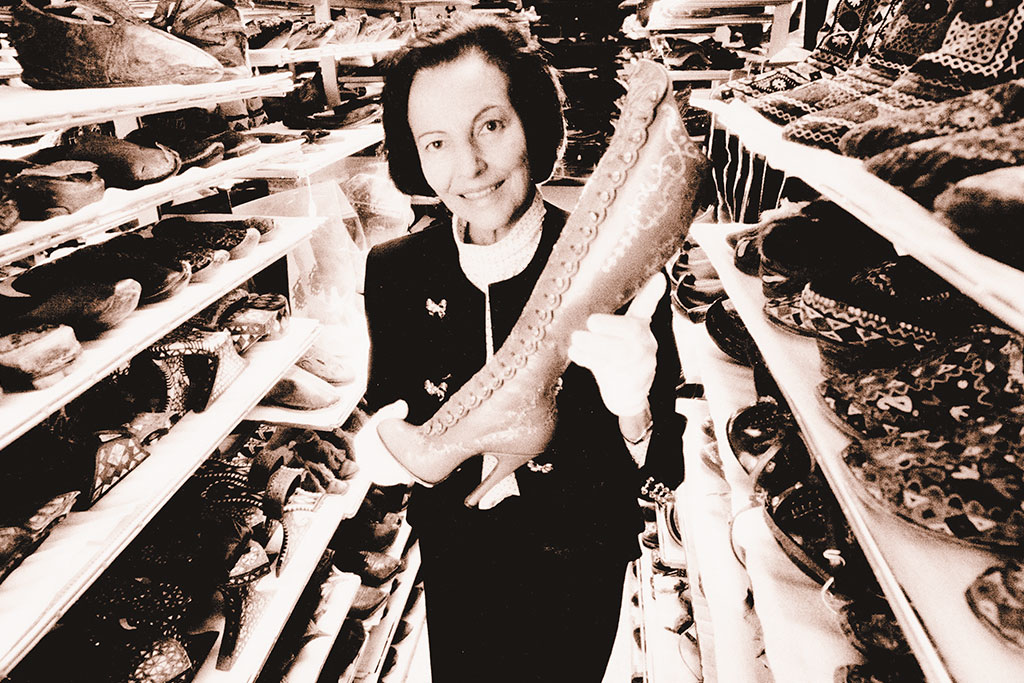
Sonja Bata was born in Switzerland, studied architecture and spent much of her life surrounded by heels and laces.

Her late-husband Thomas Bata ran a global shoe empire, and she amassed her own collection of historic footwear that numbered some 13,000 pieces spanning 4,500 years, the bulk of which would become the foundation of the Bata Shoe Museum, which she started in 1995. It remains the only museum in North America dedicated to historic footwear.

Bata, who once lived along The Bridle Path, was awarded the Order of Canada in 1983. She was also a philanthropist who devoted her time to multiple organizations, including the World Wildlife Fund Canada and Junior Achievement Canada.

Bata passed away February 20 at Toronto Western Hospital. She was 91 years old.