

Home Blog Page 559

Consensual Non-Monogamy — it’s more popular than you think

0

In my line of work, I’m privy to an often unsolicited glimpse into the intimate lives of couples from all walks of life. From chatty Uber drivers to long-lost childhood friends, it’s not uncommon for people to open up as soon as they find out what I do for a living.

One of the trends I’ve observed over the past 10 years is an increase in consensual non-monogamy (CNM). Data from two representative samples of 8,718 adults suggest that 21 per cent have been in some form of a CNM relationship. And although non-monogamy has always existed in multiple forms (e.g., cheating), it seems that consensual non-monogamy may be on the rise.

Some, like Mandy* from Forest Hill, say CNM is a more realistic option given the divorce, infidelity and marital dissatisfaction rates.

“I didn’t want to be another statistic. After watching my parents and so many of their friends and siblings, I knew there had to be another way.”

Others discovered CNM by chance and were pleasantly surprised.

“It had nothing to do with our upbringing,” says Yorkville resident Petra*. “My parents have been happily married for fiftysomething years. But monogamy just isn’t the best fit for us. We opened up 12 years ago after talking to some new friends we met in France, and we couldn’t be happier.”

There are, of course, many reasons people opt for CNM, and no two relationships are alike. And although Mandy and Petra see CNM as the key to relationship success, people in monogamous relationships view monogamy similarly. This is because we tend to generalize our desires as universally ideal. The data, however, suggests that both CNM and monogamy can be successful. Although those practising CNM exhibit higher levels of trust and lower levels of jealousy, research reveals that levels of satisfaction, passion and commitment are similar.

Your chances of success, in either arrangement, increase when you thoughtfully consider the options in advance and opt in as opposed to accepting one structure as a default.

Just like monogamy, CNM does not work for everyone (there is some preliminary evidence that certain personality types are drawn to it), and it is not the answer to a failing monogamous relationship. It won’t eliminate common relationship stressors, but its benefits might include expanded support networks, alternative openings for personal growth and an emphasis on exploration over restriction. As CNM requires greater specificity with regard to delineating relationship boundaries and expectations, it can lead to more communication, which has the potential to increase intimacy and decrease tension.

“I also feel less pressure around sex than I did before,” says Petra.

“I feel like it helps us to connect in other ways, and because we’re open about other people, I’m not afraid of losing him to someone else.”

CNM is about much more than sex, and although it is often dismissed as a way to condone sexual infidelity, the clear distinction between CNM and cheating is consent by all parties involved.

*Please note that names have been changed and relationship details have been shared with permission from all parties referenced.


The great indoors

0

When we think of summer camp, we typically think of kids marching through fields, gathering bugs and butterflies, or running across the grass in pursuit of a soccer ball, camp counsellor or fellow camper. But what do you do if your wee day camper is not enthused about embracing Mother Nature? It’s time to finalize your summer plans, and parents need to find the right day camp for their indoor-loving progeny.

Fear not, there are many day camps that focus on learning and having fun in the great indoors, with a smattering of earth and outdoor science appreciation, which might just trick your kids into enjoying getting outdoors a little bit more.

Have a sporty kid who prefers gym floors over grass fields? Check out a multi-activity camp that offers a range of new indoor sports every day, or visit your local rock climbing gym. Many have exciting day camps for would-be climbers.

If your goal is to get your child kicking a ball outside, focus on sports camps that have an outdoor option like soccer, floor/field hockey or basketball, among others.

Do you have a budding young Picasso in the house? Find an art camp that will give your child the opportunity to try out different mediums and encourage him or her to eventually move the easel outside to paint some landscapes.

Bill Nye a name you hear often around the dinner table? My son loved engineering camp where they built rockets, learned about how everyday household items work and probably received more education about science than in actual science class.

If you have a kid who is constantly pulling things apart to see how they work, put his or her talents to good use and have your kid build you something. Maybe an outdoor bike ramp.

When my two oldest were about six and eight, I did some research and found a magic camp. The six-year-old is now 24 and still loves trying out card tricks and other tomfoolery.

My two youngest signed up for “Knight School” where they spent the morning learning fencing and the afternoon doing archery. After it ended, my Hunger Games fan of a daughter took archery lessons for a continuing season. Flash forward seven years, and my 16-year-old son now competes in competitive fencing tournaments and is hoping to make it his university sport in a couple of years. This is one case where encouraging him to run around with a pointy thing in his hands was a good idea.

But above all, you know your own kids and what they’re interested in. Pick a camp that aligns with what they are excited about, and it will guarantee summer fun, indoors or out.

Land of dough and honey

0

It’s a universally well-known fact that Canadians love their balls of fried dough.

Loukoumania (3120 Rutherford Rd.) offers a Greek take on everyone’s favourite doughnut hole-style treat.

Loukoumades are Grecian orbs of pure deliciousness that are traditionally coated in honey and rolled in cinnamon. But here customization is key: you can choose from dozens of toppings, from icing sugar and crushed Oreos to bacon bits and banana cream, all layered over ice cream, if you so desire.

You can get those honey balls to go, but you also have the option to linger and sip a selection from an extensive coffee menu featuring espresso-based drinks (such as affogatos) and even butter coffee.

Confessions of a Lawrence Park shopping expert

0

Bella McFadden, young entrepreneur and business owner, has managed the impossible — she gets to shop for a living. 

“When I was a kid, I was so hard on my mom because I always wanted to go shopping. I said to myself, ‘I need to find an industry where I can make money on that.’” 

McFadden says she got into thrifting to sustain her own wardrobe early on in high school at Lawrence Park Collegiate, a time when she didn’t have much disposable income. She realized around Grade 11 that people loved the clothes she was wearing. 

“They would always ask me where I bought it and if they could buy it from me, so I realized I could capitalize on this,” she says.

It was then that McFadden started her first brand, cheekily titled Worship the Fallen with the initials WTF. She would go shopping in thrift stores, searching for clothes that fit a particular style and would style them and post photos to sell her wares. 

Searching her current brand, @internetgirl on both Instagram and Depop (an online app primarily used to buy and sell vintage and used clothes and accessories), her style is certainly distinctive but ultimately hard to pin down. 

“I’m definitely inspired by a bunch of different sub-genres and subcultures; a lot of late ’90s cult films and just the late ’90s era, and I like the Y2K era of fashion,” McFadden says of her brand’s style. 

But this wasn’t always McFadden’s plan when she started selling clothes in high school. After graduating, she went off to Concordia University and she didn’t have time to be running a business, so it became more of a side job. 

However, when taking a mental health break from school in her third year, McFadden ended up never returning, deciding instead to focus on expanding her business on Depop. 

Now, her personal brand has become her full-time job, or more than full-time. “I work 24/7 to be honest,” she says. 

Throughout the week, McFadden and her assistant will spend all day wrapping packages, shooting new product for Depop, making shipping labels and, recently, shooting YouTube videos on a specific lookbook or style from her products. 

Although McFadden isn’t the only one selling curated vintage wear online, she sees her brand as unique because of the relationship she can build with her customers. 

“It’s sort of like purchasing off somebody’s Instagram profile. People will message me with any questions they have about my product, and they can talk to me directly.” 

McFadden also understands that the point of thrifted goods is the advantage of low prices and reusing items, so she works to keep her prices affordable. 

“What I’m doing is sustainable because I’m moving this product instead of it going into landfills.” 

She estimates her customers are generally around ages 15 to 24, a group she says doesn’t always have a lot of disposable income, so she works to make her product — what she describes as mostly vintage finds and old mallwear — appealing to her audience. Most of the items on her Depop account range from $10 to $60, depending on the item and the label. 

McFadden’s current focus is expanding into manufacturing her own designs. 

“I have so many designs and I’m so excited about creating them. I’ve been curating my style based on vintage wear, and now I’ll be able to use my own line.” 

Outdoor spaces that evolve as our families mature

0

Our properties have become much more valuable to us with the intensification of our city.

We ask our gardens and landscapes to enhance our busy lifestyles, and often what we need and want from our gardens shifts over the course of our lives.

The outdoor space that served our needs when we were a young family often no longer serves our needs once we are empty nesters. So spaces, like gardens, should be flexible, designed to evolve as your life and family changes.

Through my work on residential gardens throughout the city, I focus on careful planning, analysis and design to establish a framework for our clients’ properties that allows their gardens to mature, grow and evolve over time, becoming a critical and functional part of their home.

In our increasingly dense city and neighbourhoods, every square foot counts, and the outdoor aspect of your property can be designed to enhance your use day and night and through all four seasons.

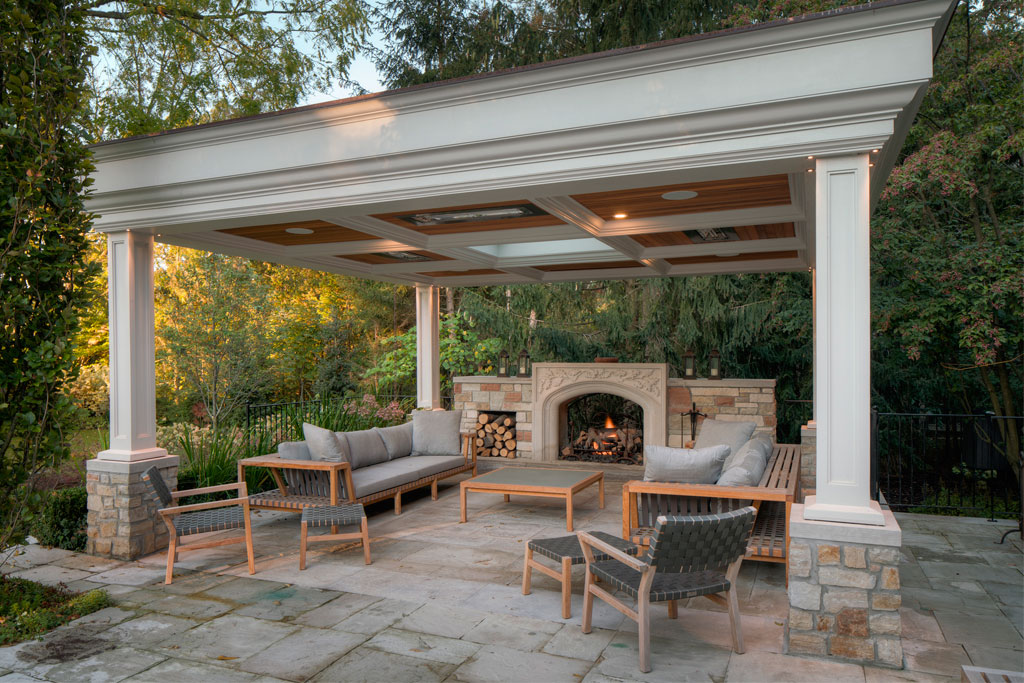
Three popular ways to achieve this type of functional garden are through creative uses of secondary structures, design-savvy garden furniture and outdoor living spaces.

Secondary structures no longer serve as just a place to store your equipment and tools. They are now cleverly converted into art studios, retreat spaces and deluxe lounge and entertaining areas that extend our use of our gardens.

Garden furniture now comes in a vast range of options, offering a myriad of different configurations to allow for more comfortable and flexible entertaining and relaxation.

Outdoor kitchens, fireplaces and pavilions have truly allowed the interior of our homes to seamlessly flow out to functional outdoor spaces, becoming valuable extensions of our homes.

As a landscape architect in Toronto, perhaps one of my greatest challenges today is designing spaces that are resilient and can respond to extreme weather events, such as periods of drought or flooding.

Landscapes are living and breathing systems that suffer under duress and can ultimately fail in adverse conditions.

To address this challenge, we integrate green and blue infrastructure strategies that can help to increase the resilience and sustainability of our landscapes without compromising the esthetic integrity of the design.

We try to weave this infrastructure seamlessly and holistically through our gardens with a focus on reducing overall water requirements, capturing and utilizing rainwater and reducing urban heat.

Specific techniques you can use include a palette of hardy, native and drought-tolerant plants; installing rain gardens, bioswales and cisterns for water storage; using green roofs and permeable paving; encouraging diverse tree canopy growth; and using paving materials with a high solar reflectance index (SRI) value.

The implementation of these techniques will result in habitat creation, pollination and storm water management and will allow your garden to be resilient to extreme weather events that are all too common in our city.

A garden that can bounce back from these types of extreme events requires less maintenance due to damage and failure.

Jen Agg announces landmark Toronto restaurant the Black Hoof will close later this summer

0

Toronto restaurateur Jen Agg announced the impending closure of her landmark restaurant The Black Hoof on May 17 over social media.

"The Hoof (now in its 10th year) is so special to me—it's where I learned how to do what I do (so often the hard way)—but it's time," she writes. "I've never approved of closing a busy restaurant, (seems crazy, tbh) but we've said all we have to, and ten years in this business is a LONG F—ING TIME."

Looks like the last day of operation will be Aug. 20, and you can bet the long-revered Hoof will be packed until then as foodies from across the land descend on Dundas Street West for one last taste of the creative cuisine that set the city ablaze.

Agg started the operation in 2008 on Dundas, back when there was nothing of note in the area. After The Black Hoof opened up, slowly but surely the area began its transformation to hip foodie destination. A few of the city's more popular culinary trends over the past decade such as charcuterie and bone marrow were first cooked up in the Black Hoof kitchen.

The Hoof is also known for the many chefs that worked there most notably of course Grant van Gameren who helmed the kitchen during its formative years and famously earned rave reviews from none other than British celebrity chef Gordon Ramsay among others. In addition to GVG, other chefs of note to ply their trade at the Hoof stove include Colin Tooke who went on to open Grand Electric as well as Brandon Olsen of La Banane. 

Jen Agg also continues to operate Rhum Corner, which opened in 2013 and launched another successful restaurant, Grey Gardens, in Kensington Market in 2016.
Oh, and she published a very popular memoir I Hear She's a Real Bitch. So, yes, she's got a lot going on, part of the reason why Post City magazines named her one of the most inspiring Toronto women of 2017.

According to her comments on the closure, it seems as though the space will remain in her hands and unoccupied until inspiration strikes. And we're pretty sure it will. Credit where credit is due, Agg has been one of the driving forces  that shook the fine dining establishment out of its stupor and pushed the local food scene to brave, and extremely delicious, new heights. And, it started with the Black Hoof.

Yes, in my backyard

0

The numbers are in for 2018, and the home renovation market is going through another shift!

Every year I eagerly await the Cost vs. Value report put out by Remodeling Magazine (www.remodeling.hw.net), and even though this report is an American study, the national averages are an excellent indicator of what is happening in the Canadian marketplace.

A big surprise this year is the continued trend toward outdoor renovation projects.

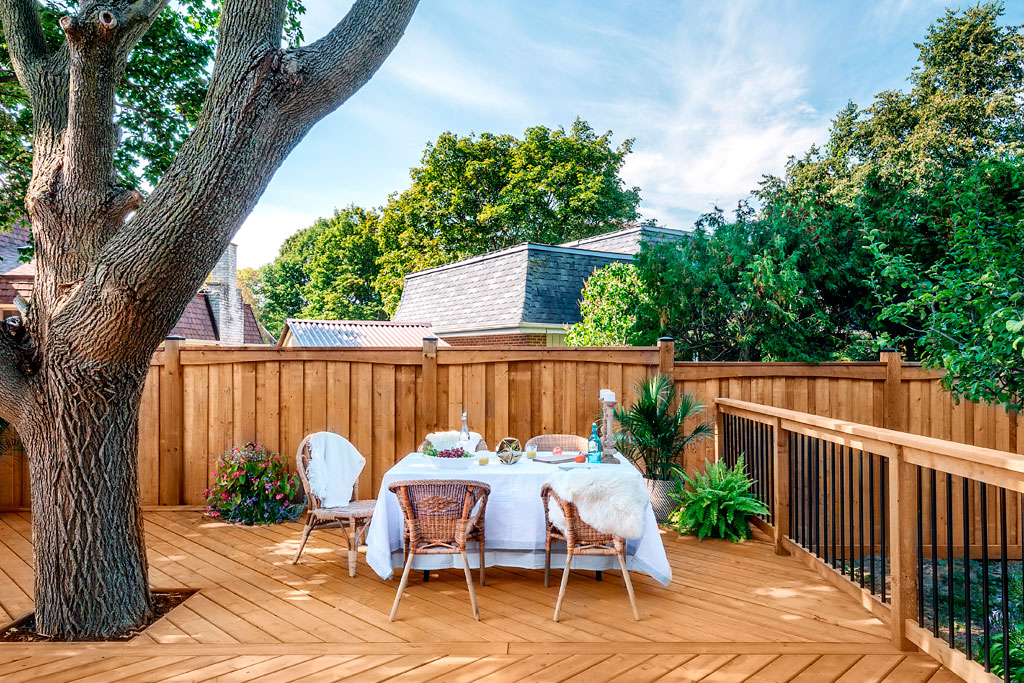
Building a deck addition continues to grow in value, up to an 82.8 per cent return on the investment.

So why the shift in values from indoor to outdoor renovations?

A lot of this has to do with the buyers and, specifically, the millennials who now, according to realtor.com, represent 35 per cent of the housing market.

Many millennials are just as happy with a finished home as they are with one that needs to be completely gutted and remodelled.

We are seeing an increase in DIY and how-to videos on home renovations, painting kitchen cabinets and even simple things like hanging wallpaper.

With homes in urban centres still coming with a high price tag, most of today’s buyers have to settle for a little smaller than they would ideally like.

If you are in that category and are trying to make the most of your space, why not look to your backyard for that extra living space you desperately need.

Many experts (myself included) have speculated that these deck additions are seen as extra living space. Basically, if buyers can’t afford a huge home, they are accepting a wood deck on the back as a summer option for living space.

But there are a few simple questions you should answer before you rush out to the lumber yard for those deck materials.

First, what are you currently using your outdoor space for? Will a deck improve your time outdoors?

Some homeowners really do love to garden or need their yards for the family (or even the family pet). Make sure that the decision to add a deck is lifestyle appropriate for everyone who is going to use the space this summer.

Next, is there an indoor feature that you wished you had, like a fireplace, a dining room or even a bigger kitchen? Building something outdoors to complement the inside of your home is the best way to ensure that you are going to use the space.

Deck additions seem to be the answer for a lot of people based on the growth of the industry. Companies like MicroPro Sienna that specialize in outdoor lumber are showing growth across the country as it introduces new markets to pre-stained boards.

Apart from outdoor living space, another outdoor renovation with big return on investment (ROI) is the addition of windows and doors. With an ROI of over 98 per cent, these fixtures have a fantastic return.

Personally, I think the idea of putting in new windows or doors intimidates many first-time homeowners, so having the job already done for them is very appealing.

Wherever you choose to remodel this year, spend your money wisely by including some renovations that increase the value of your largest asset, your home.

Under a Hundred: Seeking sustenance at Yorkville’s swish steak house

0

Yorkville hasn’t been pegged as a proper party destination since Neil Young and co. ditched the hood for less gentrified pastures. Or so we thought. Apparently, if you hit up STK on a Saturday, you’ll see that there’s a pulse.

By midnight, the men in $3,000 suits let go. It gets raucous. People topple off bar stools. Or so says our chatty server.

Alas, we’ll not get to witness an ounce of this fun: reserving a table a week in advance only nabs us a two-seater at 5:15 p.m. Who knew it was such a hot spot?

The tough choices
We decide to sink most of our $100 budget into a steak — but which one? Do we opt for an affordable skirt steak ($33) and a duo of appetizers or do we go all out? Unfortunately, the $179 tomahawk steak’s out of reach tonight. We’re hoping for some wine with our meal, but two glasses of vino would blow a third of our budget at $16 each. This is hard.

With the waiter’s help, we narrow it down to the bone-in filet ($74) and the Delmonico ($70), a rib-eye that’s dry-aged in house. “If you like tender and lean, the filet is great,” says the server, who then sits down next to us, as if the conversation is about to take a heavy turn. “But the rib-eyes are so nicely marbled with fat right now, “he says. We’re sold! One fatty steak with a duo of sides, please. And with that single course, our budget’s gone.

But will there be enough?
We worry that a second dinner might be necessary, but then a wee loaf of warm bread arrives in a cast-iron skillet, laced with blue cheese butter and a side of chive-infused olive oil. It disappears quickly.

Charbroiled until medium-rare, our steak arrives cut and fanned out, ready to be plunked on our plates. Since we couldn’t get the vino, we settled on the red wine demi-glaze dipping sauce plus the (not robust enough) chimichurri. At an extra $2 for the latter, it fit the budget. Our sides — nicely charred Brussels sprouts plus jalapeno grits bathing in cheese — definitely amuse the palate.

The conclusion
Upon completion we’re entirely sated, despite feeling that this wasn’t quite what Yorkville’s primped socialites would order. Our only error? Next time, we’ll be sure to nab that elusive 10 p.m. reso.

Our local royal expert on the royal wedding and more

0

Carolyn Harris has become a Canadian expert on royal history, from as far back as Magna Carta to the present day royals. For Harris, royalty isn’t just something that becomes interesting around a royal wedding or another royal baby, it’s her job. Harris says she remembers her interest in royalty developing during a trip to England before her last year of high school at University of Toronto Schools. 

“We visited some of the great castles, Windsor Castle and Hampton Court and the Tower of London, and I just found these places absolutely fascinating.”

From there, Harris continued to pursue history in university, and at graduate school at Queen’s University, Harris focused her PhD on the role of the queen during the English Civil Wars and the French Revolution. 

“One of my professors recommended me for some media interviews, as the media was interested in scholars who could talk about the history of royal weddings in 2011, when Prince William was engaged to Kate Middleton,” Harris says. 

Throughout her PhD, Harris says she kept getting requests for media interviews. 

After graduating, she kept up with the media interviews and has since written three books as well as for publications such as the Canadian Encyclopedia, BBC News Magazine, and Smithsonian Magazine among others. She also teaches at the University of Toronto School of Continuing Studies. Harris can list off names, dates and locations of royal members and events casually and confidently from her years of research. 

Harris says she thinks the interest in the Royal Family for the public, even those in Canada, comes from a sense of royal history being a family saga. 

“Many people who watched William and Harry grow up are now fascinated by the fact that Harry is marrying Meghan Markle and William and Catherine are now the parents of three children, as many people remember William and Harry when they were young and mourning their mother.” 

After years of studying the Royal Family in particular, Harris’s expertise gives her a unique perspective on the family. 

“Sometimes people have a perception that the monarchy is unchanging and deeply traditional … but in the Queen’s reign alone, we’ve seen many examples of the Royal Family changing with the times,” says Harris. 

She cites Prince Harry’s engagement to Meghan Markle — in the 1950s, Princess Margaret decided not to marry someone because he was a divorcee, and Markle has been divorced. 

Harris says Markle and Prince Harry will have an impact on the evolution of the Royal Family in other ways, too, such as commissioning a wedding cake with buttercream icing instead of the traditional fruitcake. 

“As well, they’re treating the royal wedding as a personal occasion instead of a political occasion. There is usually a wide array of political figures invited, and that’s something that Prince Harry and Meghan have avoided, where they’re inviting friends and family and people they have met through their charity work,” says Harris.

Harris says she has trouble describing exactly what a day in her job looks like, because it’s always something different. Right now, she’s researching members of the Royal Family who lived in Canada for years at a time, and in the summer she’ll be lecturing on a Baltic cruise to St. Petersburg, Russia. In the fall, Harris will teach a course on the Russian Revolution.

TanenbaumChat finds new tenant for next school year

0

In January, a lease agreement was finalized between Tanenbaum Community Hebrew Academy of Toronto (TanenbaumCHAT) and RoyalCrest Academy. The independent elementary school will move into the second floor of the educational facilities at 9600 Bathurst St.

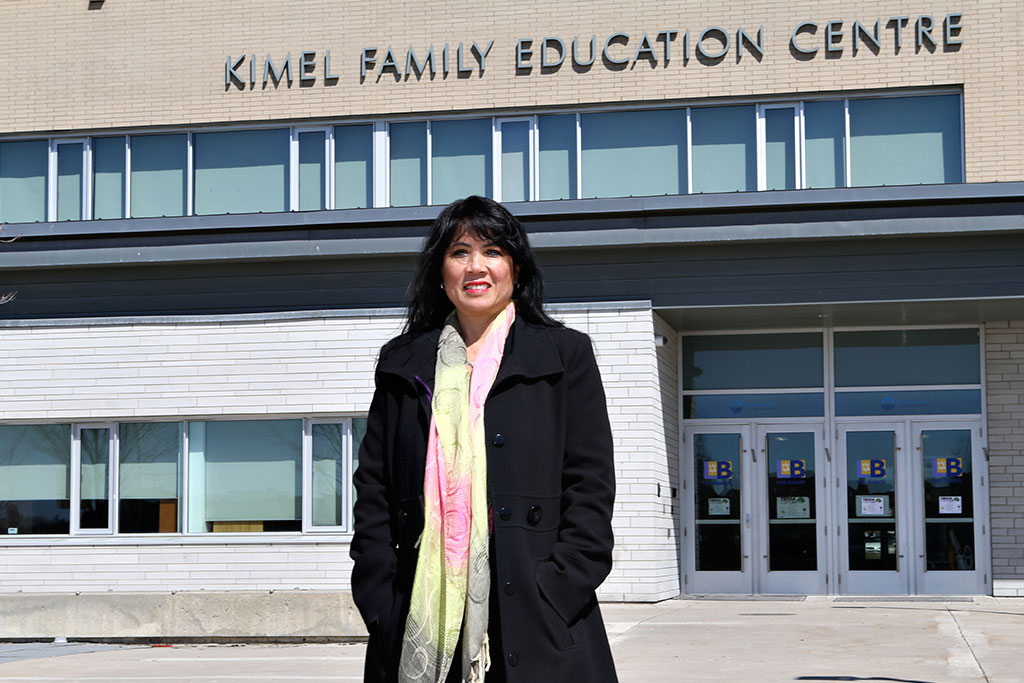
Previously occupied by TanenbaumCHAT, which announced in March of 2017 that it was consolidating its two schools due to low enrolment numbers, the second floor of the Kimel Family Education Centre is part of a larger facility which was purposely built for Jewish education and promoting Jewish identity within the community. The building is owned by Jewish Community Properties, which is under the umbrella of the United Jewish Appeal (UJA) of Toronto. The first floor will continue to be occupied by Leo Baeck Day School.

“This was the best opportunity that we had in terms of filling the space,” said Jonathan Levy, the head of school of TanenbaumCHAT. “Our board and administration work carefully to make sure that the long-term sustainability of the school is strong.”

“The Kimel Centre has been a vibrant centre of Jewish education and Jewish life.”

RoyalCrest Academy also found this to be the best option going forward, despite having owned their own facility and had a long-term expansion project in the works to build a high school on their property. They’ve since sold their building at 9500 Dufferin St. to a developer.

“It was never a plan,” said Michelle Johnson, the director of admissions and student services at RoyalCrest Academy. “The only thing that spearheaded the move was that the fact that the space became available. Had it not, we would probably still be here.”

RoyalCrest currently has an enrolment of around 200 students, and 30 to 40 per cent of their community comprises Jewish families.

In addition to housing two day schools, the campus also hosts summer camps, evening programs and more.

“The Kimel Family Education Centre has been a vibrant centre of Jewish education and Jewish life, and we continue to pursue enhancing that. Bringing in RoyalCrest doesn’t preclude us from doing any of that,” said Steven Shulman, campaign director and counsel of the UJA Federation of Greater Toronto.

RoyalCrest Academy has announced that they will be moved in and operating in the Kimel Family Education Centre for their 2018-2019 school year.

Birch Bistro’s French desserts will throw you for a (fruit) loop

0

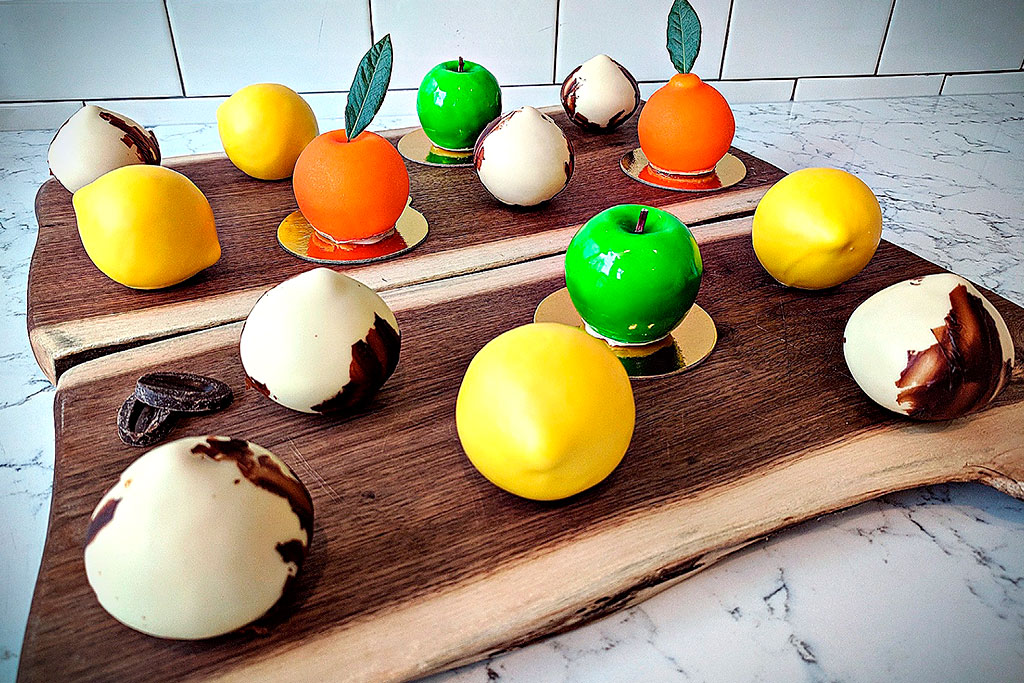
At the French restaurant Birch Bistro (623A Mount Pleasant Rd.), pâtissier Calvin Wat draws on his experience working in Michelin-starred restaurants in Paris to create hand-sculpted dessert masterpieces.

He’s been at the resto for less than a year, but he’s getting buzz for his creative dessert menu that includes a lemon filled with a lemon syrup reduction, lemon segments and confit lemon (lemon peel blanched five to six times and then cooked in a lemon syrup for five to six hours).

To craft his beautiful apples, he places the fruit in a sous-vide so that it retains its structure as it is saturated with the flavours of lime and dill.

And the indulgent hazelnut is comprised of salted caramel sauce, a hazelnut praline and almond chocolate sponge all enrobed in mousse and chocolate.

Tsujiri North York gets a second floor of Japanese fare

0

The Yonge and Sheppard outpost of Tsujiri, the 155-year-old purveyor of Japanese tea and matcha based desserts, has recently opened up its second floor with a new dine-in menu.

On the ground floor there’s usually a lineup for the matcha lattes, slices of irresistible cheesecake and soft serve. Upstairs, the new offerings include more substantial fare.

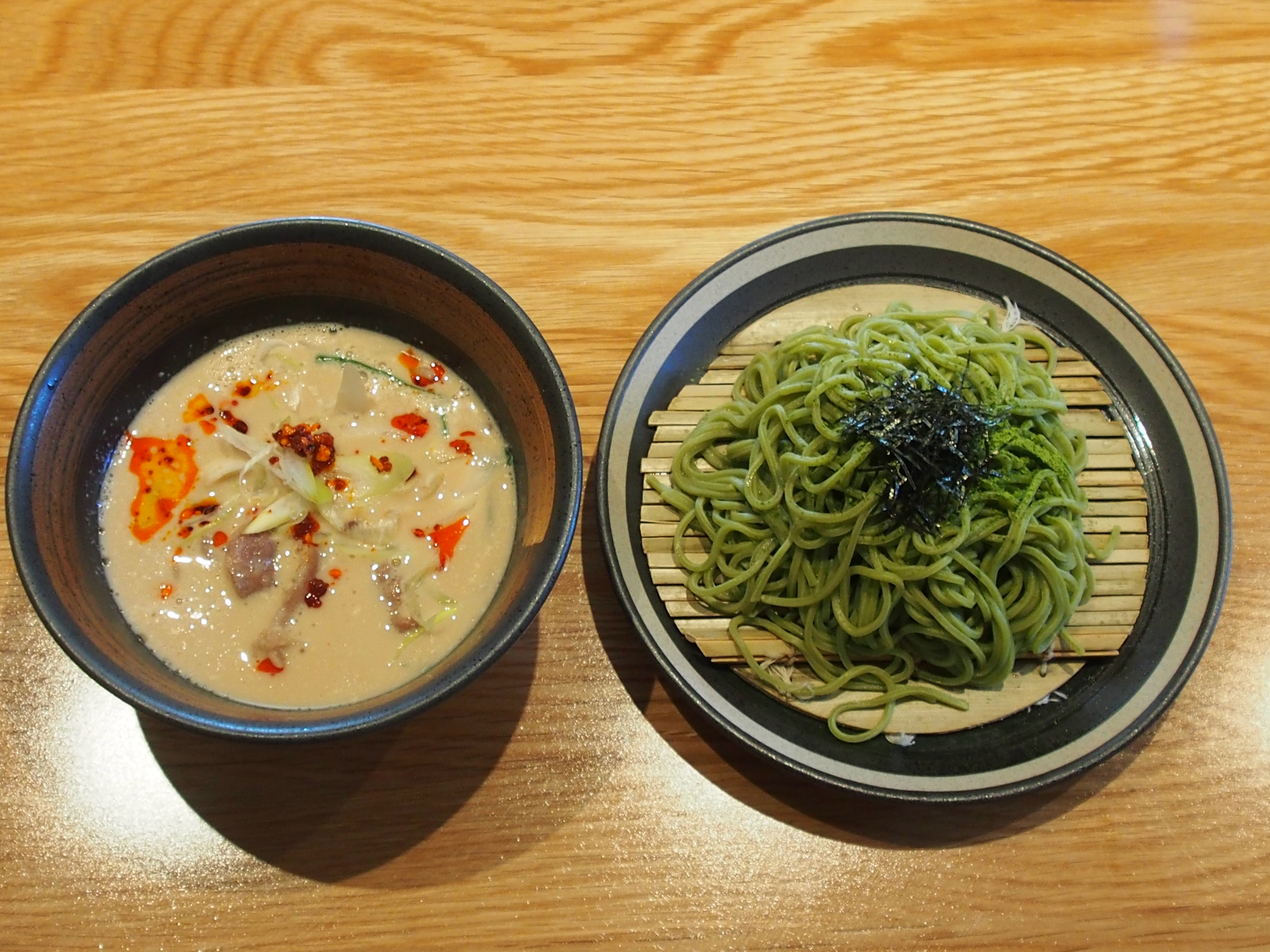
Tonkotsu soy milk tsuke soba.

The menu boasts several dishes based on the popular tsukemen-style of ramen where the noodles are dipped into the soup instead of the two being served together.

The dipping soup that comes with the tonkotsu soy milk tsuke soba ($12.50) is rich and creamy, made with pork bone broth and soy milk and a small spicy sprinkling of chili oil. Traditional soba noodles are made with a combination of buckwheat and wheat flour. The Tsujiri take on these tasty noodles adds powdered matcha, which creates the vibrant colour and subtle green tea flavour.

Kitsune soba with unagi ochazuke.

The kitsune soba and unagi ochazuke ($13.00) comes with traditional soba noodles in soup with deep-fried bean curd and fish cake all garnished with green onion. Hot tea is poured over the bowl of rice on which succulent unagi rests.

The pancake platter with house-made ice cream. 

No meal at Tsujiri is complete without the sweet pancake platter ($14). Made-to-order for maximum fluffiness, they are stacked, drizzled with brown sugar sauce, and accompanied by house-made ice cream.

A number of teas are available served hot or cold to go with your meal. Try the premium sencha tea ($4.50) for the full matcha experience, or try a houjicha latte (5$) for a delightfully toasty flavour (the leaves are roasted instead of steamed).