
Home Blog Page 554

Monday night’s all right for dining in Toronto

0

If you listen to conventional wisdom, Mondays are the worst nights to eat out. It used to be that deliveries came on Tuesdays, so restaurants were perceived to be serving leftover produce and  protein. And so, Mondays became prime couch and Netflix nights. However, rising rents have forced experimental and ambitious Toronto chefs to make use of restaurant spaces on these traditionally less popular nights of the week. Now, Mondays and Tuesdays are the most exciting nights to dine out. These temporary restos appear one night and the next they’re gone. But don’t worry! They’ll be back next week –– same bat-time, same bat-channel.

Fat Choi on Ossington
The family-run Soos Restaurant has been serving up modern Chinese-Malaysian plates since 2014 when they opened shop on Ossington. But this summer, matriarch and chef Tricia Soo has turned the Monday and Tuesday service into a new dining concept called Fat Choi. Launched on June 4, Fat Choi delivers innovative plant-based pan-Asian fusion. Menu items include roti stuffed with Mamak-spiced chickpeas and onion and an impressively true-to-taste spin on Peking duck, with tofu skin wrapped in a scallion pancake. Their sloppy Jack alone is worth the Monday trek to Ossington: It’s barbecued jackfruit, kimchi and sambal aîoli stuffed in a deep-fried mantou, resulting in a crispy-spicy-saucy (and oddly meaty) sammy so good you’ll want to don a pair of pastel coloured shorts, join the hipsters on the west side and invest some capital into this concept so you can dine on it every night of the week. The family hopes to open a stand-alone Fat Choi restaurant in 2019. ‘Til then, it’ll remain Ossington’s best-kept Monday-Tuesday secret.
94 Ossington Ave.

Soba comes to Bloor
Sure, you think you’ve had soba noodles before, but have you really had soba noodles before? Widely known as Canada’s premiere soba master, Ted Iizuka has been making soba noodles on Tuesday nights at Ichiriki Japanese Restaurant since 2009. Iizuka personally selects organic buckwheat from fields in Manitoba, cleans and mills the buckwheat into flour himself, mixes the dough by hand and cuts it into long, thin noodles using a special knife. The soba ends up tasting and feeling remarkably lighter and less gummy than the dried prepared noodles one usually associates with soba. It’s served the same day it’s made, on a bamboo plate alongside a broth of soy, bonito and mirin for dipping. But, alas, such tenderly handcrafted things were not meant for daily consumption (unless you live in Japan, of course). In Toronto, find it at Ichiriki on Tuesday nights.
120 Bloor St. E #103

tuesdays are forever soba night.

A post shared by Jesse Grasso (@therealgrasso) on

K.Dinners hits the Danny
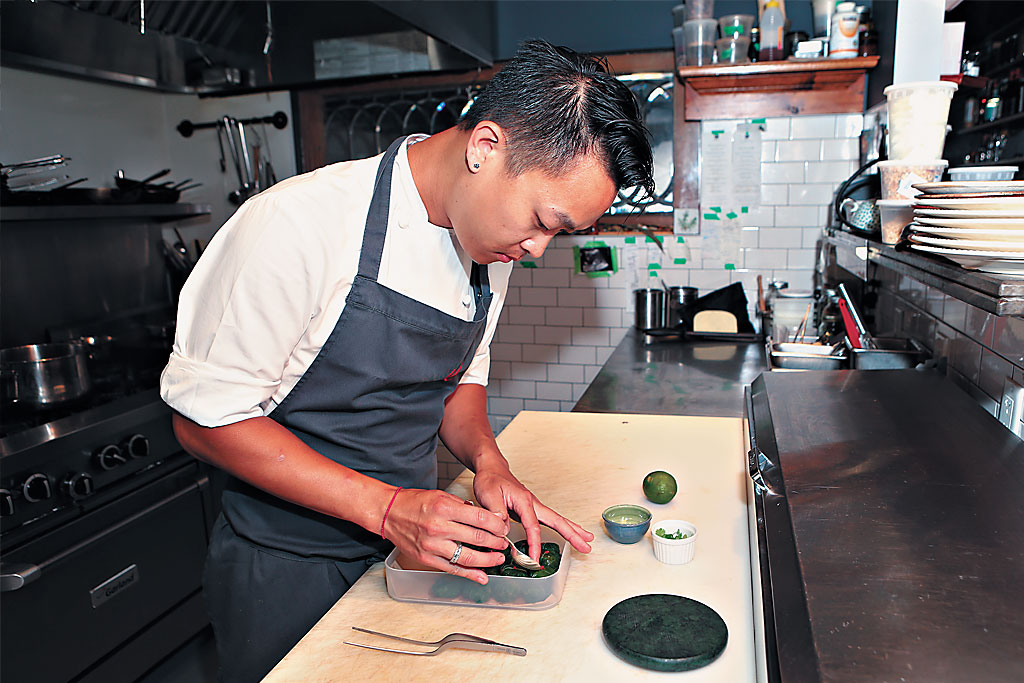
Chef Ken Yau, whose resumé boasts time spent at the three-Michelin-starred Fat Duck in the U.K. as well as Scaramouche closer to home, started his Monday night dinner series — K.Dinners — in September 2017. He brought his fine dining chops to Fiorentina on the Danforth, where he doles out a 13-course tasting meal for up to 16 guests at a time. The dinners are BYOB (guests get wine pairing advice from a sommelier ahead of time). Courses include artfully arranged morsels of Nori steak tartare and fish skin, and lumpfish caviar and clams. Yau does the prep and cooking himself, only relying on assistance from one server and artisanal bread from Matthew James Duffy (formerly of Café Boulud). The dinners are fully booked until 2019, but interested patrons can call Yau directly to get on the waitlist.
463 Danforth Ave.

Had the pleasure of attending a tasting created by @k.dinners, a pop-up dining experience every Monday night at the Florentina on the Danforth! . Featured here is the fish skin dusted with salt and vinegar sushi rice, served alongside with nori steak tartare ? The crispy fish skin was very flavorful and balanced really nicely with the steak tartare! A phenomenal dish and visually stunning ? . Having worked previously at the Michelin 3-star Fat Duck in London and Melbourne, Chef Ken Yau is offering a very unique 13 course tasting menu for $100. Each dish is very uniquely and elegantly presented combining flavours from various regions throughout the world! . I will share some more pics from this fabulous tasting soon ? Thank you @lamjaeat and @k.dinners for the invite! . . . . . . #sponsored #kdinner #tastingmenu #torontoeats #yyzeats #tastethesix #blogto #steaktartare #friedfishskin #fusion #foodpics #foodporn #buzzfeedfood #huffpostgram #torontoinfluencers #to_finest #eeeeeats #toptorontorestaurants #myfab5 #finedining #delicious #foodtography #igfood #getinmybelly #foodie

A post shared by Ravi – Toronto Foodie (@tofoodblogger) on

Parallel is the star of Geary Avenue in Toronto

0

Let me tell you about the next Ossington restaurant strip. Geary Avenue is what Ossington was 10 years ago: A gritty, unloved strip of town, unknown and not very nice, small scale industrial with cheap rent to attract small new restaurants.

Geary is home to a collection of auto repair shops and it’s just starting to burst into hipster resto bloom. There are two craft beer bars, Blood Brothers and The Greater Good. That’s where you rub shoulders with uber hipsters while waiting for your table at Parallel, the newest, hottest and most wonderful Israeli restaurant in town. ’Cause of course they don’t take reservations.

While uptown they’re still absorbing grease into every pore at Jerusalem, here in the new supercool west end, Parallel is dishing Israeli nouvelle.


The watermelon and feta salad is all kinds of colourful at Parallel

The room, with past lives as a Portuguese restaurant and a storage space, has for its centrepiece a huge 2,000-pound stone grinder to turn sesame seeds into tahini, the mother sauce of Israeli cooking.

As evening turns to night and the room darkens, a violet light shining on this behemoth turns it more into artwork than machine. On the west wall, projected films show better in the dark, become more haunting.

Big sassy flavours govern every item. They’ve left the charred bits on the fire roasted eggplant, served oozing and smoky with mint, scallions, coriander, all topped with bright pink ribbons of house-made tahini with beets, all to be spread on their grill-kissed thick, dense challah. The fabulous fried cauliflower is strewn with herbs from the herb garden above the restaurant’s bathroom and dotted with slightly psychedelic yellow (turmeric aîoli) and fuchsia (beet tahini). Just as the giant tahini stones dominate the visual aesthetic of the restaurant, tahini is the theme running through the food. The creamy/sweet beet tahini appears again atop jazzy house salad of kale with walnuts, sweet potato, goat cheese, scallions, mint and chewy little black lentils.


The kale salad at Parallel

The Israeli cookbooks of Yotam Ottolenghi have taken the town by storm, but to my palate if you put the Ottolenghi flavours up against Parallel, the Toronto boys would win hands down. Their flavours are bigger, bolder, their execution simpler — and easier to cook. But the Parallel boys weren’t always Torontonian. The resto is owned by three Israeli-Canadian brothers, Alon, Guy and Aharon Ozery. They started a little bakery (Ozery bakery) in 1996 and it’s done extremely well and expanded.

Their taste buds rock. Nobody in town does shawarma as well as they do. It’s long-cooked lamb shank, so tender and moist it’s erotic, with polenta made from puréed fresh corn and red peppers with smoked paprika, brussels sprouts and deep rich lamb stock. But their foundation remains tahini, which some call sesame butter. The brothers pulverize Ethiopian sesame seeds with the huge stones, add lemon juice and shazam, the mother sauce! Made piquant with labneh, it appears in their wonderful fish shawarma made with crispy grouper and tomatoes zinged with sumac.

For dessert, tahini morphs into their justifiably adored house-made halva with various toppings. I am fond of salted chocolate on the halva, or caramelized pistachios.


The house-made halva

But who is not fond of salted dark chocolate … or caramelized pistachios? Or deeply creamy nutty tahini? Parallel dishes dream-food, every single plate of it.

Museum of Contemporary Art to transform Toronto

0

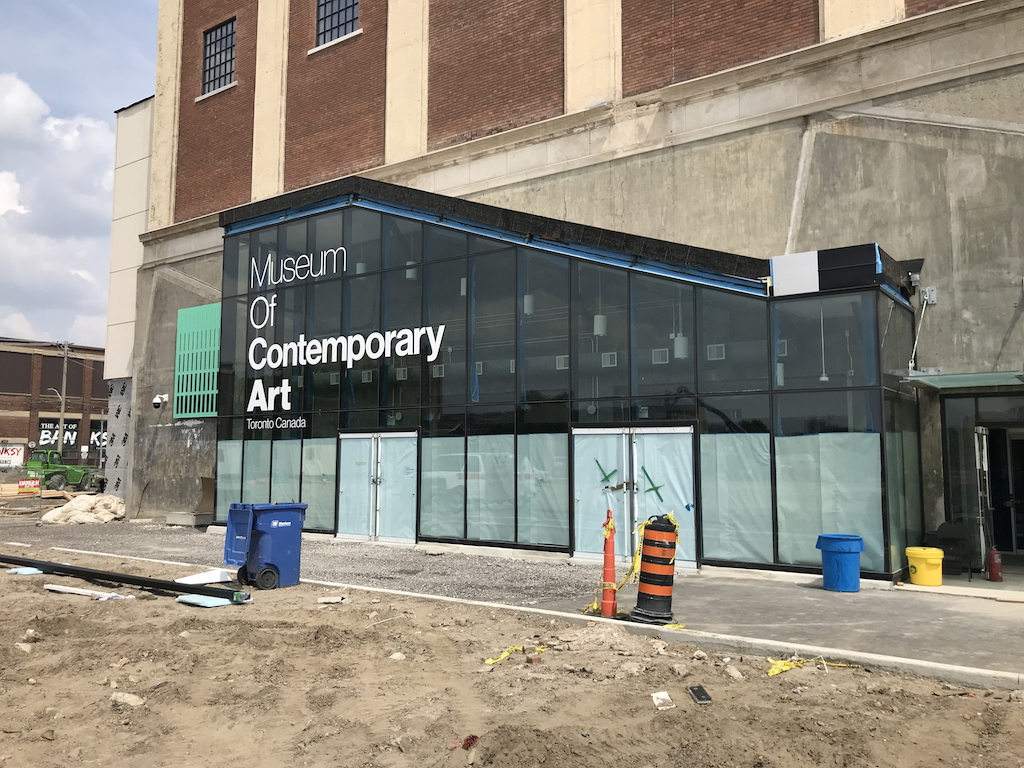
The Museum of Contemporary Art (MOCA) is the latest addition to Toronto’s arts scene. The city has long been lacking a major contemporary art gallery to fill the space between the Art Gallery of Ontario and the smaller spaces that are flourishing throughout the city, and this one promises to deliver when it opens for good on Sept. 22.

When looking for the next “it” neighbourhood to explore before anyone else, it is a good strategy to follow the scent of oil paint, plaster and other artist accoutrements. That’s where to find the cool. It worked on Queen West and in Kensington Market. And if one were to apply that formula today, it would lead to Sterling Road in the Junction triangle, home of the soon-to-open MOCA.

The arts scene in Toronto is thriving, with many galleries opening up in a range of neighbourhoods, from Yorkville to Moss Park.

In short, Toronto seems to be having something of an art moment.

As architect Peter Clewes stated during a recent tour of the MOCA facility, cities such as London and New York have many such spaces.


The new MOCA facility under construction last month

It could be transformative for the city.

“I think it’s a very significant gallery for the city,” says Clewes, the team lead from architectsAlliance working on MOCA. “It really speaks to Toronto starting to grow up and leverage all of the intensification that is happening. But I also think it’s an incubator for this neighbourhood.”

Clewes sees the city doing more and more development along old railway lines in the city, such as on Sterling Road.

“All of the focus has been on filling in the downtown, these empty spaces, and to a lesser extent along on the avenues,” he says. “What’s been forgotten are these railway seams that transect across the city. They are really almost like rivers and present an opportunity to create a very divergent and diverse set of linear neighbourhoods.”

The new MOCA’s building dates back to 1920 when it was home to the Northern Aluminum Company, followed by Tower Automotive. What Clewes and team did in designing the building is what he calls “stealth architecture.”

“It is really about the building as the event as opposed to the collection,” he explains. “Here we wanted to reveal the bones of the building in a very elemental and honest way.”

“Here we wanted to reveal the bones of the building in a very elemental and honest way.”

Inside the gorgeous 10-storey brick structure, once the tallest building in Canada, the concrete has been cleaned up and polished, the gigantic wooden doors left almost as is, and the impressive columns remain, as do the large warehouse windows. The mechanical and electrical systems were exposed as they snake through tall ceilings.

MOCA will occupy floors one to five with the rest leased out as office space. There will also be numerous studio spaces available to local artists. A Sud Forno café sits on the ground floor.

The new gallery will open with a major group exhibition, Believe, on the second and third floors, that features the work of 16 artists from Toronto and abroad.

On the ground floor, the gallery presents its first commission, Demos — A Reconstruction, by Greek artist Andreas Angelidakis.

In addition to MOCA, directly across the street in fact, another repurposed space was recently home to an exhibit featuring the works of British artist Banksy, which was scheduled to close on Sept. 2 but has been extended once again to Sept. 16.

So, art is happening, and it is adding some serious excitement to the neighbourhood.

Already on Sterling, craft brewery Henderson opened up its brewing facility and tap room in 2016. In addition to beer, Henderson also hosts popular events including literary readings and a weeknight dedicated to vinyl records.


The Drake Commissary on Sterling Road

Right next door to Henderson is the new Drake Commissary, which opened last year.

On St. Helens Avenue, One street to the east, sit numerous small commercial galleries including Daniel Faria Gallery, Robert Kananaj Gallery and Gallery TPW.

Along the railway seam behind MOCA is the West Toronto Railpath that stretches about four kilometres but could one day run all the way to Union Station.

This could be the beginning of something special for Toronto, so get out and explore this exciting new neighbourhood before everyone else does.

The hottest shoe trends for fall

0

Bye-bye sandals. Fall is here, so it’s time to cover those toes. But fret not, this season brings with it three of the classiest looks — loafers, ankle boots and block heels. We asked Jeanne Beker to pick her favourite pairs of each.

LOAFERS (from top)

NOTABLE NAVY
“Nicholas Kirkwood makes a beautiful shoe, from the pointy toe to the gorgeous heel with the black pearl detailing. Really elegant.”
Davids, 66 Bloor St. W., $1,000

SILVER SENSATION
“Ferragamo just makes the best quality, and I love the fact that the buckle can be reversed for a gold effect.”
Sporting Life, 2665 Yonge St., $820

LEOPARD LOVE
“This is almost a cross between a ballet flat and a loafer. This is the real deal pony hair, and they’re lined with leather.”
Gravitypope, 1010 Queen St. W., $150

VELVET LUXE
“These are so cosy! This is shearling, I believe, on top. It says relaxation in a very posh, ultra luxe way.”
Specchio, 1240 Bay St., $695


ANKLE BOOTS (from top)

RETRO VIBES
“It reminds me of a cross between a go-go boot and a Beatle boot, so very ’60s.”
Aldo, Promenade mall, $140

SHOWSTOPPER
“I’m in love with these. They’re velvet (so vegan-friendly) boots, and they’re artful and artistic.”
Studio D, 2570 Yonge St., $995

SIDE STRIPES
“They’re sleek and timeless: a classic dressy suede boot with this graphic detailing up the sides. ”
Zvelle, zvelle.com, $505

WILD WILD WEST
“It has beautiful embroidery and interesting openings on the side and it will be featured on TSC this month.”
Ron White, Bayview Village, $395


BLOCK HEELS (from top)​

SPACE AGE
“You could dance your way through a David Bowie video in these. There’s something futuristic about them.”
Specchio, 1240 Bay St., $595

MUSTARD MUSE
“I can’t imagine this not going with anything. I love this colour. It has a nice square toe and a perfect heel height.”
L’Intervalle, Eaton Centre, $148

STATEMENT SHOE
“These Dries Van Noten shoes are to die for, from the beautiful fabric to the shape of the heel.”
Specchio, 1240 Bay St., $795

PATENT PERFECTION
“Lucite, a great throwback to the ’60s and ’70s, these are beautifully designed with both a retro and modern feeling.”
Davids, 66 Bloor St. W., $1,195

Toronto basketball star Danilo Djuricic on playing for Harvard University

0

Although 19-year-old Harvard basketball player Danilo Djuricic has already won a gold medal with Team Canada on the under-19 (U19) junior national team, he’s still focused on education first. Djuricic credits his parents for that kind of thinking. 

“My parents were always talking to me about how important school is, always preaching school first, sports second,” he says. 

Basketball found Djuricic, by virtue of good genes, rather than the other way around. 

“My first sport was soccer, but growing up I started hitting growth spurts, and I was a little bit taller than all the other kids,” Djuricic says. “One of my assistant coaches recommended I try basketball, so I tried house league and then rep.”

The rest, as they say, is history. Djuricic played with the Brampton Warriors, from Grades 5 to 8, and then played with CIA Bounce, from Grades 8 to 11, on the Amateur Athletic Union (AAU) circuit travelling the U.S.A. 

By Djuricic’s first year of high school at St. Michael’s College School, he was already on the varsity team and had received interest from Harvard, which he says really motivated him to stay on track. 

“It’s a very high academic school as well as having a really good basketball program, so I felt prepared very well by my high school.”

Djuricic says his time at St. Michael’s really prepared him for balancing school work and sports. 

“It’s a very high academic school as well as having a really good basketball program, so I felt prepared very well by my high school.”

He says this played a role on his path to Harvard. 

Djuricic has stayed true to his priorities after his first year at Harvard. 

“I do my best to work hard, scheduling when it’s time for work and when it’s time to play basketball. My priority is academics, so I get that finished and then work hard on the court,” Djuricic says. “It’s the best of both worlds: the best school in the entire world and a really great basketball program that’s on the rise.”

His discipline has paid off, earning him his proudest moment and possibly, he says, the greatest honour in his life — playing on the U19 junior national team and winning gold for Canada. 

“To win a gold medal for my country that has given so much opportunity for my parents and me was honestly one of the moments in my life I still can’t put into words,” Djuricic says. 

That gold medal–winning team also included another Canadian rising basketball star, R. J. Barrett. 

Even with this accomplishment under his belt, Djuricic says he still has a long way to go in his career. “My dream is to play at the highest level, the NBA.”

To all the kids who dream of playing professionally, too, Djuricic is quick to mention the importance of school first. 

“Continue to work hard at your craft, continue to do well in school because school comes first,” he says.

He also says to listen to your coaches to get to the highest level of trust with them, mentioning CIA Bounce coach Nicky Davis and high school coach Jeff Zownir as two influencing forces on his development as a player. 

With great success can come great sacrifice, but Djuricic says he has no regrets. 

“Being so dedicated to my craft as well as school, you miss out on things that other kids get to do. But I don’t mind it at all. There’s nothing I wouldn’t pass up for the position I’m in today.”

What can Toronto learn about marijuana legalization from other cities?

0

Canada is going to be the first G7 country to legalize cannabis, but we’re part of a global phenomenon. On Oct. 17, Toronto will have legalized weed available online only. In April, the dispensary model begins, although it is hard to tell if that means licences will go to places such as Shoppers Drug Mart or if independent businesses will be able to get creative.

By looking into what other cities are doing, we catch a glimpse of what could happen in Toronto.

DENVER
On Jan. 1, 2014, Denver became the first American city to legalize cannabis. Since then, it has seen tourism, liquor and restaurant sales increase with little to no impact on crime rates.

“[Denver is] the mecca of cannabis business and responsibility,” said Terry Lake, VP of Hexo, the cannabis company making infused beer for Molson Coors. “With their millions and millions in cannabis tax revenue, Denver funds schools and social services — early adopters equal early success.”

In the Colorado capital, there are 518 privately owned dispensaries, where users present an over-21 ID to buy weed.

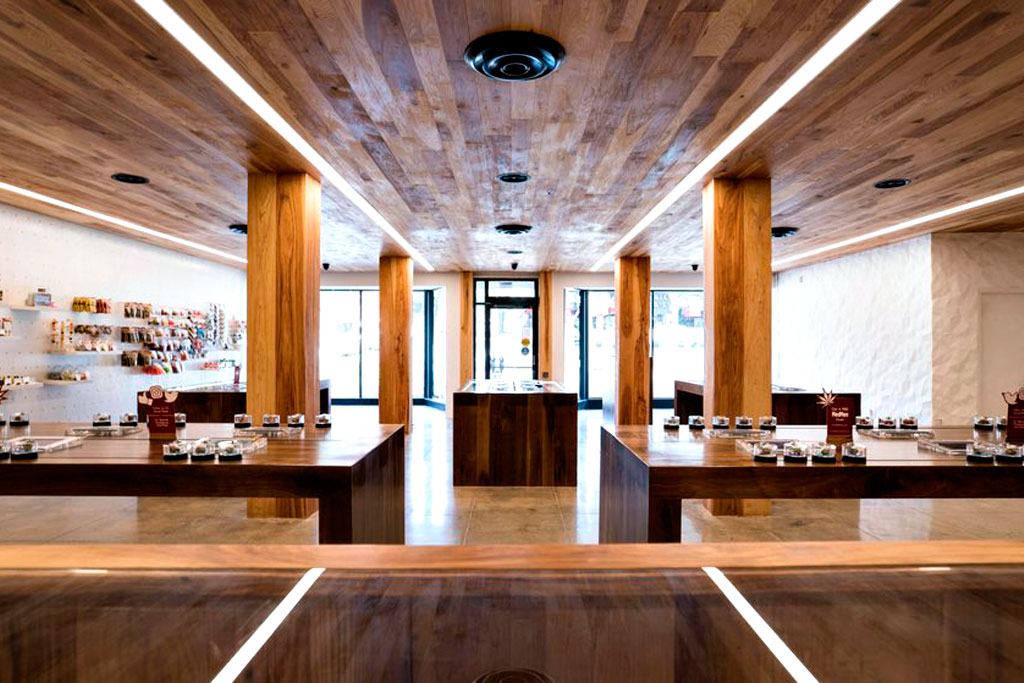
There are high-end independent and chain retail shops such as California-based Medmen, which rival Apple with their gleaming storefronts.


A growing operation that is part of a Denver tour for visitors

The company was founded in 2010 by Andrew Modlin and Adam Bierman and operates in three states.

Work on cross-border expansion to Canada has been underway since 2015.

Denver’s 2018 Annual Marijuana Report highlights that retail marijuana sales are up 29 per cent, while marijuana-related crime sits at 0.3 per cent of overall crime.

“This new report demonstrates Denver’s co-ordinated approach between multiple agencies to manage marijuana is working,” said Denver mayor, Michael B. Hancock.

“We took on the daunting challenge of becoming the first major city in America to manage legalized recreational marijuana, and we are having success.”

In 2017, across Colorado, pot sales reached US$1.5 billion.

Earlier this year, Denver issued its first Cannabis Consumption Establishment licence to the Coffee Joint, a coffee shop with a private room for marijuana consumption.

Although no smoking is allowed indoors, patrons are free to vaporize, dab or consume edibles.

AMSTERDAM
It is hard to talk about cannabis consumption in cities without mentioning Amsterdam, the Netherlands, legendary for its “coffee shops.”


A coffee shop in Amsterdam where people can smoke cannabis

Estimates are that between 25 and 30 per cent of tourists visiting Amsterdam frequent coffee shops to smoke cannabis; however, strictly speaking it is decriminalized, not legal.

There are 173 “coffee shops” in Amsterdam, of the more than 500 in the Netherlands, where it is legal to consume and patrons are usually offered a menu of available joints. But the number of shops is shrinking fast.

Alcohol isn’t sold in the shops.

The most recent analysis from Amsterdam states that cannabis puts 400 million euros into state revenues.

It is a widely held belief that Canada might see similar operations by 2020, but Amsterdam is far from perfect.

“It’s difficult to navigate through Amsterdam’s system, and it is complicated to get the supply,” said Will Stewart, VP of Hiku, the company behind Tokyo Smoke.

“For us, we prefer to open in places on the verge of legalization as opposed to places heavily constrained.”

MONTEVIDEO
On the other side of the legalization spectrum is Montevideo, Uruguay, where the cannabis rollout is seen as a case study in what not to do.

In the city of 1.3 million, there are just 16 pharmacies authorized to sell cannabis and more than 3,000 people designated as “personal growers.”

“Uruguay has not had a very sophisticated rollout, and the pharmacy system, where you’re tracked by the government, is not seen as a model that will be adapted around the world.”

There is not much, since prices are capped at $1.40 per gram, with 90 per cent of that going back to the grower. There are an estimated 147,000 people between the ages of 18 and 65 who consume cannabis, including about a third who use it weekly. But Pharmacies are frequently out of stock, and users must be registered with the government.

“Uruguay has not had a very sophisticated rollout, and the pharmacy system, where you’re tracked by the government, is not seen as a model that will be adapted around the world — Canada’s model will do more,” said Lake.

VANCOUVER
Although nowhere near the numbers of Denver, or throughout California, Vancouver is seen as the unofficial headquarters of Canada’s cannabis revolution.

This British Columbia city may have the most sophisticated cannabis system in the country, which developed independently of the federal legalization timeline.

The city currently has 46 dispensaries with city-issued permits. After Oct. 17, Vancouver, and all of British Columbia, will operate the way Ontario is headed with a mix of public and private dispensaries.

“The cannabis culture in Vancouver is very advanced,” said Lake. “The current illegal dispensaries have been tolerated (and many licensed by the city), and many are on par in terms of sophistication as any you will find. Some of these will apply for legal licences and will likely set the standard for others.”

Will Toronto end up with a bureaucratic, clunky system such as Uruguay’s, or a more grownup version like they have in Denver, where revenues are sky high with minimal impact on crime?

As long as it’s not buck-a-joint, we should be OK.

Toronto laneway to honour local tragedy

0

Four years ago Barry “Feel Good” Luksenberg took a trip to Vietnam with one of his closest friends. What should have been an unforgettable adventure turned tragic when the 24-year-old man’s life ended in a motorcycle accident. He never made it back to Canada 

For all those close to Luksenberg, his death was not going to be the end of his story. Since his passing, the neighbourhood of Hillcrest village, where he grew up, has taken steps to immortalize his memory.

“It started with 'Feel Good,' the lane being named after Barry 'Feel Good' Luksenberg,” said Kim Lesperance, one of the organizers of a GoFundMe project aimed at revitalizing a laneway at St. Clair Avenue West and Arlington Avenue. 

Lesperance and fellow community activist Julian Back have plans to fill the walls of Feel Good Lane with a series of murals. Their goal is to make the space and bordering park a safer place, one that will provide the community with a chance to enjoy some unique local artwork.

“As you walk through the laneway, it’s not really a beautiful space.”

“I met [Barry’s] parents one day, chatted with them about their story and signed a petition to get the city to name the lane ‘Feel Good Lane,’” said Lesperance. “That was a couple of years ago.… As you walk through the laneway, it’s not really a beautiful space.”

Memories of Barry Luksenberg are still very fresh in the minds of many in the St. Clair West community. Luksenberg and his friends grew up playing together in Graham Park and frequently found themselves exploring the laneway. As they got older, they started a rap group called the 512 Crew. While performing with 512 Crew, Luksenberg adopted the moniker “Feel Good” to reflect his outlook on life. 

“Barry was very young, obviously well respected in the rapper community, and he was taken too young and that was a tragedy,” said Lesperance. 

In total, there are 18 available spaces in the lane for local emerging artists to showcase their work. To attract the interest of local artists, the organizers posted a call at the Ontario College of Art and Design and have reached out to a west end arts collective known as Spudbomb. The GoFundMe page has set a goal of $5,000 dollars for the project, already reaching over $3,000 in donations. All of the money raised will go toward paying the artists and purchasing all the necessary materials. The laneway launch is scheduled for late fall.

Toronto plays host to cult leader’s funeral in immersive musical theatre production

0

Upon entering historic Heliconian Hall this month, audience members will not only partake in an evening of musical theatre, they will also join a cult and witness the funeral of its leader. This is immersive theatre unlike any performed in Toronto. Who knows what might happen?

Dr. Silver: A Celebration of Life, which opens Sept. 13, is the latest offering from the city’s premier purveyors of this artistic fare, Outside the March, in a collaboration with the Musical Stage Company. 

The production was created by Toronto musical theatre dynamos (and sisters) Anika Johnson and Britta Johnson, who responded to Outside the March’s call for submissions with their wild tale of the funeral of a cult leader. 

“It’s a pretty fun task to make our audience feel as though they are members of a cult,” says Britta Johnson. 

Immersive theatre is one of the most popular new trends to develop in stage works as a way to compete for attention with all the streaming services and such keeping the posteriors of potential patrons plunked on couches in the comfort of their own homes. 

“The music is very evocative and puts you in the mood right away.”

But don’t worry, nobody will be asked to sacrifice a virgin or drink anything beyond possibly some Kool-Aid.… 

“The conceit, the assumption is we are there to perform a ritual and sometimes the audience might sing along,” says Anika Johnson. “They become the congregation of the funeral. Nobody has to improv or anything.”

In Dr. Silver there is no dialogue and music is a constant.

“The music is very evocative and puts you in the mood right away,” says Britta Johnson. Much of the background music is courtesy of the cult’s own choir,  the Silver Singers, made up of students from Toronto arts high school Wexford Collegiate, where Britta has been a guest artist for a number of years. 

“It’s a really cool partnership to work with the kids,” she says. “The commute is a little rough (the school is located in Scarborough), but they’ve been doing an amazing job.”

The cast principals include Musical Stage Company collaborators Kira Guloien (Grey Gardens) and Rielle Braid (Life After), who are joined by Donna Garner, Peter Deiwick and Broadway veteran Bruce Dow.

Dr. Silver is directed by Mitchell Cushman of Outside the March. 

The Johnson siblings, who wrote the book, music and lyrics for the production, were born and raised in Stratford, Ont., home of the Stratford Festival. 

“Our parents were pit musicians at the festival, so we kind of grew up in theatre,” says Anika. “We would see musicals 14 times because our parents were playing in them and didn’t know what else to do with us.”

With musicians as parents and grandparents (and another sibling in opera), it is no surprise musical theatre was their calling.

“It is a huge part of our shared language and world, says Britta. 

“It was kind of like being raised in a musical cult,” says Anika. “Not as serious as this one, though.”  

Caitlin Cronenberg and Jessica Ennis’ photobook on breakups debuts in Toronto

0

Toronto photographer Caitlin Cronenberg has teamed up with longtime collaborator, art director Jessica Ennis, to release a book of short stories about the end of relationships and new beginnings, which is lovingly told through photographs. The Endings, which was first hatched in 2011, features some of today’s most beloved actors, such as Kiera Knightley, Julianne Moore, Imogen Poots and Gugu Mbatha-Raw, in a series of intimate, raw and moving vignettes.

The talented and adventurous Cronenberg and her collaborators manage to conjure up and capture real emotion and incredible beauty. It was released Sept. 4 by Chronicle Books. The Endings is dedicated “to women with wild hearts and a flair for the dramatic.”


Actor Christine Horne is featured in the chapter called When Tears Are in Your Eyes

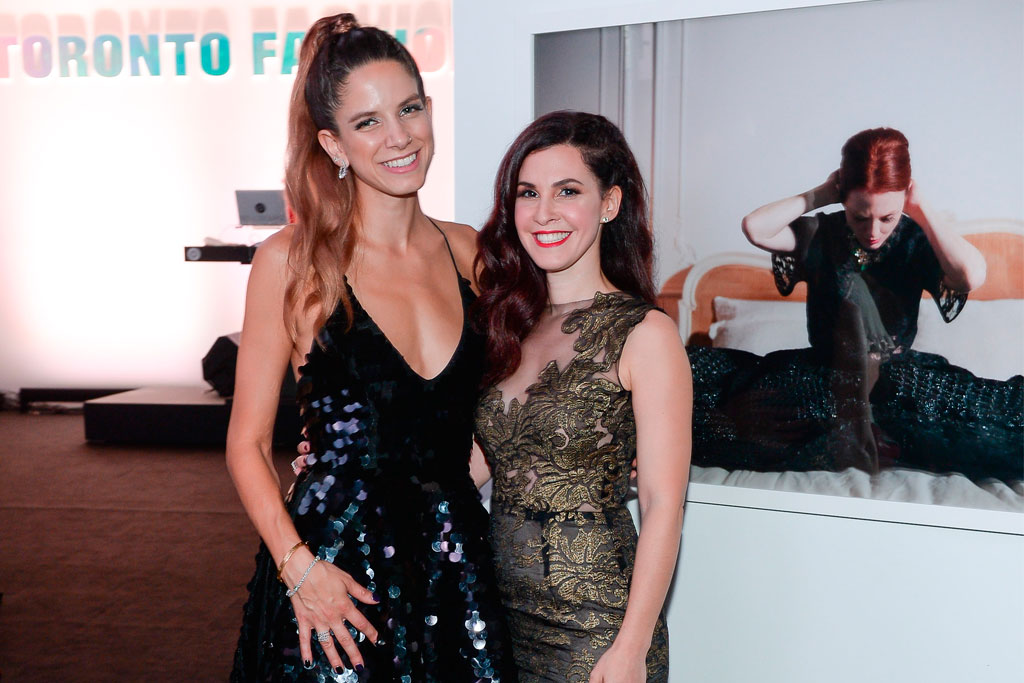
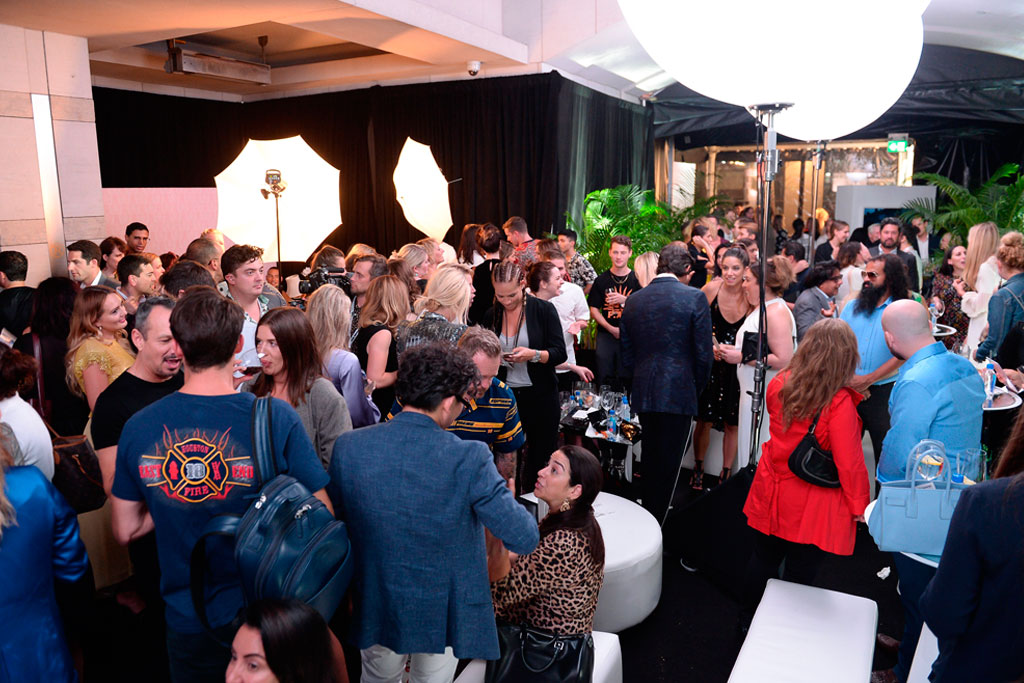
The book’s release was celebrated at a launch event on Tuesday Sept. 4 during Toronto Fashion Week in Yorkville. An art exhibit was set up for the launch with prints for sale, which will be moved to Taglialatella Galleries at 99 Yorkville Ave. for a show that will run from Sept. 5 to 19.


The book launch party in Yorkville (IMAGE: George Pimentel)

A short film inspired by the photobook will premiere Sept. 10 at the TIFF Bell Lightbox rooftop. The book is also available for order online.

Remembering Rob Stewart at TIFF

0

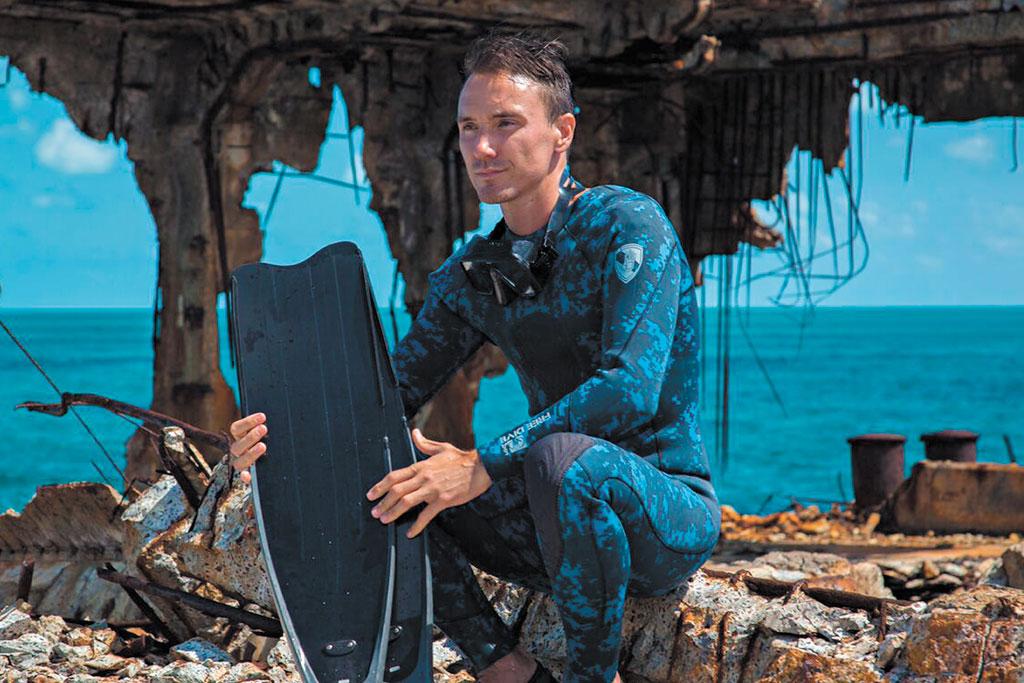
Rob Stewart, a Canadian filmmaker and Toronto’s own conservation hero, passed away while diving off the Florida Keys in 2017. His last film, Sharkwater: Extinction, sat unfinished at the time of his death. But thanks to the help of his friends and family, who rallied to finish the project for him, the film will get its world premiere on Sept. 7 at TIFF. Post City spoke with colleague Julie Andersen about Rob, the film and their shared love of sharks.

Tell me about the circumstances around Rob’s passing and the team deciding to carry on this important project. 
It was a very tough day and a very tough year and a half, but we had no choice. This is obviously what all of us would do naturally. Rob was such a huge power for all of our lives, and of course losing Rob, I don’t think it was even a discussion. All of us just banded together with Rob’s parents and decided we were going to move forward.

What made him so special?
Every day I hear of more and more people who have been impacted by Rob and are making changes not just in their lives but for things that they are passionate about. That’s really the legacy of Rob. He used to have a saying: that you take your passion and you smash it together with your talent, and you live a life of meaning and you can bring about great change. It’s not just about sharks. It’s whatever you’re passionate about.

Tell me about your introduction to sharks.
I was 19 and I was diving in Hawaii, and I was by myself, and I suddenly felt this presence next to me, and I looked, and arm’s-length next to me was a hammerhead shark, literally looking at me eye to eye, and I locked eyes, and I tell you what, it shifted my world completely. I saw life not death. It made me question everything I was told. Here was this animal that was supposed to eat me alive, and instead it seemed like it was much more afraid of me, and I just became intoxicated by having experiences like that.


Julie Andersen

When did conservation kick in?
Well I became a shark nerd, like Rob, and went around the world trying to find sharks and to dive with them. A lot of times what I was experiencing, more than the sharks themselves, was what was happening to them. So the shark finning, going to Burma Banks [Myanmar’s deep-water home to a large shark population] and seeing the shark fins drying in the sun, and the lights on the illegal shark finning vessels come on at night. And it just really tore at me. But it wasn’t until I met Rob that I realized I could do something about it.

So when did you first meet him?
I had an advertising agency and had gotten into the Internet really early, and I was working with companies like Porsche and Mercedes, and I just felt a little bit like the ocean was pulling me. And one day I went to a screening of this little movie called Sharkwater, and I was absolutely blown away by this young, amazing guy who decided he wasn’t going to take it anymore. And he made this amazing movie. I waited afterwards to meet him, which was totally uncharacteristic of me. Five days later, I was in Toronto with a notebook full of ideas, and the rest is history. He basically inspired me to get on board with the cause. I sold my house, my business, my car and changed my life completely to work with Rob Stewart.

Wow, that’s a big change.
There was just something very special about him. He thought he could change the world, and working with him, you felt like it was possible.

What does the new film add to the conversation around sharks?
Rob kind of helped us fall in love with an animal that most people malign and hate. The new film looks at all the other issues facing sharks. The first film looked at shark finning and the fact that 80 million sharks were disappearing per year for their fins. This film really looks at what happens to the other 70 million sharks that are disappearing and opens our eyes to the fact that we don’t even realize how many products we have in our homes that contain sharks. That was a really important realization for Rob.

We do? What kinds of products?
It’s crazy, everything from deodorant, lotions and lipsticks all the way to pet foods. Imitation crab is often filled with shark. So many different names for shark that sometimes we don’t even know. You got to a fish and chips shop and you’re eating rock salmon. Well guess what, that’s shark too. It’s crazy how accessible it is to all of us.

Why is it important to protect sharks?
Sharks sit atop the food chain and are apex predators. If you remove them out of the food chain, it has cascading effects. What we forget is that sharks have been on this planet for 450 million years, right? They have survived five major extinctions. They formed our oceans, and oceans are so critical for our survival. So it’s really not just about sharks, and it’s not just about our oceans. It’s about us and what we are doing to our life-support systems.

Author Claudia Dey on the release of her new novel

0

For Toronto writer Claudia Dey, who attended St. Clement’s School, it was seeing Michael Ondaatje’s The Collected Works of Billy the Kid theatre adaptation that sparked her desire to tell stories.  

“I thought, ‘I want to do that. I am going to do that.’ It answered to the electricity I felt inside; it gave me a form,” she explains. “When you are a teenager, you are hunting for ways to live, ways to be. This moment gave me my direction.”

Dey wrote her first play in Grade 7 and even scripted a death scene for herself. 

“I was poisoned after having an affair with a professional baseball player and did a death dance in one of my mother’s dresses and turquoise high heels,” she says.  

Despite keeping much of her writing to herself when she was younger, Dey says she got a lot of encouragement in her burgeoning literary pursuits. 

“I look back now, and the encouragement I received from teachers and from other students probably helped to nudge me toward writing as a formal and legitimate pursuit.”

“It feels like I am watching my soul cross an eight-lane highway.”

After St. Clement’s, Dey studied literature at McGill University and then playwriting at the National Theatre School of Canada for two years. What came next was a whirlwind of creative pursuits including, but not limited to, playwriting, a sex column, an advice column, her first novel (Stunt), acting in two independent films (one, a horror film with no dialogue where she falls in love with a sea creature), a book about sex, a design studio and a clothing brand called Horses Atelier and now Heartbreaker.

Heartbreaker is her second novel and tells the story of Billie Jean Fontaine, who ends up in a small, northern town in the middle of nowhere after falling from a stolen car. Years later, she disappears one night and it’s up to her daughter, Pony, and husband to piece together what may have happened. The book is told in three distinct voices — Pony, Billie Jean’s dog and a teenager named Supernatural.

In terms of process, Dey says she writes a book to answer a question for herself or to settle a debate within herself. 

“In the case of Heartbreaker, the novel began with an image: a woman in a white three-piece suit tumbling from the open door of a slowly moving Mercedes sedan: her long hair, the loose limbs. She was in the middle of nowhere,” says Dey. 

So, Dey asked herself: what is the middle of nowhere? From there, the novel took shape. 

Dey is a healthy mix of excited and anxious about the release of Heartbreaker

“It feels like I am watching my soul cross an eight-lane highway,” she says. 

With a creative mind like Dey’s, she’s always thinking about what may come next, but that doesn’t mean she’s ready to share. 

“I have another novel in me. That is my future. But I can’t say anything more.”

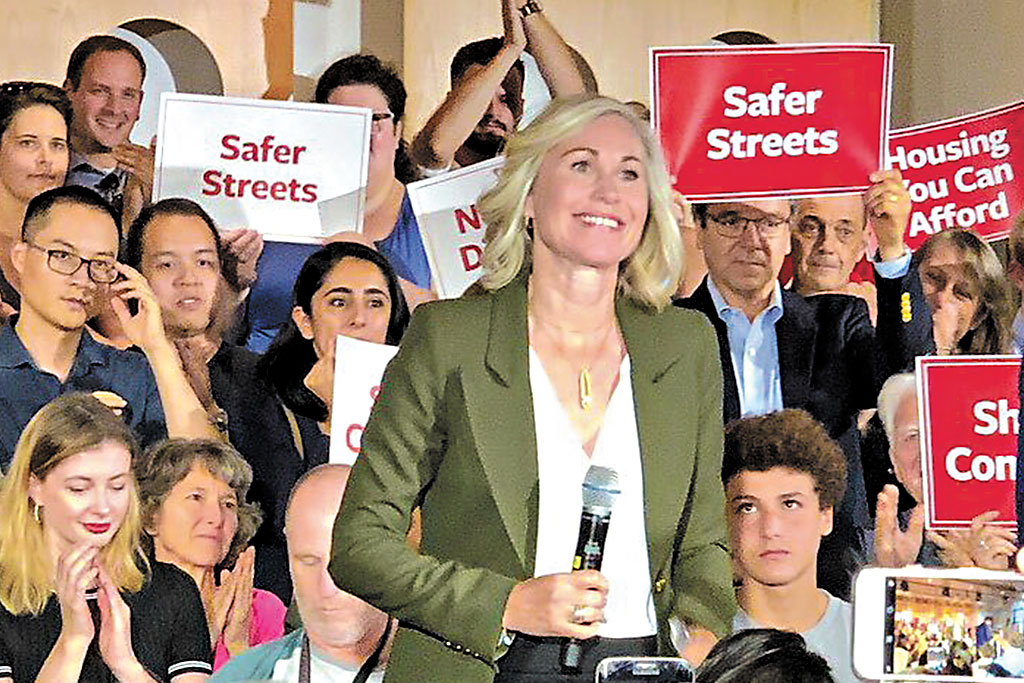
Advice for mayoral candidate Jennifer Keesmaat

0

When I was running for mayor, a colleague sent me a well-known excerpt from Theodore Roosevelt’s speech entitled “Citizenship in A Republic.”

The speech was delivered in Paris in 1910 and should be required reading for anyone striving for higher office.

There is a passage that is particularly poignant for your journey called the “man in the arena.” I welcomed the passage because it described my experience in the mayoral race. Now I am giving it to you:

“It is not the critic who counts; not the man who points out how the strong man stumbles, or where the doer of deeds could have done them better. The credit belongs to the man who is actually in the arena, whose face is marred by dust and sweat and blood; who strives valiantly; who errs, who comes short again and again, because there is no effort without error and shortcoming; but who does actually strive to do the deeds; who knows great enthusiasms, the great devotions; who spends himself in a worthy cause; who at the best knows in the end the triumph of high achievement, and who at the worst, if he fails, at least fails while daring greatly, so that his place shall never be with those cold and timid souls who neither know victory nor defeat.”

Running for mayor of the City of Toronto is arguably the hardest campaign to elected office in the country. The campaign period is the shortest, the money is the hardest to raise and the office holder is directly elected by a city of 2.7 million people and more than half will likely not vote.

When I ran for mayor I called in every favour I was due, plus a few I hadn’t earned.

Trying to find a path to victory is difficult, particularly for individuals who have not served as elected officials. The reason is that when you are an elected official you have the chance to help people and when you seek re-election those same people will help you.

Throughout the campaign you will be asked to attend many community events, festivals and organized events.

I encourage you to participate in each of these events as fully and completely as possible.

It will be these times that fill you with great enthusiasm and keep you motivated through the harder events such as debates and town halls.

There is no question that social media has a valuable role to play in any campaign, but be wary of its predictive powers. Getting into communities that do not know you well is critical.

At one time, there was a unique and quaint tradition in Toronto whereby winning candidates held events that raised funds to ensure all mayoral candidates would be able to pay off their debt. That time has passed.

On your journey, you will meet incredible people and grow even fonder of the city. Making sure your ideas become part of the public debate will serve the city well.

All the best in the days ahead and be confident that your place will not be with the “cold and timid souls.”