Home Blog Page 547

Toronto treasure hunt brings vintage finds to midtown

0

Treasure Hunt Boutique is a new Mt. Pleasant consignment store in Toronto that buys and sells authentic designer goods. From vintage classics to unique styles, all of the products here come from top designers like Hermès, Cartier, Louis Vuitton and many more. Owner Haiyan Zhu offers customers 60 per cent of the final sale price of all products they bring to the shop. It’s worth heading to Treasure Hunt Boutique with togs you’ve tired of, and you’ll likely find replacements (561 Mt. Pleasant Rd., 647-351-0886).

There is a second Fuwa Fuwa Japanese Pancakes location in Toronto. This Midtown spot serves souffle pancakes, a Japanese dessert that takes a classic pancake recipe and turns it into the fluffy and thick treat famous for being served at Japanese weddings. The pancakes made at Fuwa Fuwa are light and  come paired with a variety of sauces, fruits and ice cream (2471 Yonge St., 647-618-2816).

Saigon House is a new restaurant in the Yonge-Lawrence village serving Vietnamese, Thai and Korean dishes. The menu features favourites such as vermicelli, pho noodle soups and a selection of stir-fry and curry dishes as well as pad Thai and even taro bubble tea. If you are in the mood for some Asian flavours, Saigon House has them aplenty (3393 Yonge St., 416-483-0736). 

18Karat Studio+Gallery designs and creates custom jewellery and is currently hosting a metal art exhibition highlighting some of Canada’s most talented metal art designers: Lynn Légaré, Petra Luz and Caroline Rivière. Each artist brings her own unique touch and materials to the designs. Metamorphosis: From Raw to Refined is the name of this exhibition, which runs until Feb. 28 (1156 Yonge St., 416-593-1648).

A new restaurant serving Vietnamese street food has opened in North York. Vietnoms offers an extensive menu in an environment designed for quick and delicious meals. There is a variety of pho bowls, vermicelli noodles and banh mi sandwiches that are available alongside special daily dishes, appetizers, drinks and other rice and noodle dishes (243 Sheppard Ave. E., 647-352-5886). 

Lather & Steel is a new barbershop where men can come in for a haircut, a beard trim and some nice company. With a full menu of services, the barbers at Lather & Steel want their customers to explore their individual hairstyle preferences in a comfortable, old-world environment. Services includes haricuts, clean-ups, and head shaves. For those sporting facial hair, the barbershop also offers trimming, line-up and full shaves. Shampoo and conditioner service is included with any haircut (1009 Yonge St., 647-351-7077).

Instagram of the Day

https://www.instagram.com/p/BrlBRoKH2KJ/?utm_source=ig_web_copy_link

Volunteers run Toronto’s rinks better

0

Sometimes the City of Toronto tries to solve problems that don’t exist. Take, for instance, the time Toronto City Council tried to pass a policy to ensure there was enough shade in parks. And sometimes the city doesn’t try to fix problems that do exist because it takes too much effort. The problem that could and should be fixed is that neighbourhood arenas are not being run efficiently. We need to improve the overall availability of ice time.

As Toronto grows and resources are stretched, there is an imperative to find more efficient ways of delivering programs and services. One such program is the scheduling of ice time for user groups.

Any parent of a hockey player or figure skater knows very well how hard it is to get ice time nearby for kids to practise and play.

At present, there are two ways that ice time is managed. The city manages some rinks, and there are eight independently run rinks that are managed by arena boards.

The arena boards comprise volunteers in the community and work with the arena managers to maximize the use of ice so that all users get a chance to skate.

The mandate of these boards is to break even or run a small profit. With the exception of Leaside, all board-run rinks have non-unionized employees.

The result is that there is very little idle ice time.

The city has a different model and mandate for managing the rinks. They want to ensure there is adequate time for free skating for families and the rink is operated by unionized staff.

Since there is no mandate to maximize the ice time, it is often unused for long stretches during the day.

In addition, the city rinks open when it is convenient for the union, not when it is convenient for the community to use them.

The result is that parents have to drive their kids to far-flung places for practice time and sometimes pay for private ice.

Two outgoing councillors, Josh Colle and Jon Burnside, attempted to fix this problem by suggesting new ways to manage the scarce resources of the ice rinks.

Through a motion moved at council, the renegade councillors suggested that the arena boards manage some city rinks in addition to the eight rinks that are currently operated independently.

In spite of the reasonableness of the proposal, it will likely never see the light of day.

Over the past 15 years, the city has tried to limit the reach of the eight independent boards by systematically reducing their areas of authority.

It started when the city removed the ability of the rinks to manage their own capital projects.

Then the city imposed a standardized city-wide policy on ice allocation that changed the way rinks could allocate ice to user groups.

Then the city took control of the nomination process for the volunteer board of directors that oversees the rinks.

The combination of bureaucratic influence and political meddling has dramatically reduced the independence of the arenas.

However, even in the face of the meddling, the board-run arenas continue to turn a small profit, maximize ice time, run clean and well-maintained rinks and remain the envy of the communities that aren’t lucky enough to have one.

City rinks continue to be underutilized and expensive operations.

Although it makes sense to have some more city rinks run by an independent board, it likely won’t happen because it would mean admitting that board-run rinks actually work better than city rinks.

It would also mean discussions with the unions, which certain councillors will oppose.

So parents will continue to have long drives, the union workers will still have their same jobs, and city council will ignore a great opportunity to improve efficiency and the amount of available ice time.

Full disclosure, Karen Stintz is the chair of the North Toronto Memorial Arena Board.

The culinary influence of midtown’s Roberto Martella

0

In November of last year, a sizable cadre of Toronto’s most influential people gathered at a sold-out dinner to pay tribute to a midtown legend. Held at Villa Colombo in North York, the event was attended by the likes of Rocco Rossi, Steve Paikin and Mayor John Tory, who tweeted that he was celebrating the guest of honour’s “many contributions to dining and culture in Toronto.”

Restaurateurs typically aren’t treated with such distinction, but the legend in question is Roberto Martella, co-owner of Yonge and Eglinton’s long-standing Italian restaurant Grano. The impressive show of support was a concerted response to the stroke that almost killed him in 2016.

The stroke hit while he was on a wine trip in Venice, staying alone at a friend’s house. He doesn’t remember anything about the incident, but it left him unconscious for three days before he was discovered. He was in a coma for a month.

Today he is still wheelchair-bound, recovering at Baycrest health centre. His room is covered floor to ceiling with get well messages and photos of friends and family. Sometimes he takes a while to answer questions, but when he does, the vibrant intellect for which he’s known shines through in its entirety.

As a result of the stroke, Grano closed in late 2018. The restaurant had been open for 32 years, although calling it a restaurant doesn’t really cut it. Public discussion forum, cultural promotion centre, ideas incubator, 19th century–style salon, concert venue, art gallery, lecture hall — Grano was a mix of all those things, and that was the intention from the beginning.

As much as anything else, the social element made Grano unique: the poetry readings, the Language and Linguini Italian lessons, the book launches and the fiery Grano Speakers Series, which saw renowned intellectuals such as Gore Vidal, Christopher Hitchens and Camille Paglia share their ideas to an invite-only crowd.

Martella opened Grano with his wife, Lucia Ruggiero-Martella, in 1986.
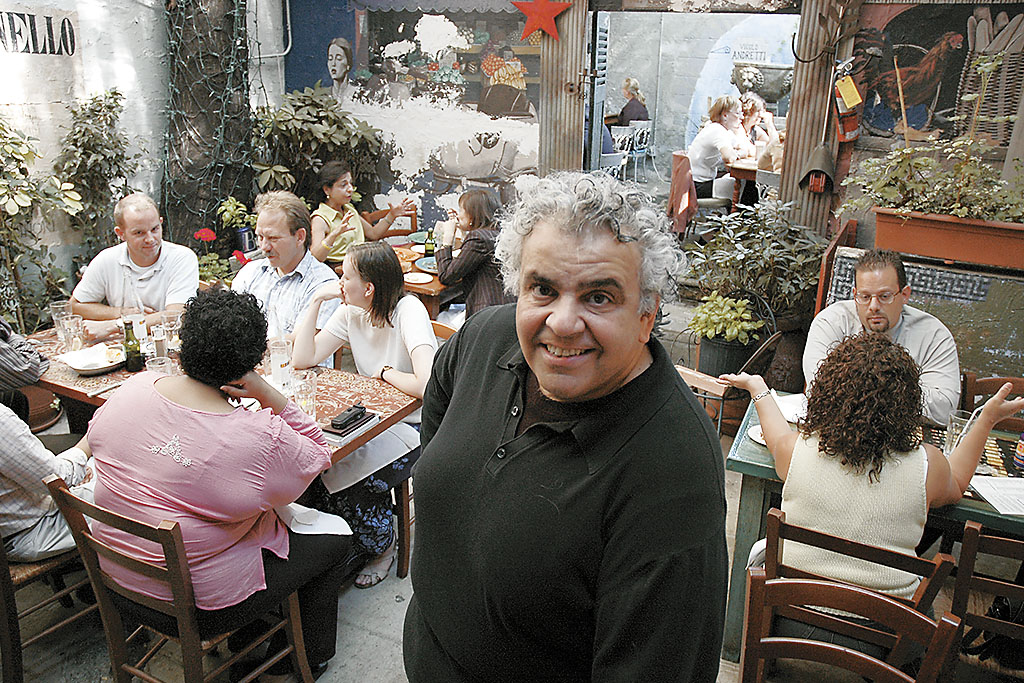

Martella on the busy patio at Grano

They had never operated a restaurant before — Martella’s wife, actually, had never even worked in one — but their life journey to that point had left them ripe for such an undertaking.

Born in 1953 to an Italian father and an Italian-Canadian mother, Martella grew up above his father’s barbershop near Steeles and Bathurst.

Arguably, good food is central to most Italian families, and it was no different in his. He was raised on house-made prosciutto, and he fondly recalls his mother’s labour-intensive tomato sauce, which she’d leave simmering on the stove all night long. Martella’s mother kick-started his culinary journey, he says, even if he feels it’s a little overplayed to admit as much.

Following university, he had an urge to travel, so he went to Japan, eventually becoming a roadie for a drumming group from Sado Island. He lived in Italy, too, and briefly in the U.K., bartending or waiting at restaurants to satiate his ever-growing curiosity about people and ideas.

“His love is people,” his wife says. “He will welcome anyone and everyone. He has that quality to speak on a variety of subjects.”

He made that skill apparent during their first encounter in 1979, she says, when he was back in Toronto working at a restaurant at Dufferin and St. Clair. He discovered she was studying anthropology, so he started up a discussion about cultural anthropologist Margaret Mead. The stratagem worked: by 1985 they were married.

Martella spent some time organizing events and dinners for the Canadian Italian Business and Professional Association, and he says his wife was quite helpful during that time, so he had a growing sense that they could pull off a restaurant. Around a year after that, they opened Grano.

At first, Grano was primarily a bakery and deli, selling bread, cheese, salumi and other Italian ingredients, but it blossomed quickly. Soon they had a steam table offering lunch, followed by full-fledged dinners. Martella worked front of house, while Ruggiero-Martella suddenly found herself in charge of a professional kitchen.

“She took to it very naturally,” Martella says. “Ultimately, she even surprised herself.”

As Grano became popular, it grew in size. The couple expanded their restaurant into three adjacent storefronts. They lived upstairs, too, growing their family and their living space alongside their business, which also became a source of tension.

“It’s an occupational hazard, I suppose,” Martella says.

Although other influential Italian restaurants at the time played up glitz and glamour, Grano was unpretentious but intelligent, casual but sophisticated.

“It was a community as much as it was a restaurant. There was a lot of culture there.”

It did not take long before Grano became increasingly known for its book launches, lectures and other arts-related events. Michael Ondaatje became a regular, as did Bob Rae.

“Grano was unique because Roberto is a unique person,” says influential Toronto restaurateur Franco Prevedello, a longtime friend of Martella. “It was a community as much as it was a restaurant. There was a lot of culture there.”

Martella, it should be noted, made a point of promoting multiculturalism before it was the cool thing to do, before social media and the social justice movement. More recently, in 2014, he publicly called for Toronto residents to try to learn new languages.

“Monolingualism can be cured,” he wrote in the Toronto Star, using the same florid language with which he speaks. “An embracing of multilingualism would move us forward on the progressive arc that truly is Canada’s and pay homage to the world’s diversity which is our diversity too.”

That kind of open-mindedness, an embracing of the differences that unite people, became Grano’s essence.

Perhaps it’s no surprise, then, that in 2006 Martella won the Jane Jacobs Prize for enriching the cultural fabric of the city.

The heady cocktail of elements that combined to make Grano what it was — good food, good discussions and good vibes — paid off. Grano outlived numerous other local culinary institutions, including Centro, Splendido and North 44.
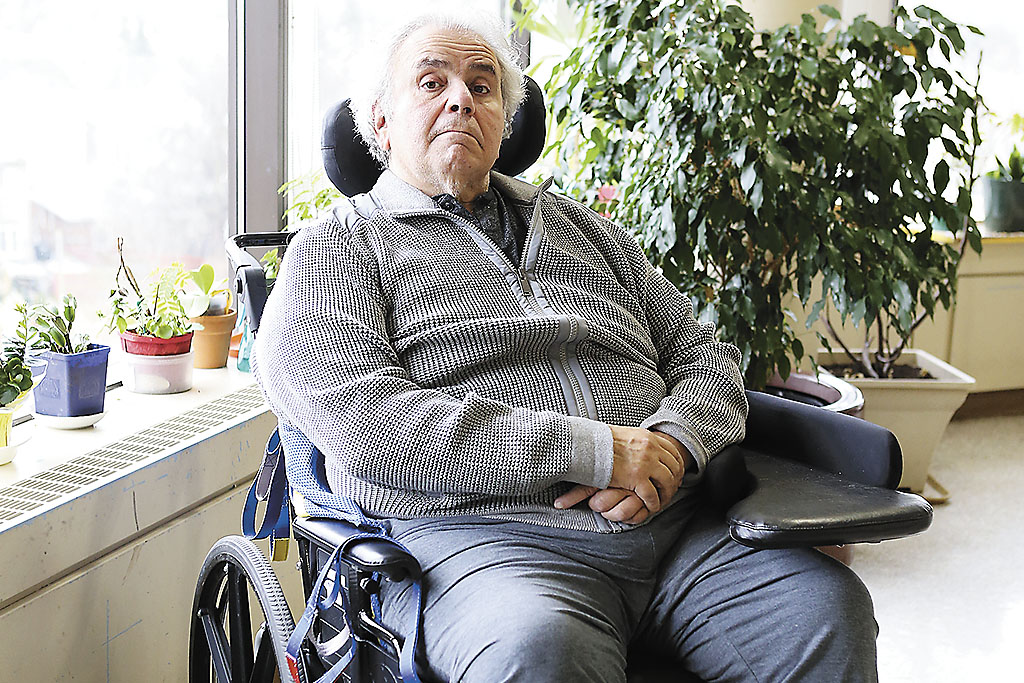

Martella is currently recovering at Baycrest hospital

These days, as Martella recovers, he remains just as curious as ever. He is getting to know his fellow patients at the hospital and is learning from them what he can. He’s keeping up on his languages, of which he knows four: English, Italian, French and Spanish, plus a little Japanese. He’s working on a lecture series too.

He’d like to return to Italy one day once he’s better. And he hopes the tradition of hospitality will continue where Grano once stood.

“It would make me happy if another restaurant were to take it over,” he says.

Soulpepper’s first full musical set to hit the stage in Toronto this month

0

This month, Soulpepper Theatre offers Rose to the city, the company’s first full-blown musical in its history. And it is shaping up to be something special.

The production first saw the light of day four years ago when Soulpepper’s Sarah Wilson pitched an idea to director of music Mike Ross: a piece based on the beloved writer Gertrude Stein children’s story “The World Is Round” and its determined main character Rose.

“Once we started to write, the scope of piece started to grow,” says Ross. “Times have been changing in wonderful ways the past couple years, and suddenly the idea of telling a story of nine-year-old girl trying to find place in this world and refusing to let others tell her who she is became kind of important.”

Over the past two years, Rose: A New Musical was workshopped a few times, and a clearer picture of the story and songs came into focus.

The creative team behind the production, Ross and Wilson, were also responsible for Soulpepper’s resounding hit Spoon River. That means expectations are high — so much so that the show has already been extended before it has opened.

“[It’s a] Testament to people trusting the music program that’s been happening here over the last couple years,” says Ross.

“People are willing to jump into new waters with a little bit of trust because of that.”

“I’ll be standing up there trying to expose my heart as much as I can, and I’m hoping everyone will take a little piece.”

The lead role in the production is played by adult Hailey Gillis.

“I have spent a lot of time with this beautiful little girl, and I feel like I’ve grown with her as she has been moulding herself into full character,” says Gillis.

“I’ve met with a lot of nine-year-olds in researching, and they are way cooler than I am. They are so sure, and Rose is like this. She’s so sure about what she’s unsure about. She feels all the injustices of a confusing world as the blinders of childhood open up a bit.”

Rose is set in the mountain town of Somewhere. The nine-year-old is very concerned about the world around her, and she expresses her concern through song. But when she sings, she often cries. The main character’s endearing empathy makes this an inspiring story about a search for self-identity.

Gillis hopes everyone who comes to the show will leave with a little bit of magic all their own.

“I’ll be standing up there trying to expose my heart as much as I can, and I’m hoping everyone will take a little piece — that they’ll pick up what I’m putting down.”

Rose: A New Musical runs Jan. 17 to Feb. 24, www.soulpepper.ca.

Soulpepper’s new artistic director shares her own her real-life love story

0

Award-winning director Weyni Mengesha is ditching L.A. to return to Toronto as the newly appointed artistic director of Soulpepper theatre company. She is best known for directing Da Kink in my Hair and Kim’s Convenience, among the many other projects she’s worked on. Her husband, Eion Bailey, is an actor best known for his television roles in Band of Brothers, Ray Donovan and Once Upon a Time. Post chatted with Mengesha about her and Bailey’s love story while preparing for their move to the East Coast.

How they met
We met at Afrofest in Toronto in 2011. He was playing a role on Covert Affairs at the time and a Toronto-based stuntman (Moses Nyarko) who was doing a couple days on an episode invited him to the festival. Through mutual friends, we all ended up hanging out together. At the end of the day, he asked me if I would like to grab a tea.

The first date 
We went on our first date about a week after we met. It was at Sassafraz. There was a little party happening there. We ate dinner and danced.

The courtship
Well, because we lived in different cities, our dates were a week or two long at times. He would come to Toronto or I would go to L.A. Or we would pick another city to meet in. So it was a whirlwind romance. I think we were basically living together in six months.

“We woke up one morning about a year into our relationship — madly in love — and decided we should get married soon. We were married by the end of the day.”

The wedding 
We woke up one morning about a year into our relationship — madly in love — and decided we should get married soon. We were married by the end of the day. On the way to the courts, we picked up my best friend who was dying to know where we were going looking so fancy. She was our witness. We are still planning the party. (I promise, Mom, it is going to happen!) Our 10-year anniversary is coming up!

The kids 
We have two little boys.

Balancing careers and marriage
It is not easy, that is for sure, but we just take it day by day. Date nights are important to us. We love talking about our work with each other because we are both obsessed with stories. The tough part is figuring out how to continue to carve out time for ourselves between working in different cities at times and taking care of our kids.

Shared hobbies  
Anything to do with storytelling, of course, as well as poetry, camping, snowboarding, travelling. We both love the outdoors. We also both have had passion projects in community development and social work.

The home  
We are just making the move to Toronto, so it is still a mystery where we will land. We want to be close to Soulpepper, of course. Topanga Canyon is where we have been for the last four years in California. It is where we had our second son. It is 10 minutes to the beach and in the mountains. It has been a beautiful place to raise our kids.

Secret to success 
Hard work and lots of communication. I think the most important part of our recipe for happiness is unplugging and spending time with family and our community. We host a lot of events, even in our home. It brings us joy.  We also try and do no work or work-related things on Sundays — sun up to sun down. We get up with the boys, pack lunches and get lost in whatever city we are in. They are magical days for us.

Life after retirement
Lots of travelling. I would love to spend more time in Ethiopia. I would love to do more work there and have my boys experience the country. Eion is excited about that too. Laughing, loving, and hopefully still making theatre and film.

Sofia is Toronto’s top spot to see and be seen, but the food is meh

0

One can barely keep up with Charles Khabouth, who at last count has 21 clubs and restaurants, all successful, all snazzy, all cool. From Cabana pool bar (very Vegas) to Byblos (very good Middle Eastern), this is the guy with the Midas touch. His new place, Sofia, has 238 seats and has 110 seats on two patios. Big. But no doubt Mr. Khabouth can fill 348 seats in Yorkville. Every night.

The place is jumping already. Stand for three minutes at the podium and watch the non-stop parade of blondes with long legs in short skirts and guys in expensive suits. Where does all the money come from? And why does it flock here?

Our dinner for two, with two glasses of wine, came in at more than $250. Was it worth it? Depends on what you mean by worth it.

The food was meh (more on that later), but the scene is … quite the scene. All those blondes and guys who look like money, the Yorkville address and the entertaining decor.

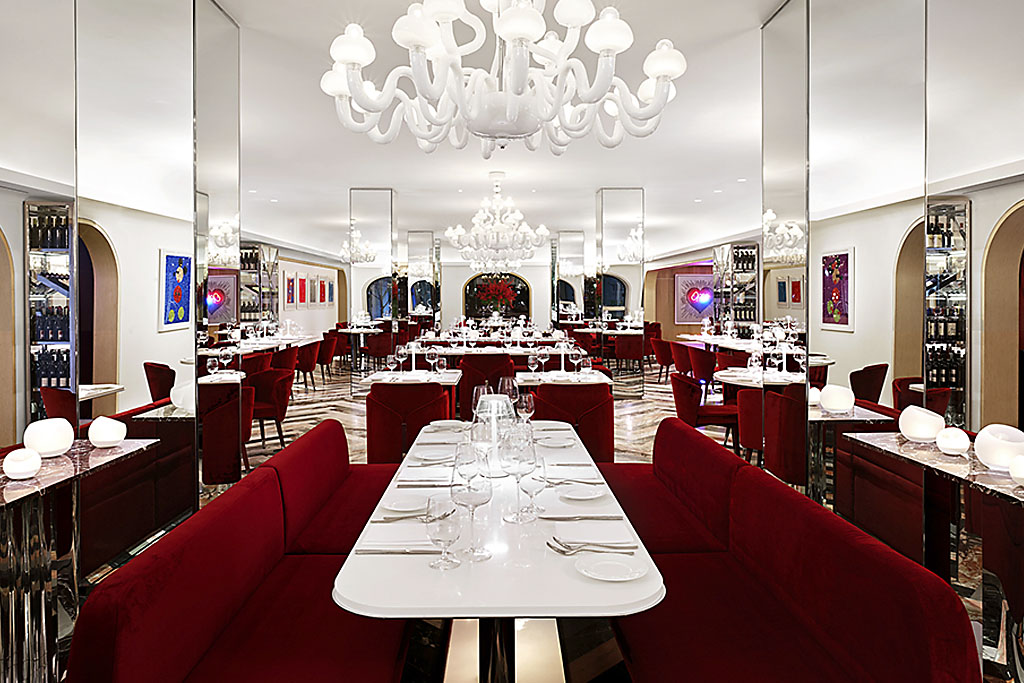
The floor is particularly arresting, herringbone strips of remarkable stone. Tables are white lacquer, chairs and banquettes are plush cranberry velvet, and everywhere light reflects from the many milk glass chandeliers. Mirrored columns and walls. There’s even a crooner at a white baby grand on a platform.


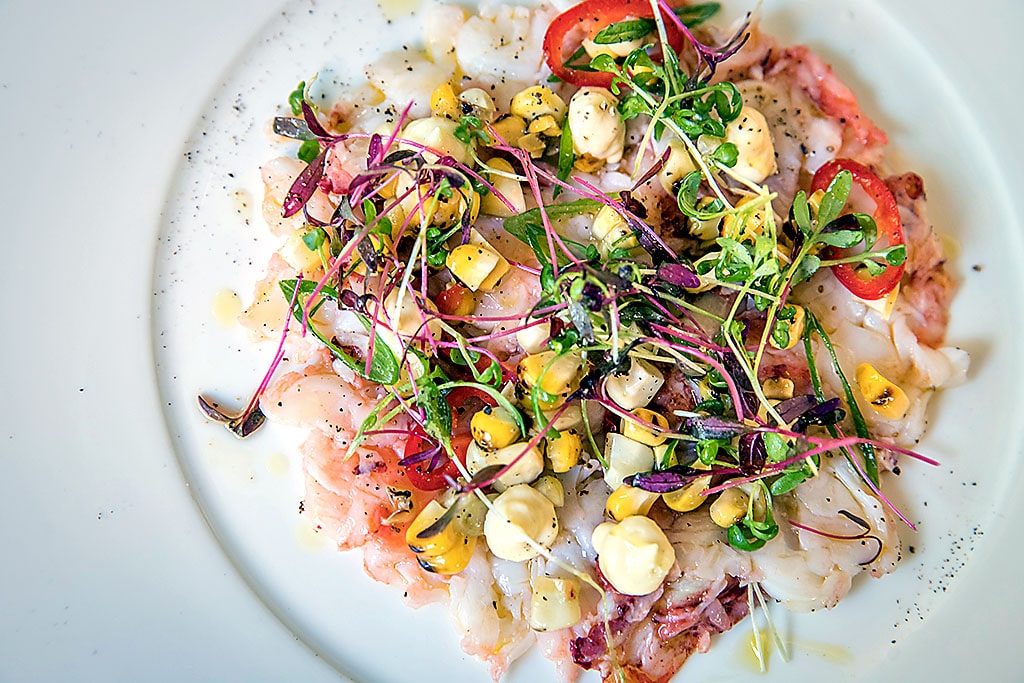
Sofia’s aragosta crudo​ (IMAGE: JESSE MILNS)

Both male and female servers are, of course, pretty. Managers (older men in suits) rove constantly, checking the room for service. This makes us feel very important. The noise level, thanks to all those hard surfaces, is ear-splitting. All part of the scene.

Then there’s the food. Mostly southern Italian with the occasional excursion to the land of fusion. Like the lobster crudo, sweet, sexy raw lobster dressed with lemon, green onion and too-sweet mayo that tastes suspiciously like the Japanese kewpie mayo that sometimes dresses sushi. We veer back to Italy with agnolotti stuffed with ricotta and garnished with hazelnuts, black truffle and chanterelles. As I said, meh. Flavours neither robust nor interesting.


The ​zeppole di san giuseppe dessert with pistachio gelato (IMAGE: JESSE MILNS)

For mains we have two large wild shrimp for $12 each. Nice but not noteworthy. And not that big either for $12. And orata (sea bream) for $48, served with lemon butter. Also nice but not special. For sides we have rather plain broccoletti (the promised white balsamic and garlic apparently MIA) and Roman artichokes, the super-traditional Roman deep-fried artichokes. Problem here is that the kitchen has trimmed the artichokes incompletely and where we expect crunchy outside and soft inside, there are some fibrous leaves that don’t chew so good. And where oh where is the promised basil pesto?

Bottom line: So many pretty people, so popular already, not about the food.

RECOMMENDED DISHES: Insalata di arance, aragosta, rigatoni alla vodka and torta dell’opera, a decadent chocolate cake for two.

DRINKS: Nishan Nepulangoda (of Blowfish fame) whips up Italian-inspired signature martinis and tasty cocktails. There’s also an extensive wine list of international vintages.

PRICE: $250 for two.

OPEN: Mon.-Sat., 3 p.m. to 10:30 p.m. Sunday 11 a.m. to 3 p.m.

RESERVATIONS: It’s recommended that you book ahead of time at opentable.ca.

Sofia, 99 Yorkville Ave., 416-479-8974

Thornhill native brings powerful story to life in new CBC series Unspeakable

0

Showrunner, writer and producer Robert C. Cooper, who attended Thornlea Secondary School, knew he wanted to pursue a creative career at an early age.

His ambitions were further developed in high school, thanks to the autonomous learning program, a course credit where students can tackle whatever subject area that interests them as long as they have clear goals in mind.

In Cooper’s case, he used the program to write short stories and work on film projects with like-minded students.

“My career path was forged before high school. I knew what I wanted to do at a very young age, but I was really encouraged and motivated by my high school teachers to pursue it.”

Following high school, Cooper completed a BFA at York University where he studied film and television, after which he started work as a writer.

Over his career, he has served as showrunner on Dirk Gently’s Holistic Detective Agency for BBC America, Netflix and AMC Studios, and as showrunner of the Stargate television franchise for MGM, as well as co-creating Stargate Atlantis and Stargate Universe. Cooper was also  executive producer, writer and director of multiple episodes of all three series.

His latest project, Unspeakable, an eight-part miniseries on the tainted blood scandal, is a deeply personal one as he contracted hepatitis C from tainted blood himself in the 1980s.

The show is based on Cooper’s own experiences as well as two non-fiction books about the crisis: Bad Blood and The Gift of Death.

“Once clear of the virus I was able, for the first time, to stop looking at the situation from the point of view of a victim and more from the point of view of a storyteller.”

“I first decided to tackle it in 2014, which is just after I was cured of hepatitis C after living with it for 30 years. Once clear of the virus I was able, for the first time, to stop looking at the situation from the point of view of a victim and more from the point of view of a storyteller,” he says.

From there, the show began to take shape.

“I saw my own situation as a good door in, but I had to be aware of the fact that this tragedy was much bigger,” he explains. “I think that any time you deal with a real-life tragedy you have to be very aware of not exploiting people’s misery. But at same time, it is an incredibly important story to tell.”

Although Unspeakable is not a direct translation of Cooper’s life, he notes that almost every moment in the show is based on a true instance. However, the scope of the miniseries is much wider.

“I’m incredibly lucky that I was able to avoid getting HIV and have been cured and am now reasonably healthy. So many people didn’t make it, and so many people are continuing to live with HIV and hepatitis C, and I felt an incredible amount of responsibility, when I took this on, to be respectful of those experiences,” he explains.

The story behind Unspeakable is also about searching for the truth.

“This show is about getting to the truth, about people’s health and safety being compromised. This is a story that happened 30 plus years ago, but it’s never been more relevant.”

Having recently watched the show with his family, the importance of telling the story set in.

“When it was done, I was talking about whether I will ever work on anything this meaningful again. It was a long time coming and now it’s out there.”

Unspeakable premieres on CBC on Jan. 9.

Incredible theatre on tap this month in Toronto

0

Although much of the city is slowing down, and the temperature starts to redefine our perception of cold, the local theatre scene is hot, hot, hot. This month, there are at least a dozen new productions hitting stages from Leslieville clear across town to the Theatre Centre, many of which are greatly anticipated new works. With so much from which to choose, Post City has put together a handy guide to make the most of a wonderful month of theatre in Toronto beginning with an opening on Jan. 4 straight through to the end of the month. Beginning at the end of this month, but running mostly in early February is the Progress Festival, which is also worth checking out.

Opening Jan. 4
Kiviuq Returns: An Inuit Epic, Tarragon Theatre

Arctic theatre company the Qaggiq Collective returns to Toronto this month with its production Kivivq Returns following a one-day performance back in 2017. The interdisciplinary performance brings together both old and contemporary storytelling elements such as Inuit throat music to offer a bold new take on their own traditional stories that revolve around an Inuit hero, Kivioq. The show is performed in Inuktitut with English overviews, and before each performance audience members will have the opportunity to learn about the importance of the Inuit language to Canadian theatre. Kiviuq Returns runs until Jan. 27.

Jan. 7
We Are Not Alone, Crow’s Theatre

If I had to pick a favourite, I am most excited to catch Damien Atkins’ one-man show We Are Not Alone. He is a wonderful, electric performer and the show examines the history and believers in the UFO phenomenon. Hard to go wrong with this one. Atkins is rumoured to be portraying something in the order of 30 characters in this somewhat askew perhaps downright quirky show. If this show doesn’t fly your saucer, ahem, Atkins will also be starring in the Shaw Festival production of The Ladykillers opening this spring down the road in Niagara. We Are Not Alone runs until Jan. 26.

Jan. 8
The Play That Goes Wrong, Ed Mirvish Theatre

This touring production hits town on the heels of some solid reviews. The farce is strong with this one, and The Play That Goes Wrong is billed as the satirical love child of Sherlock Holmes and Monty Python. Think classic whodunit with pratfalls and madcap high jinks of the highest order. Apparently, it’s a lot of fun, moves quickly and could be just the thing to distract audiences from the mounds of snow accumulating outside the theatre. The play opened in London back in 2012, and is still enjoying a rather prolonged run, garnering a Best New Comedy nod at the 2015 Laurence Olivier Awards along the way.  It runs until Feb. 10.


Alex Mandell and Amelia McClain star in a Play That Goes Wrong

Jan. 9
1979, Berkeley Street Theatre

As far as scintillating subject matter for stage adaption goes, the life and times of Canadian politician Joe Clark is unlikely to top many lists, but add the names Michael Healey (writer) and Miles Potter  (director) to the mix and things get very interesting indeed. The two did happen to team up on a little production dubbed The Drawer Boy, and it did pretty well, becoming a somewhat iconic Canadian work after premiering in Toronto in 1999. This show, 1979, premiered in Alberta in 2017 to rave reviews and numerous award nominations. That original three-person cast of Christopher Hunt, Jamie Konchak, and Philip Riccio, will be starring in this production as well. The play, which looks at the changing world of conservative politics in Canada, is going to be kind of a big deal. It runs until Jan. 27.

Jan. 10
After The Fire, Theatre Centre

In early 2018, the play Bears kicked the city in its theatrical teeth with its bold and unapologetic storytelling and politics winning two Dora awards to its trouble. This month, playwright Matthew MacKenzie returns to the Theatre Centre one year later with his new work After The Fire. The work is set in the aftermath of the 2016 wildfires in and around Fort McMurray, Alberta, and offers a different, more family-centred approach to MacKenzie’s continued examination of fossil fuel addiction. This Indigenous-led production will be powerful. And if you missed Bears the first time around, it will be presented by the Factory Theatre beginning next month. After The Fire runs for just nine performances Jan. 10-19.

Jan. 13
Tartuffe, Canadian Stage

There is never a bad time to poke fun at religion and hypocrisy, and that is what Moliére’s timeless satire Tartuffe is all about. Canadian Stage’s new production directed by Chris Abraham and starring Tom Rooney comes direct from the venerable Stratford Festival where it wowed audiences and critics alike in 2017, garnering four-star reviews from both the Toronto Star and the Globe and Mail. Tartuffe runs at the Bluma Appel Theatre until Jun. 27.

Jan. 17
Rose, Soulpepper

When Spoon River hit the Soulpepper stage in 2015, we fell in love, and in so doing recognized the Toronto company for its incredible music program. Now, the time has come for Soulpepper’s first full-fledged musical production, Rose, based on a children’s story by Gertrude Stein. Sarah Wilson and Mike Ross, the creators of Spoon River, are also driving this production, which stars Hailey Gillis as Rose alongside a fantastic cast including Oliver Dennis, Alana Bridgewater and many more. We are expecting something pretty special to unfold on opening night. Rose runs until Feb. 24.

Jan. 29
The Tashme Project, Factory Theatre

This intriguing production is described as a “one-act verbatim theatre piece that traces the history and common experience of the Nisei through childhood, WWII internment and post-war resettlementheatt east of the Rockies.” The Nisei are the children of the internment camps, who are now in their 70s and 80s. The play juxtaposes the playfulness and adventures of children with the more sombre realities of the internment narrative. The production is created and performed by Matt Miwa and Julie Tamiko Manning. It runs until Feb. 10.

Jan. 29
Hook-up, Theatre Passe Muraille

This Tapestry Opera production in partnership with Theatre Passe Muraille looks promising and is bolstered by the steady direction of Richard Greenblatt with Dora Award-nominated Julie Tepperman as librettist. As the title suggests, this work explores issues around consent, shame and power and is told through the lens of three friends heading to university. It stars an impressive cast of up-and-coming artists including Alicia Ault, one third of the musical group The Ault Sisters. Hookup runs until Feb. 9.

Best vintage finds in Toronto

0

It’s bargain-hunting season, and where better to look than your local vintage and consignment shops? Our fashion expert Jeanne Beker picked her favourite pieces from the past and many of the shops are holding the items just for you. Check out our Instagram account @postcityto to find out who is holding what until when.

A) BODACIOUS BOOTS
“This is a dressy boot with a ’70s vibe, but the way that it’s colour blocked makes it contemporary.” Curvaceous Consignments, 7670 Yonge St., $70

B) PRINTED PUFFER
“This Pucci puffy coat is just perfection. Put on a big pair of sunglasses and walk around the ski village.” Second Nature Boutique, 514 Mt. Pleasant Rd., $600

C) A WORK OF ART
“This beautiful knit sweater of the Venus by Botticelli painting is so great. It’s playful and artistic. A statement piece.” The Cat’s Meow, 180 Avenue Rd., $949

D) HEEL OF FORTUNE
“I love the heel on this shoe. I could put this on my mantle. It’s so beautifully designed by Prada.” Revival Couture, 363 Eglinton Ave. W., $450

E) PATENT PERFECTION
“These Jimmy Choos are absolutely classic. A stunning patent shade of pewter, softer than black.” HazelLily Designer Consignment, 510 Eglinton Ave. W., $295

F) SILKY SOFT
“Even if you can’t ever afford anything Hermes, you could probably manage a scarf. This coral is the colour of the year too.” Haute Classics, 1961 Avenue Rd., $350


Jeanne wearing the printed Pucci puffy coat ($600)

G) ’60s THROWBACK
“Who could resist anything that’s Mary Quant? I love the pleated skirt, and checks are so hot and happening now.” Printvintage, 834a College St., $165

H) FLOWER POWER
“I have a similar McQueen knit dress with this cut and these little capped sleeves. It’s so feminine. Sexy, but demure.” Revival Couture, 363 Eglinton Ave. W., $595

I) VELVET DAZE
“I love this Anna Sui dress. This gorgeous plum velvet, it’s so rich, it looks regal. The militaristic buttons are fantastic.” The Cat’s Meow, 180 Avenue Rd., $495

J) GROOVY BABY
“This Celine coat looks like it came out of a psychedelic ’70s moment. This is art to wear. It’s so graphic and so irresistible, and there’s a real weight to it.” Rewind, 577 Mt. Pleasant Rd., $595

K) ICONIC PLAID
“It’s not the classic brand colours, but this darker Burberry combo is lovely. Plus the great fringes on both sides.” Second Nature Boutique, 514 Mt. Pleasant Rd., $150

L) SHINE ON
“What I love about this metallic is that it isn’t gold and it isn’t silver, and it’s Dior. It’s a forever piece.” Haute Classics,1961 Avenue Rd., $1,900

M) COSY MEETS CHIC
“I love the graphic nature of this Rag & Bone funky little sweater. This is a great nod to cosy chic.” Common Sort, 444 Bloor St. W., $95

Ditch the dining table for your next dinner party

0

It’s dinner party season, and everything centres around the dining table. But who wants to go to yet another boring sit-down meal? We helped a client mix it up by turning their living room into a beautiful entertaining space where guests could happily circulate and enjoy great food, drinks and company — very dinner party-esque, with no dinner table in sight.

Satisfy all the senses 
Entertaining like this is all in the details: the aroma of fresh-baked goods, the taste of savoury and sweet nibbles, the visual beauty of flickering candlelight and decor, with low key background music fine-tuned for the occasion.

Every surface is an opportunity 
Create a feast for the eyes. This is the time to bring out your best serving pieces. You know that huge platter in the back of the cabinet? We layered fresh greenery on the bottom and holiday decor to add sparkle under generous candlelight. I like to mix votives, tapers and pillars and fill lanterns with large battery-operated candles, clustered in groups on the floor, so every surface has light. Varying the size and shape of decorations adds more visual interest. Large, sculpted reindeer stand guard over cheese plates, and shiny ornaments look festive on multi-tiered serving ware.

Movable feast  
I like to use a variety of surfaces as food and drink “stations.” For more visual interest, use different surfaces at different heights, with plenty of room to walk around. Everywhere the eye lands on surfaces around the room, a treat is waiting. Serving bite-sized, hot hors d’oeuvres on trays keeps guests out of the work station (kitchen) and gets you circulating too. You can mix and mingle and check the food stations to see if anything is running low.

Tricks and treats  
Delicious, pop-in-your-mouth cookies and sweets require a central location, like an ottoman where guests can move around and see the whole selection. Add glass or crystal jars filled with gold balls or battery-operated strings of lights. It’s a simple trick to set these out on a mirrored tray (or a flat mirror) to reflect the light and add sparkle. A sideboard is the ideal place to set out different food options. Having manageable portions available means less waste and invites return visits. Have a stack of small recyclable plates, flatware and napkins available at every station. A one-stop cleanup station can be set up outside the kitchen for convenience.

A side of coffee and tea 
Side tables are great for adding decor and candles, but we like to use larger ones as the coffee and tea station. Dig out the fine china and use the coffee and tea pots with matching cups and saucers, so guests can help themselves.

What’s better than a bar cart?
Two bar carts! Let them do the heavy lifting! One for desserts, one for the drinks. Keep the bar menu simple so guests can help themselves. We used the adjacent entry hall, closer to the kitchen, for replenishing drinks.

Add the holiday hygge 
Finally, add a cosy layer: lovely stockings hung by the chimney, scrumptious throws and squeezable pillows. Then, light the fireplace and add guests. Trust me, no one is going to miss sitting at the table.

Yorkville music shop sells building for $25 mil

0

Remenyi House of Music, the beloved Yorkville piano and music shop, sold its iconic black and white building to Tribute Communities for $25 million this past spring. Now, the developer has submitted a proposal for a 29-storey condo building with 42 residential units and ground floor retail. 

According to Michael Remenyi Jr., the general manager of the store, it will take up to five years for the development to be completed. An agreement between the store and Tribute ensures that Remenyi will reopen in the retail space of the future building, but during development it will have to seek out a new home.

“Nothing will replace Bloor, especially this location and arts community.”

Located directly across the street from the Royal Conservatory of Music, Remenyi House of Music has been at 210 Bloor St. W. since 1979. What was then a destination for hippie culture has turned into an arts and cultural haven. Not only is the Conservatory a stone’s throw away — so, too, is the Royal Ontario Museum. 

“Nothing will replace Bloor Street,” said Remenyi, “especially this location and its proximity to the arts community. 

“The plan for Remenyi House of Music moving forward is to still continue this operation,” he continued. “We have some time before we have to leave the building, so there is no immediate rush at the moment.”

Remenyi House of Music has served top-tier musicians since its opening, including members of the Toronto Symphony Orchestra and other international orchestras that have played in Toronto. 

“We give our customers a certain level of privacy for shopping with us, and there have been many notable names,” said Remenyi. “One that I don’t mind saying is Oscar Peterson.” 

The history of the music store can be traced four generations back to the 19th century. The first Remenyi House of Music opened in 1890 in Budapest, Hungary. The family and the store survived through two world wars, but once the Communist regime took hold in Hungary in 1951, all of the shop’s inventory was confiscated. In 1959, founder Zoltan Remenyi and his family fled Hungary and came to Canada.

“I think that this [development] is the catalyst for an expansion, possibly to open another location,” said Remenyi. “Now that we have to start considering another location in Toronto, it really opens up quite a bit for us.”