Patio season has been anything but normal this summer, but as the Labour Day weekend approaches so too does that familiar annual feeling that the end of patio season is coming and it’s time to enjoy our drinks al fresco while we still can.
Sky Flower, a new pop-up located at College Street and Spadina Avenue, has arrived just in time to help us usher out patio season in style.
The rooftop pop-up, which features a show-stopping city view that includes the CN Tower, aims to create the feeling of a secluded garden oasis.
The patio features about 80 physically-distanced seats, surrounded by colourful flowers and palm trees.
Complementing the view is a menu curated by Eric Chong, the first MasterChef Canada winner in 2013 and chef at R&D restaurant.
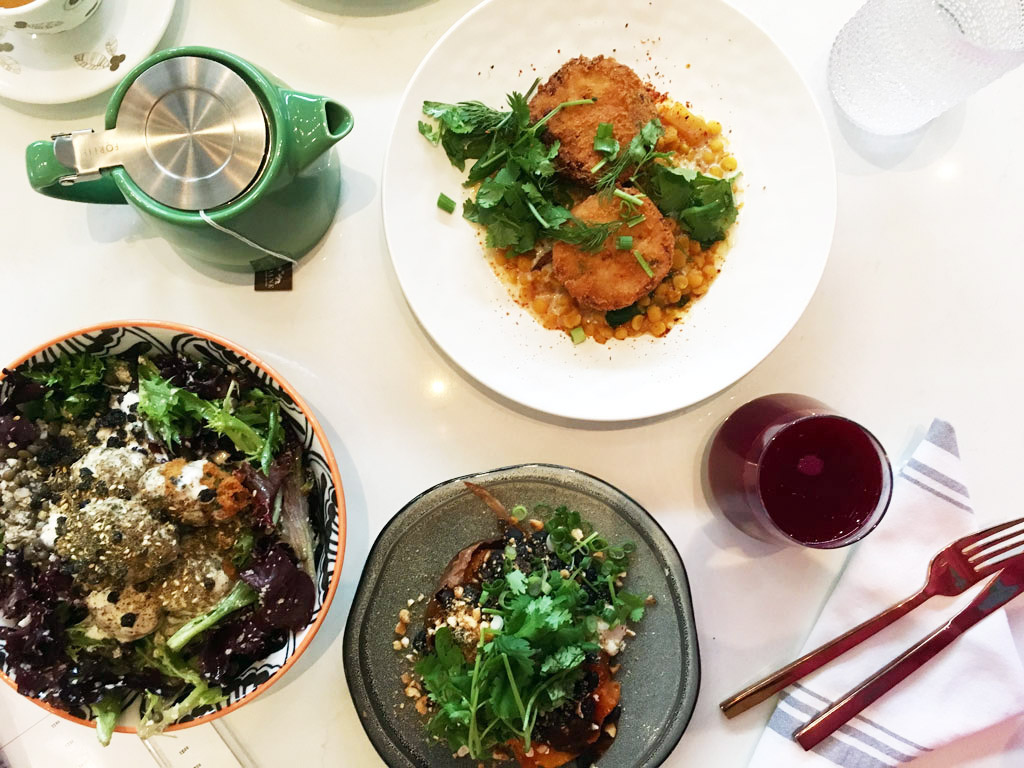
Dishes on Chong’s menu bring a casual, barbecue-inspired approach to Korean, Chinese, Vietnamese, and Thai flavours. Expect plates like Sichuan street corn, Kalbi beef tacos with kimchi furikake, and 12-hour slow-cooked and grilled octopus with watermelon radish.
Cocktails run the gamut from summer staples like an Aperol Spritz and a Pimm’s Cup to original in-house concoctions like the signature Skyflower cocktail with Grey Goose Citron, lime, Makrut lime syrup, cucumber, basil, and edible flowers.
Although Sky Flower is billed as a pop-up, it currently does not have a set end date. So it may be possible to enjoy those al fresco meals and cocktails in this garden oasis in the city well into the fall.
The restaurant is open Monday to Friday from 5 p.m. until 2 a.m. and Saturday and Sunday from 11 a.m. until 2 a.m. Reservations can be booked through Opentable.
Starved Toronto diners won’t have to wait until winter for the next major foodie event. The city is cooking something up for the fall.
In an email sent out to potential participatory restaurants, the city announced it was partnering with Destination Toronto on a “different more extensive restaurant program for the fall, with details to be released soon.”
This comes after COVID-19 forced the cancellation of Summerlicious, Toronto’s annual shot in the arm for the restaurant industry during one of their down seasons that brings diners out in droves for some prix-fixe fare.
Of course, with coronavirus, every season is now a down season, and without Summerlicious bringing in the cash, the news of a potentially lucrative event fast approaching is music to most restauranteurs’ ears.
That is, the ones that haven’t shut their doors for good.
For the restaurants that have weathered the storm, the city is “doing everything that it can…to support local businesses and residents through the COVID-19 pandemic,” according to spokesperson Jasmine Patrick. This effort includes helping out with marketing so that the industry rebounds in 2021.
“We will review…how best to promote Toronto as a culinary destination for residents and the future return of tourism in 2021 and beyond,” said Eirine Papaioannou, an event support supervisor for the city.
Winterlicious 2021 is still up in the air, but according to promotional pages on the CAA and the Toronto Convention & Visitors Association websites, it is still slated to take place in either January or February.
Toronto’s municipal government has also published reopening guidelines and has made economic support available for businesses impacted by COVID-19.
For now this mysterious fall event is nameless, shapeless and menu-less, but one thing is for certain. It will showcase food made by some of Toronto’s best restaurants.
Over the last couple of months, a number of restaurants across Toronto have been forced to close their brick-and-mortar locations, unable to survive the significant loss of revenue, high cost of rent and staffing shortages caused by the coronavirus pandemic, not to mention the added difficulty of learning to navigate the long list of seemingly ever-changing rules and guidelines surrounding the city’s dining scene.
According to a recent survey conducted by Restaurants Canada (a not-for-profit entity representing the nation’s food industry), it could take up to 18 months for some businesses to return to profitability.
The survey states that almost half of the eateries — even with takeout offerings and indoor dining operations at 50 per cent capacity — are running at a loss. If things continue at this pace, only 13 per cent of the food service businesses are expected to be profitable again within six months. About one-third will need a year to bounce back, and 36 per cent are looking at nearly 18 months. Not surprisingly, almost everyone — 90 per cent — continue to record lower sales when equated with this time last year.
In Stage 2 of reopening, most restaurants witnessed a staggering start with dine-in options limited to outdoor areas such as patios — including curbside ones made possible through the city’s CaféTO program — parking lots and adjacent premises. However, now with Stage 3, business has started to pick up for some, albeit slowly.
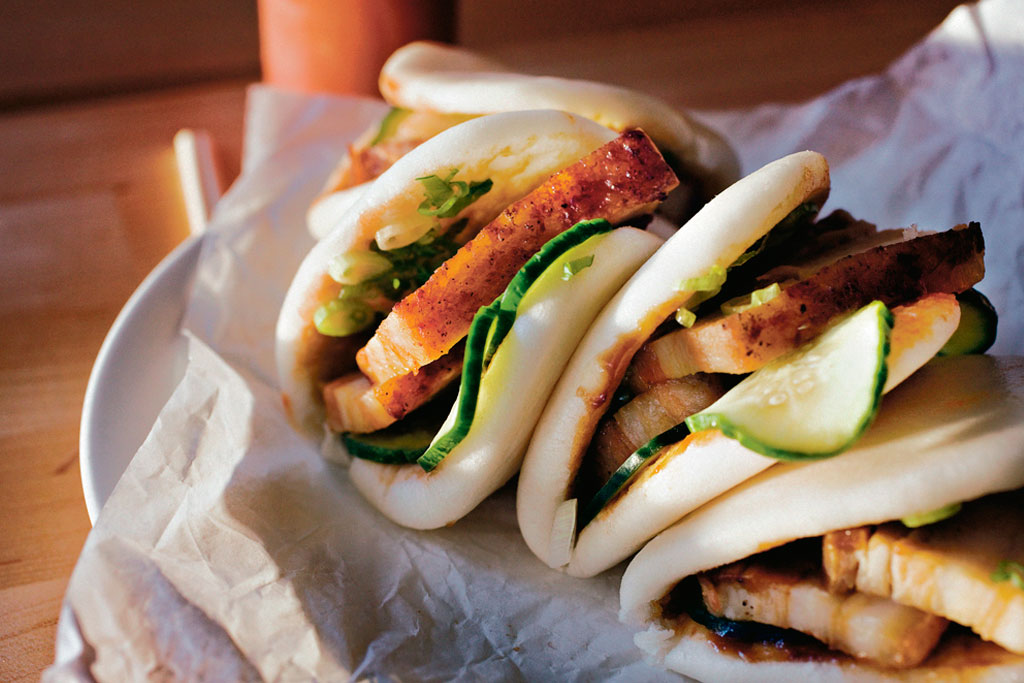
The bao at Momofuku
Nicki Laborie, founder and owner of Bar Reyna Yorkville and Reyna on King, spoke with Post City about how local restaurants are faring.
“Earlier, we were hardly making six to eight per cent of what we made last year, and takeout didn’t really help business,” says Laborie. “It was only after the City of Toronto authorized a 22-seating patio for our second location, Reyna on King, that we started making close to 50 per cent of sales.”
Now, with some indoor dining, Laborie says the restaurant can seat up to 52 patrons. In the last couple of weeks, Laborie says Reyna on King has made close to 70 per cent of last year’s sales.
“We have started hiring again, and by fall, we are hoping to go back to our regular menu,” she says.
However, even some big international operations have taken a while to get back in the game, lacking access to any kind of outdoor patio.
Chef David Chang’s popular noodle bar, Momofuku — which is based in New York City — had to cut back on operating hours at its Toronto location on University Avenue. The hip ramen spot was limited to takeout and delivery from 3 to 8 p.m daily, except on Mondays. In Stage 3, Momofuku has reopened for indoor dining from Tuesday to Friday, 12 to 3 p.m., and for dinner from Tuesday to Saturday, 5 to 10 p.m., but with a limited menu. Momofuku has taken several new safety precautions, including new digital menus available with a URL or QR code.
During the previous phase, Eataly, too, had to tweak hours to cater to customers on its new customized patio.
“We wanted to create a full summer experience outdoors — from greenery to a coastal-inspired menu — so diners could take a trip to Italy without ever leaving the city,” says Raffaele Piarulli, executive VP of Eataly North America. “We’ve added a breakfast service from 8 to 11 a.m. daily and have seen many of our regular café-goers move outside to take a seat and enjoy their coffee and cornetti.”
With more than 35 locations worldwide, the Italian food emporium has had to adapt on a much larger scale. According to Piarulli, Eataly had implemented a series of home delivery services, through Instacart and Uber Eats that are proving to be successful during such uncertain times.
The dining area at Eataly
“Not just Eataly fans, but also a completely new customer base, have been able to enjoy our retail products without leaving the safety of their homes,” Piarulli says.
Now, in Stage 3, two of Eataly’s indoor restaurants in Toronto — La Piazza and La Pizza e La Pasta — have reopened, following the limited capacity guidelines.
“From what we’ve seen, some of the ‘new’ habits, such as the takeout culture, have solidified, and … we think dining out has become more of a treat and less of a ‘taken for granted’ habit,” Piarulli says. “And that, we believe, will inevitably raise the bar of hospitality overall, which, in the long run, can be the silver lining.”
Meanwhile in Yorkville, Café Boulud — which has locations in New York and Palm Beach — has finally been able to reopen after months of uncertainty.
“Both the Café Boulud and d|bar teams were fully prepared and ready to welcome guests as soon as Stage 3 arrived in Toronto,” says Maxime Regad, director of food and beverage at the Four Seasons Hotel Toronto, where the restaurants are located.
According to Regad, the Spa Terrace just launched its Cloud 9 Oasis menu, offering a selection of healthy dishes and a refreshing wine list. Café Boulud continues to adjust certain dishes on the menu to reflect the seasons, and the d|bar lounge is once again open daily with live DJ entertainment on Thursday, Friday and Saturday evenings. Like Eataly and so many other restaurants across Toronto, Café Boulud is opting to continue its take-away menus as well.
It’s difficult to predict what lies ahead for Toronto’s dining scene, but one constant that seems apparent is that takeout and delivery services are here to stay.
Superette co-founders Drummond Munro and Mimi Lam (Credit: Kayla Rocca)
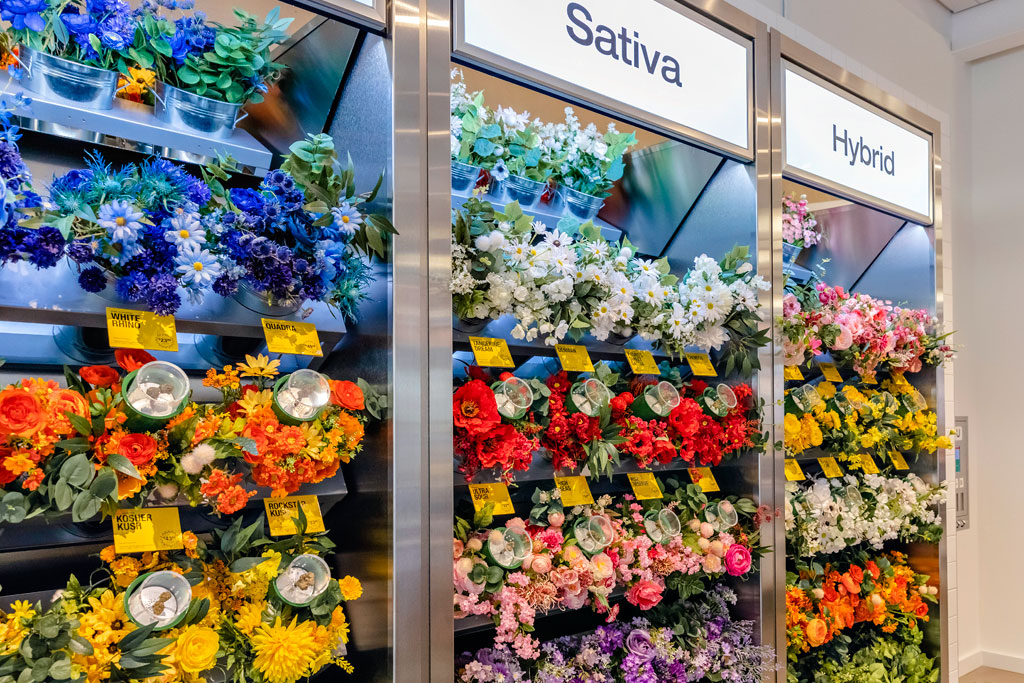
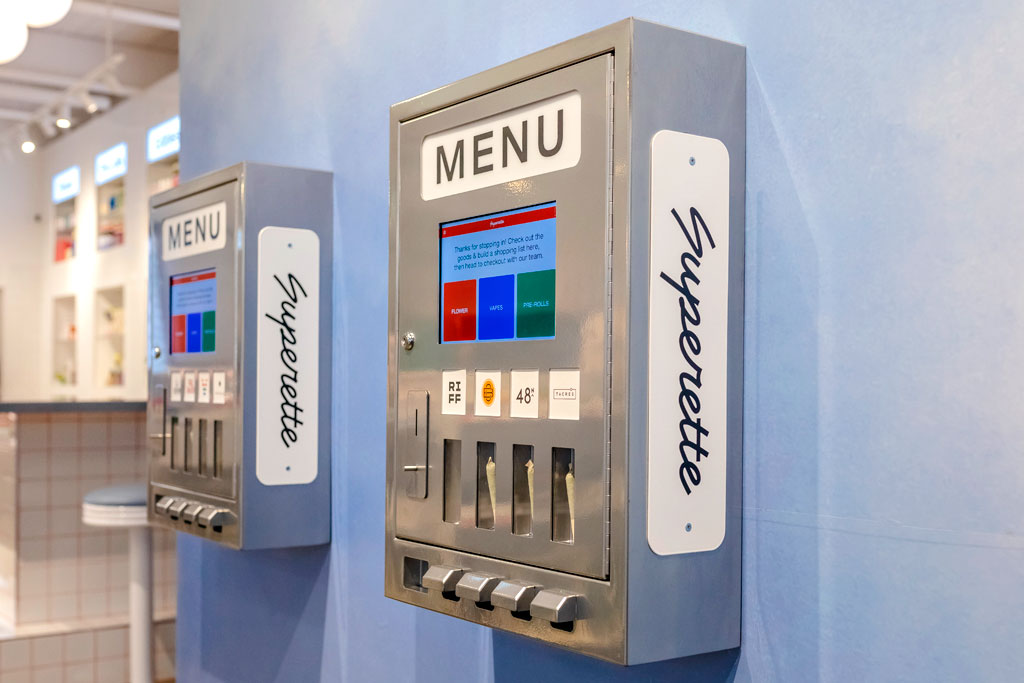
The conversation inside Superette on Yonge Street south of Macpherson Avenue, in the heart of Rosedale, is emblematic of the new type of cannabis consumer and the new type of cannabis store. “I want to get high before tennis, but I don’t want my tennis friends to know I get stoned. Can I get some pre-rolls?” says Mimi Lam, recounting a recent customer’s story. Lam is the 28-year-old Superette CEO and co-founder along with Drummond Munro who is also the chief brand officer. The shop, which represents a trend in legal marijuana, was designed by Munro and Design of Brand and is chic, airy and bright, with attentive service that differentiates it from other dispensaries.
When Superette opened on Yonge, Munro — who has lived in Rosedale his entire life — sent flowers to the neighbouring businesses and joined the local BIA with Lam. Lam believes that Superette — made to resemble an old school deli and flower bodega with a direct line to the Rosedale Diner to order emergency hamburgers for when the munchies strike — increases the value of the neighbouring retailers and will help everybody increase sales during the pandemic.
She has a distinct upscale value proposition for Rosedale shoppers and dreams of distinguishing herself by making window displays to rival Christmas at the Bay.
“People walking by look into our store, and they don’t even know what’s going on. We don’t look like a typical ‘cannabis store,’ but as we’ve grown and become distinctive, we’ve seen people make the trip from all over to see what we’ve got,” says Lam, who along with Munro was instrumental in helping launch the Tokyo Smoke nationwide cannabis retail strategy. The pair left Tokyo Smoke when it was sold to Canopy Growth.
“A lot of our retail vision is about ‘normalization’ and having fun with cannabis and being bold. I think an authentic cannabis store can resonate across any and all demographics.”
This has certainly been the summer of cannabis retail location expansions, including into neighbourhoods like Yorkville and Leaside where one would more likely expect to see Cartier than cannabis and Maseratis instead of marijuana.
When cannabis was initially legalized on Oct. 17, 2018, one big hindrance to economic success for legal cannabis licensed producers with billion-dollar valuations, like Canopy Growth and Aurora, was the limited brick-and-mortar locations to buy legal cannabis in Ontario.
There are currently more than 100 legal cannabis retailers in Ontario — there are almost 500 in Alberta — and some experts believe there will be more than 1,000 legal cannabis retailers in Ontario come next fall.
Along Eglinton Avenue, between Avenue Road and Chaplin Crescent, four legal cannabis shops are opened or opening, and there are three currently in Leaside.
Still, Brad Poulos, a cannabis business expert at Ryerson’s Ted Rogers School of Management, says it’s not enough. He also thinks that in a crowded marketplace it’s the shops that offer a unique retail experience that will last.
“We’re not even close to capacity,” says Poulos, who uses alcohol retailers as a proxy for cannabis outlets and believes that, even if cannabis attracts half the consumers as spirits and beer, there’s still room for hundreds of more legal retailers in Ontario.
“There is an existing blueprint for ‘vice’ retailers, so it’s not like we’re making this stuff up from scratch. If you look at the numbers of liquor stores, you see we’re not even close to the amount of access points for a similar need state, and just like with anything retail, it’s the best of the best who will survive.”
Poulos goes even further in his belief that certain distinct cannabis retailers will boost local retail sales, like the Friendly Stranger on Queen West or the Neighbourhood Joint in the Beaches, which ships its product in the original pneumatic tubes once used for copy by the Toronto Star. At the 42-year-old Rosedale Diner, manager Gil Filar says he hasn’t had a better neighbour in years.
“Superette seems to be doing more to support local businesses than many of our other neighbours, and I find it refreshing, especially at a time like this,” says Filar, adding that, although he doesn’t smoke cannabis, he personally has no moral qualms about the product. He likes that Superette wants neighbourhood partners and thinks the retailer is offering a blueprint that other retailers — across any sector — should follow.
“If you offer more products to more people and it’s done tastefully and with respect, both to local businesses and consumers, it works on behalf of the entire neighbourhood,” says Filar.
To him, the math is simple: having a fancy cannabis shop next door is a good thing because it increases his bottom line.
“Superette has definitely brought us more customers,” he says.
Lam says she’s seeing a new type of customer in Rosedale, and she believes business will pick up in the fall, when residents of the area return from the cottage.
Thus far, Lam and Munro have received no push back from any of their neighbours, and they think cannabis and upscale neighbourhoods — as we’ve seen in Denver and Los Angeles — can certainly get along.
In the end, that Rosedale tennis player bought a one-gram pre-roll and a Houseplant cannabis beverage. She was able to get high before playing her match, and her neighbourhood friends never had any idea.
Toronto-based artist, birdO, is well-known for his Dali influence with a Swiss graphic design twist. BirdO has had a significant impact on the Toronto art scene and is at it again. This year, he participated in the Yorkville Murals Festival which took place from Aug. 28 to 30.
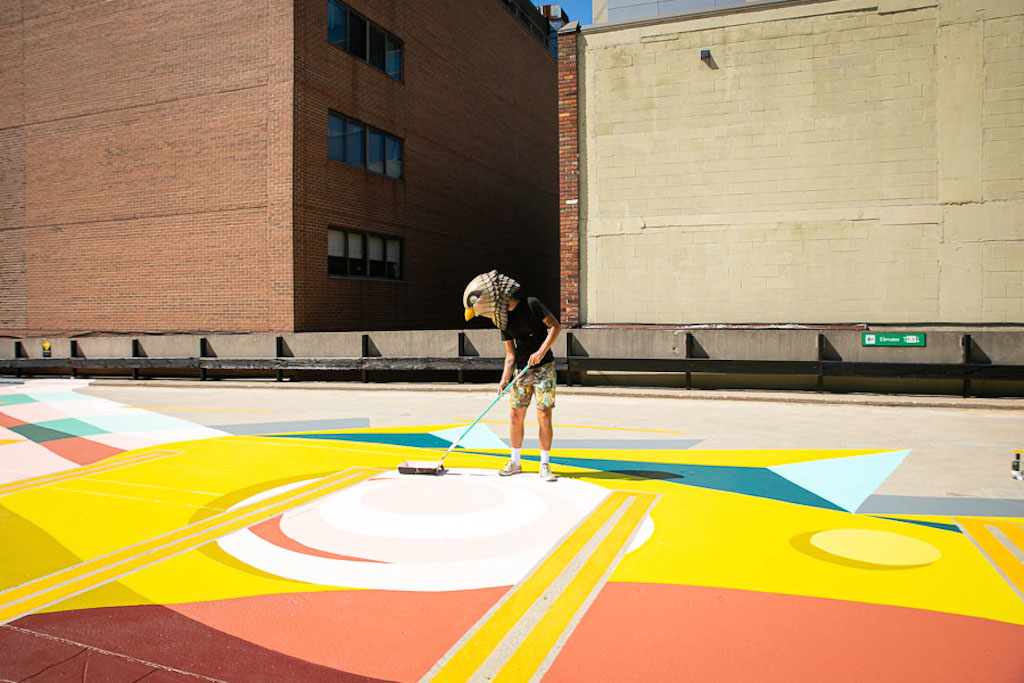
The festival happens every year at this time and spans three days showcasing Canadian mural talent. BirdO has been hard at work decking out the top of a parking garage building located at 154 Cumberland St. in Yorkville as his contribution to this year’s festival. The project has been dubbed Toronto’s largest unexpected mural as it covers the entire rooftop parking lot of the building and is best seen from a bird’s eye view. The larger than life mural is called C-horse.
birdO working on the mural
Yorkville Murals showcases work from Canadian artists and is free to attend. This year, the opening night event took place at 99 Yorkville Ave. with dinner and cocktails, as one of the many ticketed events apart from the murals.
Montreal-based Romeo’s gin, which helped to make this mural possible, was featured at the seated events, and showcased nine Toronto bartenders serving up gin-based cocktails. Dinner services took place each night of the festival and were quick to sell out.
The goal of the Yorkville Murals Festival is to make the neighbourhood a tourist destination by creating long-lasting art installations that beautify the city while also attracting visitors. The murals are painted on existing structures, ensuring their timelessness and are available during any season.
The murals that are part of the festival are free to see, but other ticketed events which took place each day of the festival, included artist series, talks, movie screenings, and solo exhibitions. Those looking to check out the murals now that the festival has come to a close, can get started in the courtyard at 99 Yorkville Ave. The festival’s website shows an interactive and detailed map that will guide you through the neighbourhood to see all the new murals that were part of this year’s event.
Craig Wong’s bay scallop & shrimp balls with C-Plus red vinegar gastrique
“When you’re a kid, there’s nothing fun about your parents dragging you along to a Chinese wedding … except for the 10- course gourmet feast! The ‘hai keem’ stuffed crab claws were always my favourite,” says Craig Wong of Patois and the new Bar Mignonette. “Every time I’d be lucky enough to get one, I’d be sipping on a C- Plus orange soda. The flavours became intertwined — now, it’s almost sacrilegious to not pair C- Plus and stuffed crab claws.”
SCALLOP & SHRIMP BALLS
1lb black tiger shrimp, peeled and deveined
1⁄4 lb bay scallops
1 1⁄2 tbsp Shaoxing rice wine
5 1⁄2 tbsp potato starch, divided
1 tsp sesame oil
1⁄4 tsp white pepper, ground
1 1⁄2 tbsp salt
7 crab claws, cooked and half-shelled (optional)
34 oz panko vegetable oil
METHOD
1. Place a dry food processor bowl and blade in the freezer for 30 minutes.
2. Place half a pound of the shrimp in the chilled bowl and quickly pulse three times. Hand-chop the remaining shrimp and the scallops.
3. Season the mixture with the rice wine, 1 tbsp of potato starch, sesame oil, white pepper and salt.
4. Cook a small amount to test for seasoning.
5. Dip your hands in water and form the shrimp into 3 ounce round balls. If using the crab claws, insert each one into a shrimp ball; gently mold and shape the shrimp mix around half of the crab claw, leaving the pincers exposed.
6. Use the remaining potato starch to make a slurry. Lightly dip the shrimp balls in the slurry, a few at a time.
7. Toss the balls into the panko until coated in breadcrumbs.
8. Deep-fry the seafood balls in vegetable oil at 325°F for approximately four minutes or until they reach an internal temp of 135°F.
C-PLUS RED VINEGAR GASTRIQUE
17 oz C-Plus orange soda
20 oz Chinese red vinegar
METHOD
1. In a saucepan over low heat, reduce the orange soda by 75 per cent.
2. Add red vinegar. Reduce slowly until the sauce slightly thickens and enjoy as a dip.
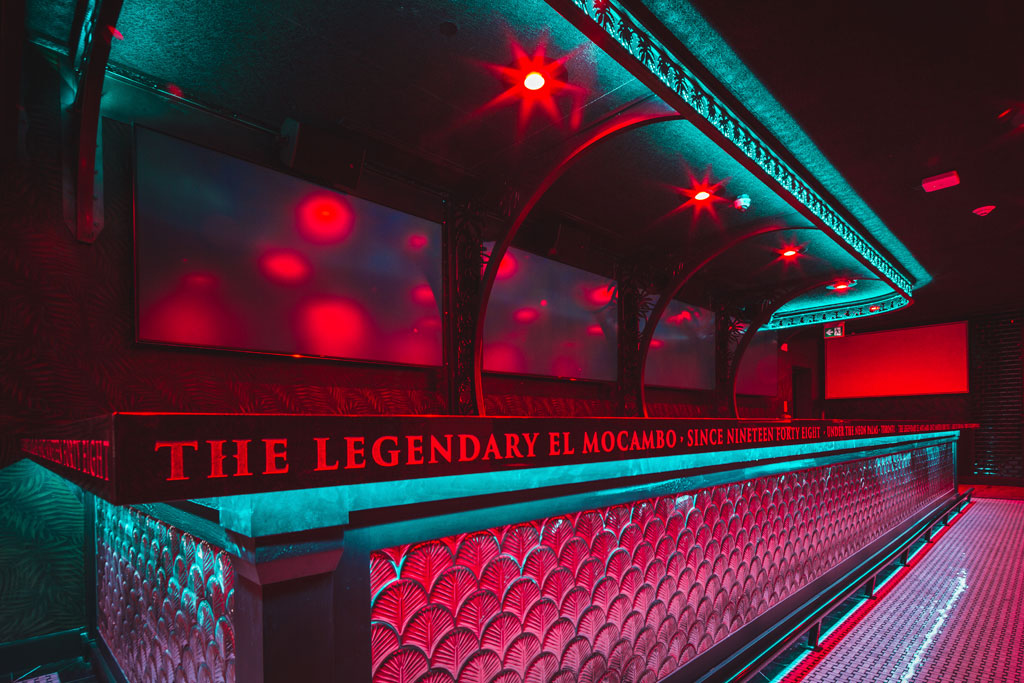
Michael Wekerle’s El Mocambo will be reopening its doors in September for a live concert headlined by Big Wreck. Of course, we are still in the midst of a pandemic, so the venue is only able to allow in-person attendance to a small audience, but fans also have the option to purchase access to the live stream at nugs.tv.
Under the Stage 3 rules, the iconic music venue is able to open its three isolated areas — the Starlight Room, Under the Neon Palms and the VIP Balcony — for attendees of different events. Each area has its own entrance and exit along with its own washrooms. With live music back in the building, the venue is also open to hosting small social events such as weddings.
It all kicks off when Big Wreck hits the stage at Under the Neon Palms on Sept. 10. The concert will be streamed live from the second floor of the El Mocambo via the streaming partner Nugs.net.
“During these unprecedented times we need to unite together to support everyone in our communities,” says Wekerle. “Music is a thread that unites us all and we are working closely with artists and their team members to bring new and meaningful experiences to music lovers, in new ways — safely. Myself, and my team are encouraged to continue to innovate, and work to create solutions that work to support artists, fans, communities and the entertainment industry at large. I am hopeful that with continued collaboration we can all work to sustain a healthy and thriving entertainment sector, and to ultimately keep live alive.”
The El Mocambo dipped their toes into virtual events back in July with a Canada Day virtual concert including Kim Mitchell, July Talk, Next Generation Leahy, Jully Black, Haviah Mighty and Gordon Lightfoot.
“We have a central control room with a video control room, an audio control room and a vocal isolation booth, which allows us to pull audio and video from three separate performance spaces in the venue while simultaneously editing, mixing and delivering content via streaming platforms, or recording and capturing for future use,” says Jamie Howieson, production manager and executive designer at El Mocambo.
Stay tuned for more live and virtual events at the El Mocambo by visiting the website.
Thornhill’s Milos Raonic lost the Western and Southern Open final against Novak Djokovic on Sunday, Aug. 29. He advanced to the final after defeating Greece’s Stefanos Tsitsipas in the semifinal.
The original semifinal match between Raonic and Tsitsipas was to be played on Aug. 27, but Raonic and the rest of the tennis athletes joined other sports in postponing play to highlight racial inequality and social justice.
The movement was initiated by the NBA team Milwaukee Bucks, which refused to take to the court in a playoff game against the Orlando Magic on Aug. 26 after Jacob Blake, an African-American man, was shot multiple times in the back by a police officer in Kenosha, Wisconsin.
The movement was soon joined by other leagues such as Major League Baseball, Major League Soccer and the National Hockey League.
Raonic advanced to the semis by defeating Serbia’s Filip Krajinovic in three sets in a quarterfinal match, on Aug. 26, and by earning his first win against former world number one Andy Murray in more than six years in a straight set victory in the round of 16.
Richmond Hill’s Denis Shapovalov fell in three sets to Jan-Lennard Struff in the round of 32.
The loss was Shapovalov’s fourth in a row to the 34th ranked German, who seems to have the Canadian’s number. Shapovalov, who entered the tournament as the 12th seed, had advanced to the round of 32 after beating Croatian Marin Cilic, the 2014 U.S. Open Champion, in straight sets.
The Western and Souther Open tournament took place in New York City, rather than the tournament’s usual location of Cincinnati, Ohio, and is was held without fans in attendance, as tennis, just like other sports, continues to grapple with the COVID-19 pandemic. The tournament was held at the USTA Billie Jean King National Tennis Center in Queens, New York City, which is also the site of the U.S. Open. Players and staff are isolated from the general public over the course of the two tournaments.
Shapovalov and Raonic will both compete in the U.S. Open., which is scheduled to begin on Aug. 31.
The tournament will be missing some marquee players, as defending champions Rafael Nadal and Mississauga’s Bianca Andreescu have decided not to compete, with Nadal citing safety concerns and Andreescu stating that the pandemic has compromised her ability to train and compete at a high level.
A Foot Locker at Yorkdale Mall is temporarily closed after an employee tested positive for COVID-19 last week.
A mall spokesperson confirmed that store management closed the location on Thursday, Aug. 27 to allow for appropriate cleaning and sanitization, and that mall operations has ensured a “deep cleaning” of all exterior surface areas, in addition to frequent cleaning of all high-touch and high-traffic areas.
Mall operation was notified on Thursday about the employee, and they subsequently notified management by email about the incident; but they can’t confirm when the employee was last in the store.
Mall managers are advised to let the Yorkdale management office know if any of their employees are diagnosed with a confirmed case of COVID-19 or if they elect to evacuate their premises in response to a presumptive COVID-19 case.
The store outlet wasn’t initially identified — leaving some customers worried about a potential spread of the virus — and many are now asking for more answers about the employee.
Ontario’s retail guidance material recommends screening workers regularly for health issues, although there is no province-wide guidance on customer screening.
As per Yorkdale Shopping Centre’s website, the Foot Locker location remains temporarily closed. Those hoping to visit the store when it safely reopens and resumes operations should check the website for updates.
The Chase Fish and Oyster Bar — once known for shelling out unlimited oysters to its customers for a reasonable $40, or the lip-smacking menu boasting of crispy cod tacos and tuna nachos — is being transformed into Planta Cocina.
The classic seafood spot, formerly on the first floor of 10 Temperance St., will now be an entirely new, 100 per cent plant-based restaurant — all set to celebrate some of the finest Mexican dishes meant to tantalize your taste buds. The opening date is set for Sept. 21.
Discussing the move, Steven Salm, president and CEO of Chase Hospitality Group and Planta Restaurants says, “The impact of COVID-19 and the current state of the world has made it evident that transparency in our food supply chain is more important than ever. And that aligns itself perfectly to plant-based cuisine and what the PLANTA vision has been from the start.”
“Plant-based cuisine has a strong and lasting impact on our immunity, and we can’t wait to provide our guests with an entirely new experience that does not compromise health or quality,” Salm explains.
Despite being able to operate at only 50 per cent of their original dining capacity, Salm is optimistic about greeting guests once again.
“It was exciting news when we were able to welcome guests back. It is undoubtedly a different experience out there and our commitment to being an evolving and experience-based hospitality group is always on the top of our mind,” he says.
For those wandering what the new menu will look like, there’s some good news. Chef David Lee’s specials at Planta Cocina will include the hot mess nachos with pulled barbecue jackfruit, queso, cashew lime crema, black beans and pico, as well as the amarillo and azul corn masa tamales, seasoned with wild mushroom, huitlacoche and tomatillo. And of course, the huitlacoche tacos with árbol, sweet potato and truffle. And if you know chef Lee, you know anything with truffle is his specialty.
Keeping in mind a greater clientele, Planta has also partnered with Uber Eats, DoorDash and Ritual to deliver your favourite Planta items, as well as pantry staples and meal kits right to your doorstep.
This Saturday, Aug. 29, the Manifesto Toronto annual music festival will go online for a landmark 12-hour live-stream event alongside Manifesto Jamaica. Headlining the event is Grammy-winning Jamaican reggae artist Koffee, who will be live-streaming from Jamaica.
At 19, Koffee is the youngest performer and first female to receive the Grammy for Best Reggae Album. She is also the only woman to hit the Top 10 Reggae Albums chart at year-end. Koffee will be streaming her concert set live from Kingston, Jamaica, and will be supported by Nigerian-Canadian singer TOBi who will be streaming live from Toronto’s Great Hall.
Manifesto’s live event will include many other local acts, including Dijah SB, LU KALA, and Osé. In addition to a strong lineup of local and international music artists, Manifesto will also be showcasing film screenings, spoken word performances, dance artists, visual arts performances, yoga movements, and an after-party featuring local DJs.
The festival’s “New World” theme pays homage to the current 2020 art scene that’s in a tremendous flux state.
Koffee
“Manifesto has always been committed to mobilizing and celebrating hip-hop culture and beyond (i.e. R&B, reggae, soca, etc.) within the communities we serve. In light of the global pandemic and urgent social justice movement for Black people, we wanted to gather both here in Toronto and with our sister organization, Manifesto Jamaica, based in Jamaica. This major collaboration is allowing for us to reimagine, dismantle, and unify via the arts, and take action in 2020 for a more equitable future,” says Tinesha Richards Morris, Manifesto’s operations and partnerships manager.
Toronto influencer Sashagai Ruddock will host the virtual event from The Great Hall, and programming will start at 12:05 p.m. and will run past midnight. TOBi will take the stage at 6:45 p.m. followed by Koffee at 7:20 p.m. The after-party DJ set starts at 8:05 p.m.
Manifesto Festival is one of Canada’s largest community and culture events. The annual festival is known to help promote young artists. Manifesto 14 is a free event that can be accessed via MNFSTO.com. Follow the Manifesto Instagram account for updates.