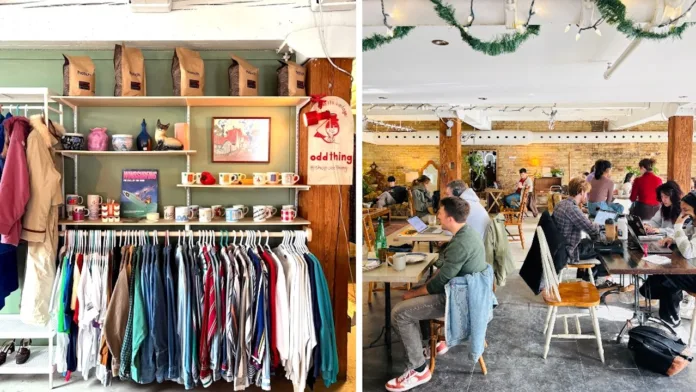
There’s a massive coffee shop on Dupont Street that houses artist studios and community events that include film viewings and collage nights. It’s called Typist, and it’s the brainchild of career typist Nicole Bhersafi. If the concept weren’t already welcoming enough, it’s now home to a new vintage shop, Odd Thing, operated by Ana Popova.
Typist opened in March of 2023 when Bhersafi, having spent several years building a career as a busking typewriter poet, began a search for affordable studio space to situate her practice. When she found the unit on Dupont, it was bigger than what she’d envisioned but she figured she could share it with artist friends. And since there was already a built-in counter, she could even launch a coffee program to supplement the rent.
“As an art student I already had [experience working in coffee] because that’s how you survive,” laughs Bhersafi.
So she turned the back of the space into artist studios, and the front into a cozy coffee shop which she also rents to creatives in the café’s off-hours. Programming has included workshops, readings, performances and all kinds of private events — from birthday parties and weddings to film productions and open jams. She didn’t intend to become a business owner per se, but before long, the coffee bar was bustling, and she needed help running it.
Meanwhile, Popova was going on four years of lugging her vintage collection around the city to set up at café pop-ups (as a side hustle, no less).
“It was a lot of work,” she says. “A lot of schlepping stuff around and packing the car.” She harboured her own dream of opening a café with a vintage retail section, so she’d been using coffee shop pop-ups as a proof of concept to see if customers would be interested in shopping her collection in that setting. As it turns out, they were, and the business was going so well that last year, she was able to quit her day job to pursue Odd Thing full-time.
Though Popova and Bhersafi had never met in person, multiple friends suggested that Typist would be a great place for Odd Thing to do a pop-up. So by the fall of 2023, Odd Thing held its first pop-up at Typist — an occurrence that would continue monthly for the next eight months. Over the summer, Popova also started hosting vintage tailgates in the Typist parking lot, featuring music, barbecue and multiple vendors, an event so popular that they intend to reinstate it next summer.
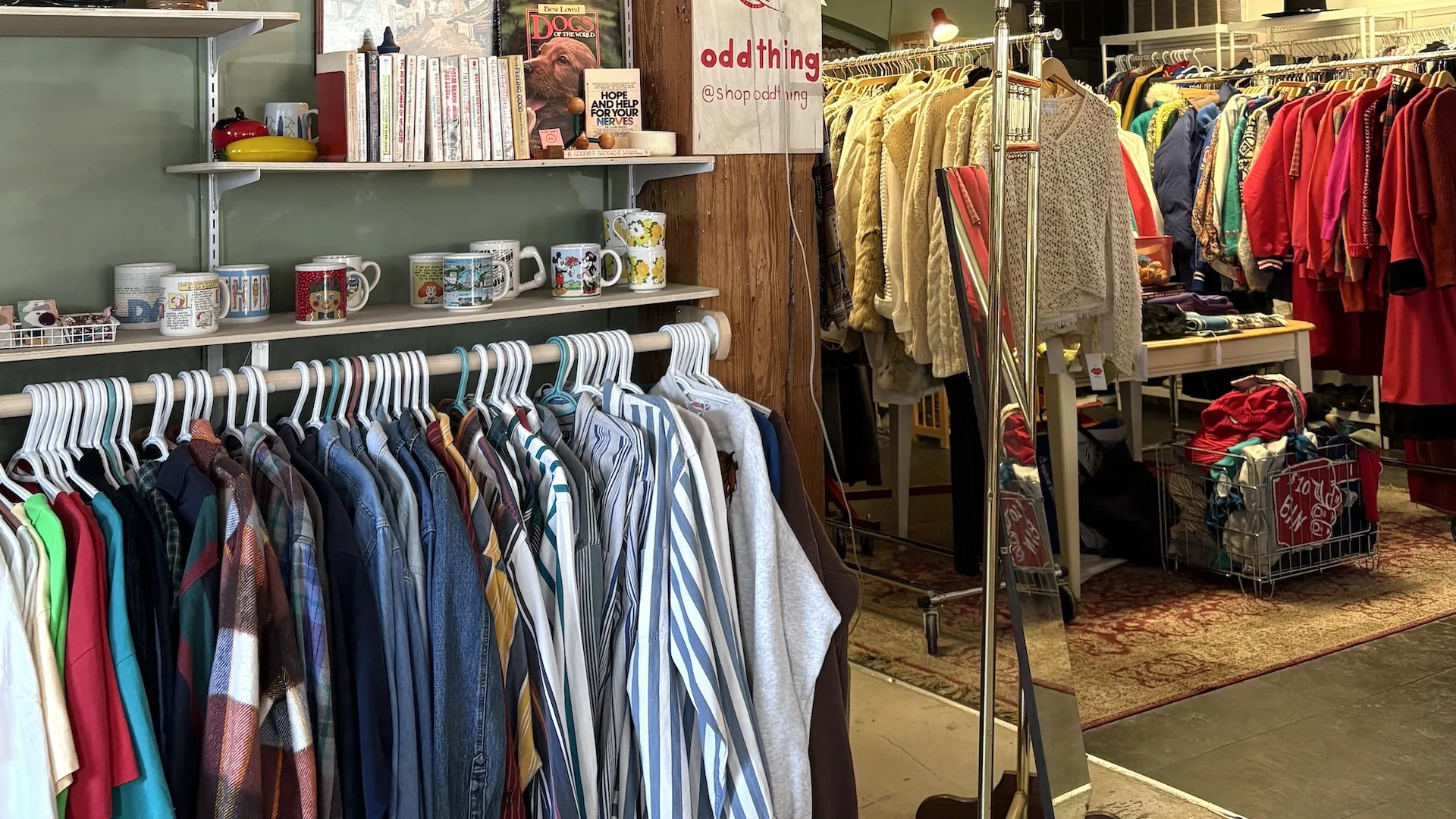
The new Odd Thing space inside Typist. Courtesy Odd Thing owner Ana Popova
It was around this time that Bhersafi was hit by the realization that she could no longer run the café alone.
“I was really struggling with workload capacity, I was running everything by myself at the time, including being the main barista on site,” she says. “Ana was telling me about her dream to open up a café/vintage spot, and since we already had a sort of quasi-permanent set up here, we struck a deal.”
They decided that Popova would help at the café a couple of days a week in exchange for floor space, and Odd Thing opened as a permanent fixture in September.
The vintage shop is right at the centre of the café, running along the back wall, so it’s impossible to miss. Popova considers her stock to be wearable everyday apparel, composed of natural fibres, and mainly sourced from the ’80s and ’90s with certain ’50s/’60s pieces mixed in.
She has her own studio in the back to process the clothes and is meticulous about presentation, ensuring everything on the floor looks and feels like new. She also has permanent displays at Bazaar in Kensington and Arts Market in Little Italy. “It feels like a step towards my goal of owning my own shop,” she says.
One of Popova’s studio mates is Typist’s studio manager, artist Ernesto Cabral de Luna. Several artists share the back space, separated by wall dividers into exceptionally affordable 150-square-foot units, considering the state of Toronto’s rental economy ($500/month.) The units are rented on a month by month basis so Cabral de Luna considers new applications as space becomes available, ensuring each artist’s practice is compatible with those presently using the space. Right now one of the spaces is vacant, and artists are welcome to apply together should they be interested in sharing.
Every weekend, Popova also invites another vintage vendor to share the front space with her, asking that they promote their pop-up rather than charging them a fee. On top of that, she’s added her own programming to the space: a monthly collage event. The ticket costs $30 and includes a complimentary drink and access to all materials, including Popova’s collection of vintage magazines — participants can make as many collages as they’re able.
“I’d say it took a year to get to the place where the right people were coming in,” says Bhersafi. “That’s Ernesto, Ana, Andre our barista. I’m seeing this place excel the most through other people using it to its full potential.”
Sadly, the building has been purchased by a developer and is intended to be torn down in two years.
“Since this place is coming down, I’m continuing to focus on making this a space for cultural growth and development,” says Bhersafi. “We’re very flexible and we do not price gouge anybody. I’m always happy to work with students or artists on the lower end of what they can pitch in. We’ll always find a way to make it work.”
Typist is open Tuesday through Sunday from 9 a.m.-6 p.m. at 390 Dupont St.
With snowfall upon us, fashion can feel like an impossible task — but there are still ways to look stylish under all those layers. For the menswear lovers, don’t miss these trends that anyone can enjoy for the season in Toronto. From exploring new eyewear shapes to doubling down on the basics, this men’s fashion trend report is sure to hit everyone’s comfort zone.
Power coats
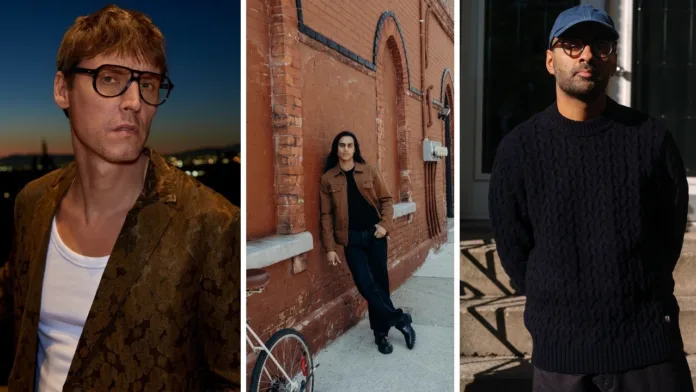
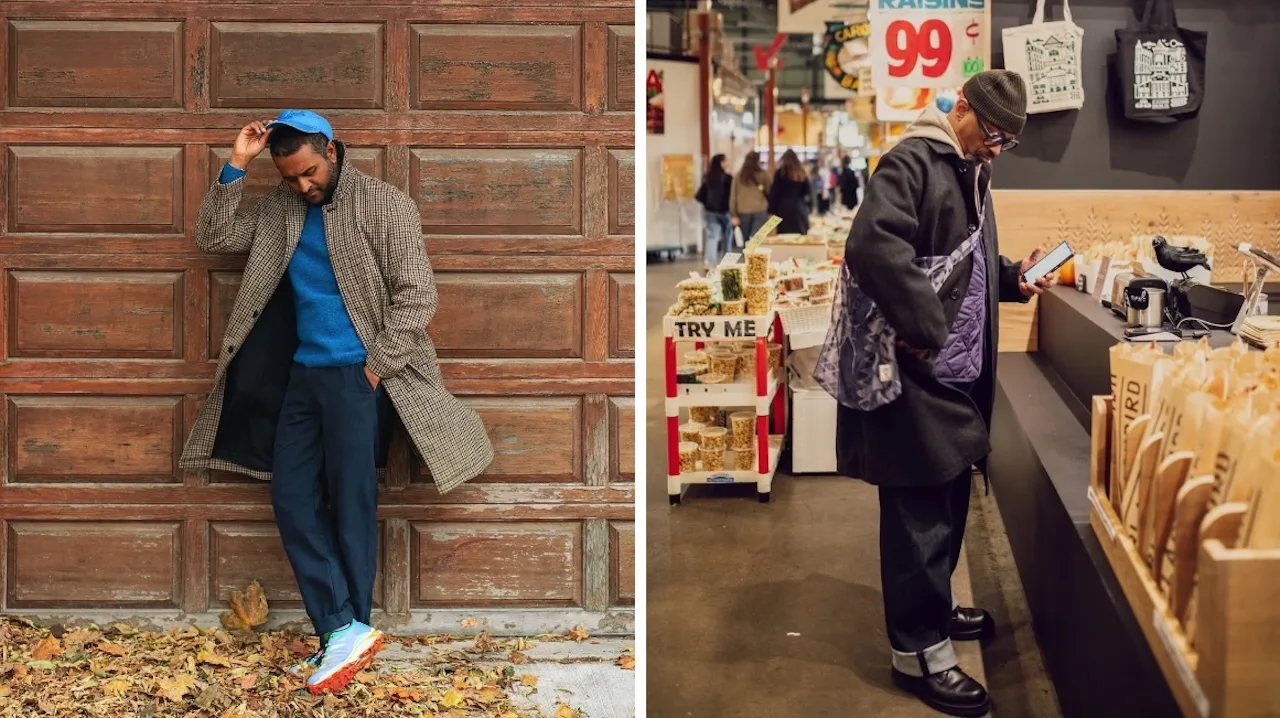
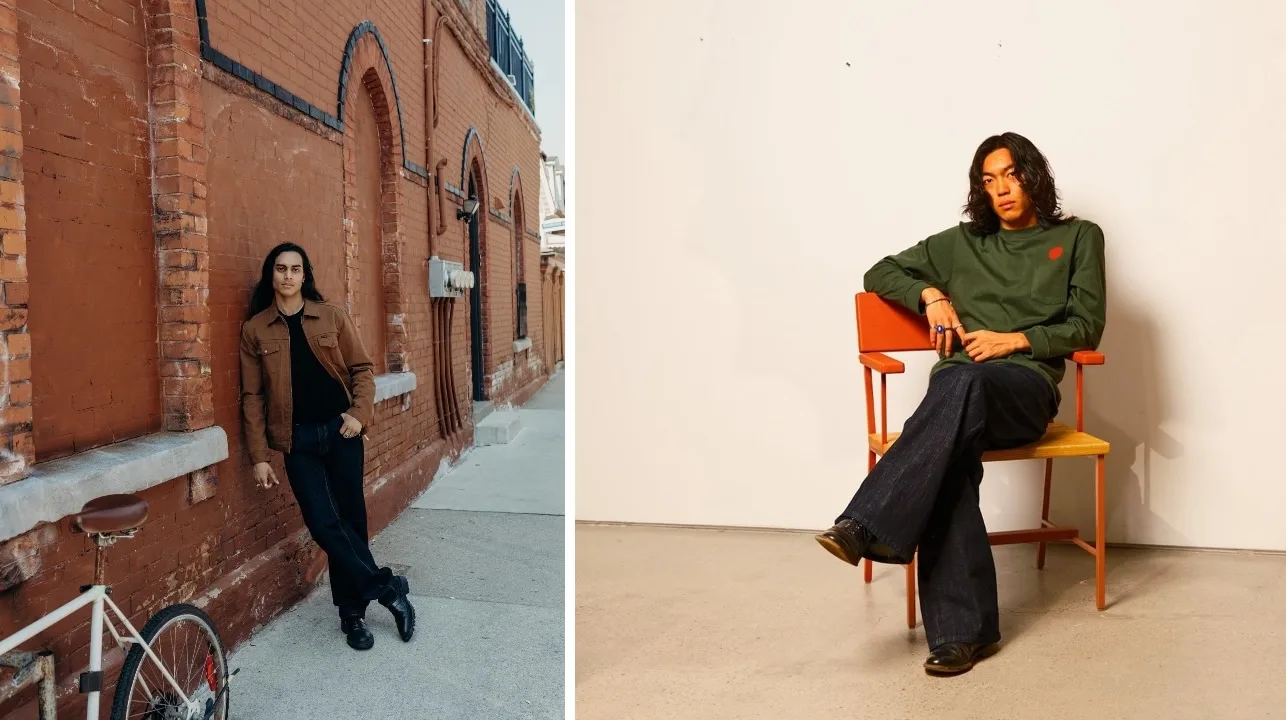
L-R: @parkprovince, @uncleotis
As a Torontonian, no fashion investment makes more sense than high quality, esteemed coats that will live with you for decades to come. This season, we’re moving away from fur-lined parkas and puffer coats, and instead opting for power jackets, of the structured overcoat variety. From Gucci and JW Anderson to Burberry and Loewe, brands are putting their own spin on these tailored coats, from pinstripe motifs to reinforced nylon. Thrift stores have a solid selection of overcoats straight from the ’80s and ’90s at this time of year that will have you feeling like you’re the boss.
Big glasses
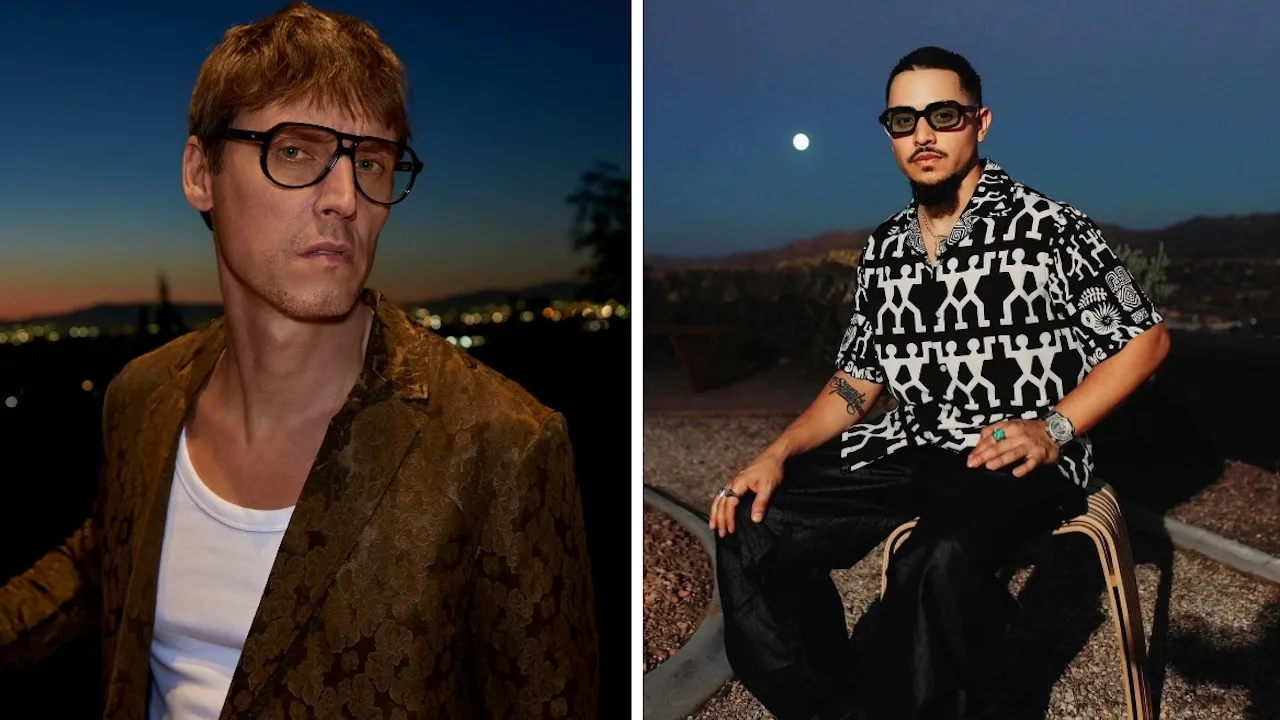
L-R: @cutlerandgross, @bonnieclyde
Whether it’s sunglasses or prescription eyewear, men’s fashion is moving away from thin frames and underprotected lenses. It’s much more versatile to go for an outlandish pair of sunglasses, as they serve as the statement piece. Bonnie Clyde have been a mainstay in the chunky frame game for a while now, and you can find them at Livestock Toronto, as well as Gentle Monster (in stock at Thornhill’s Parks Optical) for more of a gen Z feel. Cutler and Gross does some terrific acetate eyewear ranging from funky colours to more daily hues like black and desert brown — and the London brand even has a Queen West store so you can try on frame in person.
There’s not a world that exists where denim goes out of style. The only twist for this season is that people are in the mood for legacy pairs. Japanese selvedge denim has been all the rage; after about three to four months of wearing your selvedge denim, the material “breaks,” causing the jeans to distress in the areas which you’ve moved the most, creating a one of one pair of jeans just for you. Move to brands like Edwin (on Ossington Avenue) or Dutil (on Queen West) for your next pair of denim.
Chunky knits
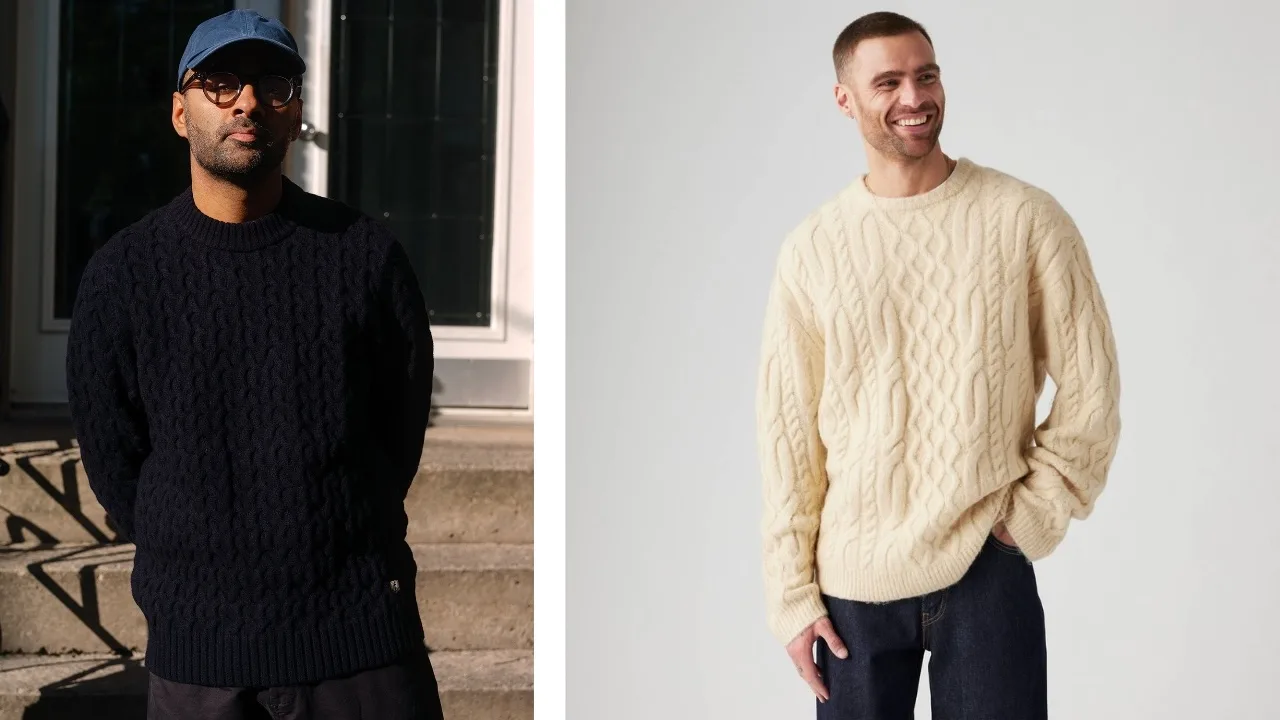
L-R: @muddygeorge, thebeauandbobble.com
Knits are a mainstay in winter wardrobes. This season, fisherman knits have been a hero item for quite a few brands, especially in the case of JW Anderson and his collab with Uniqlo. Knits are only getting chunkier, although that doesn’t mean they can’t be form-fitting. Some companies are offering customers vest versions of their favourite sweaters, allowing for layering over a thermal shirt and adding depth to your outfit. Try Beau Men’s on Dundas West or Bloor West’s Muddy George for a hard-to-beat knitwear selection.
Neckties have made a move to the streetwear world, and they’re slowly replacing necklaces. The same outfits that now require a necktie used to feature two or three open buttons and some chains exposed on the chest in the past. People are wearing button up shirts with neckties that are usually layered under a cardigan, light knit sweater or leather jacket. The specifics of the tie are up to you, although wool ties with branding near the blade have been particularly popular.
In the fight for safer, more inclusive cycling infrastructure in Toronto, creative protest art has become an unexpected yet powerful tool for conveying sentiment and creating community. Toronto artists and creators are turning to music, video games, and graphic design to voice their frustration with the Ontario government’s attempts to remove bike lanes and curtail expansion. Through their art, these creators are pushing back against the policies that endanger cyclists and perpetuate dangerous street conditions, all while seemingly ignoring facts. Here, we feature three such artists—Dave Pagurek, Marie LeBlanc Flanagan, and Tom Flood—whose work is giving the fight for safe streets a fresh, bold face.
Blame It on the Bike: A Musical Protest by Dave Pagurek
Dave Pagurek, a computer graphics programmer and self-professed “accidental activist,” might not have considered himself part of the bike advocacy scene before, but his creative response to Ontario’s proposed Bill 212 has made him an unlikely voice in the conversation. When news broke about the provincial government’s plan to remove and restrict bike lanes in Toronto, Pagurek was taken aback. He had always found cycling in Toronto a great way to get around, far more efficient and sustainable than other forms of transit. However, the government’s proposed bill seemed not only misguided but also dangerous for the city’s future.
As a way to channel his frustration, Pagurek wrote and recorded a catchy song called Blame it on the Bike, mocking the narrative that bike lanes are responsible for the city’s traffic woes. The song, which is lighthearted yet poignant, skewers the misconception that cyclists are the enemy, challenging the logic that removing bike lanes will somehow alleviate congestion.
“It made less than no sense to me,” Pagurek says. “It feels like an active step backwards for the city. There’s just no way to prioritize car commuters in a growing city like Toronto. It’s not politics, it’s geometry.” In just a week, Pagurek created a quirky 2D animated video to accompany the song, offering a humorous yet earnest reminder of why bike lanes are essential to Toronto’s growing transit ecosystem.
Although the bill ultimately passed, Pagurek remains hopeful. His video gained traction online, with friends and fellow cyclists enjoying the humor and the message it conveyed. “People more experienced than I am with political involvement haven’t given up hope yet, so I’ll do what I can to help keep the bike lanes,” he says, noting that while he’s not deeply embedded in activism, the fight for safer cycling infrastructure has become personal.
Loser Lane: A Video Game That Puts Cyclists in the Hot Seat
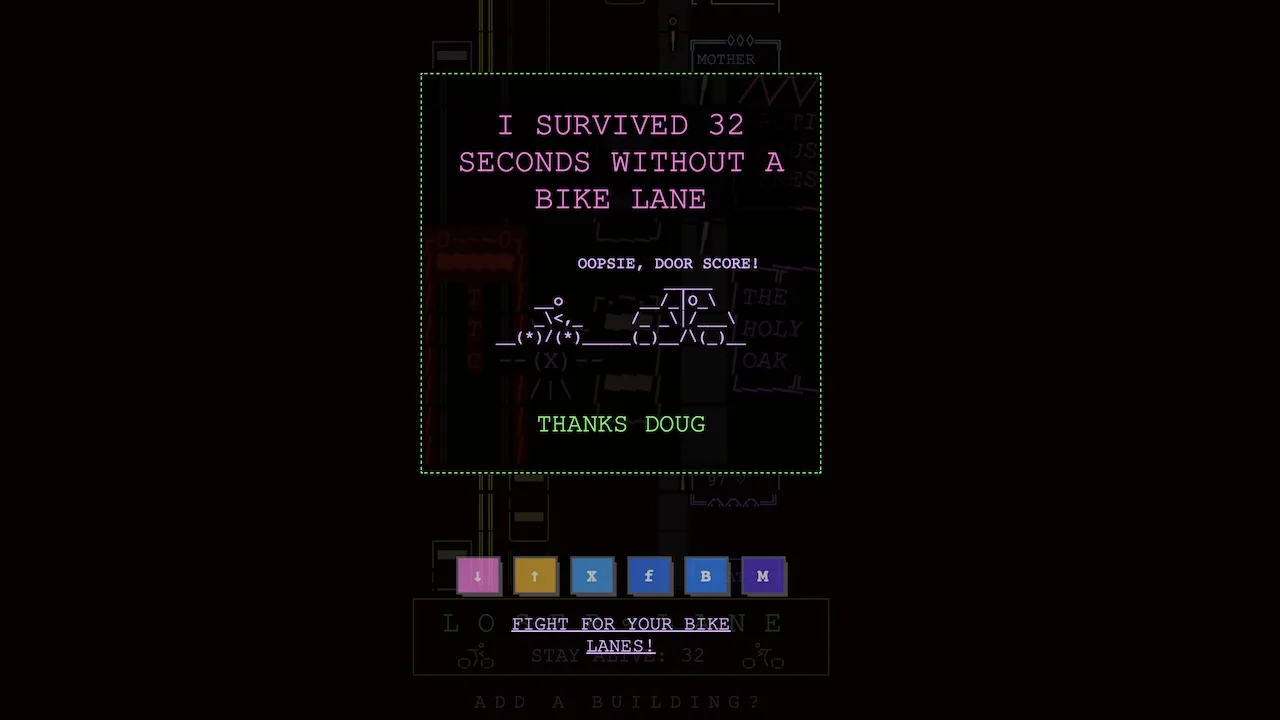
Artist and game designer Marie LeBlanc Flanagan took a different but equally impactful approach to the same issue. In response to the Ontario government’s plan to remove bike lanes in Toronto, she created Loser Lane, a video game that places players in the dangerous, unpredictable streets of the city with no bike lanes to protect them.
The objective of the game is simple: dodge traffic, avoid open car doors, and navigate streetcar tracks as your cyclist avatar speeds through Toronto’s busy streets. The catch? You can’t win. No matter how careful you are, something will inevitably get you, just as in real life. The game’s impossibly tough mechanics are intentional—LeBlanc Flanagan wants players to feel the constant, life-threatening danger that cyclists face every day when bike lanes are removed or nonexistent.
“I made this game to evoke a specific feeling: the terrifying reality of biking without a bike lane,” LeBlanc Flanagan explains. “With games, you bring the experience to life by playing it, so you really get ‘inside’ the thing itself.” The result is a harrowing and impactful experience that underscores the everyday dangers faced by cyclists in Toronto. The game’s grim message is reinforced when players inevitably “die” in the game, with the words “Thanks Doug” flashing on the screen, a direct reference to Premier Doug Ford’s push to eliminate bike lanes.
LeBlanc Flanagan’s own experiences as a cyclist in Toronto have fueled her passion for advocating for safer streets. She recalls a particularly formative moment during a Critical Mass ride in the ’90s, when she first witnessed the power of a group of cyclists coming together to assert their right to the road. Biking, for LeBlanc Flanagan, is more than just transportation; it’s a way of life, one that she believes should be protected and championed.
Screenshot of Loser Lane video game
Tom Flood and Rovelo: Graphic Design for Change
While Pagurek and LeBlanc Flanagan used video and music to communicate their messages, Tom Flood, the creative force behind Rovelo Creative, brought his advocacy to the streets—quite literally. Known for his bold and captivating bicycle-themed graphics, Flood’s work is rooted in a desire to change the narrative around cycling and advocate for better, safer infrastructure.
Flood’s foray into bicycle advocacy began almost by accident. In 2022, a simple request for a T-shirt design turned into something much larger as people began clamoring for his messages. The designs he created, often provocative and unapologetic, struck a chord with cyclists frustrated by victim-blaming rhetoric that suggests cyclists need to protect themselves at all costs while sharing the road with cars. Flood’s designs challenge that notion, using graphic art to confront the societal norms that leave cyclists vulnerable.
“I want to change the conversation. It’s not about cyclists needing to dress in neon or wear body armor to stay safe. It’s about creating safer streets for everyone,” Flood says. His designs, which include posters and digital downloads, have spread across social media, empowering cyclists and advocates worldwide. What started as a small creative project has grown into a movement, one that champions safer streets for all vulnerable road users, not just cyclists.
Flood’s personal connection to biking runs deep. As a child, his bike was his everything, and as an adult, cycling became his preferred mode of transport. His advocacy is not just a professional pursuit; it’s a deeply personal mission to make streets safer for his kids, his neighbors, and himself.
These Toronto artists and creators are showing how creativity can be a powerful tool in the battle for safer streets. But the fight is far from over. Organizations such as Cycle Toronto are pushing back, not just through art and advocacy, but through legal action. It’s clear that the future of safe streets in Toronto is a battle worth fighting, and not just for cyclists, but for those who want a city that puts people first.
Drake’s influence on Toronto is undeniable, and the iconic musician always finds a way to support the city. Case in point, Casuals Cakery, a new local bakery that decided to hold a Drake Era’s Lookalike Contest. Well, the fledgling operation just got a major boost when Champagne Papi himself decided to offer up a $10,000 prize.
This Saturday, Dec. 14th, Apt. 200 on Queen Street West will host the Drake Era’s Lookalike Contest, where participants will compete to see who can best channel the rapper’s iconic style. Originally announced as a fun competition, the event just got a major upgrade. The generous contribution has taken the event to a whole new level of excitement, making it one of the most anticipated gatherings of the year for Drake fans.
The contest will run from 4 p.m. to 6 p.m., with space limited, so attendees are encouraged to arrive early. It’s a 19+ event, with alcohol on-site, and the venue will be filled with energy, good vibes, and plenty of surprises. Casuals Cakery will be offering exclusive treats and samples for attendees, adding a delicious twist to the celebration.
The competition itself will focus on how well participants can embody the essence of Drake. It’s not just about looking like the rapper—it’s about bringing style, creativity, and entertainment that honor Drake’s legacy. The winner will take home a coveted Toronto Mans Prize Pack, featuring a bottle of Hennessy, a pack of Backwoods, and other surprises. And with Drake’s $10,000 addition to the prize pool, the stakes are high.
Beyond the contest, the event is a chance for the community to come together and celebrate local culture. It’s not just about Drake—it’s about Toronto.. Whether you’re a Drake superfan, a foodie, or someone just looking to enjoy a fun afternoon, this event promises something for everyone.
If you’re planning to attend, make sure to RSVP soon, as space is limited. It’s shaping up to be an unforgettable afternoon of creativity, nostalgia, and community spirit, all in the name of one of Toronto’s most beloved icons. Don’t miss out—come to Apt. 200 on December 14th and join the celebration.
As 2024 comes to a close, it’s time for our annual showcase of the city’s most inspiring women features artists, activists, athletes and more who have led by example, achieved against all odds and made this city and this year special. We’re shining a light on some of the most incredible women in Toronto and honouring the work they’ve done this year. These are our most inspiring women of 2024.
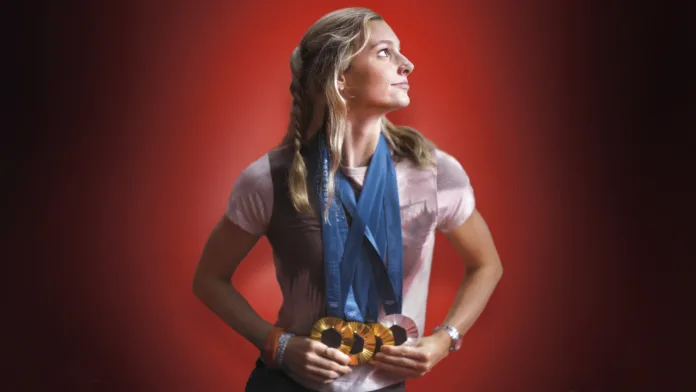
From Olympic swimmer Summer McIntosh breaking records at the Paris Games to innovator Tina Singh creating a helmet that will make sports safer for all kids to Andrea Martin receiving the Governor General’s Performing Arts Award for Lifetime Artistic Achievement, Toronto is home to some of the world’s most inspiring and incredible women.
Hear from their friends, colleagues and fellow industry professionals — including some inspiring people in their own right, including 2021’s inspiring woman Aurora James and Olympian Penny Oleksiak — on why these women are so incredible and deserve the honour of 2024’s women of the year.
Ayesha Curry is doing it all as founder of lifestyle brand Sweet July, philanthropist, author, mother and chef. The multi-hyphenate started off as a food blogger, quickly launching a Food Network show and publishing cookbooks. In 2019, Sweet July began as a magazine and has now transformed into a storefront, a production arm, a publishing arm and a skin care line. Her motivation extends to her work with philanthropic foundation Eat.Play.Learn, co-founded alongside husband Steph Curry. Curry recently made headlines for committing $25 million to closing the illiteracy gap for youth in Oakland, one of many initiatives focused on making the world a better place. She’s doing it all, and doing it with a passion that shines through in every new venture.
By Aurora James — Founder, Brother Vellies
Ayesha Curry constantly inspires me with her commitment to community, sustainability and inclusion. She is a true multi-hyphenate, having found huge success as a chef, author of three bestselling cookbooks and advocate in her work with the Eat.Learn.Play. Foundation and business owner and founder of Sweet July. I admire the way she decides what she wants and barrels toward it with her full dedication. Why should we, especially as women and women of colour, be boxed into one career path? Ayesha understands that we can follow our dreams without sacrificing quality, consistency and commitment. As mixed-race Canadian women with Jamaican roots, living in the U.S. and running our own businesses, Ayesha and I have connected over so many shared experiences. Beyond everything else she has going on, she always makes time to be a reliable friend — and she never overlooks an opportunity to bring other women of colour along in her wins. She’s a longtime supporter of my brand Brother Vellies, and of the Fifteen Percent Pledge, which is working to expand economic opportunities for fellow Black founders. I am so grateful for her friendship and her allyship, and no one is more deserving of this recognition.
Spearheading groundbreaking research on brain tumours and cancer, Dr. Gelareh Zadeh made headlines this year when her lab received $800,000 in funding from the NHL for research into brain tumours. She was also behind a recent study that discovered a tool to predict the risk of lung cancer spreading to the brain. Formerly a senior scientist at Princess Margaret Cancer Centre, head of neurosurgery at Toronto Western Hospital, University Health Network and co-director of the Krembil Brain Institute, she will be greatly missed after her recent move — Mayo Clinic named her the Department of Neurosurgery chair in Rochester.
By Dr. James Rutka — Neurosurgeon, SickKids
I have known Dr. Zadeh for over 20 years. I clearly remember the great work she accomplished in our Brain Tumour Research Centre when she was a PhD student with Dr. Ab Guha. Since then, she has been most successful as an academic neurosurgeon at the University of Toronto, performing the most technically challenging neurosurgical operations, writing papers published in the highest-impact scientific journals and receiving recognition worldwide across numerous neurosurgical organizations. She is an inspiration for all but especially for career-aspiring women, as she has achieved the highest level of accomplishments in neurosurgery while being a devoted and incredibly caring mother of her two daughters. She is fully deserving of this recognition as she has reached the top of her field in neurosurgery and is soon to head up the prestigious Mayo Clinic Department of Neurosurgery in Rochester, Minnesota.
For the sports fanatic who enjoys a good drink, the LCBO has upped the gifting game. Why go for a plain bottle when you can snag a hockey stick filled with premium vodka or a sleek racing car decanter that doubles as a conversation piece? These playful options are perfect for adding a sporty twist to your holiday celebrations and might just score the MVP award on Christmas morning.
For the race car lover
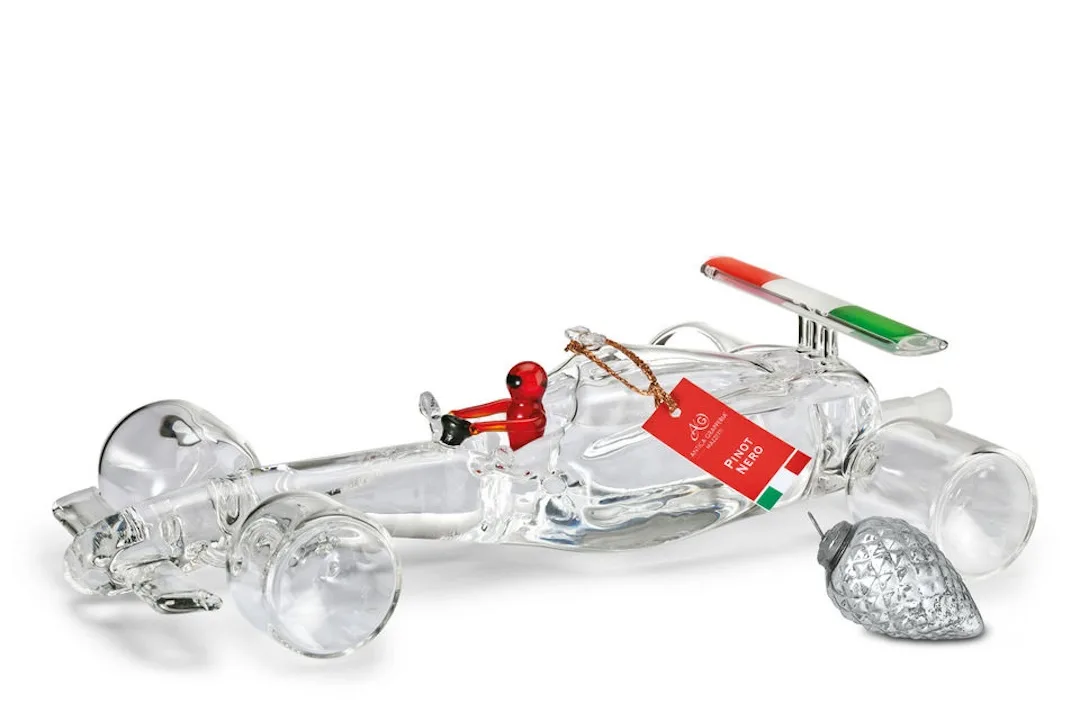
Straight from Piedmont, Italy, the Mazzetti Race Car Grappa Chardonnay is as sleek as it gets. Housed in a Ferrari-shaped glass decanter, this uniquely distilled Chardonnay grappa is the most unique gift! Priced at $179.95, it comes with a ready-to-go gift box — perfect for the car-obsessed and the grappa-curious alike.
For the hockey aficionado
The Time Vidal Icewine bottle is a real MVP for holiday gifting, shaped like a hockey trophy that any player would love to show off. At $34.95, this fun nod to Canada’s favourite sport adds a playful touch to your dinner party. Not only does it pack a sweet punch of honey and apricot, but it will definitely spark some fun and lively conversation around the holiday table.
Put your shot on net with High Stick Vodka’s limited edition vodka stick. This 750 mL, hand-blown glass bottle isn’t just a pretty face — it’s filled with award-winning vodka distilled four times from Canadian grains. Priced at $89.95, it’s the ultimate gift for the hockey aficionado. Complete with a gift box, it’s a collector’s item that scores big points in any holiday haul.
Nextdoor — the popular app for neighbourhoods where users can get local tips, meet new people in their hood, gossip about everything from community events to municipal policies, and buy and sell items — just revealed the topics that drove the most conversations in neighbourhoods across Canada this past year.
The solar eclipse, coyote sightings, and Alberta politics were just a few hot topics that had Canadian neighbours talking this year — but in Toronto, users were especially keen on Taylor Swift. The singer was the third most popular topic that drove conversations in Toronto neighbourhoods in 2024! Swift performed for two weekends in Toronto last month as part of her Eras Tour, leading to a mass economic impact on the city and even a few Toronto streets temporarily renamed in her honour.
While most of the neighbourhood posts focused on people searching for Eras Tour tickets, some users jumped in to offer rides to the concert or share information about local condos for rent during the tour dates. Others discussed Eras-inspired events and even Taylor Swift cookie-decorating parties!
Not all neighbours were die-hard Swifties, though, with the majority of “anti-heroes” residing in downtown. More than a few Torontonians vented about feeling inconvenienced by the traffic or were just angered by the costs spent by the city/businesses for the tour.
Speaking of costs — the second most popular topic discussed in Toronto hoods involved property taxes, likely stemming from the fact that, earlier in the year, the city implemented a 9.5 per cent tax hike for property owners (and recently, Mayor Olivia Chow said she isn’t certain what Torontonians will face next year). But not even taxes could stop people from discussing bike lanes — this was the most prominent topic discussed in Toronto neighbourhoods on the app and was also popular across the province (especially due to the Ontario government’s attempts to limit the city’s ability to create new, safe cycling infrastructure).
Other topics that drove conversation across the country included housing and real estate.
“In particular, municipal rezoning was one of the top words used by Canadians on Nextdoor this year and saw a 407 per cent spike in usage compared to 2023,” according to a statement released by the Nextdoor app.
Housing conversations included everything from a proposal to build a 20-story rental building in Kits Beach, introducing new row houses in Calgary, and replacing local businesses with condos in Etobicoke.
Cost of living and the economy were also concerns, with the app finding increased use of terms such as “economic,” “affordability,” “funding,” “taxpayers,” “debt”, and “inflation.”
According to Nextdoor, when users were asked in a poll what they were doing to cut costs, more than 40% of Canadian neighbours stated they were “growing their own vegetables,” while others said they were “couponing.”
Lost neighbourhood pets and wild animals on the loose frequented many posts, with coyotes on the run dominating more than 1,850 conversations. Safety was also important — there were a lot of reports about porch pirates, stolen packages, car theft videos, and general neighbourhood concerns.
Thankfully, there were also many ‘feel-good’ posts; one of the most memorable in Toronto was about a hard-working dog who moonlights as an employee at a local Home Depot!
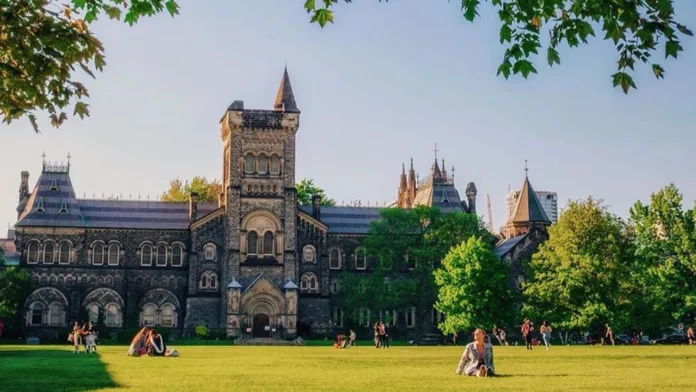
The University of Toronto (U of T) was just named the top university in the world for sustainability for the second year in a row, according to the London-based Quacquarelli Symonds (QS) World University Rankings: Sustainability 2025. The rankings looked at nearly 1,800 universities from 95 countries around the world to discover which post-secondary institutions are leading the way in social and environmental sustainability.
With an overall ranking of 100, U of T beat out other environmental heavyweight schools like ETH Zürich in Switzerland (second place) and Lund University in Sweden (third place) when it comes to environmental impact (which looks at environmental sustainability, education, and research); social impact (looking at factors like equality, knowledge exchange, impact of education, employability and opportunities, and health and wellbeing), as well as “good governance” (e.g., schools that have open-access publishing, transparent financial reporting, support ethical organisational culture, etc.).
U of T ranked an impressive 91/100 in environmental sustainability, 99.7/100 in environmental education, and 98.5/100 in environmental research. It also scored 98.5 in the good governance category.
U of T President, Professor Meric Gertler, told QS in an interview published Monday that student and faculty engagement is important to achieving sustainability goals.
“A huge number of U of T students and faculty come to the university already deeply committed to sustainability. To support and amplify this talent and passion among our students and to prepare them for a lifetime of leadership in the field, we’ve established what we call the Sustainability Pathways Program,” Gertler stated, noting that the ultimate goal is to provide all undergraduates with opportunities to incorporate sustainability learning, inside and outside the classroom, regardless of their degree program.
The university, which has three campuses (with 64,000+ students at the St. George campus, 14,000+ at the Scarborough campus, and 16,000+ at its Mississauga campus) has been committed to sustainability as far back as the 1970s, when the University hired its first full-time energy manager!
According to the City of Toronto, the University of Toronto’s St. George campus has cut greenhouse gas emissions by 43,000 tonnes between 2009 and 2019, with commitments to cut an additional 35,000 tonnes by 2030 through the school’s tri-campus 2019 Low Carbon Action Plan.
As such, Gertler believes that universities are well-positioned to lead the way in the global sustainability agenda.
“[A]s I’ve said, our community includes a massive number of students, faculty and staff who are experts in every aspect of the challenge and deeply committed to meeting it. But U of T isn’t alone in offering these tremendous assets to our partners in the public, private and not-for-profit sectors,” Gertler told QS. “So governments should be engaging universities as key parts of their strategies for tack[l]ing climate change, and this is something U of T is encouraging at the national and international levels, including our work with Universities Canada, the University Climate Change Coalition (UC3) and the U7+ Alliance of World Universities.”
Other noteable Canadian universities to make the list are the University of British Columbia, BC (6th) and McGill University, Montreal (15th).
These are the top 10 most sustainable universities, according to the QS rankings:
University of Toronto, Toronto, Canada
ETH Zurich, Zürich, Switzerland
Lund University, Lund, Sweden
University of California, Berkeley (UCB), Berkeley, United States
UCL, London, United Kingdom
University of British Columbia, Vancouver, Canada
Imperial College London, London, United Kingdom
The University of Edinburgh, Edinburgh, United Kingdom
The University of Manchester, Manchester, United Kingdom
Lovers of holiday TV movies will recognize Brittany Bristow as the leading lady in their favourite films, including this season’s oh-so-festive My Sweet Austrian Holiday and The Christmas Chocolatier. But before she became Hallmark queen, she was Hallmark princess — daughter to Lief Bristow, director and producer of many of the channel’s top-rated Christmas movies. Now, the actor shares how she found her leading man for life, Dustin Keating.
How they met
It’s painfully cliché, but we met at the gym. For over two years, we would see each other there and talk, but it took us a while before we finally went on our first date. We call it the “long con.”
The first date
Our first date was at the now-shuttered [Parkdale restaurant and bar] Superfly (RIP) on Aug. 15, 2019. The lead-up to it is the real story. Months earlier, we had a tentative date scheduled, but a series of unfortunate events — and my trademark clumsiness — got in the way. I fell down a flight of stairs and bruised most of the bones in my foot. Instead of explaining the situation properly, or sending proof of my very, very swollen foot, I sent a somewhat vague, “I’m sorry, I have to cancel — I hurt my foot” text. Not my best work. Understandably, Dustin thought I was bailing and didn’t push any further. Months later, Dustin was at a dinner at a mutual friend’s house and my name came up, to which Dustin mentioned the failed date, to which someone at the table confirmed seeing me hobbling around that day, and that I had not blown him off. Dustin texted me first thing the next morning to ask if I was free that night. Spoiler alert, I was.
The relationship
Shortly after our first date, I was scheduled to leave for North Bay to work on a TV series, so we packed in eight days together. Back to back to back we had dinner, walked around the city, hit balls at the driving range — all before I had to leave. The first weekend, I came back to town, and the next weekend we rented a cottage near production.
When the shoot finally wrapped, we had just six days before I flew to Vancouver for a Hallmark movie. We spent every minute together. From the start, we decided not to overthink anything — just to go all in.
By the time the movie wrapped, we had rented a car and embarked on a road trip from Seattle to California, which took a sudden detour to Vegas, and then a plane to Belize. We just didn’t want it to end! By the end of the trip, we had only been together for 3.5 months, and then COVID happened, so really — it’s like it never did.
The proposal
It was perfect. We were visiting Dustin’s family in Nova Scotia, and he wanted to propose at their cottage where we always watch at least one sunset over the water. Dustin enlisted his parents for help. His mom and dad, Susie and Patrick, put on Oscar-worthy performances. Susie staged a “doctor’s call,” and they both insisted they couldn’t leave Halifax. They urged us to go ahead [to the cottage] without them.
On the drive, I realized we’d be at the cottage for the two-year anniversary of our first date! I suggested we grab champagne to toast the occasion, unknowingly helping Dustin set the scene. He later confessed that he had no plan for disguising the impromptu champagne detour.
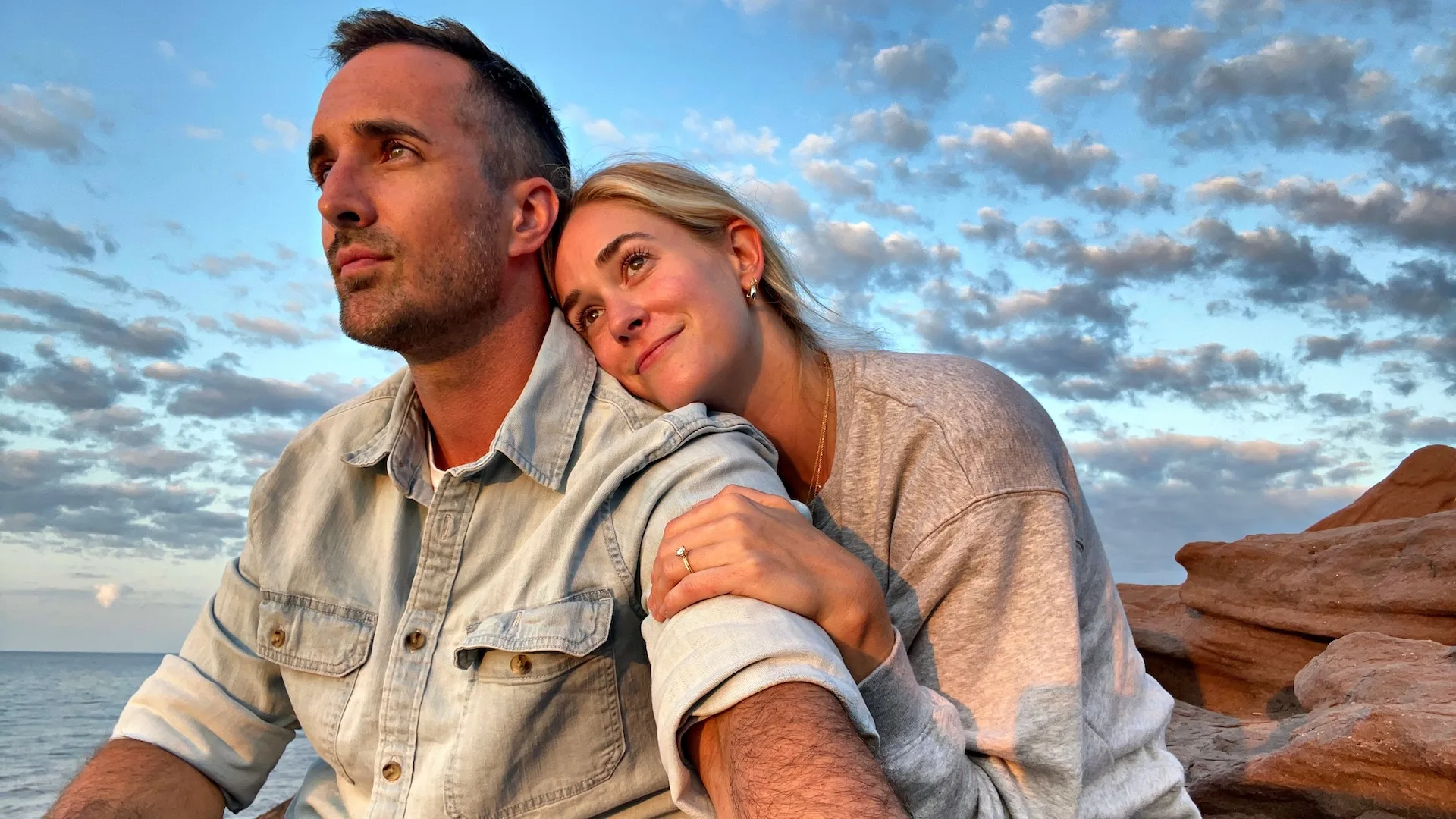
That evening, we cooked a beautiful dinner and walked down to the water at sunset. We popped a bottle of champagne, I said, “I love you” and that’s when Dustin began his speech. When he pulled out the ring, I screamed, “YES!” before he even got the words out. Turns out, he’d nailed the timing — it was exactly two years to the day since our first date.
The wedding
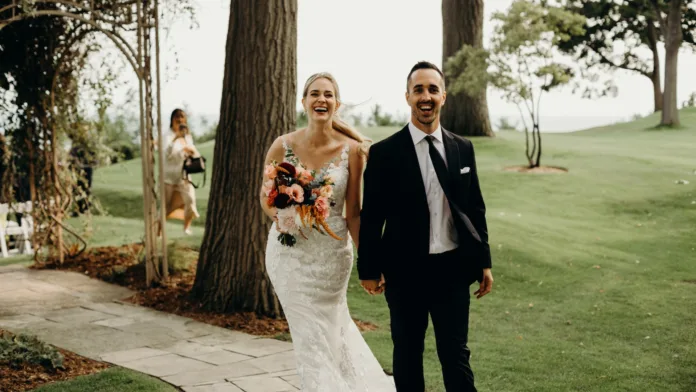
We got married on Sept. 16, 2022 — one year, one month and one day after the proposal — at The Toronto Hunt.
For our honeymoon, we started in Rome, where Dustin had previously lived. From there, we travelled to Barcelona and then explored Santorini, Milos and Athens in Greece. It was unforgettable.
Shared hobbies and interests
Golf is a big one. During the pandemic, it became our escape, and it’s stayed a huge part of our relationship. We even wrote a movie about golf while playing — it’s kind of our thing. We’ve golfed with both our families, on vacations, and are even planning on golfing in Asia this winter.
Outside of golf, we love cooking, designing furniture and pieces for our home and watching British panel shows.
The secret to success
We’re a team. We support each other. We show up for each other and prioritize what matters to us, and on top of that, we genuinely enjoy being together. We’re lucky in that way, and while we prefer to be together, we’re just as committed to seeing each other succeed both individually and as a team.
Balancing careers and a relationship
It’s all about support. Dustin’s design and fabrication company, the Make Nice Project, has been a huge success in just two years, and I love seeing him thrive. For my part, this industry can be a roller coaster, but Dustin is my biggest cheerleader. He celebrates every opportunity that comes my way and keeps me grounded. When I’m travelling, we make time to connect daily, even if it’s just to say good morning and good night.
Seeking to snuggle up in style this winter but wanting to shop local? Look no further than these Toronto knitwear brands – your guide to staying cozy and fashionable throughout the cold season.
Whether you’re looking to rock a slouchy oversized sweater for a laid-back main character vibe, layer a knit dress under a leather jacket for a night out, or add a fun touch of texture to your tried and true winter uniform, these knitters (and crocheters) have your back.
Hotpot Variety
Hotpot Variety at Fashion Art Toronto (Jessica Papp pictured, centre). Courtesy @hotpotvariety/Instagram
Hotpot is a slow fashion label founded by textile designer Jessica Papp, who recently made her runway debut at Fashion Art Toronto’s F/W season, revealing Hotpot’s new Main Character Moments collection. The ready to wear pieces, a mix of knitwear, crochet and hand sewn details, playfully lean into the stereotypes of high school popularity (think Mean Girls, with the nostalgic elements of Clueless).
“The collection celebrates the essence of becoming the person you’ve always wanted to be, through garments that embody the timeless spirit of those quintessential films and TV shows that defined our coming-of-age era,” Papp wrote in a statement.
The name Hotpot Variety is a reference to a “throw-everything-in-together” Vietnamese soup inspired by Papp’s heritage and upbringing. She compares her one-of-a-kind pieces to the cuisine because of what they have in common: they’re often enjoyed in a communal setting and one creation is never an exact replica of another.
All new pieces, including the Main Character Moments collection, will be available to pre-order through the Hotpot website as of Dec. 12.
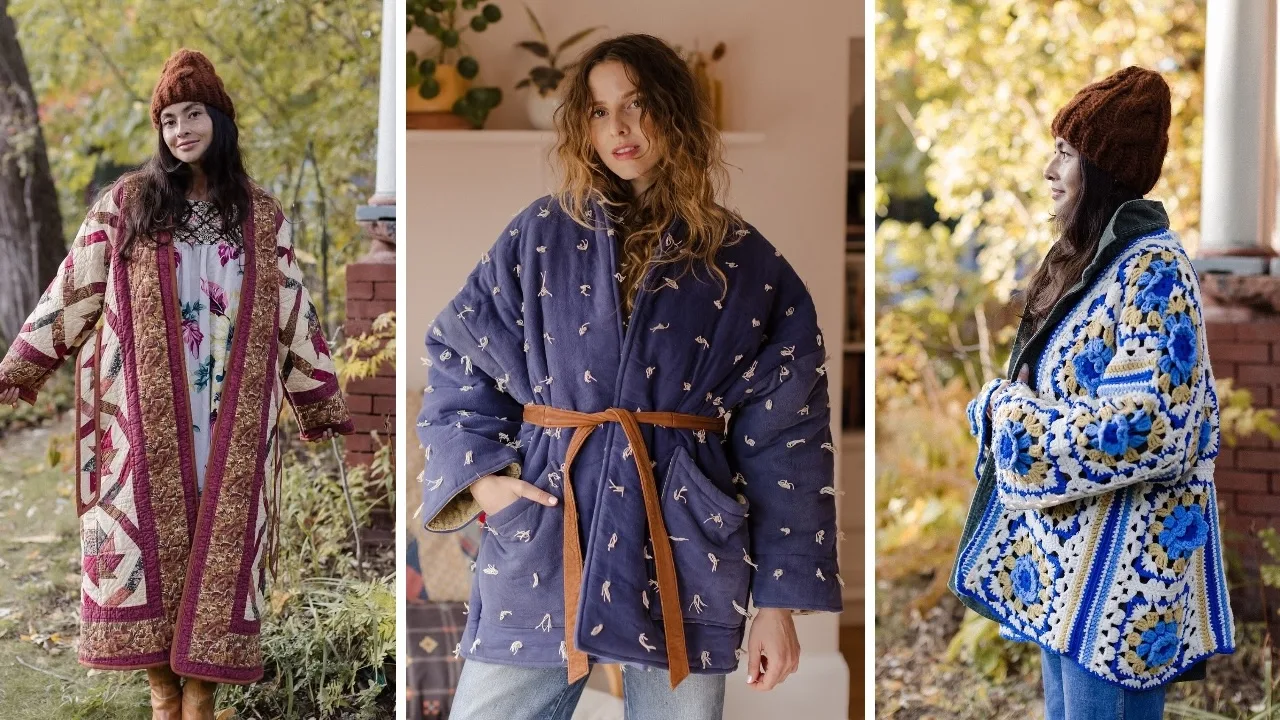
Honeybea is a 20-year-old heirloom textile brand operated by artist Rebecca Caulford. Her Vogue-featured, bohemian designs are handmade from salvaged textiles, and produced in small batches that sell out fast. Caulford creates both intricate crochet knits (like the popular Bonny Cardigan), as well as hand stitched garments (blouses, jackets, coats, skirts, dresses) made from vintage materials such as quilts and tablecloths. Collection drops are announced on Instagram and available through Honeybea’s website for international shipping as well as local pickup.
While Caulford has always operated out of a small Queen West studio space, she recently opened her first brick-and-mortar store in Kensington market, in collaboration with vintage brand Vintage Baby.
Shop Feelings Vintage
Courtesy shopfeelingsvintage.ca
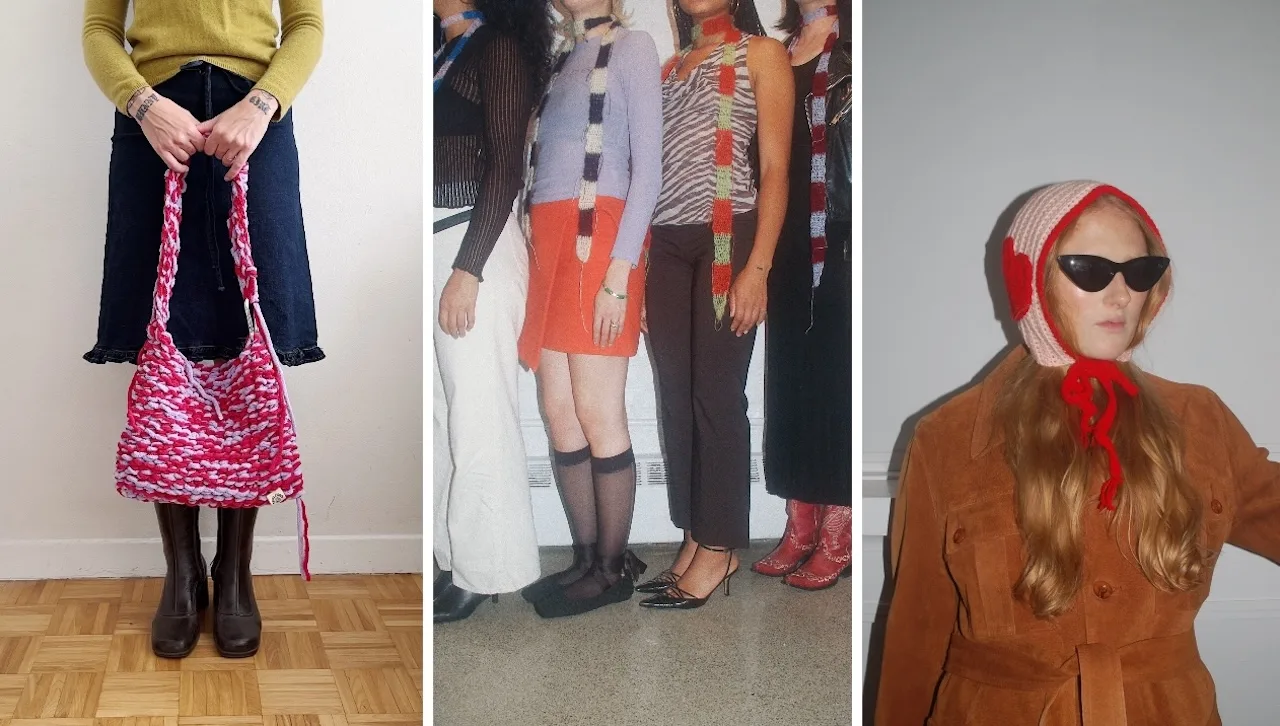
Shop Feelings is a vintage shop with an original crochet line on the side. Owner Aleks Roxborough’s Knotty brand includes bonnets, mohair skinny scarves, bags, undergarment sets (can also be worn over garments) and flower chokers.
“All Knotty crochet items are made with so much love, time and care in creating something original and unique just like our customers,” says Roxborough. Just like her vintage curation, all of the crochet designs are playful and colourful — like the Oat Milk Bonnet that’s decorated with crochet flower patches or the Lil Devil Bonnet that has literal devil horns. The Knotty Bags are fuzzy and come in four two-tone colourways (pictured above, left), the sets and chokers come in pretty much every colour you can imagine, and the skinny scarves are colourfully striped (pictured above, middle).
If you’re looking for inspiration for how to add knit accents to your winter outfits, Roxborough styles and models all of her pieces on Instagram. She even posted a video about how to style the skinny scarf (you’ll be surprised by how many ways there are). You can shop her vintage and crochet collections on the Shop Feelings website, or in the Shop Feelings showroom at 278 Sterling Rd.
Pella Wool
Pella Wool knits. Left photographer credit: @sarah.elise.bauman
Pella is a knitwear and crochet studio founded by childhood friends Petra Calder and Kelly Schaefer, that pulls inspiration from childhood nostalgia, cut-out collages and colour theory. The name Pella is actually a portmanteau of their first names. All Pella materials are locally sourced and each piece is made to order in Toronto.
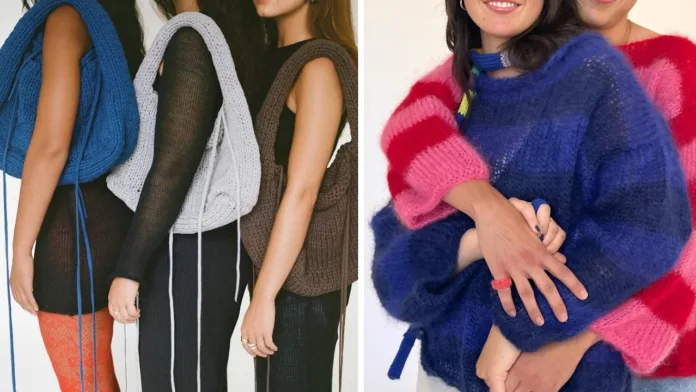
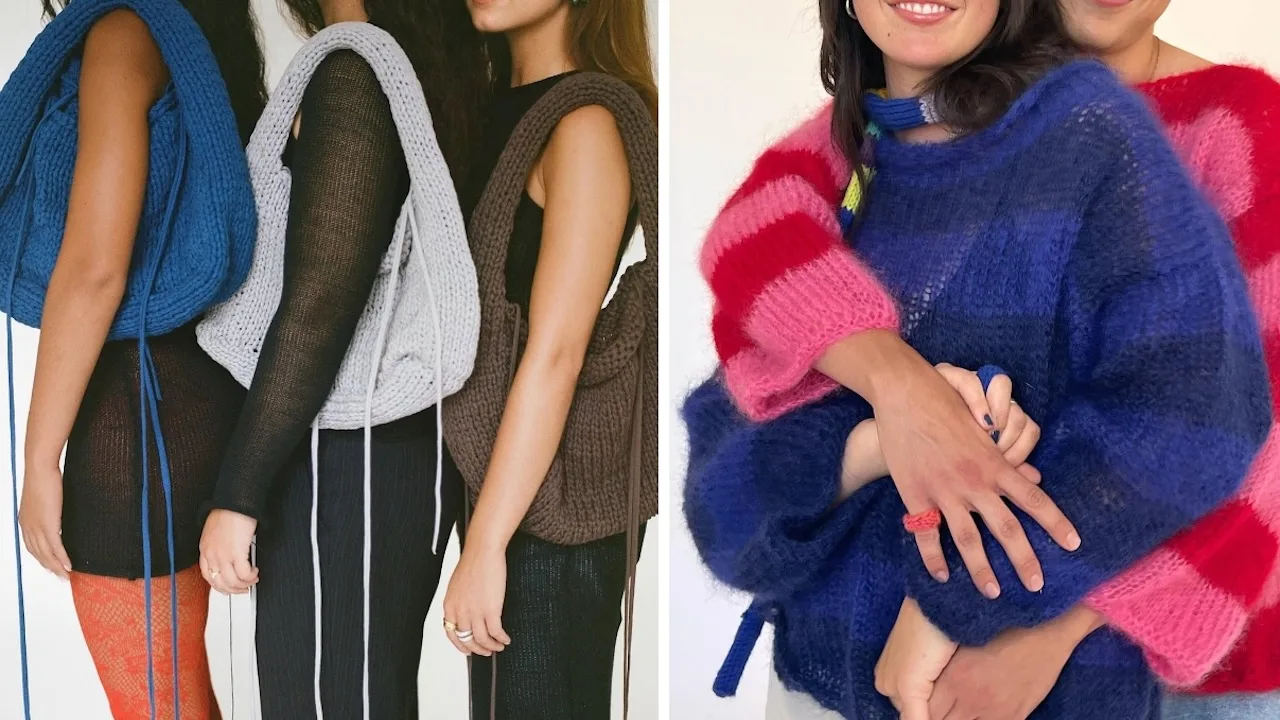
Current designs include the Alia shoulder bag (large enough to fit a laptop, pictured above, left), the shoulder shrug with thumb holes (inspired by ballet warm up gear), and the bowen dress/mini bowen dress (full length or short tank style dress). The pair are also bringing a small batch of striped and solid colour skinny scarves to a Toronto market from Dec. 14-15 — follow them on Instagram to see where they’ll be.
Aynsley Grealis is a viral Toronto artist who creates elaborate (and functional) crochet garments and accessories, such as embellished balaclavas and sculpturesque bags (carousel horses, espresso martinis, pizza rats…just to name a few designs). Her works vary widely in theme, from animals to food.
Grealis also sells patterns teaching fellow crocheters, or those looking to learn, how to replicate some of her most popular designs. Last year she even published her debut book, Mad Hatter, featuring a compilation of designs and patterns to teach readers how to make three simple bases (a balaclava, a pull-on hat and a handbag) and then how to decorate each by incorporating layers of appliqués.
Her pieces are so popular that they typically sell out five to 10 minutes after she releases them, and anybody who still wants one goes on a waitlist. If that’s not your game, you can also submit a request for a custom order through the Knotted Neon website.
Jrew Creations is a BIPOC-owned crochet accessory brand founded by Andrew Foster and Jaime Aludos that has been featured in Vogue, GQ and Vanity Fair. Naturally, the name Jrew is a portmanteau of the owners’ first names. Their products range from bucket hats, durags, shrugs and bags to custom orders. The colour options are pretty much endless.
After starting their brand in 2022, inspired by Aludo’s later grandmother, who was an avid crocheter, they opened their first physical space in Stackt Market. Placing a priority on community building, they featured consignors in the space and also hosted pop-up events for local artists. This year, they moved into a more permanent location at 44 Tecumseth St., combining their crochet creations with Foster’s Jamaican cuisine — including stuffed Jamaican patties (considered by many to be some of the best in Toronto) and spring rolls.
In the past the duo have even hosted Sip N Stitch workshops in the space, where customers were invited to learn about the basics of crochet while enjoying a complimentary dish from Foster’s food menu.
You can shop Jrew Creations on Etsy, and in-store.
On the Map is another vintage/crochet hybrid brand, owned by thrifter and crocheter Silvina Antunes. The brand is known for colourful creations ranging from bucket hats, shrugs and sweaters to festival tops and full-length dresses, while the curated vintage collection includes Y2K apparel, ’70s bell bottoms, bohemian tops and ’80s sequined party dresses.
Antunes intentionally makes knit and crochet pieces for all seasons, with inclusive sizing ranging from XS-5XL. She also welcomes custom orders.
Earlier this year, On the Map opened a brick and mortar location at 454 Ossington Ave., where Antunes has splashed her personal taste all over the walls. Decorated with twinkly lights and a rainbow of colours, the space exudes joyful, beachy vibes. She’s also been known to host pop-ups in the space, inviting local artists, designers and even a tattoo artist.
Bruised Peach Shop
Courtesy @bruised_peach_shop/Instagram
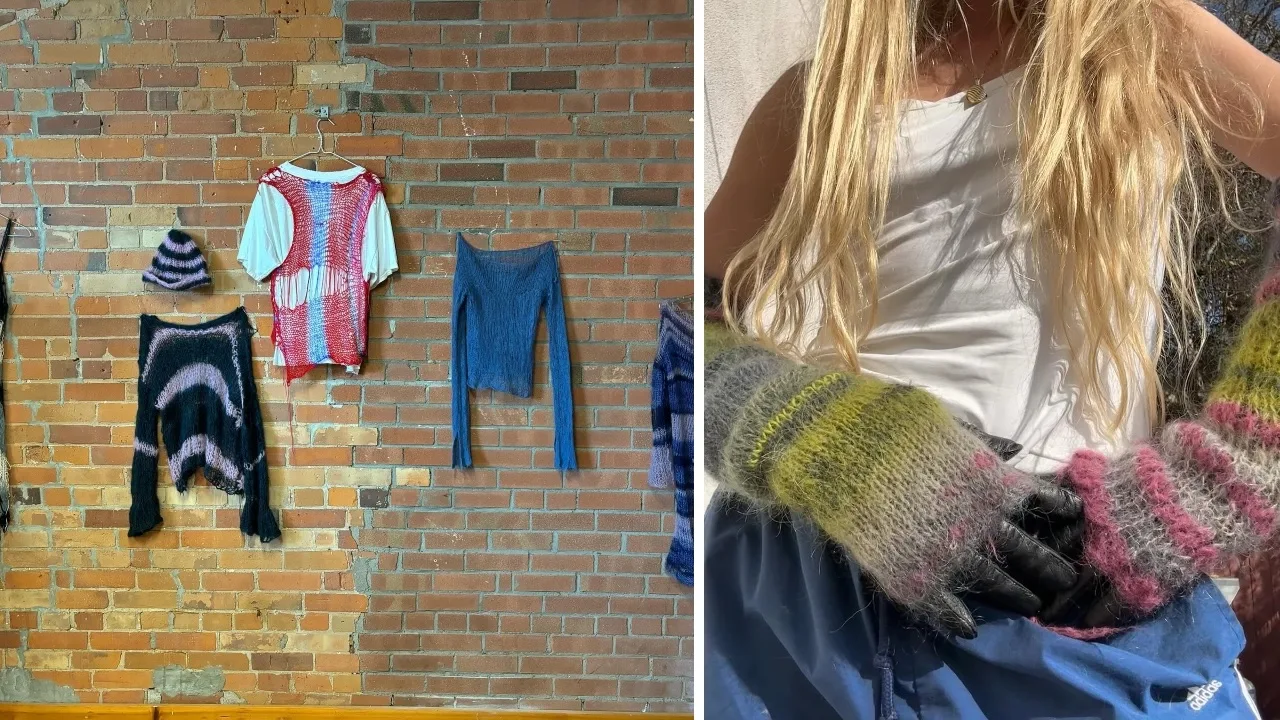
Bruised Peach Shop is a slow-made, hand-sewn and knit brand created by Lisette Dunin-Markiewicz.
Having first learned to sew and knit from her mother and grandmother, Dunin-Markiewicz launched the business in 2020 after sewing custom dresses for her friends. After demand grew for her designs (including blouses, hats, dresses), her mom joined the business to help keep up with orders. As an experienced seamstress, “she was able to take my ideas from paper and make them into beautifully constructed garments,” says Dunin-Markiewicz. Once the weather got colder that year, they began producing knitwear too.
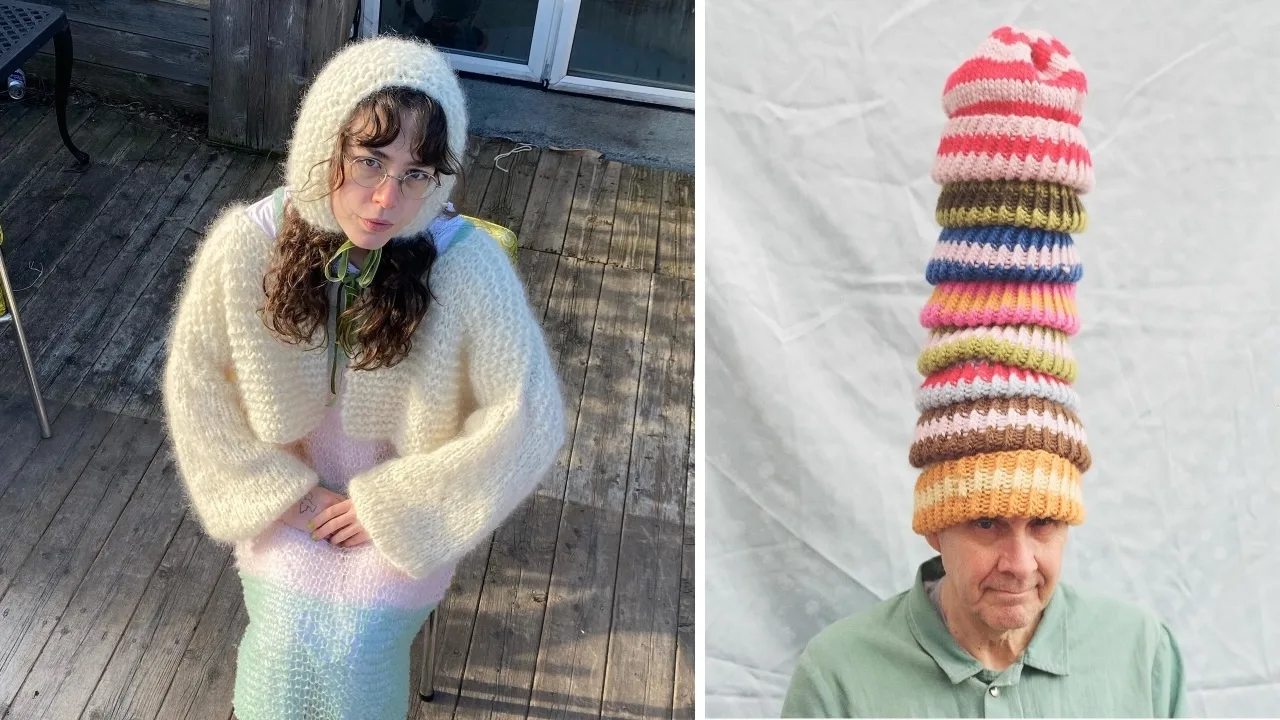
The pair took a small break in the last year but are launching new designs in the new year and actively taking orders for existing designs, as well as customs. Leading up to Christmas, the shop will also be posting weekly ready-to-wear pieces, including winter accessories like colourful, striped toques (pictured above, right).
Ides of May Shop
Courtesy @idesofmayshop/Instagram
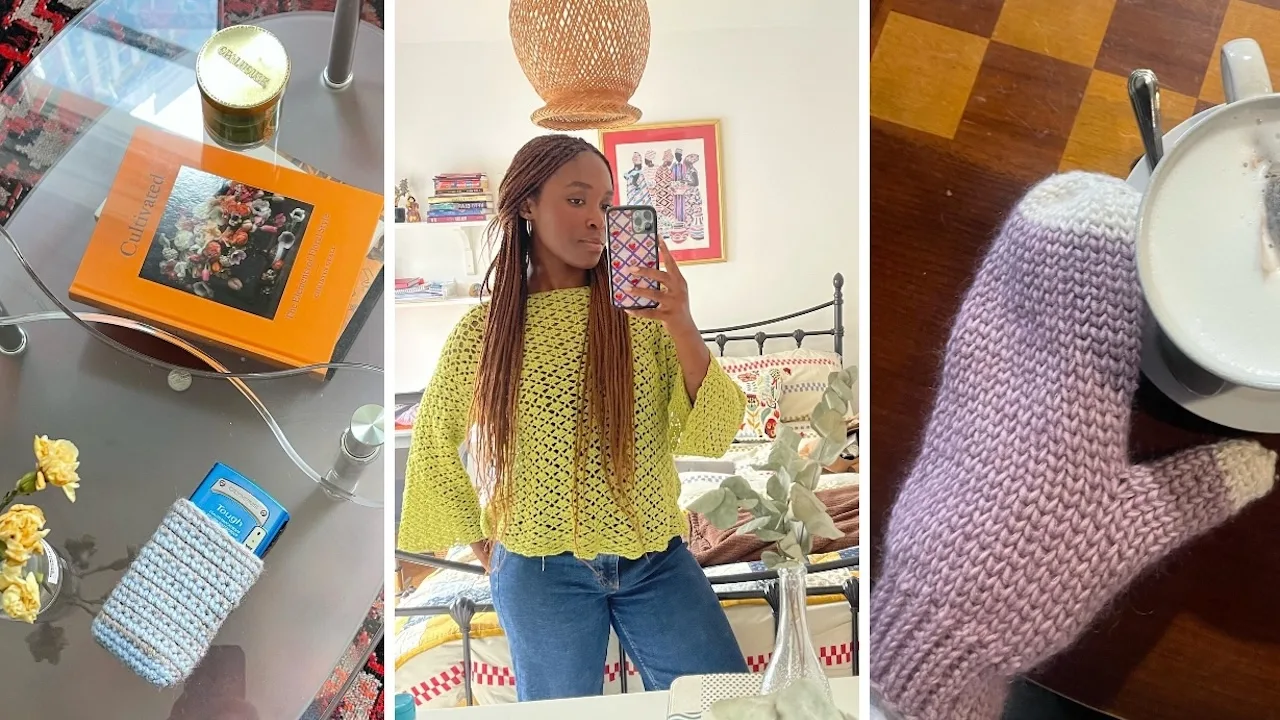
Daneille Reid is a crochet artist that takes orders through Instagram — both customs and existing designs. She’s made everything from bikini tops, tanks and beach dresses to hats, mittens, sweaters, bags and even cases for devices (pictured above, left). All you have to do is DM her (or email) with the design you’re after, the size and colour.
Like many people, a number of whom are included on this list, Reid learned to crochet in 2020 as a way to pass time during the pandemic. Before she knew it, she was a whiz with the needles and fielding requests to start selling her pieces.
“I really like doing things with my hands so it became a creative outlet for me,” she says. “It’s been such a fun time making my own ideas, but I love when people commission me because it challenges me and helps me learn new skills.”
She also designs pieces by custom order in her studio, and will be hosting a studio sale in the new year (look out for the announcement on Instagram).
“I never follow patterns so I’d say my pieces are known for being one of one, each having unique details,” says Goodfellow. Given her profession, there’s no doubt her pieces are original and star-worthy, as seen worn by styling clients like musician Katie Upper, or Valley’s Rob Laska.
Loophole Studios
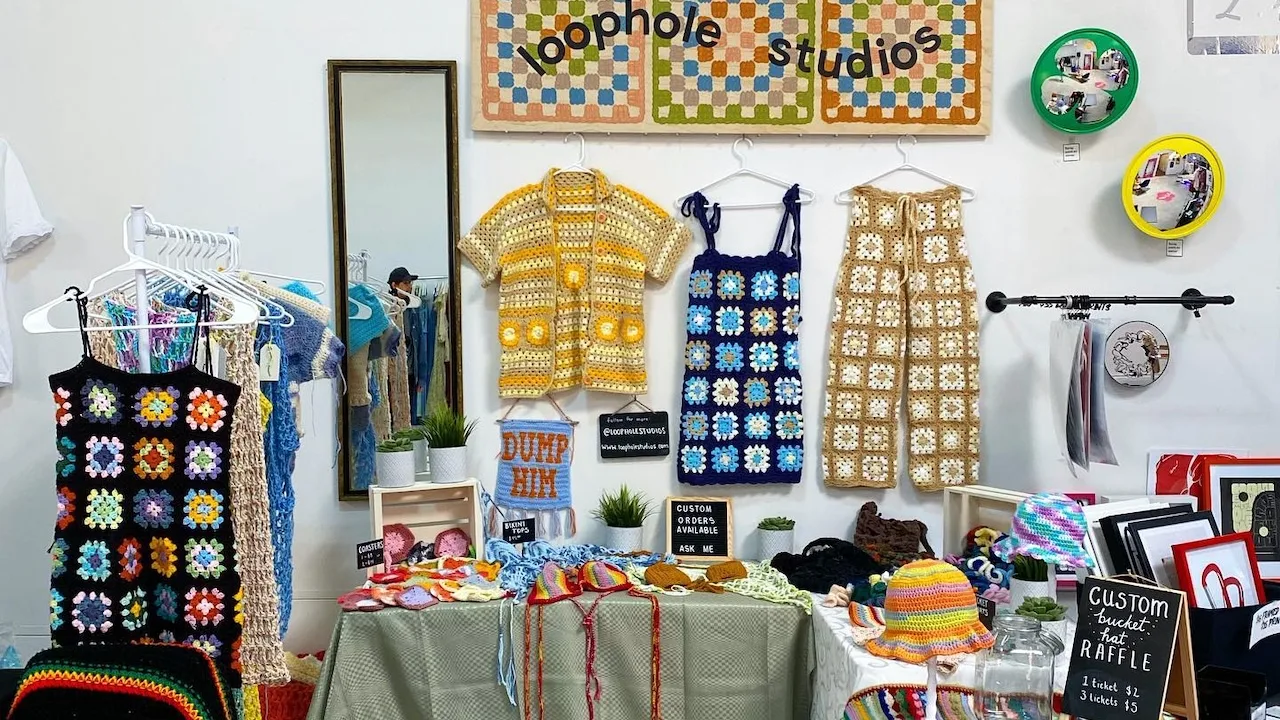
Loophole Studios at the Good Friends Market. @loopholestudios/Instagram
Loophole is a made-to-order crochet and knitwear brand by Madalin Warner. She crochets everything under the sun, having got her start making crochet bikinis before expanding to all kinds of wearables.
Loophole is closed for the holidays but will reopen for custom orders in January. Orders are taken through her website, email or Instagram. Warner can also be found vending at various markets around the city.
Lacewing Studio
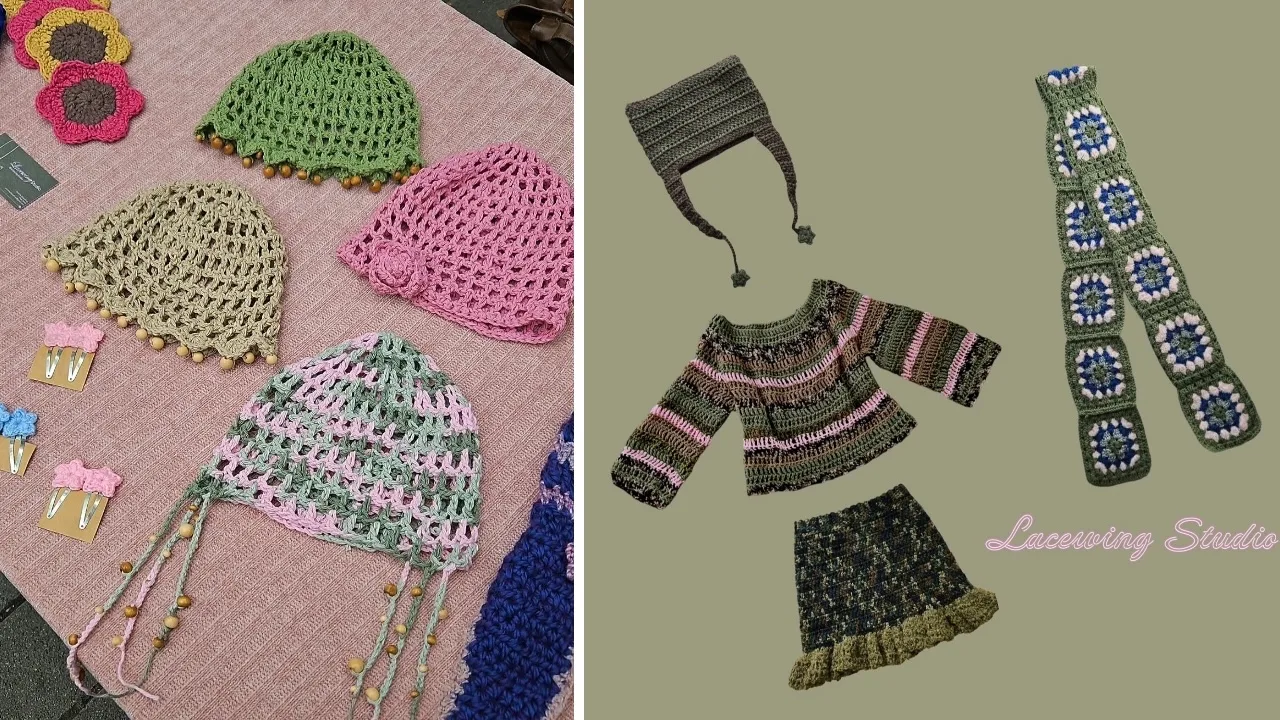
Courtesy @lacewing.studio/Instagram
Lacewing is a crochet brand by Oormika Chaudhary, who started her practice after finding inspiration in an intricate crochet table runner made by her mom’s great aunt during a trip in the Andaman Islands in India.
She creates ready to wear pieces that have a whimsical quality (like “reef skirts” inspired by the ocean, or “cat beanies” with cute star embellishments) and also takes custom orders through Instagram. She can also be found vending at markets around the city.
“My bestsellers are my hats but I thoroughly enjoy making sweaters and skirts out of scrap yarns because they add a touch of uniqueness that would be very hard to replicate. Using scraps also allows me to be more sustainable in my work,” says Chaudhary.
The scrap designs are made from varying salvaged textiles and patterned in multiple colours, making them feel fairy-like. Other designs include matching sets, shrugs, flared sleeves and scarves.








 By Aurora James — Founder, Brother Vellies
 By Dr. James Rutka —